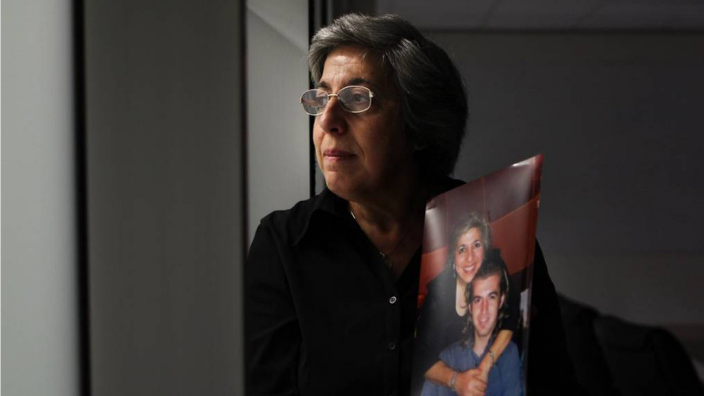
Ten years ago, Katrina Tsaftaropoulos was faced with the unimaginable reality that she would be spending her birthday without her middle child George.
In 2012, 27-year-old George Tsaftaropoulos took his life, leaving behind a 15-page farewell detailing the depression he had suffered from a young age.
“I felt like I was losing everything. My son, my family, my sanity, my sense of security – the ground beneath my feet was shifting,” Katrina told the Black Dog Institute in 2020.
“People acted and treated me differently. They judged his death, not forgiving or understanding of his suicide. The taboos and stigma in society were alienating me.”
READ MORE: Mental Health in Australia’s Greek Community: How can we reduce the stigma?

A decade on and Katrina has made it her mission to raise awareness of mental illness and be a loud voice for suicide prevention.
“I go on marches, do interviews with papers, online forums, petitions, presentations. Anything to break the taboos and remove the stigma,” she told Black Dog Institute.
Having volunteered with Lifeline and raising over $35,000 for Beyond Blue and Black Dog Institute, Mrs Tsaftaropoulos firmly believes early intervention and education are the solutions.
“We need more counsellors in schools. Why let it get to the stage when it’s too late and the damage is done?” she told The Leader earlier this week.

“It’s like shutting the gate when the horse had already bolted. We have to get into youth because that’s where mental health starts festering.”
The Allawah mother has been actively visiting high schools and giving mental health presentations since her son’s passing.
“I haven’t stopped. Even through the pandemic I did online presentations,” she said.
According to the Australian Institute of Health and Welfare, over 3000 deaths by suicide occur each year in Australia, with males being 3 to 4 times more likely to take their own lives than females.
Suicide is the leading cause of death among young Australians, representing 31% of all deaths in young people aged 15-17 and 39% of all deaths in those aged 18-24.
If this story has caused any distress The Beyond Blue Support Service is available via phone 24/7 on 1300 22 4636 or via beyondblue.org.au/get-support for online chat (3PM – 12AM AEST or email responses within 24 hours).
Source: Black Dog Institute, The Leader.

