
For a century, The Greek Herald has stood as far more than a newspaper. It has been a voice, advocate, organiser, campaigner, watchdog and historical witness for generations of Hellenic Australians navigating life far from their ancestral homeland.
From the very first edition published in November 1926, the mission of The Greek Herald was “to enlighten and educate” and to serve the community with integrity and purpose. Guided by its lasting watchwords – “Truth, Right and Justice to all” – the newspaper emerged not simply as a publication reporting developments from Greece and Australia, but as a civic institution for a growing migrant community confronting questions of identity, faith, representation and belonging in a new homeland.
In its inaugural editorial, the newspaper declared, “Our aim with the commencement of this publication is to enlighten our fellow Greek compatriot in this noble country… For these reasons our newspaper is not the organ of any political party, social class or faction…”
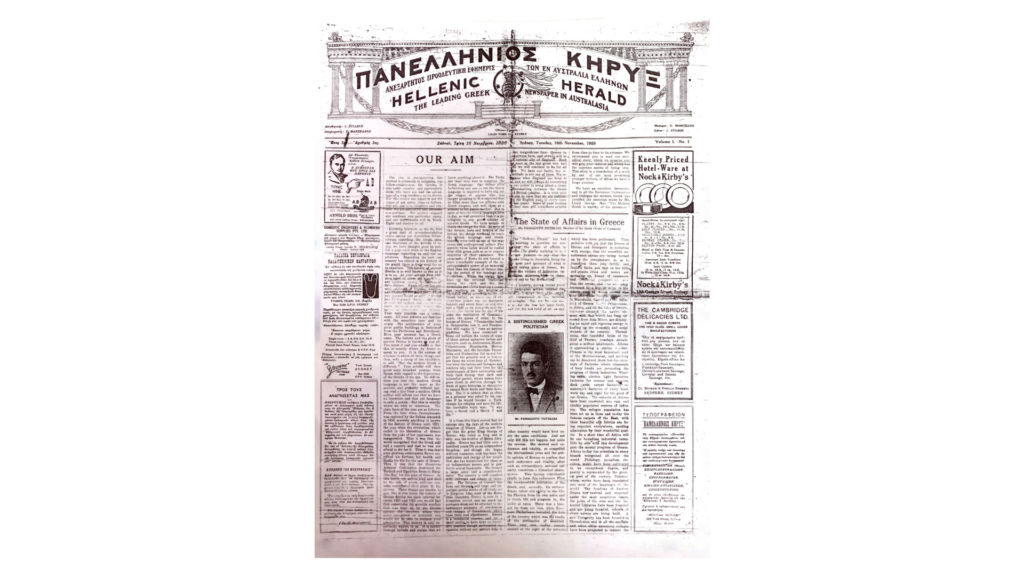
Those principles would shape the paper’s role for decades to come.
Within days of its establishment, the newspaper was already documenting one of the defining disputes shaping early Australian Hellenism – the schism involving the Greek Orthodox Community of New South Wales and the Ecumenical Patriarchate. Questions surrounding church authority, communal governance and representation were not peripheral issues within the emerging Greek Australian community. They were central to its formation.
From its earliest years, The Greek Herald became deeply immersed in the major debates shaping diaspora life. At times it advocated, challenged authority structures, mediated disputes, promoted reconciliation, or provided a public forum through which the Greek community grappled with difficult and often divisive questions concerning leadership, faith, identity and the future direction of Australian Hellenism.
These debates were not confined to Sydney alone. Across the decades, The Greek Herald maintained one of the most extensive interstate journalism networks within diaspora media, documenting communal disputes, church affairs, anti-Junta activism and major developments affecting Greek communities across Australia.
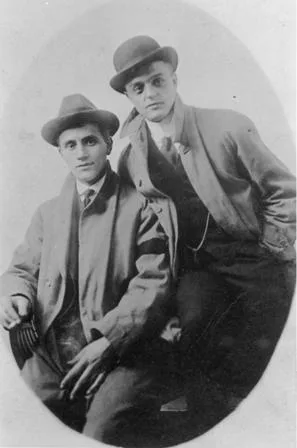
In 1927, during intense debate surrounding communal leadership and ecclesiastical authority, the newspaper published editorials critical of what it described at the time as the “autocracy of the Church, the Consul, and the Greek elite.” A year later, the paper attempted to mediate between rival ecclesiastical factions in an effort to pacify communal divisions.
Yet advocacy for The Greek Herald extended far beyond communal governance.
In the 1920s and 1930s, Greek migrants frequently faced racism, xenophobia and discrimination within Australian society. The Greek Herald became one of the few public voices willing to directly challenge those attitudes. In 1927, the paper attacked anti-Greek racism and criticised officials for failing to adequately defend the community. In 1928, it launched what the archive explicitly described as a campaign against racism, publishing examples of hostile rhetoric directed at Greeks in Australia.
The newspaper did not limit itself to editorials alone. On 13 July 1944, journalists Floros Demetriades and Nikiforos Lekatsas formally petitioned the Australian Journalists Association to defend Greek migrants against “racism, discrimination and xenophobia.” At a time when southern European migrants were often marginalised within public life, such interventions represented one of the earliest organised advocacy efforts for Greek Australians.
The paper also played a major role in preserving Greek language, education and cultural identity during the formative decades of the diaspora. On 15 March 1927, The Greek Herald supported fundraising appeals for equipment for one of the earliest Greek schools established in Sydney – the newly founded Private Greek School led by Anna N. Perivolaris at premises donated by Arcadian benefactor Ilias Iliopoulos, with support from the Kytherian community. Throughout the interwar period and beyond, the newspaper consistently encouraged Greek Australians to preserve their language, heritage and traditions, while advocating for the teaching of Modern Greek in Australian schools.
As migration increased and economic hardship intensified during the Great Depression, The Greek Herald increasingly focused on unemployment, poverty and migrant welfare. Under editor Michael Emmanuel Malachias, the newspaper documented the harsh realities confronting Greek migrants in Australia and, in June 1931, even advised readers to warn relatives against migrating to Australia due to widespread unemployment and hardship. The paper also published detailed first-hand accounts documenting racism, exploitation and the pressures facing Greek settlers during the Depression years.
Throughout its history, The Greek Herald also became a vehicle for large-scale community mobilisation.
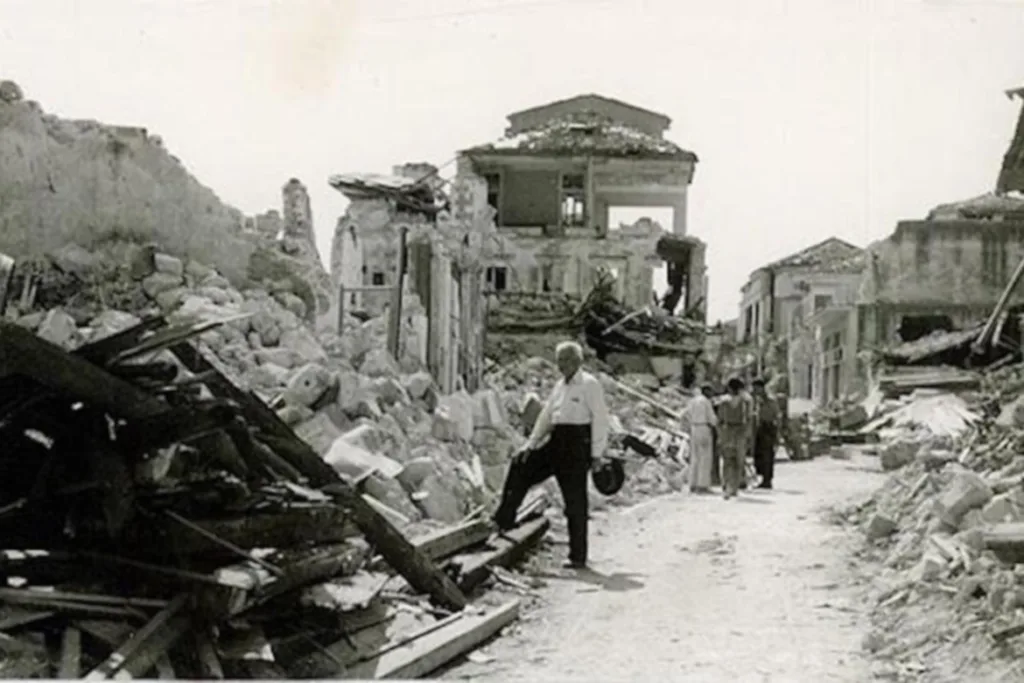
One of the clearest examples came during the devastating Ionian earthquakes of 1953. Rather than simply reporting on the catastrophe, The Greek Herald launched extensive fundraising and humanitarian appeals, publishing English-language coverage aimed at mobilising support beyond the Greek community. By November that year, 140,000 pounds had been raised and sent to Greece for earthquake victims, in what became one of the newspaper’s most significant philanthropic campaigns.
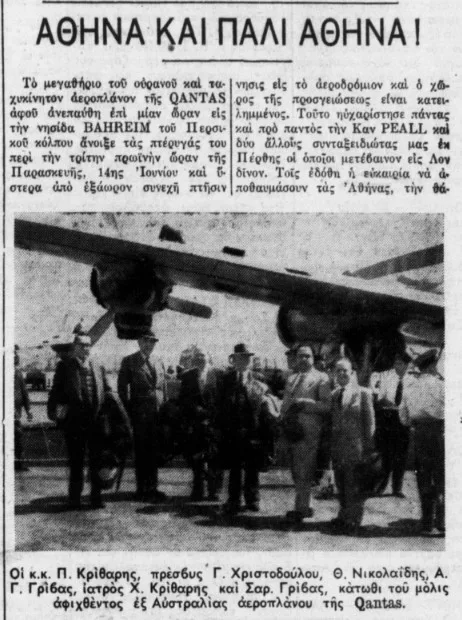
As mass migration transformed Greek Australia during the 1950s and 1960s, The Greek Herald increasingly moved beyond reporting and into direct advocacy on behalf of newly arrived migrants. In 1957, the newspaper strongly supported proposals for organised Greek welfare services, employment assistance and migrant support structures, while also campaigning for greater protections for migrant women following repeated reports involving exploitation and social vulnerability among newly arrived brides and families.
At the same time, the paper openly challenged racism and discrimination directed at Southern European migrants and advocated for improved transport links between Australia and Greece, supporting initiatives that contributed to the establishment of QANTAS flights connecting Sydney and Athens in 1957.
The newspaper’s advocacy role intensified further during periods of political upheaval affecting Greece and Cyprus.
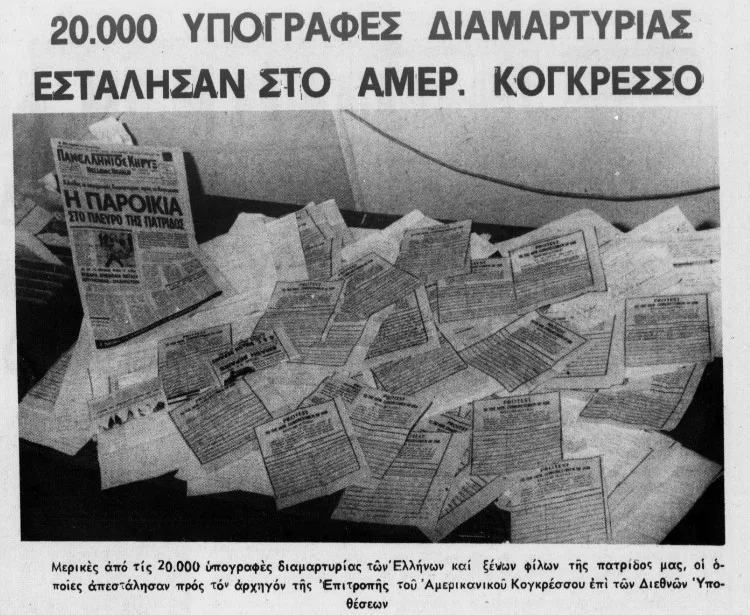
Following the Turkish invasion of Cyprus and escalating Greco-Turkish tensions in the 1970s, The Greek Herald became a major platform for patriotic mobilisation across the Greek diaspora in Australia. In 1976, the newspaper collected more than 20,000 signatures for a petition directed to the United States Senate concerning Greece and Cyprus, while simultaneously running its “Help the Motherland” campaign encouraging associations, sporting clubs and community organisations to financially support Greece and its national causes.
The newspaper’s advocacy for Greek language education extended well beyond the interwar period. During the late 1970s and early 1980s, The Greek Herald supported campaigns connected to Modern Greek programs at Monash University, bilingual education initiatives and the expansion of Greek language teaching within Australian public schools at a time when many migrant families feared younger generations would lose fluency in the language.
In 1980, decades before Greece formally expanded expatriate voting rights, The Greek Herald was already documenting and debating proposals concerning the right of Greeks living abroad to participate in Greek elections, reflecting longstanding diaspora demands for political recognition and representation despite migrants contributing economically, culturally and politically to both Greece and Australia.
Throughout the late 1970s and early 1980s, the newspaper increasingly focused on issues affecting the daily lives of migrants in Australia, publishing coverage surrounding unemployment disparities, pension concerns, citizenship difficulties and discrimination against non-British migrants at a time when many Greek Australians still faced barriers to social mobility and public representation.
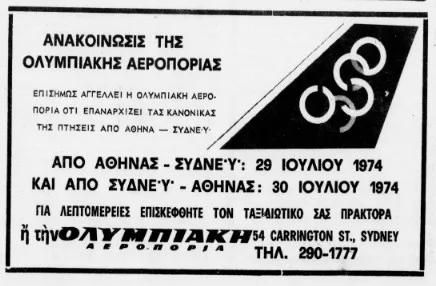
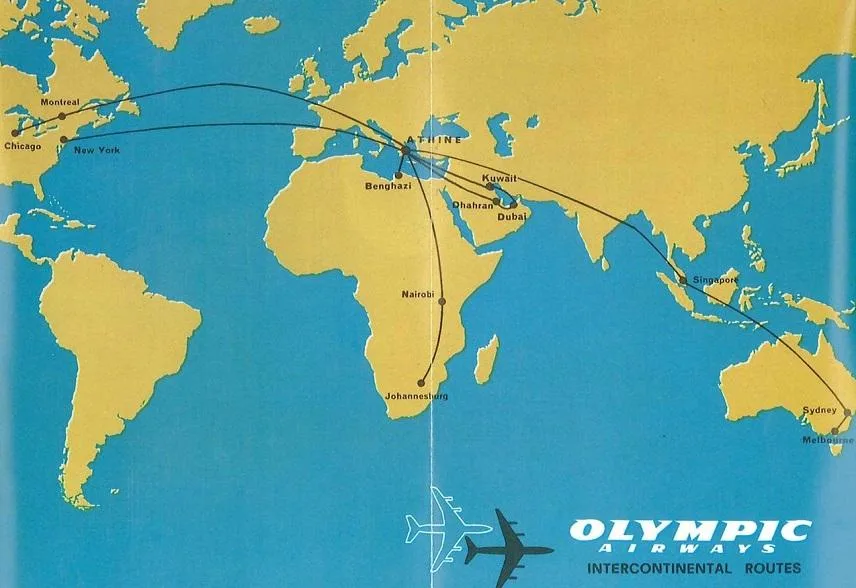
In 1981 and 1982, The Greek Herald also campaigned publicly for the restoration of Olympic Airways flights to Australia, publishing appeals, commentary and community pressure campaigns arguing that direct air links were essential for maintaining family, cultural and emotional ties between Greece and the diaspora during a period of increasing travel and migration between the two countries. The newspaper later reported that discussions surrounding the possible resumption of flights had intensified amid sustained diaspora lobbying and public pressure.
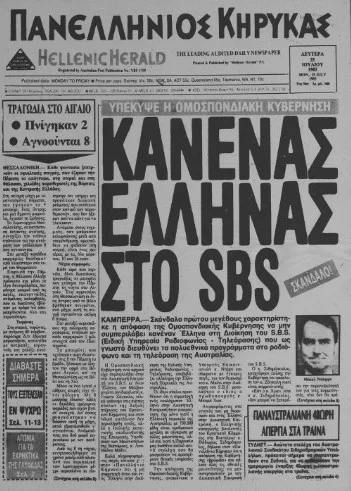
By the late 1980s, The Greek Herald had evolved into one of the most influential Greek-language media institutions in Australia and continued intervening directly in debates it viewed as central to the future of Australian Hellenism. In 1987, the newspaper strongly supported campaigns defending the independence of SBS during attempts to weaken multicultural broadcasting, framing the issue as part of the broader struggle for migrant representation within Australian public life.
Throughout the same period, the paper maintained sustained advocacy surrounding Greek language preservation, repeatedly supporting campaigns connected to Greek schools, bilingual education and university Greek studies programs. In 2000 and 2001, The Greek Herald extensively highlighted warnings surrounding the collapse of Modern Greek departments at institutions including the University of New England and published appeals from educators and community leaders urging Greek Australians to support the survival of tertiary Greek studies. The newspaper also strongly supported SBS Greek-language broadcasting and multicultural media during ongoing debates surrounding ethnic representation within Australian public life.
The newspaper also became a major mobilisation platform during the Macedonia dispute of the late 1980s and early 1990s, extensively promoting rallies, lobbying efforts and public campaigns connected to the issue, while continuing longstanding advocacy surrounding expatriate voting rights and the reunification of the Parthenon Marbles, including promoting international petitions, political support campaigns and public interventions by figures including Gough Whitlam and Jeff Kennett.
While the issues confronting the community evolved across generations, the newspaper’s broader mission to inform, advocate and preserve remained consistent.
Since entering a new chapter of leadership in 2019, The Greek Herald has continued to evolve its advocacy role through a new generation of journalists and contributors, expanding coverage into areas including mental health awareness, investigative reporting, women’s leadership, educational advocacy, multicultural justice initiatives, heritage preservation and community accountability journalism.
In recent years, the newspaper has increasingly used its platform to bring visibility to issues once considered taboo within parts of the Greek and Cypriot communities, particularly surrounding mental health, emotional wellbeing and suicide prevention. Through interviews, feature reporting and awareness campaigns, The Greek Herald has helped foster more open conversations around grief, depression, stigma and access to support services within culturally and linguistically diverse communities.
In more recent years, The Greek Herald has continued to expand its advocacy role across education, cultural preservation, social issues and accountability journalism.
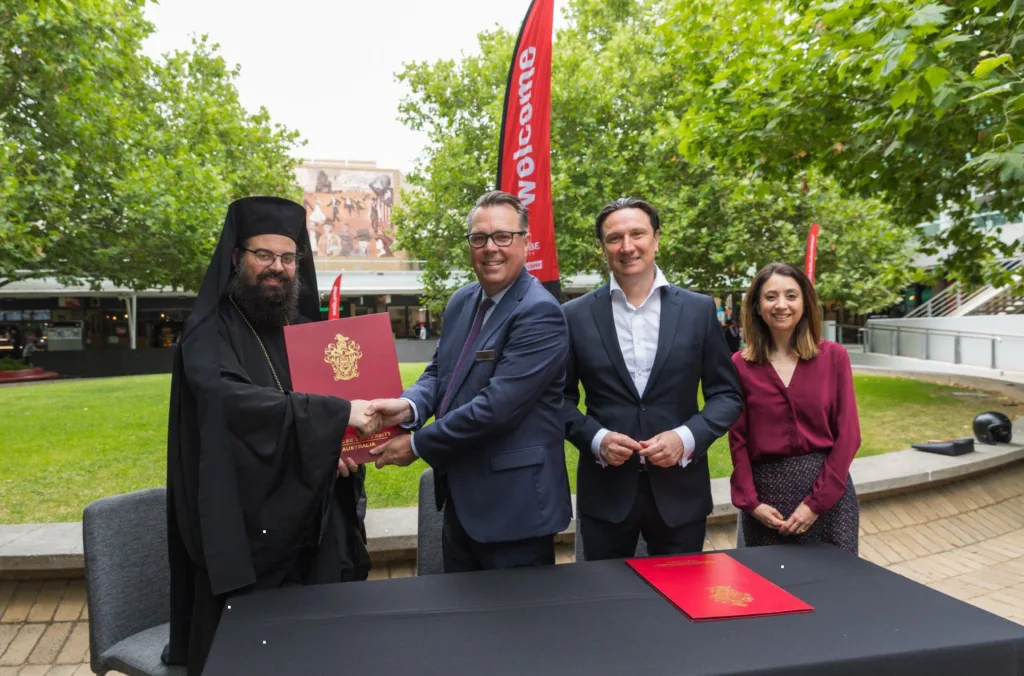
In 2020, the newspaper became a major platform in the campaign to save Greek Studies at La Trobe University, helping amplify community lobbying, petition campaigns and public pressure that ultimately contributed to the continuation of the program. Three years later, in late 2023, The Greek Herald partnered with the Macquarie University Greek Association to launch a petition campaign opposing proposals to discontinue Modern Greek Studies at Macquarie University. The campaign mobilised thousands of signatures and attracted support from academics, politicians, faith leaders and diplomatic representatives in both Australia and Greece, reinforcing the broader argument that Greek language studies remain central to cultural continuity and identity.

The newspaper similarly played a direct role in preserving grassroots cultural initiatives. In January 2024, reporting by The Greek Herald on the threatened cancellation of Greek Storytime sessions at Richmond Library in Melbourne prompted renewed public scrutiny and community mobilisation. Within days, Yarra City Council publicly confirmed the program would continue, with parents and organisers publicly thanking the newspaper for helping bring attention to the issue.
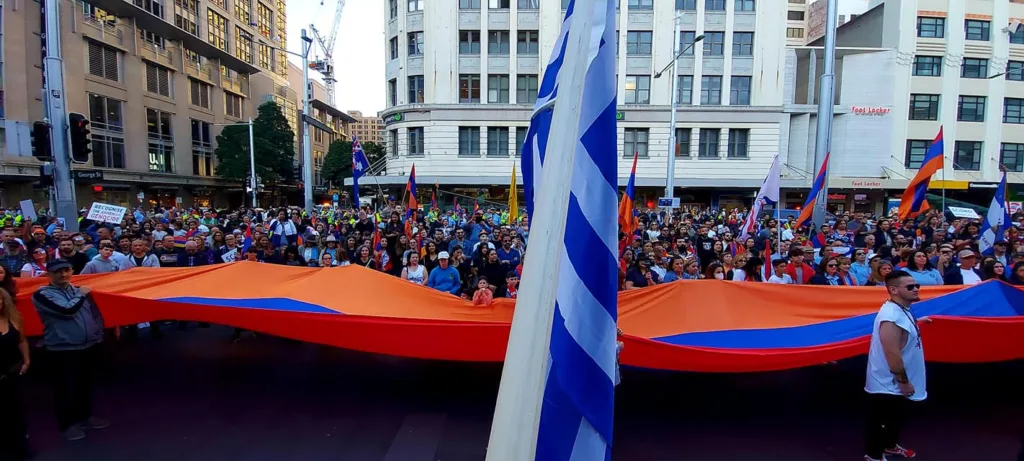
The publication has also increasingly engaged in broader questions of historical memory, multicultural justice and heritage advocacy. As a core media partner of the Joint Justice Initiative, The Greek Herald has supported campaigns for recognition of the Armenian, Assyrian and Greek genocides through coverage of parliamentary debates, commemorations and educational initiatives. The newspaper has likewise maintained a longstanding advocacy position supporting the reunification of the Parthenon Marbles, framing the issue as one of cultural justice and historical preservation.
Its advocacy role has also extended into the preservation of Greek Australian heritage within Australia itself. During the 2023-2024 heritage listing debate surrounding St George Greek Orthodox Church, reporting and opinion pieces published by The Greek Herald became part of Woollahra Council’s official public consultation materials as the community debated the future of one of Sydney’s most historically significant Greek Orthodox sites. The church and war memorial complex was ultimately heritage listed in February 2024.
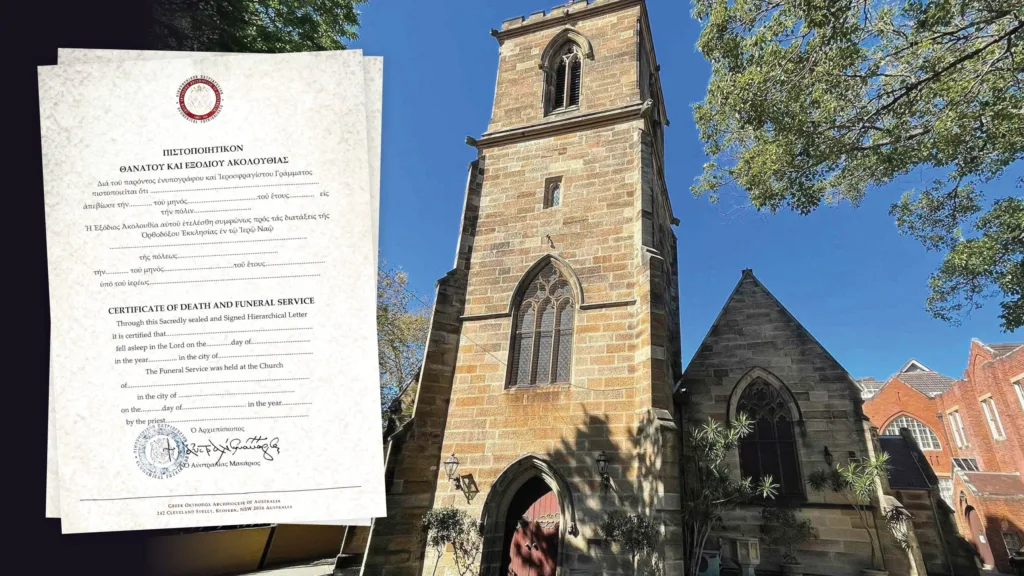
The publication has also continued its longstanding role in investigative journalism. One of its most significant watchdog investigations examined the Greek Orthodox Archdiocese of Australia’s “Certificate of Death and Funeral Service,” raising questions surrounding transparency, costs and the burden placed on grieving families. The investigation by journalist Pamela Rontziokos received major national recognition, including the Crikey Award for Investigative Journalism and the Walkley Foundation’s Student Journalist of the Year honour in 2024.
Similarly, it has played a substantial watchdog role in reporting on the historic sale of the Hellenic Village site in Austral, extensively documenting governance disputes, financial implications and debates surrounding the future use of the proceeds, while positioning itself as a central forum for questions of communal accountability and long-term stewardship.
The newspaper has also increasingly used its platform to elevate women’s leadership, health advocacy and social contribution through initiatives such as The Greek Herald Woman of the Year Awards. Established in 2024 to recognise often-overlooked contributions within the diaspora, the awards have honoured women across education, youth advocacy, community leadership and health awareness, including campaigns surrounding endometriosis and women’s wellbeing. In doing so, the initiative has expanded the newspaper’s advocacy role into broader conversations surrounding representation, inclusion and social change within the Greek Australian community.

Longtime publisher Theodore Skalkos once described The Greek Herald as a “constant struggle against the establishment and against those who fear the truth,” believing the newspaper’s duty was inseparable from the defence of Hellenism, truth and communal memory.
He later described the publication as “a valuable map of our collective memory and our political, social and cultural heritage.” One hundred years later, that role remains unmistakable.
The Greek Herald did not merely chronicle the Greek Australian experience. Across generations, it helped shape it – campaigning, advocating, mobilising, scrutinising, defending and preserving the voice of Australian Hellenism through some of its defining moments.
