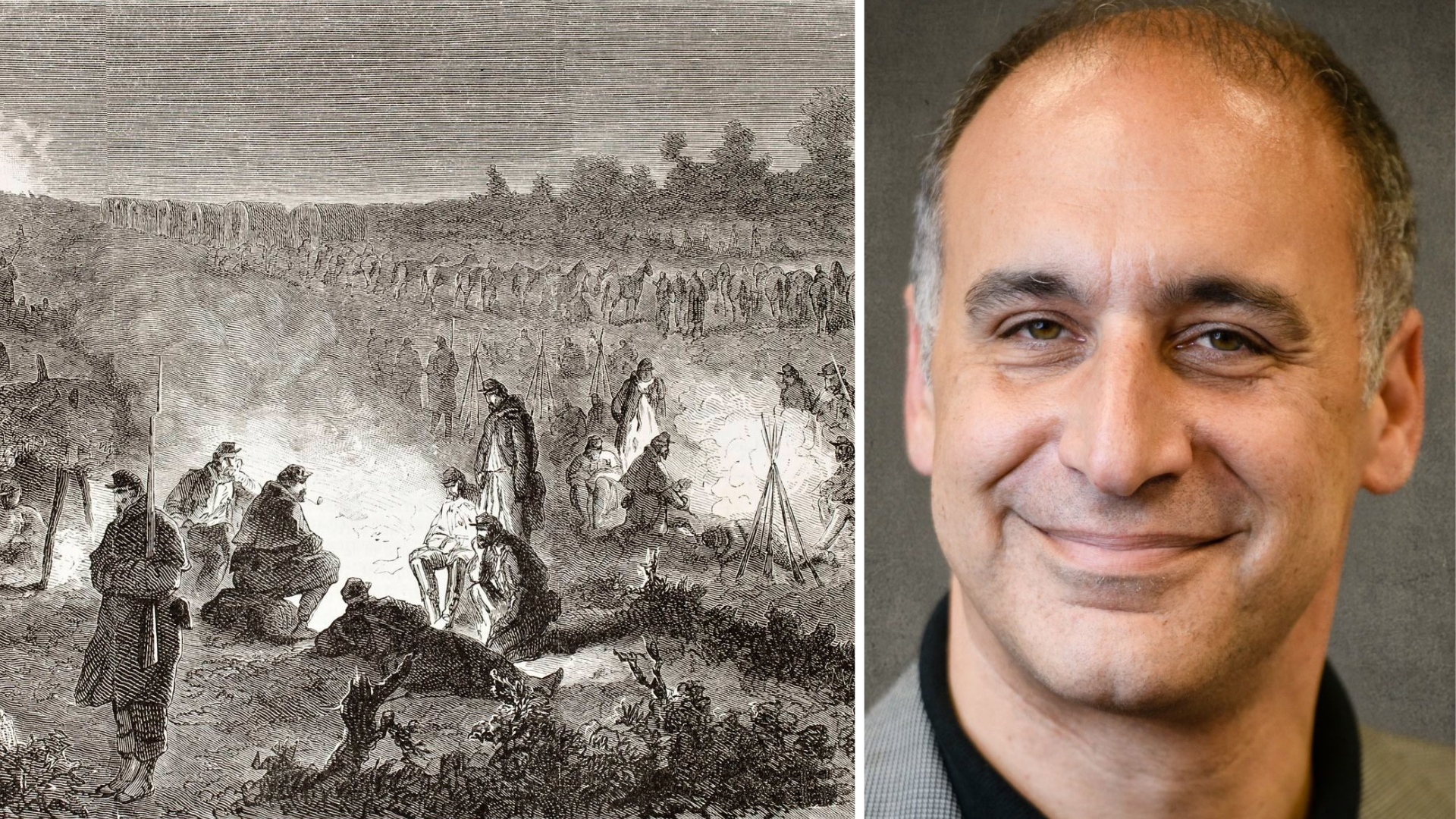
Political science lecturer Alexander Billinis will present an online-only lecture on the often overlooked role of Greek cotton merchants in the American Civil War, on Thursday, July 6 at 7pm, exploring the significant impact of Greek entrepreneurs on the war’s economic landscape.
The lecture is part of the Greek History and Culture Seminars offered by the Greek Community of Melbourne (GCM).
With a strong emphasis on the Greek Merchant Marine, Mr Billinis has extensively studied the historical contributions of Greek cotton merchants. His research reveals how these merchants played a crucial role in the global cotton trade during the turbulent era of the Civil War.
During the secession of eleven Southern states from the American Federation in 1861, the South faced formidable challenges. However, armed with their dominant cotton production and the institution of plantation slavery, the South hoped to garner support from cotton-dependent nations such as Britain and France.
Greek firms, with their operations spanning Britain, Egypt, the Mediterranean, and India, and a presence in the United States, including New Orleans, emerged as key players in the cotton trade. While relatively small in the American market, Greek cotton merchants held significant influence in the growing Egyptian cotton market. As the war loomed, many Greek cotton merchants moved out of the South, relocating to Alexandria and driving a four-fold increase in Egyptian cotton production.
The strategic foresight and market intelligence of these Greek merchants had a notable impact on the course of the war. Despite disruptions to British and French industry and soaring cotton prices, alternative supplies from Egypt, India, and Brazil prevented a complete collapse of textile mills. As a result, the Confederacy failed to secure international recognition and succumbed to the superior military, economic, and financial power of the Union.
Mr Billinis is a political science lecturer at Clemson University and an esteemed writer on subjects related to the Greek Merchant Marine, the Greek Diaspora, the Balkans, and Byzantium. With a Juris Doctorate in international law from American University and a master’s degree in history, Mr Billinis brings a multidisciplinary approach to his research.
Event Details:
- When: Thursday, June 29, 7pm
- How: Livestreamed on the Greek Community of Melbourne’s Facebook and YouTube.

