
By Ilias Karagiannis
The Pontian dialect, the music, the songs of Diogenis Ainatzis are not just a field of creation for him. It is his personal battle with time, a way of proving that tradition does not belong to museums, but to those who have the power to carry it into the future.
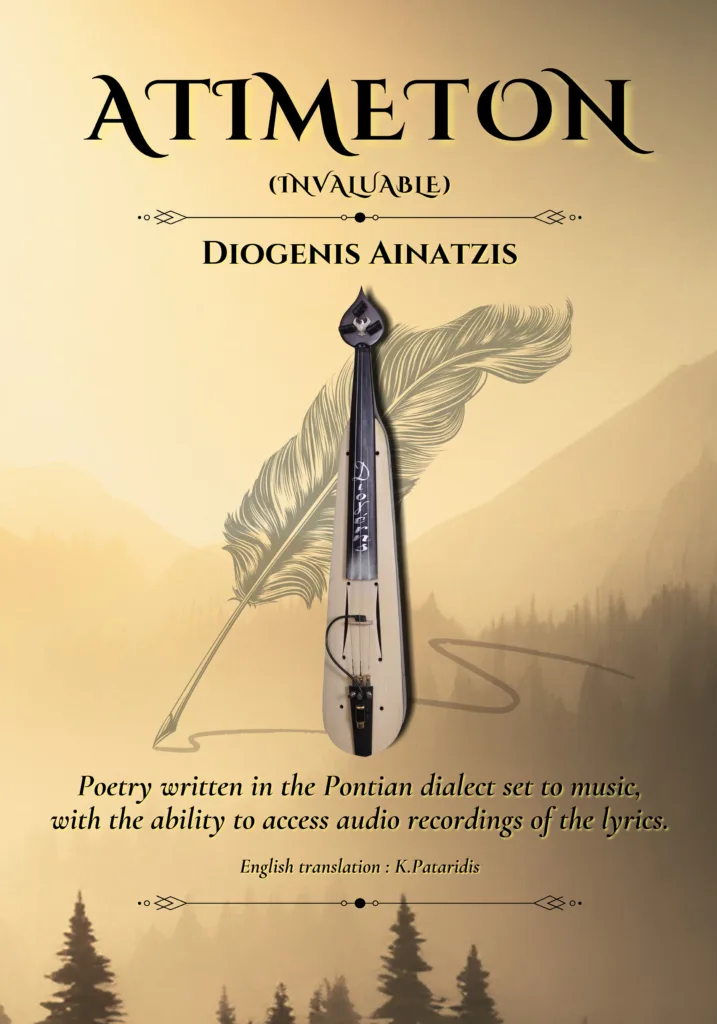
Atimeton, his book published in 2023, was one such act. Now, in 2025, his work has been translated into English and is becoming a bridge with the rest of the world. It is not just a translation. It is an opening. A bet that even in an era of homogenisation, languages like Pontic can find new interlocutors.
He says he does it out of responsibility. Responsibility towards the ancestors who spoke this language, towards those who love it, but also towards those who have never had the opportunity to know it.
It is no coincidence that Australia becomes the first major stop of his trip to promote the book. The Greek community of Australia is not just a community of expatriates. It is a place where Greekness is constantly recreated, in an environment that challenges it to adapt, to endure and to evolve.
There, where the distance from Greece is measured in miles but not in hearts, Diogenis has found a second home. He has returned seven times, and now, on his eighth tour, he is preparing to present a work that aspires to be a point of reference for the rescue of the Pontian dialect, to unite through words, music and rhythm, all those who want to feel the vibration of a civilisation that has survived the storms of history.
The Greeks of Australia, many of whom were born thousands of miles away from Pontus, hold something of that world within them, and Diogenis returns it to them through his lyrics and melodies.
In the interview with The Greek Herald that follows, he talks about the past and the future, about language and music, about his challenges and hopes. Above all, it reminds us that no cultural heritage can be saved on its own. It needs voices that raise it, hands that carry it, and people who refuse to let it go.
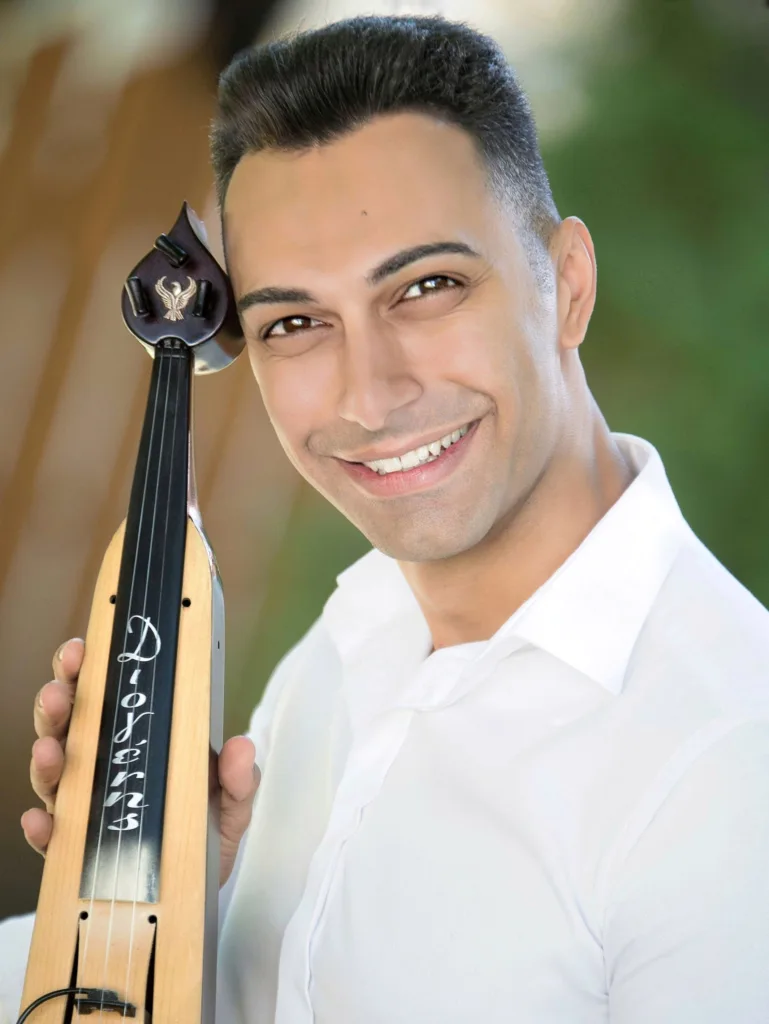
Atimeton was published in 2023 and takes a big step in 2025, since it has now been translated into English. What prompted you to proceed with the publication of the book in an international language, such as English?
The biggest motivation for the English edition was the same one that pushed me from the beginning to write the Greek edition of the book. The burden of informal responsibility towards delivery. Those of us who have the ability to contribute to the preservation, dissemination and perpetuation of our intangible cultural heritage in any way we can, must do so.
Also, for the English version, my relationship with the Australian community was also a springboard, which developed after my successive tours on this continent. They have given me, and continue to give me, the opportunities to interact with the Greeks and to listen to their concerns and needs both on a teaching and personal level. Finally, for the English edition, I would like to thank my good friend Kostas Pataridis, for his selfless and willing contribution.

You have developed strong ties with the Greek community of Australia. What has impressed you most from your previous contacts with the Greek diaspora here?
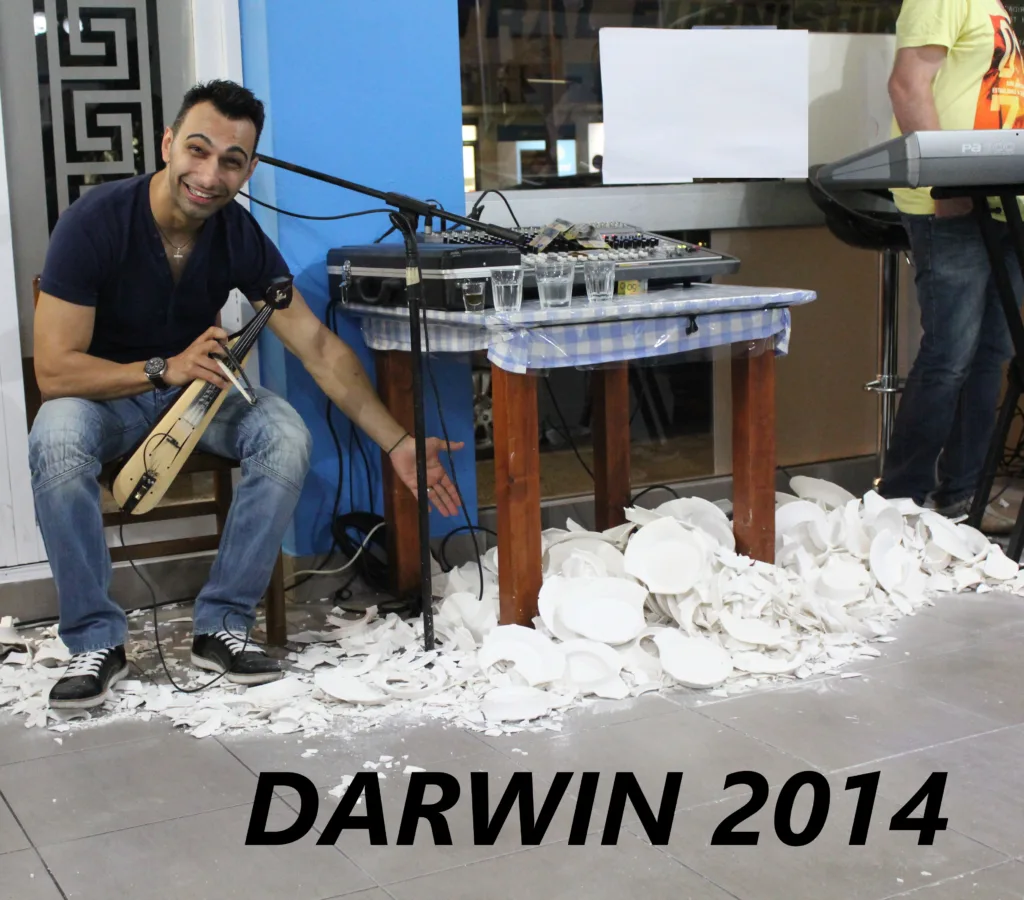
I have the blessing through my artistic career, to have made (and continue to do) many trips in my life, to many countries of the world. With the Australian community, however, I believe that I have developed a very special relationship of mutual love, respect and appreciation. It is no coincidence that in my seven tours so far, I have visited four different cities in Australia, making a total of 153 appearances in all kinds of cultural events, dances, nightclubs, etc.
Next May-June, it will be my eighth music and writing tour. But what impresses me most about the Australian community is the excess of love for Greece and everything Greek. And you know, this is particularly difficult to achieve by young people who were neither born, nor lived, nor live in Greece. In my opinion, it demonstrates the principles by which Greeks in Australia raise their children and this is particularly encouraging for the survival and preservation of the Greek element in this distant continent.
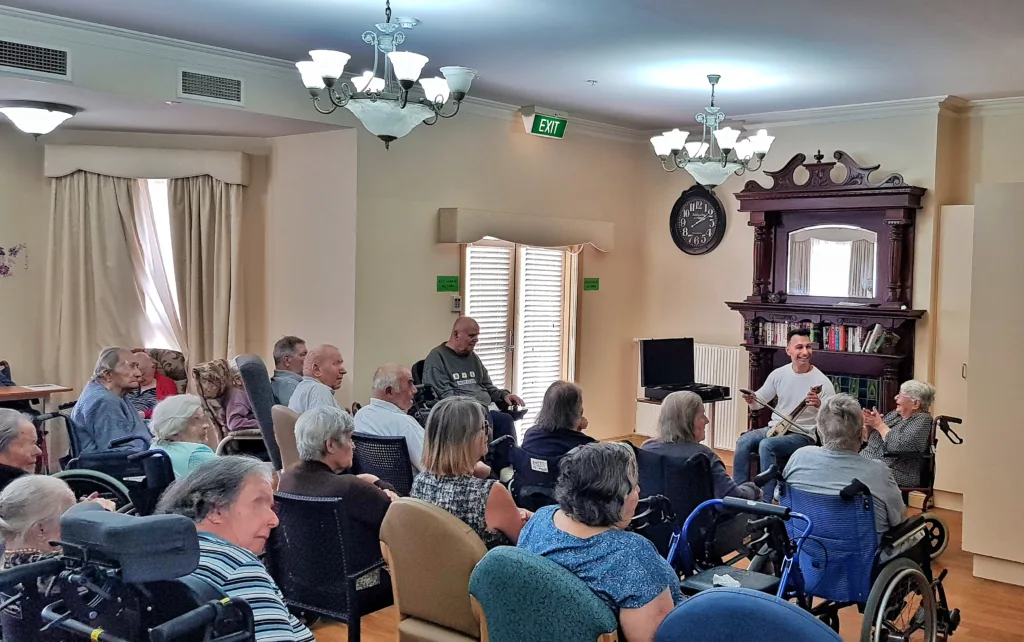
Your Atimeton tour in Australia will include presentations and concerts. What can our readers expect?
This tour, as its name suggests, includes several interactive seminars, lectures and presentations of the book, through which one can be initiated into the unique paths of the Pontic dialect, gain a lot of knowledge about its historical origin and course, admire its direct connection with the ancient Ionian dialect, as well as reflect on its future and its survival. Also, to gain a lot of important knowledge about Pontian music, as well as even more about our intangible cultural heritage as a whole.
As for the concerts, those who can stand a lot of dancing and fun until dawn, all they have to do is join us for one of the upcoming lives. The evenings we spend in Australia are unique and each one is a special experience, which everyone must live, regardless of whether they are of Pontian origin or not.
Do you think that the Pontian dialect can gain a new audience in the diaspora and why not in Australia, even among people with no direct connection to Pontus?
It would be rather utopian to believe that in the times of linguistic homogenisation in which we live that this would be easy. Initiation into a dialect that is not used as a means of everyday communication is something particularly difficult and requires effort and a lot of dedication from those interested, especially when experiential learning of it no longer exists. However, I do not cease to hope and try with all the means at my disposal to attract people to the history, music and tradition of Pontus as a whole.
I imagine that you have concerns about the survival of the Pontic dialect, hence the publication of a book that can act as a guardian of its perpetuation. How can the diaspora, and especially the Greek Australian community, contribute substantially to its preservation and development?
Clearly, I have many concerns, which I have developed, to a very large extent, in the book. Anyone who reads it will understand exactly what I am saying and my arguments. The Greek diaspora in Australia, as well as in any other country, can contribute by supporting such efforts with all the means at its disposal, material and otherwise. More specifically, the organised Pontic and Greek community in general, can contribute with its resources and connections to such projects, which, as you mentioned, are the guardians of the perpetuation of tradition. The point is that those in charge in key positions have the will to do so.

You are also a master of the Pontian lyre. How did your involvement with this traditional instrument begin, and what does it mean for you personally?
I’ve been playing the lyre all my life! My involvement began at the tender age of 10 years and has never stopped since! The trigger was my love since childhood for tradition in its entirety. For me, the lyre is the extension of my hand. After almost 30 years with the lyre in my hands, I can’t imagine my life without it. For me, it is a living organism, another member of my family. The one that understands me 100% in every phase of my life, positive or negative.
What are your future plans in the field of music and writing? Are there any new creations or collaborations you’d like to share with our audience?
The effort never stops! As long as my hands and my mind hold, I will continue to create. To write lyrics, books, music, etc. My life is shared, half in the real world and half in the studio. This is how I work, this is how I proceed and this is how I express myself better. So, expect more news soon… Stay tuned !

And a message to our community in view of your tour in May
I want to thank you for the interview, through which I am given another podium to get in touch with the Australian community that I love so much. I want to wish everyone health, happiness and a social environment full of honest people. With those who we didn’t get to know on my previous tours, I’m waiting for you in my upcoming shows in Melbourne and Sydney, to get to know each other and see each other privately.
Diogenis will be playing at Pontoxeniteas NSW’s highly anticipated Winter Wonderland Gala 2025 on Saturday, May 31, at 6.30pm at The Grand Roxy in Brighton-Le-Sands, Sydney.
Event Details:
- WHAT: Pontoxeniteas NSW Winter Wonderland Gala Fundraiser
- WHEN: Saturday 31 May 2025, 6.30pm
- WHERE: The Grand Roxy, 128 The Grand Parade, Brighton-Le-Sands NSW 2216
- DRESS CODE: Cocktail
- TICKETS: $140 for adults, $100 for youth (17 years and under)
- TICKETING LINK: https://www.trybooking.com/CZBCH
