As The Greek Herald marks its centenary in 2026, prominent Greek Australian community leaders, writers and advocates have penned letters to future generations, imagining what Hellenism in Australia may look like 100 years from now.
Written as messages to the year 2126, the reflections explore the enduring importance of language, faith, family, culture and community, while also confronting concerns about assimilation, globalisation, technology and the changing nature of identity. Together, they form a powerful time capsule of the hopes and anxieties shaping Greek Australian life today.
Some contributors write with optimism about the resilience of the diaspora, while others pose difficult questions about whether traditions, institutions and even newspapers themselves will survive. Yet across every letter runs a common thread: a belief that culture can endure, so long as future generations continue to live it, question it and pass it on.
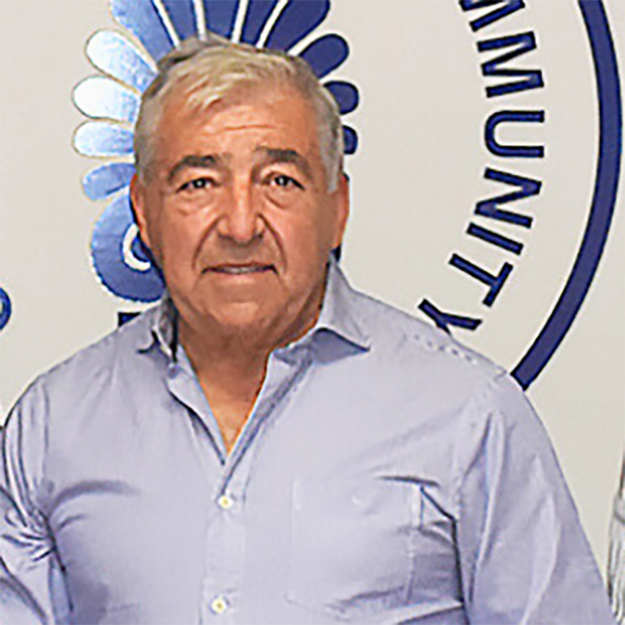
President of the Greek Orthodox Community of New South Wales,
Con Apoifis
To those who open this letter one hundred years from now,
Greetings from the year 2026.
I write to you as President of the Greek Orthodox Community of New South Wales with a profound sense of duty, gratitude, and confidence in the generations to come. Though a century may separate the writing of these words from their reading, I trust that the enduring character of our people will continue to bridge that distance across time.
Our Community in this age stands upon foundations laid by men and women of courage, perseverance, and vision. Those who came to Australia from Greece and Cyprus left behind familiar shores and faced uncertainty in pursuit of opportunity, stability, and a better future for their families. They arrived with limited means, yet with immeasurable strength of spirit. Through hard work, discipline, and sacrifice, they transformed hope into achievement.
From modest beginnings they established institutions, schools, associations, businesses, and charitable endeavours. They created not only livelihoods, but a living community. They preserved language, culture, memory, and a sense of responsibility to one another. Their legacy is visible not merely in buildings or organisations, but in the values they transmitted to their children and grandchildren.
We who live in 2026 are proud to be both Greek and Australian. We honour the inheritance of Hellenism — its language, history, philosophy, democratic ideals, and reverence for learning — while embracing the freedoms, opportunities, and civic spirit of Australia, the nation that welcomed our people and enabled them to flourish. These identities have not competed with one another; they have strengthened one another.
We live in an era of extraordinary advancement. Technology has transformed communication, commerce, education, and medicine. Distances once vast have been diminished. Knowledge is more accessible than at any previous moment in human history. Yet progress alone does not guarantee wisdom. Prosperity alone does not secure harmony. The true measure of any society remains the character of its people, the strength of its institutions, and the way it treats the vulnerable, the young, and the elderly.
As you read these words in your own time, I wonder what course history has taken. Have nations chosen cooperation over conflict? Have leaders governed with integrity and restraint? Has innovation served the common good? Have families remained strong, communities cohesive, and citizens mindful of their obligations as well as their rights?
Whatever your circumstances, permit a voice from the past to offer this counsel.
Guard your freedoms, for liberties surrendered are seldom easily restored.
Honour your family, for it is the first place where duty, respect, and character are learned. Preserve your language and culture, for they carry the memory of a people.
Support your community, for no individual prospers in isolation.
Value education, for informed minds are the safeguard of a free society. Practice generosity, for prosperity acquires meaning only when shared.
Remember always that every generation is both heir and trustee. We inherit institutions we did not build, opportunities we did not create, and sacrifices we did not personally bear. Our responsibility is therefore clear: to strengthen what is worthy, to reform what is deficient, and to pass forward a society better than the one we received.
If the Greek Orthodox Community of New South Wales continues to stand proudly when this letter is read, then many generations between us and you will have fulfilled that responsibility with honour. Acknowledge them with gratitude. If difficulties have arisen, meet them with courage, discipline, and unity. If success surrounds you, receive it with humility and use it for the benefit of others.
My hope is that future generations still know their heritage, respect their elders, encourage their youth, and contribute meaningfully to the wider nation of which they are a part.
May the Hellenic spirit of resilience, learning, and civic virtue endure. May the bonds of family and community remain strong.
To you, the custodians of tomorrow, I send respect and confidence from the year 2026.
With sincere regard,
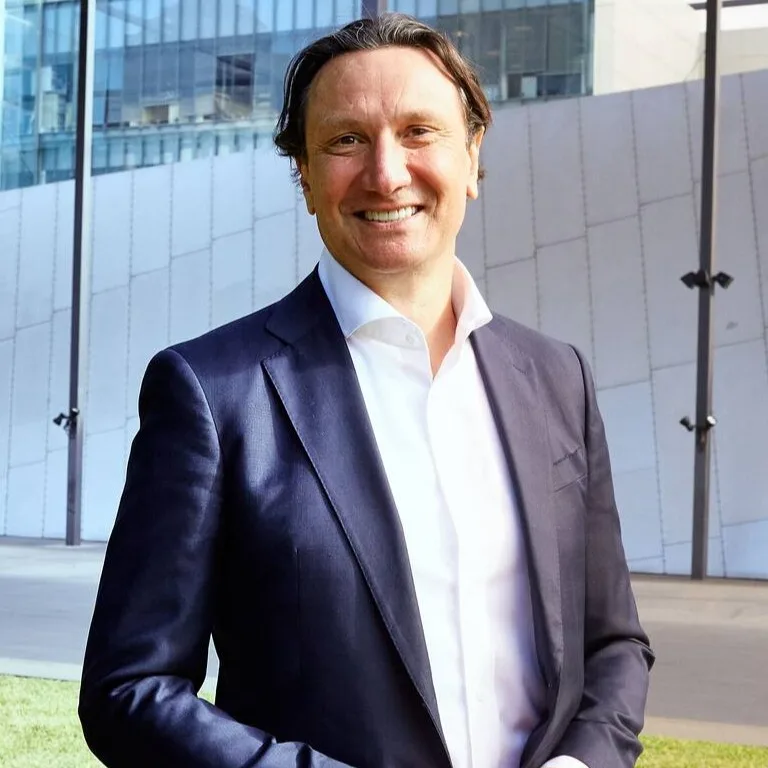
President of the Greek Community of Melbourne, Bill Papastergiadis OAM
Dear Greek community,
Australia is a rich and diverse society built on the back of policies of cosmopolitanism and multiculturalism. Migrants, particularly those who came from Greece in the 1950s and 60s, played a key role in shaping this outcome.
As Greek Australians in 2126, you should feel proud of the work of previous generations who laid the foundations of a great country. As of 2026, our work is unfortunately not done. In 2026, language retention for non-Anglo communities is still at low levels, while broader societal appreciation of cross-cultural contributions is being challenged. Anti-immigration voices are gaining traction and even some in our community are caught up in this conversation.
Our country prides itself as the leading voice globally on diversity and multiculturalism. In 2026, we will, as the Greek Community of Melbourne, continue to challenge non-migratory policies and ethnic monotony and in so doing, remind Australians of the value of our historic contributions as Greek Australians.
In 2126, we expect our Greek Australians to be more comfortable in their understandings of the foundations that built this great nation of Australia. We expect all Australians to acknowledge the movements predating 2026 that led to policies that underpin our multicultural societal norms.
At the same time, our connection with Greece in 2026 needs to be strengthened. We desperately need economic and health treaties between Greece and Australia. We applaud the right to vote for Greek citizens abroad granted in 2026 and look forward to future representation in the Hellenic Parliament. So much still needs to be done to connect our two lands.
In 100 years from now, Greek Australians will be closer than ever to the homeland. Travel time will have been significantly reduced, and technology will allow your connections to be faster and smoother.
However, I implore you to not allow technology to override your connections. You must, in 2126, reach out and connect personally with Greece. In so doing, you will feel the warm glow of the sun which is made even warmer through interactions with Hellenes – famously understood as “filoxenia” and filotimo”. This warmth will be as strong as it ever was provided you make the effort to learn the language and embed yourself in its culture. If we forget our history and our culture, then the landscape will not be able to speak lightly into our ears as we gently pass through Greece’s terrain.
Kind regards,
Bill Papastergiadis OAM
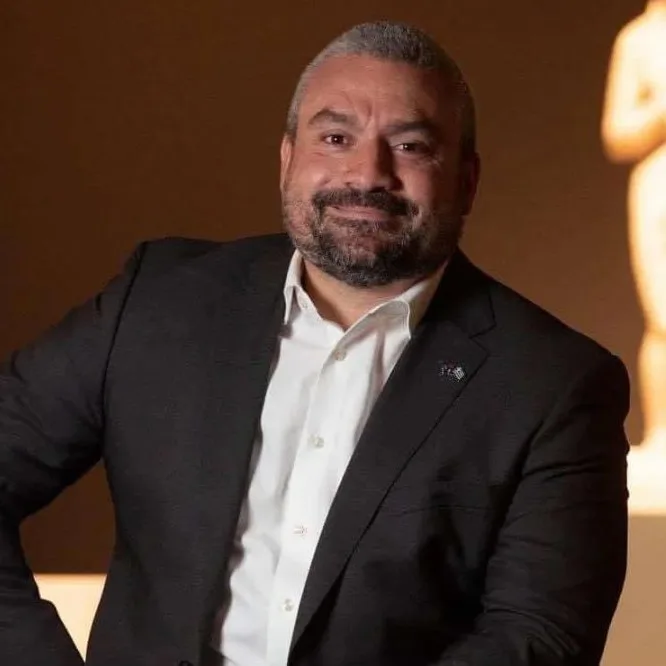
President of the Greek Orthodox Community & Church of Canberra,
John Loukadellis
Dear future generations of the Greek Australian community,
As you read this letter a century from now, I write with both hope and responsibility, hope that our community has endured, and responsibility to remind you of the foundations that made that endurance possible.
The strength of our identity has always rested on three pillars: our language, our faith, and our culture. These are not separate elements, but deeply interconnected forces that define who we are. If one weakens, the others follow. If they are nurtured together, they become unbreakable.
The Greek language is more than a means of communication, it is the vessel of our history, philosophy, and soul. It carries the voices of our ancestors and connects us across generations and continents. It is essential that you continue to invest in Greek language education, both formally through schools and informally within the home. Speak it, teach it, and live it. Advocate for government support and grants to ensure Greek language programs remain accessible, funded, and valued within Australia’s multicultural framework. Without the language, the connection to our heritage fades.
Equally vital is our Orthodox faith. The Church has always been the heart of our community, a place not only of worship, but of gathering, identity, and continuity. Work closely with your Church. Support it, strengthen it, and remain united through it. Encourage participation from younger generations and ensure that it evolves where necessary, without losing its sacred traditions. Remember this truth: without our faith, we risk losing the very essence of who we are.
Our culture; our festivals, music, dance, food, and customs, must continue to be celebrated with pride and purpose. These are not merely events; they are living expressions of our identity. Organise and attend cultural festivals, commemorate national days, and ensure that Greek traditions are visible and vibrant within Australian society. Promote them widely, invite others to share in them, and take pride in showcasing who we are.
Never underestimate the power of visibility. Continue to proudly fly the Greek flag, not only on national days, but as a symbol of enduring identity. Let it represent unity, resilience, and pride. It is a reminder to yourselves and to others that the Greek spirit remains alive and strong in Australia.
Engagement with government is crucial. Build strong relationships with local, state, and federal bodies to secure funding and recognition for Greek schools, churches, and cultural initiatives. Advocate as one united voice. The future of our institutions depends on your ability to work strategically within the systems that shape Australian society.
Above all, remain united. Communities do not survive by chance, they survive through effort, cooperation, and shared vision. Support one another, involve the youth, and lead with purpose.
If you have remained strong in your language, steadfast in your faith, and proud of your culture, then you have honoured those who came before you and ensured a future for those who follow.
With faith, pride, and hope,
John Loukadellis
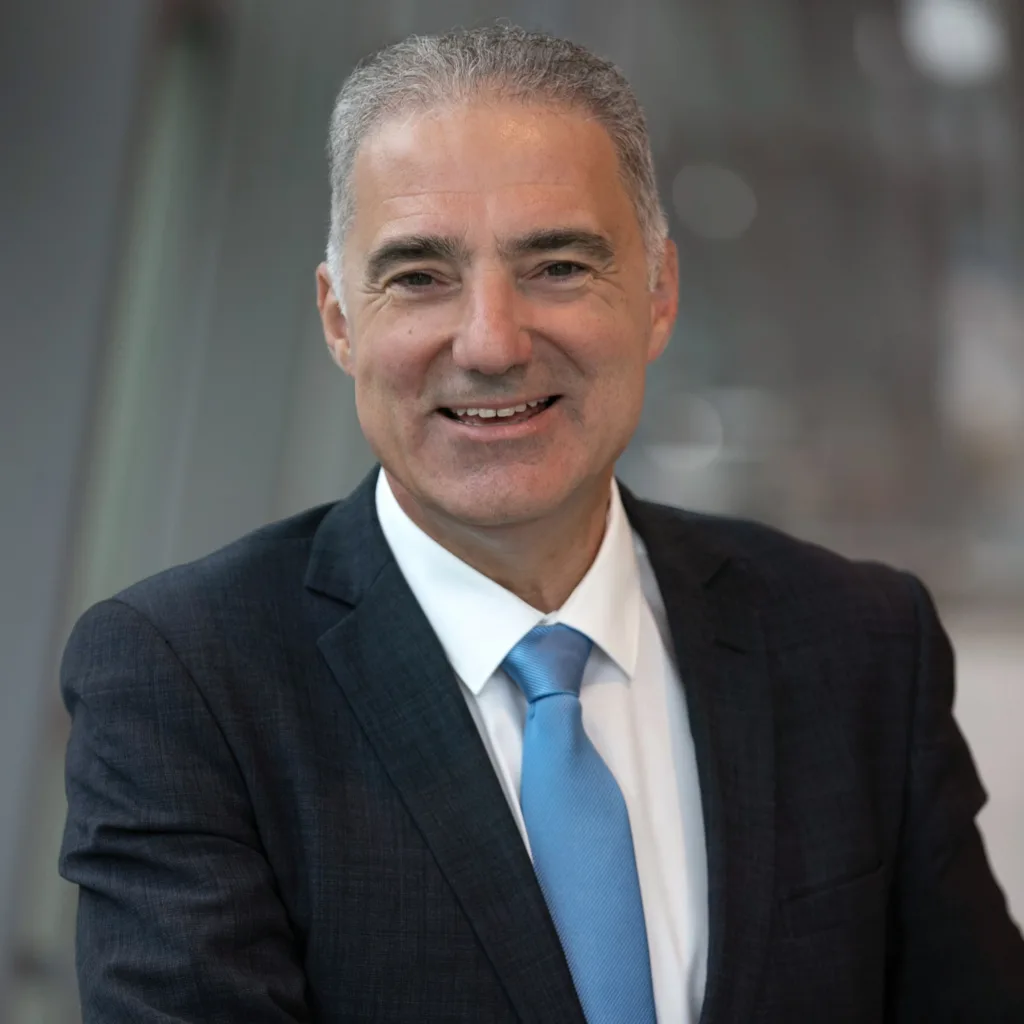
Executive Director at Business Sydney,
Paul Nicolaou
Dear Greek Australians of the future,
If this letter has found its way to you a century from now, then it means something remarkable has endured – the spirit, identity and contribution of Hellenism in Australia. That alone is worth celebrating.
As I write in 2026, our community stands on the shoulders of generations who arrived on these shores with courage, sacrifice and an unshakeable belief in building a better life. They brought with them language, faith, family values, entrepreneurship and a deep sense of Philoxenia (φιλοξενία) that has enriched Australia in countless ways. Their legacy is not just in the churches, businesses, and institutions they built, but in the values they instilled in us.
My hope is that, 100 years from now, you continue to honour that legacy, not as something static, but as something living and evolving. Hellenism has never been about standing still. It is a civilisation that has adapted across centuries, across continents, and across challenges. It is both ancient and modern at once. I trust that you have found new ways to express what it means to be Greek in Australia, while remaining anchored in the timeless principles of culture, religion, language, family and community.
I wonder what the world looks like for you. Technology will no doubt have transformed how you live, work and communicate. Perhaps the idea of a “newspaper” as we know it today has evolved into something we can barely imagine. Yet I sincerely hope that the essence of storytelling, truth-telling and community connection remains. Media has always played a vital role in binding communities together, preserving identity and giving voice to shared experiences. Whether in print, digital or forms yet to be invented, may your community continue to value platforms that inform, unite and inspire.
To you, the future custodians of our heritage, my advice is simple: stay connected. Stay connected to your history, your language, your faith, and most importantly, to one another. It is easy in a fast-moving world to lose sight of where you came from. But identity is a source of strength, not limitation. It gives you perspective, resilience and a sense of belonging.
At the same time, embrace the broader Australian story. One of the great successes of Greek Australians has been our ability to integrate while maintaining our distinct identity. We have contributed to every aspect of Australian life, business, politics, the arts, sport, and philanthropy, while proudly remaining Greek. I hope you continue to lead, to give back, and to play a role in shaping the nation you call home.
I also encourage you to support and uplift one another. Community is not just a word; it is a responsibility. Look after those in need, celebrate each other’s successes, and invest in the next generation. The strength of our community has always come from unity and shared purpose.
Finally, never underestimate the power of culture. Whether it is through language, music, dance, food or faith, these are not just traditions, they are expressions of identity and continuity. Protect them, nurture them, and pass them on.
If you are reading this 100 years from now, then you are the living proof that what was built before you has endured. Now it is your turn to carry it forward.
With pride, hope and confidence in your future,
Paul Nicolaou
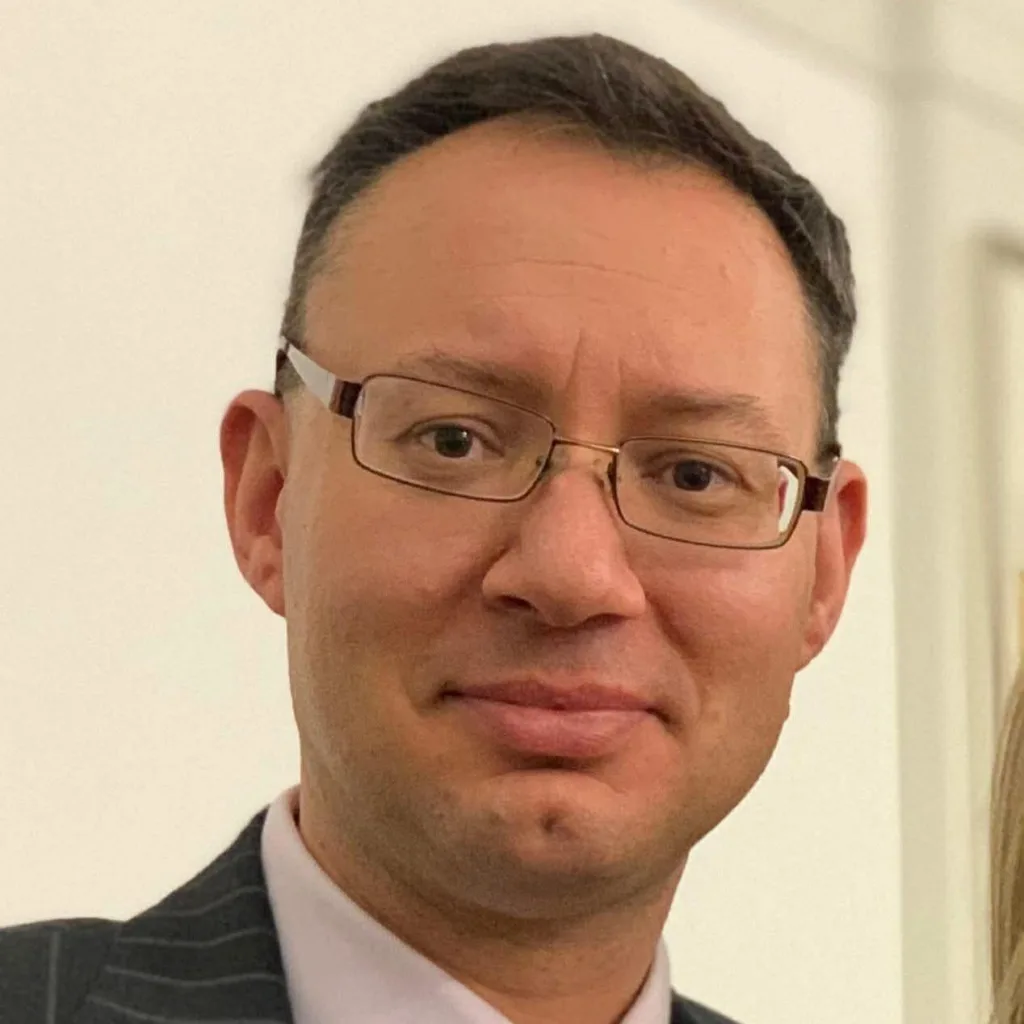
Melbourne lawyer and writer, Dean Kalimniou
To you, Greek Australians of the year 2126,
If this letter has survived, then so too, in some improbable and stubborn form, have we.
I write from a time when we still argue about pronunciation. When the word παροικία is deployed with the solemnity of a theological term, even as its substance flickers uncertainly between memory and performance. When we congratulate ourselves annually on the vitality of our language, while quietly enrolling fewer children in its study. You may recognise the tone. It is one of affectionate anxiety.
I wonder what you call yourselves.
Do you still say “Greek,” with that curious insistence that exceeds geography, language, and sometimes even knowledge? Or has the term thinned into something ornamental, like the columns that adorned our suburban facades without bearing any weight? Perhaps you have invented a new word, one more honest, or more forgiving.
In my time, we are fond of commemorations. We excel at anniversaries. We gather beneath banners, we invoke continuity, we speak of heritage as though it were a fixed inheritance rather than a negotiation conducted daily, often imperfectly, between forgetting and invention. We believe, or at least we say, that the future is secured by remembering. Yet even as we remember and build pyramids to our own ontological fears of mortality, we curate, we select, we polish. There are things we do not say.
I suspect you will know this too.
You may have discovered by now that identity is not a possession but a practice, one that cannot be outsourced to festivals, institutions, or the occasional well-attended speech. If Hellenism has endured among you, it will not be because we preserved it intact for you, carefully sealed like a relic, but because you found ways to make it speak again, perhaps in forms we would scarcely recognise, and perhaps, if we are honest, would instinctively distrust.
Forgive us for that.
We were raised to believe that authenticity resided behind us. That somewhere, in a village we left or never quite knew, in a language we spoke imperfectly, in customs we repeated without always understanding, there existed a truer version of ourselves. It is difficult to relinquish such consolations. They lend coherence to the dislocations of migration. They render loss bearable.
Yet I suspect that your task, as it was ours, is not to recover an origin, but to decide what to do with its fragments.
As for this newspaper, whose centenary we now mark with suitable solemnity, I wonder what shape it has taken in your time. Perhaps it no longer exists as paper, that curious object we still hold in our hands, inked with the reassurance of permanence. Perhaps it has become something else entirely, a shifting archive, a true Herald of change, or perhaps, more modestly, a memory that surfaces occasionally, like a familiar melody whose words are half-forgotten but Herald something exciting, or poignant.
If it has survived, it will not be because it preserved us as we were, but because it allowed itself to be unsettled by who you have become.
Allow me, then, a small piece of advice, offered without authority and with some hesitation.
Resist the temptation to become what others expect of you.
There will always be those who prefer you as a symbol: industrious, family-oriented, culturally rich in ways that are easily displayed and comfortably consumed. There will also be those within your own ranks who will insist upon a singular, correct way of being Greek, as though identity were a matter of compliance rather than encounter.
You may listen to them, but do not obey them too closely.
Permit yourselves contradiction. Permit yourselves the quiet erosion of certainty. Permit yourselves, above all, to speak in your own voice, even if it sounds unfamiliar at first, even if it causes discomfort, even if it fails to resemble what we once thought we were preserving for you.
For if there is one lesson our century offers, it is this: That a culture does not disappear because it changes. It disappears when it ceases to be lived.
And so, if you are reading this, if you are still asking what it means to belong, if you are still, in your own way, arguing about pronunciation, then perhaps we have not failed you entirely.
With a measure of hope, and a measure of doubt, from those who came before you, πολλά φιλιά,
Dean Kalimniou
Solicitor and Notary Public, Constantine D. Vertzayias
If there is a Greek Australian reading this in 100 years, it certainly will not be in a format that we know today – May 2026.
As Australians we are concerned about the American- Israeli war against Iran and the effects on our economy – record high petrol prices and the fear of a recession.
As Greek Australians, we participate in our vibrant communities in various cultural and social events on a frequent basis. In Sydney, the discussion centres around the sale of the Kemps Creek land – a 40 hectares parcel of land “gifted” to the Federation of Hellenic Associations (OFSE) around the year 2000 and now sold for about $120 million. The associations will soon decide how the proceeds will be distributed.
For 30 years, the vision has been to (1) establish a Pan- Hellenic Fund to be used for the community in the fields of education and welfare. The tax-deductible nature of the Fund would ensure its continued growth and serve the community for many generations. Future reader, was the Pan- Hellenic Fund established? Was the Pan- Hellenic Centre built? Did it serve the Community’s needs? Does it still exist?
The greatest concern of Greek Australians is the maintenance of the Greek language, heritage and identity. In a rapidly evolving world, globalisation and the advance of AI, languages are being steamrolled by English. The problem is compounded by government and university policies which sideline languages and humanities in favour of science. One by one, universities in Australia have closed Greek language courses. Is the Greek language taught in Australia and around the world in schools and universities in 2126? Indeed, do schools and universities exist or is all learning completed remotely online?
As Greeks of the diaspora, we are concerned about the threat posed by Turkey against Greece. Turkey questions Greece’s sovereign rights relating to territorial waters, continental shelf and EEZ. The Turkish Parliament long ago resolved that should Greece extends its territorial waters in the Aegean to 12 miles then this would be a cause for war. Did Greece extend its territorial waters? Was there a war between Greece and Turkey or did the countries resolve their differences by going to the International Court of Justic? And what of Cyprus 52 years after the Turkish invasion, ethnic cleansing and colonisation and the establishment of an illegal entity in the militarily occupied territory? Has the Cyprus issue been resolved? On what basis… Are there two states in Cyprus? Has the Cypriot identity merged? Do Greek Cypriots still consider themselves a part of Hellenism?
Another concern is the brain drain from Greece, very low birth rate and resultant declining population. What is Greece’s population in 2126? Have all European countries’ populations been dramatically reduced? Are Europeans a small minority behind Asians and Africans in the world? Indeed, do national frontiers exist anymore? Have European countries subsumed their national identity within a European identity? Did the EU evolve into one sovereign state with former national frontiers becoming regional / local government units?
Whilst these lines were penned, the USA’s Artemis project to the moon was underway with expectations of a moon landing and a Mars landing in the 2030s. When did we return to the Moon? When did we land on Mars? Have permanent colonies been established? Do they belong to all humankind or have major power blocs hewn spheres of influence on the Moon and Mars?
Did we end up failing humanity by engaging in a nuclear war? When did China become the world’s superpower? How did China handle its role? How did we manage the threats of climate change and pollution? Did we finally realise that the Earth is humanity’s common homeland and it did not make sense to fight over ownership of territory, resources and religion? Do institutionalised religions still exist? Does the traditional family unit exist? Did singularity take place in 2038? Do robots / AI rule the Earth and are in the process of colonising the solar system?
Is this being filtered by AI?
Constantine D. Vertzayias
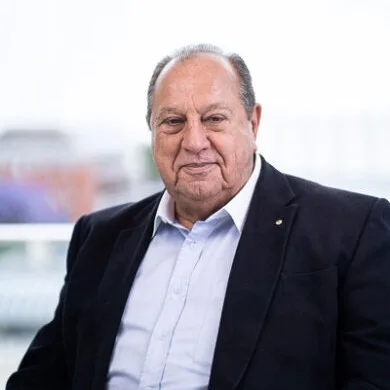
Founder and Chairman of Maras Group, Theo Maras
To the Greek Australians of one hundred years from now,
I write this as the son and grandson of migrants who came to Australia with very little except resilience, sacrifice, and hope for a better future. My family came from the Aegean island of Ikaria, where life revolved around subsistence farming, fishing, family and faith. People survived on what they could grow, catch, or trade. There was little money, little industry and very little certainty about tomorrow.
In 1928, in the aftermath of World War I, my grandfather left Ikaria and migrated to Australia, leaving behind his wife, five children and parents in pursuit of opportunity. He worked from sunrise to sunset, seven days a week, enduring years of separation before eventually reuniting his family in Adelaide. Through hard work he purchased land in Walkerville and established a market garden, using the knowledge he had brought from Greece to build a future in a new country.
What he taught us was simple: poverty and misery could only be overcome through education, sacrifice and opportunity.
Those values shaped my generation. With four families living under one roof, my cousins, sister and I were encouraged to embrace education and the opportunities Australia offered us, while never forgetting our Hellenic language, culture, history and Orthodoxy. We learned to adopt the Australian way of life while holding firmly to the values that had carried our family across oceans.
Now, as I write this to future generations, I reflect on how dramatically the world has changed even within my own lifetime. I began my professional life in architecture using drawing boards and drafting arms. I witnessed the rise of computers, mobile phones, global connectivity and the digital revolution. What once seemed unimaginable became ordinary within a generation.
And now we stand at the beginning of another transformation: artificial intelligence.
I believe artificial intelligence will fundamentally reshape the future of humanity. It will play a major role in food production, helping feed growing populations more efficiently and sustainably than ever before. It will transform mining through automation and precision technologies, particularly in the discovery and management of rare earth materials and energy resources. In healthcare, artificial intelligence will assist in diagnosis, preventative medicine and remote monitoring in ways we are only beginning to understand today.
Transport will also change profoundly. I believe future generations will simply call for a vehicle that arrives autonomously and transports them safely to their destination. Workplaces will continue evolving into collaborative and highly intelligent environments supported by advanced technologies capable of reshaping productivity and creativity across every industry.
But while technology will change the world around you, I hope the essence of who you are never changes.
Never lose sight of your culture, your language, your faith, your family values and your respect for democracy and freedom. The strength of Hellenism has never simply been survival. It has been the ability to adapt, to contribute, to build communities and to create opportunity for the next generation without forgetting where we came from.
If there is one piece of advice I leave for you, it is this: embrace change, but do not let change erase you.
Hold onto that Hellenic ethos of “family first”. Work hard. Pursue education. Make sacrifices when necessary. Remain proud Australians of Hellenic heritage. And no matter how advanced the world becomes, never forget that opportunity has always belonged to those willing to reach for it, not only for themselves, but for the generations that follow.
Theo Maras
