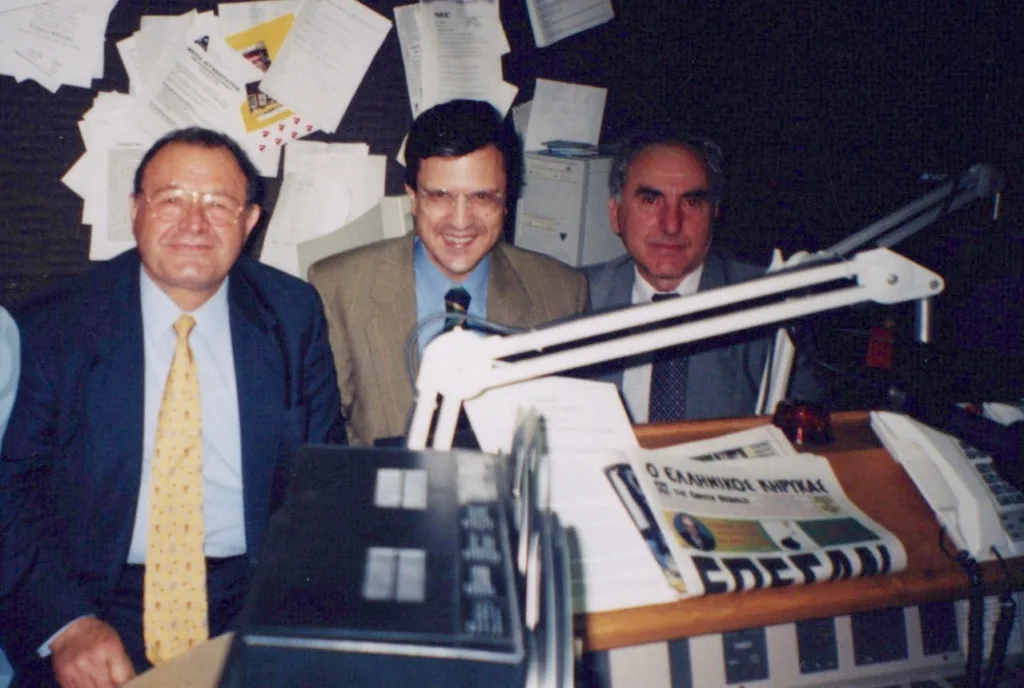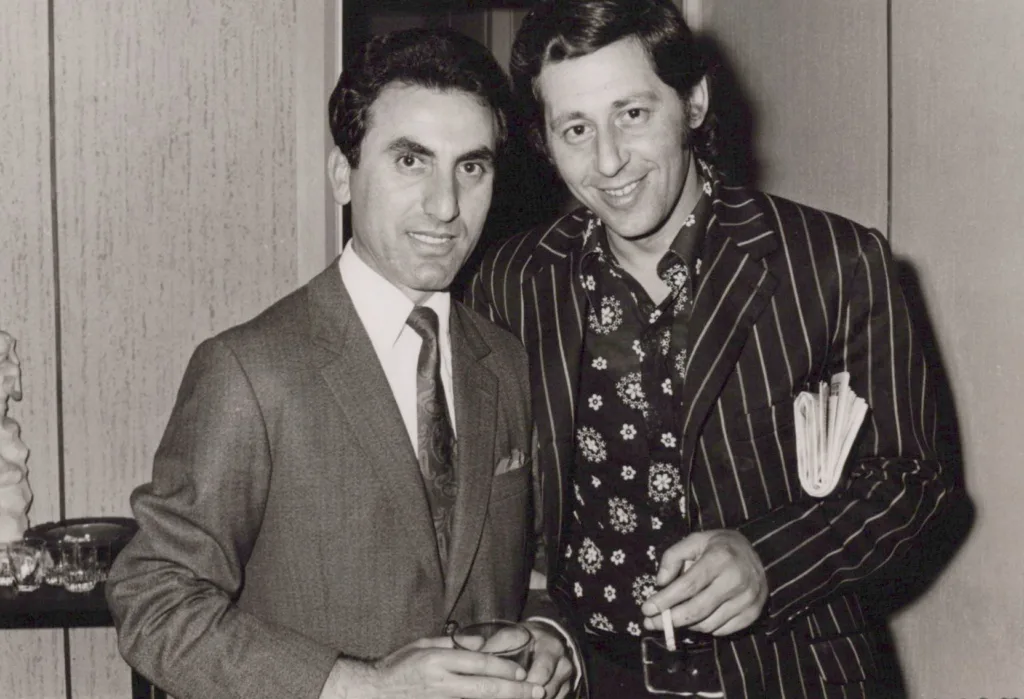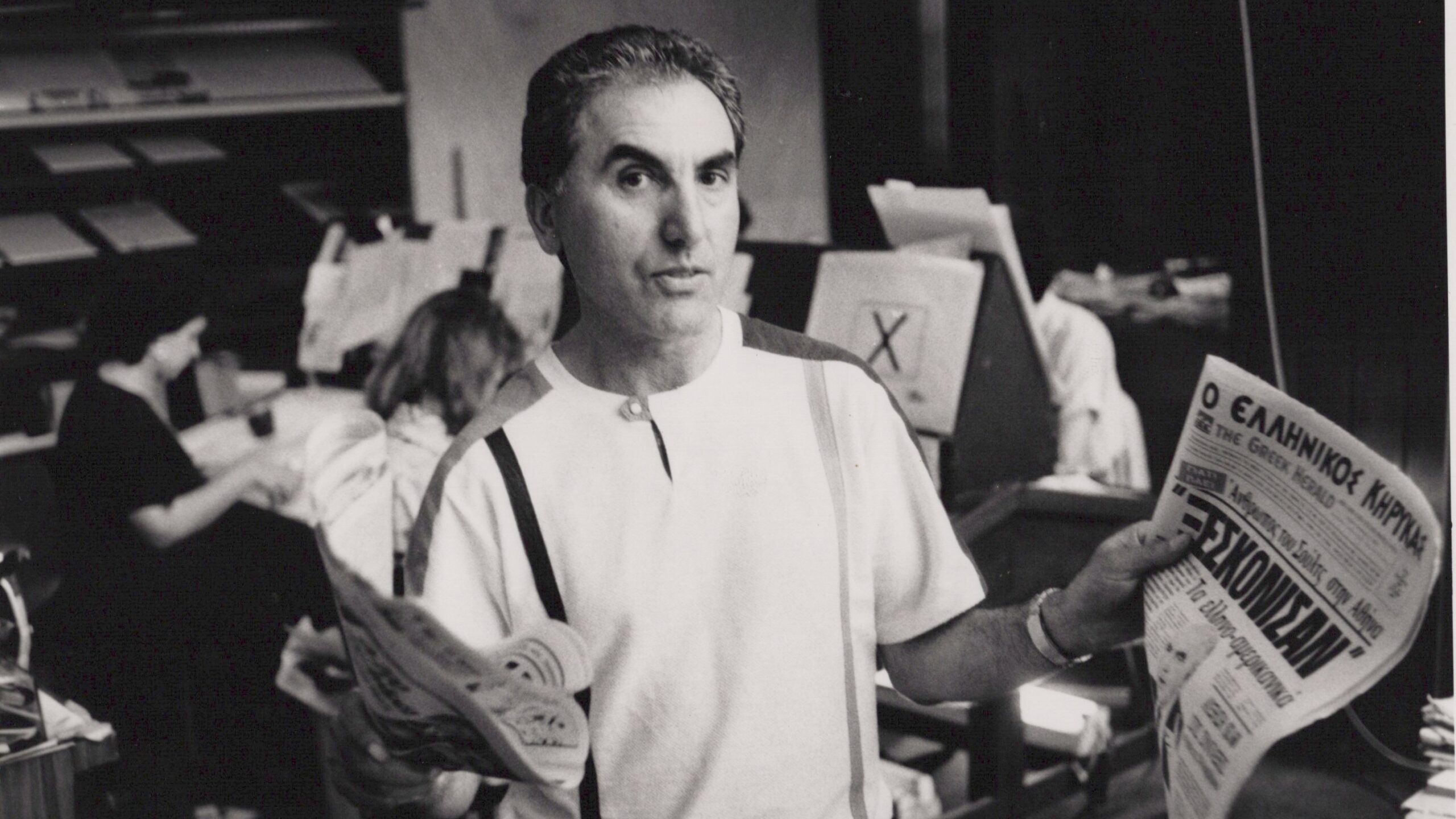
There are some people who seem destined to spend their lives among newspapers, deadlines, ink and history. For more than six decades, Michael Mystakidis has lived precisely that life — documenting the triumphs, struggles and evolution of Greeks in Australia while becoming one of the defining figures of diaspora journalism himself.
For over 40 years, he stood at the editorial helm of The Greek Herald, helping shape the newspaper into one of the most influential voices of Hellenism outside Greece.
As The Greek Herald celebrates its centenary in 2026, Mystakidis reflects on the publication’s extraordinary journey with deep emotion and pride.
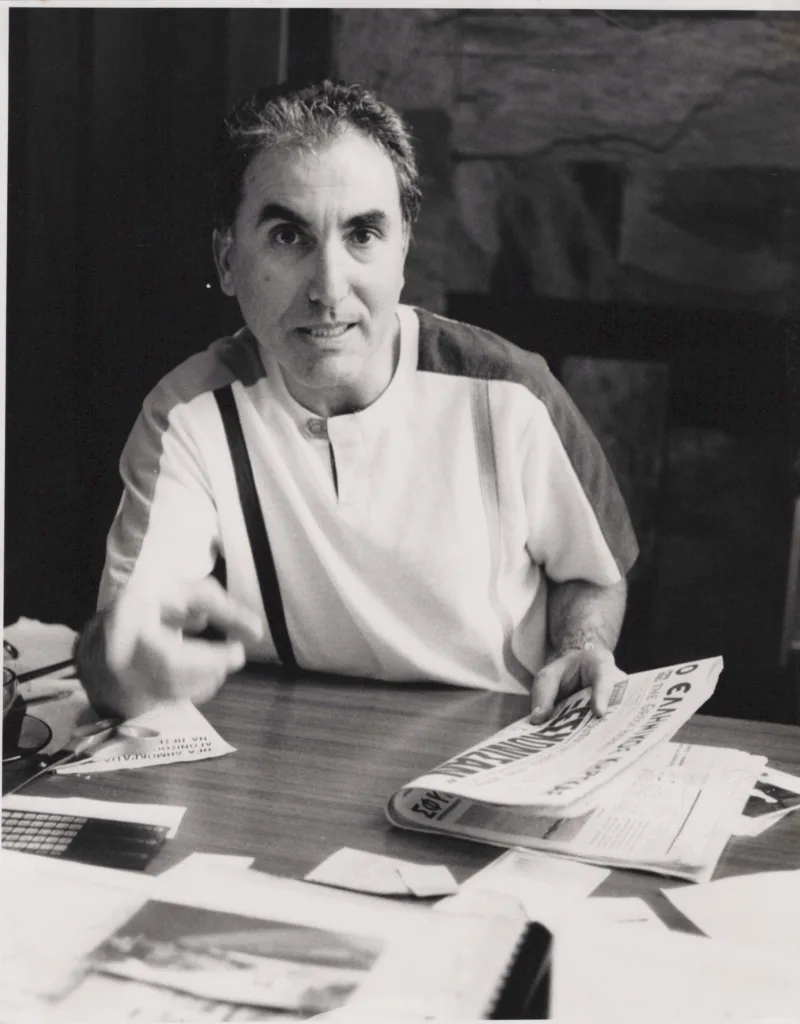
“It is a moving and awe-inspiring journey through the newspaper’s long history,” he says.
“A history filled with success, recognition and respect from both Australian and Greek authorities, acknowledging its contribution to the multicultural fabric of this country where it was born.”
For Mystakidis, however, the true success of the newspaper was never measured solely by awards or influence, but by the unwavering support of the community itself.
“If there is one defining element behind this successful journey, it is the warm embrace The Greek Herald received from the Greek men and women of Australia from 1926 until today,” he said.
That relationship between newspaper and community has defined his entire career.
Mystakidis first entered journalism in 1961 as a sports reporter at Ethniko Vima (National Tribune), during an era when the Greek-language press served as a lifeline for migrants scattered across Australia.
There was no internet, no mobile phones and no instant communication with Greece. Newspapers carried not only news from the homeland, but also the emotional weight of belonging.
“Those wonderful old years,” he recalls, “there was neither internet, nor mobile phones, nor today’s advanced communication systems and information technology media.”
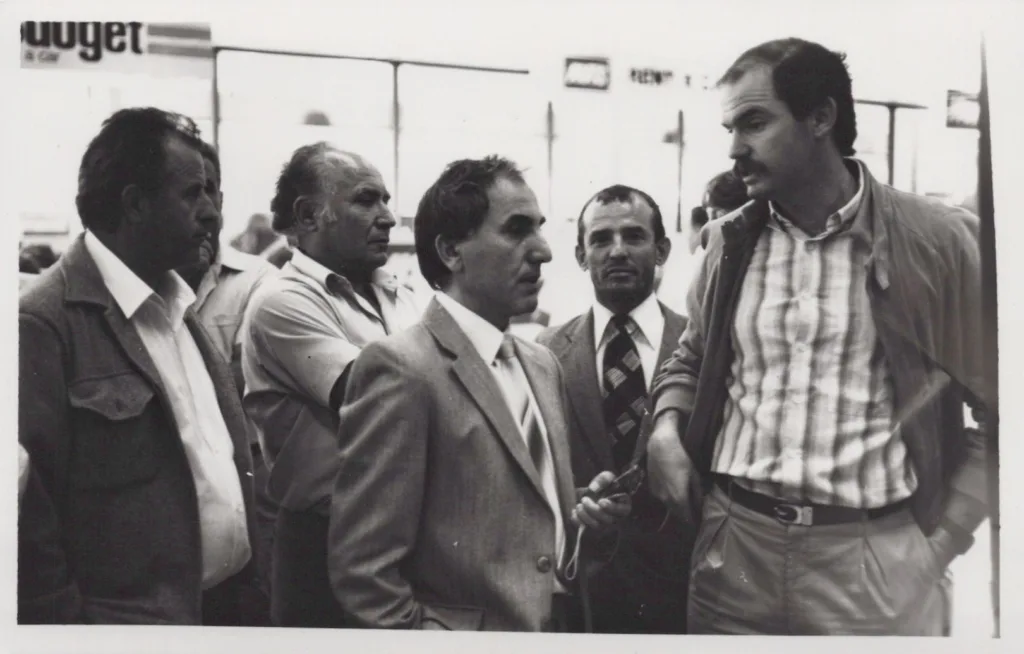
Mystakidis remembers the extraordinary demand for Greek-language newspapers during those decades, with people waiting outside the printing presses in Sydney in the early hours of the morning just to secure a copy fresh off the press.
Sport — particularly football — became central to migrant life. Greek migrants, often isolated by language barriers and demanding work schedules, found community and comfort at suburban football grounds.
“The Greek migrant found in football his entertainment, but also an outlet from confinement, loneliness, the monotony of ‘work-home, home-work’ and isolation from the social life of hospitable Australia,” Mystakidis says.
“At the grounds he found compatriots, conversed, let off steam, found relief and there created his circle of friends.”
At the same time, Greek Australian newspapers became cultural institutions. They informed, educated and connected a rapidly growing diaspora navigating life in a new country while trying to preserve its language and identity.
Mystakidis says The Greek Herald quickly became much more than a newspaper.
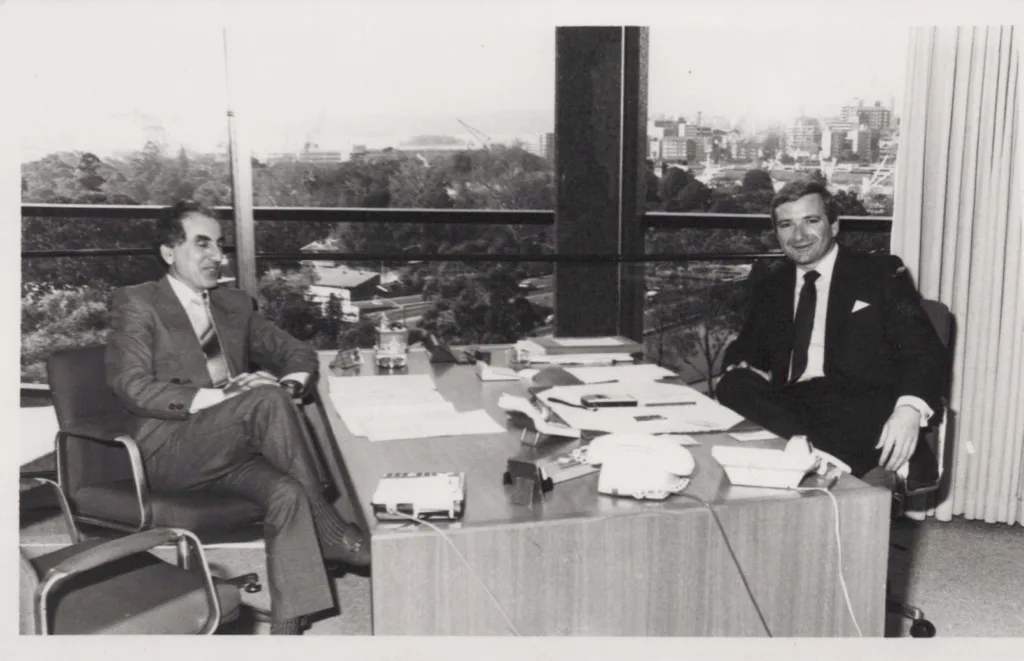
“It was born during an era of racial discrimination, when migrants were insulted as ‘wogs’ for speaking Greek publicly,” he says.
“Yet even then, the small Greek community regarded their newspaper, the Panellinios Kirikas, as their ‘paper flagship’.”
Only a year after beginning at Ethniko Vima, Mystakidis rose to become Editor-in-Chief and Production Director. His association with The Greek Herald formally began in 1977 in a moment he still remembers vividly.
“A few days after returning from Greece, I heard a knock at my home in Coogee,” he recalls.
“When I opened the door, I saw publisher Theodoros Skalkos standing there. ‘I want you to work beside me,’ he said. And so, I officially became part of The Greek Herald.”
That decision would shape the rest of his professional life.
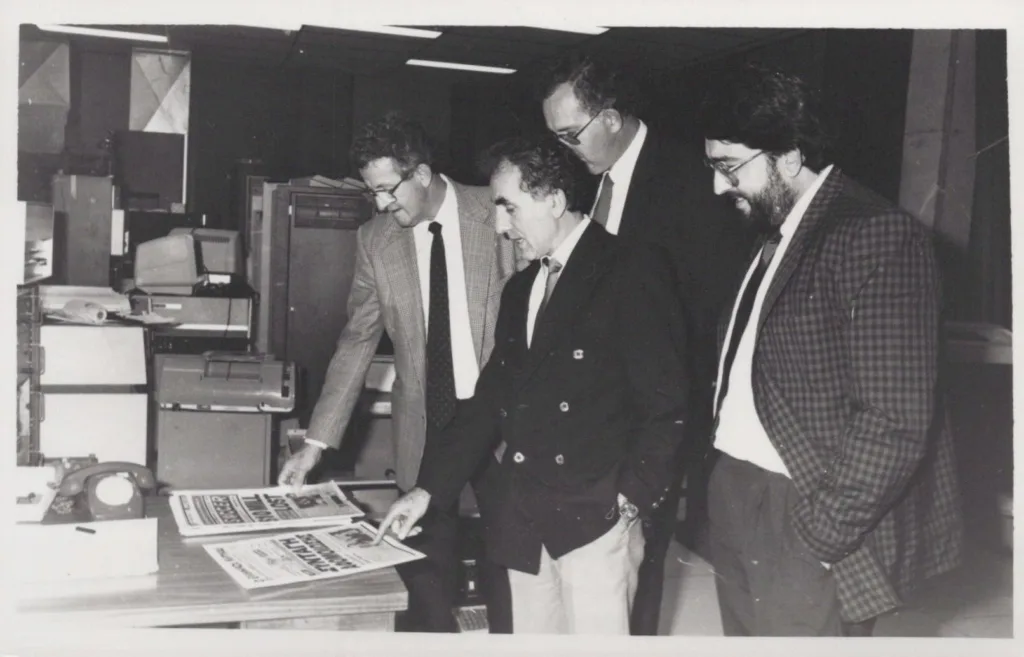
Mystakidis soon became editor-in-chief, a role he held until 2025 — initially full-time and later part-time – while remaining one of the paper’s most influential editorial voices.
Throughout those decades, he approached journalism as a vocation grounded in ethics and responsibility.
“I believed that journalism is a vocation and that its quality depends on the education and character of the journalist,” he says.
“I wanted always to be objective, fair to everyone and, like Diogenes with the lantern… I searched for and wrote ONLY the truth, however bitter it may have been.”
His editorial philosophy rested on what he calls the triptych of “Verification – Documentation – Confirmation”, insisting every questionable claim be rigorously examined before publication.
At the centre of much of this history stood the late Mr Skalkos – publisher, businessman and one of the towering figures of Greek Australian media.
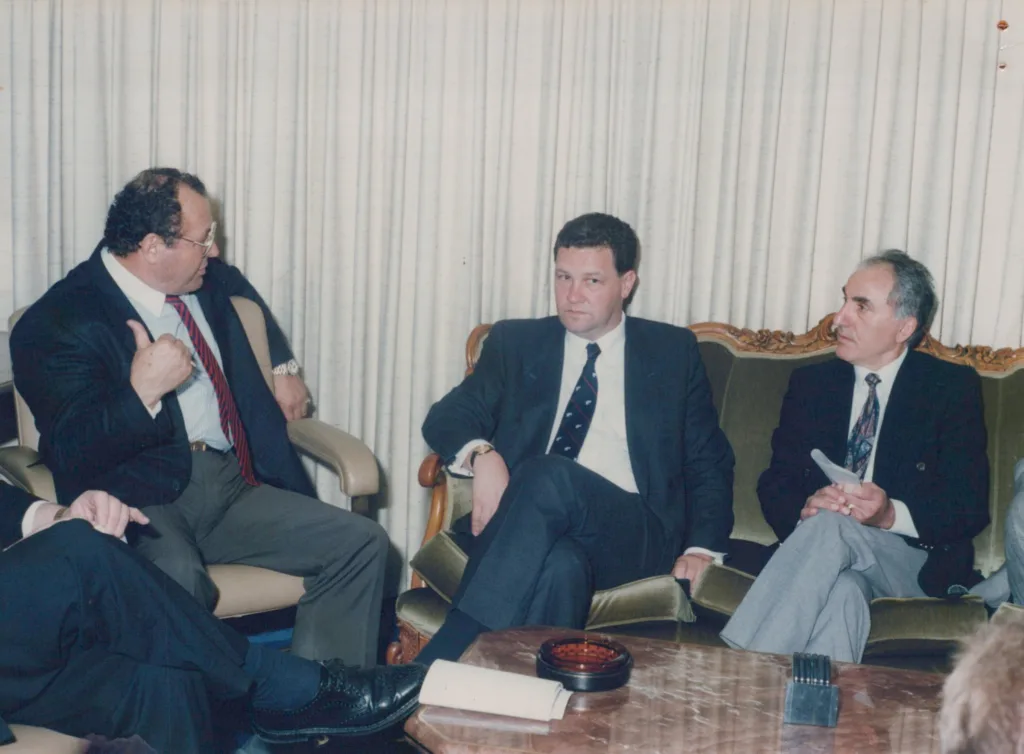
Mystakidis describes him as “a unique figure in the history of Greek Australia and the diaspora,” remembering him as both visionary and deeply complex.
“I bow deeply to his greatness, his heart, humour, courage, patriotism and his care for the people who worked at The Greek Herald,” he says. “He was a phenomenon.”
Beginning life as a cane cutter in Queensland, Skalkos built Foreign Language Press into one of Australia’s largest multilingual publishing operations. Alongside The Greek Herald, the company printed dozens of newspapers and magazines serving migrant communities across the country.
Mystakidis recalls that the 1980s marked the golden era of the publication.
“Without doubt, the 1980s were the golden era,” he says.
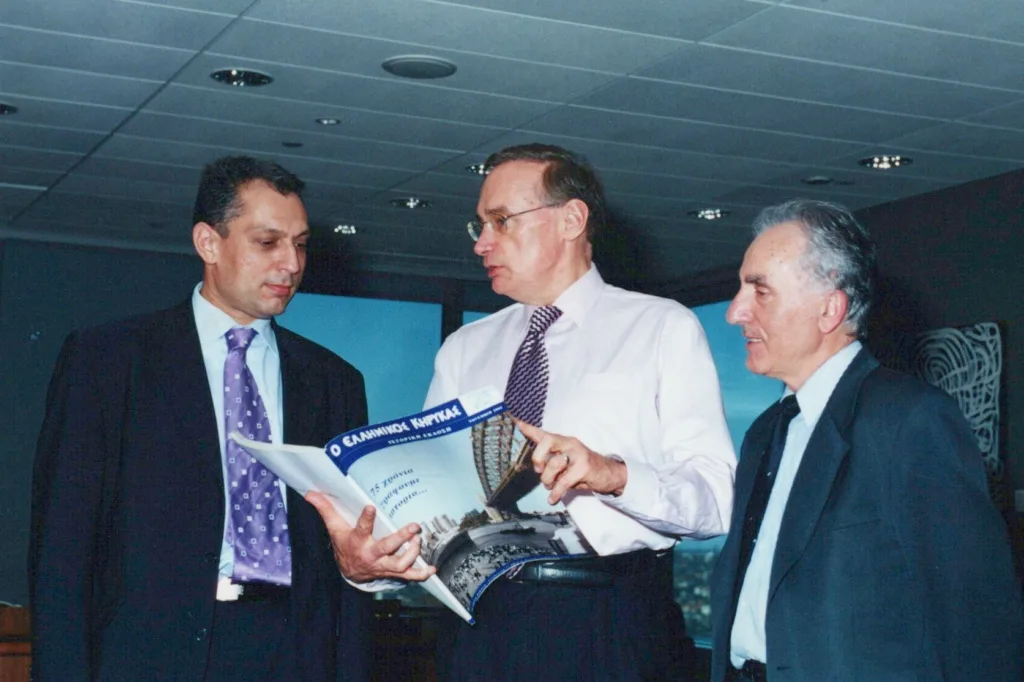
“New presses unlike anything else in Australia were installed. The company employed more than 150 people across two shifts and printed more than 80 newspapers.
“It was the period when Australians called Theodoros Skalkos ‘The Greek Murdoch.’”
He also credits Mr Skalkos with revolutionising Greek-language publishing through his embrace of new technology.
“He was the first to abolish hot metal printing and linotype and introduce phototypesetting and offset printing,” Mystakidis says.
“He was also the first, even ahead of publishers in Greece, to introduce the monotonic system and electronic typesetting.”
The innovations attracted attention internationally. Mystakidis remembers prominent Greek media figures visiting Sydney to observe the technological advances being implemented at The Greek Herald.
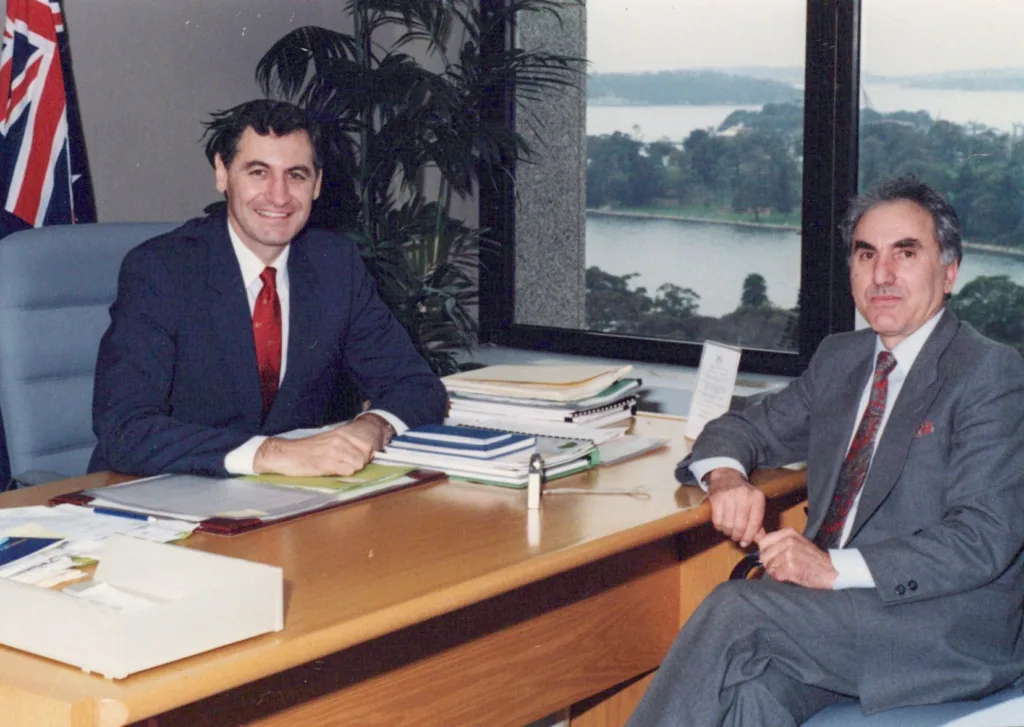
Despite the newspaper’s success, the journey was never without hardship. Economic boycotts, financial pressures and political tensions tested the publication repeatedly.
“The newspaper endured economic boycotts and losses amounting to tens of millions of dollars,” Mystakidis says, “but it never surrendered its democratic principles.”
Yet perhaps the clearest insight into Mr Skalkos’ character came during one difficult financial period, when a loyal reader from Wollongong arrived offering money to support the newspaper.
“I remember one reader from Wollongong who came to offer $1,000 to help the newspaper financially,” Mystakidis recalls.
“Skalkos replied, ‘With readers like you, The Greek Herald has no problems. Keep the money and give it to a poor family instead.’ That perhaps best captures his character.”
Over the decades, The Greek Herald established itself as one of the central institutions of Greek Australia — not merely reporting on the community, but helping shape it.
Mystakidis describes the newspaper as “the social ‘Bible’ of Greek Australians”, built upon credibility, reader trust and “its fearless and continuous struggle for truth and justice.”
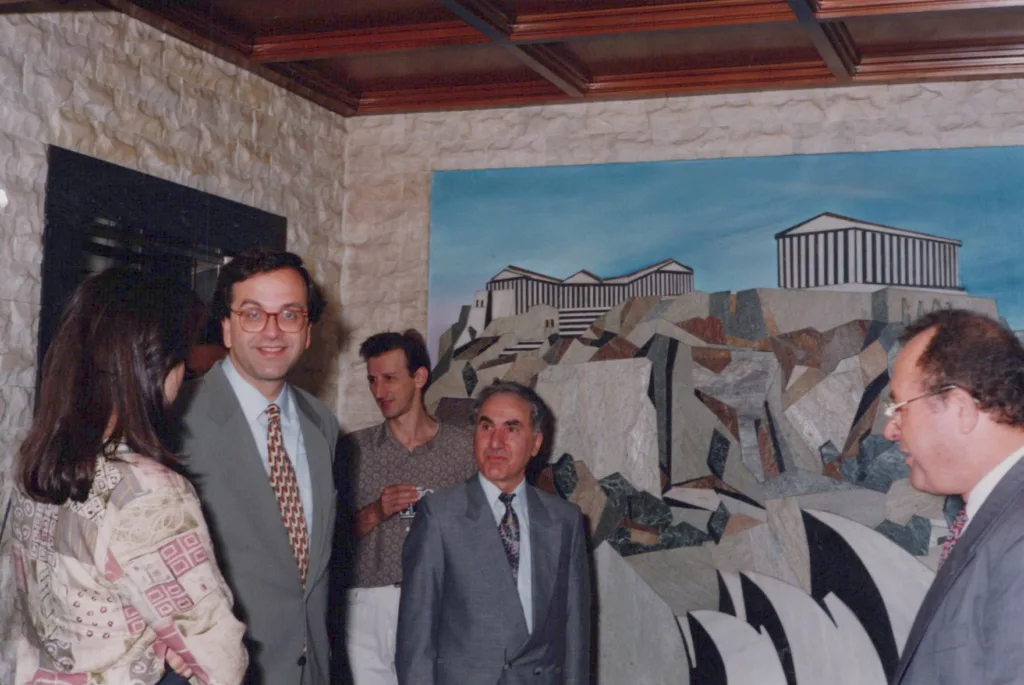
He believes its contribution to Hellenism in Australia extends far beyond journalism.
“The Greek Herald is not simply a daily Greek-language newspaper,” he says.
“It critiques leadership, inspires the community and promotes every movement of progress within the diaspora.”
Within countless Greek Australian homes, grandparents used the newspaper to teach younger generations the Greek language. For historians, Mystakidis says, its archives now represent an irreplaceable record of migration, politics, culture and identity.
“For future historians it will remain an invaluable map of our collective memory, political life and cultural heritage,” he says.
Now, as the newspaper marks 100 years since its first publication in 1926, Mystakidis sees the anniversary as something larger than journalism itself.
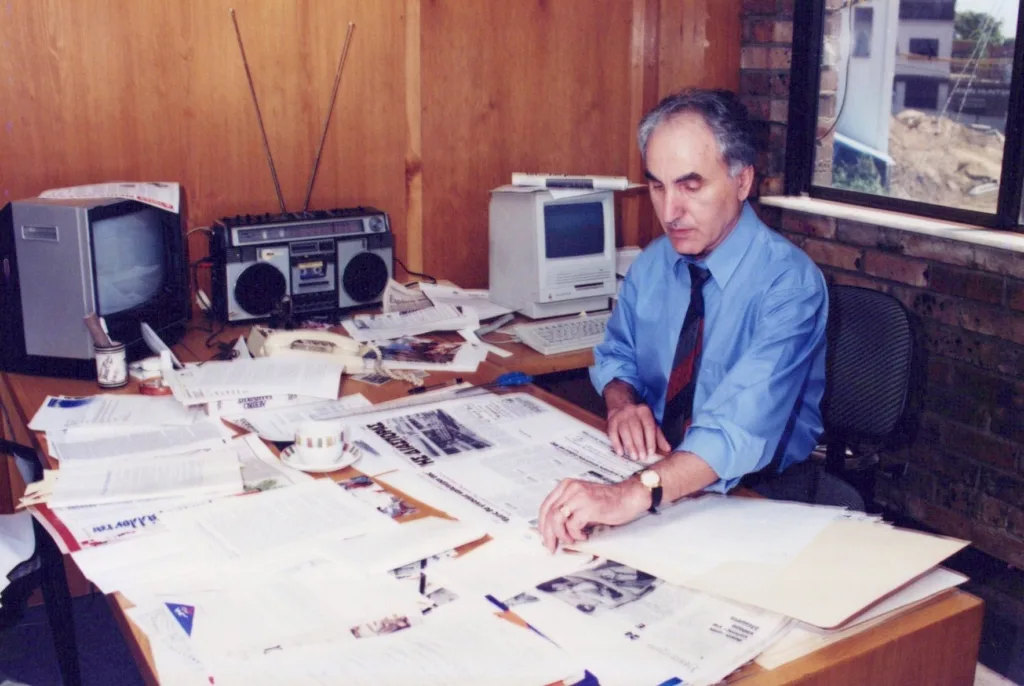
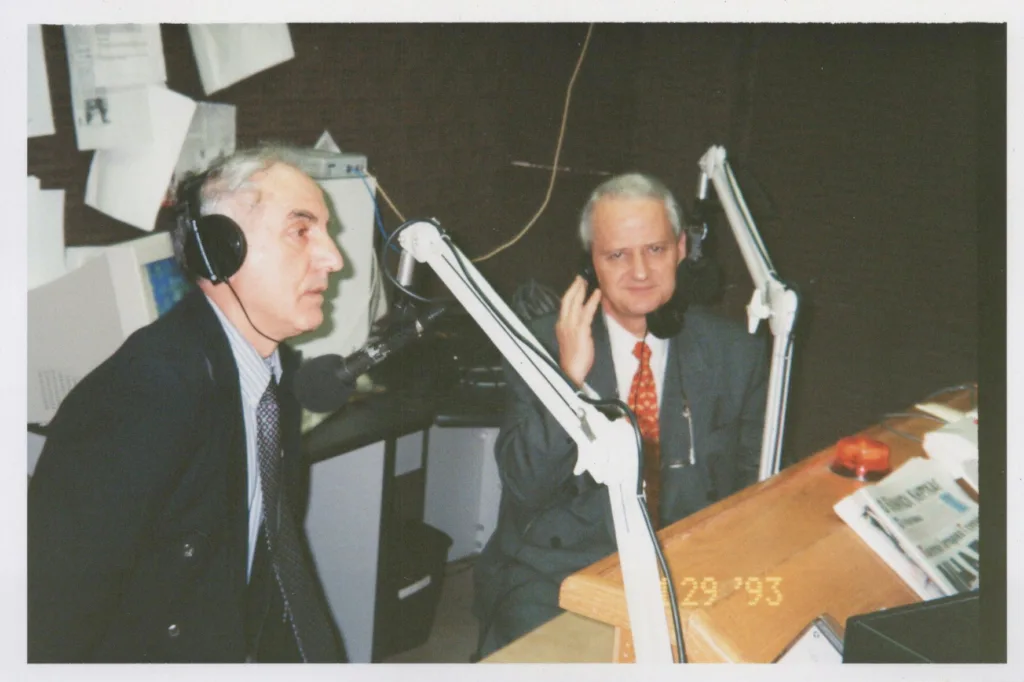
The centenary, he says, is “a celebration of the Greek presence in this far corner of the earth, of our culture, and of journalism.”
Despite uncertainty surrounding the future of print media in the digital era, he remains hopeful younger generations will continue engaging with Greek-language journalism.
“I would encourage young Greek Australians to read a Greek-language newspaper because doing so strengthens both their language skills and the continuation of Greek culture and civilisation in Australia,” he says.
After more than 60 years in journalism, Mystakidis remains one of the enduring custodians of that culture, that memory, and that remarkable story.