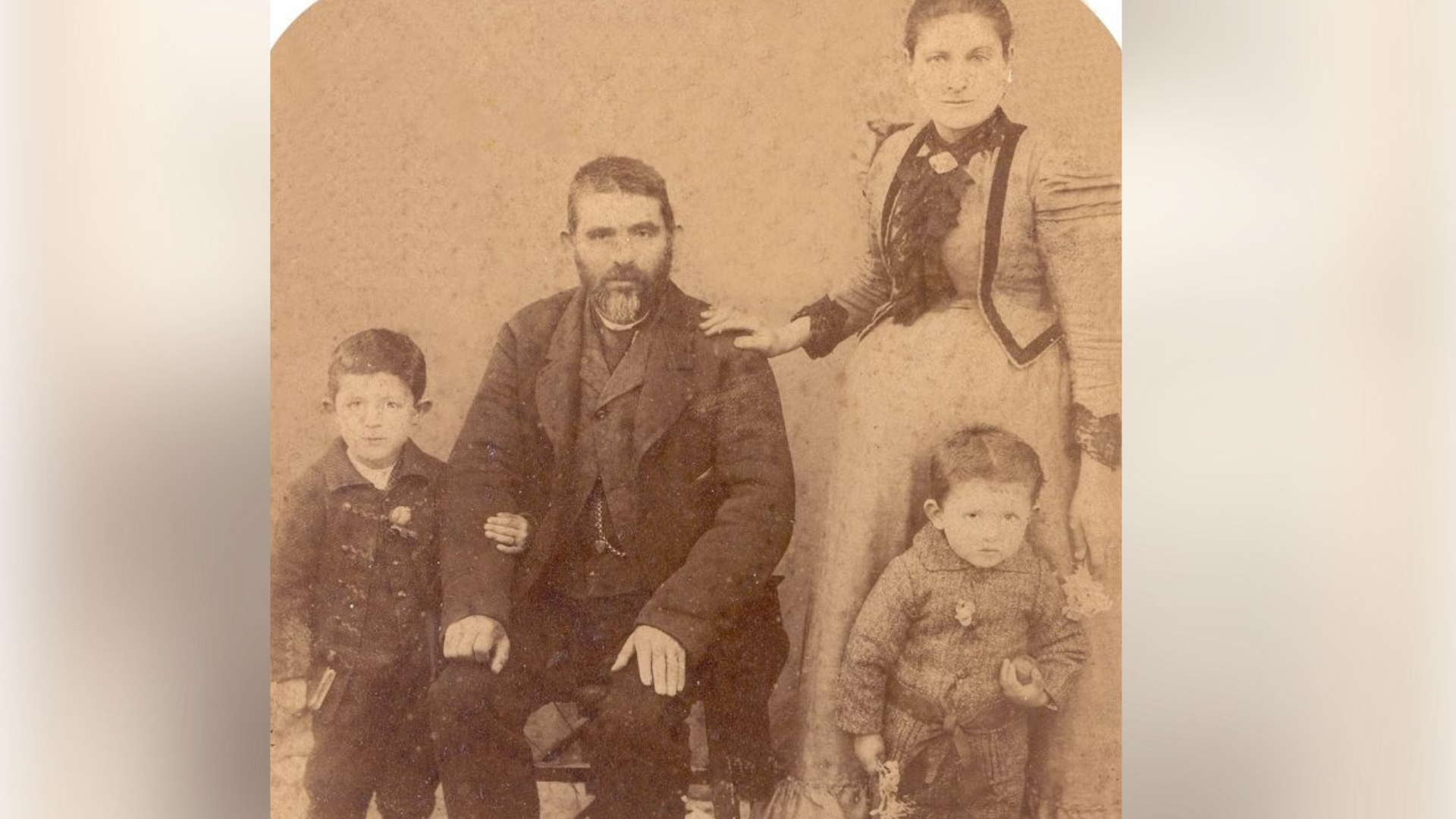
There are some stories that would remain forever locked away in the dusty archives of history if someone did not decide to tell them.
Stories filled with yellowed documents, legal opinions, letters from consuls, fruitless journeys, and people who stubbornly refuse to let a matter die.
One such story begins with a Greek Australian man named Demosthenes Syrmis, who died in Queensland in the 1960s leaving behind one final wish.
He wanted part of the life he built in Australia to one day return to his ancestral homeland of Ithaca through a charitable bequest.
And so began the true odyssey of the Syrmis bequest.
For decades, the donation became entangled in bureaucracy, legal deadlocks and institutional delays until, as Demosthenes Syrmis’ namesake nephew reveals today, the matter was finally unblocked thanks to the intervention of The Greek Herald.
Courts, consulates, governments, bureaucracy and indifference all stood in the way. It became the story of one man’s wishes confronting the slow machinery of institutions.
The bequest of Demosthenes Syrmis is an odyssey not only because it is connected to Ithaca, but because it embodies the story of the Greek diaspora in the 20th century.
People who left Greece poor, built lives and fortunes on distant continents, and ultimately sought to leave behind something greater than wealth alone.
A legacy.
And somewhere along that journey, The Greek Herald became part of the story.
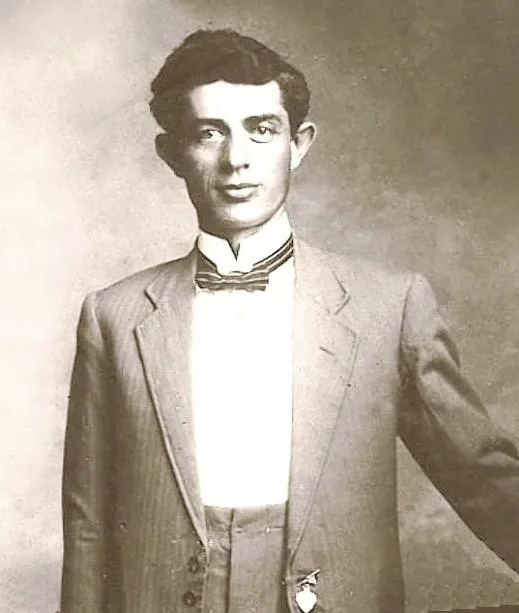
In 1993, an article written by the newspaper’s historic publisher Theodore Skalkos was enough to shake decades of inertia and remind people that diaspora media could help resolve matters that affected lives and had long been left to stagnate.
As The Greek Herald marks 100 years of continuous publication in Australia, the story sheds light on a lesser-known but deeply important part of the newspaper’s mission.
Not simply documenting the community, but at critical moments acting as a force of intervention for issues affecting the wider Greek diaspora.
The story of Demosthenes Syrmis
The story of the Syrmis bequest began long before the legal battles.
In the early 20th century, a young man from Ithaca decided to leave the island behind and seek a new life abroad.
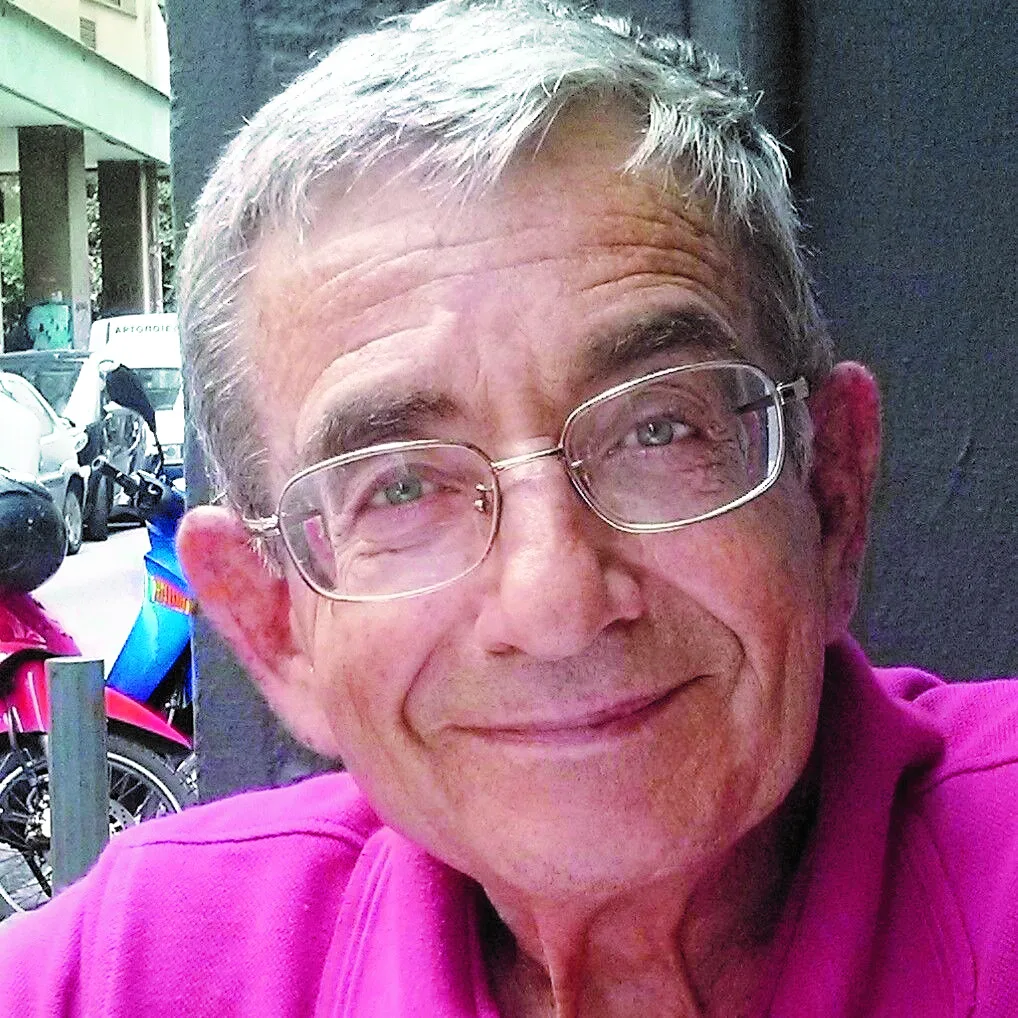
“My uncle went to Australia in 1905,” his nephew, also named Demosthenes Syrmis, told The Greek Herald during an interview in Athens in April 2026.
Morning light filled the small table where the interview took place, almost symbolically accompanying the sense of relief carried by a story that took 66 years to near its conclusion.
There was a quiet satisfaction in Syrmis’ expression, the look of someone carrying the exhaustion of a long struggle, but also the peace that comes with finally honouring a promise made to the dead.
He devoted much of his life to fulfilling his uncle’s final wish.
It became a relentless battle against bureaucracy, delays and time itself.
Closing his eyes for a moment, Syrmis mentally returned to 1907, when his father followed his brother to Australia two years after the latter’s departure from Ithaca.
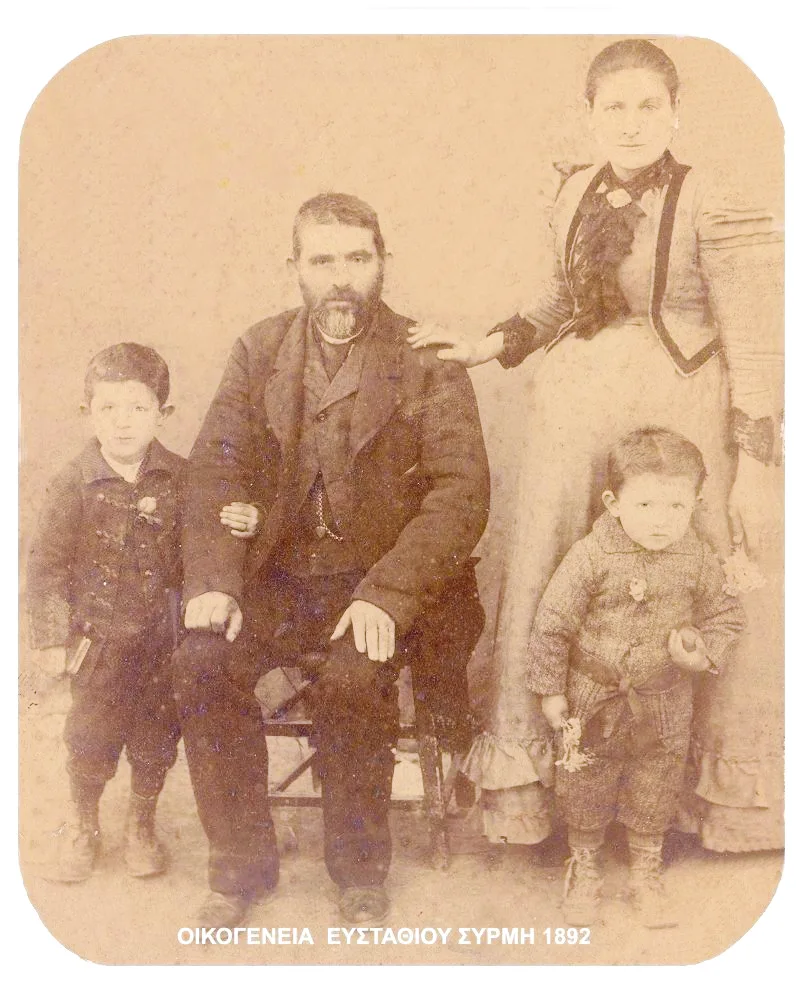
The family entered the hospitality industry almost immediately.
“You should know that hotels in Australia back then didn’t make most of their money from rooms,” Syrmis explained. “Most of the income came from the bars, because they were among the few places licensed to sell alcohol.”
The businesses prospered and Demosthenes Syrmis built considerable wealth. Yet his connection to Ithaca remained unbroken.
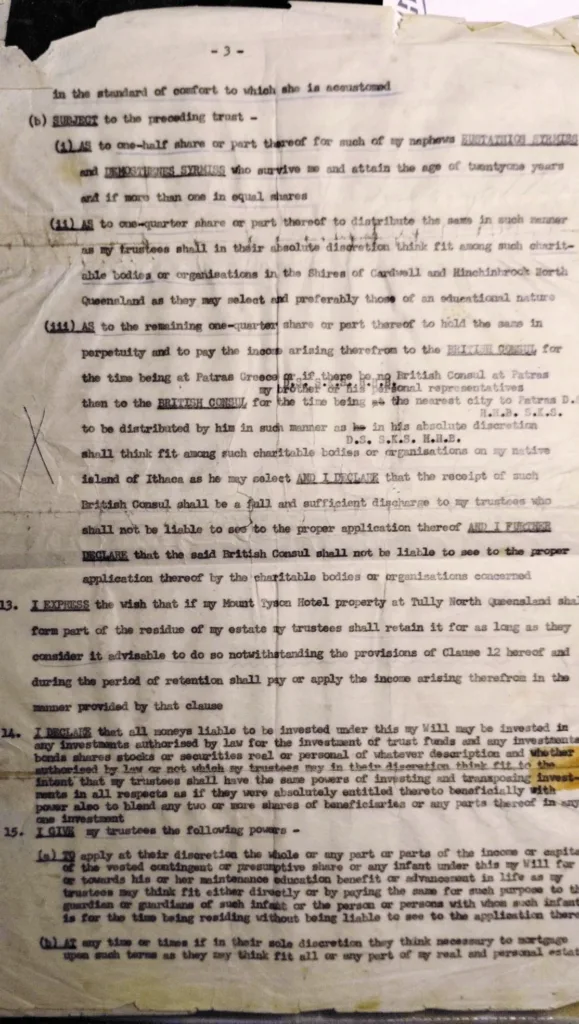
When he died in Brisbane in 1960, his will directed that part of his estate be used for charitable and educational purposes on the island.
At the time, the amount was significant: AUD $352,239.82.
And that is where the real odyssey began.
There is something almost poetically ironic about the fact that all this unfolded in order for a fortune to return to Ithaca.
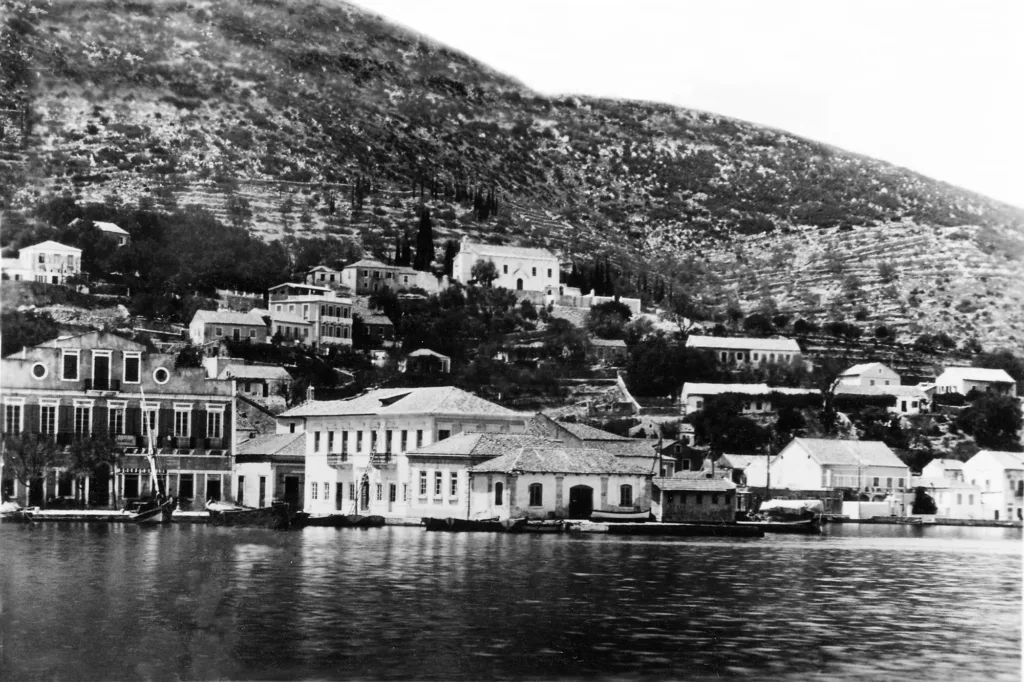
Not only the birthplace of Demosthenes Syrmis, but also the place the Western world came to associate with the very idea of return.
Only this journey involved no Sirens or Cyclopes.
Instead, there were consulates, courtrooms, bank accounts and institutions that endlessly delayed what one man had decided back in 1960.
It was as though the will itself had to cross its own ocean before finally finding its Ithaca decades later.
Legal deadlocks and delays
The will originally stipulated that the funds be administered through the British Consul in Patras because, at the time it was written, Australia had no diplomatic representation in Greece.
However, the later establishment of an Australian embassy created a series of legal and bureaucratic complications.
“I first went to Australia in 1969 to sort out the bequest,” Syrmis recalled. “Until then, essentially nothing had happened.”
At the time, he was a young economics student arriving in a country he describes as “at least 50 years ahead of Greece.”
The legal difficulties proved enormous.
Under Australian law, the money had to be transferred to an organisation with “perpetual” status.
In Greece at the time, very few organisations met that requirement.
“The only body that could legally handle it was the municipality,” he explained. “But back then the Municipality of Ithaca did not represent the entire island because the other villages had their own local councils.”
What followed were court proceedings in Queensland, correspondence with consulates and public authorities, countless trips and endless delays.
At one stage, there were even discussions about directing the funds through the local senior citizens’ centre in Ithaca. However, the will specifically stated that the funds should primarily support youth and educational purposes.
For decades, the matter remained frozen.
Until a meeting in Sydney in the early 1990s changed everything.
“The Greek Herald’s intervention was the key”
Demosthenes Syrmis vividly recalls the moment the case finally began to move after decades of deadlock.
He says the decisive turning point came through the intervention of The Greek Herald and its publisher Theodore Skalkos.
The two men met in Sydney in the early 1990s while Syrmis was in Australia for professional reasons.
At the time, he was working for Olympic Airways and participating in discussions examining the possible restoration of the Greece-Australia air route.
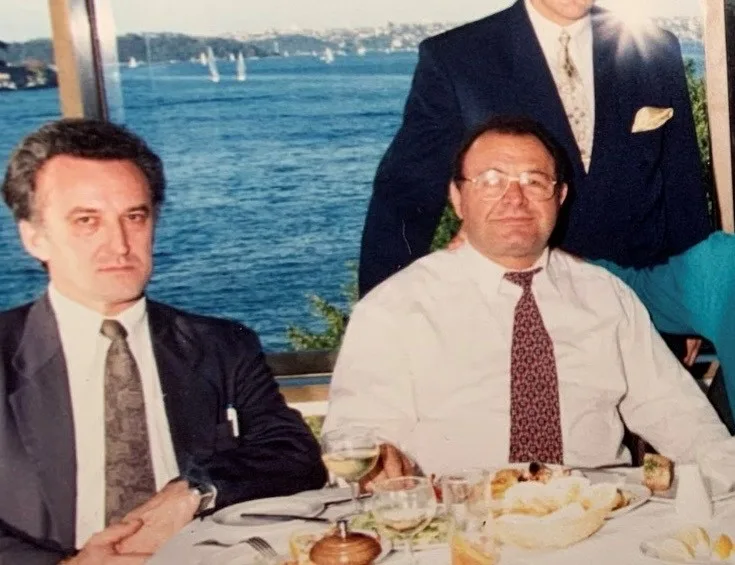
During the visit, members of the Greek community organised a luncheon in honour of the delegation. Among those attending was Theodore Skalkos.
The scene almost feels cinematic.
A lunch beneath the Sydney Harbour Bridge. Lobsters on the table. A man recounting a decades-long struggle. And a publisher listening closely.
Skalkos immediately understood that publicity was the only weapon against institutional inertia.
“They invited us to lunch under the Sydney Harbour Bridge,” Syrmis recalled. “I still remember they had ordered lobsters. During the conversation, I mentioned the problems I was facing with my uncle’s bequest.”
“I explained that we had been trying to resolve the issue since 1969 and that we constantly encountered obstacles,” he said.
“Skalkos listened carefully and immediately told me, ‘Don’t worry. I’ll make them move.’”
According to Syrmis, the publisher understood exactly how such organisations operated.
“He told me these institutions delayed bequests because they held onto the funds and invested them for profit,” Syrmis said.
“And then he told me, ‘Tomorrow I’ll write about them in the newspaper.’”
The next day, The Greek Herald published an article detailing the case and the lengthy delays.
The response was immediate.
“Within three or four days, the managing director of the company handling the bequest called me,” Syrmis recalled. “He asked, ‘Why did you take this matter to the newspapers?’”
Syrmis’ response was blunt.
“I told him that not only had I not revealed all the details, but that the next article would contain even more information,” he said.
That pressure proved decisive.
“He then told me, ‘Please, do not proceed further. We will ensure the money is transferred to Greece as agreed.’”
For Syrmis, there is no doubt about the role The Greek Herald played.
“The intervention of The Greek Herald was the key to unblocking the bequest,” he said.
“Without that publication, I fear the matter could have remained stalled for many more years.”
Following the publicity and pressure created by the article, the process finally began moving forward and the funds slowly made their way to Greece.
A 66-year journey
Even after the money reached Ithaca, the odyssey did not end.
“There was still endless delay. Where would the facility be built? How would it operate? How would it be staffed?” Syrmis recalled.
Following pressure from Syrmis himself and former mayor Spyros Arsenis, plans were approved in 2006 to transform an almost abandoned primary school into accommodation for elderly residents.
But another change in administration overturned those plans yet again.
“When the money first arrived in Ithaca, the facility could easily have been built,” Syrmis said bitterly. “Now you couldn’t even buy a studio apartment in Menidi with it.”
Inflation and changing regulations had gradually eroded the value of the bequest.
Eventually, the decision was made to use the funds for the creation of a sporting facility instead.
“I accepted it with a heavy heart,” Syrmis admitted, though this time with visible relief in his voice.
“Essentially, we are finished now,” he said.
“This is a story that began in 1960 and is concluding in 2026. Sixty-six years.”
During the interview, Syrmis even phoned the Mayor of Ithaca to ask when the sporting facility would be completed so that The Greek Herald could be invited to the opening ceremony.
“The Herald played a decisive role in unblocking the money,” he said.
After so many decades, he no longer views the newspaper’s involvement as merely journalistic intervention, but as part of the story itself.
Perhaps that is the deeper meaning behind the story of Demosthenes Syrmis.
That the Greek diaspora is not measured only through wealth, businesses or migration statistics, but through the enduring desire of people to keep their connection to their homeland alive.
Even if it takes an entire lifetime for the journey home to finally be completed.
And within that journey lies another enduring truth: the role The Greek Herald has continued to play across generations.
From Theodore Skalkos’ decisive intervention in the early 1990s, which helped unblock the bequest, to the preservation and retelling of stories like this today, The Greek Herald continues, a century after its founding, to serve as a bridge between Australia and Greece – between memory, responsibility and the ongoing story of the Greek diaspora.
