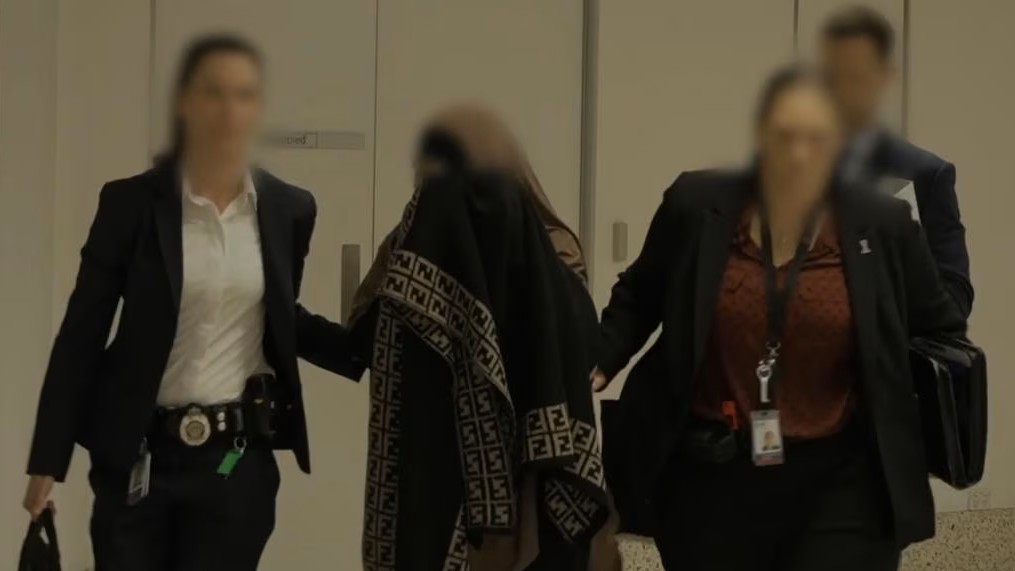
Two Melbourne women accused of keeping Yazidi women as slaves while living under the ISIS caliphate in Syria have become the first Australians charged with crimes against humanity under domestic law after returning to Australia this week.
Melbourne grandmother Kawsar Abbas, 53, and her daughter Zeinab, 31, were arrested by the Victorian Joint Counter Terrorism Team at Melbourne Airport on Wednesday night after leaving a detention camp in north-east Syria. Both are due to appear before a Melbourne magistrates court.
Police allege Kawsar travelled to Syria with her family in 2014 and was involved in the purchase of a female Yazidi slave for $US10,000 before keeping the woman in the family home. She faces four charges relating to enslavement, possessing a slave, using a slave and engaging in slave trading, each carrying a maximum sentence of 25 years’ imprisonment.
Zeinab is accused of knowingly keeping a female slave in the home and has been charged with enslavement and using a slave.
The pair had been held by Kurdish forces at the Al Roj camp since 2019 following the collapse of the Islamic State caliphate.
A third woman, Sydney resident Janai Safar, 32, was also arrested upon arrival in Australia and charged with entering or remaining in a declared conflict zone and being a member of a terrorist organisation. Authorities allege she travelled to Syria in 2015 to join her husband after he had joined ISIS.
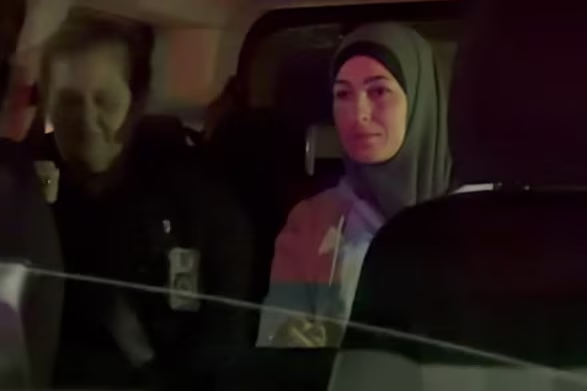
Australian Federal Police Assistant Commissioner Stephen Nutt confirmed the Melbourne women would face court, saying: “All I can say is that safety of the community is the No.1 priority for all agencies involved.”
The returning group included four women and nine children, who arrived on separate Qatar Airways flights after spending weeks delayed in Damascus following their departure from the Roj internment camp.
The allegations against the Abbas family are understood to stem from evidence provided by members of the Yazidi community, including two women who claim they were enslaved while living in the family household in Syria.
One woman, Tayseer, alleged she spent 18 months captive with the family and suffered repeated abuse. Another woman, Sarab, claimed she was briefly enslaved as a teenager before being returned to another captor. Both women have reportedly indicated they are willing to testify if the matter proceeds to trial.
ANU international law expert Donald Rothwell said the case would test Australian law for the first time.
“This is novel under Australian law. It’s untested before an Australian court, so would present challenges in terms of witnesses and evidence,” he said.
The federal government has denied assisting in the women’s return to Australia, despite confirming it had issued passports earlier this year to Australians detained in Syrian camps. Defence Minister Richard Marles said: “We’ve also made it really clear that anybody who has been in breach of the law will be met by the full force of the law if they come back to Australia.”
Authorities say the returning children will undergo reintegration programmes, potentially including deradicalisation support.
Source: The Australian
