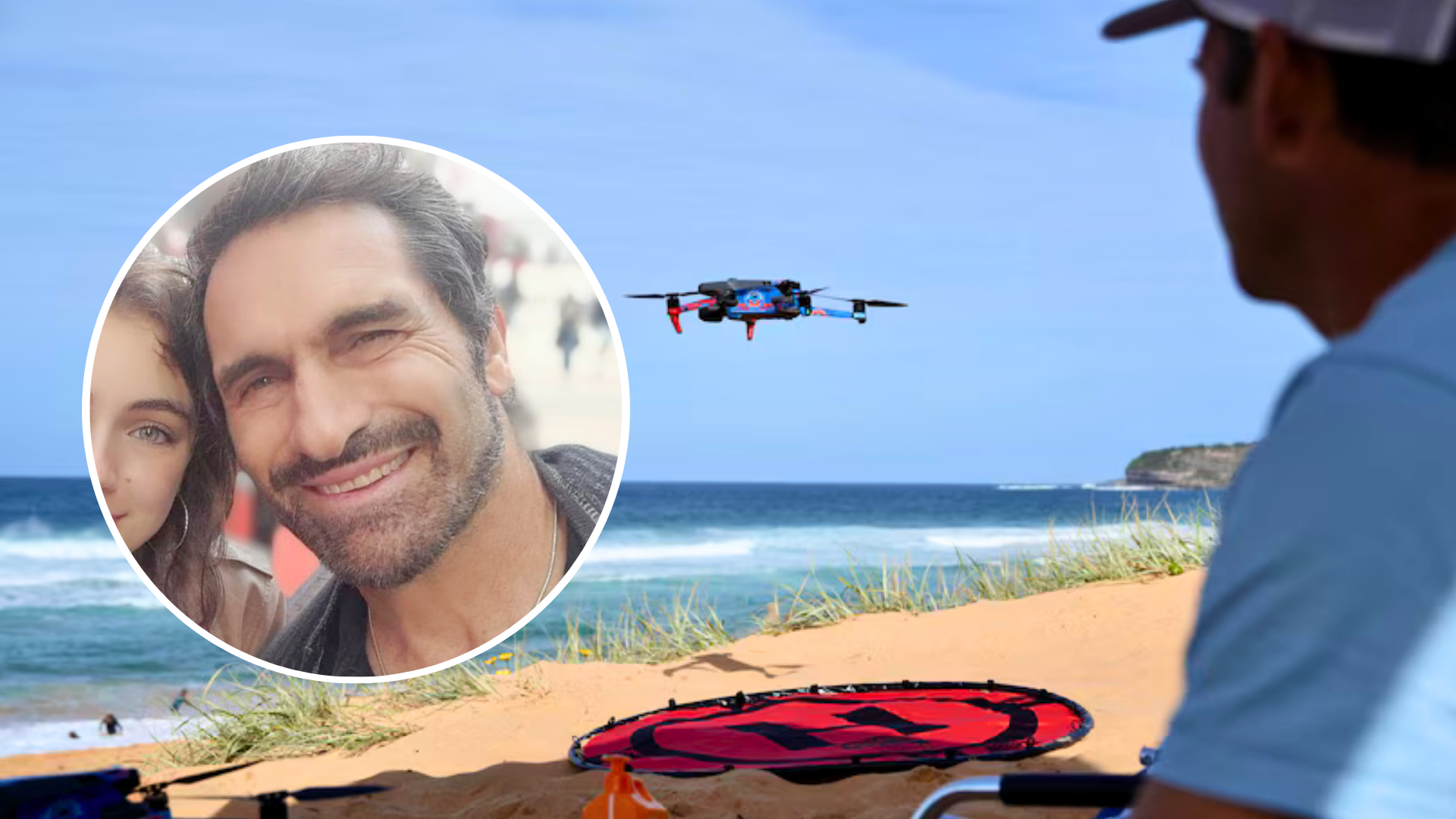
The family of Sydney shark attack victim Mercury Psillakis says a new drone surveillance program is a meaningful tribute that could help save lives along Australia’s coastline.
Psillakis’ twin brother, Mike Psillakis, and widow, Maria Psillakis, joined authorities to launch the initiative, which will train surfers as drone pilots to monitor beaches year-round.
The program, part of New South Wales’ $30 million Shark Management Program, will see 125 new pilots trained and 60 additional drones deployed between Newcastle and Wollongong by the end of winter.
Mercury, a renowned surfer, died aged 57 after being mauled by a great white shark at Long Reef Beach in September 2025.
His brother Mike said the initiative honoured his brother’s legacy and could have changed the outcome.
“I believe on the sixth of September, if there was a drone in the sky that day, Mercury will still be with us,” he said. “So that’s a great step in the right direction, and it’ll be an ongoing journey.”
Maria said the tribute carried deep meaning for the family.
“The release of these drones in Mercury’s name is deeply, deeply meaningful to us and our family,” she said.
“We are truly grateful for the commitment shown here to innovation, to safety, to protecting those who share our coastline.
“These drones represent progress. They represent the lives that may be saved, families that may be spared this unimaginable loss.”
The initiative, delivered in partnership with Surfing NSW, will extend surveillance beyond the traditional patrol season, with pilots trained to identify high-risk species and pause events for at least 30 minutes if sharks are sighted.
New South Wales Agriculture Minister Tara Moriarty said the government was embracing evolving technology to improve safety.
“We’ll continue to work with the sector and the experts on the best use of technology to be able to spot sharks faster,” she said, adding “the shark nets are here to stay for the moment.”
But Mike said change was needed, arguing “shark nets don’t work” and calling for expanded use of automated drone and AI technology to protect surfers from “sunrise to sunset”.
Training has begun on Sydney’s Northern Beaches and will later expand to other parts of the state.
Source: ABC.
