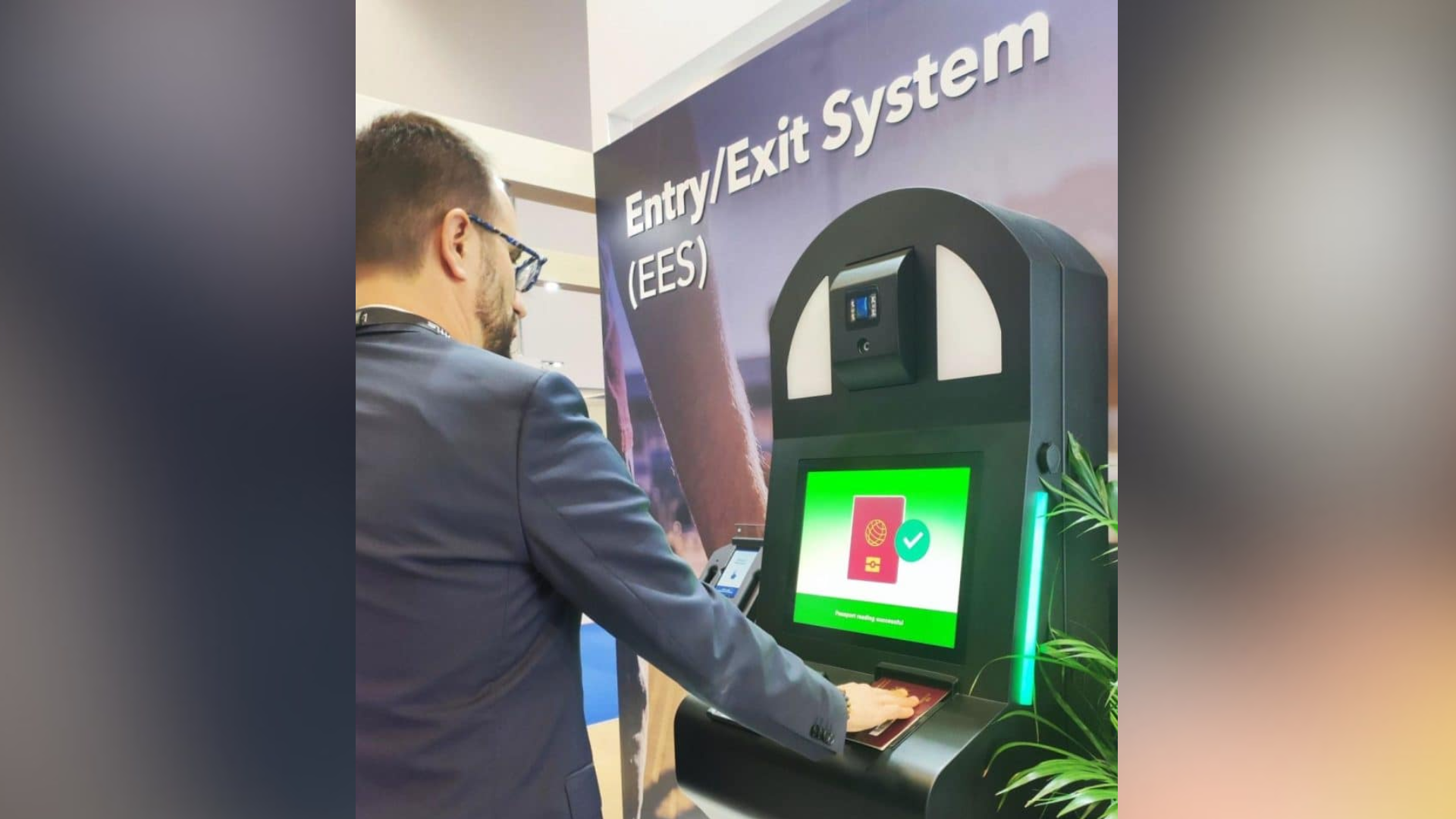
In effect from today, Australians travelling to Europe will have their faces and fingerprints scanned at borders across 29 countries as the new European Union Entry/Exit System (EES) replaces passport stamping.
Greece is among the countries to implement this new biometric data collection designed to track who enters and leaves the continent.
Other countries in the Schengen Zone who will activate the EES system are Austria, Belgium, Bulgaria, Croatia, Czech Republic, Denmark, Estonia, Finland, France, Germany, Hungary, Iceland, Italy, Latvia, Liechtenstein, Lithuania, Luxembourg, Malta, Netherlands, Norway, Poland, Portugal, Romania, Slovakia, Slovenia, Spain, Sweden, and Switzerland.
Cyprus and Ireland will maintain the use of manual passport stamping.
Travellers could also be questioned about the reason for their visit. Tighter screening comes amid ongoing Middle East conflict disrupting global travel while the European Commission reports over 25,000 people have been denied entry to Europe since the EES gradual rollout last year due to invalid documents or insufficient travel justification.
Travel experts warn of delays at airports, ports and international train stations as the digital system is activated. The International Air Transport Association (IATA), which represents hundreds of airlines worldwide, voiced its concerns about the effectiveness of the EES.
“There is a complete disconnect that EES is working well, and the reality, which is that non-EU travellers are experiencing massive delays and inconvenience,” IATA said in a statement. “We need to be realistic about what will happen during the peak summer months, when traffic at Europe’s airports doubles.”
Migration law expert at the University of Sydney, Mary Crock told ABC News the decision reflected part of a wider international shift toward increased surveillance of international travellers, amid rising instability from the Middle East conflict.
“We are now moving into an age where the need to be aware of who’s travelling where… has probably never been more important,” Crock said.
The EES is not the only border security measure Europe will be implementing. The European Travel Information and Authorisation System (ETIAS), will be functional towards the end of the year and will require travellers from visa-exempt countries, including Australia, to apply for authorisation before departure.
Crock said the new systems were “fortuitous”, rather than something for Australians to be concerned about.
“Given the dangers that we’re facing with conflict in the Middle East, we are in a period where nobody quite knows what’s happening, who is going to try and retaliate and in what manner,” she said. “So, for all of those reasons, getting on top of the electronics of movement is a very sensible thing to do.”
How does EES work?
Non-EU citizens, including Australians who are travelling to the countries in the Schengen area for short stays of up to 90 days in a 180-day period will use the EES.
The free digital border system requires no pre-registration and will record the traveller’s photo, fingerprints and passport details each time they cross a border.
On arrival and depature, travellers will present their passport, have their photo taken and fingerprints scanned, and potentially answer questions about their accommodation or the purpose of their visit. Returning visitors will only undertake a quick biometric check. Children under 12 only require a facial scan. Irish passport holders and some EU residents are exempt.
If travelling through a connecting flight through a Schengen airport, the EES checks happen at the first point of entry into the Schengen area. Internal flights between Schengen countries usually will not require further checks.
Source: ABC News
