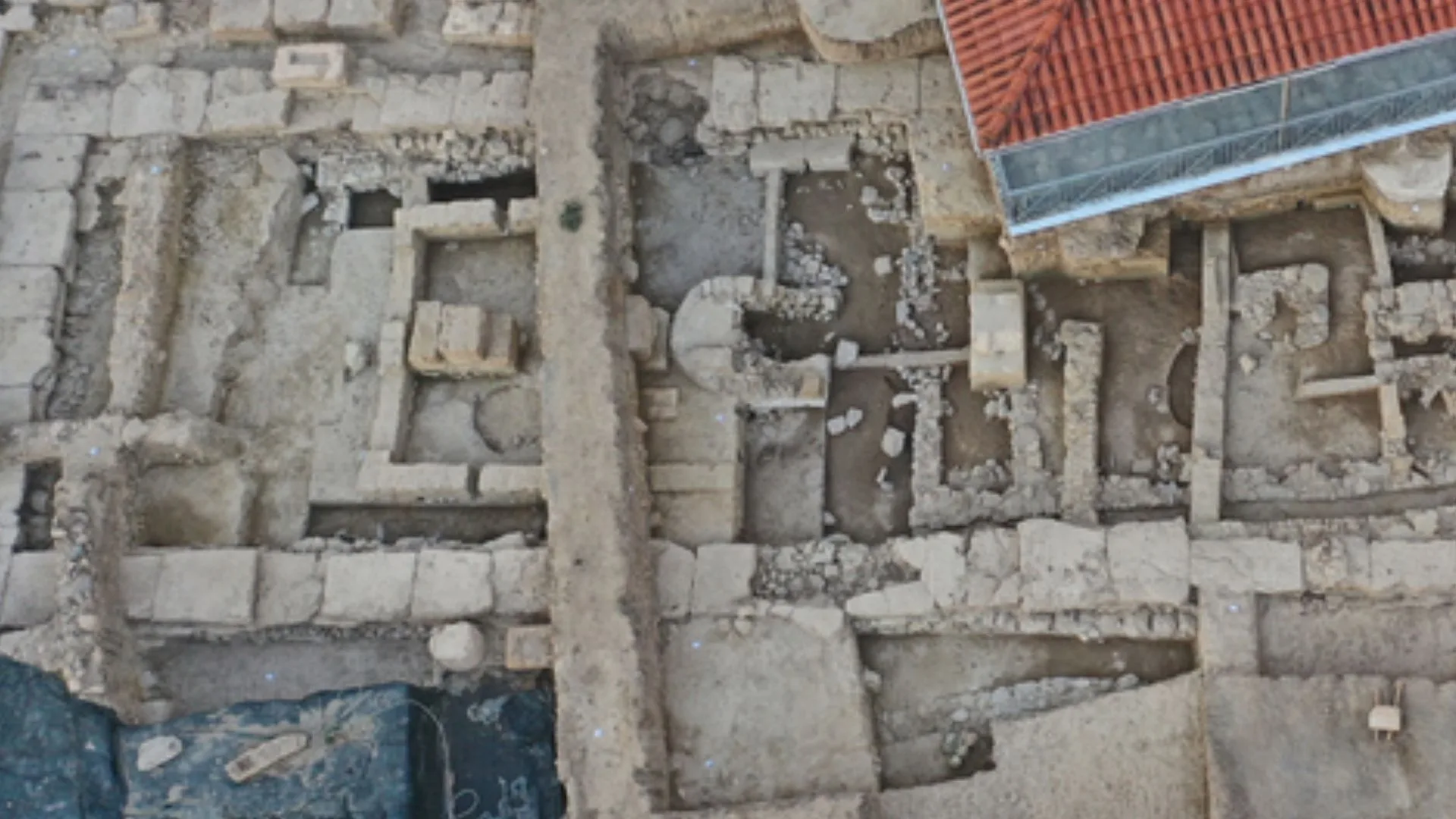
Archaeologists working on the Greek island of Evia have uncovered a previously unknown ancient temple containing richly used altars and a trove of precious objects, adding to a series of major discoveries in the area, popularmechanics.com, has reported. The find dates to the 7th century BC and lies close to the famous Temple of Amarysia Artemis, according to Greece’s Ministry of Culture.
The newly revealed structure, fully excavated in 2023, measures about 30 metres in length, a scale typical of early Greek temples. It preserves sections of its outer walls and a western arch, but the most striking discoveries were made inside. Researchers identified multiple hearths that appear to have functioned as altars, indicating intensive ritual use over long periods.
Among them was a distinctive horseshoe-shaped altar. Thick deposits of ash containing charred animal bones point to repeated sacrifices, and pottery from the site suggests some ritual activity may predate the temple itself, extending back to the late 8th century BC.
Alongside the altars, archaeologists uncovered a wide range of offerings, including Corinthian alabaster, Attic pottery, locally made ritual vessels, and jewellery crafted from gold, silver, coral and amber. Amulets from the eastern Mediterranean and bronze and iron fittings were also found.
The temple was built with mudbrick walls on a dry-stone foundation, reflecting the swampy conditions of the landscape at the time. Evidence of fire damage shows that parts of the structure were later reinforced and expanded, likely in the late 6th century BC.
Earlier layers revealed bronze figurines of bulls and a ram from the Geometric period, as well as a Mycenaean clay bull’s head. Excavations also point to human activity on the site as early as the 9th century BC, suggesting the sanctuary’s religious importance developed over centuries.
Source: popularmechanics.com
