
By Victoria Loutas
Kostas Hatzichristos was one of the most renowned comedic, theatrical performers, having a successful career in the film industry spanning over 60 years.
Hatzichristos was born on January 1st 1921 in Thessaloniki Greece to a large family. Initially, he pursued a military career, studying at the Resistance School of Syros, but later finishing his studies in Kavala.
In his early life, he settled in Athens and worked in a variety theatre in Piraeus and later with the Nitsa Gaitanaki company. He continued working for independent companies, working in an operetta company owned by Parasvevas Oikonomou from 1945 until 1948 and later working under Koula Nikolaidou’s musical company at the Verdun theatre from 1949 until 1950.
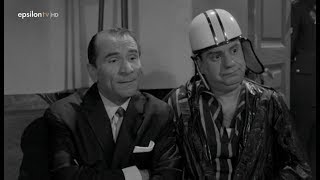
Hatzichristos played his first prominent acting role at the Verdun theatre company, performing as a villager character, Thymios. This chatacterical was a satirical type and continued to influence his work for the remainder of his artistic career.
After establishing his acclaimed career in theatre, he moved onto television films, having his first screen appearance in 1952 in the movie ‘The Tower of the Knights’. He continued to play leading roles in Greek films, building on his outstanding career working in over 100 films.
In 1955, he married his first wife, Ketty Dirdaou. Together they had one daughter and later divorced in 1975.
READ MORE: Greek theatre legend Orestis Makris born on this day in 1899
READ MORE: On this day in 1834, Athens became the capital of Greece
In addition to acting, Hatzichristos delved into the world of film production, extending his skill set and developing his theatrical career. Hatzichristos produced three movies and directed eight others.
In 1961, he created his own theatre company, “Hatzichristos Theatre”, which lasted a few years.

From the 1970s onwards, Kostas Hatzichristos began to slow down his theatrical work, until finally returning in the 1994-95 era and completing his final film “Alexander and Aise” in 2001.
The popular Greek actor, died on October 3, 2001 in Athens from a respiratory infection. His contributions to the Greek film industry will always be honoured and remembered.
