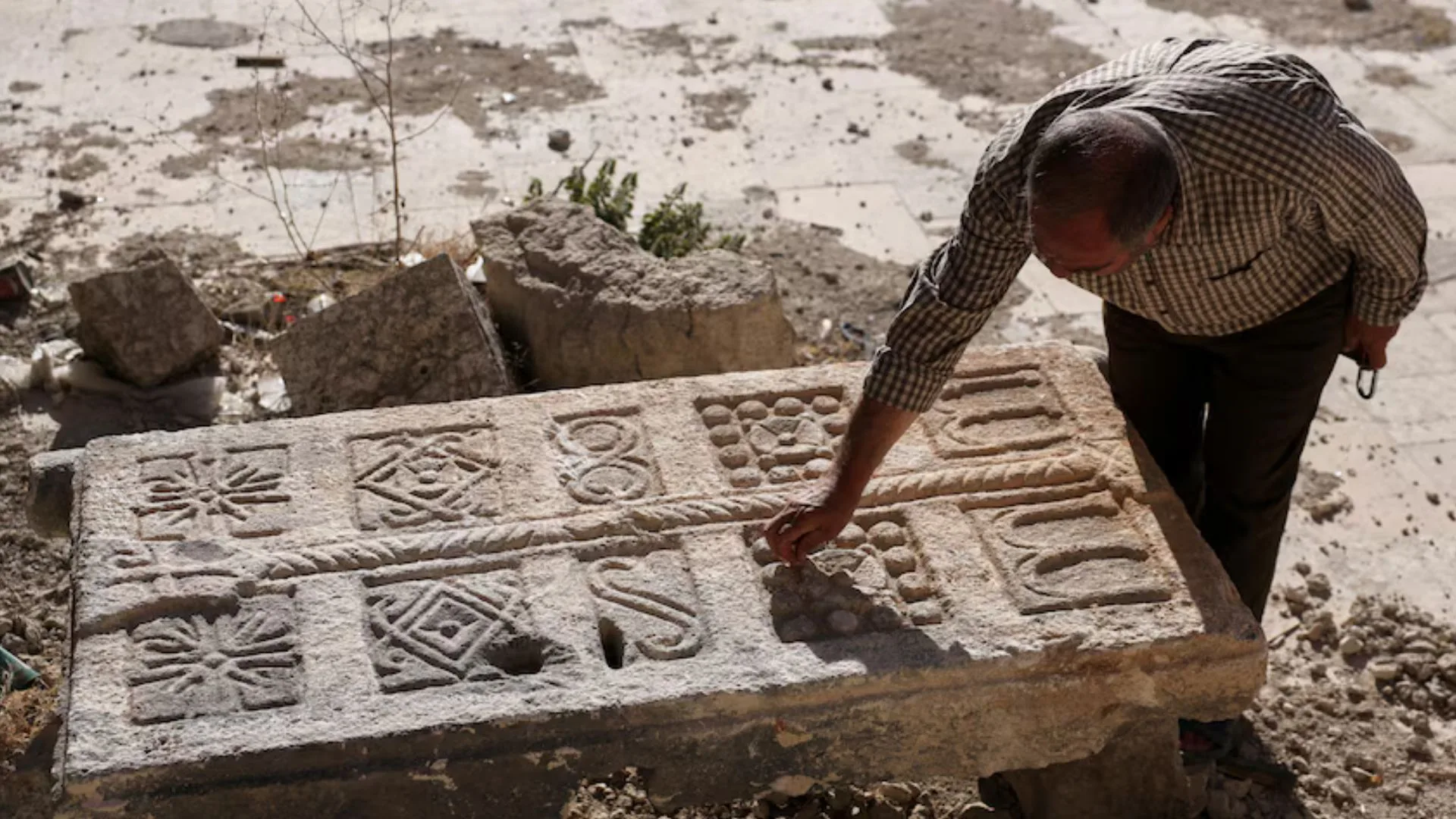
A Byzantine-era tomb complex believed to be over 1,500 years old has been uncovered in northern Syria, revealing yet another layer of the region’s deep historical roots, abc has reported.
The discovery was made in May by a Syrian contractor clearing debris from a destroyed home in the town of Maarat al-Numan. As he dug through the rubble, he stumbled upon what would soon be identified as a hidden underground burial site.
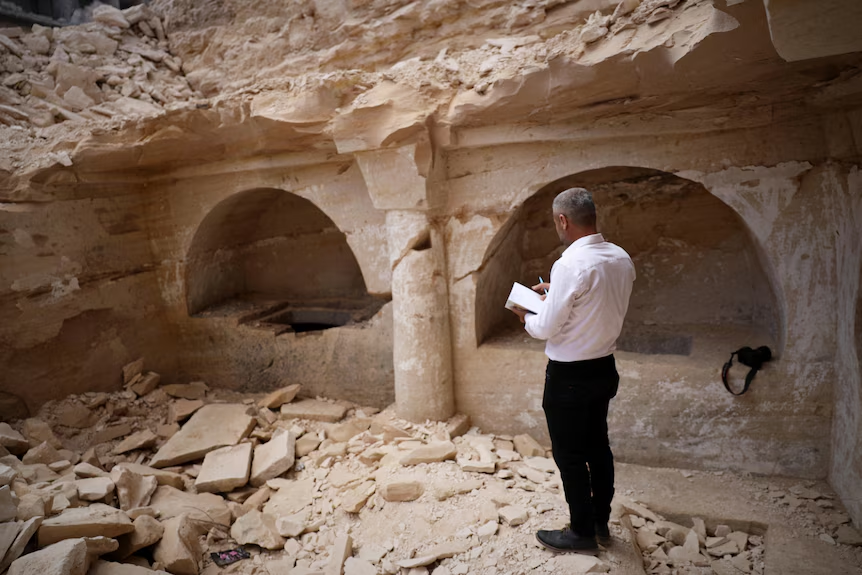
Local residents notified the antiquities directorate, which quickly dispatched an archaeological team to examine and secure the area. The team found a pit near a cinder-block building, which led to the entrances of two burial chambers.
Inside each chamber were six stone tombs. One of the stone columns bore a cross etched into its surface—an unmistakable marker of Christian influence during the Byzantine period.
“Based on the presence of the cross and the pottery and glass pieces that were found, this tomb dates back to the Byzantine era,” explained Hassan al-Ismail, director of antiquities for Syria’s Idlib province.
The finding adds to the already rich archaeological landscape of the region. “[Idlib] has a third of the monuments of Syria, containing 800 archaeological sites in addition to an ancient city,” al-Ismail noted.
The Byzantine Empire, which emerged in the 4th century AD as a continuation of the Roman Empire, adopted Christianity as its official religion. Its presence is still visible today across northwestern Syria in the form of abandoned stone settlements known as the “Dead Cities,” where remnants of basilicas, tombs, homes, and colonnaded streets dot the landscape.
Maarat al-Numan, where the tomb was found, sits between the major cities of Aleppo and Damascus. In recent years, the town became a focal point during Syria’s civil war and was recaptured by Syrian government forces in 2020 after a prolonged period under opposition control.
Much of the town was left in ruins—many homes were looted or destroyed, with satellite images showing houses still standing but with roofs missing. However, residents are now gradually returning to reclaim and rebuild what they can.
According to local resident Ghiath Sheikh Diab, some property owners in the past deliberately concealed archaeological finds on their land, fearing the government would confiscate the property to preserve the ruins. He expressed hope that the new authorities would provide fair compensation and support for returning residents who now face rebuilding amid devastation.
Years of conflict have taken a heavy toll on Syria’s cultural heritage—not only from bombings but also from extensive looting and illegal excavations.
Despite the destruction, some see these recent discoveries as signs of renewal.
Source: ABC
