Home Blog Page 84

Greek Australian who can’t ski is building Australia’s largest indoor snow resort

0

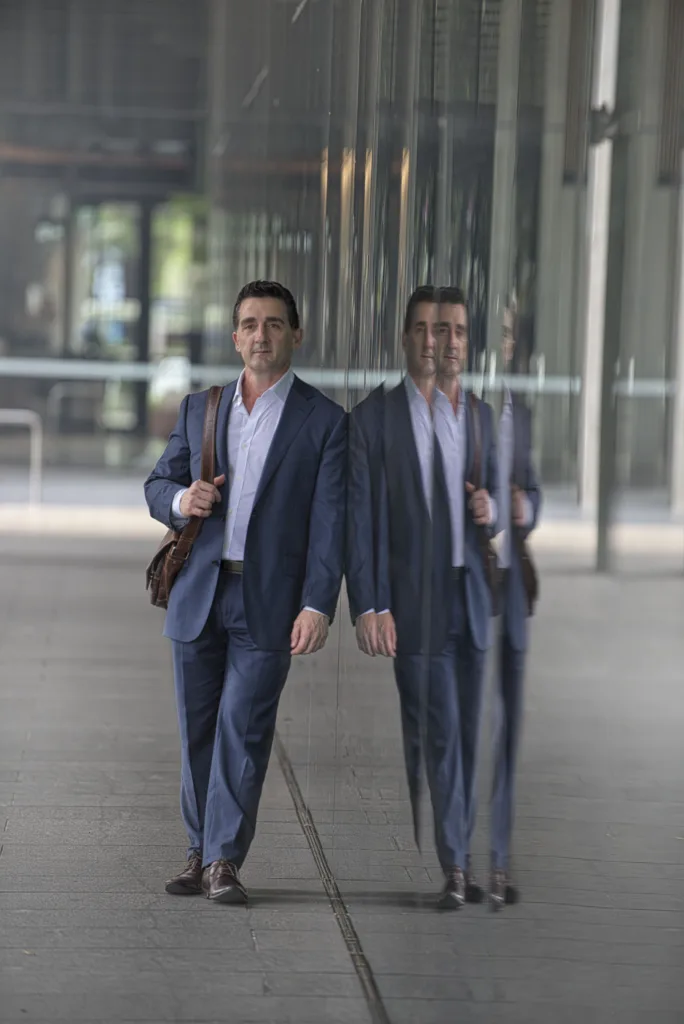
Peter Magnisalis began kindergarten without speaking a word of English.

“It was quite traumatising at the time,” he recalls. That early struggle taught him the discipline he would eventually use to create his $700 million development: Winter Sports World.

Before becoming a developer, Magnisalis grew up on his parents’ three-acre plot in Londonderry, near Penrith. They transformed the Australian scrub into what he describes as “a little Greek village”; fruit trees, vegetable patches, and long days of physical labour.

“It looks idyllic,” he says, “but it was tough.”

His parents’ story is one familiar across the Greek diaspora.

“They both grew up very poor. My mum only went to school until Year 6. My dad barely went at all because my grandfather was blinded in the war. As the eldest son, my father had to work.”
A bricklayer whose own education was cut short by conflict, his father believed work was the greatest teacher. As a teenager, Magnisalis spent weekends labouring: carrying bricks, hauling roof tiles, cleaning sites, and watching buildings take shape piece by piece.

“The biggest gift my dad gave me,” he says, “was not being afraid of hard work.”

Education, denied to one generation, became central to the next. Magnisalis became the first in his family to attend university, completing a degree in Construction Management, a decision he still recounts with humour.

“I asked my careers adviser, ‘What’s the highest building course I can do?’ They said Construction Management, so that’s what I did.”

By 22, he had launched his own building company. The success was brief.
“I realised pretty quickly there was a lot more to learn.”
Leaving a mark

He shut the business and joined some of Australia’s largest construction firms, gaining experience across aged care, retirement living, land subdivisions and large-scale commercial developments. Over time, a guiding principle emerged.

“If you’re going to develop something,” he says, “you have to ask: what can I do differently? How do I leave a mark?”

That question found its answer on a Friday night in 2015.

“I was just thinking,” he recalls. “Australia has very limited snow. It’s expensive, hard to get to, and unreliable. And I thought: why can’t we have a building with snow in it?”

He didn’t yet know that more than 150 indoor snow resorts were already operating globally. He trusted instinct. Australians, he points out, are among the world’s most enthusiastic snow-sport participants: 54 per cent have skied or snowboarded at least once, while 46 per cent have never experienced snow at all—largely due to cost, distance and access.

“This is exactly where indoor snow centres work,” Magnisalis says, adding that the irony is that he himself can’t ski. “I’m saving that for when I ski down the slopes of Winter Sports World for the first time once the doors open.” 
Independent modelling by Stollznow Research, using deliberately conservative assumptions, projects more than 1.3 million visits annually to Winter Sports World—before factoring in international tourism, Western Sydney’s population growth, or the opening of Western Sydney International Airport just 15 kilometres away.

Still, the scale of the idea was daunting.

“There was a point where I put the project down for six months,” he admits. “Sometimes you need to stop, reflect, and make sure you’re not heading down the wrong path.”

An independent business review ultimately reaffirmed his instincts.
“Australians are snow-mad,” he says. “Per capita, we’re one of the top snow markets in the world. That gave me the confidence to pick it up again, and I’ve never looked back.”

Winter Sports World has since secured a Memorandum of Understanding with Bonski Group, the world’s largest indoor snow operator, a milestone Magnisalis describes as “massive validation” for both the project and Western Sydney.

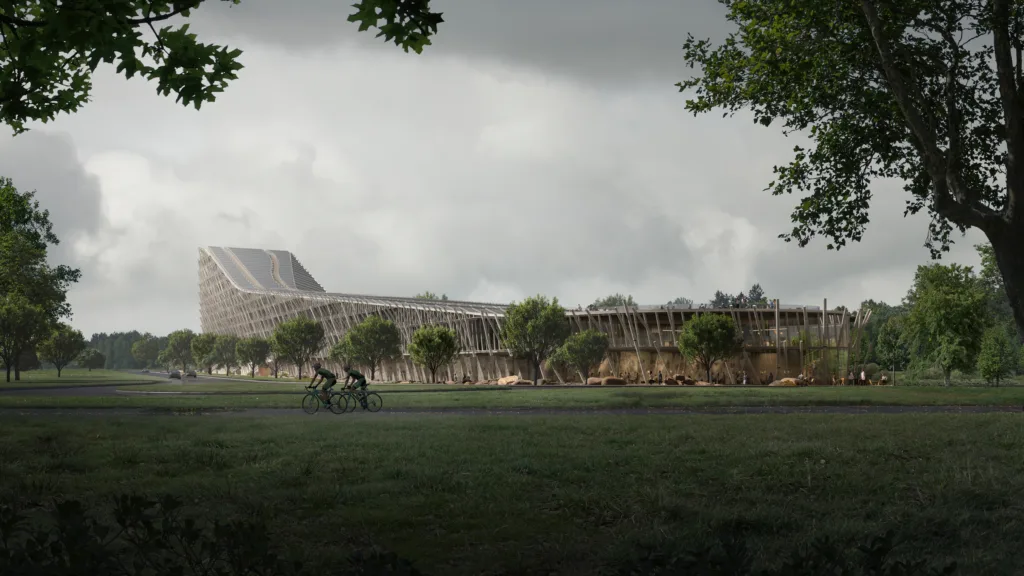
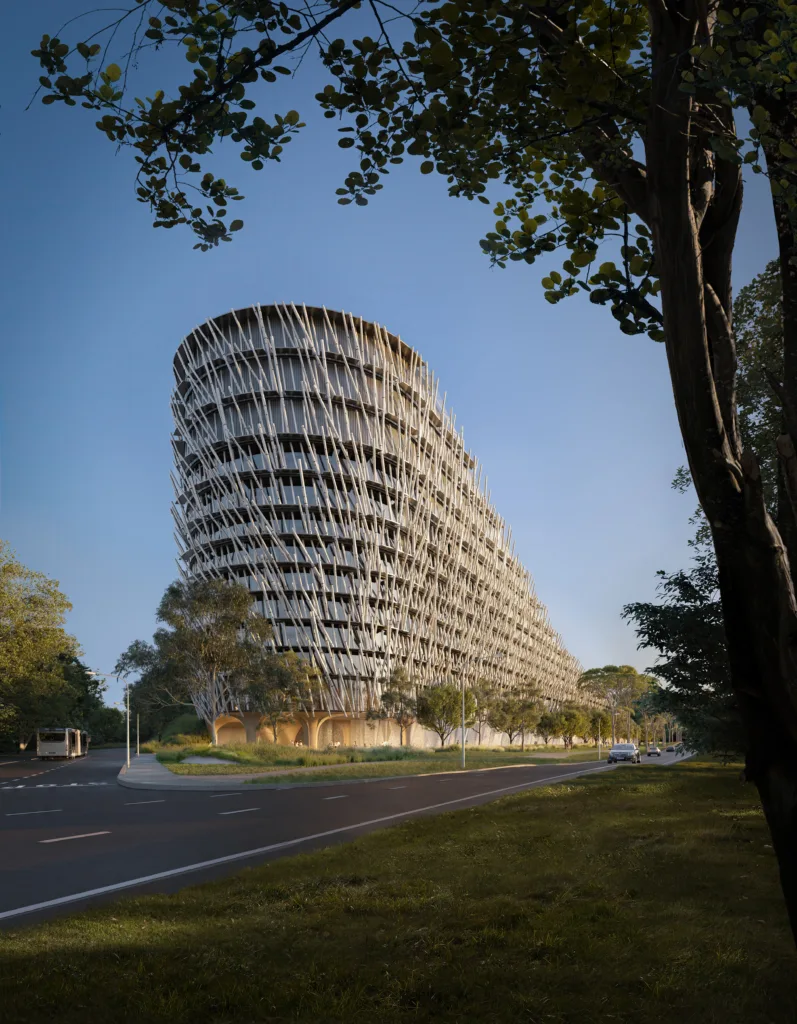
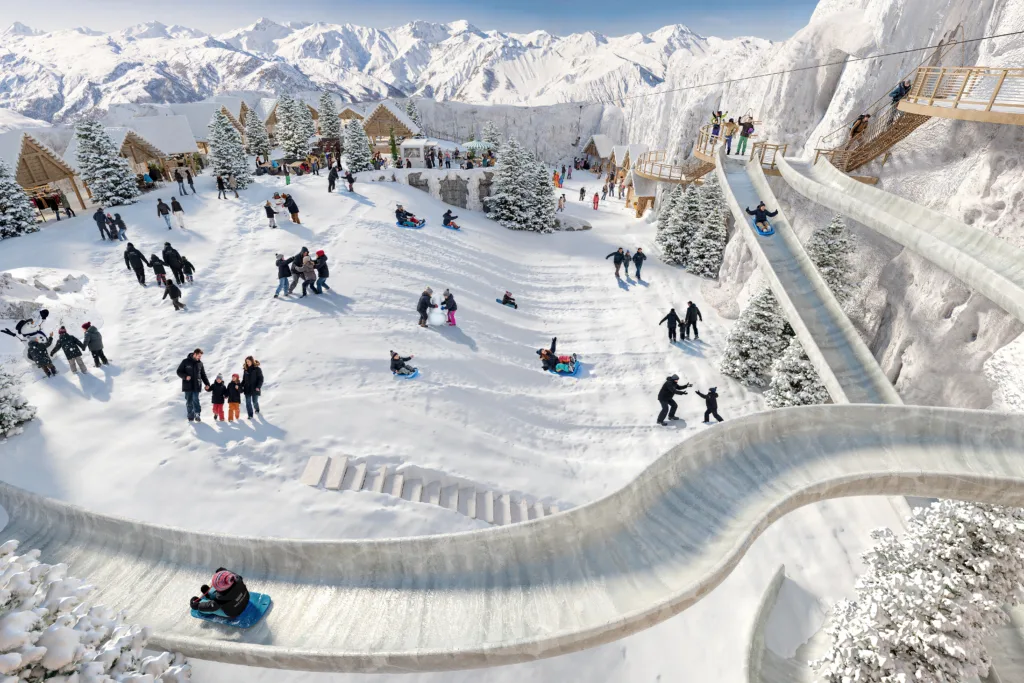
The development will feature real, chemical-free snow, a 300-metre advanced ski run, learning zones, snow-play areas for all ages, and a fully immersive alpine environment designed as both a high-performance sporting facility and a family-friendly tourist destination.

While global in ambition, the project is quietly shaped by Greek values. Central to the vision is filoxenia, the ancient Greek concept of radical hospitality.
“I hadn’t really thought about it before,” Magnisalis says, “but filoxenia is exactly what we’re trying to create.”

For him, that means inclusion without exception.
“Everyone’s welcome. Everyone’s treated like family,” he explains. “That warmth, that’s what people should feel the moment they walk in.”

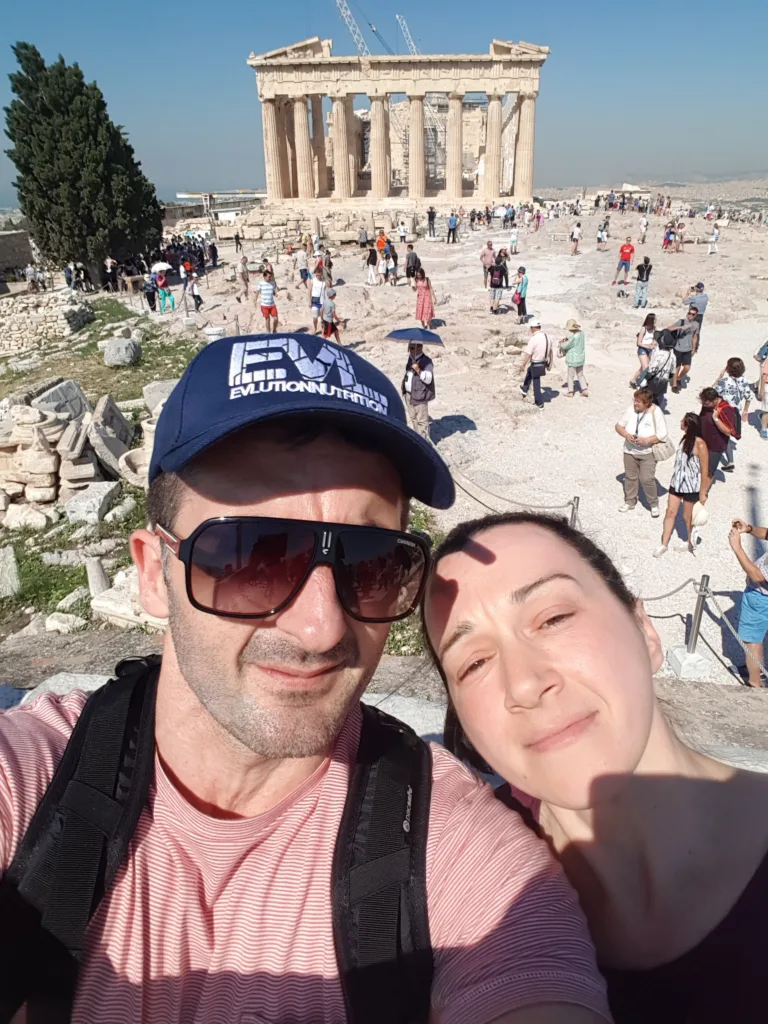
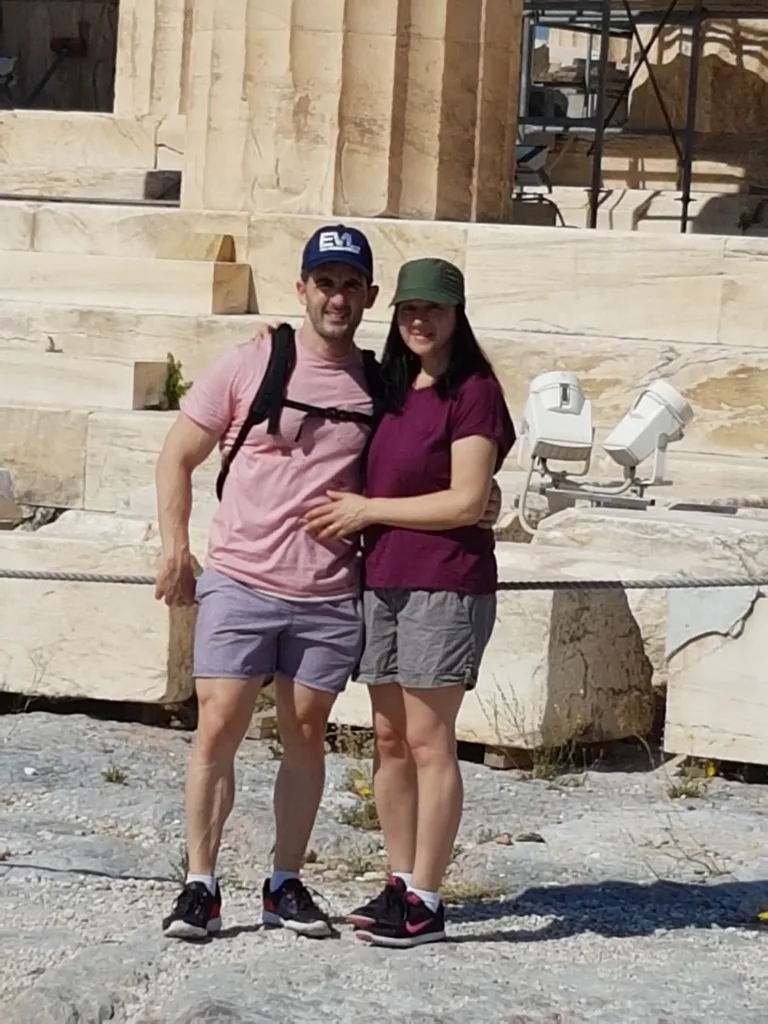
It’s a sense of belonging he only fully understood after visiting Greece in 2017.
“The moment we landed, it felt like home,” he says. “You hear Greeks arguing over the pettiest things and think, ‘Yep—I’m home.’”
The legacy of having a go

That grounding, of family, culture and belonging, also shapes how Magnisalis approaches risk. Married to his wife Vicky for 26 years, after meeting at the legendary Kazzie Club in Kingsford, he says the project isn’t about ego. It’s about challenging a generational instinct to play it safe.

“A lot of us grow up thinking, ‘What will people say?’” he admits. “Don’t aim too high. Don’t risk failing.”

Winter Sports World, he hopes, sends a different message.
“You can have a go,” he says. “You can push boundaries. You don’t have to stay small because you’re afraid of failing.”

When the doors open in 2028, Winter Sports World won’t just be a landmark of steel and snow. It will stand as proof that a boy who once couldn’t speak the language, and a man who has never skied, has helped rewrite the future of Western Sydney.

Giorgos Lygouris turns 104 after a life lived between Greece and Australia

0

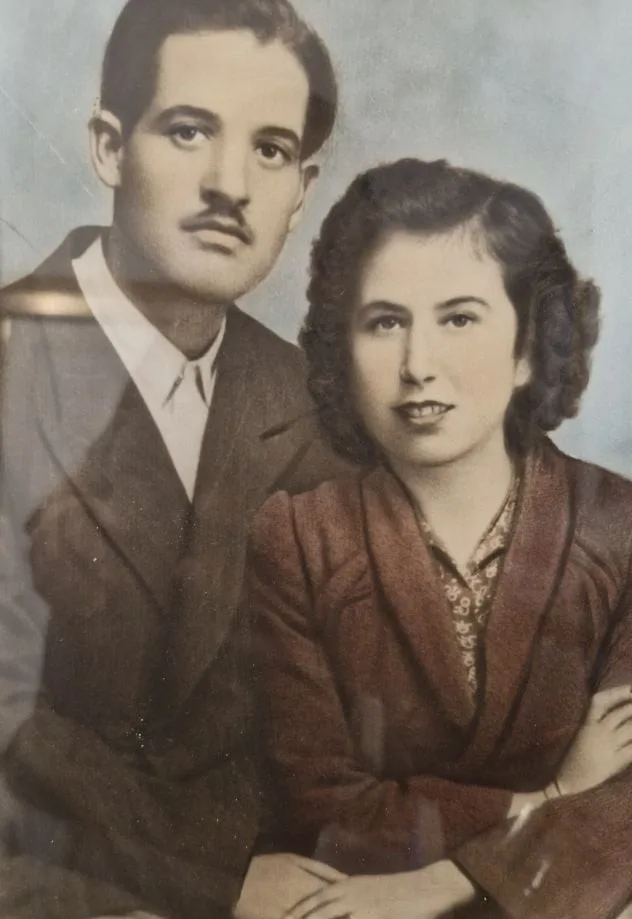
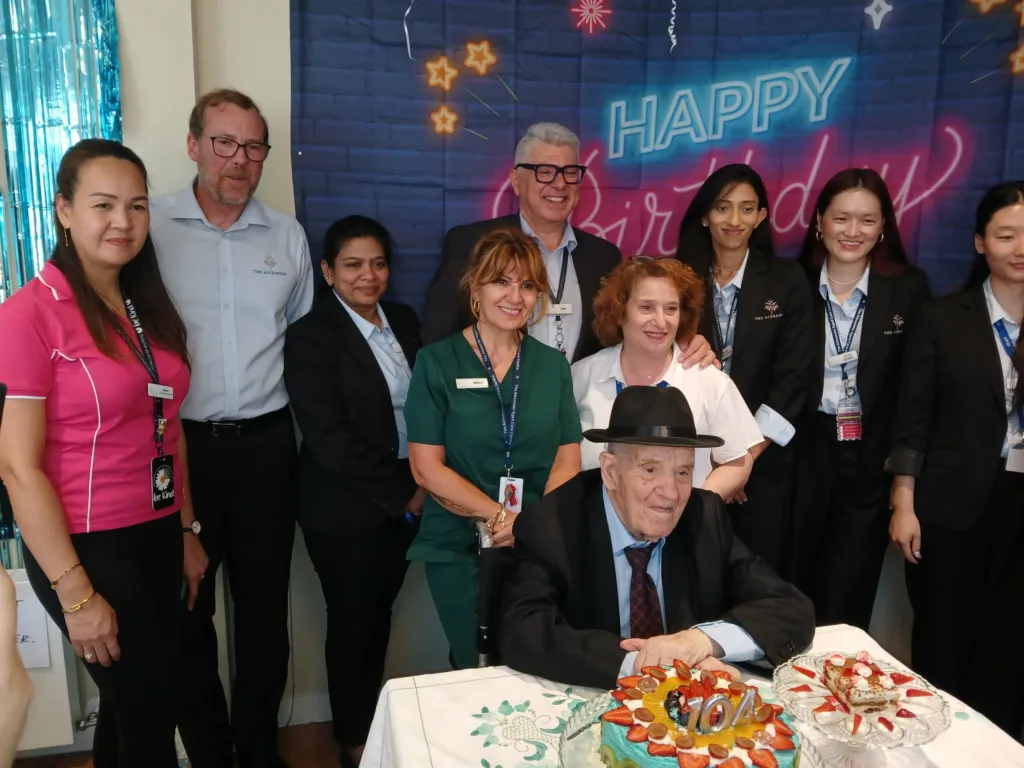
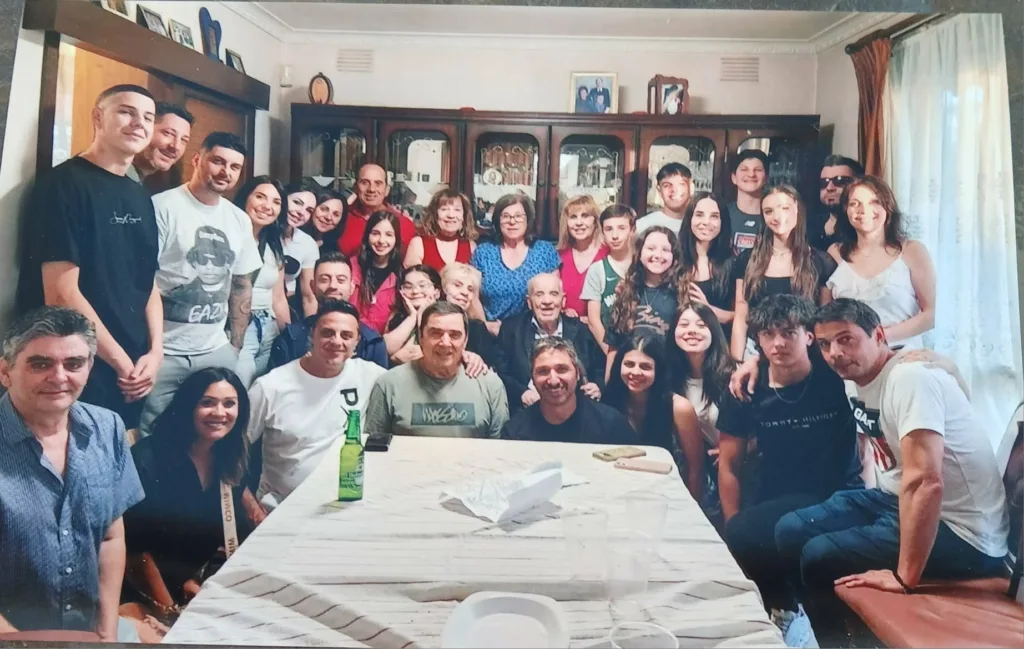
Giorgos Lygouris turned 104 on 20 January, celebrating the occasion with cake, balloons, and his five children and their partners, 14 grandchildren and 22 great-grandchildren, all quietly convinced he may yet live to see a great-great-grandchild.

Ask him about the milestone and he responds with a shrug and a quiet smile.

“He has always been this way. No fuss. No complaints. No drama. Not about pain. Not about illness. Not about life,” says his daughter, 3XY radio presenter Mary Tsimikli-Economopoulou. “

The birthday was hosted by The Alexander Aged Care Centre in Clayton, where Giorgos has lived since November 2024.

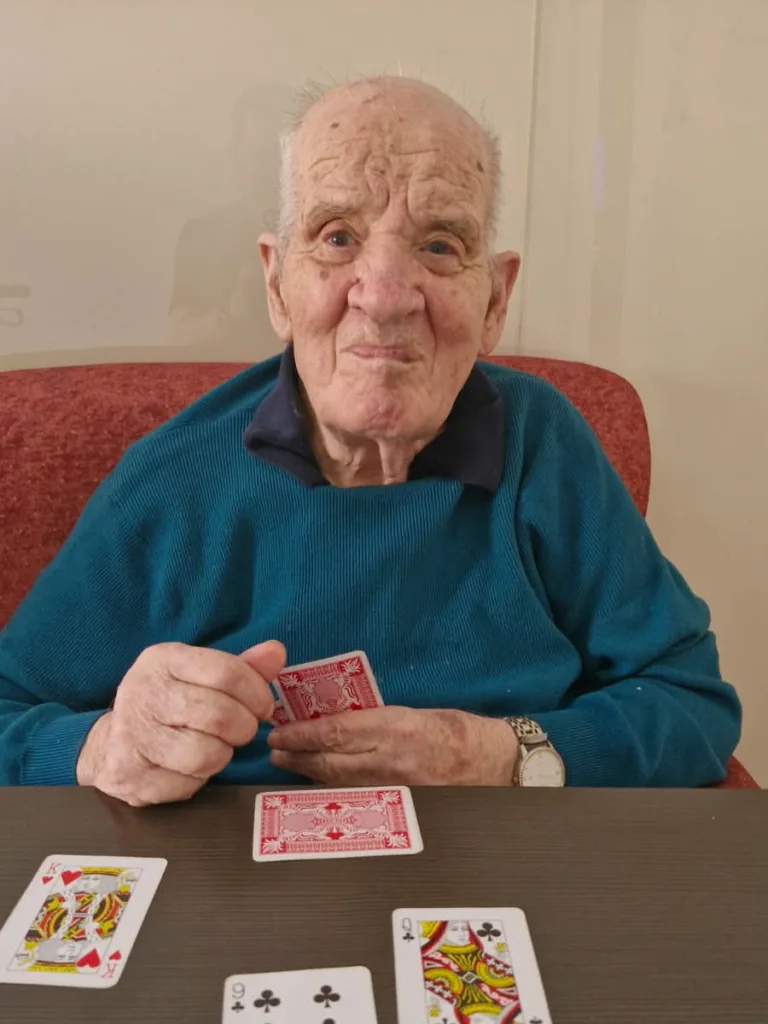
“Before that, he was living independently in his Springvale South home, assisted by daily carers and daily visits and care by his children. He enjoyed cooking, tending his garden and playing cards, biriba, always without money, counting cards with incredible precision,” Mary says. 

“He rarely took painkillers, he smoked until the age of 55 and quit only when the doctor frightened him.”

COVID never touched him, nor did loneliness as he was always surrounded by family. 

Born into a broken century

Giorgios was born in Kalamata on 20 January 1922, the year of the Asia Minor Catastrophe, into a Greece fractured by war, poverty and political upheaval. For a man born that year, life expectancy hovered closer to 40 than 100, and survival beyond infancy was far from assured. Statistically, 20 per cent of babies born in 1922 Greece died before their first birthday.

That Giorgos is still here places him among a statistical rarity: one of fewer than 500 Australians estimated to be aged 104 or older today of which 75 per cent are women.

Across his lifetime, he has outlived wars, migrations, governments, heartbreak, and almost everyone who once knew him as a young man.

Law, resistance, and a vanished brother

As a young adult, Giorgos became a χωροφύλακας, a rural policeman sworn to uphold order while Greece tore itself apart during the Civil War. History placed him on one side of the divide, and his brother Theodoros on the other.

“Theodoros was an antartis,” Mary says. “Dad was the law. His brother was the resistance.”

When Theodoros was facing arrest and trial, Yiorgos asked for a favour: not acquittal, just time.

“They held him for one night,” Mary says. “By morning, he was gone. They said he escaped, but no one ever heard from him again. We believe he was killed. My father felt betrayed.”

There was no body. No grave. No answers. Their mother unravelled, turning to psychics in her grief. Giorgos said little.

“He never spoke about it,” Mary says. “But it marked him.”

When his first son was born, Giorgos named him Theodoros after his lost brother. He never explained why. He didn’t need to.

Love, rules and survival

Marriage in post-war Greece came with conditions. As a χωροφύλακας, Giorgos could only marry if his bride brought a dowry. He eventually married Athanasia: a seamstress, sharp-willed and ambitious.

“He never called her Athanasia,” Mary says. “He called her koritsi mou (my girl).”

She drove; he never learned. She pushed; he steadied. Together they raised five children and pursued opportunity wherever it appeared.

They left their children in Athens and migrated alone to Germany. They worked. Endured. Returned. Then, in 1967, they all migrated to Australia under an assisted scheme, as Greece fell under dictatorship.

Mary, who was 12 at the time, remembers it clearly.

“Dad didn’t like Germany,” she says. “But Australia, that was different.”

The quiet grind

In Australia, Giorgos worked for decades at General Motors Holden. He never mastered English, just enough to get by.

“That was the only job he ever had here,” Mary says. “And he retired from there.”

Despite strong Kalamatian networks in Melbourne, he avoided community politics.

“He avoided associations,” Mary laughs. “Everyone wanted to be president. He went once and never went back.”

Loss without bitterness

Athanasia died almost eight years ago, and Mary remembers her father truly breaking then, as well as when he lost his granddaughter.

Yet even then, he did not harden.

These days, his sentences are shorter and he avoids phones. He sings instead: Dalaras, Parios, Dionysiou. 

At the Alexander Aged Care Centre, Giorgos moves with a four-wheel frame, chooses his activities carefully and participates only on his own terms. Greek Café Days lift his spirits. Occasionally he joins in during sing-alongs of Greek songs. Familiar language. Greek films and, of course, cards.

“He plays strategically,” Mary says. “Counting hands, holding back, knowing exactly when to drop the ace.”

Until recently, he read everything — The Greek Herald, Ta Nea, Neos Kosmos, Ellinis. Greek-Australian media mattered deeply to him, including the world his daughter would later enter.

As a young journalist, Mary would collect freshly printed copies of The Greek Herald from its Gibb Street press publisher Theo Skalkos operated in Melbourne. She would take them straight to her father. 

Through her, Giorgos is also linked to a formative chapter of Greek-Australian broadcasting. Mary worked under Skalkos when he bought Elliniki Ypiresia in Carlton and later founded The Voice of Greece.

His children once asked him if he regretted coming to Australia. 

“This is a question I should ask you,” he said.

They told him the truth, that they would not change a thing. 

“Then I don’t regret coming,” he said.

He has survived by saying little, enduring much and loving deeply; a quiet outlier in the statistics, and a giant in the lives that gathered around him this January.

If that is not a life worth celebrating, nothing is.

Another century marked 

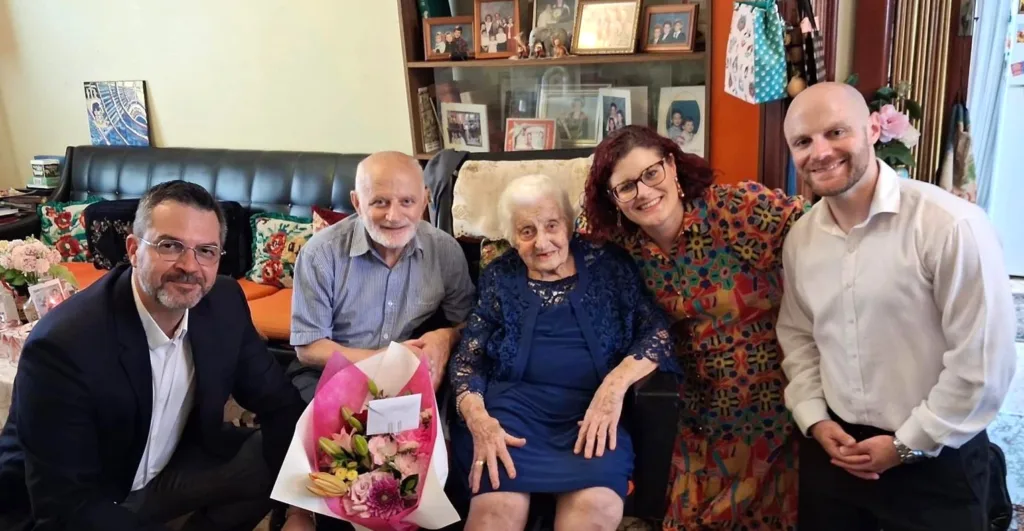
Giorgos was not alone in marking a remarkable milestone. Late in January, Mrs Georgia Sofatzis celebrated her 100th birthday, surrounded by family and memories that span Greece and Australia.

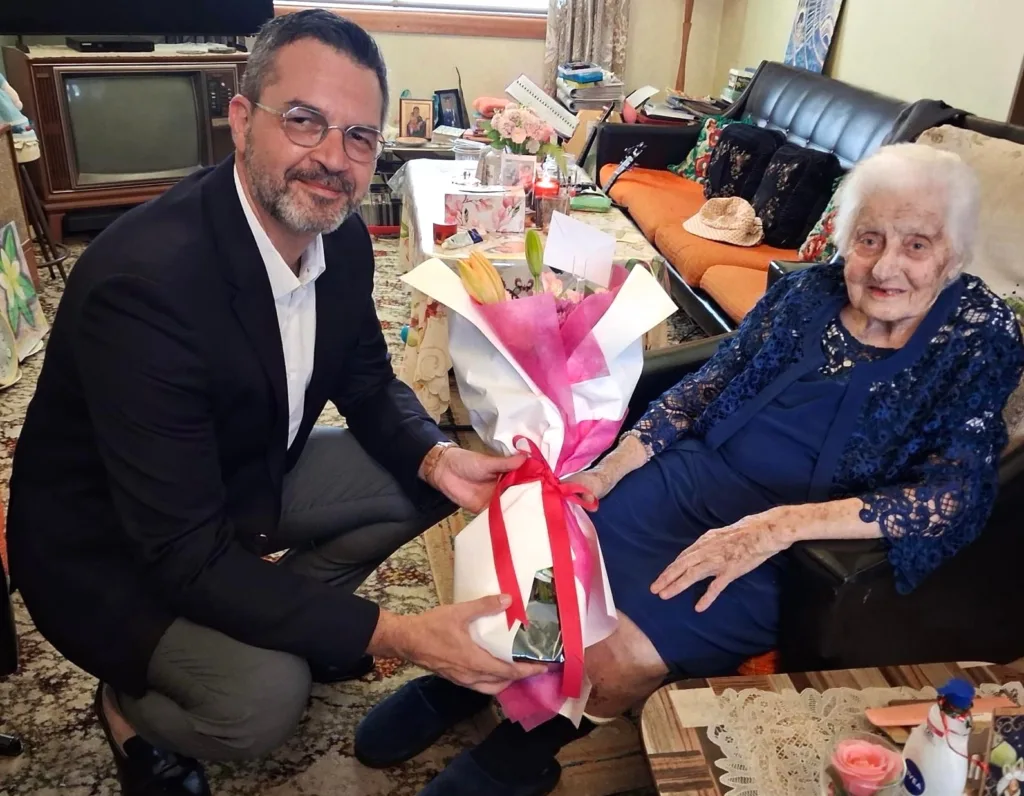
To mark the occasion, Mrs Sofatzis was visited by the Consul General of Greece in Sydney, George Skemperis, who congratulated her and thanked her for her longstanding contribution to her family and the Greek community. During a particularly moving meeting, she shared moments from her life in Lemnos and Australia, and recited beloved Greek poems.

Together, the two milestones offered a quiet reminder of the generations of Greeks whose lives have bridged hardship, migration and belonging – and whose stories continue to shape the fabric of Greek-Australian life.

Sydney to host first UNESCO-recognised World Greek Language Day celebration

0

Sydney will host its first celebration of World Greek Language Day on Monday, 9 February 2026, marking a significant international milestone following the recognition of the Day by UNESCO in November 2025.

The event will be held at the University of Sydney’s Refectory and is being presented by the Consulate General of Greece in Sydney in collaboration with the Department of Modern Greek and Byzantine Studies, University of Sydney.

World Greek Language Day celebrates the enduring global influence of the Greek language as a cornerstone of philosophy, democracy, science and culture, and its continued relevance within contemporary multicultural societies.

The evening will open with a welcome reception, followed by official greetings from the Consul General of Greece in Sydney, Giorgos Skemperis, and Professor Avril Alba, Head of the School of Languages & Cultures at the University of Sydney.

A key highlight of the program will be the presentation of awards to HSC top achievers in Modern Greek courses, recognising excellence in Greek language studies among secondary students.

The keynote address will be delivered by Professor Vrasidas Karalis, Chair of the Department of Modern Greek and Byzantine Studies, who will reflect on the cultural, literary and philosophical legacy of the Greek language and its place in the modern world.

The program will also feature a live musical performance of Erotokritos, the iconic 17th-century Cretan poetic song, performed by the Cretan band IXO NYX.

A panel discussion moderated by Professor Karalis will follow, with panellists including actress, author and public speaker Mary Coustas and entrepreneur Mark Bouris AM, exploring the role of language in identity, communication and cultural continuity.

The evening will be hosted by journalist Tom Skolarikis and digital creator Kalliopi Roditis.

Event details

  • Event: World Greek Language Day
  • Date: Monday, 9 February 2026
  • Time: 5:30pm
  • Venue: The Refectory, University of Sydney
  • RSVP by: 29 January 2026
  • RSVP email: pdo.syd@mfa.gr

Saint Gregory feast and Philotimo Festival unite community in Melbourne

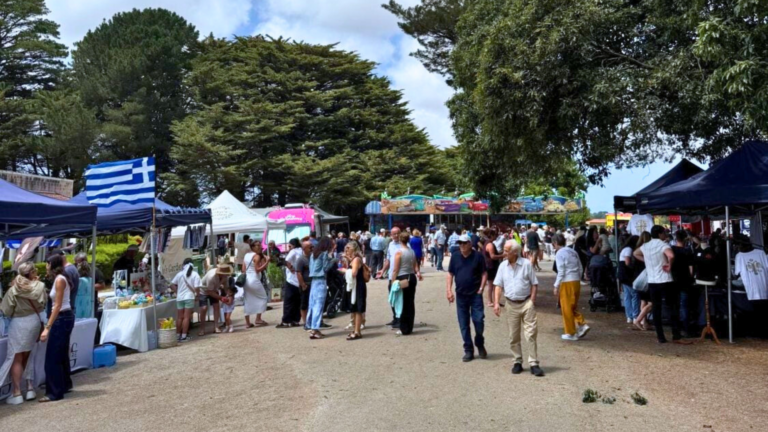
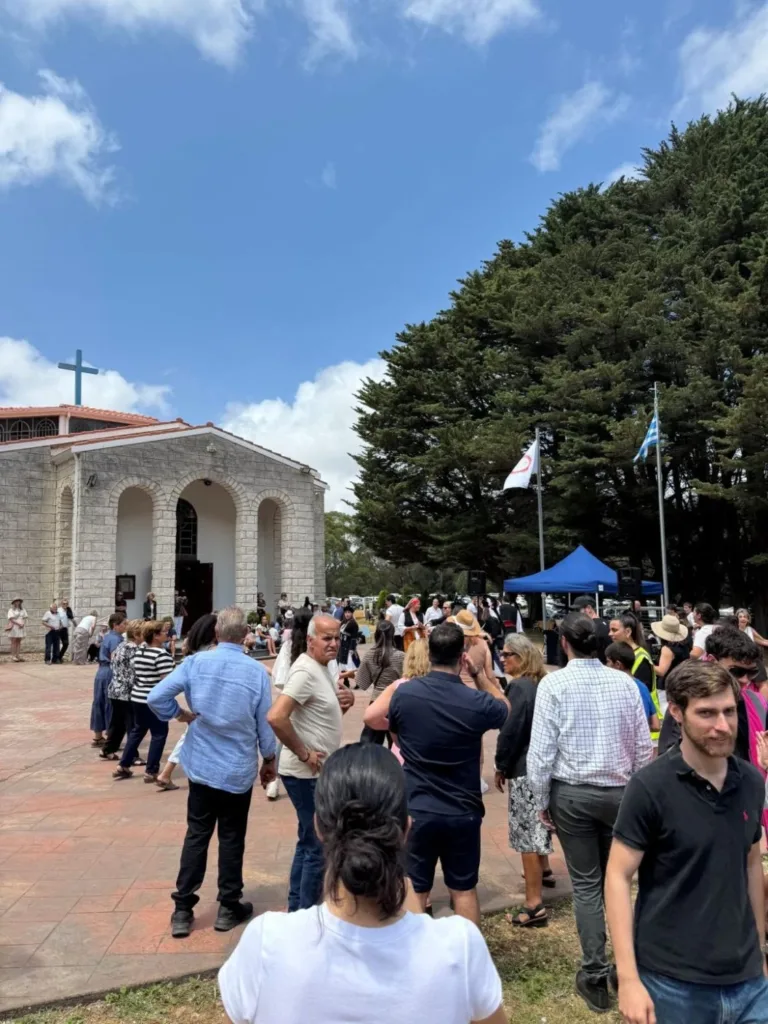
The feast of Saint Gregory the Theologian was marked with reverence, joy and strong community participation on Sunday, January 25, at the Church of Panagia Kamariani, as parishioners and visitors gathered for a day that combined worship, tradition and youth engagement.

Matins and the Divine Liturgy were celebrated with ecclesiastical splendour, presided over by His Grace Bishop Kyriakos of Melbourne. He was joined by the parish priest, Archimandrite Fr Irinaios Koikas, along with clergy from parishes across the Greek Orthodox Diocese of Melbourne, reflecting the broader diocesan significance of the feast day.

Panagia Kamariani, a parish deeply connected to faith, family and community life, was filled with worshippers of all ages, many of whom travelled from surrounding areas to take part in the celebrations honouring one of the great Fathers of the Church.

Following the conclusion of the Divine Liturgy, the parish grounds transformed into a vibrant gathering place as the GO Youth Melbourne ‘Philotimo’ Festival 2026 commenced. The festival, organised under the auspices of the Greek Orthodox Diocese of Melbourne, aimed to strengthen bonds within the community, promote tradition, and highlight the vital role of young people in the present and future life of the Church.

Families, children and young people came together to celebrate in an atmosphere marked by warmth and inclusivity. Parades featuring children from the Diocese’s Sunday Schools were held, while traditional Greek dances performed by parish and youth dance groups added colour, movement and cultural pride to the day. The strong presence of families and youth underscored the festival’s central message of continuity, participation and shared responsibility.

Speaking following the celebrations, Fr Irinaios expressed his deep gratitude and emotion at the strong turnout and enthusiastic engagement of the faithful. He noted that the success of the festival reflected not only the commitment of volunteers and families, but also the broader pastoral vision of Archbishop Makarios of Australia.

Fr Irinaios highlighted the Archbishop’s consistent presence, support and paternal care for youth and parish initiatives, noting that such events strengthen unity across parishes and encourage younger generations to remain actively connected to the life of the Church.

The GO Youth Melbourne ‘Philotimo’ Festival once again stood as a living expression of Orthodox faith in action – bringing together worship, culture and community – while demonstrating the enduring values of philotimo, cooperation and service. For those in attendance, the day offered not only celebration, but a renewed sense of belonging and shared purpose within the Greek Orthodox community of Melbourne.

John Halikos announces departure from Kalymnos following bitter experience

0

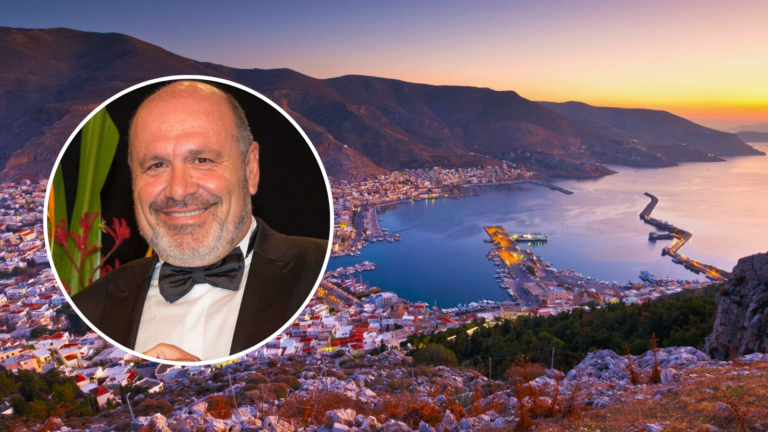
Businessman and long-time supporter of Kalymnos, John Halikos, has announced his decision to leave the island, citing deep personal hurt and disappointment following a recent incident that he says profoundly affected his dignity.

In a letter addressed to his compatriots and shared with local media, Mr Halikos said the decision to depart from Kalymnos – which he frequently refers to as “my island” – was one of the most difficult he has made, after decades of involvement, contribution and support to the local community.

Widely regarded as a benefactor of the island, Mr Halikos has played a significant role over many years in supporting major infrastructure projects, social initiatives and charitable causes, contributing to daily life and community wellbeing in Kalymnos and neighbouring Pserimos. Despite this, he said recent developments left him feeling “bitterness, distress and, above all, an insult to my dignity.”

Mr Halikos said the incident, which he described as minor in nature, resulted in the immediate initiation of criminal proceedings against him – an experience that he said deeply affected him on a human level.

“I am not hurt by the application of the law,” he wrote. “I believe the law must apply equally to everyone. What hurt me was the absence of understanding, moderation and respect for a person who, for decades, stood consistently and selflessly beside this place.”

In his letter, Mr Halikos also expressed disappointment at the conduct of certain political factions, accusing some local leaders of politicising the matter during a Municipal Council meeting and choosing not to attend – actions he said discredited both the event and his personal standing.

At the same time, he expressed gratitude to those who offered him moral support, including local officials, institutional representatives and ordinary citizens who reached out to him privately.

“I felt deep satisfaction from the sincere and beautiful words I heard from many of my compatriots,” he wrote.

Reflecting on his long-standing involvement on the island, Mr Halikos said his support was never motivated by obligation, recognition or titles, noting that he has never sought to be described as a “benefactor.”

“Everything I have offered has come from emotion, love and respect for the place and my people,” he wrote.

He also revealed that over the years his business activities – which he described as having a strong social dimension, aimed at local development and employment – had repeatedly been the subject of complaints and, at one point, false accusations to financial crime authorities. He said those claims were ultimately dismissed, with all his activities found to be legal.

At the age of 65, he said, being summoned to police and facing criminal proceedings was a deeply distressing experience that ultimately led him to his decision.

“With a heavy heart, but with a clear conscience, I make the decision to leave my homeland today,” he wrote.

While acknowledging that his departure – and the possible closure of his businesses – could have economic and social consequences for Kalymnos and the families he employs, Mr Halikos said he remains committed to doing everything possible to avoid that outcome.

He concluded by expressing hope that time would ease the emotional burden he now carries, and that he may one day return to Kalymnos to continue offering and contributing to the island and its people.

Novak Djokovic settles in Athens ahead of ATP 250 campaign

0

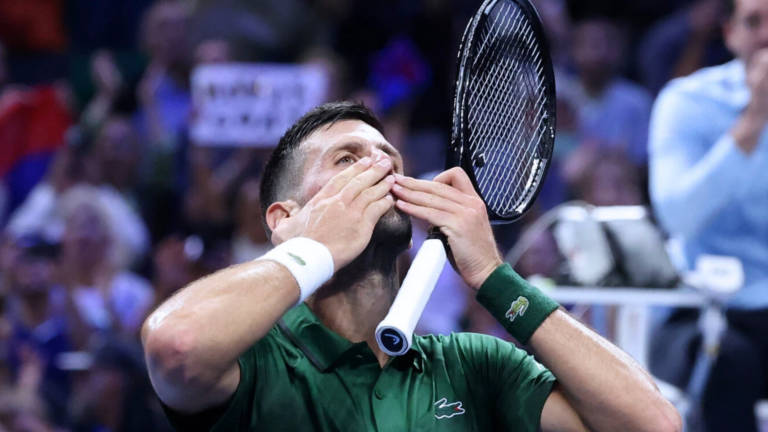
Novak Djokovic, 24-time Grand Slam champion, has made Athens his home since September, moving from Serbia with his family.

The Serb will begin his ATP 250 Athens campaign on Tuesday against Alejandro Tabilo, seeking his second title of the season.

Djokovic describes his life in Greece as enriching and grounding, allowing him to slow down and spend more time with his wife and two children.

“In the last two months, we have been testing life in Greece, and the feelings are very positive. We feel welcome, people are very kind, generous and friendly to us,” he said.

The 38-year-old has embraced a calmer routine between training and matches, finding a family-focused environment that has recharged his competitive drive ahead of the season’s final stretch in Athens and Turin.

Despite a lighter schedule, Djokovic remains among the world’s top players, having reached all four Major semi-finals this year and deep runs in Miami and Shanghai.

He will aim for his 101st ATP title in Athens, closing in on Roger Federer’s 103 career titles, while balancing his professional ambitions with his new family life in Greece.

Severe storms continue to hit Greece causing flooding and red alerts

0

Heavy rain and thunderstorms have swept across much of Greece, with the Athens National Observatory and Meteo warning that some areas could also see hail.

The storms, which began in western Greece, are spreading to central Greece, southern and eastern Peloponnese, Evia, Crete, the Cyclades, Sporades, the northern and eastern Aegean islands, and the Dodecanese.

Meteo classified the rainfall as category three out of five, with six northern regions placed on red alert. Strong southerly winds are expected across the Aegean through the afternoon.

The severe weather has already caused localised flooding in Attica, halting traffic along the Varda stream from Spata to Pikermi.

The fire service received about 40 calls for water pumping, debris removal, and fallen trees.

Two people were rescued unharmed after their vehicle was swept into a stream near Pikermi and Spata.

Authorities urged residents to avoid flood-prone areas and follow all safety instructions.

Banned doctor Bill Tolis faces court over steroid import charges

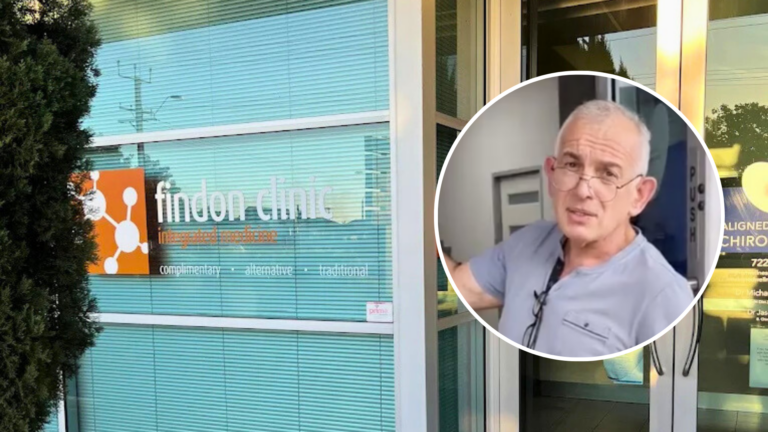
Bill Tolis, the 61-year-old former GP banned from providing health services in 2022, is facing court in April after Australian Border Force seized more than 200 vials of steroids at his Adelaide clinic.

Tolis, who previously practiced at Findon Clinic in Woodville South, has been charged with importing Tier 1 goods, including performance and image-enhancing drugs.

The South Australian Civil and Administrative Tribunal banned Tolis from practicing medicine and naturopathy for seven years after finding he had prescribed harmful medications, including anabolic steroids, and failed to maintain proper patient care.

AHPRA has warned that Tolis may still be providing health services, describing him as a “serious risk” to the public.

Outside court, Tolis denied importing steroids and said he was “just managing” the clinic, disputing claims he posed a risk.

Authorities continue to investigate, and providing health services while banned carries penalties of up to three years in prison or fines up to $60,000.

Source: The Advertiser.

Ange Postecoglou returns to football as UEFA Technical Observer

0

Former Celtic and Nottingham Forest manager Ange Postecoglou has returned to football just three months after his brief stint at Nottingham Forest ended following a string of eight winless games.

The Greek Australian, who previously won five trophies in two years with Celtic, including a treble, and guided Spurs to Europa League glory, has joined UEFA’s Technical Observer Panel.

In his new role, Postecoglou analyses the technical and tactical aspects of matches, alongside other former top coaches like Rafa Benitez, Roberto Martinez, and Ole Gunnar Solskjaer.

On Tuesday, he observed Arsenal’s 3-1 Champions League victory over Inter Milan, highlighting striker Gabriel Jesus’ sharp instincts in scoring both goals.

Postecoglou said of Jesus’ performance: “Both goals were instinctive… a demonstration of a goalscorer’s instincts as, while others are watching, he is anticipating an opportunity to score.”

Fifth worker found dead after Trikala biscuit factory explosion

0

Fire brigade investigators have located the body of a fifth employee following a deadly explosion and fire at the Violanta biscuit factory in Trikala, central Greece, early Monday, bringing the death toll to five, authorities said.

According to sources, firefighters identified the area where the missing worker, a woman, was located, though recovery will require the removal of debris due to extensive structural collapse.

The bodies of four other victims, all women, were recovered earlier, and relatives have been contacted to begin identification procedures.

Seven people, including a firefighter, were injured in the incident and are reported to be in stable condition.

The explosion and ensuing fire broke out shortly after 4am during the night shift, causing a large section of the factory to collapse. At the time, 13 people were believed to have been inside the facility.

Arson investigators are continuing to examine the cause of the blast, with authorities saying a gas leak combined with a spark is the most likely scenario.

Preliminary findings indicate the initial explosion occurred at the factory’s gas-operated furnaces.

Source: Ekathimerini.