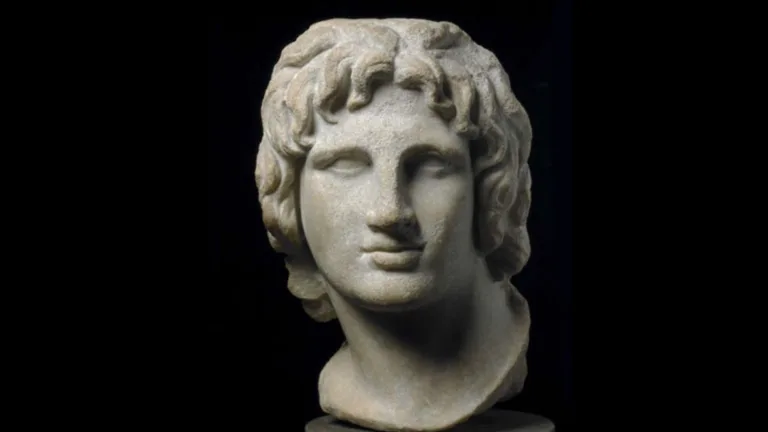
The Temple of Boom – a large-scale reimagining of the ancient Greek Parthenon unveiled at the National Gallery of Victoria (NGV) in 2022 – has been found dismantled in a remote cattle grazing paddock.
A hiker encountered the pieces of the Temple of Boom while exploring the Craigieburn Grassland Nature Reserve in July this year.
The NGV first revealed the piece in November 2022 as the winner of its coveted annual Architecture Commission. Built to approximately one-third the size of the Parthenon, the piece’s lightweight concrete pillars served as a canvas for several local artists.
The work was exhibited for nine months before it was pulled apart and relocated to an undisclosed destination (even unknown to its creators).
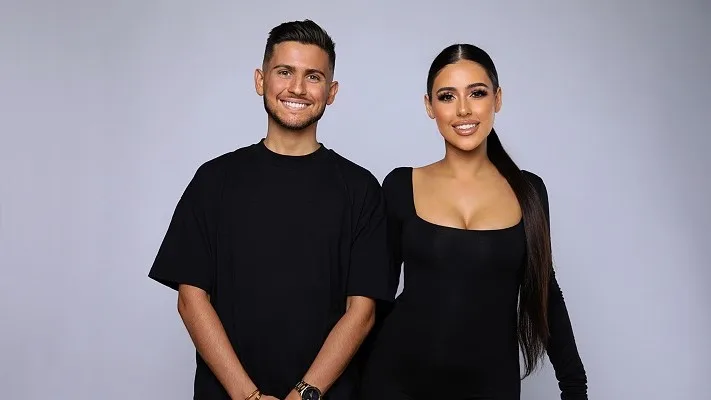
‘Temple of Boom’: A reimagining of the Parthenon designed by Adam Newman and Kelvin Tsang on display at NGV International.
It has since been found broken down into hundreds of stacked pieces wrapped in stretchy plastic and polystyrene, and roped off behind a buzzing electric wire.
Title deeds indicate the land is privately owned, and is in the early stages of being developed into a large logistics park.
The NGV commented on the discovery, saying “wherever possible the building materials are designed to be recycled, reused or relocated. The materials are in the process of being moved to a storage location.”
As we enter day 10 of the Paris Olympics, Team Hellas has made some exciting progress in the 2024 tournament.
Greek long jump champion Miltiadis “Miltos” Tentoglou, who won Greece a gold medal in the 2020 Tokyo Olympics, advanced to the final of the Paris Olympics with an 8.32-metre jump on Sunday, August 4. He will compete in the event’s finals on Tuesday, August 6.
In other events, Greek high jumper Tatiana Gusin and hammer thrower Christos Frantzeskakis will make their Olympic final debuts this week. Frantzeskakis aims to improve his season’s best hammer throw of 76.86 metres.
Also among the finalists in her event on Sunday afternoon will be Greek skeet shooting athlete Emmanouela Katzouraki, who scored 50/50 shots in Sunday’s qualifying event.
Greece’s basketball team has advanced to the Olympic Games quarterfinal round after defeating Australia 77-71 and Serbia’s win against South Sudan on Sunday morning. The quarterfinal showdown will be on Tuesday, August 6, with the Greek team playing against Germany for a place in the semis.
Milena Kontou and Zoi Fitsiou.Antonis Papakonstantinou and Petros Gaidatzis.
In rowing, Greece gained two more bronze medals as Milena Kontou and Zoi Fitsiou placed third in the lightweight women’s double sculls on Friday, August 2.
Earlier, Antonis Papakonstantinou and Petros Gaidatzis won the bronze medal in the lightweight men’s double sculls.
Australia’s official terror alert level has been raised to “probable” amid heightened community tensions over the war in Gaza.
Security authorities believe the chances of a violent extremist act are now more likely than when authorities lowered the alert level to “possible” in November 2022.
ASIO’s director-general Mike Burgess said Australia’s security environment had become more volatile and unpredictable.
Burgess reiterates that while Gaza is not the cause of the terror alert increase, it was a “significant driver”.
“It’s driven more emotion and heat into society,” Burgess said.
When asked about the practical changes of this decision, Mike Burgess said ASIO and his law enforcement colleagues are “reviewing [their] caseload of assessed violent extremists.”
The Greek women’s team prevailed 11-4 against France on Sunday, August 4 in a water polo match that ended the first phase of the competition at the Paris Olympics.
Although Greece‘s national team started very concentrated in defence and took a 2-0 lead, France’s goalkeeper Mia Rycraw made some great interventions. The home team found solutions at some point and with a 3-0 run went ahead (3-2), with the Greek team remaining without a goal for 11 minutes.
Greece missed a penalty which was saved by Rycraw and wasted four chances, before Eleni Xenaki found a solution with a boyish goal from 2 metres to make it 3-3 at halftime.
🤽♀️Η εθνική ομάδα πέτυχε την πρώτη νίκη στο Ολυμπιακούς Αγώνες του Παρισιού, επικρατώντας της Γαλλίας με 11-4 και θα είναι στα προημιτελικά, όπου θα αντιμετωπίσει την Αυσττραλία! 💪Συγχαρητήρια κορίτσια!#TeamHellas#waterpolo#Paris2024pic.twitter.com/7O0dFQNjSl
— Ηellenic Olympic Committee (@HellenicOlympic) August 4, 2024
The overall Greek streak reached 4-0 and the representative group led 6-3, before France’s Ema Vernoux reduced it with a penalty in the last minute of the third period.
Two quick goals from Vasiliki Plevritou and Xenaki, at the beginning of the fourth period, practically “locked” the victory of the national team. The score reached 11-4 and the Greek team had a chance to reach +8 points, which would have given them third place.
As it turned out however, this was not the desired scenario, since it would have brought the Greek team up against the consistently very strong Netherlands.
Greece will next face Australia in the quarterfinals on Wednesday, August 7 at 3.00am (Australian time).
South Melbourne FC have won the 2024 Dockerty Cup, surviving the second half of extra time down a player to win 5-4 penalties at The Home of the Matildas on Saturday afternoon.
In what was an extremely hard-fought affair, the match remained scoreless through the entire 120 minutes of regulation play, the match largely void of massive goal-scoring chances until the latter stages.
In the end, it was South that prevailed through the lottery of the penalty shootout, their goalkeeper and Jimmy Mackay medal winner, Javier Lopez proving crucial with two saves to hand them the trophy.
Post-game, South Melbourne Captain Harry Sawyer paid tribute to their opposition and his team for the commitment that’s driven them so far in the competition.
“It went right down to the wire, it could have gone either way,” he said.
“Penalties is an unfortunate way to go out, but [Oakleigh] should hold your head high, you played really well and pushed us all the way.
“I just want to say thank you also to the federation and also our loyal fans, everyone that came out today. You pushed us over the line and brought us home today.
“Also want to thank all the families of the players, we get up early for training, 6am roll out of bed, probably wake you up, thanks a lot.”
In what was an uncharacteristically calm and measured first half, both teams were content early to feel each other out with no chances of any significance in the first 45.
A yellow card brandished to Oakleigh’s Stefan Valentini for an extremely physical challenge from behind, whilst battling to win an aerial ball early in the second period, was the boiling point that seemed to spark both teams into action and stepped up the tempo of the game.
In the minutes that followed, a flurry of chances fell South’s way. First a Harry Sawyer header that almost skimmed the post on its way over the byline.
Photo: Behind The Lens – LMR / Facebook.
Then, one of South’s most prolific goal scorers of this year’s cup run, Andy Brennan who fired an extremely dangerous ball across the face of the goal that went unfound, before Brennan again found himself on the edge of the box, but his shot went straight into the hands of Oakleigh’s Nick Feely.
The chances went each way though, a deep cross from the Cannons’ Emlyn Wellsmore expertly placed, finding Alex Salmon who was unable to convert from close range.
Tempers flared again as Wellsmore committed to a hard ground tackle, taking Sawyer’s feet with him and sending the talisman to the ground clutching at his ankles.
A yellow card did not do much to calm South’s protests, but the passion of the game was alive and well, heading towards the extra 30.
It was again South’s big man Sawyer rising high off a corner, his resulting header a few feet wide, unable to break the deadlock before the first 15 of extra time expired.
The state of the game shifted massively however when South’s Max Mikkola was sent for an early shower for making contact to the throat of Brodie Boyce just before half time of extra time.
The final 15 of extra time was all Oakleigh as they pressed home their man advantage and created plenty of big opportunities in front of goal.
Asad Kasumovic hit the post off a header, whilst the best save of the match from Lopez denied Alex Salmon’s curling effort from the shoulder of the box.
Despite their persistent pressure, the Cannons were unable to find the breakthrough they needed, sending the game to the lottery of a penalty shootout.
An early save from Lopez meant South held the advantage through most of the first five, until a must-save attempt was remarkably kept out by Feely.
But it was again Lopez who stepped up when South Melbourne needed him most, saving the first effort in sudden death, capping off a remarkable cup final from the South Melbourne keeper.
The save paved the way for Lucas Inglese to step up and slot home the winning penalty, clinching the match and the 100th edition of the Dockerty Cup.
South’s record-equalling ninth Dockerty Cup triumph will be just the first trophy in their sights this season, as they currently sit six points clear at the top of the NPL Men’s ladder with two rounds to play.
Greek gymnast Eleftherios Petrounias won his third consecutive Olympic medal in the men’s rings on Sunday.
Petrounias won the bronze medal in the men’s rings event at the Paris Olympics with a score of 15,100 points, 6,300 for difficulty and 8,800 for execution. China’s Liu Yang and Zou Jingyuan won gold and silver, with scores of 15,300 and 15,233, respectively.
— Ηellenic Olympic Committee (@HellenicOlympic) August 4, 2024
At age 33, Petrounias is the first Greek gymnast to win three Olympic medals and the first athlete of all time, worldwide, in the medals rankings for the specific event. Petrounias had won a gold medal in the men’s rings in Rio de Janeiro in 2016 and a bronze medal in Tokyo in 2021.
“I have worked a lot those past three years, since Tokyo, because this time there were three years [between Olympics] and not four. In between, there were three European and one World [championships] and a surgery,” Petrounias said after his win.
The Greek gymnast added that after a short break, he will start preparing for the 2028 Olympics.
Ο Άρχοντας των κρίκων το έκανε ξανά! Ο συγκλονιστικός Λευτέρης Πετρούνιας είναι χάλκινος Ολυμπιονίκης. Γίνεται έτσι ο πρώτος αθλητής στην ιστορία του αγωνίσματος που κερδίζει τρίτο Ολυμπιακό μετάλλιο.
Θερμά συγχαρητήρια Λευτέρη. Μας κάνεις υπερήφανους. Σε ευχαριστούμε 🇬🇷
Nine years of a successful journey. Nine years in which the “Beyond Borders” festival has transformed Kastellorizo into a symbol of artistic creation and a meeting place for significant creators.
This year’s International Documentary Festival will take place from August 25th to September 1st, acting as a cultural bridge connecting Greece and Australia, with the latter being the honoured country of the festival, recognising its deep cultural connection with the island.
The Greek Herald spoke with the artistic director of the “Beyond Borders” festival, Irini Sarioglou, and in our conversation, its impressive journey is highlighted. Our discussion focuses on the importance of the festival for the Greek diaspora in Australia, while Ms Sarioglou passionately speaks about the new films and international collaborations.
The cultural activities of the festival, the significant personalities involved, such as Mitzi Goldman, and the Australian films that will be screened, offer a unique opportunity for the diaspora to reconnect with its roots through art and culture.
Starting the conversation, we asked Ms Sarioglou to give us a mental tour of the most important screenings and premieres the festival will host this year.
“The 9th edition of Beyond Borders – Kastellorizo International Documentary Festival, August 25th to September 1st, 2024, brings exciting films and many premieres from around the world. The edge of the Aegean, the border island of Kastellorizo, will once again be the beautiful setting, hosting internationally acclaimed creators in one of the most special and beloved film festivals in the country!” Ms Sarioglou said.
Kastellorizo International Film Festival
“This year, the festival received 763 documentaries from 95 countries, many of which have travelled to the biggest film festivals in the world such as Cannes, Berlin, Venice, Locarno, Karlovy Vary, Amsterdam (IDFA), Copenhagen (CPX DOX), and others. The festival’s screening programme includes 37 world, international, and Greek premieres.
“The festival is organised by the Greek Foundation of Historical Studies (IDISME) in collaboration with Ecrans des Mondes (Paris), with invaluable support from globally renowned institutions (ZDF, ARTE, BBC, RAI TV, Movies that Matter, IDF Prague, PHOENIX, FIPRESCI, Ecrans des Mondes, and others).
“Beyond Borders will host three different screening stages: the Main Competition Section, which includes 18 medium and feature-length documentaries, the Micro Competition Section, which includes 24 short documentaries, and the Panorama stage, which will feature daily different film tributes outside the competition. At the festival’s Opening Ceremony, the award-winning documentary Beethoven’s Nine: Ode to Humanity by Larry Weinstein will be screened in its Greek premiere. Inspired by Beethoven’s legendary work, it invites viewers to reflect on the timeless concepts of love and freedom, turning the film into a call for unity and reconciliation. At the Closing Ceremony, the film From Abdul to Leila by Leila Albayaty will be screened. This film is a musical journey between the West and the East, a lyrical documentary that combines the personal with the political, unfolding in a moving way the director’s reconciliation with her Iranian identity and heritage.
Kastellorizo International Film Festival
“A few words about some of the films to be screened: I Shall Not Hate by Tal Barda, Canada, which follows the uncharted journey of Dr. Izzeldin Abuelaish, the first Palestinian doctor to work in an Israeli hospital and deliver babies, whose ethic of forgiveness and reconciliation is tested when an Israeli tank bombs his home, killing his three daughters. We believe the above film, which is participating in the Main Competition Section, is timely, will be widely discussed, and we are happy to introduce it to the Greek audience. Also included are Greek productions that have been screened and found their way to cinemas such as Loxx by Dimitris Zachos and Thanasis Kafetzis and In the Sky of Nothing with Little by Christos Andrianopoulos. At the same time, we can distinguish emerging new talents, whose participation we hope will give voice to works like Anima by Kristin Ivanova, Old Summer by Maria Wider, and Monument by Maksim Avdeev.”
Parallel events with an Australian flavour
In addition to the film screenings, there will be cultural activities with a strong Australian flavour.
“This year marks the launch of the new initiative of the Beyond Borders Kastellorizo International Documentary Festival, the Co-Production Forum ‘Meeting your next co-producer in Kastellorizo.’ Fifteen peer filmmakers – creators, screenwriters, directors, producers, and executive producers – will present their works, share their experiences from completed films, and support at least one documentary project towards co-production, particularly from underrepresented countries, through two-hour meetings with their expertise,” Ms Sarioglou said.
“Furthermore, under the presidency of the General Secretary of the International Federation of Film Critics (FIPRESCI), Klaus Eder, the Critics’ Corner will be held daily during the screenings, where the three FIPRESCI members will discuss with professionals and the public the films screened the previous night in the festival’s competition sections.
“In its second year, ‘Beyond Storytelling’ continues: a film workshop with the participation of students from the collaborating network of film schools, focusing each year on a thematic core intertwined with Kastellorizo and ‘initiating’ its members into all stages of film production, from development to post-production, producing a short documentary. The workshop is conducted in collaboration with Tel Aviv University and Queen’s University in Kingston (Canada), under the guidance of academic Uri Cohen, director Danae Elon, and award-winning director, writer, and photographer Liselle Mei.”
Ms Sarioglou also mentions Mitzi Goldman’s Australian presence.
“As every year, Masterclasses will be held with distinguished creators from the documentary field, such as Mitzi Goldman, co-founder and CEO of Documentary Australia, with ‘Documentary in an Age of Misinformation’ on ways to support investigative documentaries, Elise Aicardi with ‘How to Make a Co-Production with Public Sénat’, for co-productions with the French parliamentary channel, Bruce Clark, former International Security Editor of the Economist and author with the masterclass ‘Twice a Stranger’ on how historical events shape narratives and affect human experience based on the politics and diplomacy surrounding the Treaty of Lausanne, the experienced Irish filmmaker Alan Gilsenan with ‘Working on the Edge: Documentary Production and Ireland’ on the evolution of the documentary, the ethics of film production and the possibilities of collaboration and co-production between filmmakers, and Emmy-award-winning filmmaker and anthropologist André Singer with ‘From Disappearing World to Meeting Zelensky: 50 Years in Documentary Production’ discussing how anthropology led him to documentary production and sharing his knowledge of collaborating with world-famous filmmakers like Jean Rouch, DA Pennebaker, Robert Drew, Mike Grigsby, Fred Wiseman, and Werner Herzog, with whom he has worked on 17 films over the past 30 years,” she said.
Kastellorizo International Film Festival
“An integral part of the Festival is the two-day Audiovisual Pitching Lab, where 12 projects from around the world are presented online and discussed with top professionals from the film industry, who thus contribute decisively to the shaping and realisation of future cinematic endeavours. Head Moderator is Claudia Schreiner (Documentary Campus Masterschool, Germany), and the jury consists of undergraduate and postgraduate students from film schools in Athens, Sydney, Belgrade, and Istanbul. The winning proposal will receive a prize of a €1,500 film seminar sponsored by Filmiki Productions.”
Faithful to encouraging and training young creators, the festival continues the Network of International Film Schools, with many schools participating, and this year the Network has been joined by the Australian Film Television and Radio School, the only Australian school included in The Hollywood Reporter’s annual list of the top film schools worldwide.
“The collaboration with film schools,” Ms Sarioglou tells us, “includes, among other things, the participation of completed films in the micro competition stage, through which distinguished films will be screened on Phoenix – one of the largest European documentary television networks, participation in the Pitching Lab and its committee, participation in the international group of film students aiming to learn the stages of production (documentary studio), participation in the festival’s programming teams, and more. In parallel, there will be a sculpture exhibition by artist Alexandros Zygouris, while daily, journalist and author Pavlos Methenitis and academic Matteo Compagnolo will present books with historical, literary, and cinematic content, such as Bruce Clark’s book Twice a Stranger, the reissue of Tatiana Stavrou’s book on the Hellenic Literary Society of Constantinople (1967) by IDISME, and the historical album At the Edge of the Aegean – Kastellorizo, 1890-1948 by N. Papanastasiou and N. Vogiatzis.”
Kastellorizo International Film Festival
Kastellorizo, Australia, and personal vision
Kastellorizo and Beyond Borders are inextricably linked, and we asked Ms Sarioglou how the border island, with its strong Greek Australian element, was chosen as the festival’s base.
“There is a personal love and history with Kastellorizo; in the early ’90s, we discovered it as a family, loved it from the first moment, and since then acquired a holiday home which we visited regularly. Kastellorizo is connected with family memories, and the more we visited, the more we discovered and were captivated and moved by its history, especially during the 19th and 20th centuries. With this Festival, we highlight the beautiful and border Kastellorizo, transforming the island into an internationally renowned film and cultural centre,” she said.
This year, Australia is the festival’s honoured country, and as Ms Sarioglou states, “Australia was chosen for many reasons. Firstly, it is a significant cultural partner, and we have been in collaboration with Mitzi Goldman from Documentary Australia for years. Secondly, Australia is where the largest number of Kastellorizians emigrated – more than anywhere else in the world. Thirdly, Australia has a very active Greek diaspora, with active involvement in arts and culture, a Greek presence in all major cities, and ongoing connection to Greece. Fourthly, Kastellorizo and Sydney have been twin cities since the 1980s. Finally, Australian filmmakers are increasingly standing out internationally and impressing us with their work, which deserves recognition.”
“We already know that Australia has a significant presence in the visual arts, and this is proven by the great Australian participation in our festival this year. This includes the presence of internationally renowned institutions like Documentary Australia and Australian Film Television and Radio School, the Australian filmmakers competing, the participation of Australian students in the Pitching Lab, and Australian presence in the Masterclasses,” Ms Sarioglou added.
“As for this year’s tribute, we also have Australian filmmakers in the competitive sections: James Patterson, director of the award-winning film Machine: The Future of Artificial Intelligence, which explores the impact of AI on various aspects of human life; Sari Braithwaite, with the moving Under Cover, which presents the journey of a group of women living in shelters and exploring their struggles and dreams; and Maria Theodorakis, with the film Girt by Fear, which discusses how fear affects contemporary Australian society and political decisions. Australia is a significant cultural and political partner of Greece, and we are delighted that Beyond Borders is contributing to this relationship through the cinematic art,” Ms Sarioglou concludes.
For those who wish to attend the 9th International Documentary Festival “Beyond Borders”, they can get detailed information at www.beyondborders.gr.
An orange hazelnut cake is a delicious and flavourful dessert that combines the zesty freshness of oranges with the rich, nutty taste of hazelnuts. The original recipe calls for blood oranges, but you can also use normal oranges.
It’s an easy and very quick cake to put together, although it needs approximately an hour to cook. The recipe is originally from Angela Palermo, who is a renowned pastry chef. This cake serves between 12-15 people. Give it a go – it’s a delicious cake.
Niki Louca from My Greek Kitchen shares her favourite recipe with The Greek Herald. You can follow her on Instagram @mygreekkitchen for more!
Ingredients
300 gm unsalted butter at room temp.
400 gm caster sugar
2 medium size lemons, zested and juiced
2 oranges, zested and juiced
255 gm hazelnut meal
6 eggs
125gm Greek yoghurt
150gm plain flour
Orange Syrup
220gm caster sugar
125ml orange juice
2 oranges thinly sliced, skin on, seeds removed.
Method
For the syrup – combine sugar and orange juice in a medium size saucepan and stir till sugar dissolves. Add orange slices and simmer till tender.
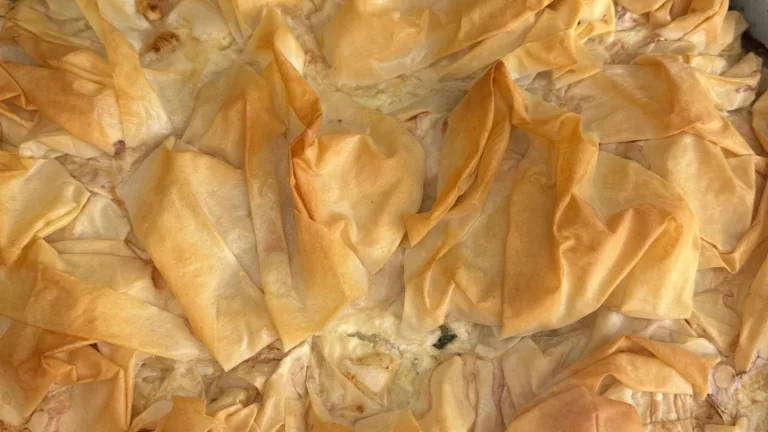
Line a 24-25 cm cake tin with baking paper and arrange the orange slices in the base of the cake tin (as shown in photo). Drizzel 100ml of the reserved syrup over the orange slices making sure they don’t move.
For the cake – preheat oven to 180C fan force.
Using a hand-held mixer, beat the sugar, butter and orange and lemon rinds till soft and creamy (about 3-4 minutes). Set aside.
In another bowl add the hazelnut meal and polenta and mix together. Add half to the butter mixture and mix on low speed to combine. Add eggs one at a time, making sure they are well combined and scrape the bowl down between each addition.
Add remainder hazelnut mixture, the juices, yoghurt and flour – mix on low speed till well combined.
Gently spoon the mixture over the orange slices and smooth it over with a spatula. Bake for approx. 1 hour till golden and a skewer comes out clean. Allow to cool slightly in the tin for approx. 10-15 mins and then carefully turn onto a wire rack till fully cooled. Transfer to a cake platter.
Can serve as is or with left over syrup and a dallop of Greek yoghurt or with double thick cream. Keep refrigerated.
Many international destinations saw substantial fare reductions as visitors can now travel cheaper overseas, The Australian reported.
Greece experienced a 13.17 percent decrease in fares in the first half of 2024, compared to the same time last year, according to new Flight Centre data. An average adult economy ticket in Jan – Jun 2024 cost $2565, compared to $2954 in the period Jan – June 2023.
Italy saw a 12.74 percent drop, the US fell by 11.2 percent, and Japan’s fares decreased by 10.67 percent. Additionally, France, Canada, New Zealand, India, Fiji, and the UK recorded falling fares due to increased competition among airlines.
Travel to Bali is becoming even more affordable, as the destination fell by an average of 17.7 percent in the first half of 2024 compared to the same period last year. The average price for an economy return ticket dropped from $1030 to $848, making Bali flights cheaper than those to New Zealand, which cost $898 return.
Overall, there was an average 13 percent decline in international economy airfares in the six months leading up to June 30, with the average cost dropping from $1928 to $1678.
Photo: jimmy teoh
The introduction of Turkish Airlines to Australia has intensified competition on European routes, making travel to the continent more affordable. Similarly, increased capacity planned by United, American, and Delta airlines is expected to further reduce fares to the US in the coming months.
According to the Australian, Flight Centre Travel Group Managing Director James Kavanagh noted that airfares had decreased for four consecutive quarters, a trend they hope will continue.
He highlighted the savings, with Indonesia down 18 percent, equating to an average saving of $182; Greece down 13 percent, saving $389 on average; and Italy also down 13 percent, saving travelers $365. He added that these savings enable travelers to afford more trips or spend more on experiences abroad.
While prices haven’t yet returned to pre-COVID levels, the consistent decrease in airfares is promising. ““We’re still not seeing pre-Covid prices but it’s the fourth consecutive quarter that airfares have decreased across the board and something we hope will continue as airlines introduce new routes and bring back some familiar ones to our shores,” said Mr Kavanagh.
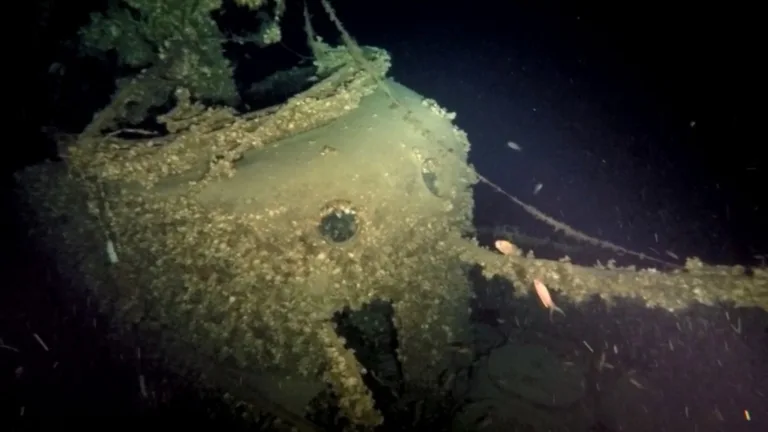
The British ocean liner Arcadian, torpedoed by a German U-boat and sunk during World War I, has been discovered by researcher Kostas Thoktaridis and his team, ekathimerini.com has reported.
The wreck was found southeast of the Cycladic island of Sifnos at a depth of 163 meters. The Arcadian, which went down taking 279 men with it, was en route from Thessaloniki to Alexandria, Egypt, with 1,155 military personnel on board. The presence of an enemy submarine near Ikaria necessitated a detour through the Cyclades to avoid detection.
Kostas Thoctarides diving with his daughter Agapi-Oceanis. Photo: Supplied.
On April 15, 1917, the Arcadian was traveling at 13.5 knots, accompanied by the escort ship HMS Sentinel. The convoy was situated between Sifnos, Antiparos, Sikinos, and Folegandros when a torpedo fired by the German submarine UC-74 struck the Arcadian at 5:44 p.m., causing a devastating explosion.
“The quality of the primary metals used in the Arcadian’s construction has significantly contributed to the preservation of the wreck,” Thoktaridis told the Athens-Macedonian News Agency (AMNA). “It seems that the bow of the Arcadian initially settled on the Aegean seabed, resulting in visible deformations of the plates. Given the ship’s length (152.4 meters) and the relatively shallow depth of the sea (163 meters), the bow’s impact helped to stabilize the hull on the seafloor,” he added.