Home Blog Page 639

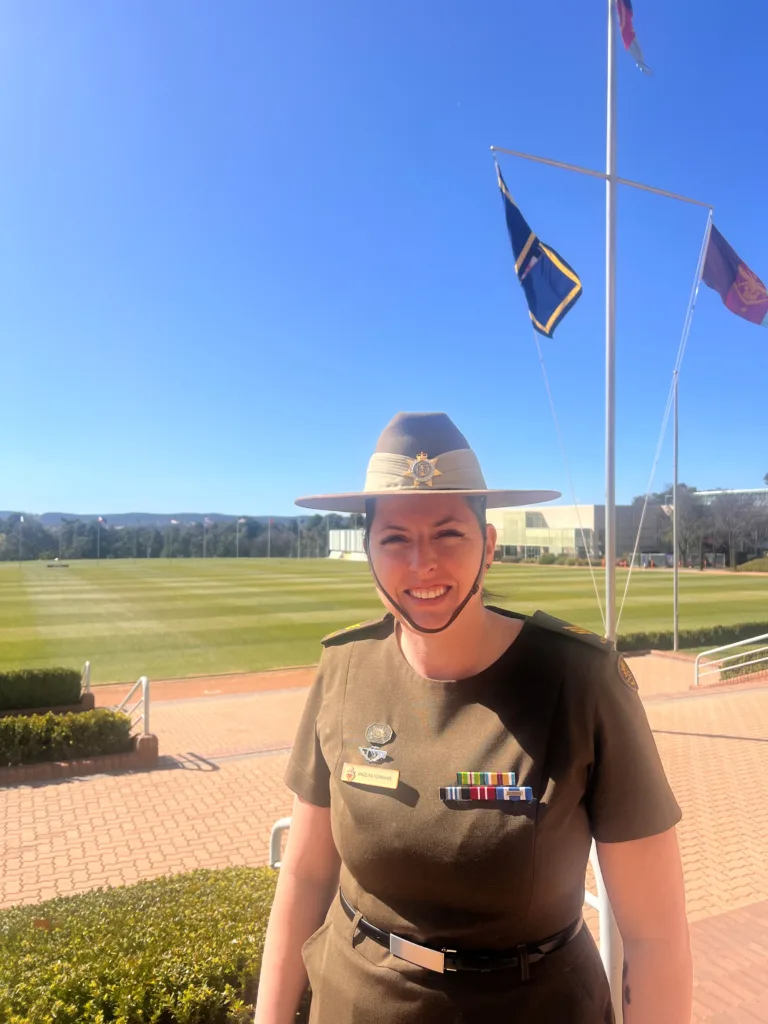
Family legacy to frontline service: Sergeant Angelina Kopanakis’ inspiring journey in the Australian army

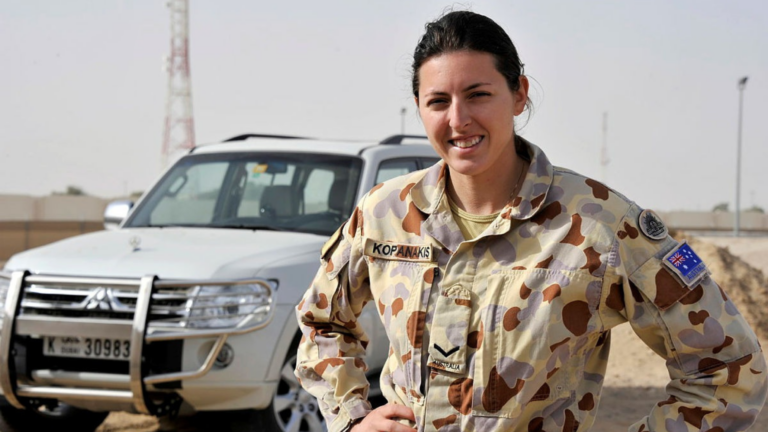
At the age of 21, Angelina Kopanakis decided to kickstart her career in the Royal Australian Army. 

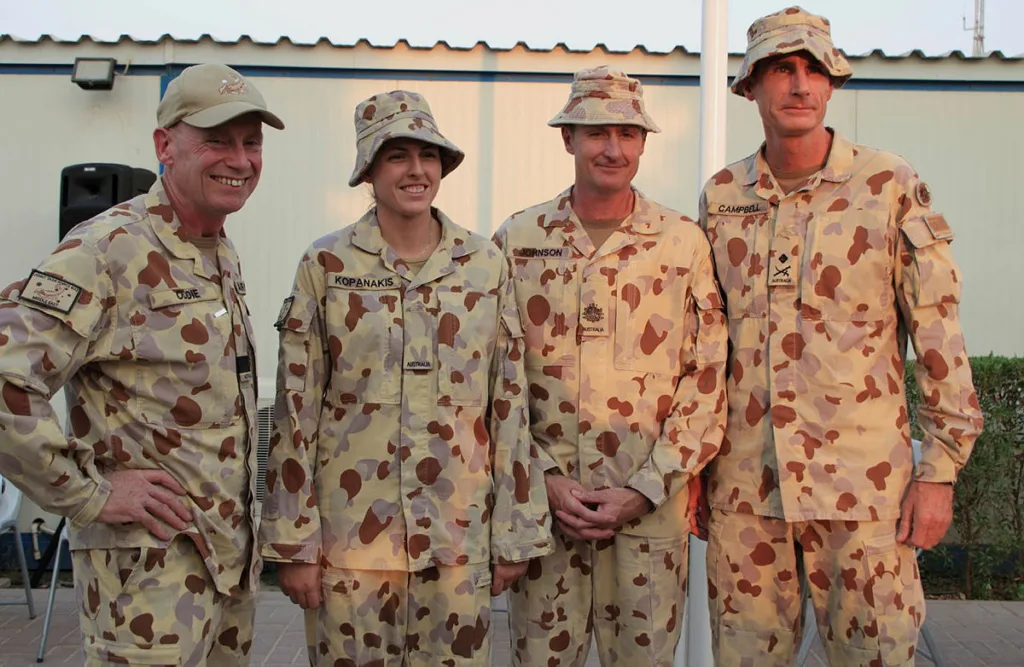
Now, Angelina has had 16 years of experience in various sectors in her field from all over the world. She has been a VIP driver for generals in Afghanistan, a driver for the Commander of the First Division in Brisbane, has worked in a special operations unit as part of the Tactical Assault Group, in various support battalions, in the School of Infantry, and in various logistics units.

Angelina currently works at the ADFA headquarters in the ACT.

In an exclusive interview with The Greek Herald, Angelina revealed she hopes to inspire others to explore the many opportunities on offer in the Army, Navy, and Defence Force. 

Who is Angelina Kopanakis?

Angelina Kopanakis is a Greek Australian army segreant who was born in 1986 on the Gold Coast in Queensland. 

She has been posted all around the world and in Australia to places like Afghanistan, Brisbane, Wagga Wagga, Townsville, Kapooka, Singleton, and Sydney.

In January this year, she moved to the ACT and commenced her role in the operation cell of the Australian Defence Force Academy headquarters.
Why did she join the army?

The Greek Australian army sergeant said she took on her first role in the Australian Army in 2008, where she worked in the Royal Australian Corps of Transport. She said her inspirations to join the army initially stemmed from her grandfather, Ronald Ernest Day who was an engineer in the army.

“My grandfather was an engineer in the Second World War. He went to Crete with the Australian soldiers and helped Greece fight against the Germans,” Angelina told The Greek Herald.

“I grew up hearing stories of how he was going through my grandmother Eleftheria Papagrigorakis’ village in Chania (which is where they met) and how he was eventually was caught by the Germans and became a Prisoner Of War in a concentration camp in occupied Poland.

“It was his passion and the stories he told about his experiences in war that from a young age, made me want to join the army.”

Angelina said growing up, she loved hearing stories about the mateship her grandfather experienced in the army.

“He always used to talk about how no matter where he went, or where he was posted, he could always rely on the mateship that he had in the army,” she said.

“He just had such a love for it and every time he talked to me about his time in the war as a little kid, I was always so excited and fascinated.

“His stories on the Battle of Crete are some that have really stood by me today.”

What does she love about her job?

With a 16-year career in the army, Angelina revealed what she loves most about being in the army.

“I just love coming to work every day and being able to see my mates, share my experiences with them and hear about their experiences and just learn,” the Greek Australian said.

“Being able to gain an understanding of what they’ve gone through and hear about their stories is just so eye-opening.

“I also love serving the nation of course, it’s such a rewarding job.”
More Greek Australians in the army

As a Greek Australian army segreant with a strong passion for her Hellenic roots, Angelina said she hopes to inspire more young Greeks to consider careers in the defence forces.

“I definitely think we need more Greeks,” Angelina said.

“For me personally, I wish I joined the army sooner, right after I finished school.

“It’s such a good and rewarding career, and it feels so good to give back to Australia. You definitely get well looked after too, whether its Army, Navy or Air Force, and there’s so many different pathways you can take.

“There’s really something for everyone. The people you meet, the places you go and the opportunities you get are just awesome. If it wasn’t for the army, I wouldn’t have travelled to or seen half the places I’ve been to in the world now.”
Melbourne residents call for council action as bird poo litters public spaces

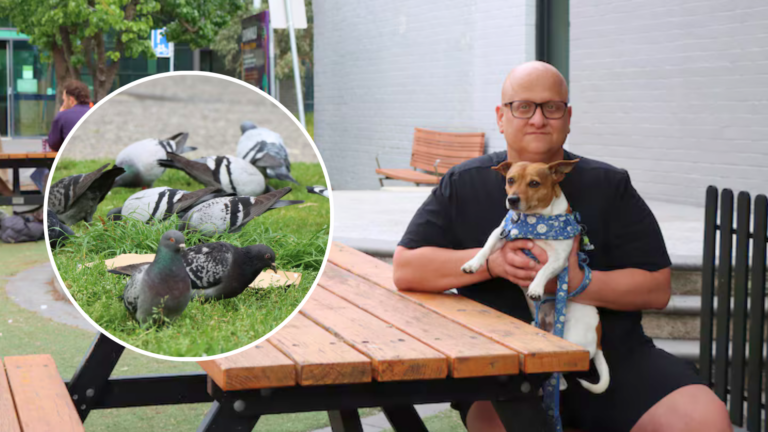
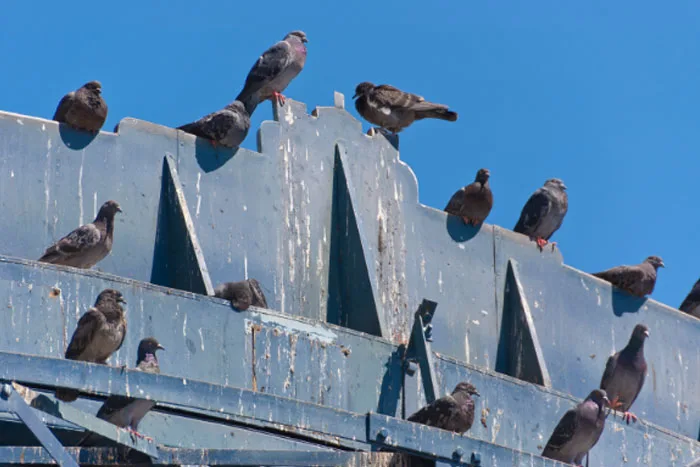
Residents in Melbourne’s south-east are urging their local council to take action against the feeding of feral birds, as the growing pigeon populations are damaging public spaces.

Avian experts warn that illegal feeding encourages the spread of non-native bird species, which not only disrupts local ecosystems but also increases competition for food with native wildlife.

As temperatures rise, Carnegie resident Christopher Tsalikis has been utilising public benches in the area to share meals with his family.

However, Tsalikis claims the bird droppings around the seating areas have become increasingly problematic as pigeon numbers swell.

“You sit on these benches and they’re covered in crap and you think it is a little bit disgusting,” he said.

“You do see families have a bit of food left over… and think it’s normal to throw some food on the floor than chuck their food in the bin.”

“It’s gotten much worse. There are birds that will jump on [the] table … or jump and grab your food straight away,” Tsalikis added.

Source: ABC News.

Online seminar to focus on ‘Raising Bilingual Children in Victoria’

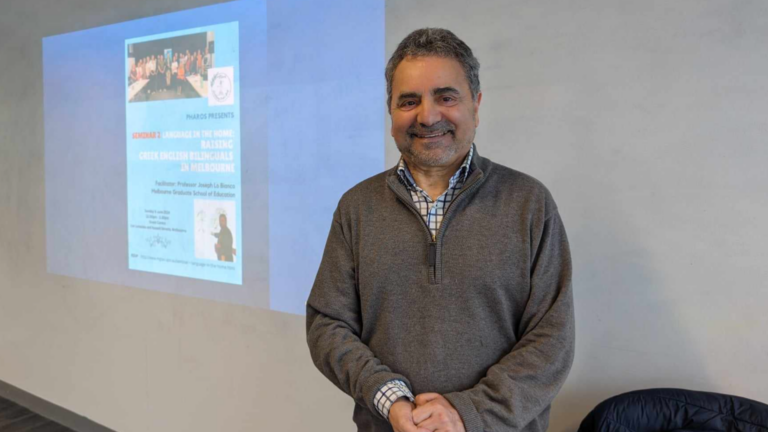
A Victorian School of Languages (VSL) event titled ‘Raising Bilingual Children in Victoria’ will be held online on Thursday, 7 November. Its inspiration is two in depth parent seminars Professor Joseph Lo Bianco has prepared and delivered for Greek speaking families in Melbourne, through the Pharos Alliance, one in November 2023 and the second in June 2024. It is intended to make these language specific seminars a feature of the work of Pharos Alliance.  

Pharos is dedicated to supporting the retention of Greek in Victoria and is a very active group of people around the Modern Greek Teachers’ Association of Victoria, building on the Pharos Strategy that Prof Lo Bianco prepared at MGTAV’s request some years ago. One of the points of that strategy is to foster the use of Greek among young children and within families. The two seminars will be repeated specifically for Greek Australian families, and it is intended these should become a regular feature of support for such families.  

The VSL seminar was expected to attract 60 or so parents but has topped 930 at last count and will be conducted as an information webinar. This incredible response is testament to the deep interest that families of migrant origin have in language maintenance in the home to prevent intergenerational loss. 

xr:d:DAFC–7UZjk:3865,j:8895008301806881807,t:23080804

Currently, all migrant languages are slipping away as second and third generations tend to use their heritage language less and less, and it retreats from the homes of parents and children to the homes of grandparents interacting with their grandchildren. As the first-generation age and eventually pass on, these precious assets and reminders of heritage fade from active usage. This phenomenon is known as language shift or language loss and while some level of decline is inevitable especially among young people who marry out of the community (something which happens for all groups), there is the additional issue of the domination of English in wider society.  But language shift can be can be tackled through what is known as ‘reversing language shift.’

Professor Lo Bianco’s seminar is an introduction for families to the complex process of language loss, but it will also focus on practical strategies that can be easily adopted to stem the rate of loss. He will offer examples of successful action and strategies that different kinds of families can use to encourage language retention. In some families, both parents speak the heritage language, in others one parent does and the other does not, while in others neither parent has an active knowledge of the language. Despite these differences there are specific ways to organise time and input to children to increase the amount of contact they have in the language and to support their learning of it at school or in other settings. 

The 900 who have enrolled come from multiple language backgrounds, such as Greek, Hindi, Vietnamese, Italian, Sinhala, Tagalog, Khmer, Russian, and Tamil, some of longstanding migrant background and others are recent arrivals. All face a challenge of how to support the home language so children become bilinguals rather than knowing only English. 

Event Details:

  • Title: Raising Bilingual Children in Victoria
  • Date: Thursday, 7 November
  • Time: 5.30pm
  • Mode: Online
  • Register here

Peter Doukas OAM elected as new Chair of FECCA

The Ethnic Communities’ Council of NSW (ECC NSW) welcomes the election of Peter Doukas OAM as the new Chair of the Federation of Ethnic Communities’ Council of Australia (FECCA).

At the recent FECCA National Conference held in Brisbane during October 2024, Mr Doukas was elected Chair of the FECCA.

In addition to Mr Doukas being elected Chair, Treasurer of the ECC NSW Emanuel Valageorgiou was elected Treasurer of FECCA.

Emanuel Valageorgiou.

Both Mr Doukas and Mr Valageorgiou will continue their duties in the ECC NSW.

“This is a triumph for the Ethnic Communities’ Council of NSW and for the influence of ECC NSW on the national stage. The Federation of Ethnic Communities’ Council of Australia, as the National Federation representing multiculturalism in Australia, will benefit greatly from the insight and experience of Peter Doukas and Emanuel Valageorgiou,” Mary Karras, CEO of ECC NSW, said.

Also elected to the Board of FECCA were the following:

  • Elijah Buol OAM, Senior Deputy Chair & ECCQ Chair
  • Jill Morgan AM, Senior Deputy Chair – Women
  • Dr Edwin Joseph, Hon. Secretary & MCNT President
  • Akesa Kei, Regional Chair
  • Miriam Cocking, MCCSA Chair
  • Eddie Micallef, ECCV Chair
  • Andrew Ng, ACTMC President
  • Dr Sadhana Bose, ECCWA President
  • Jade Li, MCOT Chair

Greece set to announce Strategic Plan for Hellenes Abroad

On Wednesday, November 6, Greece’s Ministry of Foreign Affairs will unveil its Strategic Plan for Hellenes Abroad 2024-2027.

The presentation, which will take place at the ‘Giannos Kranidiotis’ amphitheatre of the Ministry of Foreign Affairs at 12pm (local time), will be attended by Prime Minister Kyriakos Mitsotakis. The event will also be livestreamed on the Ministry’s official YouTube channel, enabling wider access to the launch.

The Strategic Plan, which was subject to public consultation last July, was introduced by Minister of Foreign Affairs Georgios Gerapetritis and Deputy Minister Georgios Kotsiras. The consultation invited feedback from expatriate communities and organisations.

The primary goal of the plan, as outlined by the Ministry, is to strengthen the relationship between Greece and its global diaspora. It aims to foster effective communication both ways, while reinforcing the presence and influence of the Greek community worldwide. The plan’s framework includes six strategic objectives, each with specific operational actions designed to engage and support Greeks living abroad.

While some expatriate organisations and individuals submitted feedback and proposals, responses from Australia appear to have been somewhat limited. Several suggestions were posted online, but it is clear that the level of participation from Australian Greek organisations was not as high as expected.

Though the Greek diaspora often expresses concerns that Greece overlooks its expatriates, it seems that Australian organisations were slow to engage with the public consultation. Among the few proposals from the region were submissions from the Hellenic Australian Chamber of Commerce & Industry National Federation and the Oceania SAE.

This response, or lack thereof, highlights the ongoing challenge of mobilising the Australian Greek community in discussions about Greece’s policies and engagement with its citizens abroad.

Multiple polls close across the US for the 2024 presidential election

Voting for the US presidential election has now closed in copious pivotal swing states, which could make all the difference between who reaches the 270 electoral votes necessary to come out on top.

Pennsylvania polls has closed with early indications suggesting a tight race in the state, which is expected to play a major role in determining the outcome of the election.

North Carolina’s polls have also closed, while some polling stations in Michigan have also now closed, marking the final moments of voting in several key battleground states.

As of midday AEDT, polls have closed in 16 states, along with Washington, DC. This marks a significant moment in the election, with results from these areas expected in the coming hours.

Polls also closed in Georgia, a state that has become increasingly competitive in recent years. With this, four of the seven crucial battleground states have now wrapped up voting, leaving just three to go.

At present, several states that were expected to lean in favour of one party or the other have already been called. However, results from the battleground states are still to come, and voters in these regions remain crucial in the race for the White House.

As counting continues, all eyes are now on the final swing states, with both sides anxiously awaiting the results that will shape the direction of the election.

The total of current electoral votes for Donald Trump stands at 214, with 179 for Kamala Harris.

*Updates to come…

Ange Postecoglou moved by tribute event at Australia House

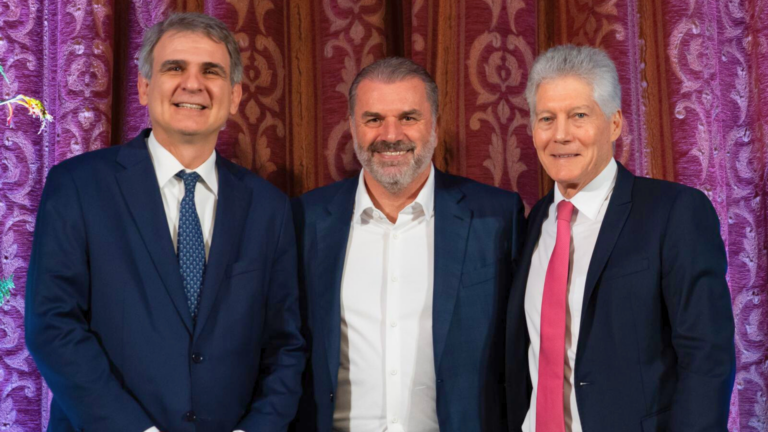
Ange Postecoglou has spoken candidly about feeling “really emotional” after being honoured by three nations during a special event at Australia House in London on Monday evening, November 4.

The Tottenham Hotspur FC manager, visibly moved, attended the Australian High Commission’s one-off celebration, titled An Evening with Ange, which recognised his rising star status in English football. In his own words, Postecoglou described himself as “a product of Greece but made in Australia,” reflecting on the journey that brought him to the pinnacle of English football.

The evening was a tribute not only to Postecoglou’s footballing achievements but also to the multicultural journey that has defined him. Surrounded by Australian sporting icons, including Matildas Clare Hunt, Charli Grant, and Hayley Raso, the 59-year-old was honoured by both Australian and Greek diplomats. Stephen Smith, the Australian High Commissioner to the UK, and Yannis Tsaousis, the Greek ambassador to the UK, both delivered keynote addresses in recognition of Postecoglou’s impact as a cross-cultural figure.

“He’s a great football coach, a great Australian, a great human being,” Smith told AAP. “He’s a great multicultural success, representing a modern, diverse, and tolerant country.”

Reflecting on his remarkable journey, Postecoglou spoke of the deep connection he feels to both Greece and Australia. “I do very much feel a product of Greece, but made in Australia, and feel really closely connected to both countries,” he said.

For Postecoglou, the night was not only about celebrating his achievements, but also honouring the sacrifices made by his parents as immigrants to Australia. “I feel very strongly about the journey I’ve had as an immigrant, not so much for myself, but to keep honouring my parents. The sacrifices they made for me to be sitting here tonight means the world to me, so I really want to thank them.”

The audience, including his wife Georgia, was left laughing as Postecoglou shared anecdotes about his late father, Jim, and how his upbringing shaped him. “It’s not that he passed on any words of wisdom there – because he barely spoke to me,” Postecoglou quipped. “He was a dad of his generation, I never saw him because he was always working for his family.”

“You don’t reflect on it at the time, but now I think he wasn’t doing it for himself, he was doing it for the family, so that rubs off on you… He never kind of gave me any sort of praise, he was really hard on me, and that was annoying as a young person. You just want your dad to say ‘well done’ – he never said ‘well done’,” he added.

When asked whether he had always displayed leadership qualities, Postecoglou was quick to downplay his past as a player, saying, “I was an ordinary player, so we can start with that!” However, he acknowledged that he had always found himself in leadership roles. “I was always kind of in leadership positions. I don’t think I sought that, but people saw me in that kind of light from a very young age. I was captain of the club I grew up at (South Melbourne Hellas) from a very young age.”

“I enjoy that sort of shared vision that you can lead people through,” he concluded.

Source: AAP.

King Charles hails Orthodoxy in letter newly released to the public

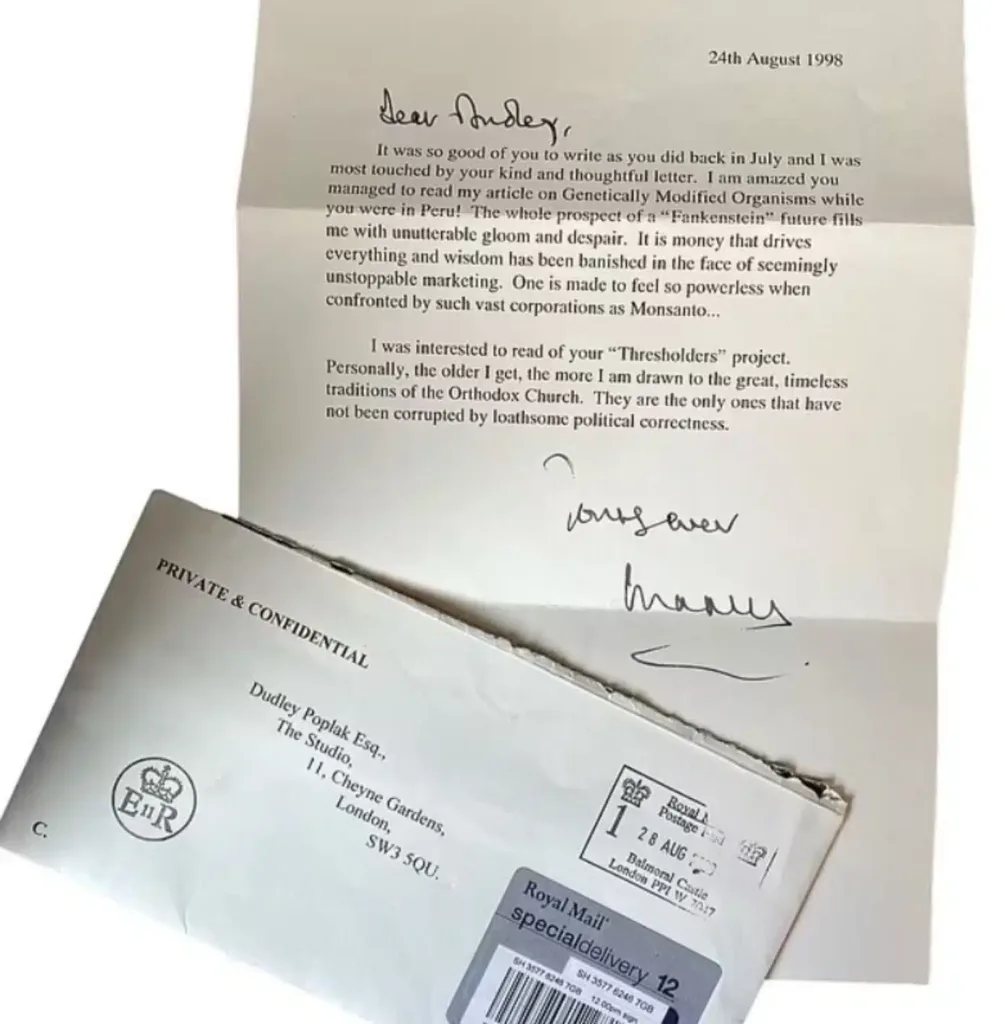
A private letter from 1998 has come to light revealing that King Charles, then Prince of Wales, regarded Orthodoxy as the sole Christian denomination unaffected by what he termed “loathsome political correctness.”

This perspective, voiced long before he ascended to the throne and became the Supreme Governor of the Church of England, could be interpreted as a veiled criticism of the institution he would later lead.

Photo: David Lay Auctions.

The letter, marked as “private and confidential,” was written from Balmoral Castle and addressed to Dudley Poplack, an interior designer who had worked closely with the royal family. Following Poplack’s death in 2005, the letter was sold at auction by Lay’s Auctioneers in Penzance, Cornwall, where it fetched over £1,700 (roughly the equivalent of $2,200 today), as reported by The Times.

King Charles has long shown admiration for the Greek Orthodox Church, the faith into which his father, Prince Philip, was baptised. This was reinforced by his description of the traditions of the Orthodox Church as “great [and] timeless.”

Serbia and Greece vow to boost military ties

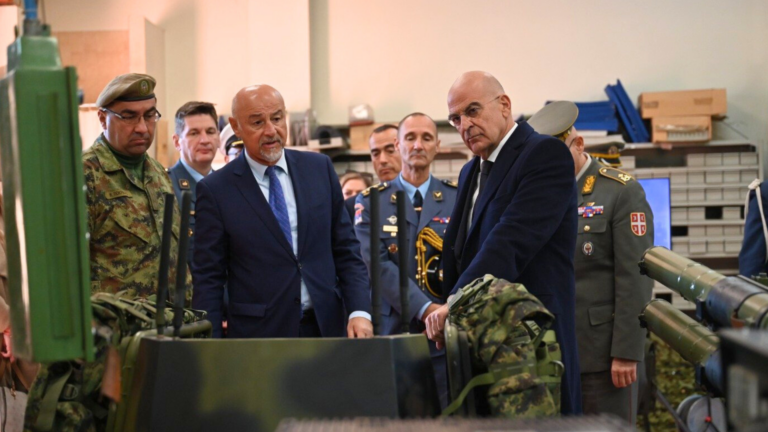
Greece and Serbia have agreed to strengthen their bilateral relations to ensure stability and security in the broader region. These key issues centred on defence cooperation were discussed in Belgrade between Greek National Defence Minister Nikos Dendias and his Serbian counterpart, Bratislav Gašić.

Dendias, who was on an official visit to Serbia on Tuesday, November 5, was welcomed by Serbian President Aleksandar Vučić. During their meeting, the two leaders discussed expanding ties between the two nations, with a particular emphasis on defence cooperation. Dendias also expressed his gratitude to Vučić for the support Serbia provided during Greece’s firefighting efforts last summer.

“Greece supports lasting peace and security through good neighbourly relations, respect by all parties of rules-based international order and of the basic principles of international law,” Dendias remarked, outlining Greece’s approach to the Western Balkans.

On the issue of Kosovo, Dendias reiterated Greece’s consistent stance. “Progress in dialogue is the only way to ensure stability and prosperity in the region,” he stated, emphasising the importance of dialogue for achieving long-term peace.

The Greek minister also pointed to significant potential for collaboration between Greece and Serbia in the defence sector. “We want to bring our defence ecosystems together,” Dendias said, referencing the new Hellenic Centre for Defence Innovation as a key platform for this cooperation.

Much-loved Cypriot Australian Peter Yiannoudes passes away

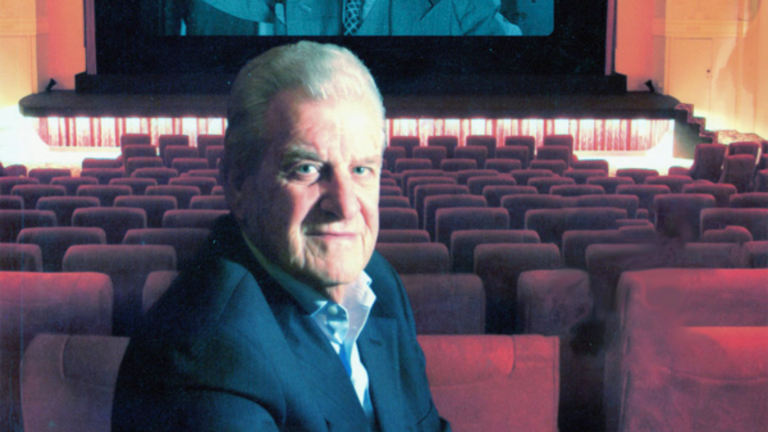
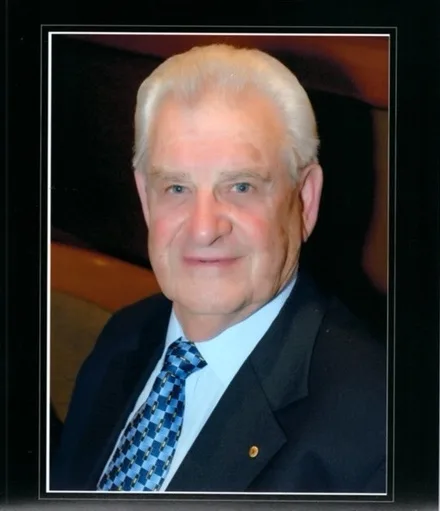
The Cypriot Australian community mourns the loss of Peter Yiannoudes, a beloved figure who had a pivotal influence on the success of Greek cinema in Melbourne.

Peter Yiannoudes was born in Vouni, a village near Limassol, Cyprus, in 1935. From 1950 he worked at various cinemas in Limassol as ticket seller and assistant projectionist. He migrated to Australia in 1956. A pioneer of Greek cinema in Australia, he formed a film company in 1958 called “Cosmopolitan Motion Pictures” together with Andreas Papadopoulos and Stathis Raftopoulos, to be joined soon after by Chris Louis from Sydney. They became the sole Greek (and other) film distributors in Australia, catering to the immigrant populations of the post-WWII period. He was also actively involved in community affairs. In 1972, he became a member of AHEPA, serving in various roles over the years, including as its national president in Australia 2016-2018.

In 1972, he became a member of the Executive Committee of the Cyprus Community of Melbourne and Victoria, and served as its President from 1978 to 1990. From 1978-1996, he also served as President of the Federation of Cypriot Communities of Australia, and Vice-president of POMAK (World Organisation of Cypriots Abroad) becoming General Secretary of the latter in 1996-2003. From 1977 to 2003 he was President of the Justice for Cyprus Committee (SEKA). He was also involved in local fundraising and philanthropic efforts for members of the Greek and Cypriot communities. He has received several awards, including the Order of Australia Medal in 2013.