Home Blog Page 433

Melina Haritopoulou-Sinanidou: Redefining what it means to be a woman in Neuroscience

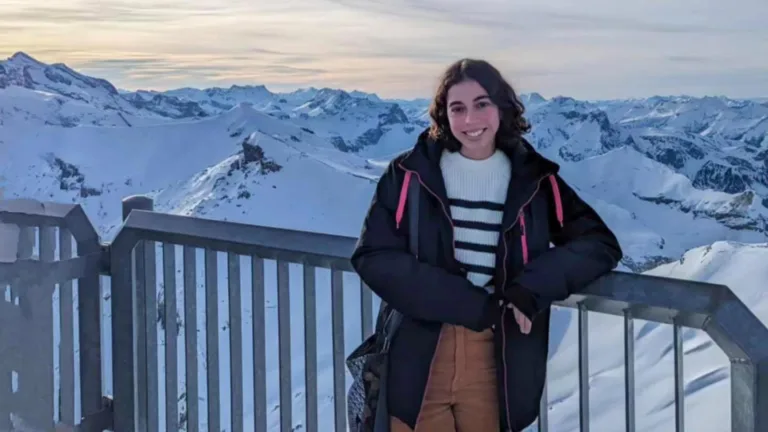
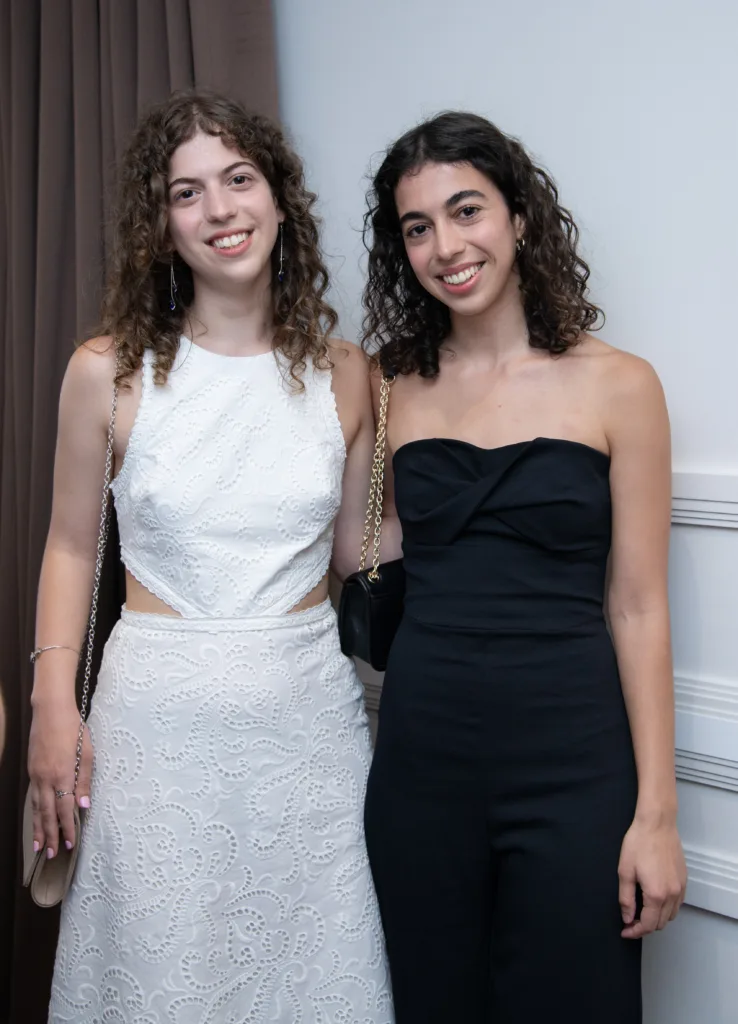
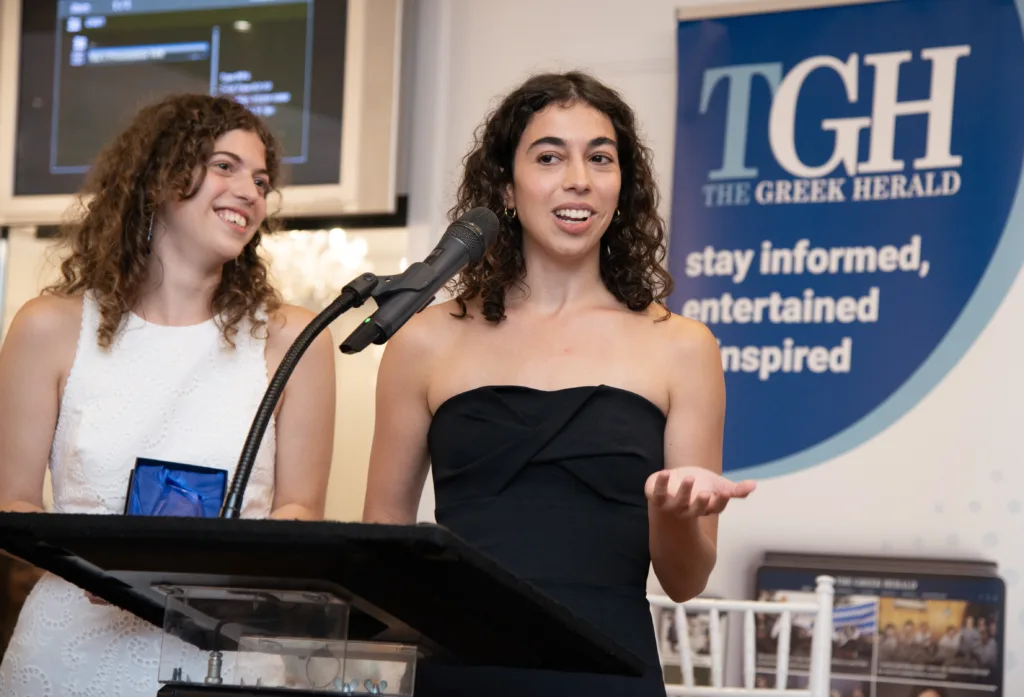
From Athens to Australia to the cutting edge of spinal cord research, Melina Haritopoulou-Sinanidou has never taken the easy road. Named the inaugural Woman to Watch at The Greek Herald’s Woman of the Year Awards (alongside her sister Zoe), Melina embodies a unique blend of intellectual ambition, scientific excellence, and quiet resilience.

Her journey began during Greece’s economic crisis, where limited resources clashed with limitless curiosity. A move to rural Australia with her mother (The Greek Herald‘s Melbourne journalist Mary Sinanidis) and sister opened unexpected doors — eventually leading her to a PhD in neuroimmunology and research spanning viral genomics, developmental biology, and cancer immunology.

But her work doesn’t stop at the lab bench.

Melina is also a fierce advocate for equity in science, openly discussing structural barriers in academia, gender bias, and the undervaluation of research careers.

In this exclusive interview, she shares her experiences as a young woman in STEM, the Greek values that shaped her worldview, and the mentors — from family members to scientific leaders — who empowered her to lead with integrity and vision.

Hi Melina, congratulations again on your award recognition. Tell us a bit about yourself.

    I grew up in Athens during the economic crisis, when there were significant obstacles in Greece and my family. Limited resources made a scientific career seem impossible for me to pursue. However, my curiosity persisted, and this was fuelled by visits to the local science museum (Eugenides Foundation) and school visits to research institutes across Europe (CERN and Max Planck).

    Recognising the need for greater opportunity, my mother was offered a job with Fairfax Media in rural Australia, and we decided to move as a family, a game-changing decision that opened doors to my future. Since then, I’ve seized every chance to excel.
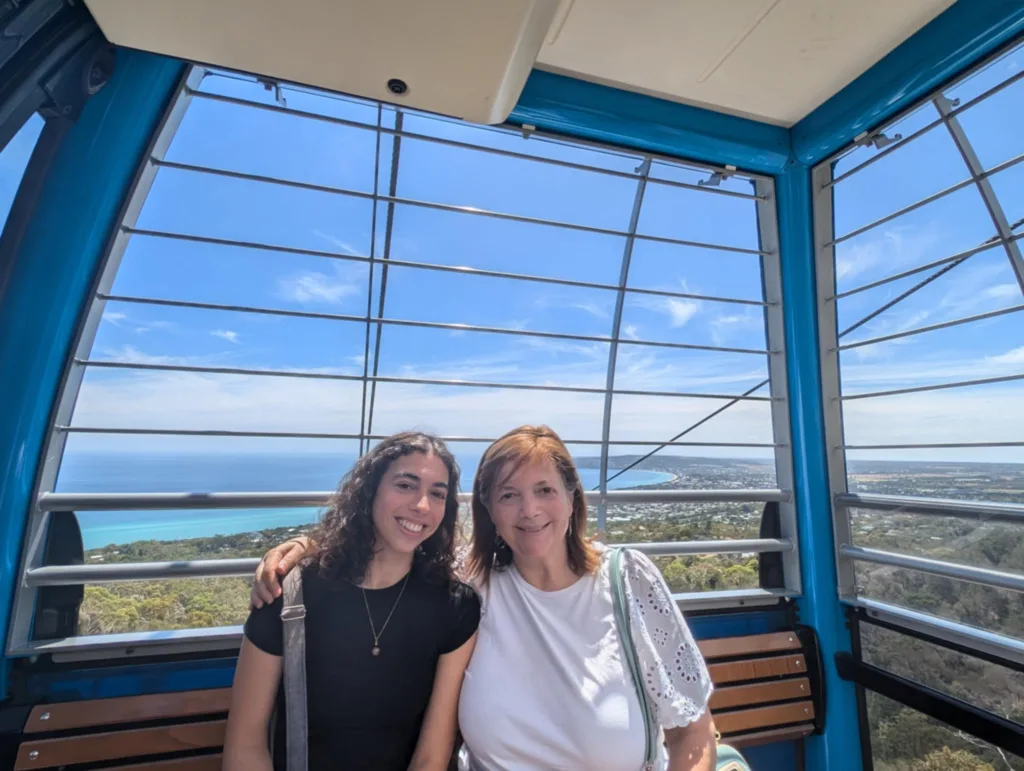
    Me_and_mum
    Melina and her mum, Mary Sinanidis.

    I completed a Biomedical Science degree at the University of Queensland, am currently pursuing a PhD in neuroimmunology, and actively sought out research internships with prestigious labs. Beyond academics, I’m an avid reader and traveller. A gap year solo travelling to Cuba, volunteering at a Costa Rican sloth rescue was chaotic, exciting and unforgettable – a different kind of learning experience, but one that I value just as much.

    Moving from Athens to Australia in 2017 must have been a transformative experience. How has your Greek heritage influenced your academic journey, and what values from your upbringing have shaped your approach to science?

    I thank Greece, with its broad mandatory curriculum (about 20 subjects), for making me a multifaceted thinker. Secondary education in Greece is chaotic, competitive and sometimes inefficient, but it helped me to take nothing for granted and develop a cross-disciplinary curiosity and questioning mindset that fuelled my diverse research interests.
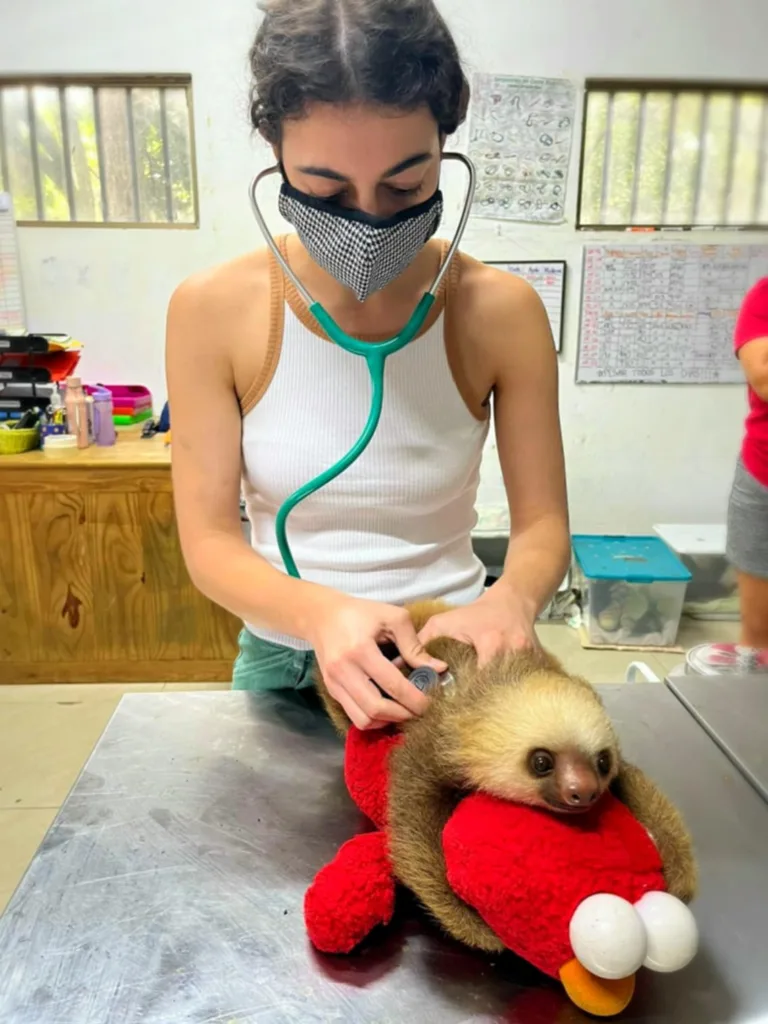
    Melina volunteering at a Costa Rican sloth rescue.

    On another level, you can only survive in Greece if you have resilience, and you need this to survive academia also.

    For instance, I am lucky to have a PhD scholarship, which means at least I get paid. How much? About $15 an hour to research spinal cord injury – efforts that could benefit so many lives and save a ton of money in healthcare costs.

    That said, I didn’t grow up thinking this was strange. In Greece, it’s not uncommon to work unpaid or underpaid in fields you care about, it’s almost expected. But that doesn’t mean it’s right. It just means I was conditioned not to expect any better.

    Here in Australia, the idea of not being fairly paid for your work feels more shocking to most people, and rightly so. Many Australian students are rethinking whether a PhD is worth it, which is part of why numbers are dropping, according to Universities Australia.

    Doing a PhD is often a labour of love, sustained by students who are passionate but also struggling to keep up with the rising cost of living. It’s not sustainable, and it’s one of the many things I hope can change about how science is structured and supported.

    You’ve spoken about the strong women in your family, including your mother and grandmother, as well as mentors like Professor Vaso Apostolopoulos. How have they influenced your path in neuroscience and leadership?

    My grandmother, a teacher, instilled in me a love for learning and a disciplined approach, but showed me the devastating impact of neurological disease. My grandmother’s Alzheimer’s and father’s multiple sclerosis fuelled my drive to understand and combat such conditions.

    My mother has been an unwavering supporter, and she taught me resilience and the courage to pursue my passions, even against conventional expectations. Watching her navigate major life changes with strength taught me to embrace uncertainty and take on challenges without fear.
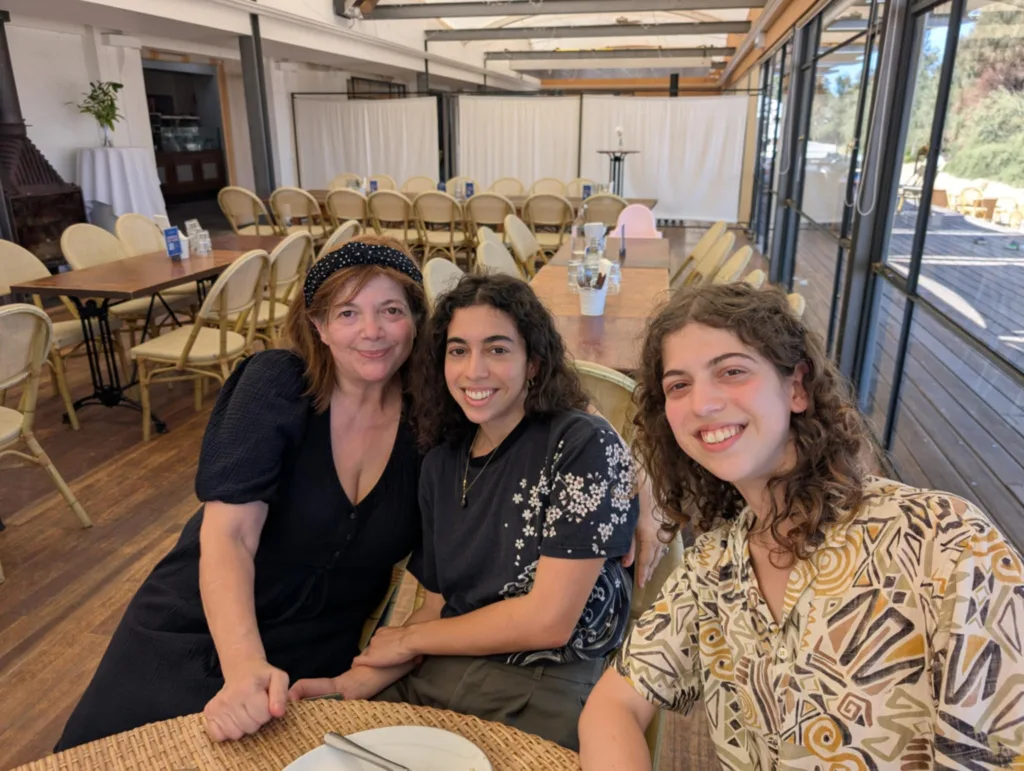
    Melina (centre), with her mum Mary (left) and sister Zoe (right).

    These foundational lessons were amplified by exceptional mentors, and not just women. Dr Sebastian Duchene’s belief in my potential, even as an inexperienced intern at the Doherty Institute, was transformative. He not only taught me crucial coding skills but also recognised my contribution with co-authorship on a publication, a gesture that profoundly validated my abilities and opened doors. This experience reignited my passion for science, reminding me of its inherent problem-solving and discovery.

    Professor Vasso Apostolopoulos further shaped my vision, demonstrating the power of translational science and interdisciplinary collaboration. Her mentorship extends beyond academic success; she fosters a supportive environment where students are seen, heard, and empowered. When I faced ethical and systemic challenges during my PhD, she provides not just advice, but a pathway forward even though we are in different cities. These are just some of the people, men and women, who have not only influenced my scientific journey but have also shown me the kind of leader I aspire to be: one who champions others, has integrity and drives meaningful impact.

    As a young scientist, you’ve already made significant contributions in neuroscience and viral dataset analysis. Tell us a bit about these.

    One of my earliest research experiences was at the Peter Doherty Institute, where I worked on analysing Ebola virus mutation rates across several outbreaks. It was my first exposure to coding and phylogenetics. Despite having no prior experience, I was given the chance to learn on the job. That internship not only helped me build a strong computational foundation but also showed me how powerful genomic data can be in understanding disease evolution and guiding public health responses.

    During COVID-19, I was involved in a research initiative by the Murdoch Children’s Research Institute, contributing to the Generation Victoria (GenV) birth cohort study by conducting a systematic review on how breastfeeding is assessed in longitudinal studies. I identified gaps in current approaches and recommended ways to standardise data collection.

    At the Institute for Molecular Bioscience, I investigated the mechanical forces involved in neural tube formation using quail embryos. This combined molecular cloning, cell culture, and confocal imaging and was my first hands-on introduction to developmental biology and wet lab techniques.

    My Honours Research took me into cancer immunology where I investigated whether a proteasome inhibitor could help reverse resistance to immune checkpoint inhibitor could help reverse resistance to immune checkpoint inhibitors in melanoma. What made this project meaningful was seeing the treatment work on animal models. This success reaffirmed my commitment to research. However, on a personal level, it was a challenging time for me as a student because I got to experience first-hand the long hours, high pressure, and blurring of work-life boundaries academia is notorious for.

    In addition to this, I’ve worked on literature reviews, both through my collaboration with Professor Apostolopoulos and with a long collaboration with the Mater Research Institute in Brisbane.
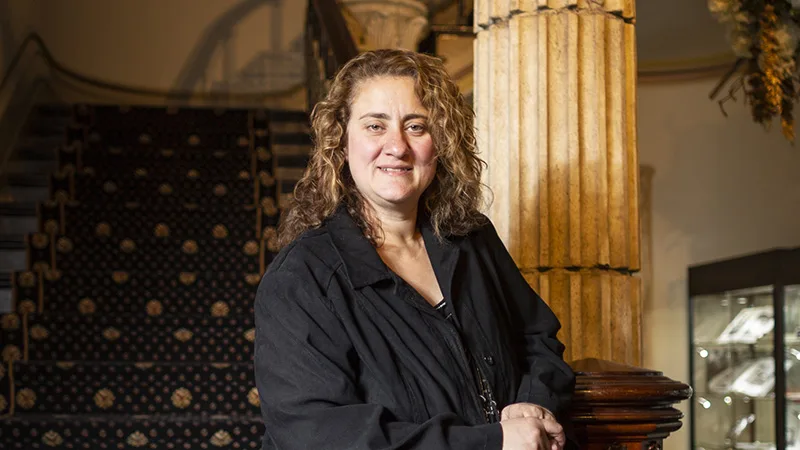
    Melina has collaborated with Professor Vasso Apostolopoulos (pictured above).

    Currently, my PhD in neuroimmunology utilises cutting-edge spatial transcriptomics to study spinal cord injury, aiming to identify new therapeutic targets. My interdisciplinary approach allows me to tackle complex problems and translate scientific discoveries into real-world solutions. New approaches excite me, and I feel the field urgently needs to move with the times.

    As you can see, I have not committed to a single niche early on. I’ve chosen projects that excite and challenge me, and through each one, I’ve grown both technically and intellectually. My core motivation is to learn, to ask meaningful questions, and to contribute to science that has the potential to make a real difference in people’s lives.

    What challenges have you faced as a woman in STEM, and what advice would you give to young women aspiring to enter the field?

    While academia poses universal challenges, gender adds layers of complexity. My experience contrasts sharply: Greece’s traditionalism demanded exceptional effort from women in STEM, forcing me to seek opportunities elsewhere. Australia’s progressiveness offers open dialogue and systemic change, yet, despite a more progressive mindset, biases persist.

    Ironically, some of my toughest challenges stemmed from women perpetuating stereotypes – relying on charm over competence. I’ve worked alongside women who use their gender to get that “extra help”. For instance, I had a colleague who has said, “I’ll talk to the boss, he can’t resist my smile.” While this might seem harmless on the surface, it plays into long-standing stereotypes that women are less capable or more emotionally driven, better suited to being agreeable than assertive. And that, in turn, impacts how the rest of us are perceived.

    When I try to be assertive or take initiative, I’ve found I’m more likely to be labelled “difficult” or “intense,” whereas a male colleague showing the same behaviour is often seen as a natural leader.

    When women lean into stereotypes to their advantage, it can also create tension within teams. It undermines women who are working hard to lead with professionalism, and it sends the wrong message, that being strategic means using gender, rather than skill, experience, or insight.
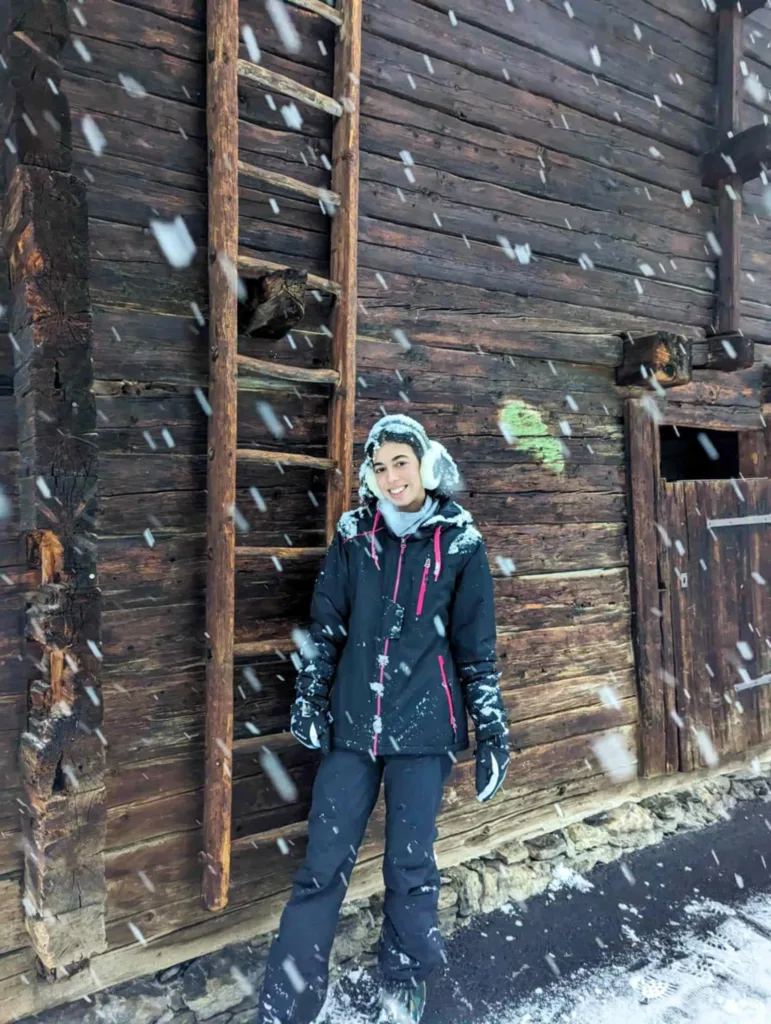
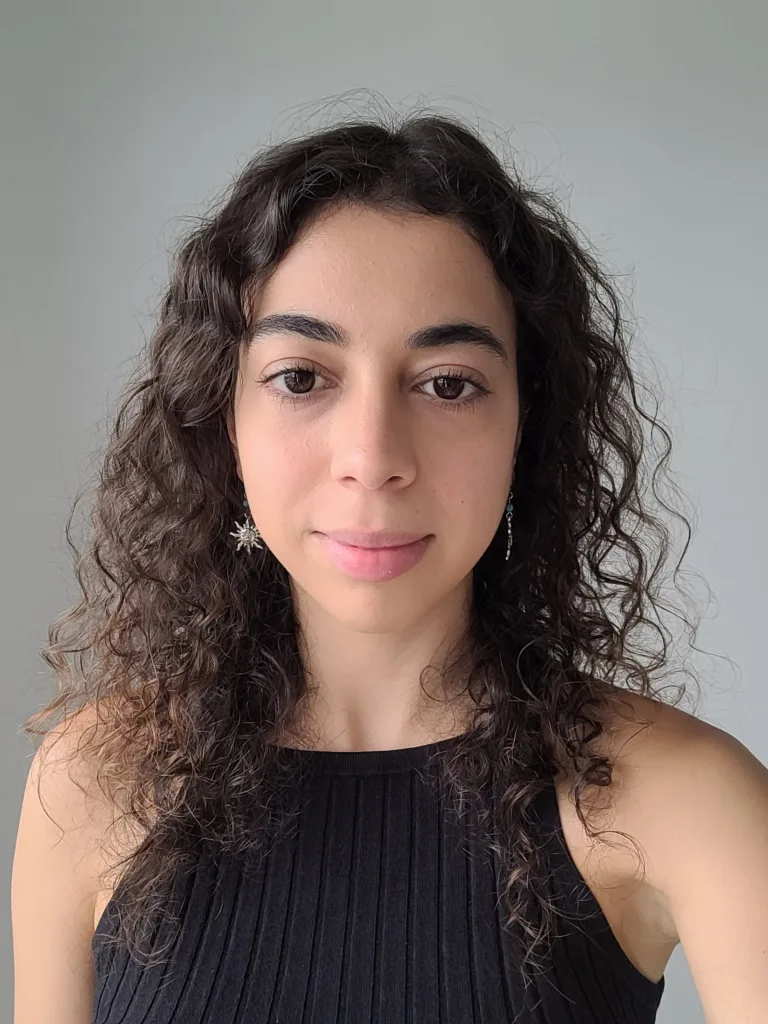
    Of course, the issue isn’t just gender, it’s also about how leaders navigate power, responsibility, and respect in the workplace.

    My advice? Regardless of the situation, focus on integrity and hard work. Be assertive, analytical, and authentic. Science needs your genuine talent, not a smiling vulnerable persona. Find supportive mentors and, in turn, uplift others. Ageism and rigid hierarchies can be daunting, but your unwavering commitment to excellence will ultimately earn respect.

    Your work in neuroscience goes beyond research—you also create ‘art with cells.’ Can you share more about the connection between science and creativity in your life?

    The phrase “making art with cells” honestly makes me giggle a little, because this is actually a core part of my research.

    For my PhD project, I use histological techniques to study how different cells and structures behave following spinal cord injury. To put it simply, I collect organs from the mice in my study and use antibodies that bind to specific targets, like immune cells or extracellular matrix proteins. These antibodies are tagged with fluorescent markers, which allow me to visualise the location and activity of these targets under a microscope.

    These images, while beautiful, reveal critical insights into immune responses and tissue healing. For example, this image shows a spinal cord section from a mouse taken 42 days after a spinal cord injury. The blue stain marks all the cell nuclei, giving a general sense of where the cells are located, and the green shows. This process blends precision with visual storytelling, proving that creativity isn’t just aesthetic; it’s fundamental to scientific discovery.
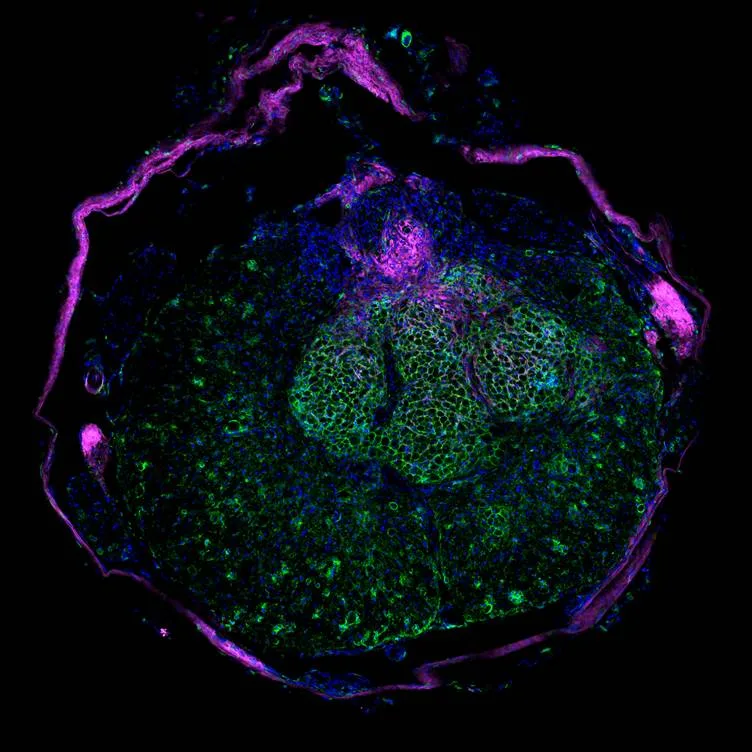
    An example of Melina’s ‘art with cells.’

    I think creativity is an essential part of science, not just in how we communicate it, but also in how we design experiments, solve problems, and interpret what we see. Histology, in particular, is one of the techniques I enjoy the most because it lets me combine precision, visual storytelling, and analytical thinking. In a way, it feels like science and art working hand-in-hand.

    Receiving the inaugural TGH Woman to Watch award is a significant milestone. What does this recognition mean to you, and how do you hope it will inspire other young Greek Australian women?

    I have previously received academic awards related to my work in science. This award is important to me because it transcends mere academic recognition; it’s a powerful validation of my identity as a Greek Australian woman in science. While imposter syndrome often whispers doubts, this moment shouts possibility.

    When I accepted the award, I was especially inspired by the inclusion of women like Chanel Contos and Stefanie Costi, who have used their voices to challenge the status quo and drive real change. Even though they weren’t present at the event, their inclusion in the program reminded me that transformation isn’t just possible, it’s inevitable when led with courage and conviction.

    To me, this award is more than a milestone, it’s a platform. I see it as an opportunity to connect with likeminded people, like Varvara Ioannou and others who are using their influence for good. I want to learn from their journeys, build meaningful collaborations, and channel what I learn into creating positive change within academia, where structural issues still persist. If I can help spark that shift and show other young Greek Australian women that their voice, their background, and their ambition belong in these spaces, then this recognition becomes something much bigger than myself.
    With one year left in your PhD and an impressive research portfolio already, what are your aspirations for the future? Where do you see your work making the biggest impact in the years to come?

    With a year remaining, my PhD has presented a stark reality check. My initial dream of traditional academia (postdoc, lab head, professorship) has been challenged. While I deeply love the scientific process, I’ve witnessed systemic issues that hinder genuine progress: excessive competition, pressure for rapid results over rigorous research, and political manoeuvring overshadowing knowledge advancement.

    Despite these challenges, I haven’t turned away from academia. My passion for research is still very much alive. But as I move forward, I want to do so with a clearer understanding of how to navigate the system without compromising my values, so that science can truly serve its purpose: solving real-world problems. My goal is to contribute to a more honest, collaborative, and impactful scientific landscape. I’m optimistic, knowing many share this vision.

    Is there anything else you’d like to say?

    I believe that the most meaningful scientific progress comes from collaboration. I’m always eager to connect with fellow researchers, mentors, and others who are passionate about driving positive change in science. If you share similar interests or are interested in supporting or collaborating on research that aligns with my work, I’d love to hear from you. Feel free to connect with me on LinkedIn. I’m always open to new perspectives, partnerships, and opportunities to work together toward research that makes a real impact.
    PRONIA responds to allegations by President of Victoria’s Greek Elderly Federation

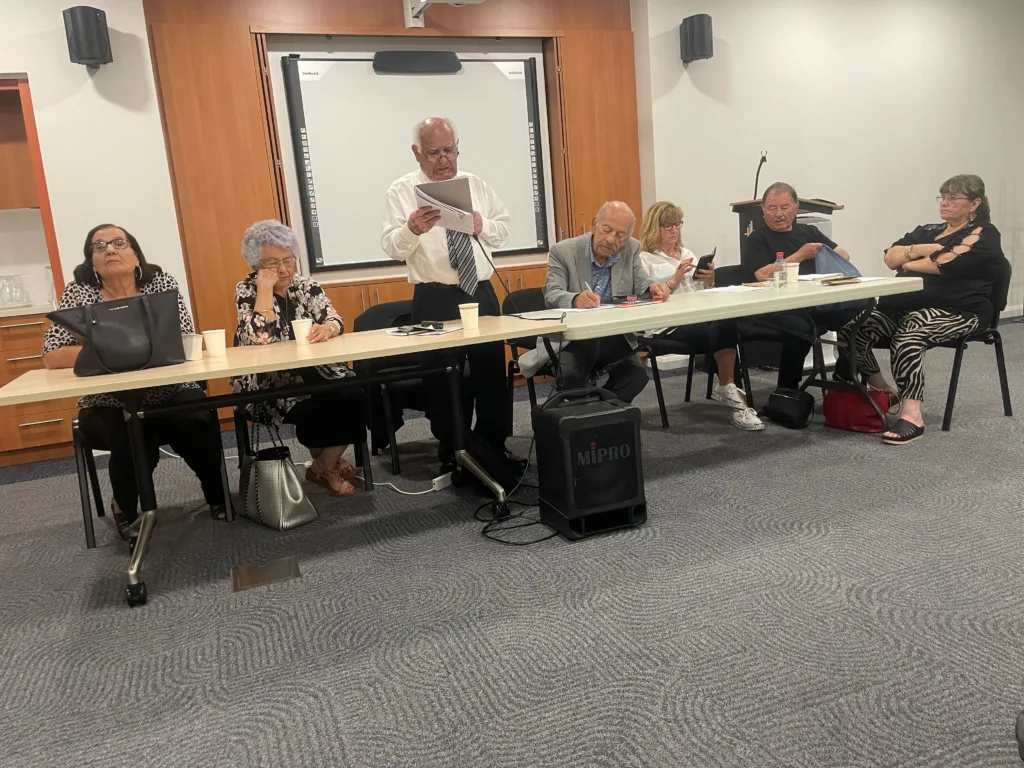
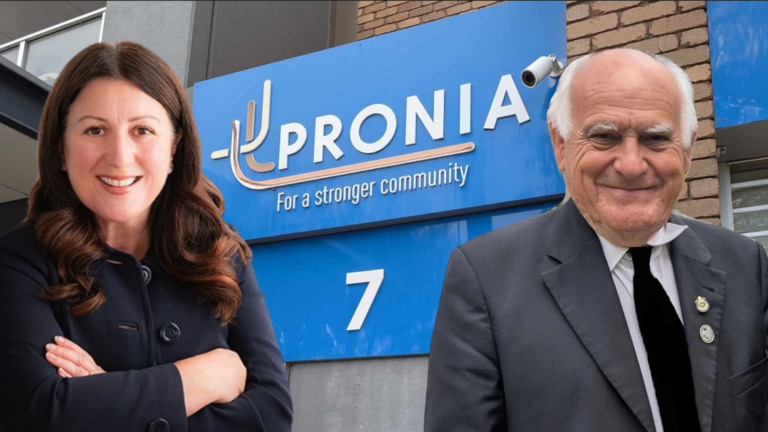
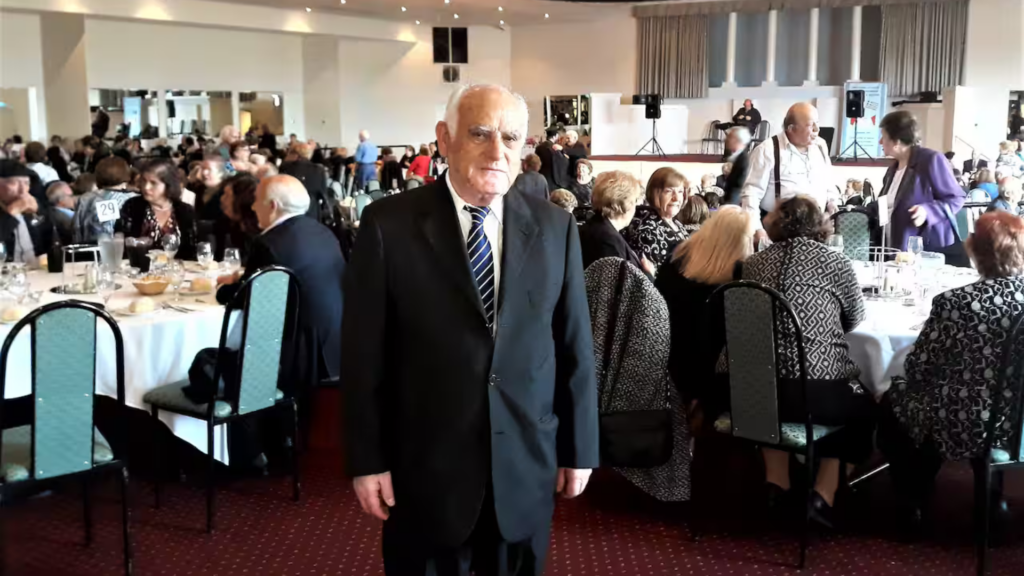
    Community organisation PRONIA has issued a public statement following concerns raised by John Kostoulias, President of the Federation of Greek Elderly Citizen Clubs of Melbourne and Victoria, about the Federation’s relationship with the welfare provider.

    In a letter, Mr Kostoulias expressed concern over the nature of a private meeting held on 11 December 2024 with PRONIA senior staff, writing that the discussion became adversarial.

    “These incidents have severely impacted my already fragile health…” he claimed in the letter.

    Mr Kostoulias also referenced challenges the Federation has faced in recent months, including communication and logistical issues, and cited an alleged $180,000 contribution made to PRONIA in the 1990s, which he claims was linked to maintaining Federation headquarters at PRONIA’s Brunswick site. PRONIA denies these allegations.

    john kostoulias
    John Kostoulias says his health has been impacted by the incidents.

    On 19 December, PRONIA responded in writing, stating Mr Kostoulias’ conduct during the meeting was “both unsatisfactory and unacceptable… which made PRONIA staff feel unsafe.” The letter noted the Federation remained welcome, but added that Mr Kostoulias would not be permitted to return if future conduct again raised concerns.

    Further tensions were reported after a meeting on 15 March 2025. PRONIA later confirmed Mr Kostoulias would no longer attend the premises.

    pronia john kostoulias
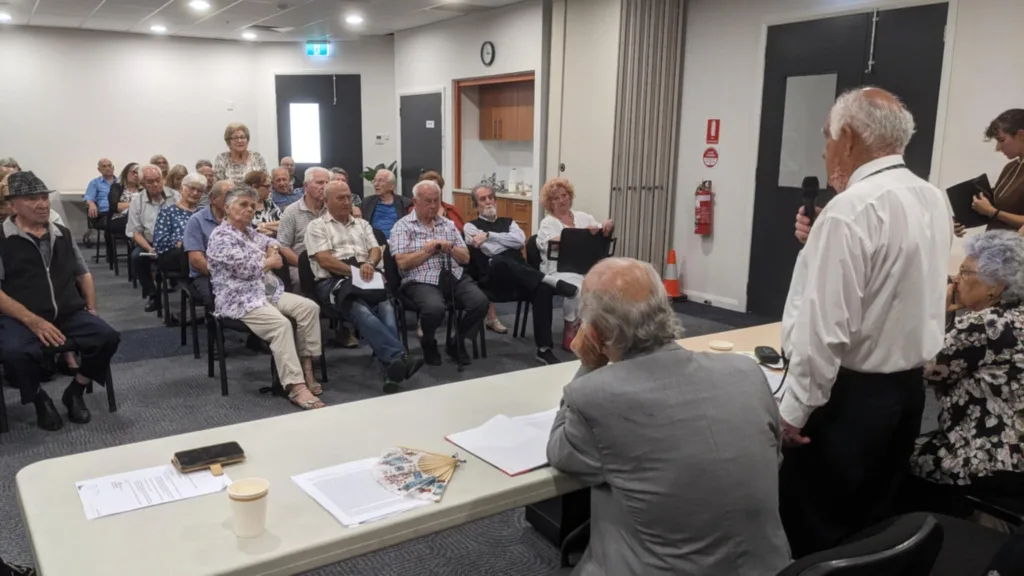
    The Federation’s headquarters are at PRONIA in Brunswick.

    In response to the situation, PRONIA issued a public statement on April 1.

    “On Friday, an incident occurred on our PRONIA premises that impacted on members of our team. Since then, there have been various comments and articles published concerning PRONIA and the Federation of the Greek Elderly,” the statement read.

    “PRONIA and the Federation share a long-standing history. PRONIA has consistently supported the Federation and the Greek community and remains dedicated to this commitment.

    “The Federation always remains welcome at PRONIA.”

    PRONIA said it would not be making further comment.

    Mr Kostoulias said the Federation’s Board has unanimously reaffirmed his presidency and commitment to collaboration.

    The future of the working relationship between the two organisations remains to be seen.

    Sylvia Hadjiantoniou.

    The Cyprus War of Liberation: Honouring the sacrifice for a united and free island

    By Michael Peters Kyriacou, President of the Cyprus Community of NSW

    On March 25, the Greek world and beyond marked the start of the 1821 Greek War of Independence. After four long centuries of occupation and oppression, the spark that was lit on March 25, 1821, gave hope that liberty need not be just a dream.

    The brutality of taking other people’s lands, identity and freedom was challenged by a group of not so organised Greeks, motivated by pure idealism and pride.

    Occupied peoples finally had a “modern” version of what the French Revolution espoused, the American Revolution declared, and the Greeks were to confirm – that is, humans have a right to liberty, life and dignity.

    The ideals found by all three revolutions were finally codified with the founding of the United Nations. For one island, the ideas of freedom proved elusive for almost a millennium.

    Cyprus has been on the receiving end of foreign “occupation” for generations and yet the island peoples have retained their identity and live to tell the tale, live to defend their ethnos, and preserved their ancient Hellenic roots.

    This is what Cyprus National Day on April 1 is all about.

    The last of the island’s occupiers, Britain, had initially “leased” the island from the Ottomans to tax the people of Cyprus to pay for the cost of Britain, providing “protection” for the Ottomans from the Russians.

    The taxes were not used for the benefit of the people or to fund the roads, bridges, schools, hospitals, water, and sewage. It was civil extortion on an industrial scale.

    Since the Ottomans sided with Germany in World War One, Britain decided to simply take the island.

    During World War Two more than 47% of the adult males of Cyprus volunteered to fight for Britain in support of Greece and France, on the promise Britain would leave Cyprus after the war. The promise was not kept, the occupation continued, the locals had enough.

    The British even tried to change the demographics on the island without success.

    Cyprus is, after all, a sunny, easy-going island, with amazing cuisine, breaches, mountains, snow fields and places steeped in history. There’s little wonder why the British refused to leave.

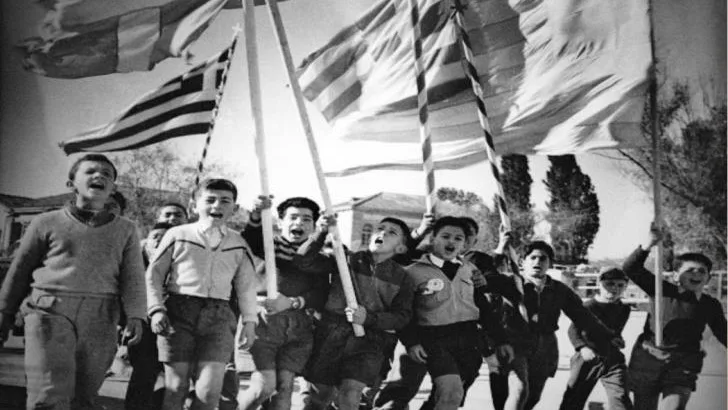
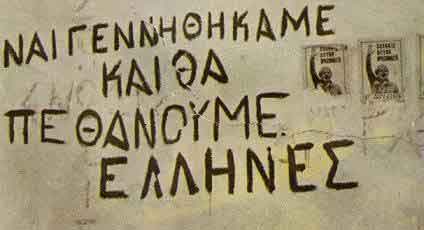
    April 1, 1955, the people of Cyprus declared their “revolution.”

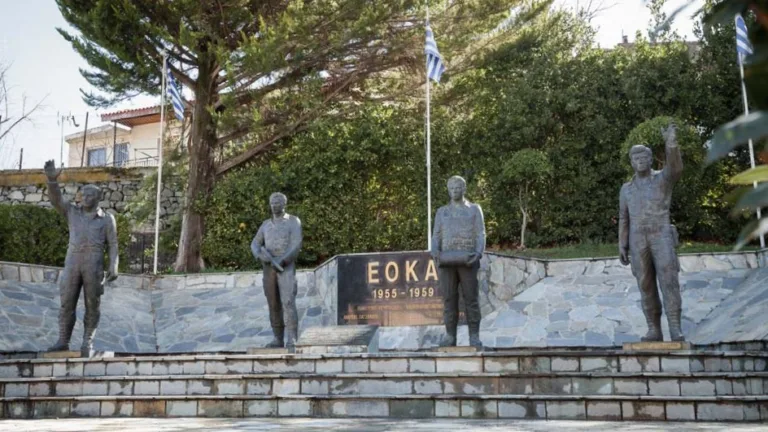
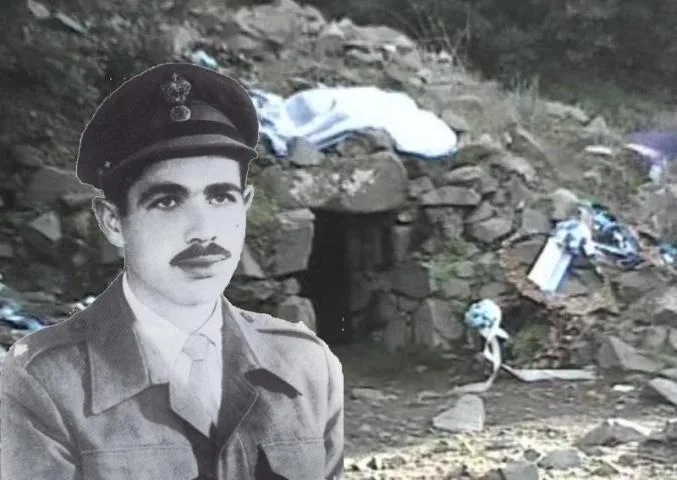
    Led by the ‘National Organisation of Cypriot Fighters’ (EOKA) it was more than an anti-colonial movement. It became the force behind self-determination and the birth of the Republic.

    It was to be a bloody, cruel war, as the dwindling might of a fading empire became desperate to retain its global status. It was to find itself sliding into a moral abyss. Tactics they once opposed were now employed – wholesale terror, torture, concentration camps, indiscriminate killings and collecting punishment. The atrocities are well documented, recorded by the foreign press at that time.

    The occupiers even set up an office dedicated to cultivating hate among different classes of locals, neighbours, villages, religions. Kidnapping, executions and the exiling of community leaders all had the hallmarks of a distressed foreign regime knowing their time to go home was approaching.

    It would be another six decades till the architects of the terror of occupation were finally brought to account, as the war crimes found their way to British and European Union courts.

    In January 2019, the British government agreed to pay £1 million in compensation to 33 locals tortured by British occupying military and more cases are in the pipeline.

    Perhaps due to Britain’s desire to retain its military bases on the island, Britain expressed regret for the conduct of the war and has made steps towards reconciliation.

    It is the courage and the daring deeds of the locals that Cyprus owes its existence too. It is because of them Cyprus retained its identity, inspiring all to keep the promise for a united, democratic and free Cyprus.

    Greek Rock to take over Sydney with rousing concert

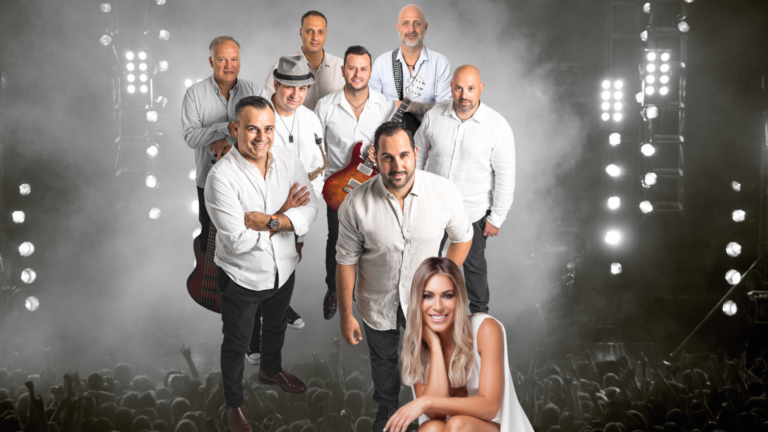
    The realm of Greek Rock is set to take centre stage in Sydney as IHO NYX prepares to thrill with a lively concert honouring one of the more underappreciated genres of Hellenic music.

    Presented by the Greek Festival of Sydney, the Greek Rock Tribute concert by IHO NYX will delight Sydney audiences at The Factory Theatre in Marrickville this coming Sunday, 6 April at 6.30pm.

    The event will feature hours of entertainment provided by the band, accompanied by Carly Yelayiotis, wherein they will cover a wide range of songs within the Greek Rock genre.

    Andonis Petrandonakis, speaking on behalf of IHO NYX, explained the concert represents a more experimental take on the band’s normal formula of doing tribute shows in honour of specific singers, composers or bands.

    “We always try to do something innovative, something that hasn’t happened before, so we chose this time to cover a genre instead of a particular artist,” Mr Petrandonakis told Community Horizons.

    He elaborated that the selection of music will cover songs from as far back as the 1970s to present day, including from bands like Trypes, Xylina Spathia, Ypogeia Revmata, Pyx Lax and artists like Papakonstantinou, Sidiropoulos, Yiokarinis and Tzimis Panousis.

    “It is a very broad style of music. Two one-hour sets can only cover so much… We have tried to choose songs that most people will know and love,” Mr Petrandonakis said.

    The Greek Australian artist highlighted the significance of the Festival’s support in their experimental endeavour.

    “It is very pleasing, and it is very encouraging that they do have a broad view on the different styles proposed by artists and bands like us,” he said.

    “They have always been quite welcoming with our proposals and very supportive of us from our inception as a band many years ago.”

    Mr Petrandonakis stressed that the band is more than ready to put on a fantastic concert of songs that will not delve into any extremes associated with rock music, making the show accessible to all.

    “People should expect to see a very well-prepared and rehearsed show with quite a large group of very talented artists,” he said.

    “It will be an evening filled with some very familiar songs and for the ones that people may not be so familiar with, I am sure we have chosen ones they will be impressed with and can sing along with as well.”

    Limited tickets are still available for this one-of-a-kind tribute to an underrated genre of Greek music.

    Event Details:

    ‘Speak Greek in March’ campaign sees GCM students visit Melbourne Zoo

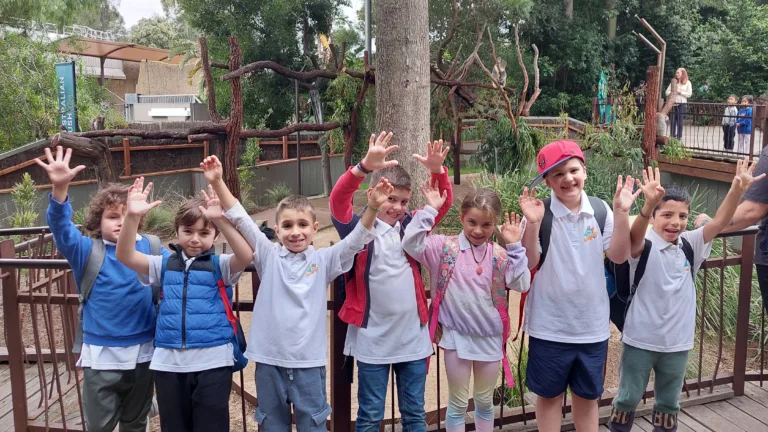
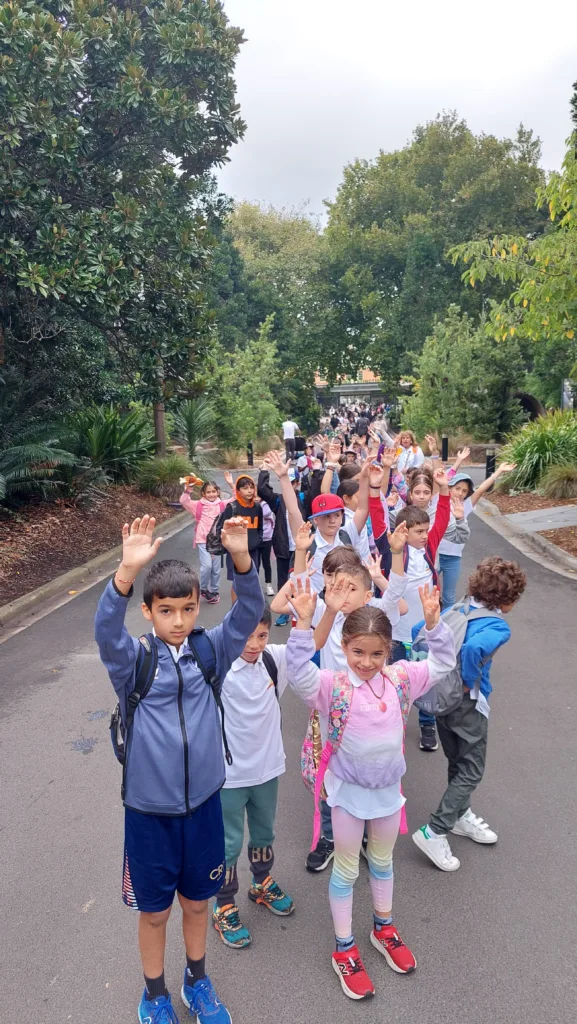
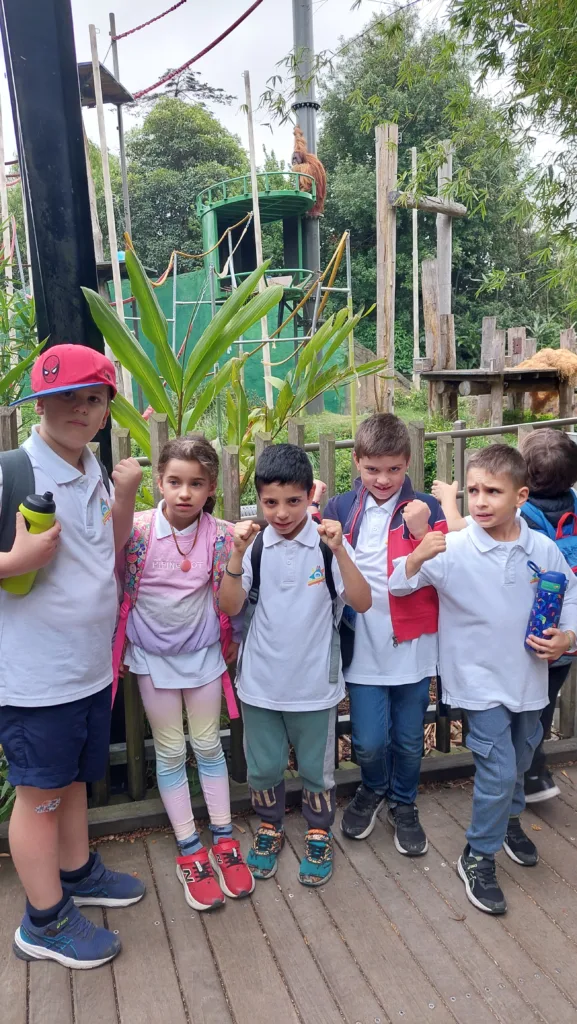
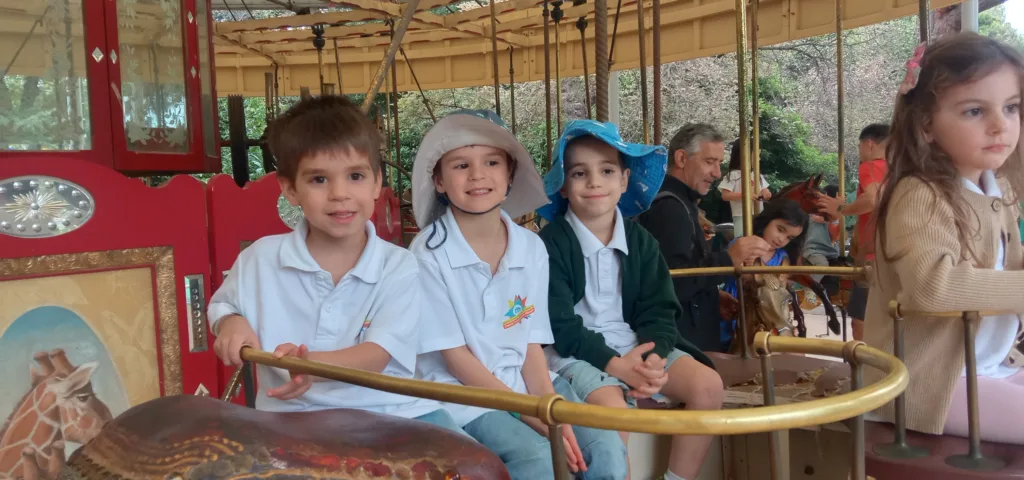
    On Saturday, March 31, the Greek Community of Melbourne (GCM) City’s school unit successfully organised an educational excursion to the Melbourne Zoo as part of the “Speak Greek in March” campaign.

    This campaign aims to promote the Greek language by encouraging children to use it daily and beyond the confines of the classroom, strengthening their connection to their cultural heritage.

    Accompanied by their teachers, the students had the opportunity to see animals up close, including giraffes, lions, tigers, orangutans, and baboons, while also learning their names in Greek. They also visited the butterfly garden and enjoyed the unique experience of dancing with the penguins.

    As part of the excursion, students participated in interactive games focused on identifying natural objects and animals. Divided into groups, they searched for the animals assigned to them and discovered fascinating facts about nature while communicating with each other in Greek.

    The small group structure fostered teamwork, communication, critical thinking, and language skills, turning learning into a fun and meaningful experience closely linked to students’ everyday lives.

    GCM ZOO

    This excursion, with its educational and recreational character, marks the beginning of a series of visits to the zoo for the remaining school units of the Greek Community of Melbourne.

    The ongoing goal remains the promotion of the Greek language and culture by offering children the opportunity to experience and use the language in everyday situations in an enjoyable and creative way.

    Teen star Sam Konstas earns first Cricket Australia contract

    Sam Konstas, the 19-year-old opener from New South Wales, has been awarded his first Cricket Australia contract for the 2025–26 season, following his impressive Test debut against India on Boxing Day 2024.

    Konstas, who rose through the NSW Blues system and plays for Sutherland District Cricket Club, is the youngest player on the 23-man list.

    His composed 60 against a world-class Indian attack, including Jasprit Bumrah, caught the selectors’ attention on Boxing Day.

    He joins six other NSW players on the contract list, including Pat Cummins, Steve Smith, and Mitchell Starc.

    Sam Konstas' second Test innings pulls the veil on India's strategic focus
    Sam Konstas. Photo: Asanka Brendon Ratnayake / AP.

    “In Sam we see promising upside in a young player who will continue to develop at first class level and in the international environment,” Men’s Chair of National Selectors George Bailey said.

    Other additions to the national contract list include spinner Matthew Kuhnemann and allrounder Beau Webster, both of whom impressed in recent Test series.

    Meanwhile, Sean Abbott has not had his CA contract renewed.

    Players can still earn upgrades through international selection in Tests, ODIs and T20Is over the next year.

    Source: cricketnsw.com.au

    Brisbane taverna owner John Theoharis disqualified from driving after licence breach

    John Theoharis, co-owner of Brisbane’s popular Lefkas Taverna, has been fined $300 and disqualified from driving for three months after breaching the conditions of his restricted work licence.

    According to the Gold Coast Bulletin, the 46-year-old admitted in Southport Magistrates Court to driving from Brisbane to Surfers Paradise on 29 December 2024 — outside the permitted scope of his licence, which was granted after a prior drug-driving conviction.

    Police verified the offence using CCTV footage at the Q1 Resort. Theoharis told officers he had driven to pick up his children, with his lawyer citing a “very difficult separation” from his estranged wife and business partner Angela.

    “On this particular day, there was no-one else to pick up the kids,” defence lawyer Kris Jahnke said.

    The court ruled out a further restricted licence, with Acting Magistrate Sarah Thompson noting Theoharis could have used services like Uber instead.

    Source: Gold Coast Bulletin

    Giannis Antetokounmpo in talks to buy the Sydney Kings

    In a stunning development sending shockwaves through both the basketball world and the Greek Australian community, NBA superstar Giannis Antetokounmpo is reportedly in talks to buy a stake in the Sydney Kings — with plans to rename the team the ‘Spartan Kings.’

    According to sources close to Antetokounmpo, the two-time NBA MVP sees the move as a chance to honour his Hellenic roots while growing the game in the southern hemisphere.

    “Basketball is war. Spartans were warriors. It makes sense,” Antetokounmpo allegedly told close friends.

    If the deal goes through, the Sydney Kings would undergo a full rebrand by 2026, including:

    • A new team logo featuring a hoplite helmet fused with a basketball
    • Halftime shows with shield drills and tsifteteli performances
    • A court design featuring the phrase ‘ΜΟΛΩΝ ΛΑΒΕ’ at centre court
    giannis antetokounmpo

    Fans have already started speculating about potential player signings. Rumours include an all-Greek bench featuring Nick Kyrgios (as player-coach) and George Calombaris (as team nutritionist).

    Sydney Kings officials have declined to comment publicly, but Antetokounmpo has fuelled the flames by posting a mysterious tweet on Tuesday morning: “Australia… are you ready for the Spartan era #ThisIsSpartaKings”

    Industry insiders are calling the move “bold,” while Greek dads across Australia have declared it “finally a reason to watch the NBL.”

    UPDATE: A representative for Antetokounmpo later clarified the reports, stating: “This story is 100% fictional and brought to you by a plate of koulourakia and a heavy dose of Greek imagination. Happy April Fools’ Day!”

    Paros submerged, Syros pelted by hail as storms sweep the Cyclades

    0

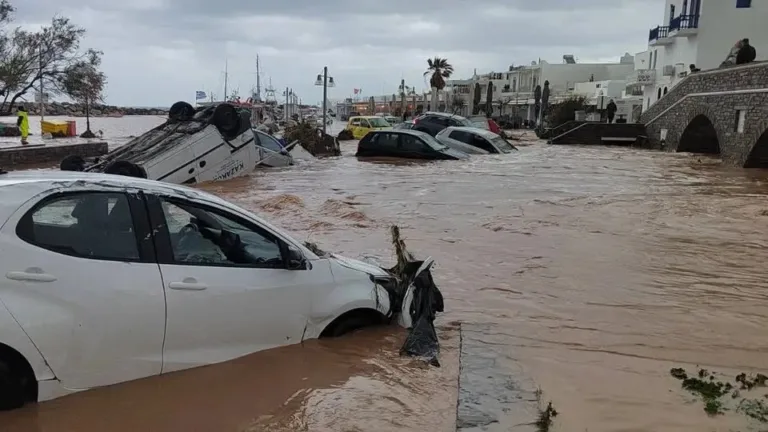
    Severe weather swept across several Cycladic islands on Monday, March 31 with Paros and Syros among the hardest hit.

    In Paros, heavy rainfall transformed streets into rushing rivers, especially in Naoussa and Kolymbithres, sweeping away cars and bins. Video footage shows the extent of the damage, with water surging through town centres.

    Local authorities rescued several individuals, including two people trapped in vehicles and 13 others brought to safety.

    Mayor Konstantinos Bizas described the situation as particularly dangerous along the Parikia–Naoussa road, noting that the Naoussa River had overflowed and swept away cars near a bridge.

    A traffic ban is now in place across the island. Reinforcements from Athens and Naxos are being sent to assist with response efforts.

    Meanwhile, Syros experienced a dramatic change in weather after a sunny morning gave way to a sudden hailstorm just after 3pm, pelting the island with ice.

    Elsewhere, Mykonos has also implemented a traffic ban, particularly in the Tourlos and Marathi areas, where flooding led to emergency rescues. Authorities reported: “Everyone is safe.”

    Further storms are expected across the Aegean, with a Red Warning issued by the National Meteorological Service (EMY). Other islands—including Samos, Ikaria, Chios, and areas of Crete and the Dodecanese—are also forecast to be impacted through Wednesday.

    On Rhodes, schools will remain closed on Tuesday as a precaution, according to Mayor Alexandros Koliadis.

    Source: Ekathimerini

    Sydney remembers Cyprus’ fight for freedom ahead of National Day anniversary

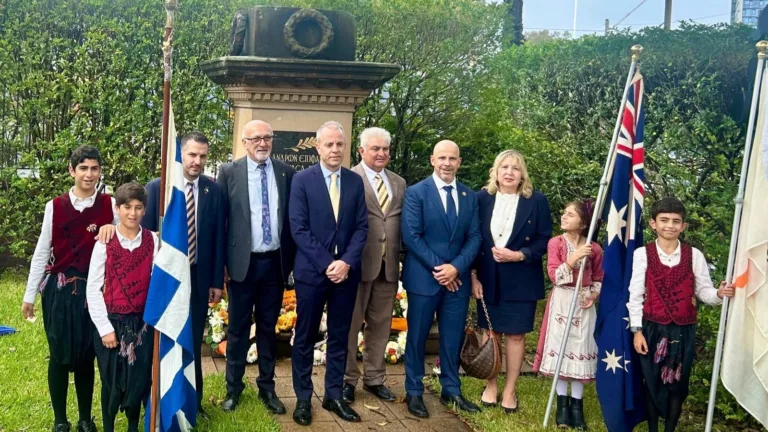
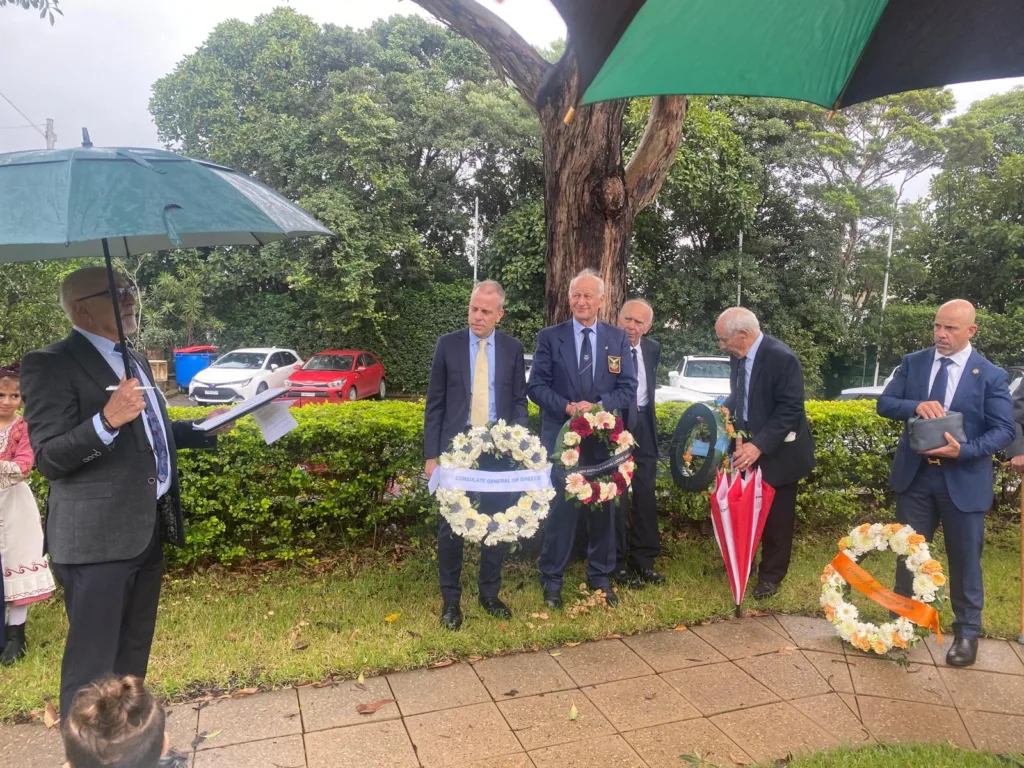
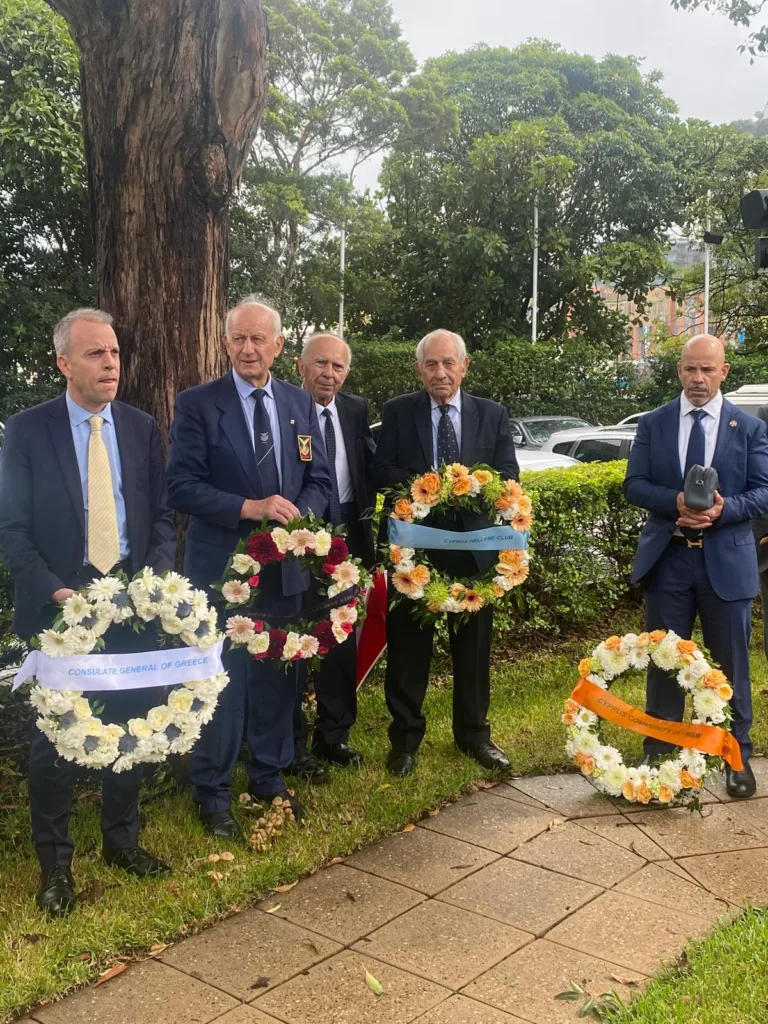
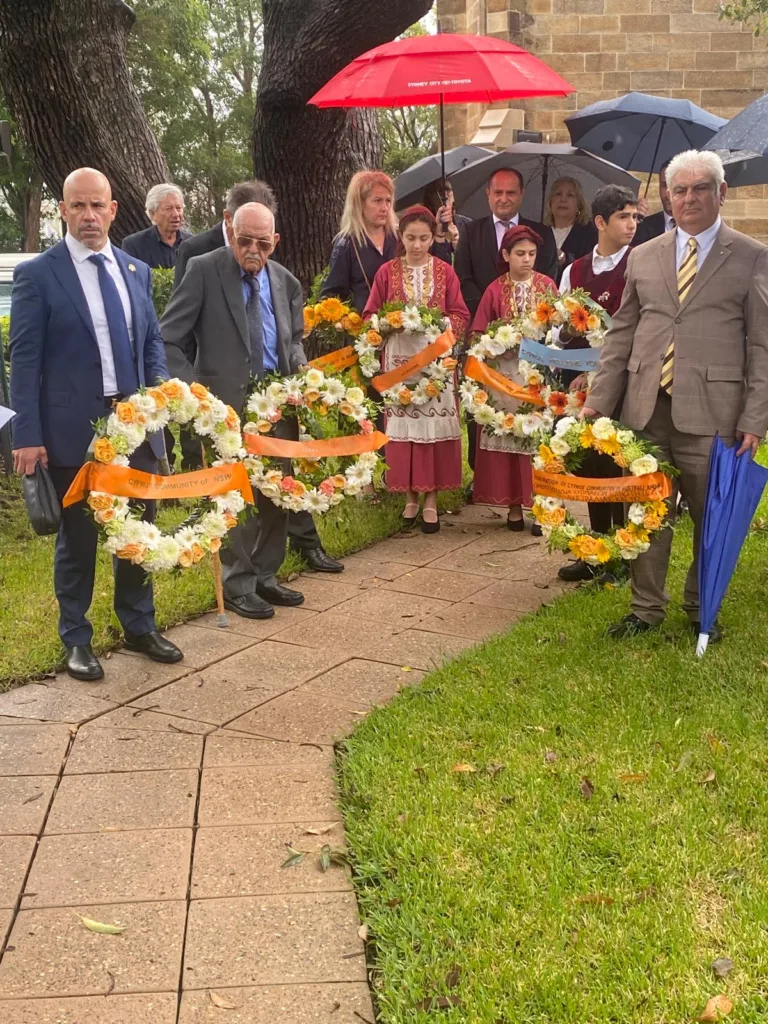
    Cypriot and Greek Australians gathered in solemn remembrance on Sunday, 30 March, for a memorial service marking Cyprus National Day and commemorating the heroes of the 1955–1959 War of Independence against British colonial rule.

    The event was jointly organised by the Justice for Cyprus Co-ordinating Committee of NSW (SEKA NSW), the Cyprus Hellene Club Ltd, and the Cyprus Community of NSW, and took place at the Cathedral of the Annunciation of Our Lady in Redfern, Sydney.

    cyprus

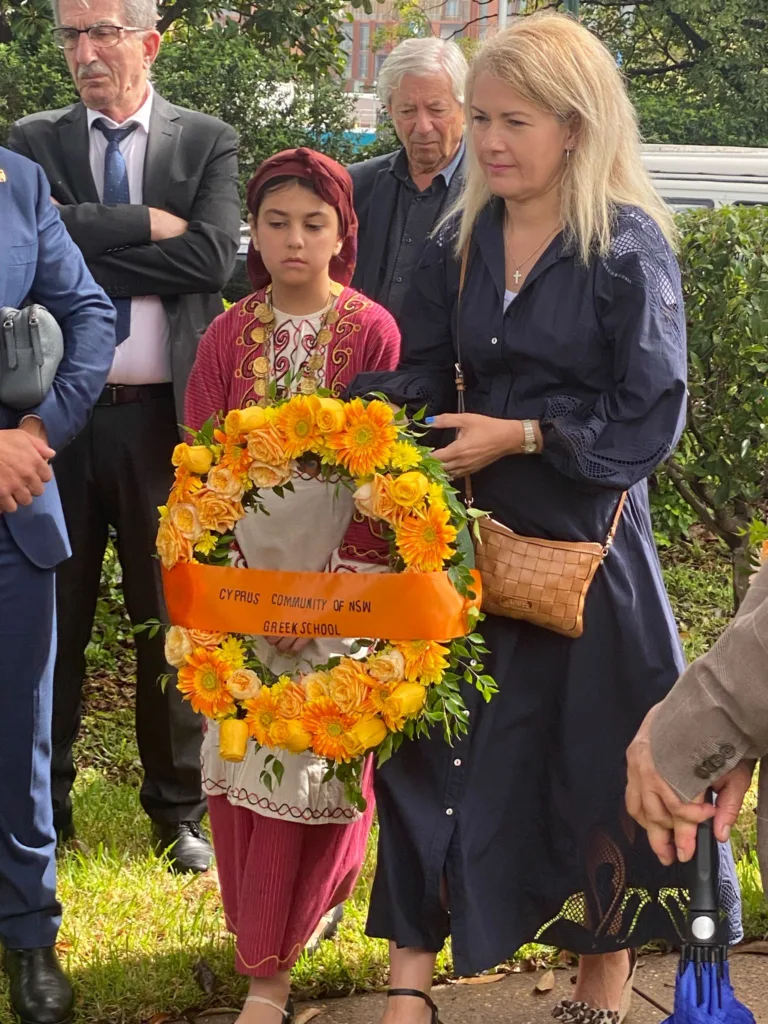
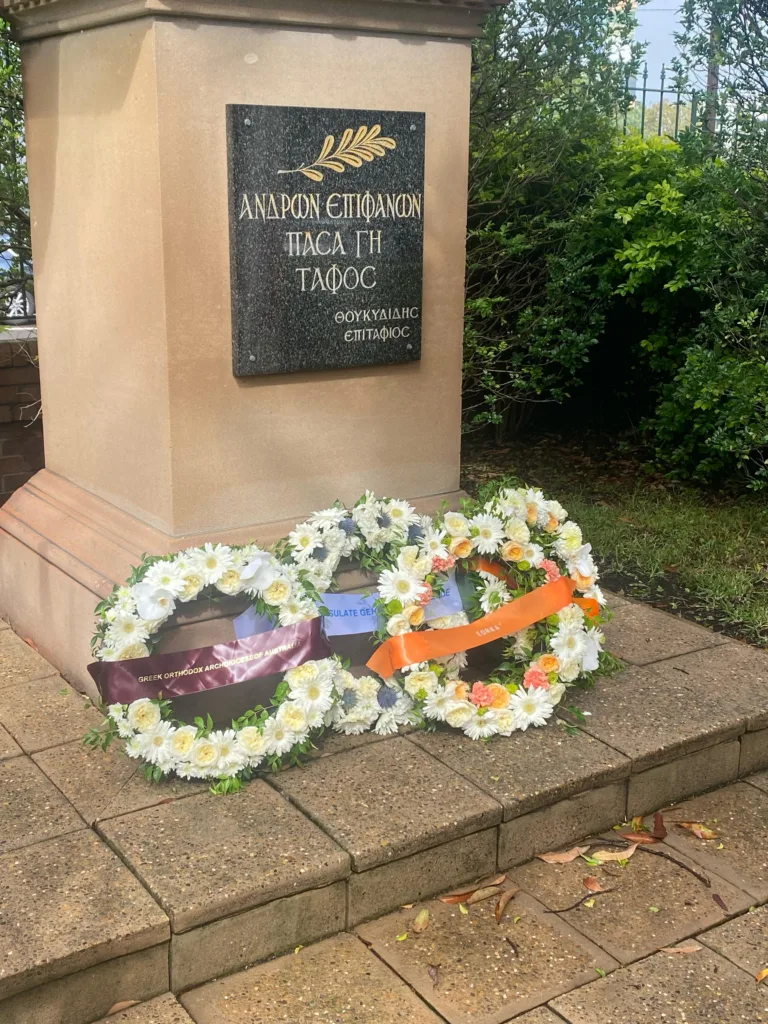
    The day began with a Doxology Service at 9:30 am, followed by a wreath-laying ceremony at the Church Courtyard cenotaph at 11am. Representatives from Cypriot and Hellenic organisations, along with community members of all ages, came together to honour those who gave their lives in the name of freedom and national dignity.

    A speech from the High Commissioner of the Republic of Cyprus in Australia, Antonis Sammoutis, was read out, paying tribute to the legacy of the EOKA fighters. The High Commissioner referred to the EOKA struggle as “a shining milestone in the modern history of Cyprus” and “a symbol of heroism and moral greatness.”

    Mr Sammoutis honoured the sacrifices made by the Cypriot people, noting that despite the overwhelming power of British colonial forces, “the brave Cypriot soul fought to win justice with bare hands and blood.” He also highlighted the roles of Archbishop Makarios III and General Georgios Grivas Digenis, who led the resistance and shaped the movement that ultimately led to the independence of Cyprus.

    The Cypriot High Commissioner concluded his address with a call for continued vigilance and unity in the pursuit of national reunification: “Let the 1955–59 struggle be the light for a fair and comprehensive settlement towards the reunification of our beloved island.”

    The service offered a moment of collective reflection, bringing together Cypriots, Greeks, and supporters of Cyprus in an atmosphere of pride, memory, and ongoing commitment to justice. Light refreshments were served following the ceremony.

    *Photos supplied by Dimitrios Kametopoulos.