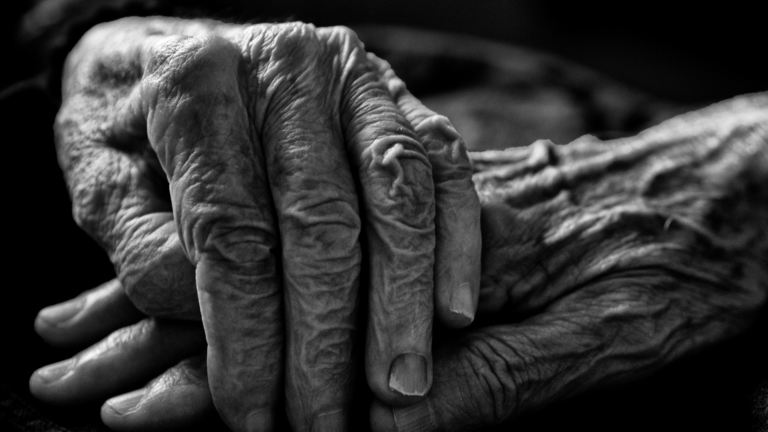
Seniors in Melbourne’s Fronditha Care homes have experienced a powerful lift in wellbeing thanks to a unique pet therapy program developed by Monash University, according to The Herald Sun.
The Pets and People initiative brought animals—ranging from dogs and guinea pigs to robotic cats—into aged care homes once a week for just one hour. Despite the short visits, researchers found “significant” improvements in health and loneliness among residents, many of whom are of Greek background.
Dr Em Bould, who led the program, said it was inspired by their own bond with elderly Greek neighbours. “They spoke no English, I spoke no Greek, but we connected over the dog,” they said. “You don’t necessarily need words when there’s a pet involved.”
The 18-week pilot ran across five Fronditha homes, four of which are based in Melbourne and cater to the Greek community. The visits were made by a small group of international students—also at risk of social isolation—who formed deep connections with the older residents.
“The conversations moved beyond pets over time,” Dr Bould said. Some students even came to call the seniors their “Australian grandparents.”
Even robotic animals played a role. “I had a cat that I gave to this one lady and she loved it instantly,” said Dr Bould. “It gives them a purpose… without the responsibility that a real pet offers.”
Fronditha Care CEO Faye Spiteri confirmed the program led to “positive and encouraging health outcomes.” Dr Bould hopes it will expand across Australia, especially in culturally connected care environments.
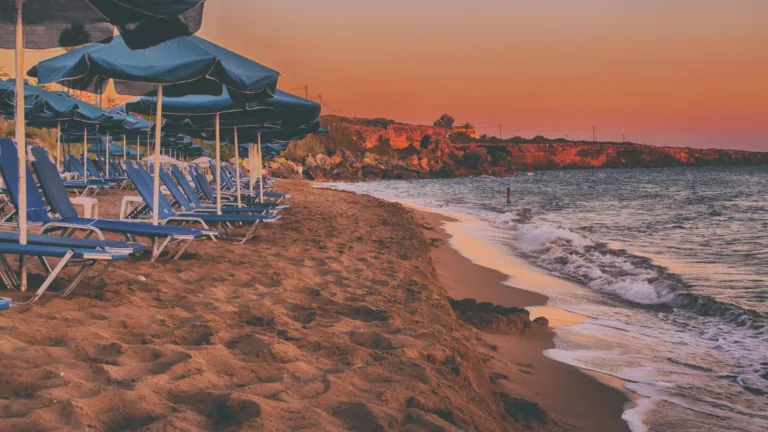
Greece and Australia have made a splash in the World’s 50 Best Beaches list, with several entries showcasing their coastal beauty, according to the dailymail.co.uk
Greece claims three coveted spots. Fteri Beach in Kefalonia ranks fourth overall, praised as being “tucked away in a secluded cove”, offering a pristine, tranquil escape far from crowded tourist hubs. Voutoumi Beach on the island of Antipaxos comes in at 16th, and Porto Katsiki, famed for its dramatic cliffs and turquoise waters on Lefkada, is listed 36th.
Australia also stands out with three beaches in the top 50. Turquoise Bay in Western Australia lands at number 11, celebrated for its vibrant marine life and excellent snorkeling conditions. Wharton Beach, known for its sweeping white sands and surf-friendly waves, is 21st. And Nudey Beach on Fitzroy Island near Cairns, with its coral-fringed waters and lush rainforest backdrop, secures the 37th spot.
Topping the global list is Cala Goloritze in Sardinia, Italy. Judges called it “more than just a beach” and “truly breathtaking”. Access is limited, preserving its untouched charm.
From Greece’s quiet coves to Australia’s vibrant reefs, these beaches highlight the countries’ coastal appeal.
Greece is expected to lose 1.3 to 1.5 million people by 2050, with the population aging significantly, according to a study by the Institute for Demographic Research and Studies, led by Professor Vyronas Kotzamanis. According to protothema.gr, the most profound changes will affect two age groups: the working-age population (20–64) and those over 65.
The 20–64 group will shrink by about 1.7 million, mainly due to falling fertility rates across generations and a steady decline in births since 1980. This trend worsened in the past 15 years as the number of women of childbearing age dropped, and emigration—especially of young adults—outpaced immigration. Meanwhile, the 65+ population is growing, driven by past high birth rates and rising life expectancy. They are projected to exceed one-third of the population by 2050, up from 24% today.
Kotzamanis argues that maintaining Greece’s 2025 employment levels by 2050 is possible under two conditions: raising the employment rate of the 20–64 age group from 67% to 82%, especially among women and those aged 20–29 and 55–64, and achieving a positive migration balance of about 700,000. If both goals are met, the number of employed persons could remain stable at 4 million.
Still, even in this scenario, the ratio of workers to retirees will fall from 1.64 to 1.24, requiring broad policy responses. As Kotzamanis notes, national prosperity “does not only depend on the population of workers,” but also on the “quality” of human resources and other long-term factors.
A routine construction project in Thessaloniki uncovered a hidden chapter of Greece’s post-war trauma, according to an article by Costas Cantouris in AP.
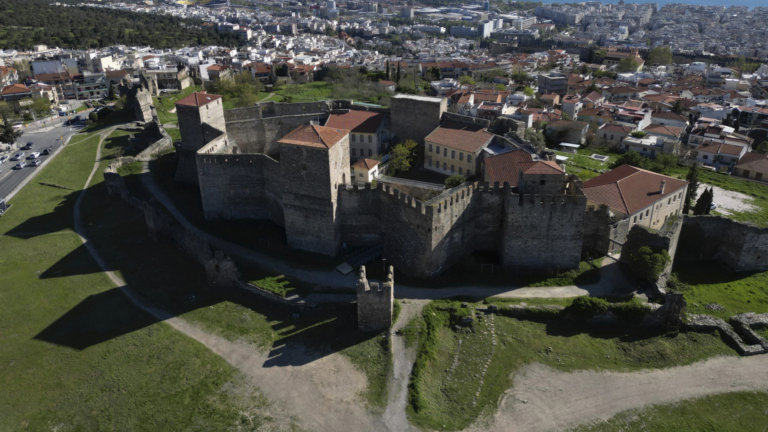
The discovery has unearthed painful memories of Greece’s Civil War. Construction workers laying benches in a city park uncovered a mass grave — 33 skeletons in unmarked pits near the Yedi Kule fortress, once a prison where leftists were tortured and executed between 1946–1949.
“We found many bullets in the heads, the skulls,” said supervising engineer Haris Charismiadis. Items found include a ring, a woman’s shoe, and a handbag — remnants of lives cut short.
The site, cleared for development because the bones are under 100 years old, has become the country’s first exhumed Civil War mass grave. Authorities in Neapolis-Sykies insisted on continuing the excavation, calling the find “of great historical and national importance.”
Families are now visiting, hoping for identification through DNA. “So they can retrieve the remains of their grandfather, great-grandfather or uncle,” said long-serving mayor Simos Daniilidis.
One of them is Agapios Sachinis, 78, whose uncle was executed at 19 for refusing to renounce his beliefs. “It’s about carrying inside you not just courage, but values and dignity you won’t compromise – not even to save your own life,” he said. “I want Agapios close to me, at least while I’m alive.”
Historian Spyros Kouzinopoulos, who researched the executions, described the victims as the “flowers of their generation.” Two 17-year-old schoolgirls were among them.
The city plans further excavation. “We must send a message,” said Daniilidis. “Never again.”
Religion is one of the most prominent elements in the works of Nikos Kazantzakis, not only Western religion but also Eastern, especially Buddhism. It is worth keeping in mind that Kazantzakis produced his oeuvre during a time when the West was encountering the East intellectually and was looking for means to reshape its cultural capital. This is the general socio-historical backdrop against which one should place the personal spiritual fascination of Kazantzakis with Buddhist tradition, ideas and practices.
In his presentation Dr Vassilis Adrahtas will explore this fascination or mystique from The Saviors of God: Spiritual Exercises to Zorba the Greek and Kazantzakis’ Odyssey to a palimpsest-kind of work of his under the title Buddha.
The most interesting conclusion of this exploration is not so much the plethora of Kazantzakis’ references to Buddhism, but the subtle, creative and ingenious ways in which he managed to interweave Buddhist with non-Buddhist hierophanic forms.
BIO
Dr Vassilis Adrahtas is the Convenor of Greek Studies, UNSW and a Subject Coordinator, Islamic Studies, WSU. He holds a PhD in the Sociology of Religion (Panteion University) and a PhD in Studies in Religion (University of Sydney). His specialisation is in Early Christianity, Patristics, Byzantine Philosophy, the History of Religions and Indigenous Australian Studies. He has authored and co/edited more than ten books.
He has served as President of the International Society of Nikos Kazantzakis, Sydney Branch (2015-2025) and is the co-founder of Unity in Philia, a not-for-profit promoting intercultural relations between Greece and Australia and cultural diplomacy in the Asia-Pasific region.
His most recent publications are Islam, Civility and Political Culture (Palgrave Macmillan 2021, co-edited with M. Milani); 20 Years with Nikos (International Society of Nikos Kazantzakis, Sydney Branch, 2021); Kazantzakis in Australia! (International Society of Nikos Kazantzakis, Sydney Branch, 2024); Consciousness’ Journey to the Transcendent: Tuning the Finite to Infinity. (Unity in Philia, 2025).
Event Details:
When: Thursday 8 May 2025, 7pm
Speaker: Dr Vassilis Adrahtas
Seminar: The Mystique of Buddhism in the Oeuvre of Nikos Kazantzakis
Where: TheGreek Centre (Mezzanine, 168 Lonsdale St, Melbourne)
“Since ancient times, we have had olive oil in our blood,” according to producer Eftychis Androulakis (Pamako). He is referring to Greece’s long and continuing tradition of making and eating olive oil. Even now, he adds, “we are the country that uses the most olive oil per capita.” Giannis Christodoulopoulos (Arkas) adds, “Greek olive oil is our culture.”
Greek olive oil is “a statement of Greek heritage,” agrees an Agrovim company representative. It is an emblem of the bounty of the land. “Its distinctive taste and the superior quality that define Greek olive oil make it unique and recognizable all over the world. It’s connected to our identity.” This national product has been central to Greek cuisine, culture, history, and economy for millennia.
A representative of the Kanakis olive oil company emphasizes many Greeks’ ongoing dedication to their trees. “Olive trees are your children; you must make them grow really well. Olive oil is a liquid gold. You have to make it right.” From generation to generation, families care for their groves, passing them down to offspring as a valuable inheritance, working to produce high quality extra virgin olive oil (EVOO), mainly from olives grown on small family farms.
“Greek olive oil could be an ambassador for Greek culture, the Greek bond with nature, with agriculture,” according to Giovanni Bianchi. He realizes that Greek olive oil can only serve as such an ambassador when it retains its own identity. Bianchi is the Italian producer of Argali Greek organic olive oil, which he makes and bottles in Greece.
Greek olive oil identity threatened by bulk exports and blending
A great deal of high quality extra virgin olive oil is exported from Greece in bulk, blended with oils from other countries, and sold under a “bottled in Italy” label. George Triantafyllidis (Belia) wishes to correct “the misconception that good olive oil is [always] Italian olive oil. The misconception that ‘Italian’ olive oil is [always] Italian olive oil.”
Of course, 100% Italian olive oil does exist, but Italy consumes and exports far more olive oil than it produces. So it makes up the difference by importing olive oil from several countries and bottling blends of oils. Greece is one of its major sources. With its small population (10 million) and substantial production (sometimes more than Italy’s), Greece has plenty of surplus olive oil to export.
Unfortunately, when producers sell their oil in bulk rather than bottled and branded, they get lower prices for it. This makes it harder to cover their expenses and more likely that they will abandon their groves. Maria Moraiti (Zariphico) joins many Greeks in lamenting that “other countries are benefiting from our product, which we should keep safe under a Greek brand. That’s the main reason I wanted to bottle my olive oil. Why are we giving our best products away—our treasures?”
Triantafyllidis says, “Greece is #1 when it comes to extra virgin olive oil.” Greeks believe that the percentage of the total olive oil produced that is extra virgin is higher in Greece than in any other country, and some experts believe that may be true. “That’s why Italy buys extra virgin olive oil from Greece and blends it with their own olive oil and others’ olive oil,” according to Triantafyllidis and many others.
Natural Greek extra virgin olive oil for cooking and health
John Koutroumanis (Nostalgaia) would like to be sure everyone understands the difference between virgin olive oil (including extra virgin) and other edible oils. By definition, as he explains, virgin olive oil is “produced by mechanical means. Other edible oils have different processes of production, with chemicals or with heat.” On the other hand, “extra virgin olive oil and virgin olive oil are products from nature.”
Extra virgin olive oil is the most flavorful, aromatic kind of olive oil—and the safest, most stable cooking oil. It is perfect for cooking, baking, frying, marinating, and finishing and dressing foods. It is also the healthiest type of olive oil, given its wealth of natural antioxidant and anti-inflammatory compounds.
While EVOO contains many beneficial elements, such as monounsaturated fat, squalene, and Vitamin E, Eftychis Androulakis and increasing numbers of scientists and olive oil professionals emphasize the health benefits that come from the high concentration of naturally occurring phenolic compounds (or polyphenols) in some extra virgin olive oils.
Androulakis believes there is evidence that on average “Greek olive oil is the most high phenolic in the world, because of the [olive] varieties. With a healthy lifestyle—try and see the effects extra virgin olive oil can give.” Androulakis adds that research on high phenolic olive oil started in Greece, with most of the clinical trials on high phenolic EVOO’s benefits for patients still conducted in this small country. And more evidence of these benefits is published every year.
Extra virgin olive oil for flavour and aroma
While numerous consumers prefer to purchase the healthiest oil they can find, others are at least equally interested in extra virgin olive oil’s flavors and aromas. “Just smell it,” urges Katerina Bougatsou (Stalia); a good extra virgin has a wonderful aroma. And taste it, of course. Then repeat: smell and taste as many different EVOOs as you can.
As Dimitris Psathas (Klea) reminds us, “olive oil is not a fatty substance like butter or sunflower oil; different varieties give different flavors.” He mentions both the most common Koroneiki olive variety and a few of the dozens of others native to different parts of Greece: “Halkidikis, Makris, Kolovi, Tsounati, Manaki.” Irene Eleni (Elaiorama) adds, “in every taste, every sip you taste Greece. In every region the taste is different.” Moreover, in every region olive oil is central to the famously healthy, flavorful Greek Mediterranean diet.
Androulakis agrees that it is rewarding to “try all the varieties around, for different dishes, different gastronomic experiences.” A more intense, spicy olive oil better suits one dish, while a fruitier one better complements another. Creative young Greek chefs delight in experimenting with a variety of olive oil-food pairing flavor combinations.
A bright future for Greek olive oil
In recent years, Greek olive oil has been attracting the attention of enthusiastic chefs, sommeliers, producers, and scientists from various backgrounds. For Androulakis, “the future of Greek olive oil seems to be really bright, with new minds, new professors, new studies, new mills, new machinery, new technologies. So that means it’s developing. Wine is an already known art, but olive oil is unexplored, and this gives me energy to explore more.”
He has good company for his exploration. And fellow travelers are most welcome on this quintessentially Greek journey.
*Originally published on Greek Liquid Gold: Authentic Extra Virgin Olive Oil (greekliquidgold.com). See that site for recipes with olive oil, photos from Greece, agrotourism and food tourism suggestions, and olive oil news and information.
New Eurostat data reveals that 26.9% of Greece’s population—about 2.74 million people—is at risk of poverty or social exclusion, significantly above the EU average of 21%. This places Greece third-worst among EU nations, behind only Bulgaria (30.3%) and Romania (27.9%), tovima.com, has reported.
The findings follow recent statistics from Greece’s Hellenic Statistical Authority (ELSTAT), confirming the country continues to lag far behind the EU average in tackling deprivation. The situation has deteriorated between 2023 and 2024, with over 80,000 more people falling into poverty—a 0.8% increase.
Experts warn that the real numbers may be even higher. Vulnerable groups such as the homeless, Roma communities, prisoners, those in institutions, and people living in camps or hospitals are often underrepresented or excluded from official data.
Across the EU, 93.3 million people were at risk in 2024. However, unlike Greece, the broader EU saw slight improvement, with the percentage of those at risk dropping by 0.3 points—around 1.3 million fewer people compared to the previous year.
While other EU countries are making slow progress, Greece’s deep-rooted socioeconomic challenges continue to place a growing share of its population on the edge of poverty and social marginalization.
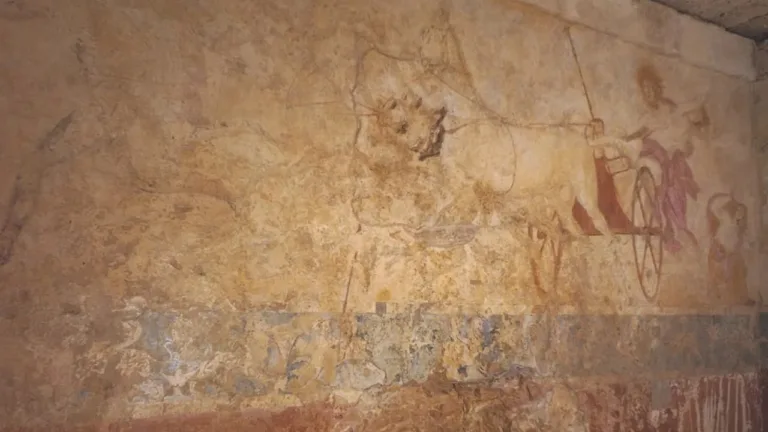
For decades, scholars believed that the Great Tumulus of Vergina housed the remains of the last Macedonian royals, including close relatives of Alexander the Great. Beneath the large earthen mound, archaeologists unearthed four tombs, labeled Tombs I through IV.
Since their discovery, the identities of those buried in the tombs have been the subject of intense scholarly debate. This is particularly true for Tomb I, often called the “Tomb of Persephone” due to its notable wall paintings revealed in 1977.
Earlier theories claimed that Tomb I held the remains of Philip II—father of Alexander the Great—alongside his wife Cleopatra and their infant son. All three were reportedly assassinated together in 336 B.C., making them prominent candidates for the tomb’s occupants.
However, new research appears to challenge that theory, according to archaeology.com. As reported by La Brújula Verde, a team of researchers recently applied radiocarbon dating, ancient DNA analysis, and isotope studies to reassess the remains found in Tomb I.
Their findings revealed that the majority of the skeletal remains belonged to a man aged 25 to 35 who died sometime between 388 and 356 B.C. This timeline makes it impossible for the tomb to belong to Philip II, whose death occurred in 336 B.C.
While the exact identity of the individual remains unknown, the researchers suggest possible candidates such as Amyntas III, Alexander’s grandfather, or his sons Alexander II and Perdiccas III—both of whom died within the updated date range.
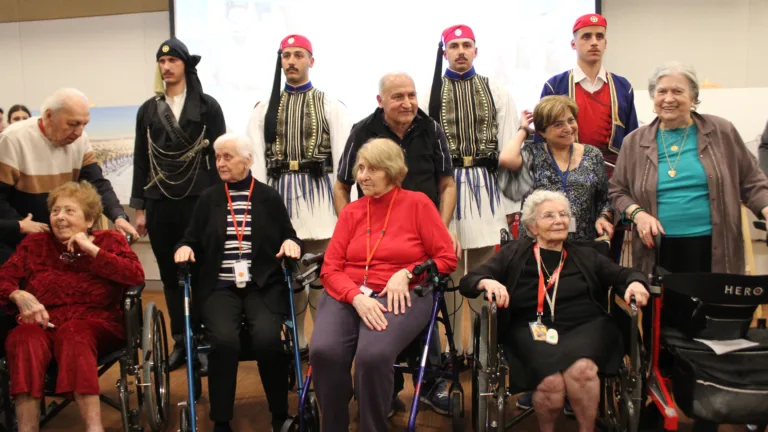
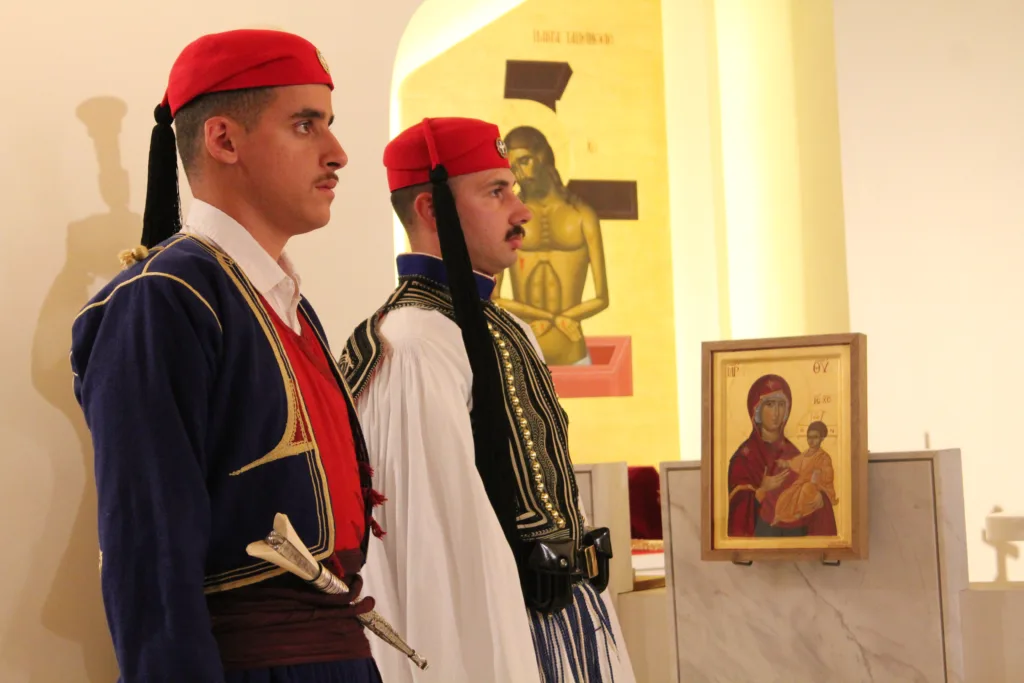
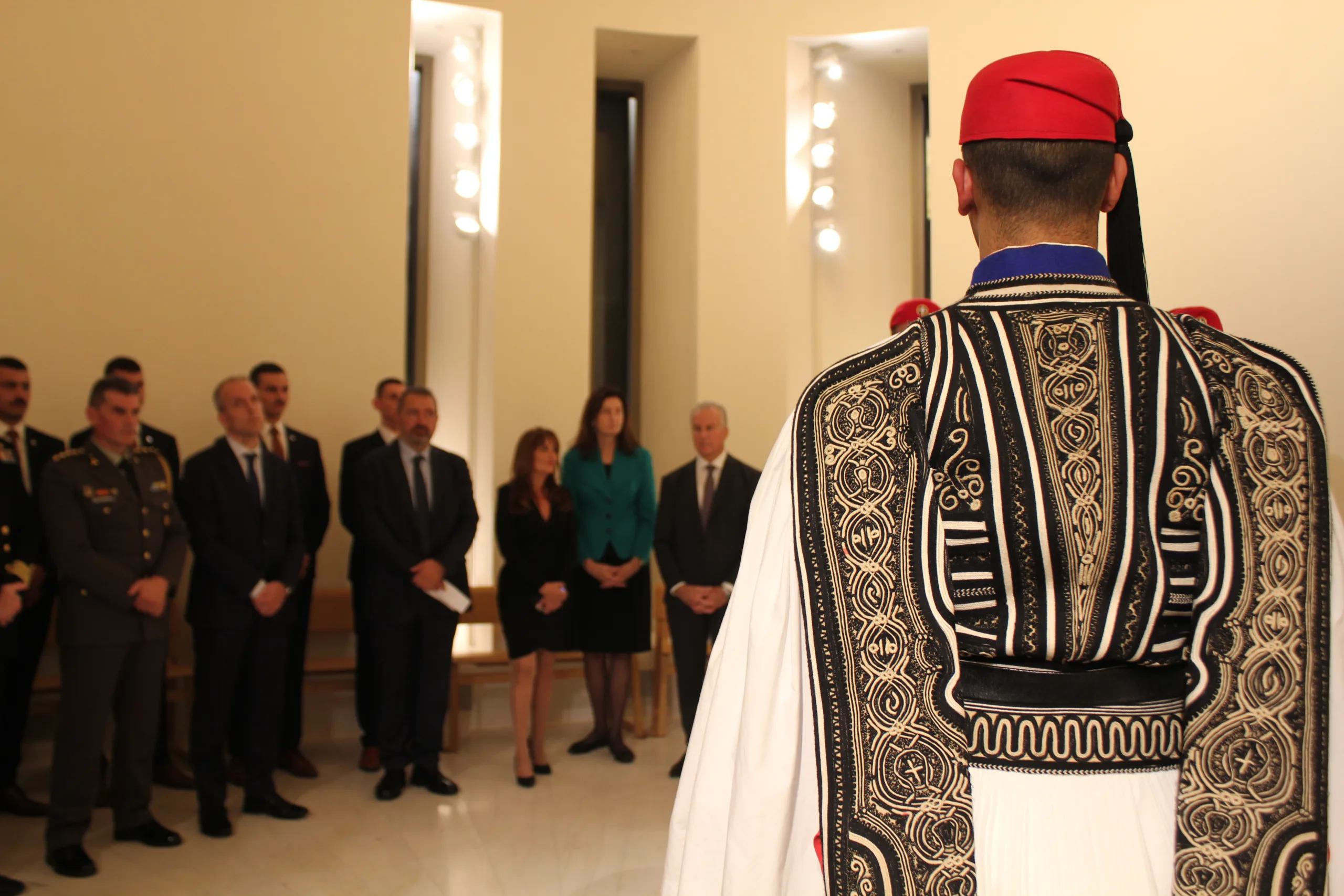
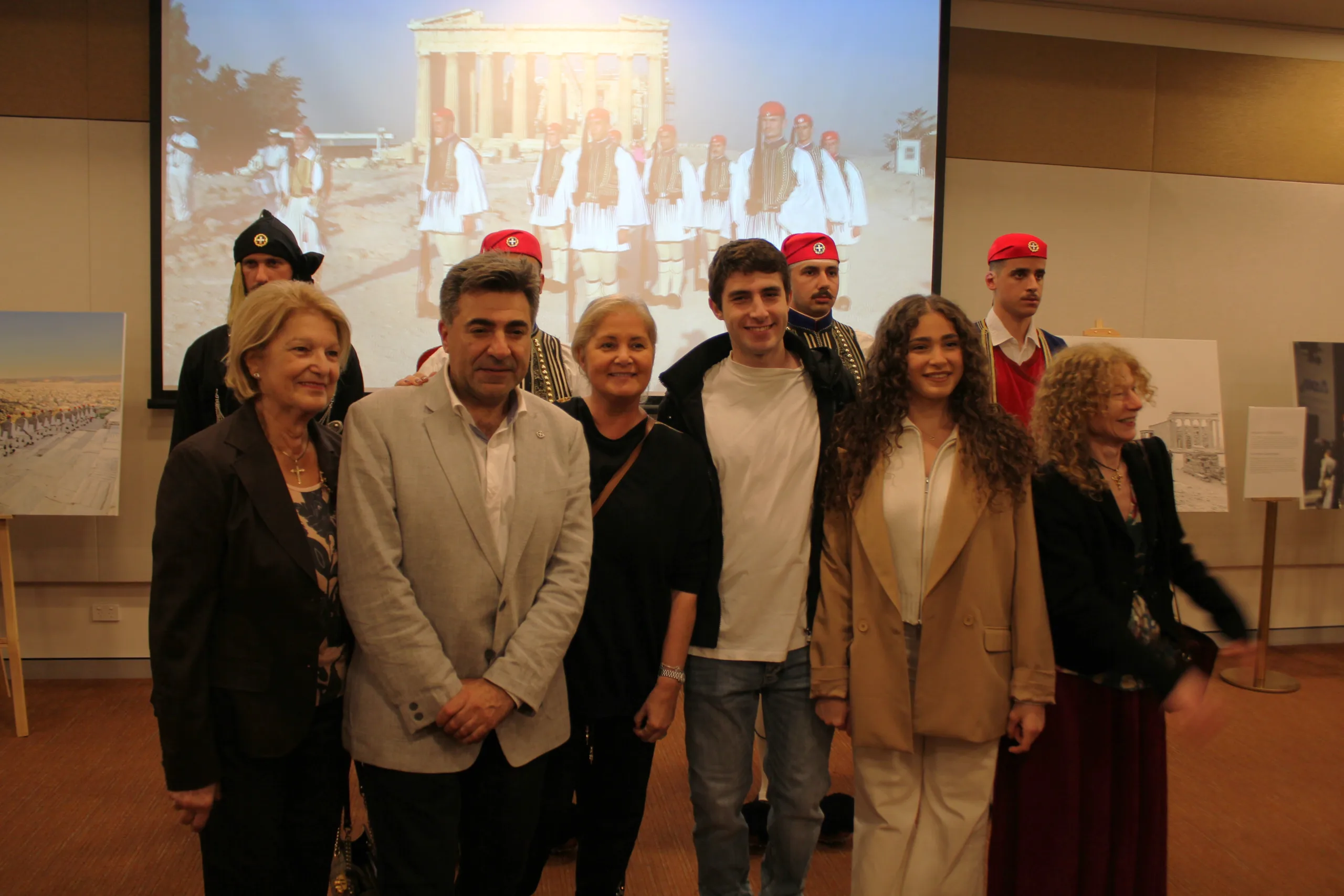
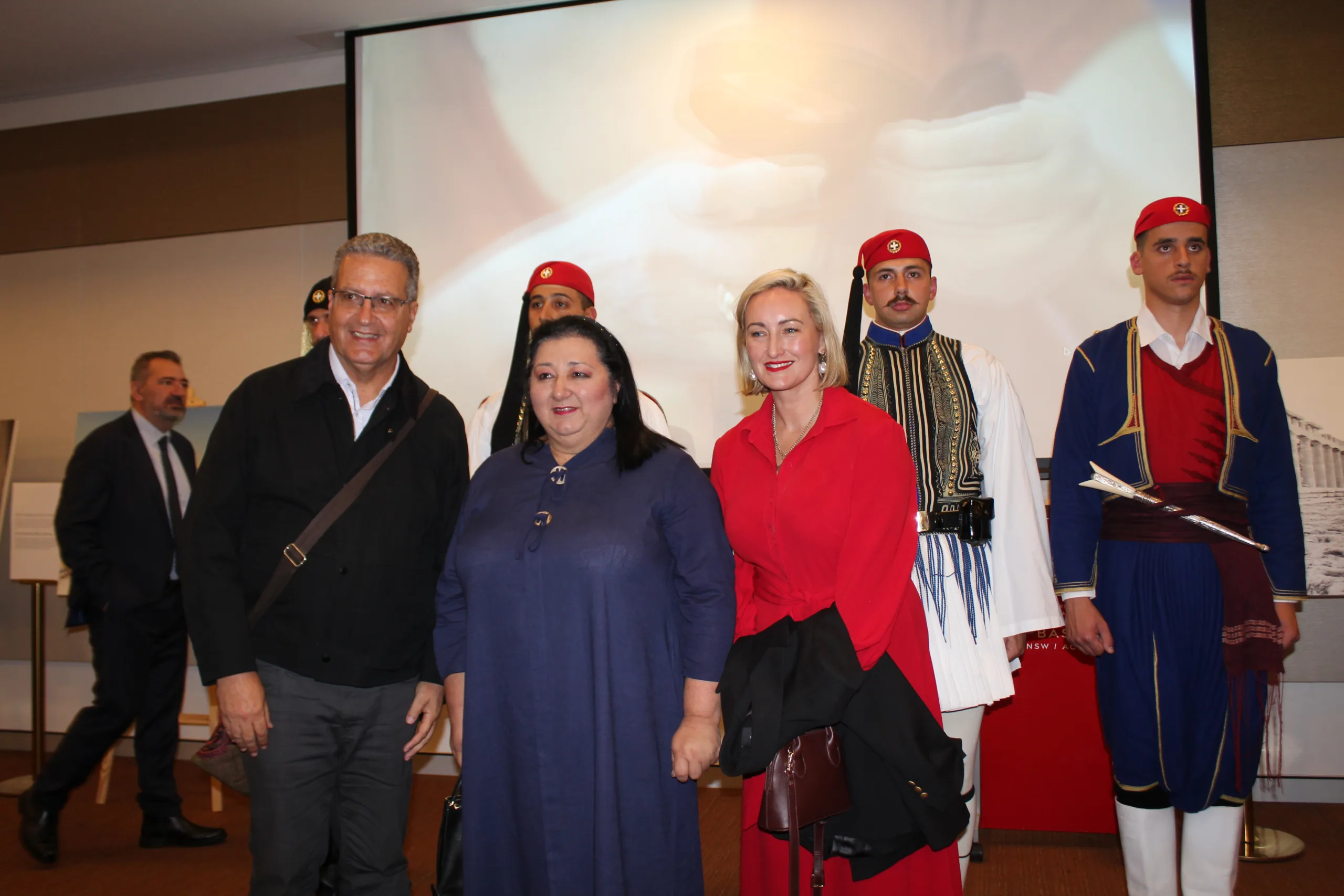
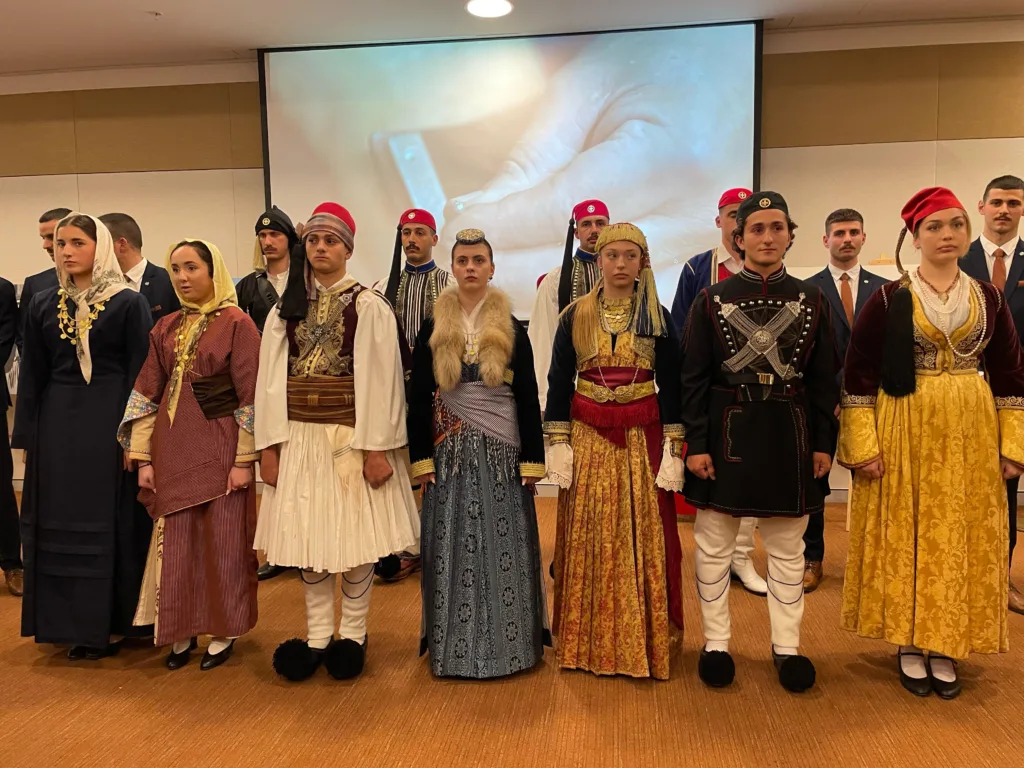
It was an unforgettable evening at St Basil’s NSW/ACT in Randwick on Thursday night as Greece’s Presidential Guard – the Evzones – marched into the aged care home, greeted by thunderous applause from elderly residents, their families, and staff.
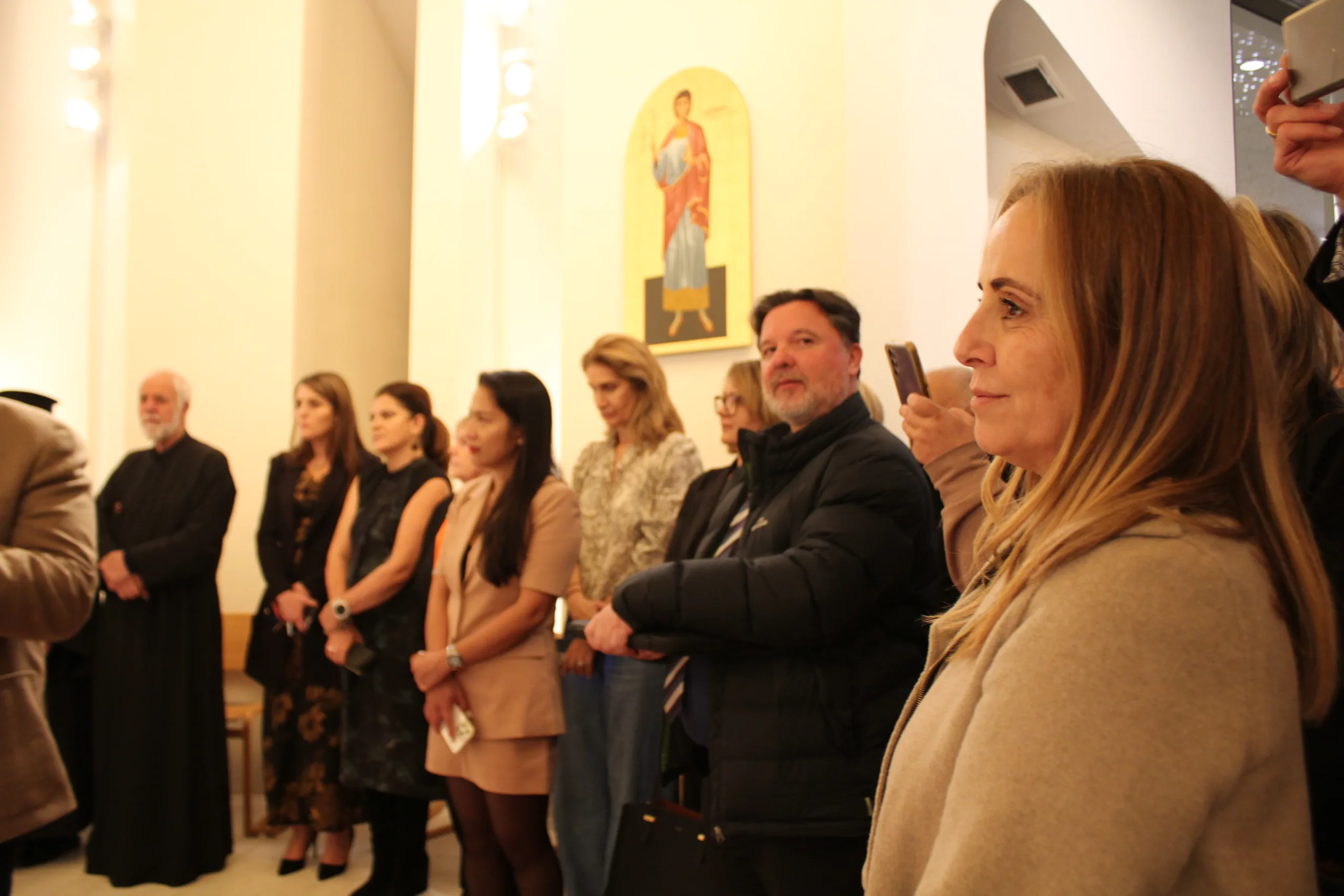
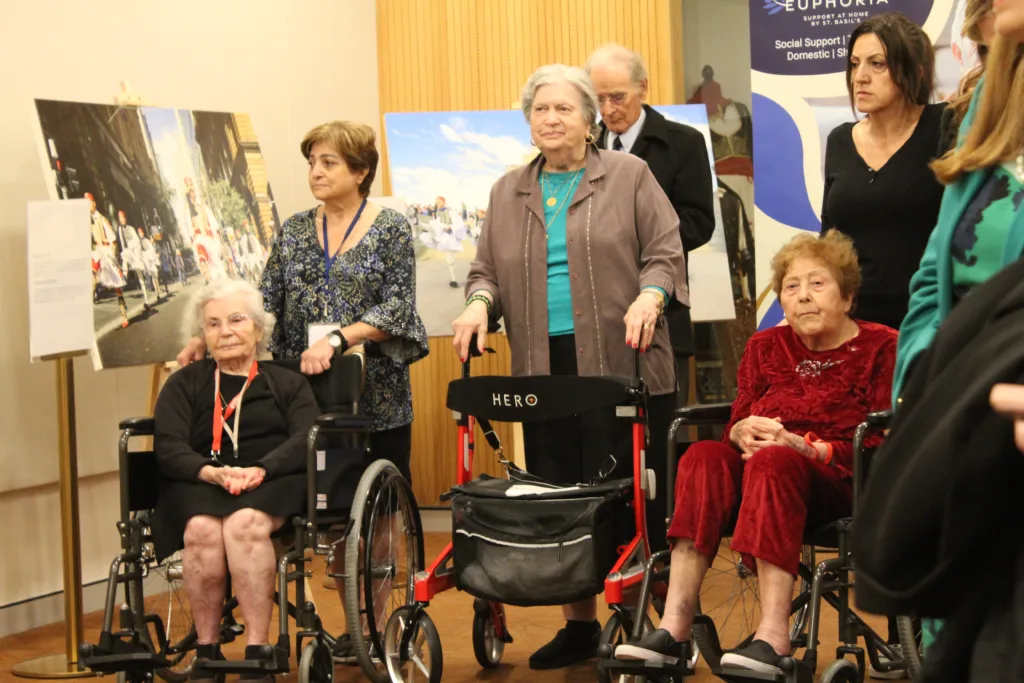
Surrounded by emotion and cheers, the Evzones’ arrival created a powerful atmosphere as many residents — some in wheelchairs, others holding Greek flags — rose to their feet in joy. It was a moment where Greece truly came to them, bridging generations through tradition and pride.
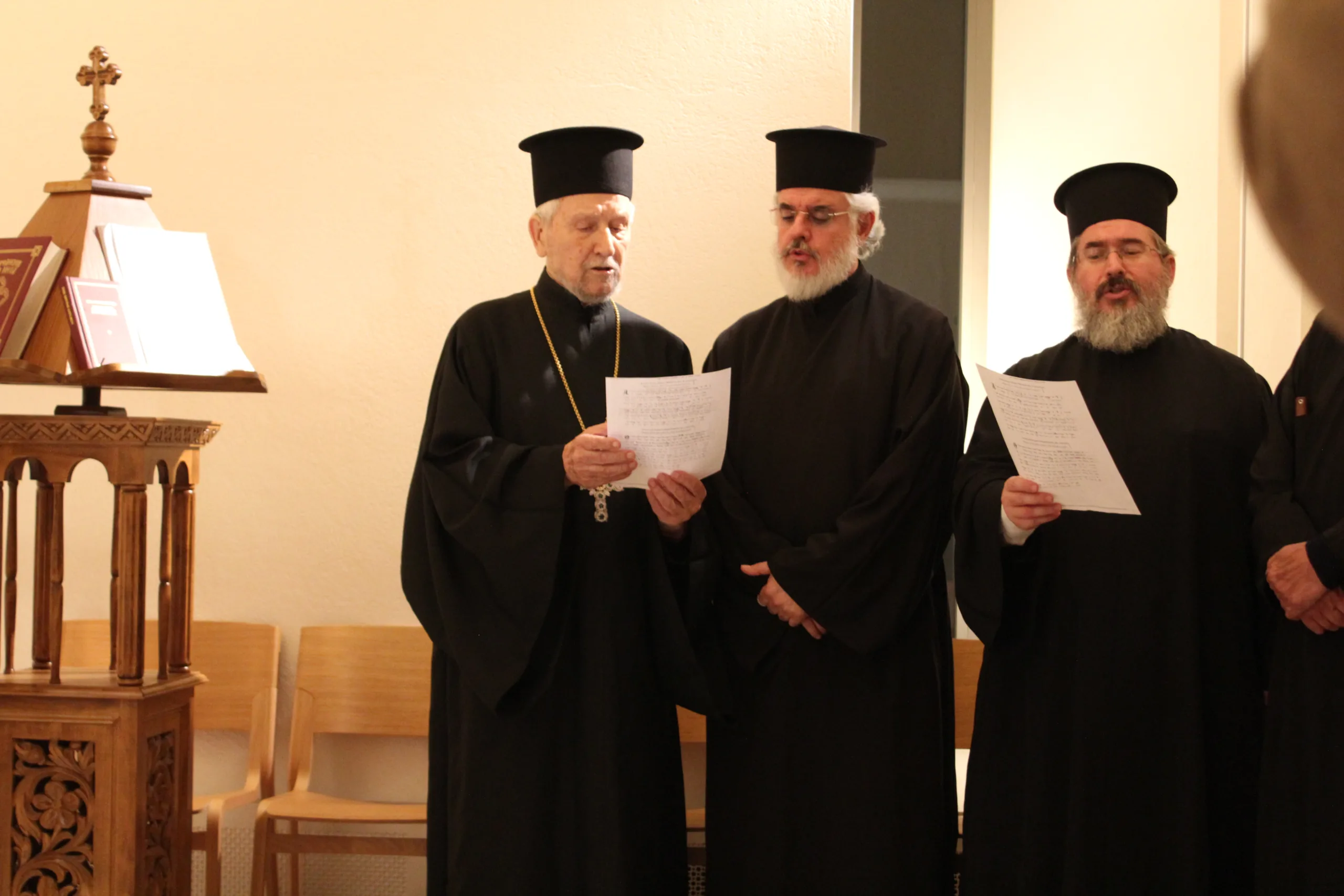
The event began with a chapel service where the ‘Christ is Risen’ hymn echoed across the room as a choir featuring local clergy chanted, joined by everyone in attendance.
All photos copyright The Greek Herald / Andriana Simos.
His Grace Bishop Iakovos of Miletoupolis read a message from His Eminence Archbishop Makarios of Australia, who offered his paternal blessings and praised the Evzones as “a living symbol of the eternal ideals of faith in God, love of our Hellenic motherland, courage, determination, freedom and self-sacrifice.”
From the chapel, guests moved to another room for the official proceedings, opened by the national anthems of Greece and Australia — spiritedly led a cappella by George Karantonis when the sound system failed, earning him a round of applause.
First to speak was the Consul General of Greece in Sydney, Ioannis Mallikourtis, who warmly welcomed the Evzones and thanked all present for celebrating this symbolic visit. He said the Evzones’ recent visits to a number of aged care homes in Sydney were an honour for those elderly Greeks who first migrated to Australia and made their homes here.
Consul General of Greece in Sydney, Ioannis Mallikourtis. George Karantonis singing the national anthems.(L-R) Commander of the Greek Presidential Guard, Michalis Tzinieris, Colonel Kyriakos Kyriakakos, Defence Attaché of the Hellenic Republic in Canberra, the Consul General of Greece in Sydney, Ioannis Mallikourtis, and Chair of St Basil’s NSW/ACT, James Jordan.
Representing the NSW Government, Dr Marjorie O’Neill MP spoke next, noting the significance of Greek migration and its lasting impact on Sydney’s eastern suburbs.
“This place would not be what it is today if it was not for Greek migration. Our area and Australia are far better places because of it,” she said.
“Being able to celebrate Greek culture right here in the eastern suburbs of Sydney is incredibly remarkable and we are very lucky to have you all here.”
Dr Marjorie O’Neill MP.Randwick City Councillor Alexandra Luxford.
Randwick City Councillor Alexandra Luxford followed with heartfelt remarks, highlighting that Greek is the third most spoken language in the city and sharing her pride in her own Greek ancestry.
“The Greeks in our city are a proud community. The presence of the Evzones helps strengthen the ties between thousands of Greek Australians like myself and their homeland,” Councillor Luxford said.
In his speech, James Jordan, Chair of St Basil’s NSW/ACT, thanked the Evzones for bringing “a little bit of Greece” to residents.
James Jordan, Chair of St Basil’s NSW/ACT.
“Some people here tonight are suffering from pain or dementia. But as soon as the four Presidential Guards dressed in the national costumes… came through the door, they smiled, they applauded. They loved that Greece came here to visit them so thank you for giving that life to our residents,” he said, visibly moved.
“For them to connect again with their mother country through the Presidential Guard is a big thing.”
Mr Jordan also thanked the Hellenic Club of Sydney, volunteers, and photographer Nick Bourdaniotis, whose Evzones Collection was on display—previously shown at the Athens War Museum and now permanently housed in the Presidential Palace in Greece.
Next, the Commander of the Greek Presidential Guard, Michalis Tzinieris, delivered a heartfelt message on behalf of the Evzones, stressing what an honour it was for them to be in Australia.
Closing the formal speeches, Mr Karantonis, director of The Evzones Collection, reflected on the journey of documenting the Guard’s symbolism and legacy.
Commander of the Greek Presidential Guard, Michalis Tzinieris, delivered a heartfelt message.
“This is more than a showcase of extraordinary photography—it is an educational journey, a tribute to history and and a celebration of identity,” he said. “Your arrival in Australia brings our hearts closer to our motherland, strengthening the bonds that unite us… We honour you today and always.”
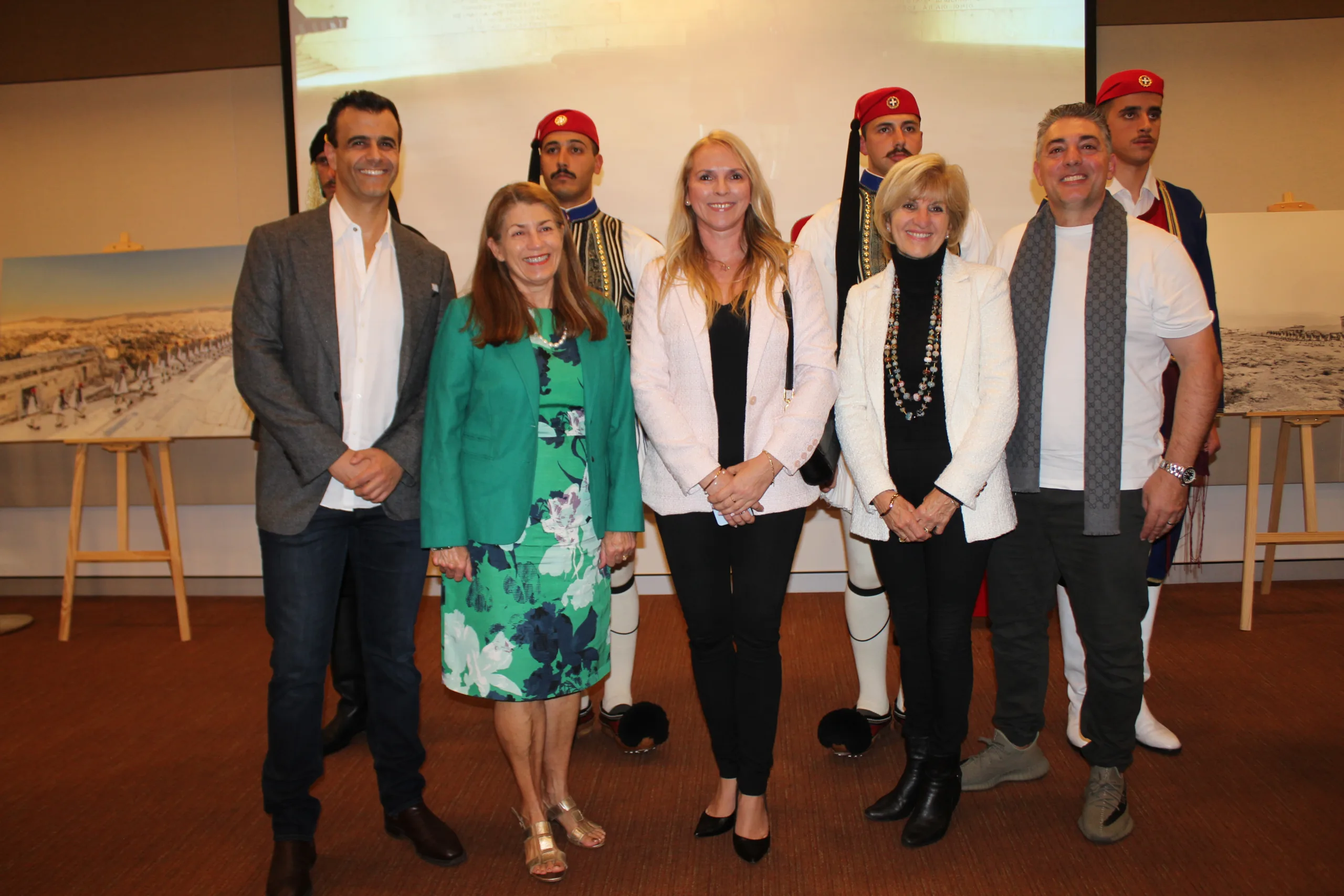
Guests were then invited to view the photo exhibition and take photos with the Evzones — respectfully and without physical contact — before enjoying refreshments. For many, it was a night where memories were rekindled, and cultural identity shone through with powerful clarity.
*All photos copyright The Greek Herald / Andriana Simos.
With the federal election tomorrow, Business Sydney hosted a high-level political forum on Wednesday evening at Clayton Utz, bringing together some of Australia’s most experienced campaign strategists and commentators for a timely discussion on the state of the race.
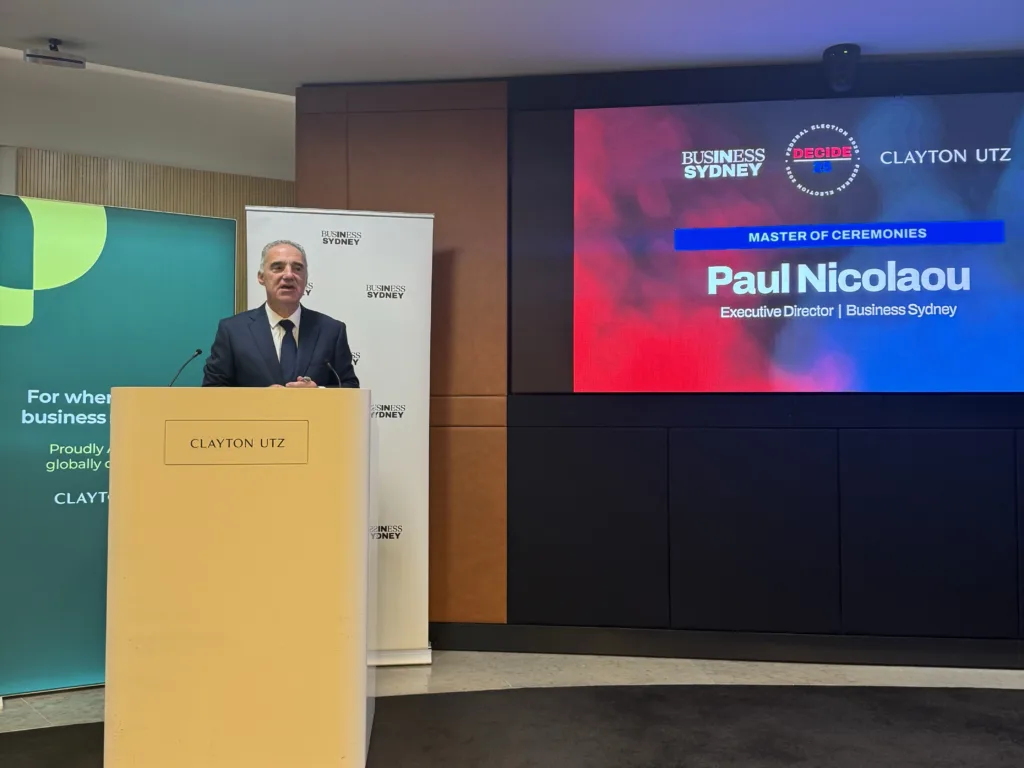
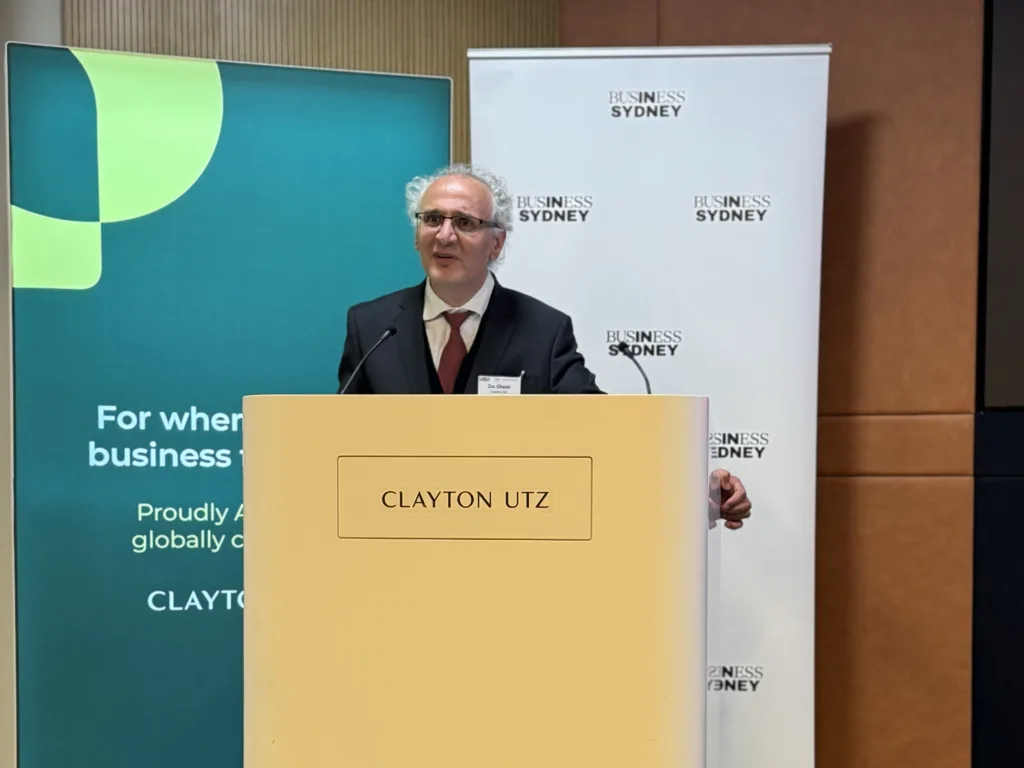
Titled Decide 25: The Political Shakers, the event was the second in Business Sydney’s 2025 federal election series. The evening opened with formal welcomes from Paul Nicolaou, Executive Director of Business Sydney, and Zac Chami, Commercial Litigation Partner at Clayton Utz.
All photos copyright The Greek Herald.
Nicolaou acknowledged the support of event partner Clayton Utz and welcomed a broad mix of guests from the business, legal and political spheres. He paid tribute to the evening’s panellists, noting their deep expertise across both major parties and decades of campaign experience.
“We’re thrilled to have such an extraordinary line-up to help us understand what’s really at play in the final days of this federal election,” Nicolaou said. He also welcomed a number of distinguished attendees, including former ministers, mayors, business leaders and representatives of peak organisations.
Paul Nicolaou, Executive Director of Business Sydney.
Mr Chami followed with brief remarks on behalf of Clayton Utz, reflecting on the importance of dialogue across political, legal and business sectors.
“Now more than ever, we need spaces for thoughtful, informed engagement,” Mr Chami said. “Forums like this allow us to examine the policies and pressures shaping Australia’s future — across democracy, the economy and society.”
Zac Chami, Commercial Litigation Partner at Clayton Utz, welcomes guests to the firm’s Sydney offices.
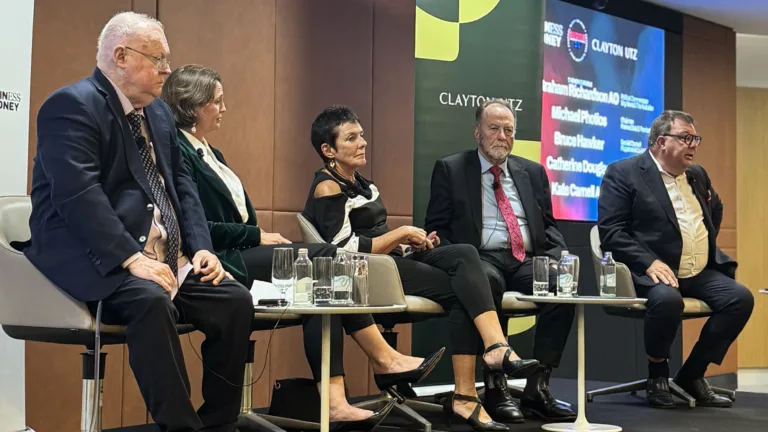
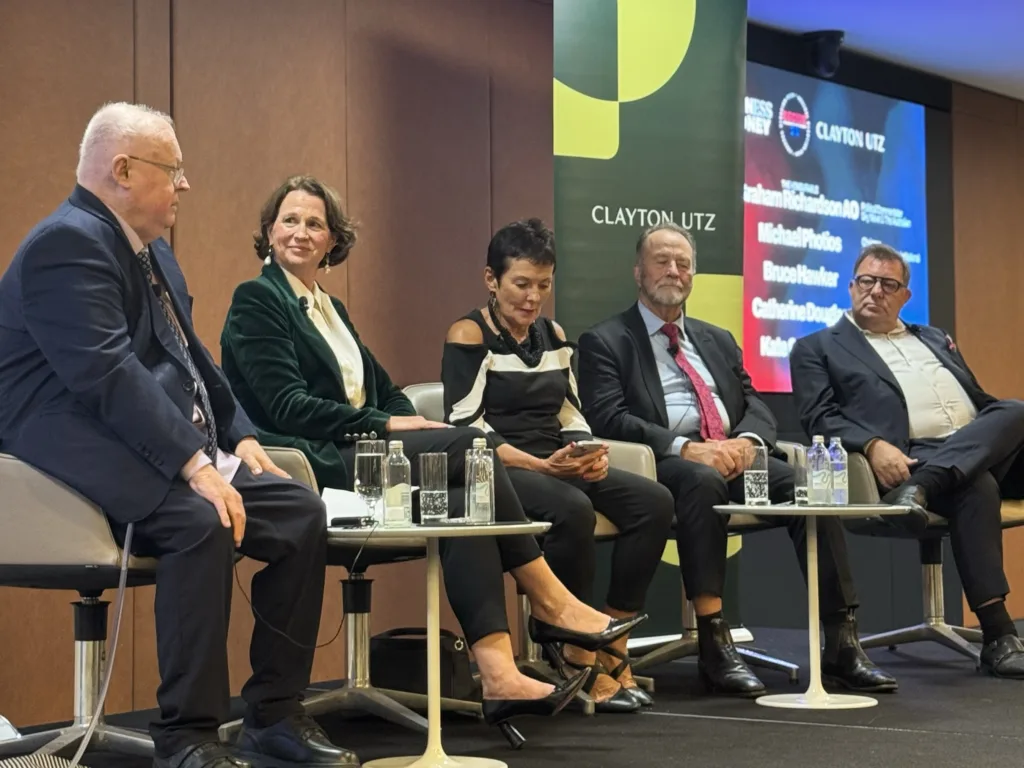
From there, guests heard from the panel featuring The Hon. Graham Richardson AO, Political Commentator for Sky News and The Australian; Michael Photios, Chairman of PremierNational; Bruce Hawker, Special Counsel at Fitzpatrick & Co Advisory; and Catherine Douglas, Managing Director of CT Group Australia. The discussion was moderated by Kate Carnell AO, Chair of the Australian Made Campaign and former ACT Chief Minister.
The event blended pre-panel networking with a dynamic discussion on the key issues shaping the final stretch of the federal election campaign.
Campaign tone, voter sentiment and political fragmentation
Opening the discussion, moderator Carnell posed a comparison between this election and previous campaigns. Mr Richardson described the tone as unusually subdued, noting a departure from the more combative styles of past elections.
“Nobody wants to be a fighter anymore — everyone’s playing it safe,” he said.
Richardson went on to warn that the increasing fragmentation of party support poses a long-term risk to the effectiveness of government.
“I don’t want us to become like Italy and have a government every nine months. When you get that kind of government turnover, it means that people you don’t know — bureaucrats whose faces you don’t know — have all the power, because they’re the only constant in the system. The politicians are visitors. They’re not the residents. The bureaucrats stay there the whole time,” he said.
Photios echoed the concern, arguing that stability through strong party governance remained essential.
“It would be Australia’s greatest mistake to fracture into a whole lot of minor parties. We need a government that can govern — and if you don’t like them, you vote them out. But when no one can govern, we all lose,” he said.
Douglas also pointed to a growing disconnect between major parties and mainstream voters, identifying a shift in values alignment as a central issue in the campaign.
Panellists Graham Richardson AO, Michael Photios, Bruce Hawker and Catherine Douglas share their insights during Business Sydney’s ‘Decide 25’ forum, moderated by Kate Carnell AO.
Policy gaps and the Coalition’s underutilised agenda
Several panellists criticised the lack of substantive policy debate in the election. Photios pointed out that the Coalition had released a 12-point policy plan, but said it had failed to dominate the campaign narrative.
“It’s a landmark policy agenda in a policy-free zone,” he said. “We haven’t heard much about it in the last couple of weeks.”
Douglas observed that traditional issues such as economic management and support for small business — long seen as strengths for the Coalition — had not received adequate focus, adding that more proactive advocacy was also needed from the business sector itself.
Hawker cited the lack of bold initiatives across both major parties and drew parallels with previous eras, contrasting current campaign caution with historical examples of politically risky but transformative reforms.
Trump factor and political messaging
The panel also examined the so-called “Trump factor” and its influence on Australian politics. Richardson suggested that while Donald Trump’s presence dominates global headlines, his impact on Australian voting behaviour was minimal.
Hawker took a different view, warning that Australians may be increasingly wary of importing political styles seen in the United States.
“We’re not the same as America,” he said. “Australians don’t want a dose of what the Americans are getting — we’re wired differently, and that’s a strength.”
Douglas added that crisis moments, such as international instability or cost-of-living pressures, tend to benefit incumbents, a dynamic that has likely contributed to the shifting momentum back toward Labor in the final stretch of the campaign.
Minor parties, preferences and the electoral landscape
The role of preferences and minor parties was a recurring theme throughout the evening. Photios pointed to expected increases in One Nation’s primary vote, particularly in Queensland and parts of regional Australia, and said their preference flows could tighten contests in several marginal seats.
Douglas noted that preference strategies were already proving more favourable to the Coalition than in the previous federal election, but warned that increasing reliance on minor party support may complicate future governance.
The panellists also discussed the influence of teal independents, particularly in economically engaged electorates. Richardson acknowledged the pressure these candidates place on the Liberal Party, calling them a “serious challenge” that could grow over time.
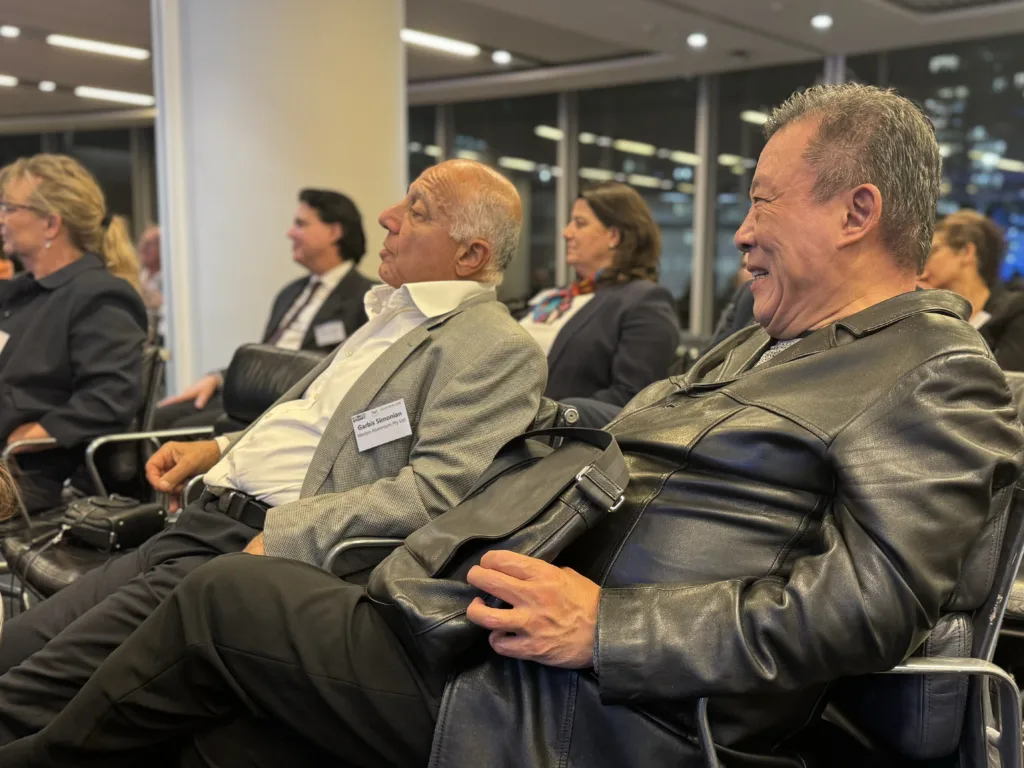
Audience members engage panellists during a lively Q&A session at Business Sydney’s ‘Decide 25’ forum, raising questions on party leadership, campaign messaging and the future of governance.
Closing thoughts and community engagement
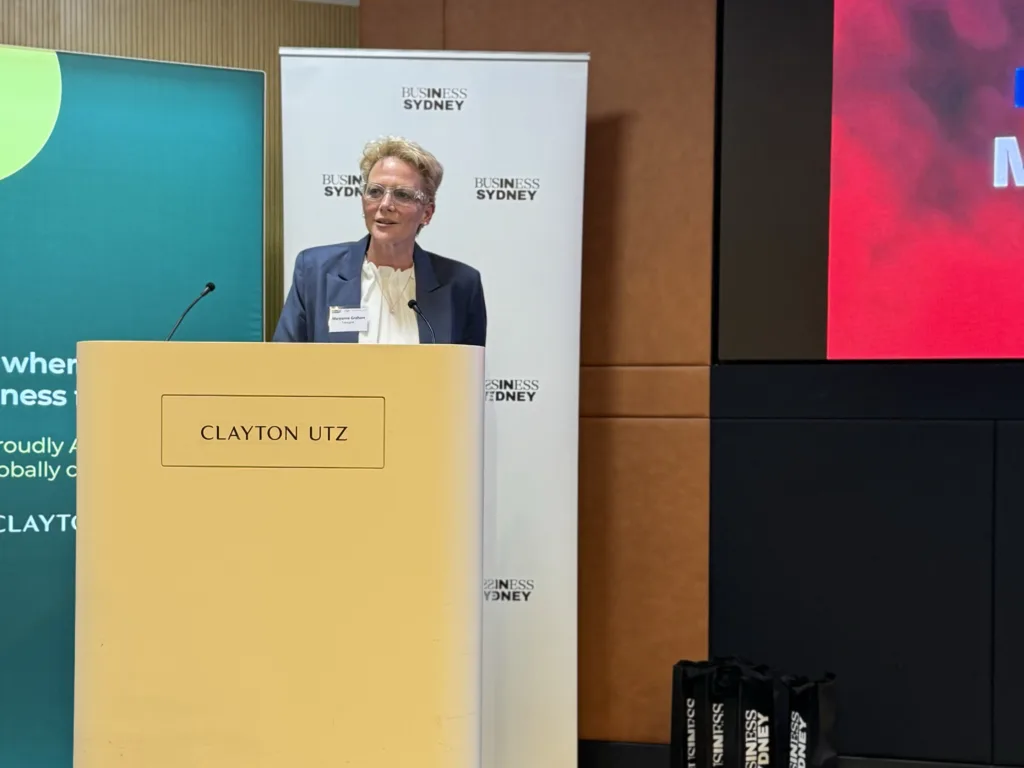
The evening concluded with a Q&A session and closing remarks by Maryanne Graham, Executive General Manager of Transgrid, who thanked the panel for delivering “deep insights and just the right amount of political mischief.”
“I think everyone here is walking away better informed — and certainly more entertained — as we head into Saturday’s vote,” she said.
Graham also thanked Business Sydney and Clayton Utz for facilitating the event, and emphasised the importance of continued civic and business engagement in shaping public policy.
As the panellists were presented with thank-you gifts, one message resonated clearly: in a campaign marked by uncertainty, platforms like Decide 25 provide a rare space for clarity, exchange, and reflection.
Maryanne Graham, Executive General Manager of Transgrid.