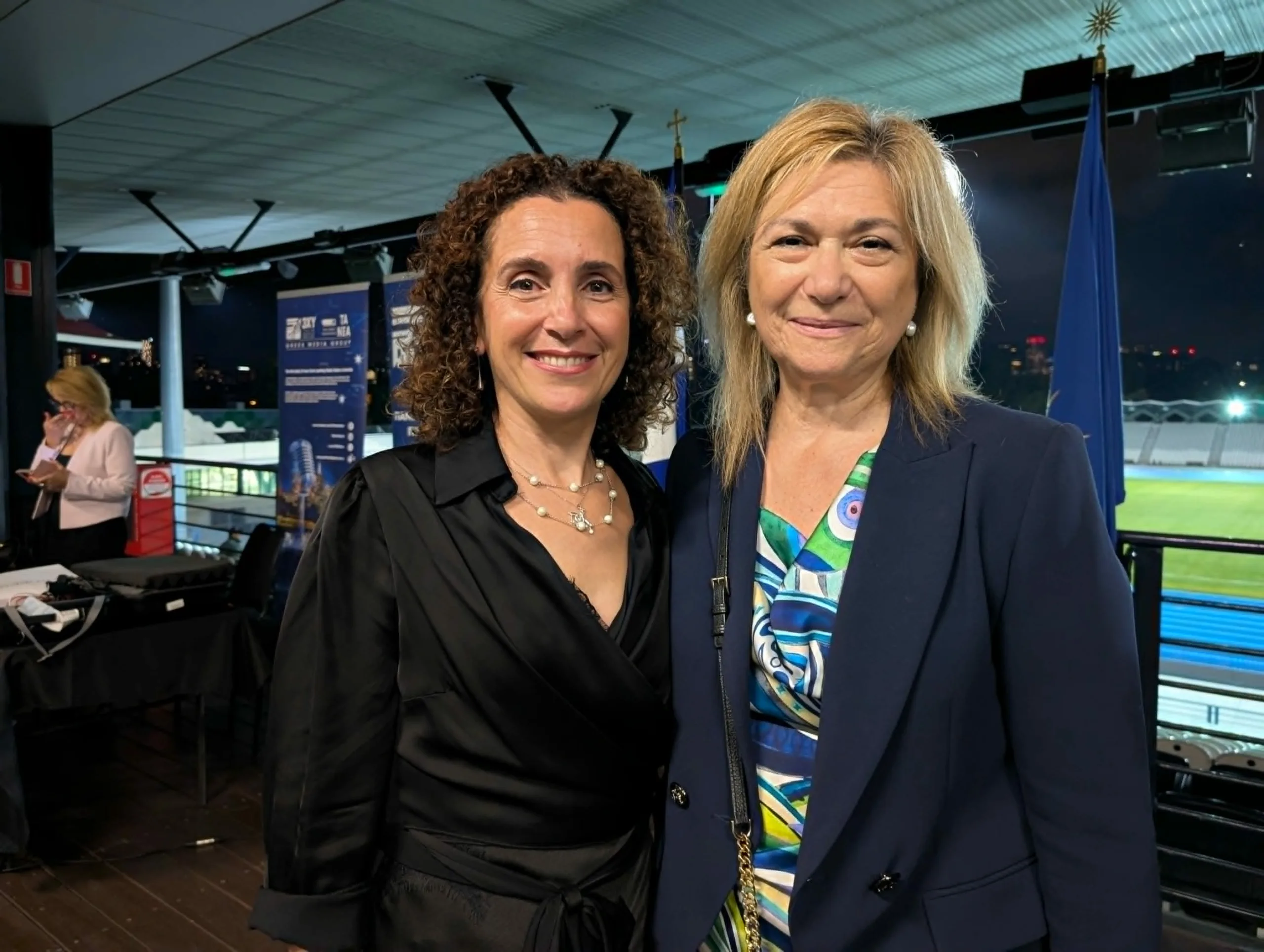
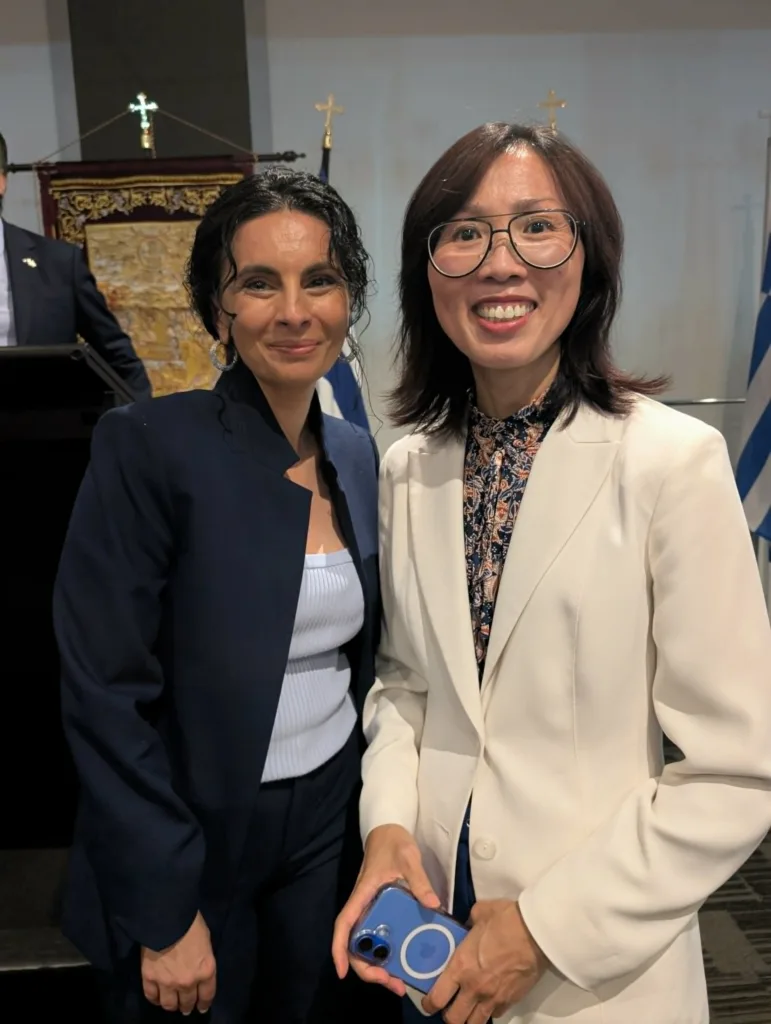
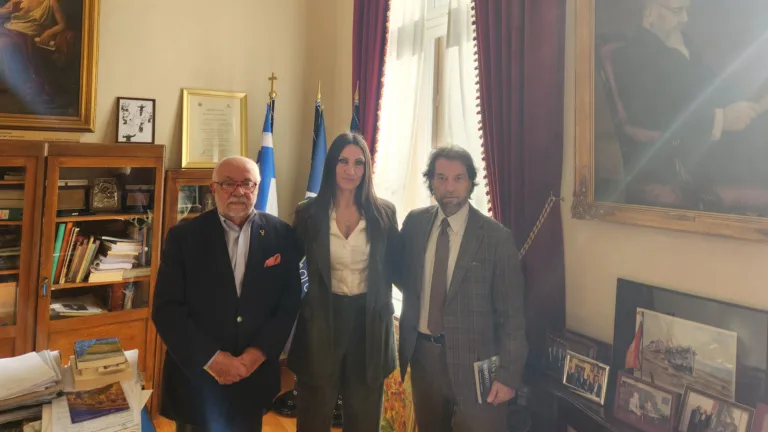
Greek Australian artists Maria Theodorakis and Katerina Stathis have been named among the 2026 cohort of the Malthouse Artist Development Program, one of Victoria’s leading initiatives supporting emerging theatre practitioners.
The program, run by Malthouse Theatre, offers annual placements for experienced early-career artists based in Victoria, providing opportunities for professional development across a range of disciplines.
Theodorakis joins the cohort in writing, while Stathis has been selected in sound and composition, highlighting the growing presence of Greek Australian creatives within Australia’s contemporary arts landscape.
They are part of a broader group that includes Keith Brockett and Aubrey Flood (directing), Jessamine Moffett (set and costume), Gabrielle Fallen and Corey Saylor-Brunskill (writing).
Since its launch in 2005, the Malthouse Artist Development Program has played a key role in nurturing a new generation of theatre-makers, supporting artists as they refine their craft and build sustainable careers in the industry.
The initiative is supported by The Hansen Little Foundation and continues to provide a platform for diverse voices and creative innovation within Australian theatre.
The inclusion of Theodorakis and Stathis reflects both their individual talent and the ongoing contribution of Greek Australians to the country’s cultural and creative sectors.
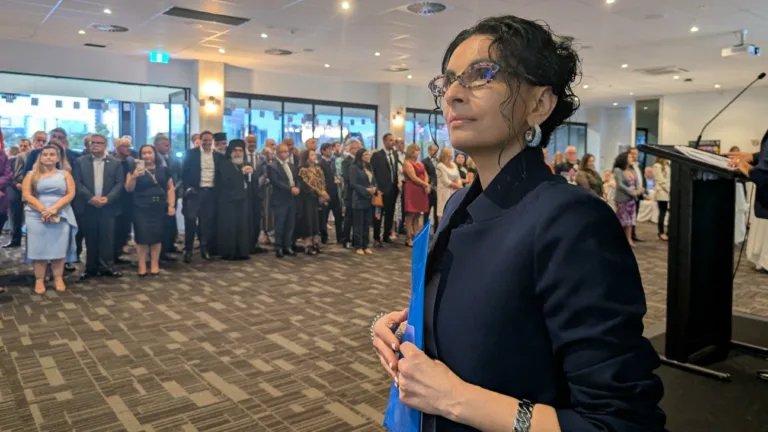
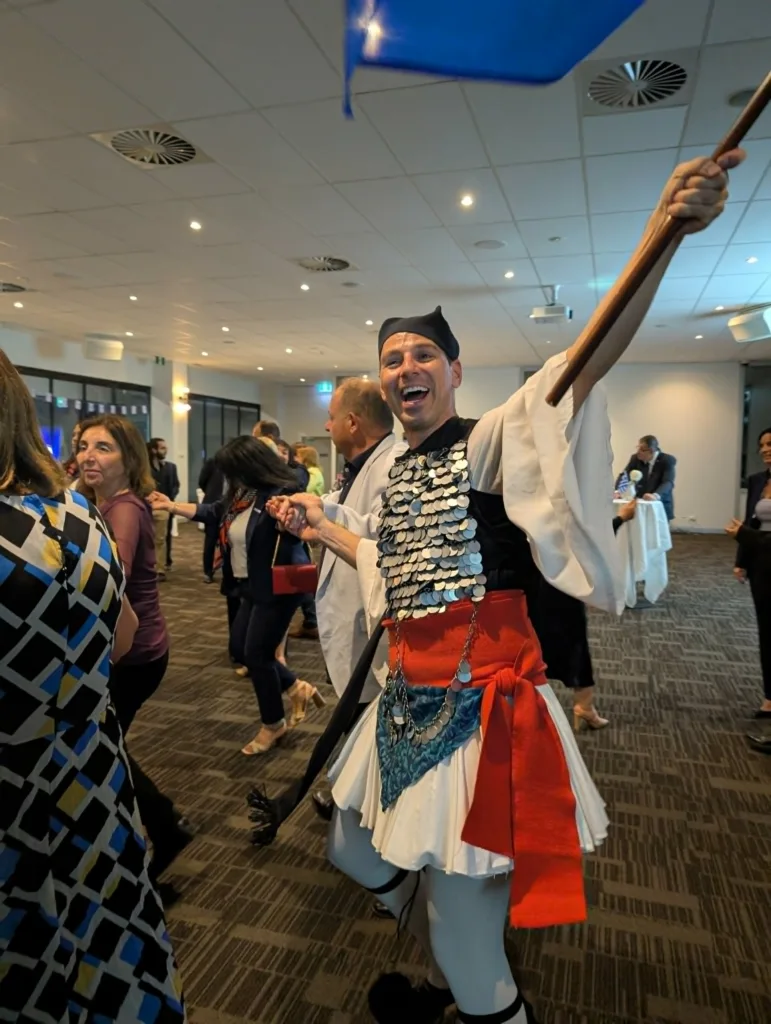
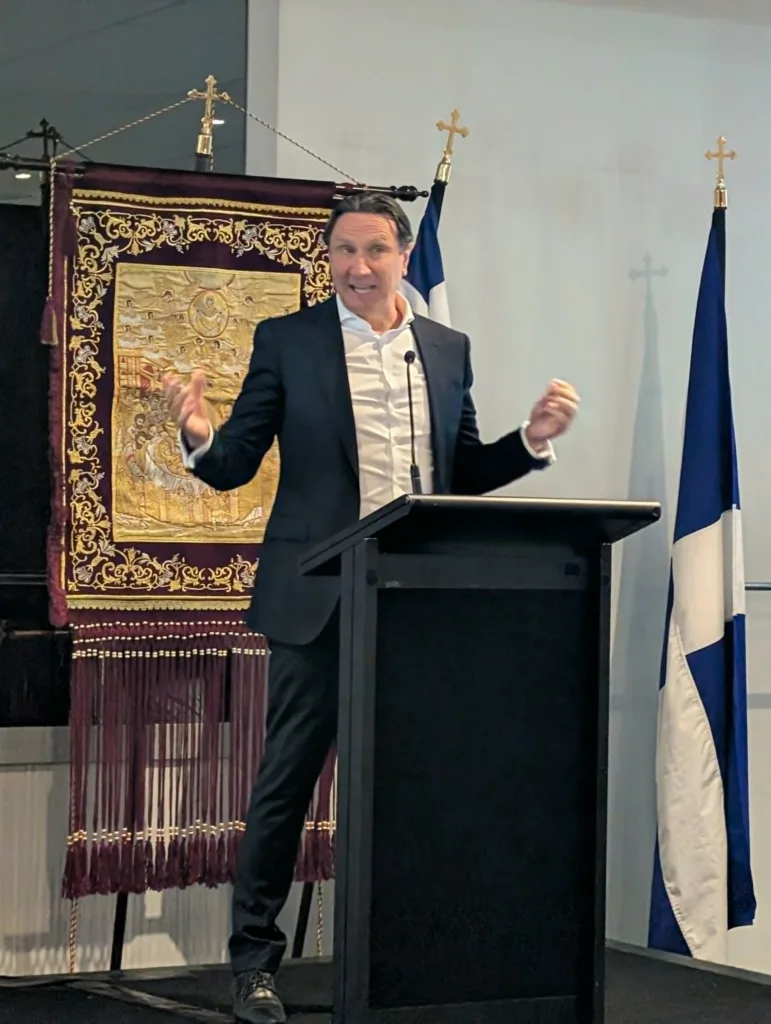
On the first evening of April at Lakeside Stadium, the blue and white of the Greek flag told its story before a single word was spoken. Banners lined the room, while screens flickered with the faces of revolutionaries.
What was remarkable was not just the spectacle, but the logistical feat. This full-scale celebration of Greek Independence Day had been assembled in just one week, following the postponement of the anticipated visit by Greek Prime Minister Kyriakos Mitsotakis. Despite the sudden shift from the originally planned event at Victoria’s Parliament, nothing about the evening felt improvised.
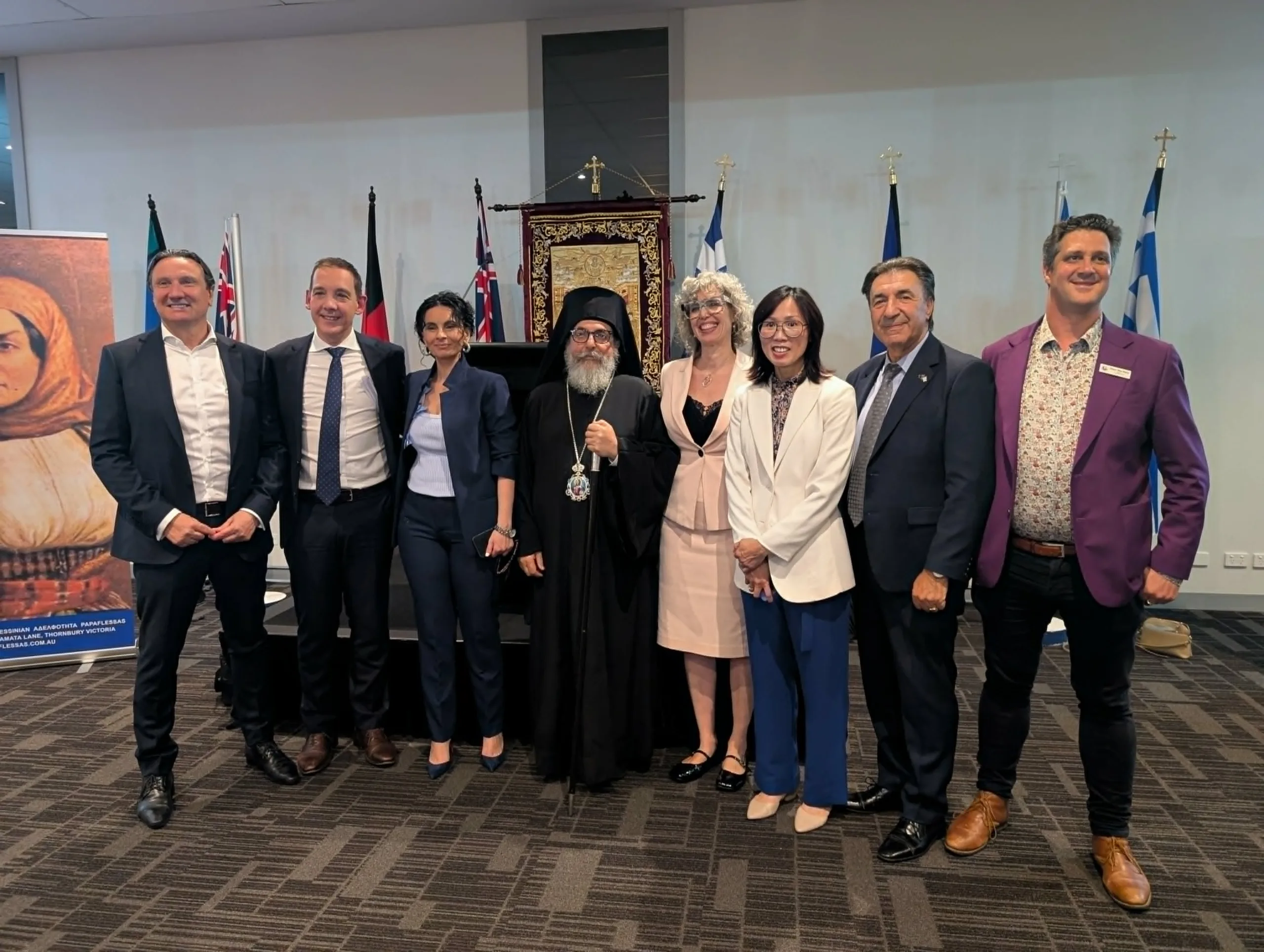
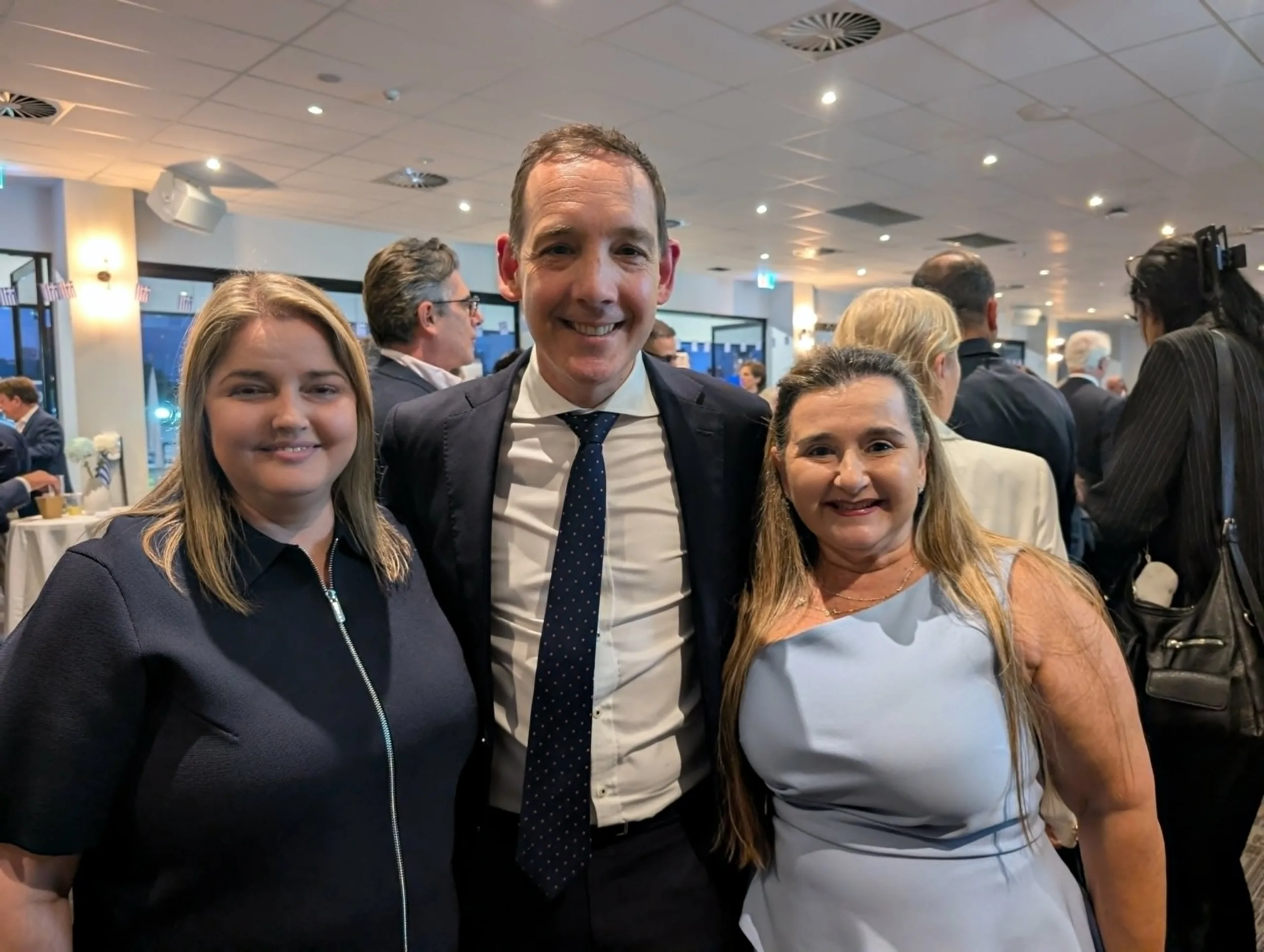
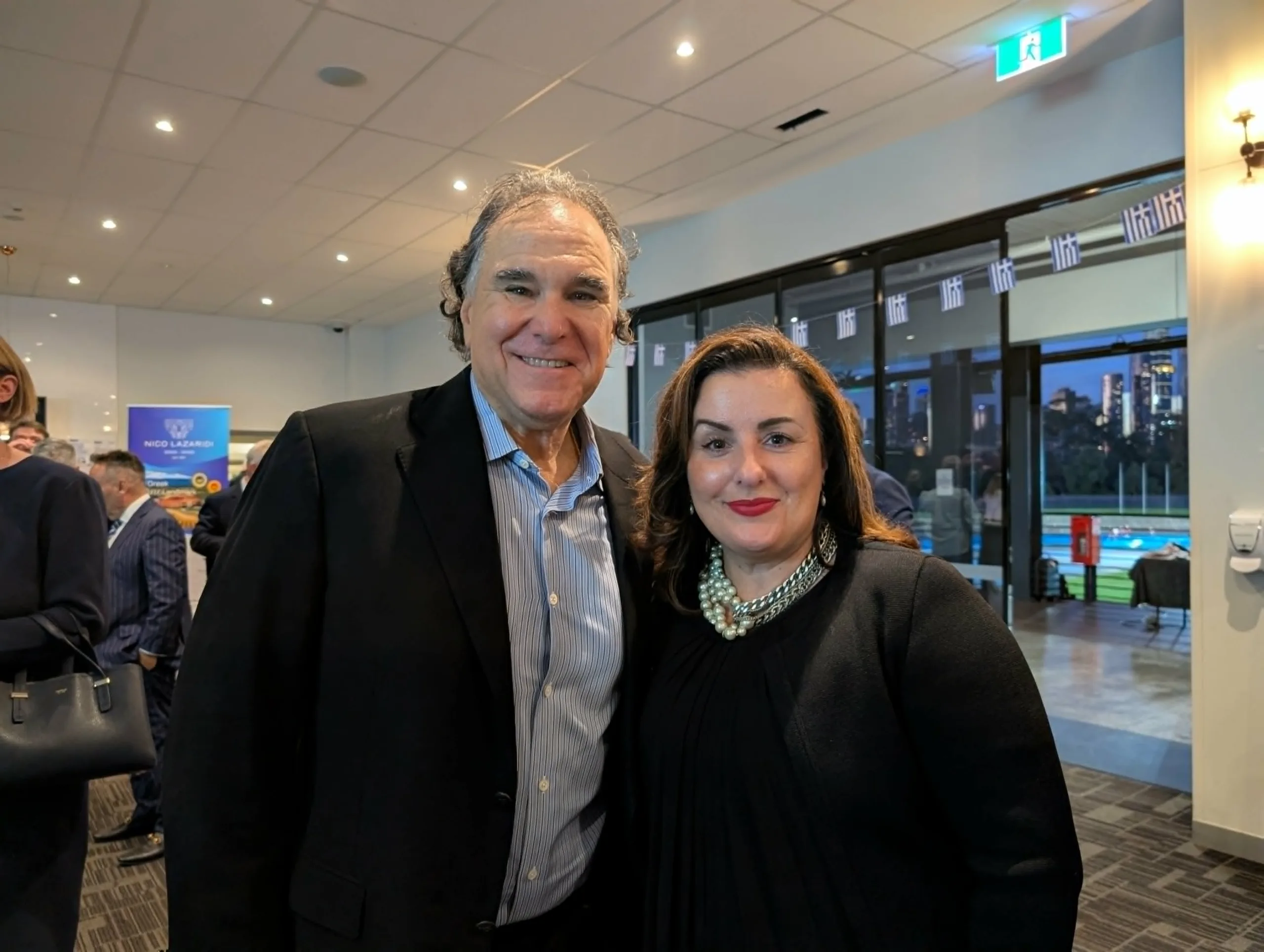
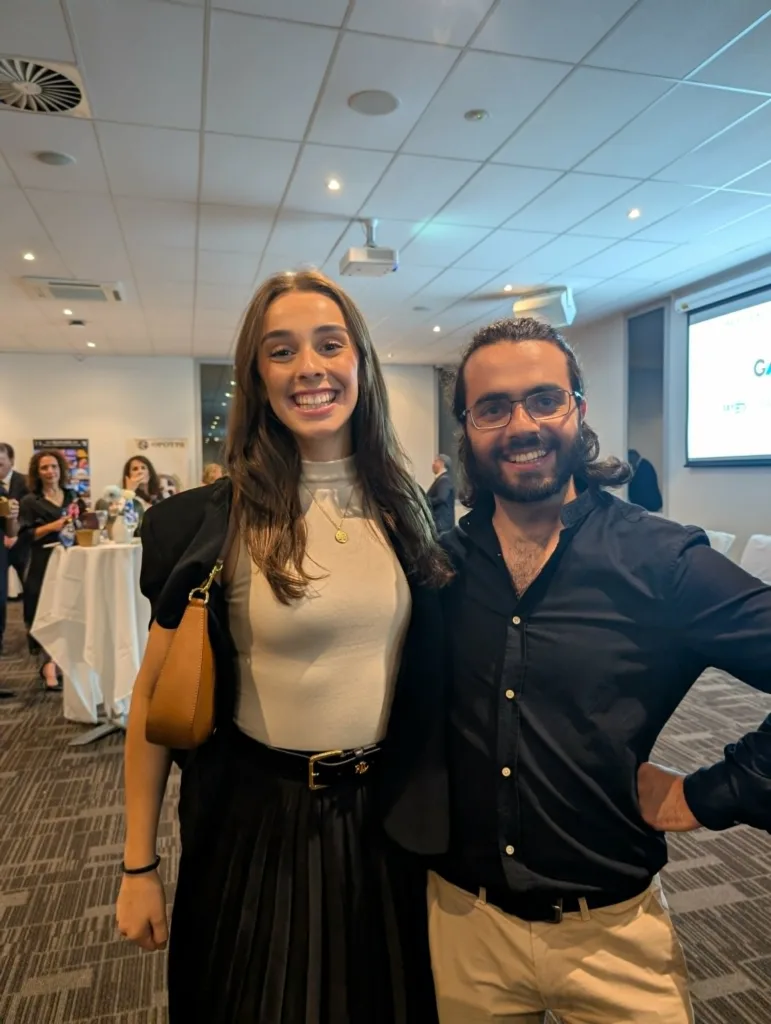
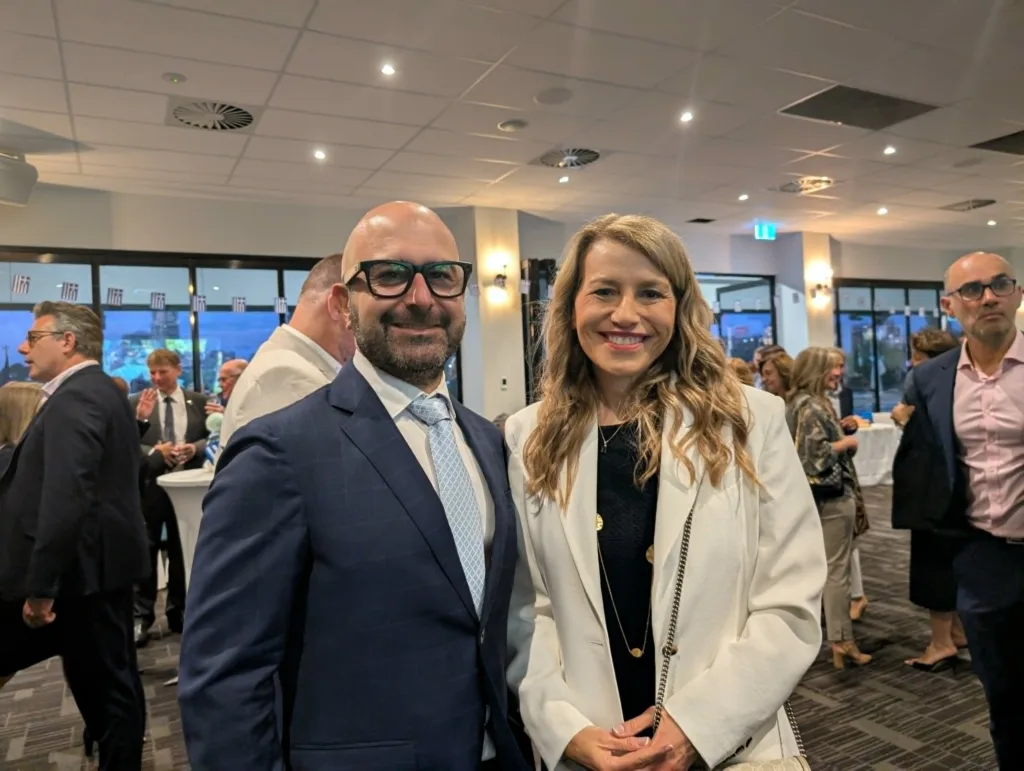
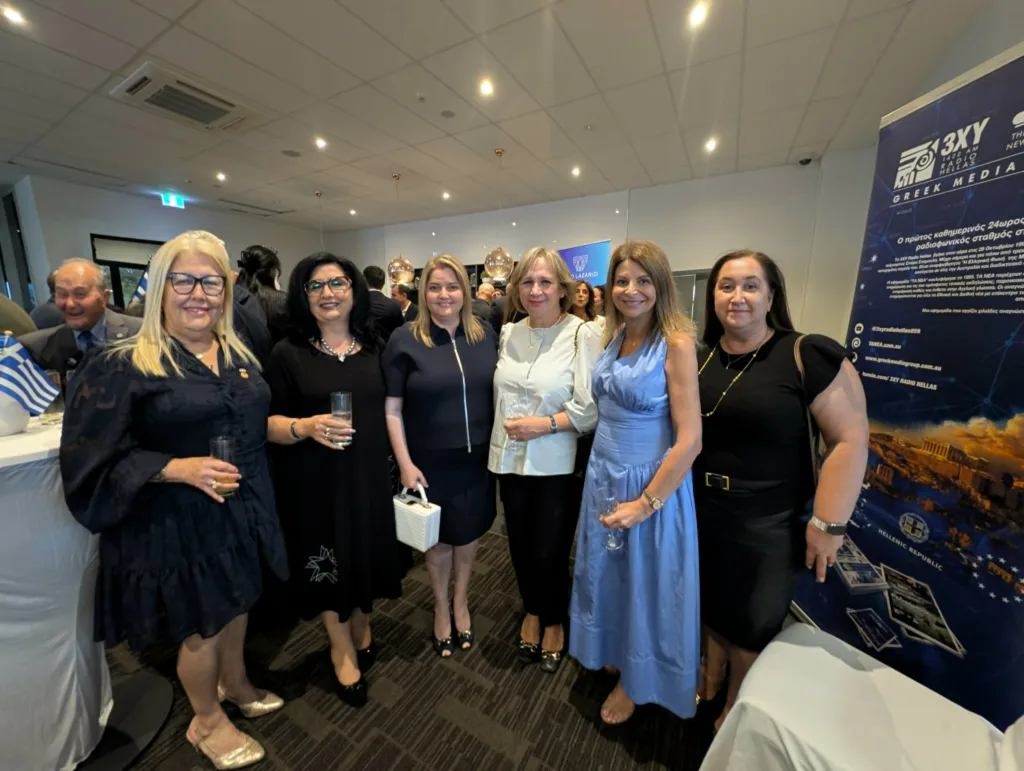
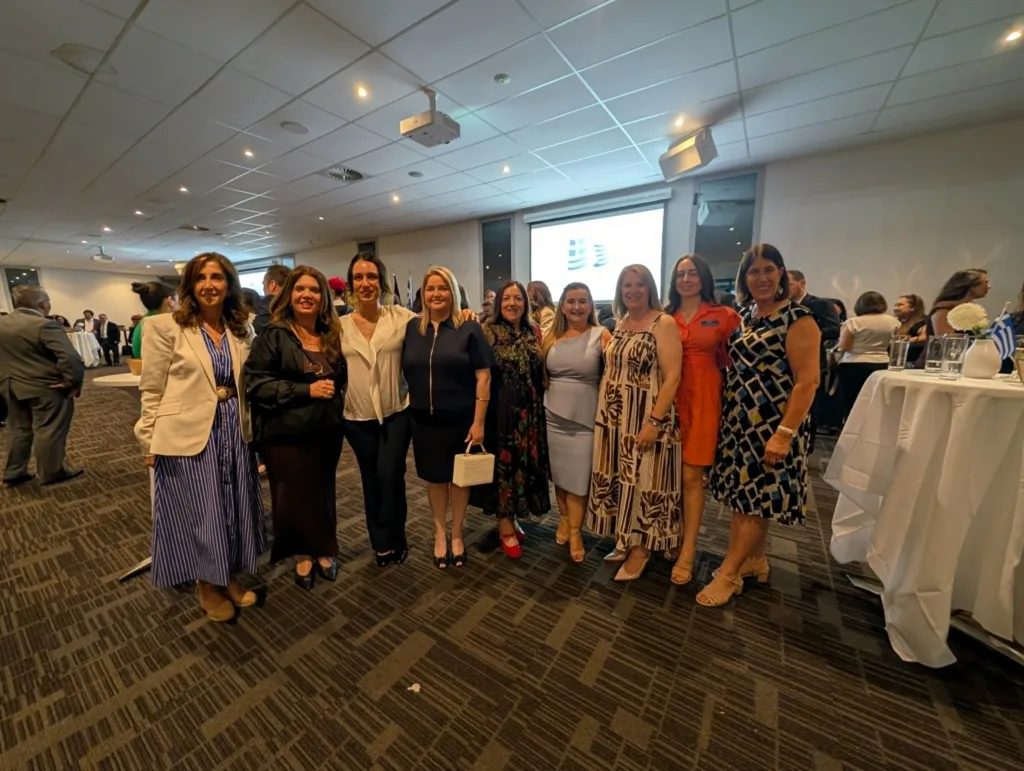
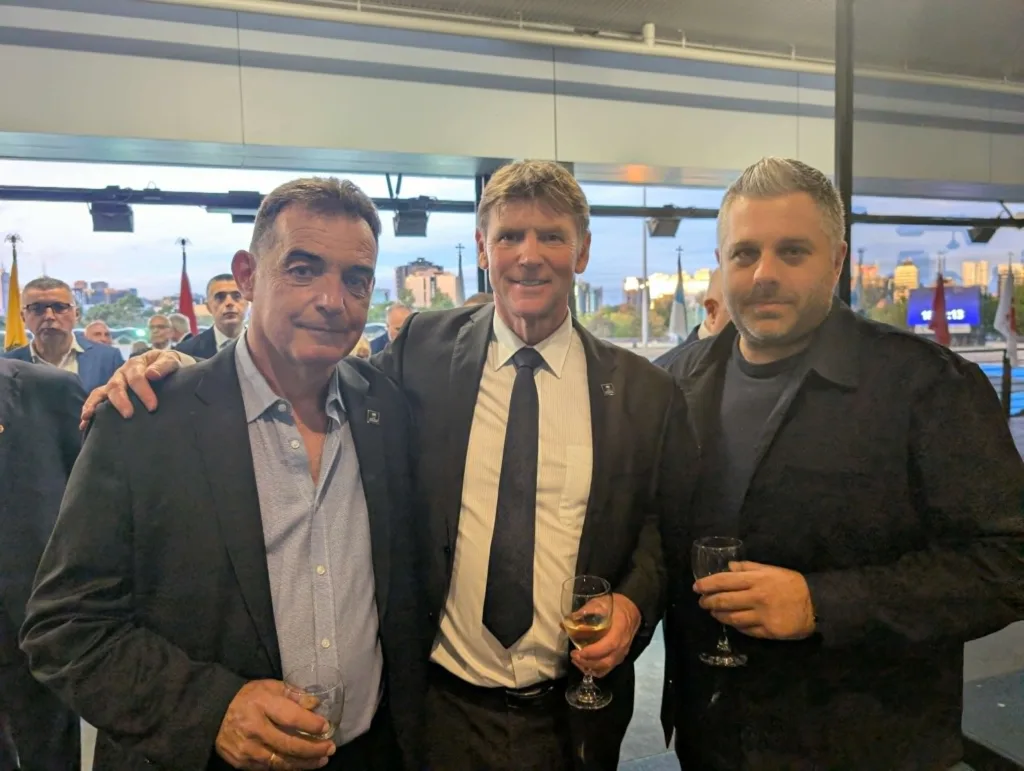
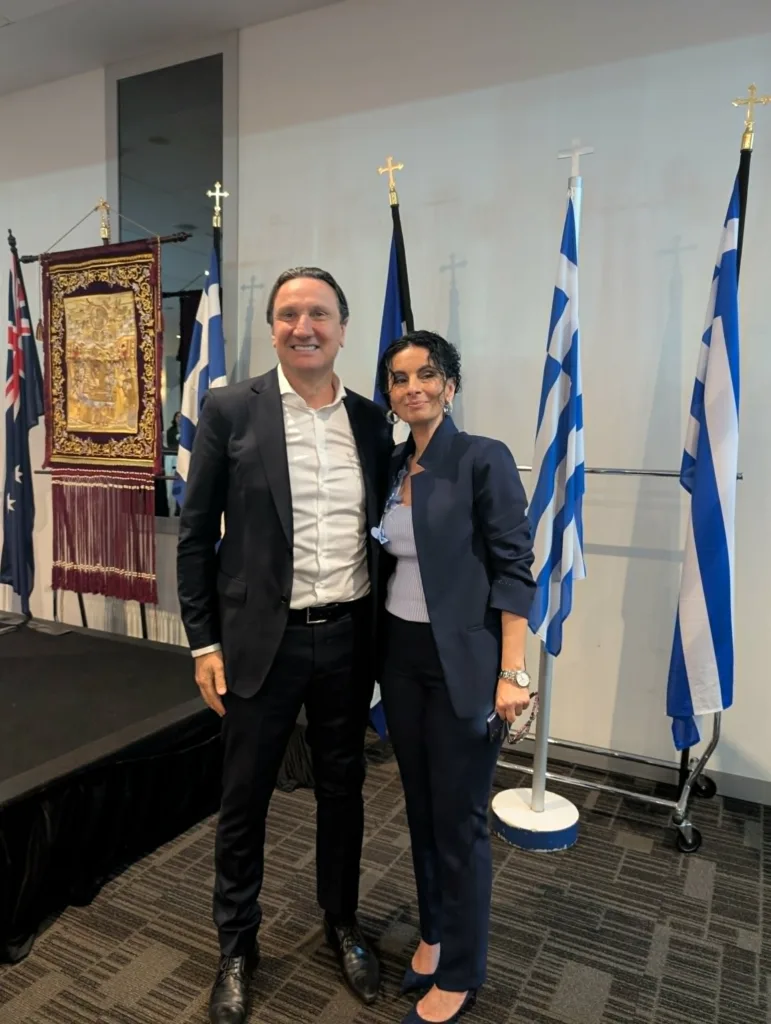
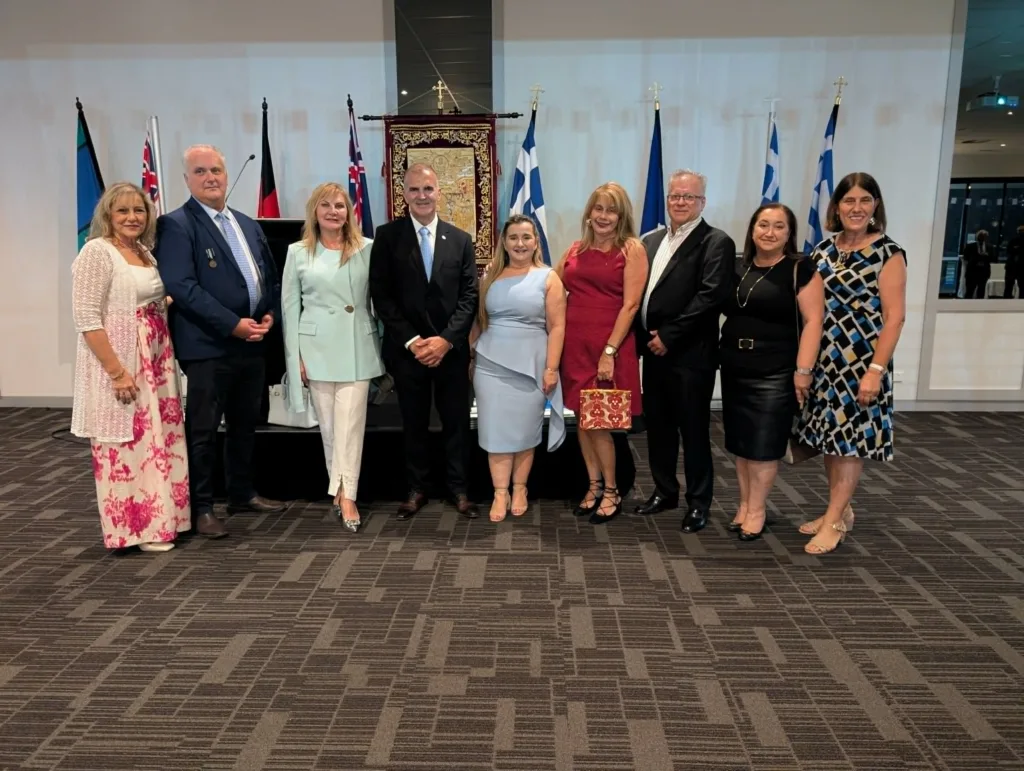
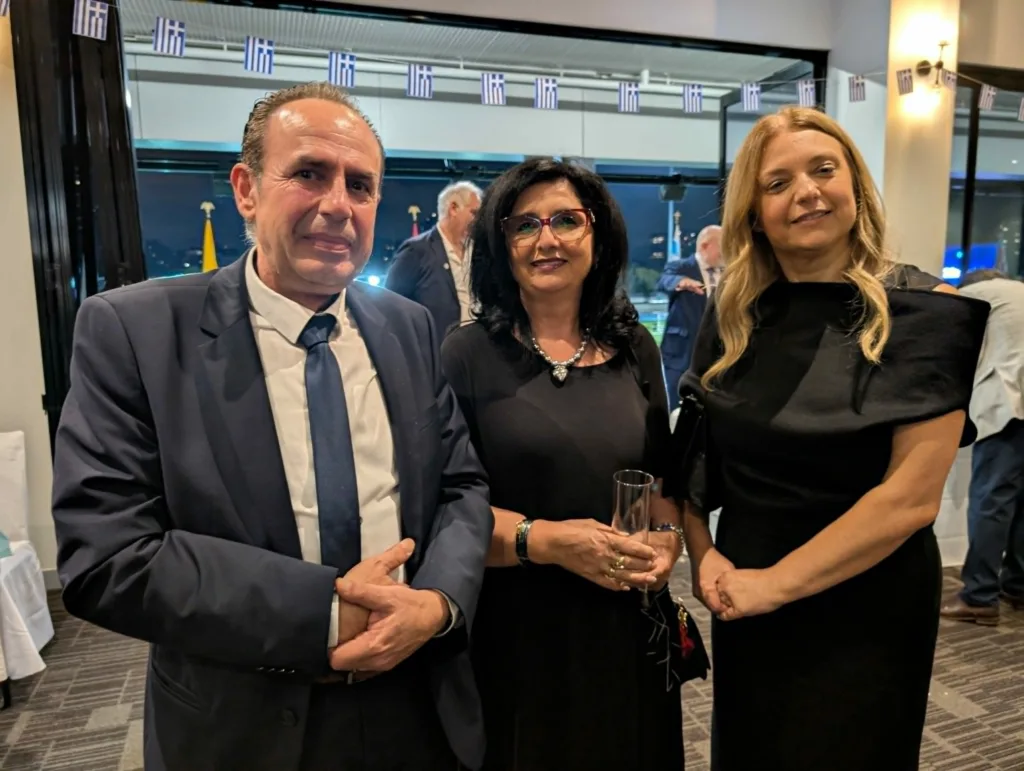
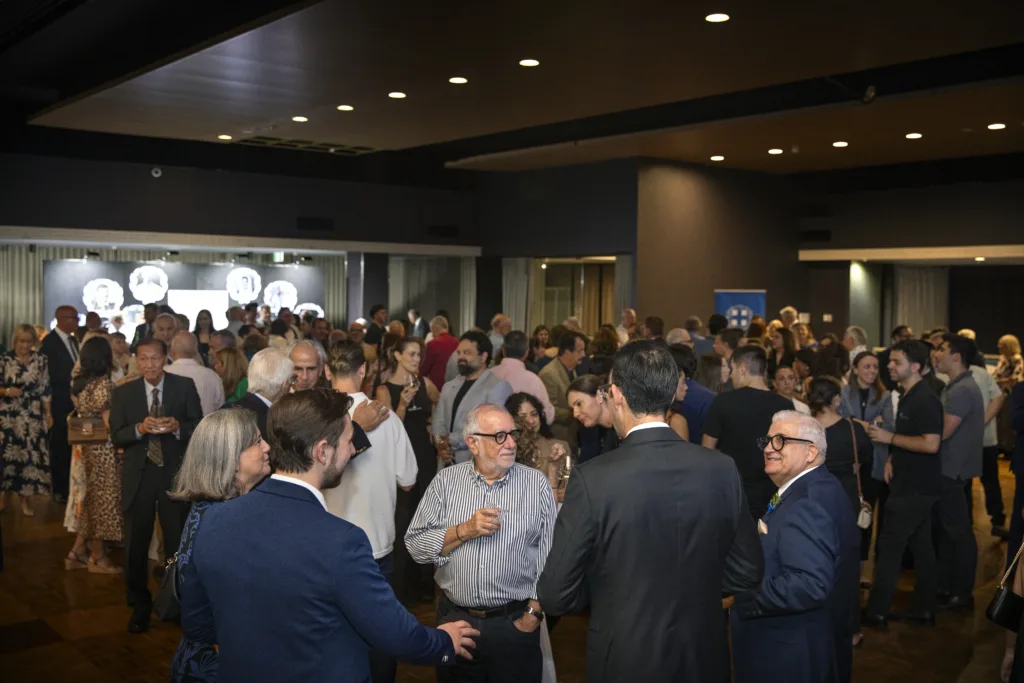
There were a number of official guests at the event. All photos copyright The Greek Herald / Mary Sinanidis.
Late into the evening, as the formalities eased, Greece’s Consul General in Melbourne, Dimitra Georgantzoglou, finally sat down at a corner table, tasting her first keftedaki of the night.
“I couldn’t have done it without my team’s support,” she told The Greek Herald. Beside her, community leader Greg Stamboulidis offered a brief endorsement: “It’s the leader that brings people together.”
A warm welcome
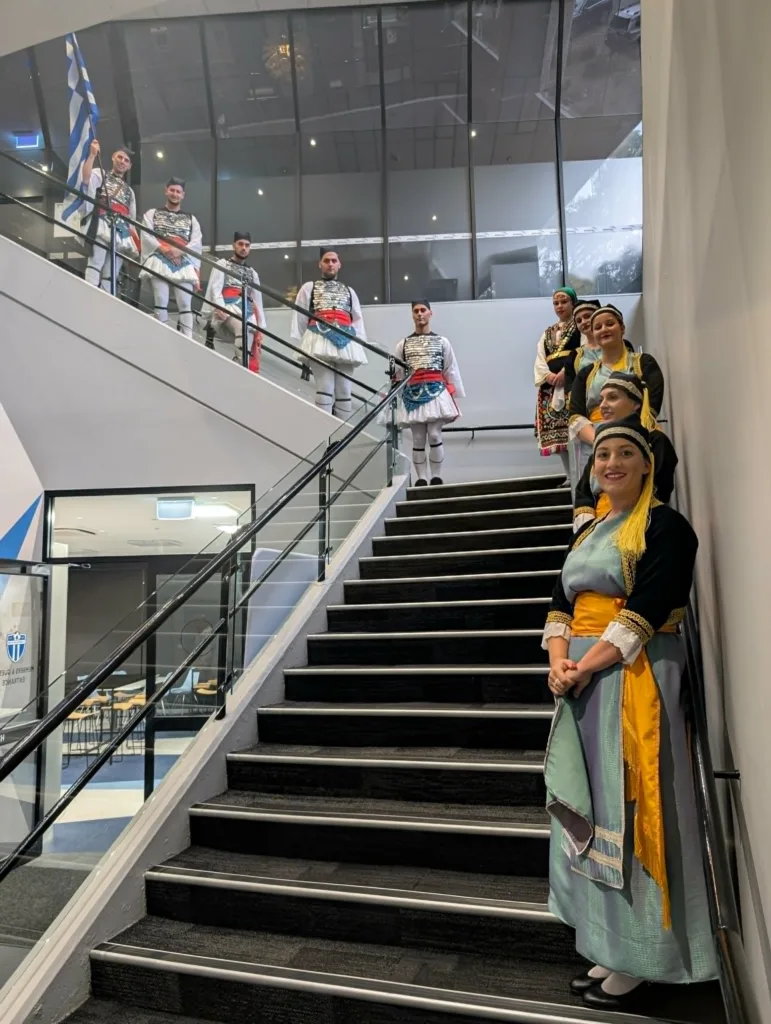
The tone was set at the door. Guests were greeted personally by Georgantzoglou, flanked by the vibrant Manasis Dance Troupe. Traditional dress, warm smiles, and a sense of theatre turned the entrance into a vivid tableau of Greek heritage.
Inside, MC Ross Alatsas steered the evening with ease, bridging the formal and the communal. The event extended well beyond the room, broadcast live across Melbourne and to audiences abroad.
Then came a moment of stillness as singer Hope Zorbas, who had already captivated crowds at the March 25 parade days earlier, delivered the national anthem. Her voice, clear and unadorned, filled the room as guests joined the chorus.
Diasporic cross-section
The guest list served as a directory of the Greek Australian story. Representatives from associations spanning Macedonia, Rhodes, Krithia, Arcadia, Pontos, and Samos sat alongside women’s organisations such as Anemones and Heliades, and education groups like the Pharos Alliance.
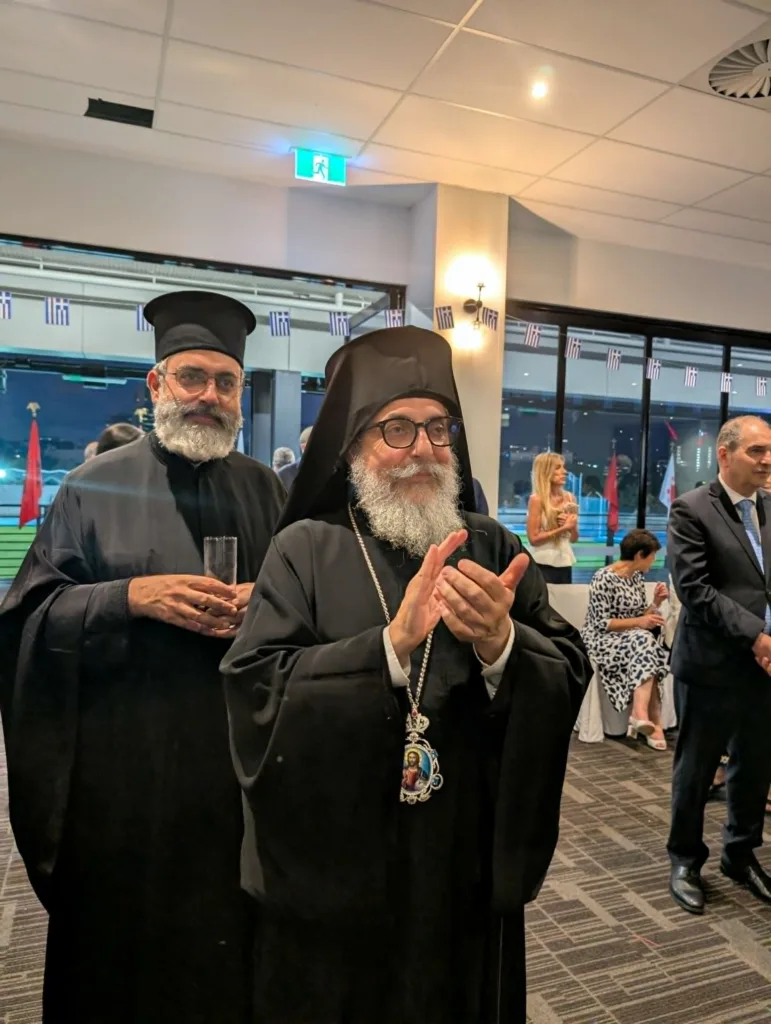
The room was a gathering of sectoral pillars, from business and welfare leaders at HACCI and the Hellenic RSL to Agapi and Fronditha. Among those present were His Grace Bishop Kyriakos of Melbourne, former ministers Jenny Mikakos, John Pandazopoulos, and Theo Theophanous. Victorian Minister Steve Dimopoulos arrived late, straight from Parliament, alongside Member for Albert Park Nina Taylor.
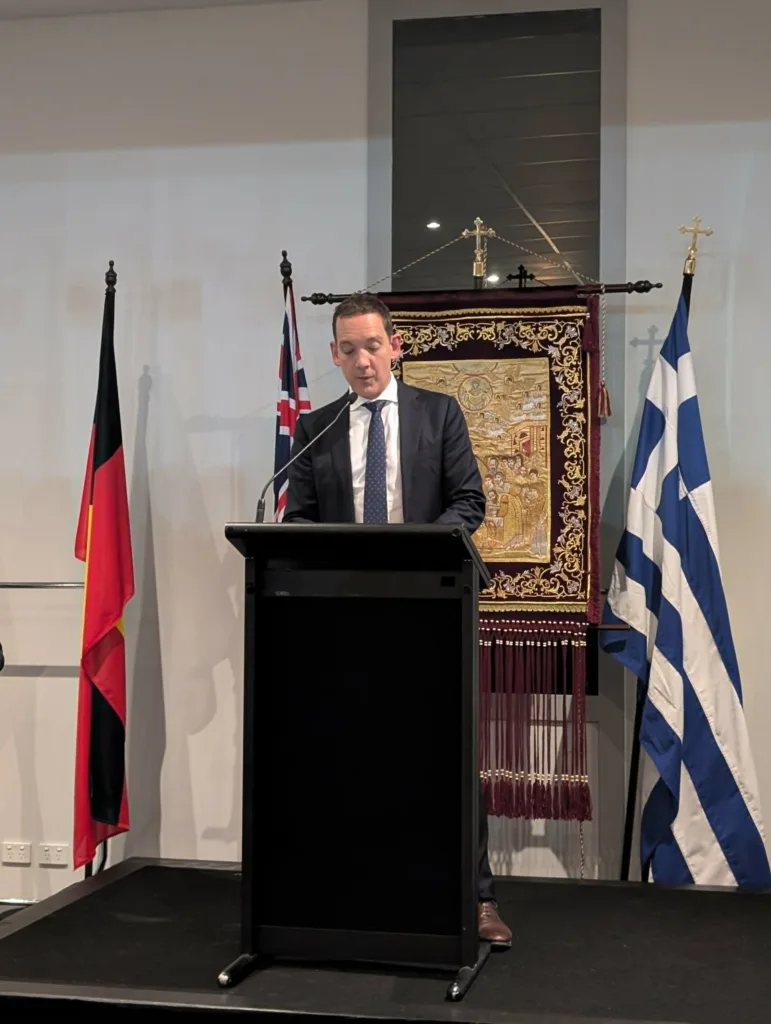
When Dimopoulos took the lectern, he spoke not only as a minister, but as the son of migrants. “Hellenism is an unbroken chain that goes back thousands of years,” he said. “Imagine if that chain had been broken… it would be a different history for the Melbourne Greek community.”
Dimopoulos grounded the historical gravity of the evening in the intimacy of personal memory. “My mum was a factory worker packing shampoo bottles for around 35 years… My dad was a painter. I’d come home and they wouldn’t even be there yet. But I stand here before you as a Minister because of them.”
It was a familiar story, but one that still carried weight – a reminder that the legacy of 1821 lives not just in history books, but in the Australian migrant experience.
Steve Dimopoulos.
Voices from Greece and Australia
The evening maintained a connection across continents. A video message from Greek PM Mitsotakis and a letter from Australia’s Prime Minister Anthony Albanese underscored the significance of the day.
President of the Greek Community of Melbourne, Bill Papastergiadis, described the Consul General as a “breath of fresh air,” noting her role in galvanising the community. He drew a line from the Filiki Eteria, the secret society that helped spark the 1821 revolution, to the modern diaspora. Maintaining language, faith, and identity in Australia was, he suggested, its own act of cultural resistance.
Bill Papastergiadis.
‘A bridge across time’
In her address, Consul General Ms Georgantzoglou placed the evening within a broader historical arc. “Tonight, we gather to pay tribute to those who fought in the name of freedom, courage and justice,” she said.
She described the diaspora as a continuing force in that legacy, calling it “the strongest bridge between Greece and Australia.”
While Ms Georgantzoglou is often noted for a more understated approach to her role, her focus on reforming the Consulate was evident in the evening’s precision. Staff tell The Greek Herald she is methodical, intent on making systems “work like clockwork.”
“See those athletes on the football pitch? That’s what she’s like. Disciplined,” one staff member remarked.
Through the windows, South Melbourne Hellas FC athletes trained below. Upstairs, plates filled quickly and old friendships picked up where they had left off. In the end, what could have been a logistical scramble became a cohesive celebration. It was a reminder that Hellenism in Melbourne is not abstract, but lived: thriving in the voices that sing, the dances that welcome, and the persistence of a community that builds something meaningful even when plans fall through.
*All photos copyright The Greek Herald / Mary Sinanidis.
AHEPA Sydney & NSW Inc has announced “Ode to Freedom”, a compelling exhibition by Greek Australian artist Angela Kiki Konstantinopoulou, commemorating the 200th anniversary of the Exodus of Missolonghi.
With the valued support of The Hon. Steve Kamper MP, Minister for Multiculturalism, this powerful collection will be showcased at the Fountain Court, Parliament House of New South Wales, from Tuesday 5 May to Thursday 28 May 2026.
The exhibition is presented under the auspices of the Consulate General of Greece in Sydney.
Through Angela Kiki’s deeply expressive works, “Ode to Freedom” illuminates the long‑standing ties between Hellenism and New South Wales, celebrating shared values of courage, democracy, and resilience.
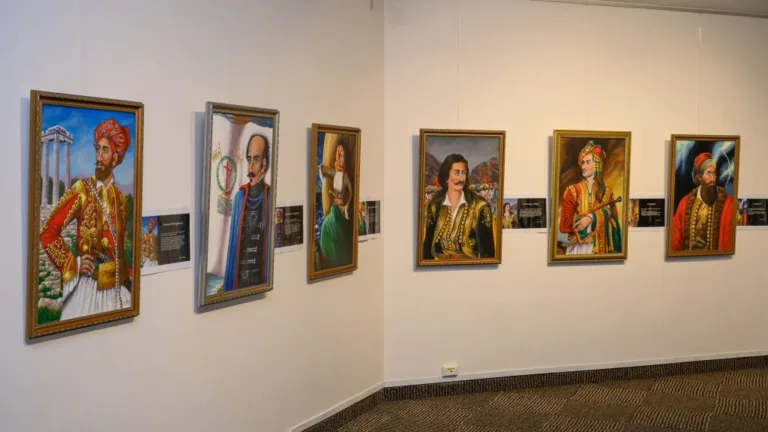
The exhibition will feature a compelling selection of Angela Kiki’s original paintings, including portraits of key heroes of the Greek War of Independence, whose courage and sacrifice helped shape the modern Hellenic nation. Among the standout works is her striking interpretation of Lord Byron, honouring his profound connection to Missolonghi and his enduring legacy within the Greek struggle for freedom.
This exhibition commemorates 200 years since the heroic Exodus of Missolonghi on 10-11 April 1826, Orthodox Easter Sunday. The defenders of that port in western Greece included Gordon Lord Byron amongst their number. After enduring years of privation, the few surviving defenders decided a heroic last charge was better than continued hunger and deprivation. They selected the early hours of Easter Sunday for their martyrdom.
The collection also turns its gaze to Australia, with pieces that illuminate the stories of the first Greeks in Australia, including a tribute to Katherine Crummer (née Plessos) – the first known Greek woman to settle in Australia – whose life reflects an early and important chapter in the shared history of Hellenism and New South Wales.
Angela Kiki is a Greek Austalian artist whose work blends historical narrative with expressive contemporary technique. Her paintings are characterised by bold colour, emotional depth, and a meticulous attention to storytelling, reflecting years of dedicated research into the heroes, struggles, and defining moments of Greek history.
Angela Kiki’s artistic practice centres on re‑imagining pivotal events and personalities, transforming them into vivid visual experiences that speak to both cultural memory and modern identity. Her ability to bridge past and present – honouring the legacy of freedom, resilience, and human spirit – has positioned her as a distinctive creative voice within Australia’s multicultural artistic landscape.
The public is warmly invited to mark the bicentenary of the 1826 Exodus of Messolonghi by visiting this special exhibition at the Fountain Court, Parliament House of NSW, between 5–28 May 2026.
The exhibition will be open weekdays 9:00am to 5:00pm and entry is free.
As analogue media quietly deteriorates in archives, storage rooms and institutions across Australia, a growing challenge is emerging – one with significant cultural, historical and commercial implications.
From government departments and universities to major corporations and community organisations, vast volumes of irreplaceable material remain trapped in outdated formats. Without timely intervention, much of it risks being lost permanently.
For Bill Zographos, founder of Archives Australia Group, this is not a future concern – it is already happening.
With more than four decades of experience across broadcast production, media and archival preservation, Zographos has built a specialist operation focused on safeguarding legacy content at scale.
From broadcast to preservation
His career began in television and international news, working across Australian networks including Channel 9 and Channel 7, as well as broadcasters in Greece and Cyprus. That early exposure to production and media technology evolved into a long-term focus on preservation – ensuring ageing material can be accessed, used and protected into the future.
“From a young age, I was drawn to cameras, audio and production equipment. What started as curiosity quickly became a profession,” he says.
Today, his work spans a wide range of sectors, including government, defence, universities, cultural institutions and major corporate organisations. Projects often involve complex archival collections, strict technical specifications and, in some cases, culturally sensitive material such as Indigenous community recordings and historical archives.
He has worked with clients including government departments, major ASX-listed companies, financial institutions and universities such as Monash and La Trobe, where archival material often carries both historical and operational value.
“In many cases, the material we are handling cannot be replaced,” he says. “There is a responsibility to get it right.”
Bill Zographos has built a specialist operation focused on safeguarding legacy content at scale.
A race against time
The urgency of this work is increasing.
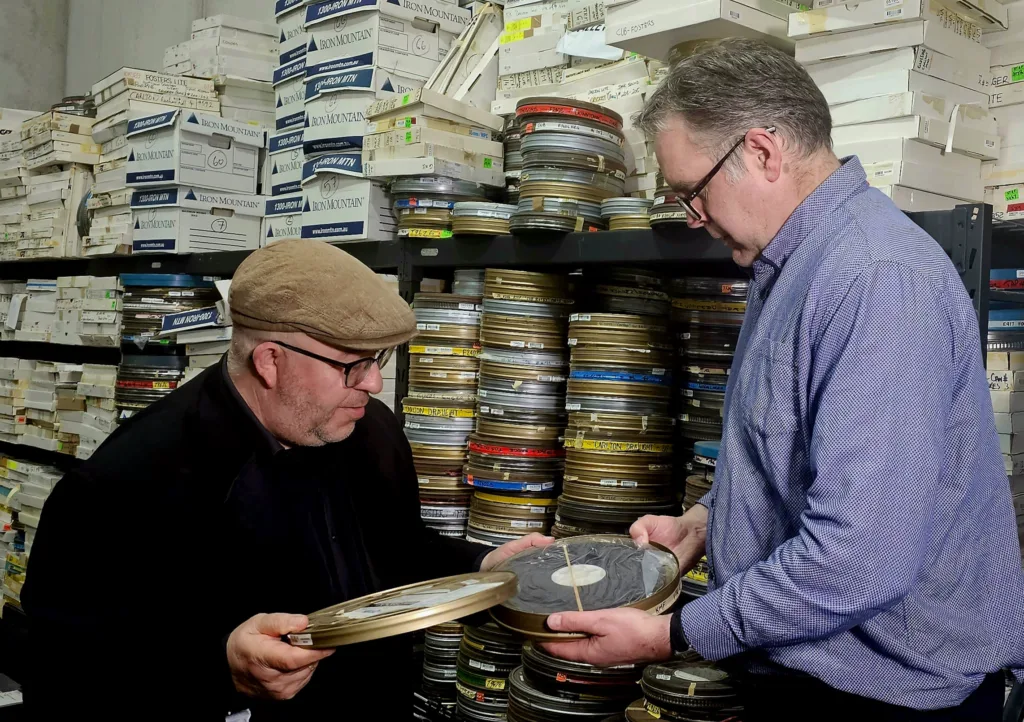
Magnetic tapes, film reels and early video formats were never designed to last indefinitely. As they degrade, playback becomes unreliable – and eventually impossible.
Industry bodies have warned that large volumes of analogue material are approaching the end of their usable life, particularly as the equipment required to play these formats becomes increasingly scarce.
“Once these materials deteriorate beyond recovery, they are gone forever,” Zographos says.
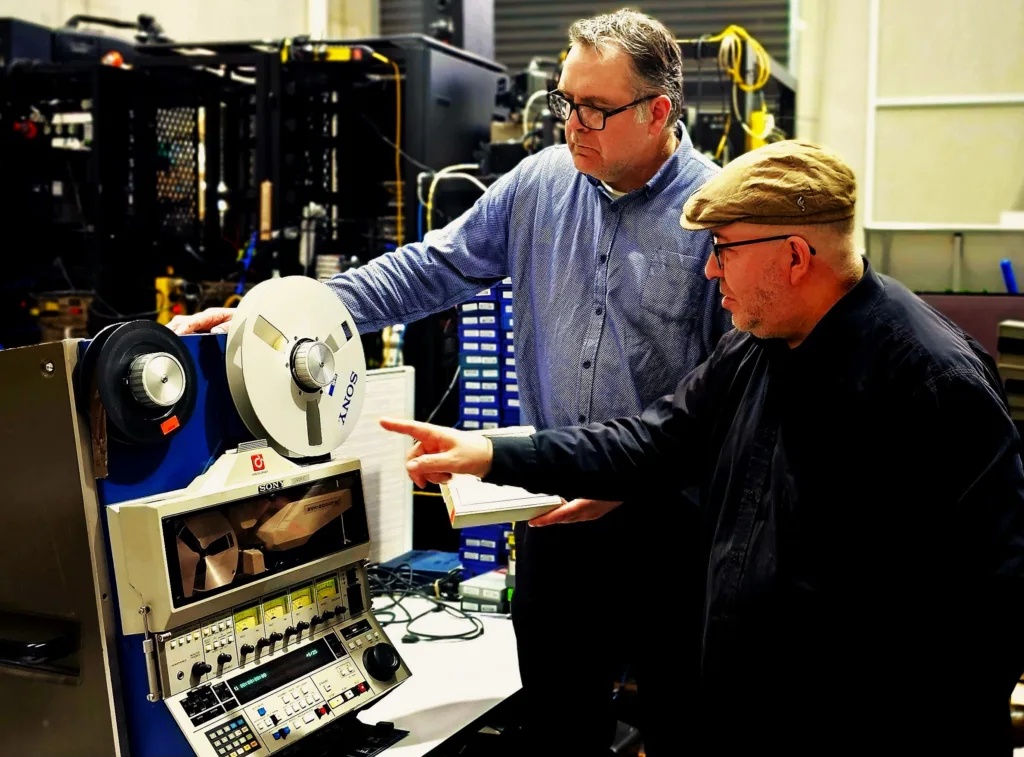
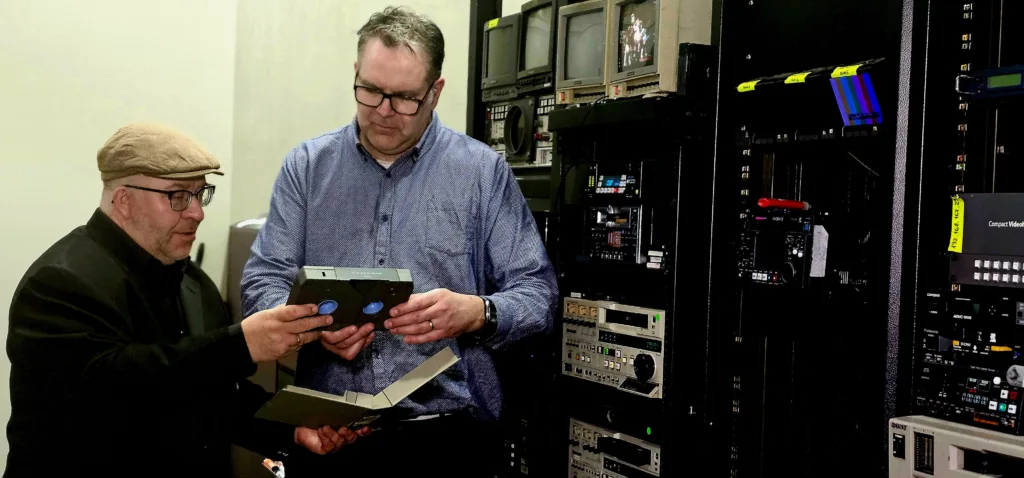
A key point of difference lies in the infrastructure behind the business. Over decades, Zographos has assembled a collection of broadcast-grade legacy equipment, much of it no longer manufactured or available.
“We operate with equipment used in major television networks through the 70s, 80s and 90s,” he explains.
“In many cases, we maintain multiple machines for each format. That level of capability is essential when dealing with complex or large-scale archival projects.”
This allows his team to manage a wide range of obsolete and professional formats, including broadcast tapes, film reels, audio archives and photographic material, delivering preservation-grade digital outputs tailored to each client’s requirements.
Over decades, Bill Zographos has assembled a collection of broadcast-grade legacy equipment.
Unlocking value beyond preservation
While the primary focus is safeguarding content, the process often reveals unexpected value.
Organisations frequently rediscover archival material that can be repurposed for research, brand heritage, compliance or public engagement. Historical footage, internal records and early campaign materials can take on new relevance decades after they were first created.
“We see material that hasn’t been viewed for decades suddenly become relevant again,” Zographos says.
Recent projects have included work with universities, councils and cultural organisations, as well as culturally significant collections such as Indigenous community archives and historical photographic materials dating back more than a century.
Recent projects have included work with universities, councils and cultural organisations.
In some cases, previously unseen footage has been restored and brought back into circulation, creating a renewed connection between past and present.
As technology continues to evolve, the principle remains the same.
“The most important thing is to digitise material at the highest possible quality today. If you get that right, it can be preserved and adapted well into the future,” he says.
In an increasingly digital world, the work itself may go largely unseen – but its impact is lasting.
For organisations holding decades of history, the opportunity to preserve it remains time-sensitive.
For Zographos, the mission remains simple.
“If it’s not preserved now, there’s a real risk it will be lost,” he concludes.
There are moments when the world seems to stand still amid the constant motion of daily life, often born out of anxiety.
In Bahrain, such moments have become routine. The sky has turned into a space where fears intersect with the sounds of interceptions and silent prayers. The war in Iran has cast a shadow, like a shroud, over people’s hopes – people who, until a month ago, were living peaceful lives.
In this dystopian reality, Greeks in the region have sought a point of stability to dispel the uncertainty surrounding them.
One such presence is Aliki Chatzara, Honorary Consul of Greece in Bahrain, a figure with deep knowledge of the region, having lived in the Gulf for the past fifteen years.
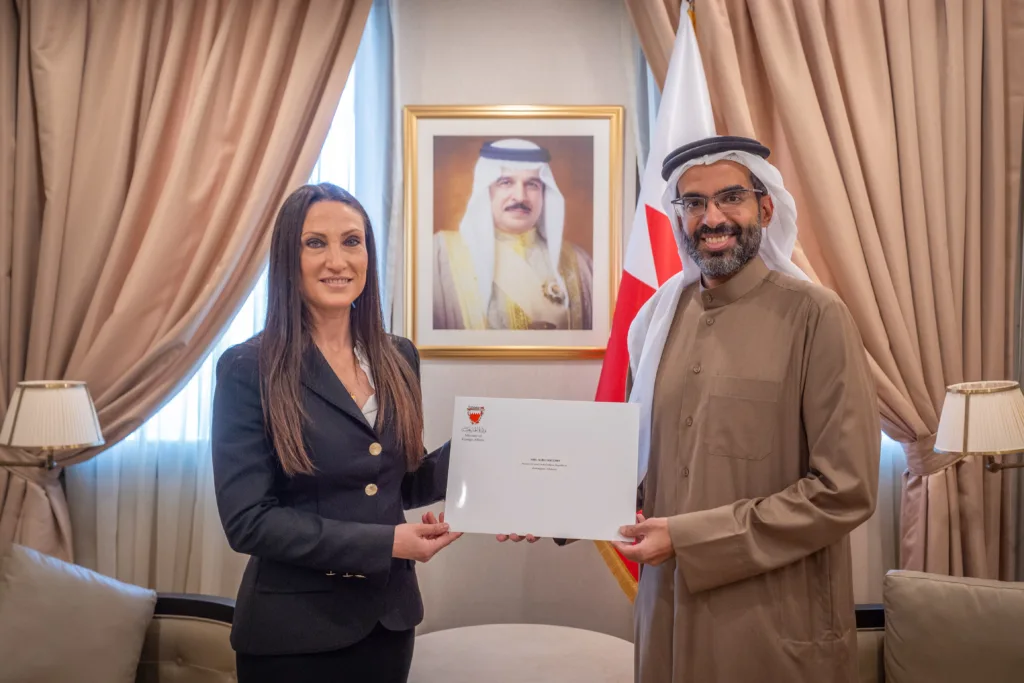
Aliki Chatzara is pictured with Sheikh Abdullah bin Ali Al Khalifa during the presentation of her consular diploma as Honorary Consul of Greece in the Kingdom of Bahrain.
Also known by her writing name “Valores,” reflecting spiritual and human values, and with a multifaceted career as an author, teacher, radio producer and athlete, she found herself on the front line of a demanding effort of coordination and support.
Through constant communication and practical solutions, she helped many Greeks return safely home, overcoming obstacles such as closed airspace and complex transit procedures through third countries. It was an effort that tested endurance while also highlighting the importance of solidarity and composure.
As Easter approaches, the circumstances take on particular symbolism. In a region shaken by violence and uncertainty, the anticipation of the Resurrection serves as a reminder that even in the most difficult moments, hope persists. The light of Easter becomes a symbol of a return to safety and normality.
In this complex and charged environment, Ms Chatzara speaks to The Greek Herald about the critical moments experienced by the Greek community, the challenges of repatriation, and what lies ahead in Bahrain.
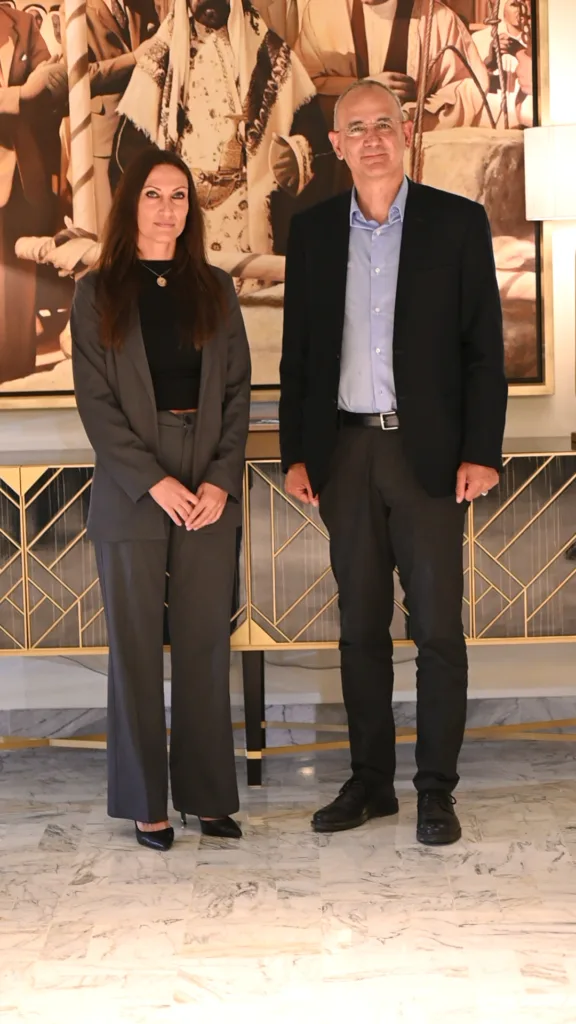
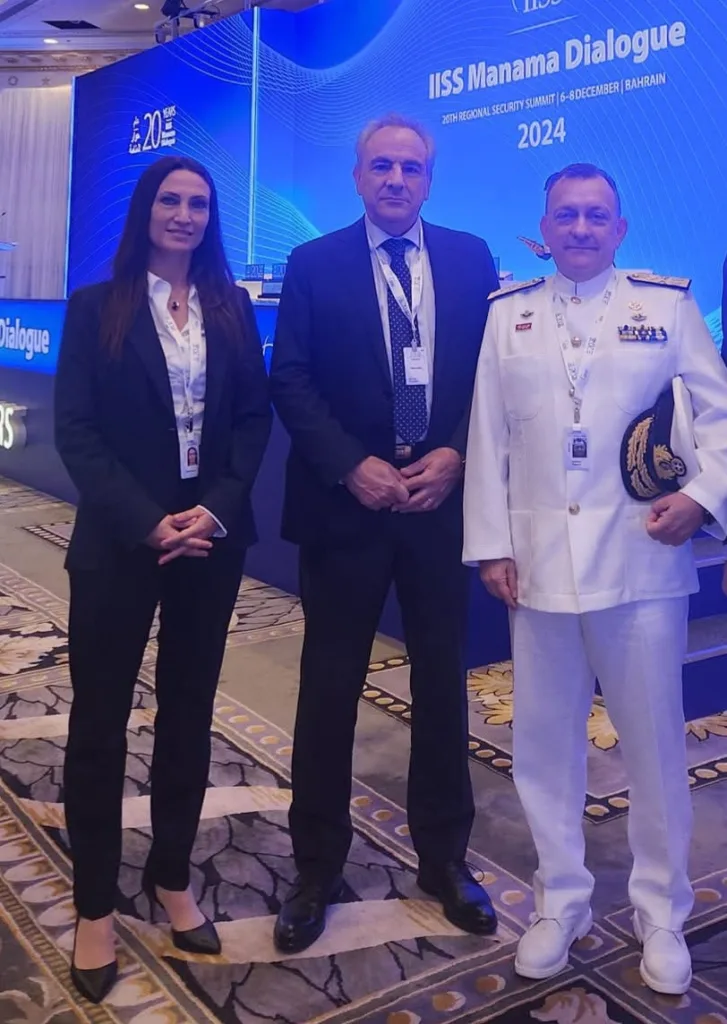
Aliki Chatzara is pictured with General Dimitrios Houpis, Chief of the Hellenic National Defence General Staff.Aliki Chatzara is pictured with Greece’s National Security Advisor, Thanos Dokos, and Rear Admiral Vasileios Gryparis, Commander of the European Operation ASPIDES.
What is the situation in Bahrain at the moment? How concerned are residents about strikes from Iran, and were such developments expected?
Although there were indications since the summer, no one wanted to expect such an outcome. Residents remain calm, though there are many questions about how the situation will evolve.
Bahrain itself has recently been affected by attacks and wider instability in the Gulf. How concerned are Greeks living there, and what was your first priority as Honorary Consul when the crisis began?
It was something that shocked us all. From Bahrain’s side, there was absolute professionalism and immediate handling of risks, giving us a sense of security. It was natural, especially in areas where interceptions were more intense, for Greeks—particularly those with children—to feel concerned. My first priority was their safety and addressing their concerns so we could find solutions.
How was the repatriation of Greek citizens organised? What role did you play and what were the main challenges?
Repatriation was organised using a C-130 Hercules aircraft once citizens expressed their wish to return. The Greek Ministry of Foreign Affairs, in cooperation with embassies in Riyadh, Doha and Kuwait—under which the Honorary Consulate in Bahrain falls—coordinated the effort.
As Honorary Consul and a resident of Bahrain, I handled coordination locally and remained in constant communication with our embassy. I had already created a WhatsApp group including all Greeks in Bahrain, where I shared official and urgent updates and maintained communication day and night.
The main difficulties were the closure of airspace and the need to cross into Saudi Arabia, which required visas. For those with pets, the paperwork was especially complex. Additionally, the fact that our embassy is based in Kuwait made some bureaucratic procedures more challenging.
For those who remain, how safe is life in Bahrain today?
Life has become somewhat routine as risks are managed, though people miss loved ones who have left. It is understandably unsettling to hear interceptions at intervals. There is some risk, including from debris. The continued closure of airspace makes travel difficult. Shops are operating normally, but morale has changed; some people work from home while others go in as usual, and schools are operating online.
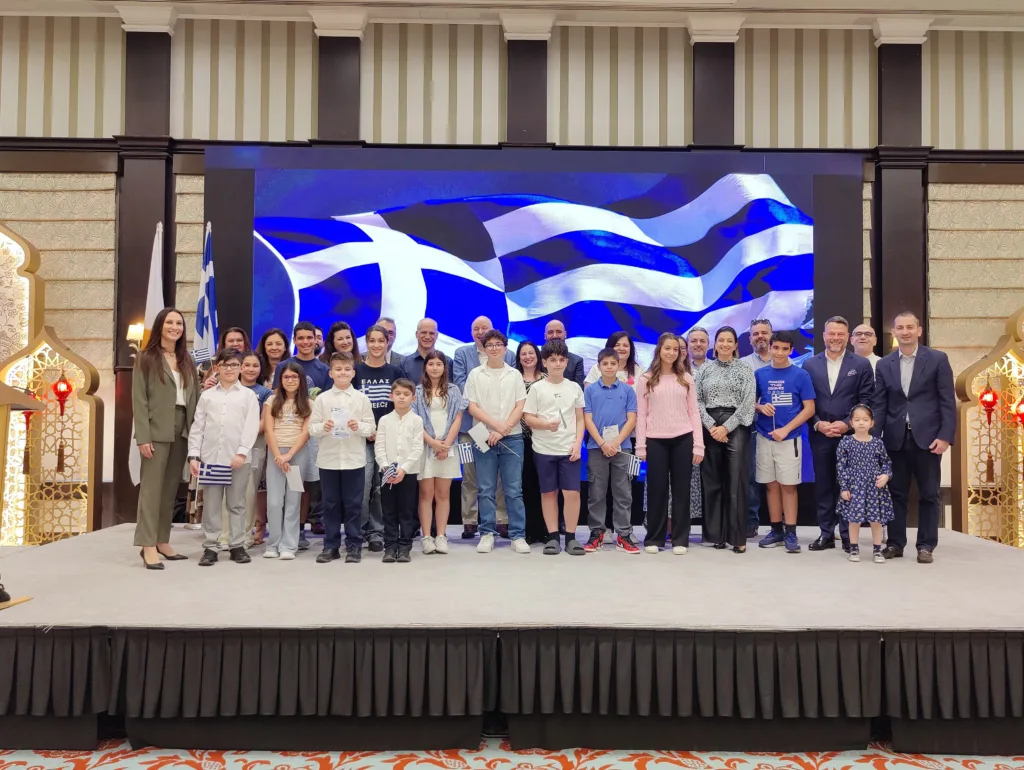
Aliki Chatzara is pictured with her students and members of the Greek community during the celebration of the national anniversary of 25 March 1821 at the Intercontinental Bahrain.
Have you experienced such a tense period before?
In my fifteen years in the Middle East, I experienced something similar during the coronavirus period. There was the same anxiety and uncertainty, though airspace remained open, even if flights were difficult.
Do you see hope for de-escalation?
There will always be “light on the horizon,” though this is a complex issue. I hope it ends soon, as Bahrain is a beautiful place where daily life once felt like a small haven of safety.
What did this experience teach you about the Greek community?
It showed me that with proper guidance, even very different personalities can unite and achieve anything. I was moved by everyone’s willingness to communicate, share their concerns, and come closer together like a large family.
I would also like to thank the Bahraini authorities for the safety they provide day and night, not only now but throughout the years. I thank the Greek government, the Ministry of Foreign Affairs and the Ministry of National Defence for their professionalism and support during critical moments.
Finally, I commend the courage of the families who travelled overland through Saudi Arabia and, despite many difficulties, managed to return home. I followed the same route and know well the hardship, anxiety and exhaustion they endured, especially those travelling with young children.
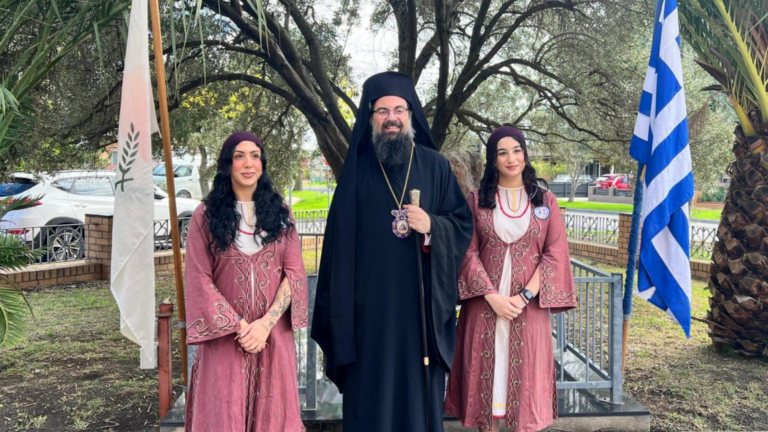
The anniversary of the start of the EOKA liberation struggle was commemorated in Melbourne’s west on Sunday, March 30, with a Divine Liturgy and memorial service at the Church of Saint Andrew in Sunshine.
In his sermon, Bishop Evmenios reflected on the life of Saint Mary of Egypt, highlighting repentance as a lifelong journey that transforms the whole person – a central message of the Lenten period.
The service also held particular significance as it coincided with the anniversary of 1 April 1955, marking the beginning of the EOKA liberation struggle against British colonial rule in Cyprus.
Special tribute was paid to the heroes of Cyprus, whose struggle for freedom was described as deeply rooted in faith, courage and self-sacrifice, reflecting both national identity and spiritual conviction.
Following the Divine Liturgy, a memorial service was held at the monument in the church courtyard, where Bishop Evmenios and representatives of community organisations laid wreaths in honour of those who fell during the struggle.
The commemoration brought together members of the Greek and Cypriot communities, reinforcing the enduring historical and spiritual significance of EOKA within the diaspora.
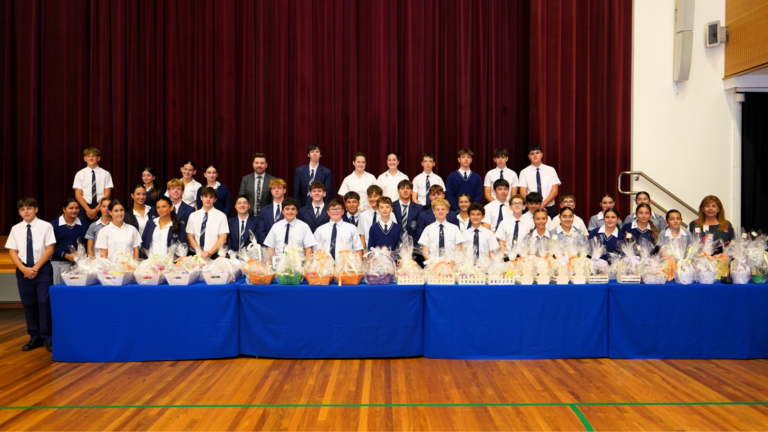
Students at St Spyridon College have been recognised for their leadership and generosity after delivering a highly successful Easter Appeal, supporting both local welfare services and charitable initiatives.
Year 9 students, alongside teacher Ms Koops, were commended for their outstanding leadership in coordinating this year’s campaign, which saw strong participation across the school community.
Thanks to contributions from students in Years 7 to 12, more than 70 boxes of food were collected and donated to the Greek Welfare Centre, providing much-needed support to families in need.
The initiative culminated in the school’s Easter Assembly, where 50 Easter hampers were raffled, with the major prize being a family pass to the Sydney Royal Easter Show. Proceeds from the raffle will be directed to the Lafora Disease Research Fund, as well as Circus Quirkus.
The school thanked all students and staff who contributed to the initiative, highlighting the strong sense of community and service that underpinned the appeal’s success.
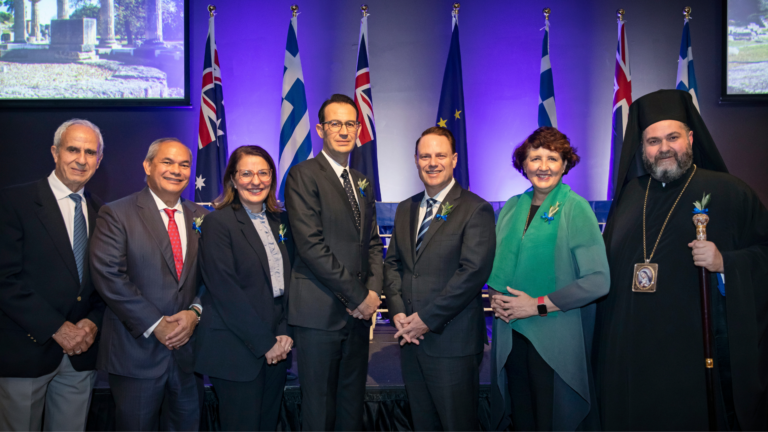
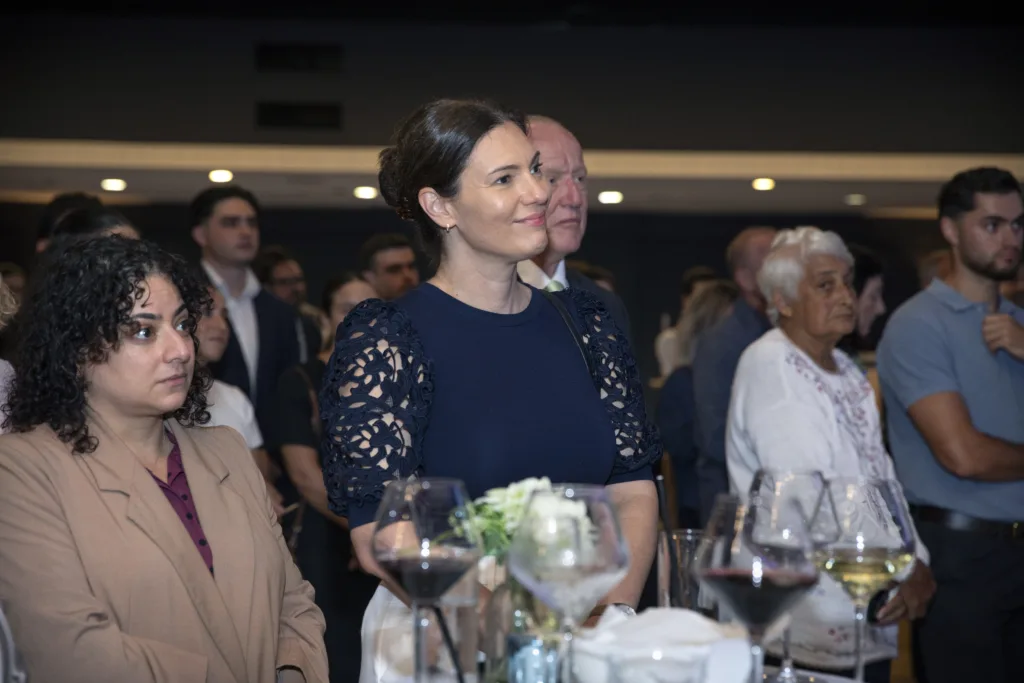
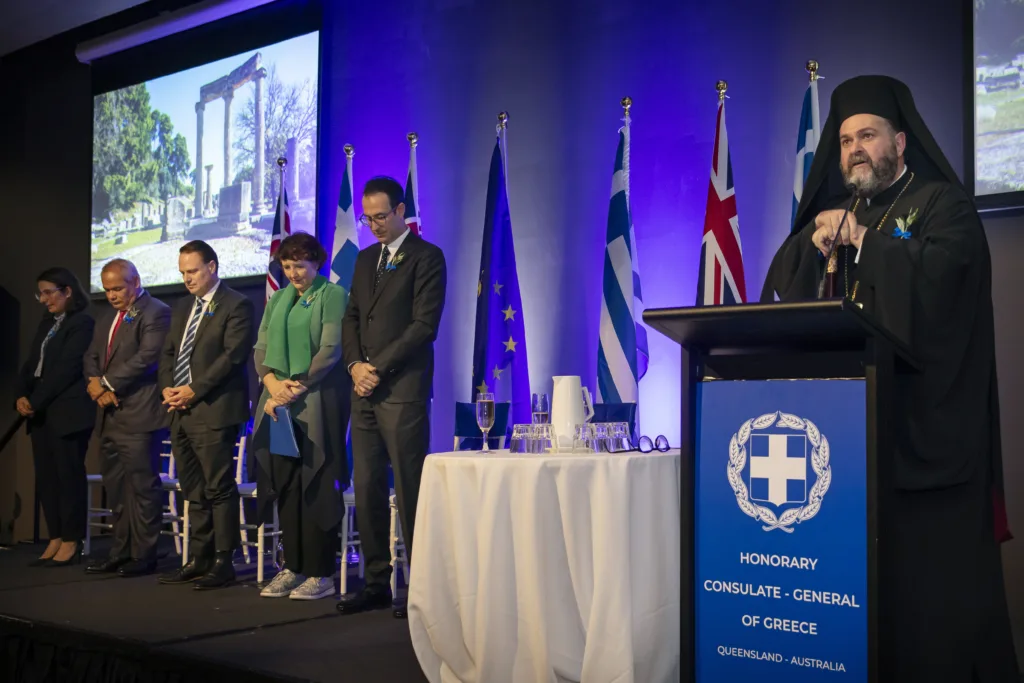
The Greek community of Queensland, civic leaders and distinguished guests gathered in South Brisbane on Tuesday, March 31 for the official celebration of Greek Independence Day, hosted by the Honorary Consul General of Greece in Queensland, George Mastrocostas, and his wife, Ying Mastrocostas.
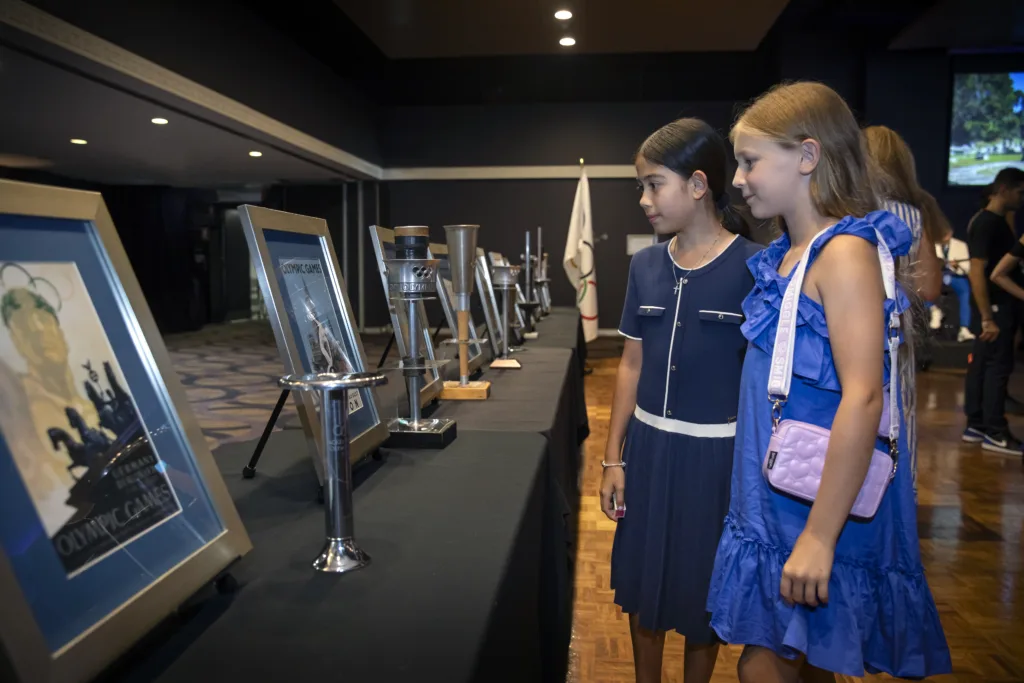
Held at The Greek Club, the evening welcomed approximately 400 guests and was presented under the theme “Olympia: The Spirit of Greece”, a concept designed to honour the birthplace of the Olympic Games and the enduring civilisational values of Hellenism.
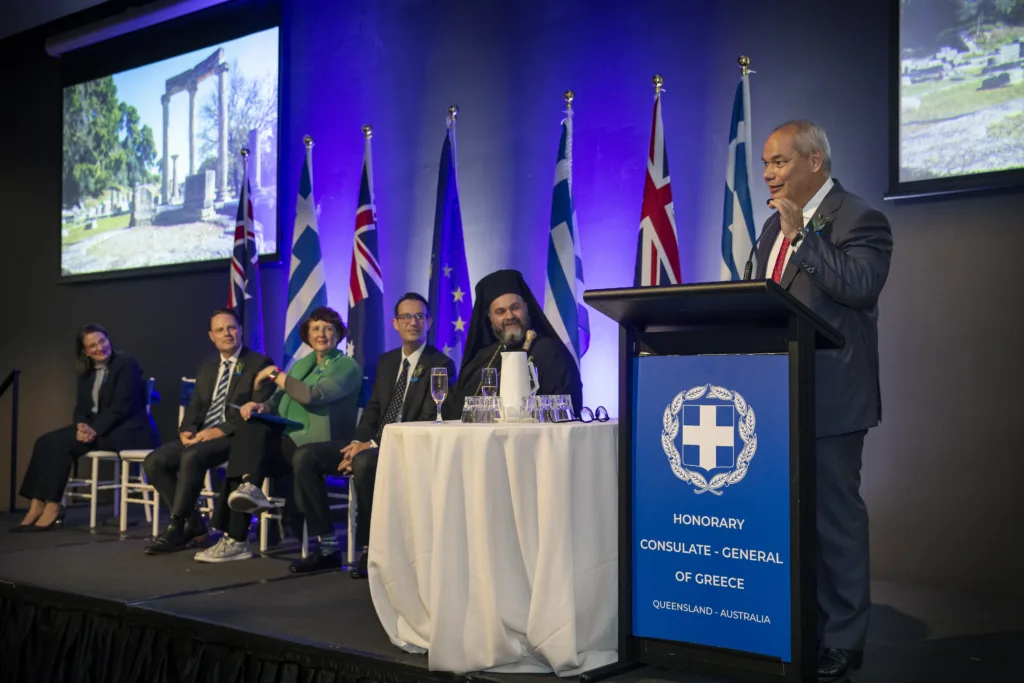
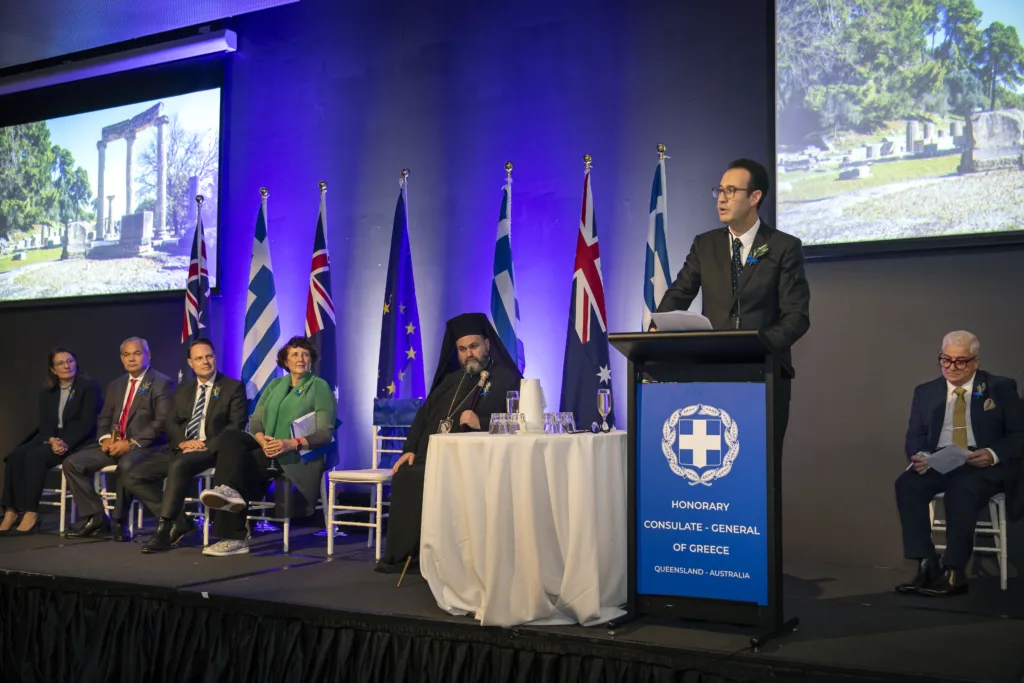
The event was held in the presence of His Grace Bishop Bartholomew of Brisbane, the Hon. Fiona Simpson MP, Minister for Women and Women’s Economic Security, Minister for Aboriginal and Torres Strait Islander Partnership and Minister for Multiculturalism, representing the Premier of Queensland, the Hon. David Crisafulli MP, the Rt. Hon. The Lord Mayor of Brisbane, Cr Adrian Schrinner and Lady Mayoress Nina Schrinner, and His Worship, Mayor Tom Tate, Mayor of the Gold Coast City Council, and Mayoress Ruth Tate.
The evening brought together government representatives, church leaders, members of the Greek Australian community and friends of Greece for a celebration that reflected both the sacred and historic significance of 25 March and the enduring contribution of Hellenic civilisation to the world.
In his official address, Mr Mastrocostas delivered a deeply personal and reflective oration on the spiritual, historical and national meaning of Greek Independence Day, describing 25 March as “the day Greece remembers not only how she was freed, but why she could never be destroyed.”
Speaking of the inspiration for the address, Mr Mastrocostas said he had written the speech while in Greece late last year after watching the film Kapodistriasin Athens.
“And I will say this honestly, without hesitation, and without shame: I wept,” he said. “Not because of nostalgia. But because what I witnessed was not merely a story. It was the cost of loving Greece.”
George Mastrocostas.
The address reflected on the survival of Hellenism through centuries of Ottoman rule, the role of Orthodoxy in preserving Greek language, memory and identity, and the profound moral inheritance of the Greek Revolution.
“Today, we do not simply commemorate a rebellion,” Mr Mastrocostas said. “We proclaim a resurrection.”
Drawing on the evening’s Olympia theme, Mr Mastrocostas also highlighted Greece’s timeless gift to humanity through the ideals first embodied in Ancient Olympia.
“For Greece gave the world more than memories of greatness. She gave the world enduring ideals,” he said.
“Among them was Olympia, where the human person was elevated through discipline, excellence, honour, and peace, where victory was not merely a triumph of strength, but of virtue.”
In one of the address’s closing reflections, Mr Mastrocostas linked the legacy of Ancient Olympia with Queensland’s Olympic future and the growing bonds between Greece and South East Queensland.
“It is deeply meaningful that, in our own time, the bonds between Ancient Olympia and the Gold Coast are being drawn closer, and that as Australia looks ahead to Brisbane 2032, we are reminded that this global celebration of human excellence began on Greek soil,” he said.
“What began in Olympia belongs now to all humanity. But it began with Greece.”
The evening’s theme was carried through the event presentation, with symbolism centred on Ancient Olympia, the olive tree, the Olympic spirit and the connection between Greece’s ancient legacy and the future Brisbane 2032 Olympic Games.
His Grace Bishop Bartholomew of Brisbane.
Mr Mastrocostas said the celebration was not only a commemoration of the Greek War of Independence, but also an affirmation of the enduring spiritual and cultural inheritance of the Greek nation.
“Greek Independence Day is a moment to honour not only the heroes who fought for freedom, but also those who kept Greece alive when she had no state,” he said.
“It is a day of memory, faith, sacrifice and gratitude. It is a reminder that Hellenism is not merely remembered. It is lived.”
The official celebration formed part of the Consulate’s annual observance of 25 March and reaffirmed the deep and longstanding ties between Greece, Queensland and the broader Australian community.
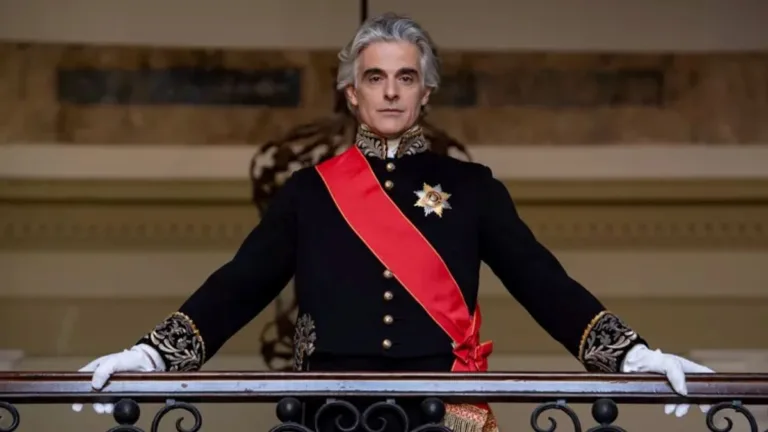
Two advanced screenings of the highly anticipated 2025 Greek film Kapodistrias will take place at The Astor Theatre, offering Melbourne audiences an early opportunity to experience the historical drama ahead of its wider release.
Directed by acclaimed filmmaker Yannis Smaragdis, Kapodistrias presents a powerful and deeply moving portrait of Ioannis Kapodistrias, the first Governor of modern Greece.
Set in the aftermath of the Greek War of Independence, the film follows Kapodistrias as he returns to a fractured homeland and takes on the monumental task of rebuilding a nation in crisis. Determined to restore unity, stability and hope, he embarks on an ambitious reform agenda – one that ultimately places him at the centre of escalating political tensions.
As competing interests and shifting alliances intensify, Kapodistrias is forced to confront the personal cost of leadership, raising the question of how much one individual can sacrifice for the future of a nation.
Blending historical depth with emotional storytelling, the film captures both the political legacy and human dimension of a leader whose vision helped shape modern Greece.
The film is presented in Greek with English subtitles and has a runtime of 140 minutes.
Screening details:
When: Wednesday, 29 April at 7pm; Sunday, 3 May at 3pm
Where: The Astor Theatre, 1 Chapel St, St Kilda, VIC
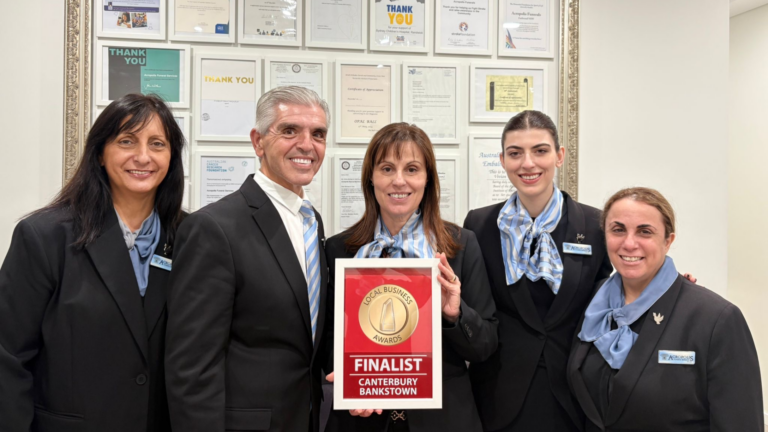
Acropolis Funerals were named finalists for the Outstanding Professional Services Award at the 2026 Canterbury Bankstown Local Business Awards.
In a Facebook post announcing the news, Acropolis Funerals thanked their customers, families and friends for their “unconditional love, support, and votes submitted.”
“This recognition highlights the trust our community places in us during some of life’s most difficult moments. It reinforces our unwavering commitment to providing compassionate, personalised, and professional funeral services,” the Acropolis Funerals team said in the post.
The funeral home said it remains dedicated to providing the best possible service for each family who has lost a loved one.
“Every family we serve is at the heart of what we do, and this nomination is a meaningful reminder that our dedication is making a difference,” they said.
The post flooded with comments congratulating the team, their constant professionalism and the compassion, dignity, and care they provide to their customers.