The Allan Labor Government has announced it will legislate Working From Home at least two days a week for at least office based workers.
Many are honing in on the debate, and I myself fully support this initiative.
I may be a bit of an outsider, but COVID for me brings many fond and irreplaceable memories. I had two children – one preschooler and one in grade prep.
I was a working mum who needed to lead my team from training in the classroom to training online while using modern and unique ways of engaging an audience.
I relished the challenge and was excited to breach new borders in my online communication world. Suddenly ZOOM was not a sound my youngest’s rocket made going to the moon, but an enabler of learning, growth and development on many levels.
Being a bit of an environmentalist, I was privately thrilled with the environmental benefits of COVID thinking, ‘yes – that is a win for the environment for once.’ I looked at the sky and it was clean. I looked at the road and heard nothing. No fumes. No transport costs. No noise.
The productivity commission has stated that workers save on average 100 minutes a day on travel, and workers in fact work longer – voluntarily. The Australian Unions research paper – presented to the Victorian Government – listed research that indicated workers were at least 13% more productive.
For me, COVID was about opening doors. At the time, I was one of very few females on a mostly male dominated board of 19 members, with two young children and a partner who is a shift worker. I would often need to forward apologies to meetings as I could not be at two places at once and children always came first.
COVID opened doors.
I was able to be a mum (thank you for cartoon versions of the Odyssey in Greek available online), supervise children and participate in board meetings. This opportunity allowed my voice to be heard and exposed the board members to a different perspective of how we (and women) operate and balance life. Being in that space and voicing other ways of doing things is all part of the change process.
I now work in a workplace that is female dominated, and has embraced Working From Home and the technologies that flooded during this period (i.e. online video communication tools). I have heard some older women say, ‘we had none of this when we had children – i.e. no parental leave, no baby bonus, no work from home, less flexibility and no jobs when we did have children… what an entitled bunch.’ I would like to say to these brave pioneering women ‘thank you’. You have paved the way for a better society moving forward.
The other fond memory I have of COVID is being with my dad every day. I would grab the computer, sit next to him and work. In his final days that’s where I was. Five minutes after knocking off my regular paid work, I was next to him being his secretary, his carer. Him dictating emails, messages, articles, audio recording his radio show and forwarding it to the community ethnic radio station 3ZZZ to be aired the next day.
It was these small acts and changes that kept my dad’s brain active and engaged to his last days. And for that I say ‘thank you.’
Thank you to the Victorian Government for being brave enough to have the vision to change people’s lives – and predominantly care givers/women’s lives for the better. And for being the test case in Australia for it. I just can’t wait for it to be legislated.
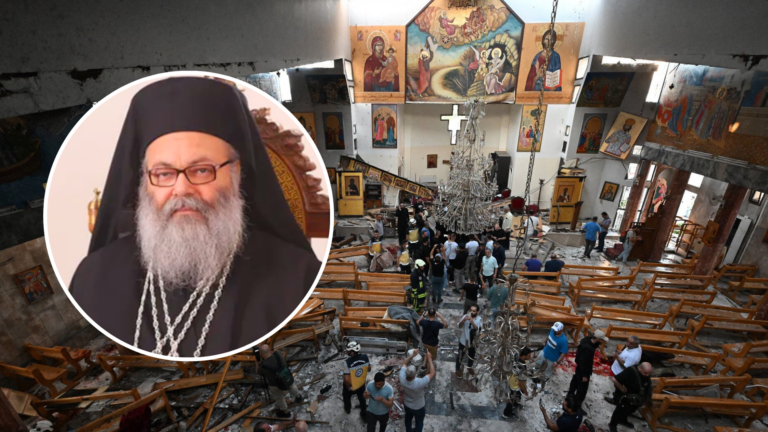
The Greek Orthodox Patriarchate of Antioch and All the East has announced the commencement of full restoration works on St Elias Church in Damascus, Syria following a brutal attack that claimed dozens of innocent lives.
Despite the severity of the incident, liturgical services resumed immediately after the attack – a powerful symbol of the Antiochian Orthodox community’s resilience and unwavering faith.
To ensure the continuation of worship during the renovation, services will be temporarily relocated to the adjacent church hall.
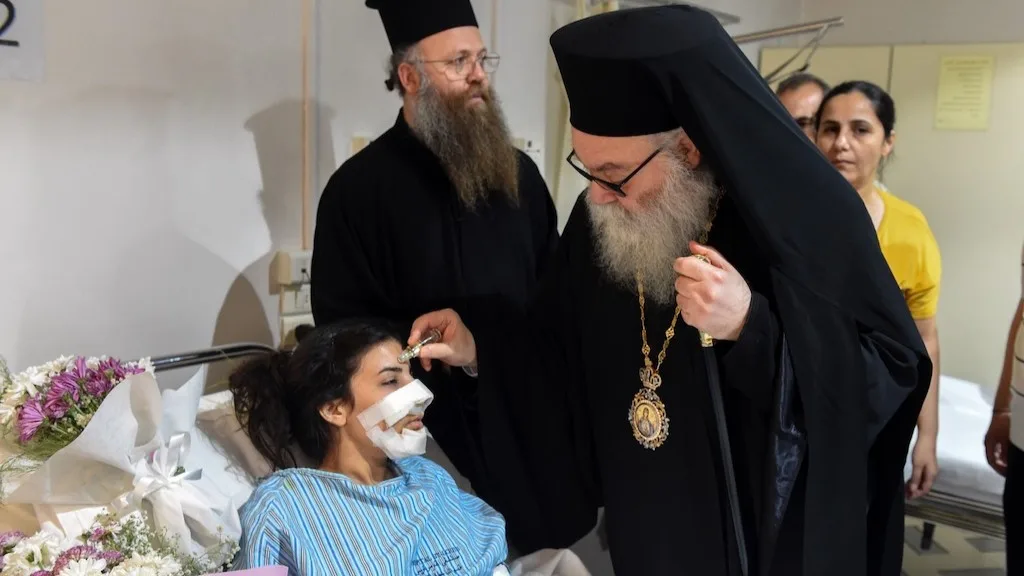
Patriarch John, accompanied by Patriarch Ephraim, visited survivors in local hospitals, offering blessings and wishing them a swift and full recovery. Photo: Antiochian Patriarchate.
Restoration efforts are scheduled to begin next week, with the Patriarchate reaffirming its commitment to both the physical rebuilding of the sacred site and the spiritual fortitude of its faithful.
“We remain anchored in hope,” the Patriarchate said in an official statement.
“We reaffirm our commitment to our faith and reject all fear and intimidation. We ask the Lord our God to guide the vessel of our salvation through the storms of this world, blessed be He unto the ages.”
Slain Melbourne man Athan Boursinos, who was gunned down in his Wollert driveway on July 31, had previously been a key suspect in a brutal 2022 underworld hit.
According to The Advertiser, Boursinos, 21, was arrested and questioned over the murder of Korey Kesici, an associate of crime boss George Marrogi’s Notorious Crime Family and a Mongols bikie prospect.
Kesici was lured from his Mickleham home on the night of March 5, 2022, and fatally shot after approaching a white BMW parked on Bangalore Way. At least two men were involved in the ambush, with one captured on CCTV loitering nearby.
Detective Inspector Dean Thomas of the homicide squad described the killing, which was also captured on CCTV, as “too violent and graphic” to be released to the public.
Boursinos, who bore the word “Omerta,” a Mafia term for silence, tattooed on his torso, was allegedly inked with another chilling phrase after the murder: “The souls I have taken will never haunt me… only the ones I haven’t.”
Following Kesici’s killing, both the BMW and a red Holden Commodore used in the murder and escape were found torched. Police confirmed both vehicles had been stolen weeks prior, the BMW from Tyabb and the Commodore from Maribyrnong.
Boursinos was reportedly operating within the network of exiled crime boss and tobacco wars figure Kazem Hamad.
Boursinos’ own death came just before 9am last Thursday, as he was leaving for a court appearance at Heidelberg Magistrates’ Court. Dressed smartly, possibly for the hearing, he was ambushed and fatally shot by a hit team who may have been waiting for his predictable morning departure.
Approximately eight bullets were fired during the attack. His partner, Sanaria Rofael, later shared tributes online following his death.
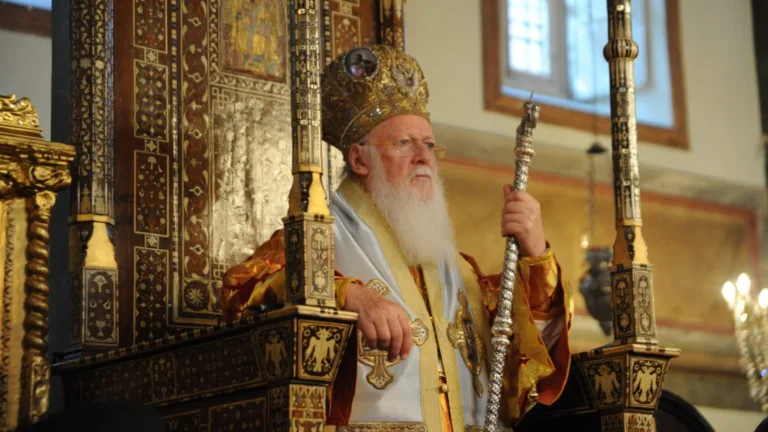
His All-Holiness Ecumenical Patriarch Bartholomew has condemned the ongoing crisis in Gaza, describing it as “a true disgrace to the human race, to all of humanity.”
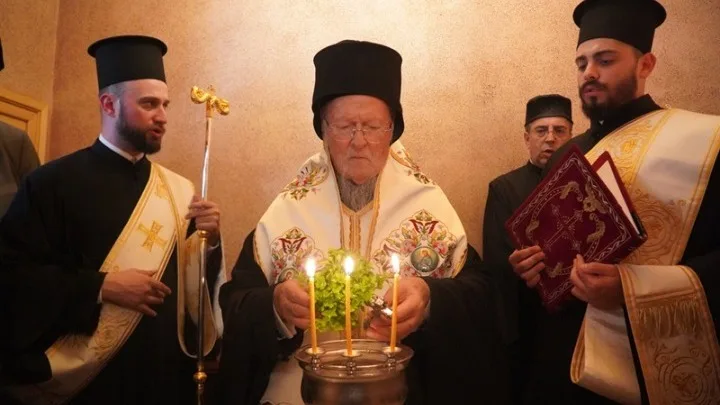
The spiritual leader of the world’s Eastern Orthodox Christians made the remarks during a liturgy and reopening ceremony of the Church of the Transfiguration of Christ the Saviour on Heybeliada (Halki) Island, in the Sea of Marmara near Istanbul.
“We are watching with abhorrence the scenes of civilians, of innocent children, dying of hunger, but also of hostages digging their own graves,” the Patriarch said. “It is a true disgrace to the human race, to all of humanity.”
While acknowledging the difficulty of changing the course of history, His All-Holiness emphasised that the Church must continue to offer hope and strive to transform the world.
“We well know that it is not easy to overturn the flow of reality, the flow of history. But the Church never abandons hope, never abandons its effort to transform the world. Because the world cannot be transformed either with violence or with wars. Look at history and you shall see,” he said.
The Patriarch’s comments come as the humanitarian situation in Gaza continues to deteriorate, with international calls mounting for a ceasefire and increased aid.
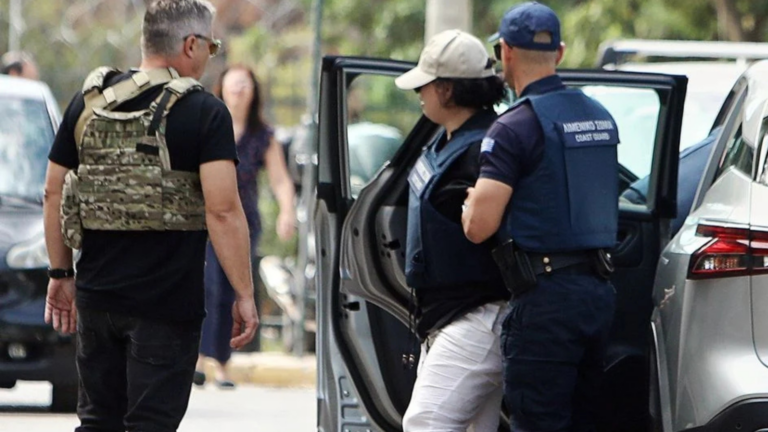
A 32-year-old Algerian woman appeared before an investigative judge in Athens on Wednesday, August 6, facing charges of murdering her three-year-old daughter, whose body was discovered floating off Edem beach in Palaio Faliro on July 27.
The woman, whose name has not been released, has been charged with premeditated murder in a calm state of mind and repeated domestic abuse. She denies all allegations.
According to her defence lawyers, the woman maintains her innocence and claims the child died accidentally.
They said she brought the girl’s body to the beach out of fear that reporting the death would lead to her losing custody of her two other young children.
During Wednesday’s hearing, the woman told the judge that her daughter first collapsed in the bathroom but briefly regained consciousness before collapsing again.
Believing the child had died, she said she panicked and decided to take the body to the sea, leaving with her other children afterward.
She also claimed that although she later noticed her daughter was still warm and had a heartbeat, she believed the child was already dead. Her movements at the beach and a nearby kiosk were captured by security cameras.
The woman is currently in custody as the investigation continues. The case has received widespread attention across Greece.
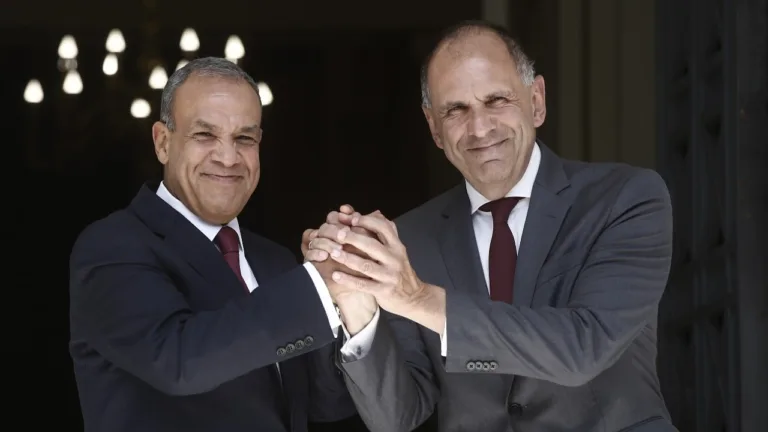
Greek Foreign Minister George Gerapetritis welcomed his Egyptian counterpart, Badr Abdelatty, to Athens on Wednesday, August 6, during an official visit aimed at deepening bilateral ties and reaffirming cooperation across key regional and religious issues.
A central focus of the meeting was the future of the historic Holy Monastery of St Catherine on Mount Sinai. Gerapetritis said he had received firm assurances from Abdelatty that both the continuity and the Greek Orthodox character of the monastery would remain intact.
The Egyptian Foreign Minister described the site as “characteristic of religious tolerance but also of respect for religious rights that Egypt has always demonstrated.”
Gerapetritis acknowledged the “sensitivity shown by President El Sisi and his efforts,” emphasising the monastery’s global significance:
“For Greece and Orthodox Christians everywhere, the monastery is not only the longest-operating place of worship but also a unique symbol of ecumenical culture.”
Discussions also touched on the legal status of the monastery and proposals for its promotion as a global centre of worship.
“Our common intention is for the monastery to continue its undisturbed course, with the status quo that has been established over 15 centuries,” Gerapetritis stated.
“I am convinced that Egypt will honour the tradition of respect for all religions and doctrines that it has shaped over time.”
The meeting further highlighted the strong and multifaceted relationship between Greece and Egypt, which Gerapetritis described as pillars of stability in the region.
He praised the Greece-Egypt agreement on the delimitation of the Exclusive Economic Zone (EEZ) as “exemplary,” even five years after its signing.
On international issues, the ministers aligned their positions on multiple fronts. Regarding Gaza, Gerapetritis reiterated the priority of achieving a ceasefire, enabling humanitarian aid access, and ensuring the unconditional release of hostages.
He confirmed that Greece, in coordination with Egypt, will continue humanitarian efforts in the region.
On Syria, both countries voiced support for the country’s sovereignty, territorial integrity, and inclusive governance with respect for all citizens.
On Libya, Gerapetritis briefed Abdelatty on recent visits to Benghazi and Tripoli.
Both ministers agreed on the need to tackle irregular migration and further coordinate efforts regarding maritime border protection and zone delimitation. Egypt’s role in securing its maritime borders was especially acknowledged.
In a world gripped by war, division and rising hate, one young Jewish-Greek peacebuilder is walking a radically different path – one rooted in empathy, shared humanity and the stubborn pursuit of peace.
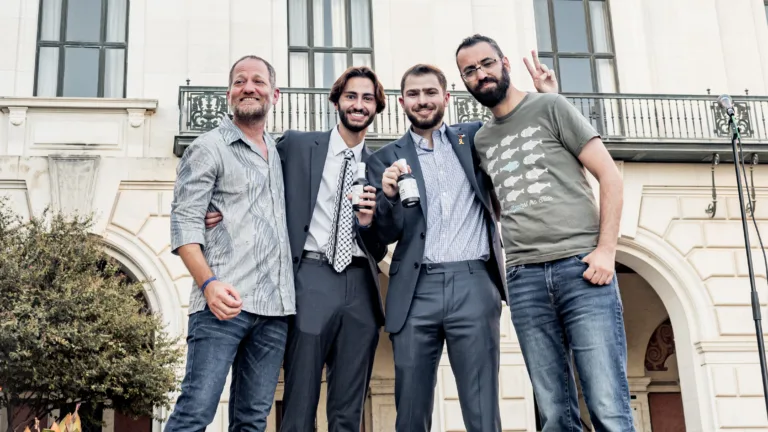
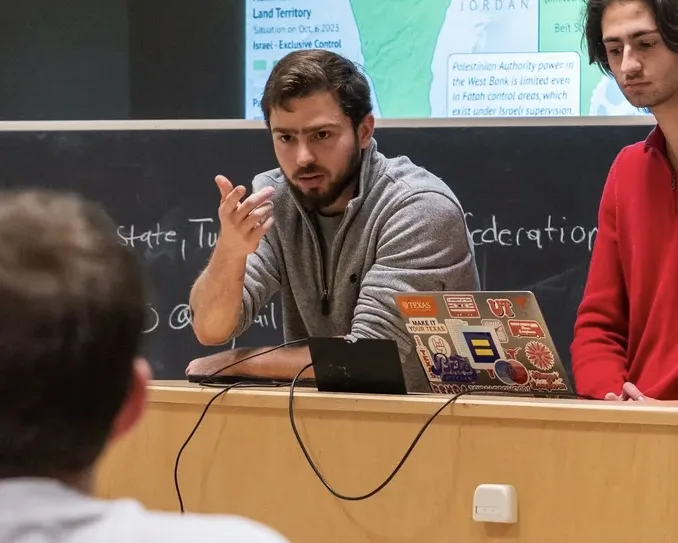
At just 22, Elijah Demetrius Kahlenberg is the founder of Atidna International, a student-led organisation that brings Jewish and Arab, Israeli and Palestinian students into dialogue on some of the most polarising issues of our time.
Born into a family shaped by both Holocaust survival and Greek resistance to fascism, Elijah’s work is deeply personal – and urgently relevant.
As the war between Israel and Hamas rages on, with devastating humanitarian consequences in Gaza and a sharp rise in antisemitism and Islamophobia globally, campuses and communities across the world have become battlegrounds of identity and ideology. Elijah, however, is fighting for a shared future between two peoples.
Elijah Demetrius Kahlenberg is the founder of Atidna International.
A moment that changed everything
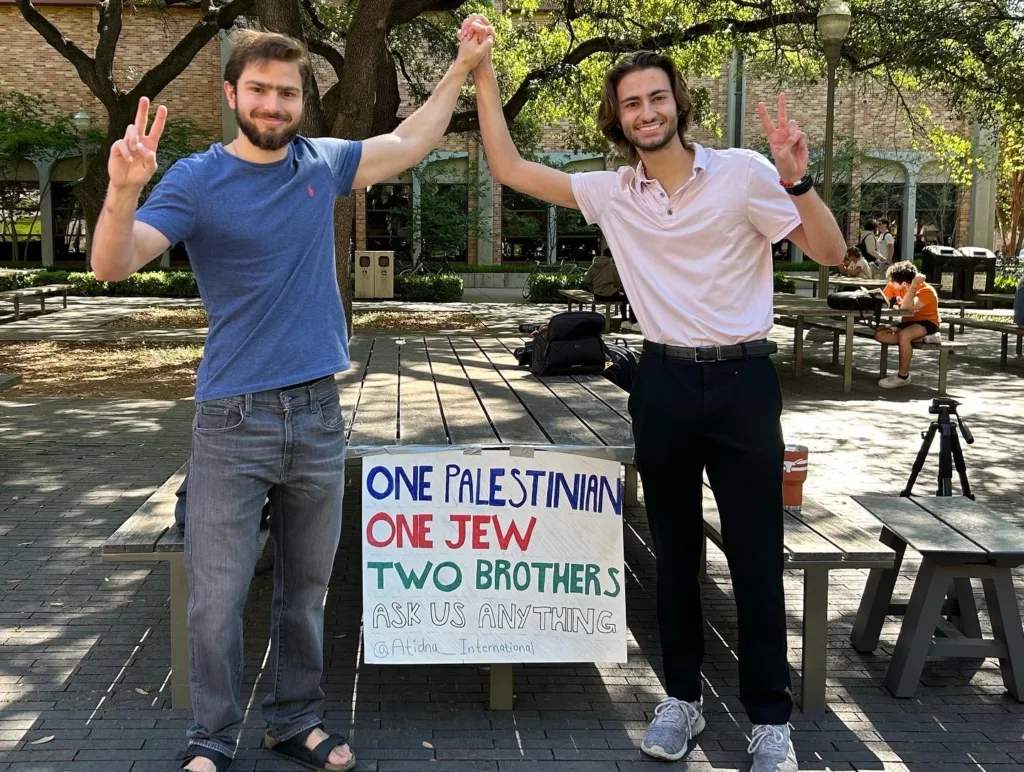
Atidna – meaning our future in a blend of Hebrew and Arabic – began with a conversation. Not a political argument or an ideological debate, but a moment of human connection.
“The story of Atidna is indispensably tied to my personal story,” Elijah tells The Greek Herald.
“Growing up in normative Jewish institutions, my only exposure to the Palestinian narrative was not from actual Palestinians, but rather from people who typically held negative or even outright racist sentiments against them.”
That changed in his teenage years when he met Ahmed – a young Palestinian wearing a keffiyeh.
“I correctly assumed he was Palestinian… I started off our first conversation by complimenting his keffiyeh. He told me it was his grandfather’s. I then remarked that the way he wore it heavily resembled, in style and appearance, a tallit — the Jewish prayer shawl. That moment sparked an hours-long conversation about our two cultures,” Elijah says.
A friendship with a Palestinian man impacted Elijah’s life.
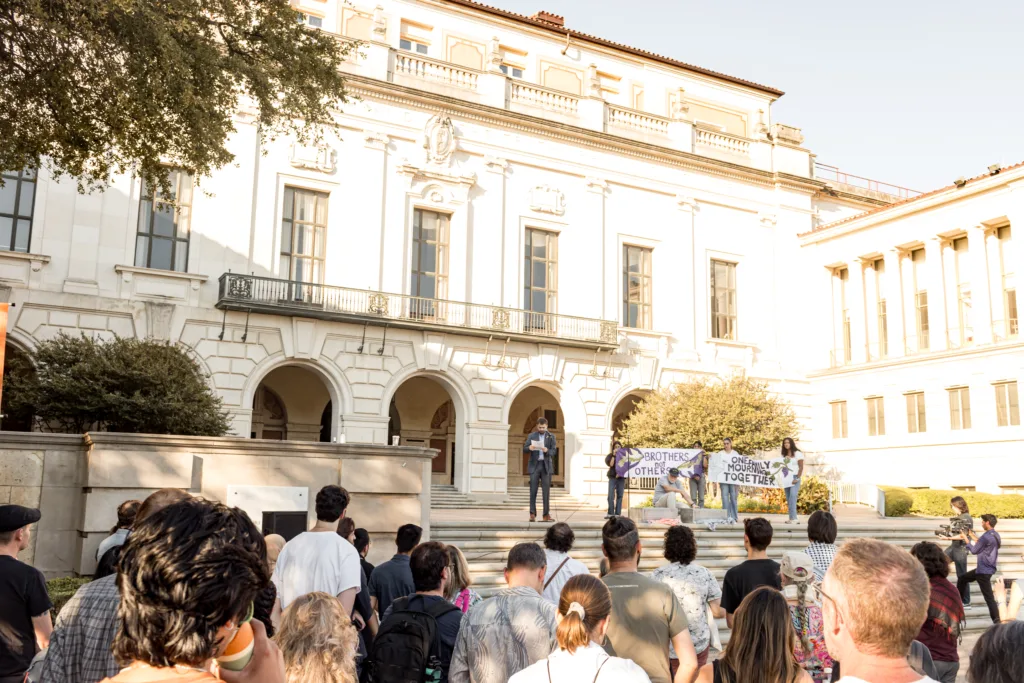
The impact of that conversation was profound: “By the end of it, we both came away with the conclusion that we were not ‘others’ but brothers.”
It was this deeply personal experience that planted the seed for what would eventually become Atidna.
“Ahmed and I were not unique. I was convinced that if our two communities could simply have civil and joint conversations like we did, the familial bond underpinning our relationship could be revealed to redefine our communities’ connection from one based on dehumanisation to unity,” Elijah says.
A divided campus, a unifying mission
When Elijah began studying at the University of Texas, he encountered a stark and painful reality.
“I quickly learned no space existed on campus for Jews, Arabs, Israelis, and Palestinians to even meet, let alone talk, with the so-called ‘other’,” he says.
“One of my earliest and most despondent memories as a Freshman was entering my first Middle East Studies class and seeing Jewish students and Arab students self-segregating to opposite sides of the classroom. This was sadly normative across America.”
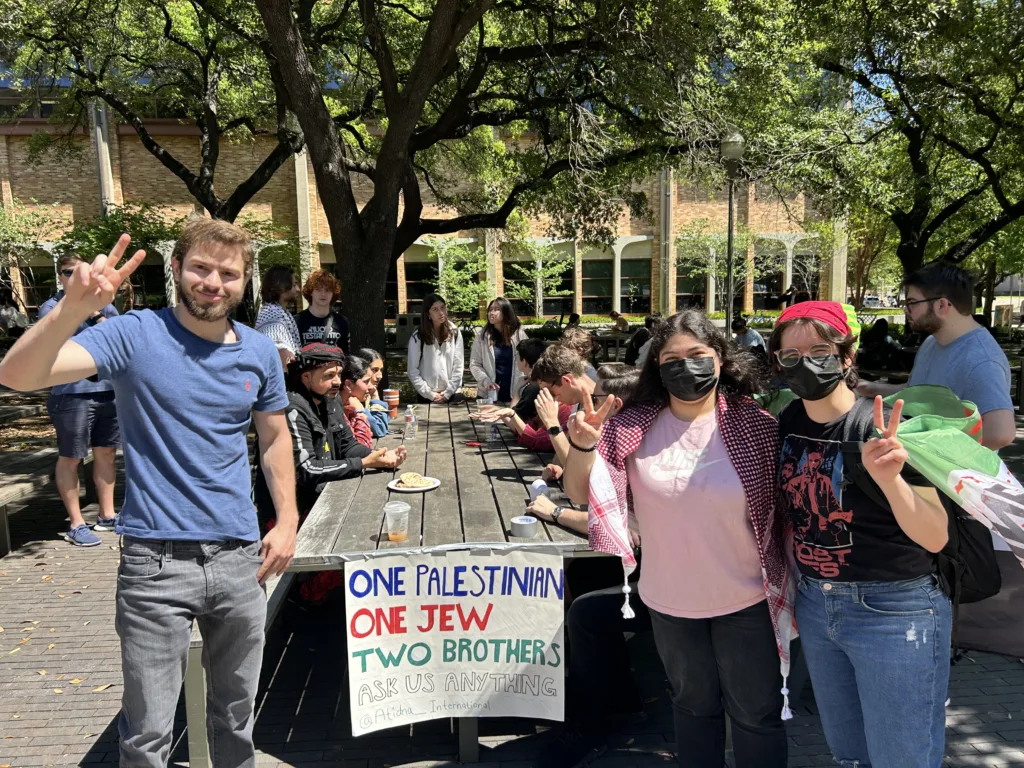
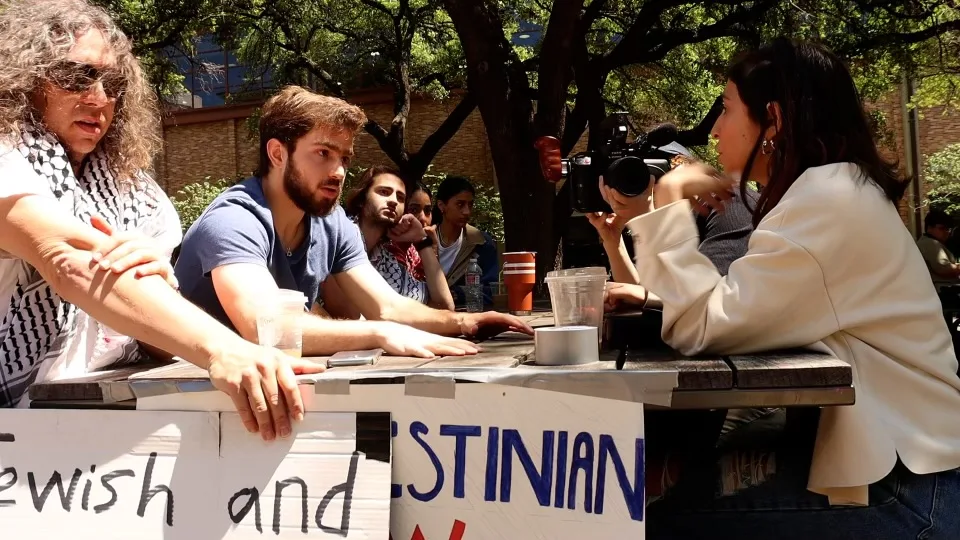
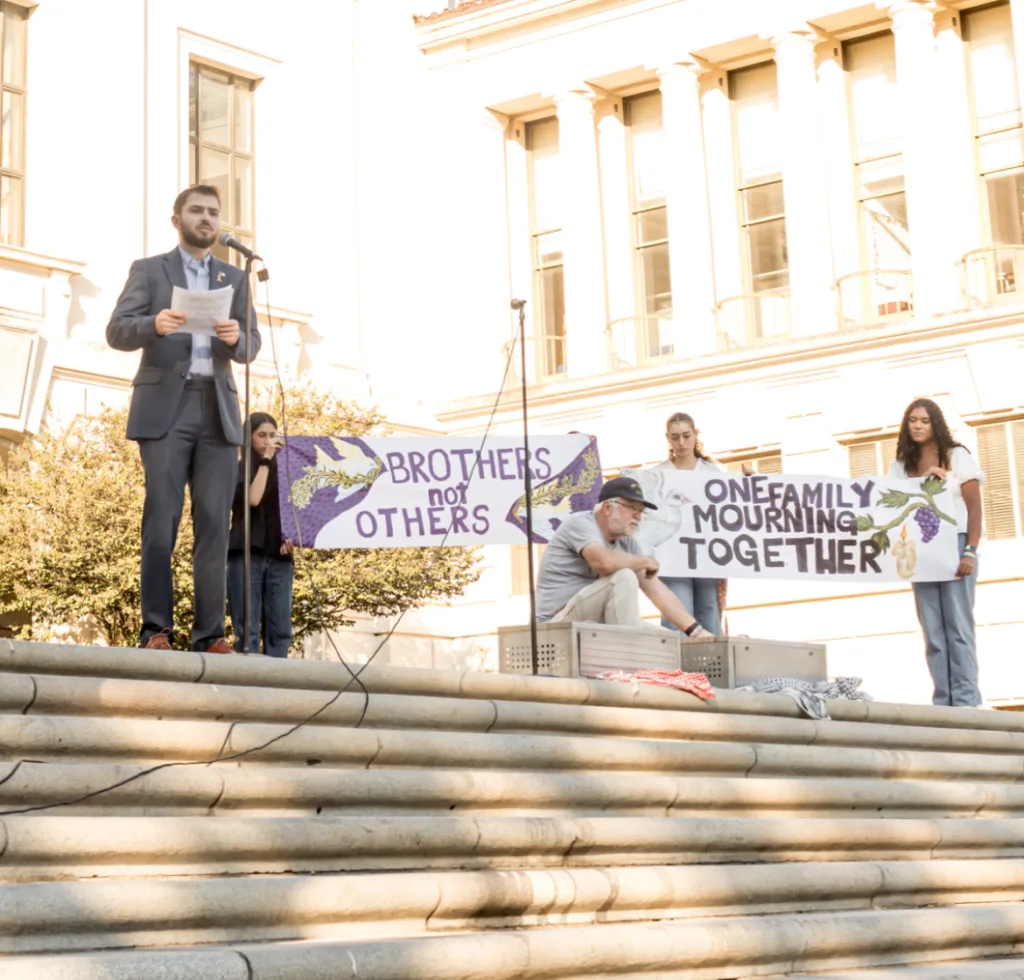
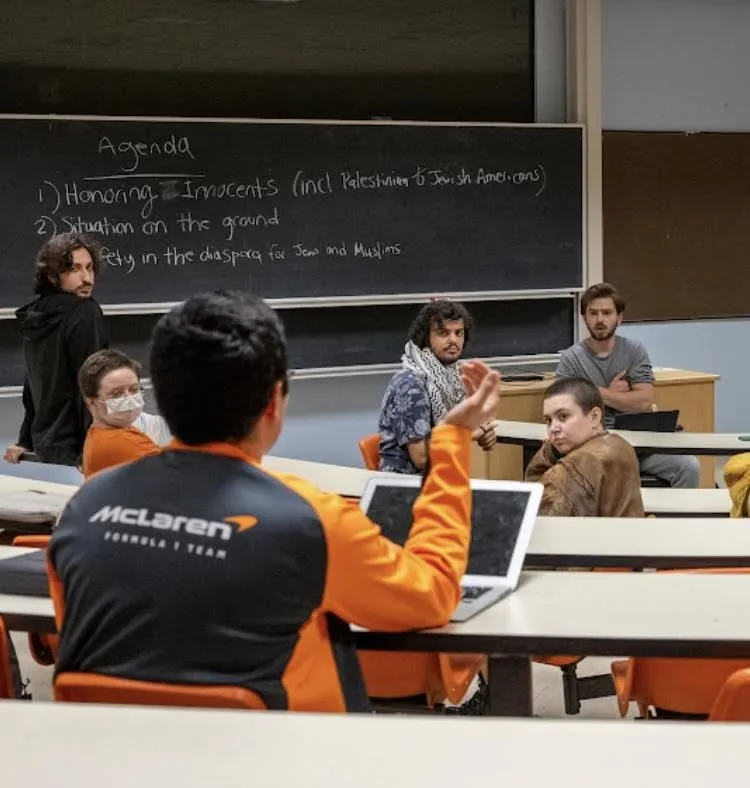
That moment became the catalyst for action. In 2022, Elijah founded Atidna as a non-profit organisation with two core goals: “Firstly, to solidify through peace events on campuses that Jews and Arabs are cousins, one family, and not inherent enemies. Secondly, to bring together both peoples through dialogue sessions on campus to have joint and civil conversations about anything and everything pertaining to Israel and Palestine.”
Atidna has grown significantly since it was founded in 2022.
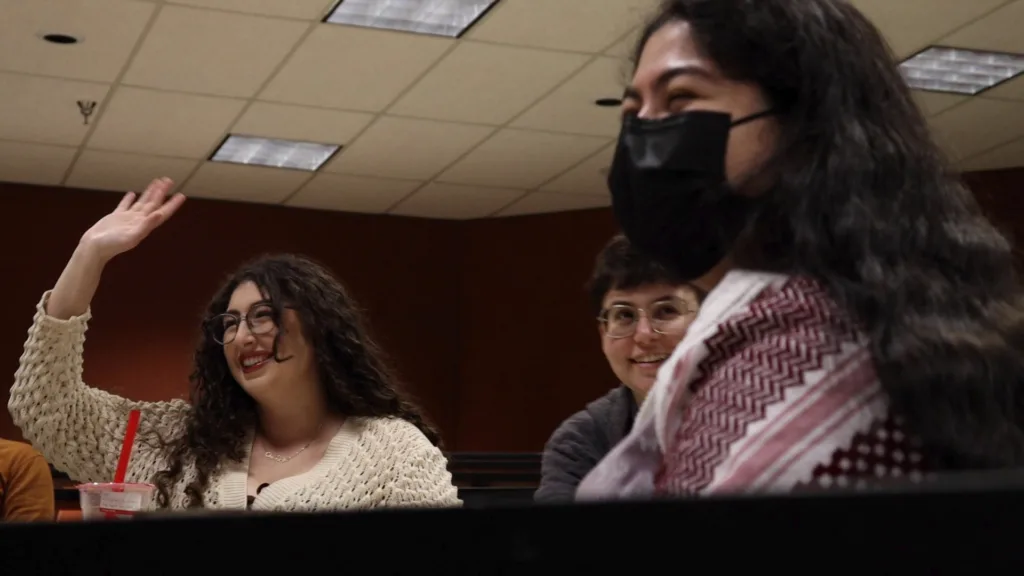
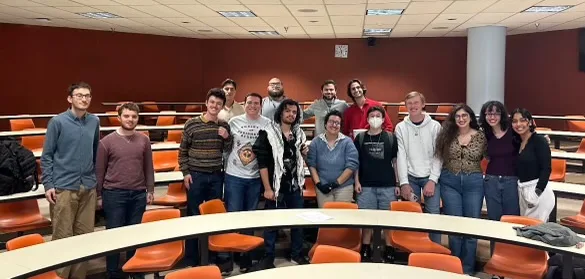
Since then, Atidna has grown rapidly, with chapters across ten university campuses and hundreds of students involved in dialogue, events and community-building.
“Atidna is the first and only student-led initiative on American campuses dedicated to bringing together our two peoples in dialogue on this divisive issue,” Elijah says.
A legacy of survival and resistance
Elijah’s activism is not only political, but ancestral. His identity is shaped by generations of survival and resistance.
“While my father’s Ukrainian and Polish Jewish family had many members who perished at the hands of the Nazis in concentration camps, my mother’s side holds stories of directly fighting and opposing Nazi oppression. My mother’s grandfather, who was of mixed Greek-Jewish and Greek-gentile ancestry, fought for the Greek resistance against Nazi occupation and racism,” Elijah explains.
Elijah’s activism is not only political, but ancestral.
These intertwined histories give Elijah a moral compass and a deep sense of purpose.
“These stories taught me that we have to both acknowledge one’s pain, trauma, and suffering while simultaneously fighting for a just and equal future. As a Greek Jew, I feel an ancestral obligation to fight for the oppressed in any context, especially my Palestinian brothers and sisters who now suffer under occupation,” he says.
“Just as my ancestors strove for equality and fought against injustices, I hope to continue their legacy through my efforts in joint dialogue and peace activism.”
Facing hostility with hope
Dialogue, however, does not come easily. Atidna has faced opposition from both Zionist and anti-Zionist student groups.
“At our UT chapter, both the primary Israeli and Palestinian student groups sent out messages to their members to not participate in Atidna’s dialogues due to issues of ‘being a possible platform for students to justify terrorism’ and ‘promoting normalisation’ respectively,” Elijah says.
Yet Atidna has persevered. “Despite disagreements being prevalent in Atidna spaces, most Jewish and Arab students come away from these conversations with many more understandings of commonalities and agreements between our two peoples than they previously imagined.”
The challenge grew more intense after the October 7 Hamas attack on Israel and the subsequent war in Gaza.
“After Oct 7th, both groups were more polarised than ever before on campuses. Sadly, some students in the Atidna sphere expressed that they no longer believed in peace and dialogue work at such a tense time. We even had Jewish and Arab officers resign from Atidna under the pretense they wanted to only focus on in-group activities for mourning and protesting,” Elijah says.
But rather than falter, Atidna expanded. “Our work grew immensely as many more Jewish and Arab students across the country gravitated to our initiatives by recognising that now more than ever, when blood, anger, and division are at their peak, is when we need to find solutions together.”
Seeds of change in the West Bank
In 2022, Elijah took his peace efforts to the heart of the conflict: the West Bank. There, he joined Roots, a unique initiative operating out of a shared space called Merkaz Karama – the Dignity Centre.
“Roots is the only West Bank-based organisation attempting to unify Palestinians and Israelis in the heart of the conflict through peace-building initiatives,” Elijah explains.
His most memorable experience? Leading Roots’ youth summer camp.
“This camp brings together 80 Israeli and Palestinian children for a week of fun and understanding the ‘other.’ I actually spent the week leading up to the camp single-handedly creating the first and only joint Jewish and Arab basketball court for the kids,” Elijah says.
“Basketball was a complete success at the camp and it generated immense personal satisfaction and hope seeing Israeli and Palestinian children bond through my favourite sport.”
Grassroots first, politics later
Elijah is part of a generation disillusioned with failed peace accords.
“I was born in 2002 and part of a generation raised amid the failures of the Oslo Accords,” he says.
“Many in my generation, especially the youth in Israel and Palestine, have become hopeless and radicalised as they have only seen destruction, death, and vitriol since their birth with no true outlet for peace.”
He argues that peace must begin from the bottom up. “A top-down peace resolution can only successfully and sustainably come about once a grassroots, bottom-up approach to peace is made the focus of Israeli-Palestinian relations.”
Elijah is part of a generation disillusioned with failed peace accords.
And division, he insists, cannot be the answer.
“Any solution predicated on division is doomed to fail from the start. Oslo, in its conception of ‘two states for two peoples,’ was guilty of this. Both peoples possess the inherent desire to access the entire land,” Elijah says.
He believes a shared future is the only way forward. “Without, at minimum, a solution predicated on freedom of movement, right of return, and equality for both peoples… a peaceful resolution will never be actualised.”
Diaspora youth must lead
Elijah places particular hope and responsibility on young people in the diaspora.
“Our generation will likely prove to be arguably the most important in the history of Israeli-Palestinian relations,” he says.
“Students, especially Jewish and Palestinian students in the diaspora who have the luxury of being removed from such daily violence, have a responsibility to have the tough conversations needed for ending the unholy evils plaguing our two peoples and working towards a joint future predicated on equality, freedom, liberty, and justice.”
His message to students? “Reach out your hand to the ‘other.’ Embodying the courage to reach out the olive branch to start a conversation is the first step to ending this dark and death-filled nightmare.”
Thessaloniki and the ethics of memory
Elijah’s Greek heritage continues to be a vital source of strength and inspiration. He looks to Thessaloniki – once home to a thriving Jewish community – as a model of pluralism and solidarity.
“Salonika, as it is called by Greek Jews, was a locality where a variety of ethnicities and languages could be heard on every other street corner,” he says. “It was a land of cosmopolitan tolerance.”
He recalls Archbishop Damaskinos, the head of the Orthodox Church of Greece during WWII, who defied Nazi orders.
“He publicly urged Greeks to hide Jews and used the church to issue falsified records to protect them from deportation,” Elijah says.
That legacy lives on in Elijah’s work. “My Greek and Jewish backgrounds undoubtedly instilled within me a sense of justice, empathy, and a desire for equality, just as my predecessors strove for.”
The courage to continue
As the bloodshed continues and division deepens, Elijah is clear about what peace demands: courage, persistence, and love.
“If we are guided by hate then we will all be blind; but if we are guided by love, then we can all see a bright future to work for together,” he says.
In the face of a conflict too often framed by fear and fatalism, Elijah is offering a different story – one in which the future is shared, the path is difficult, and peace is worth every step.
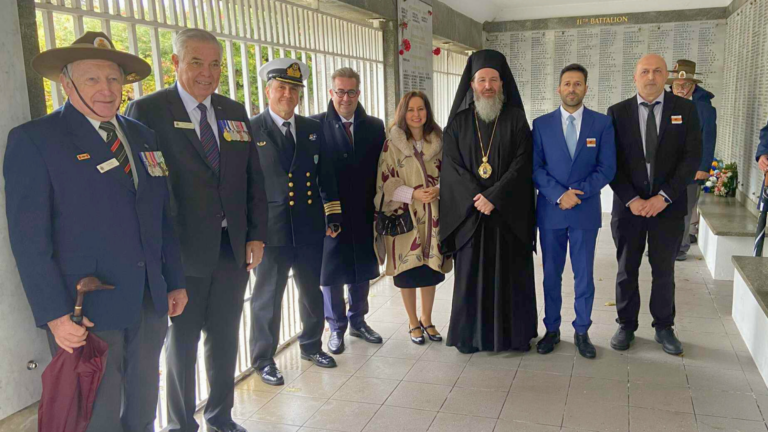
A solemn memorial service and wreath-laying ceremony was held this year at the State War Memorial in Kings Park, Perth, Western Australia, marking the 51st anniversary of the Turkish invasion of Cyprus, a sombre milestone in modern Hellenic history that continues to resonate deeply with Greek and Cypriot communities around the world.
Organised with the support of the Consulate of Greece in Perth, the event honoured the memory of those who lost their lives and acknowledged the enduring trauma left by the conflict that began on July 20, 1974.
The day, often referred to as the “black anniversary,” serves as a powerful annual reminder of the division of the island and the displacement of thousands of Greek Cypriots from their ancestral homes.
In a poignant post reflecting on the commemoration, the Consulate stated: “We hope we don’t have to experience another sad anniversary like this next year… Never forget… Long live Cyprus!”
The 1974 invasion by Turkish forces followed a coup d’état in Cyprus by pro-Greek elements, with the stated aim of protecting the Turkish Cypriot minority. The military intervention resulted in the occupation of roughly 37% of the island’s territory, a division that remains unresolved to this day despite ongoing diplomatic efforts.
Over 200,000 people were displaced, many remain missing, and the capital city of Nicosia remains the last divided capital in Europe.
For the Greek and Cypriot diaspora, particularly in Australia where a strong community presence continues to flourish, the events of 1974 are far from forgotten.
Each year, commemorations such as this one in Perth aim to honour the victims, advocate for justice, and remind future generations of the importance of historical memory.
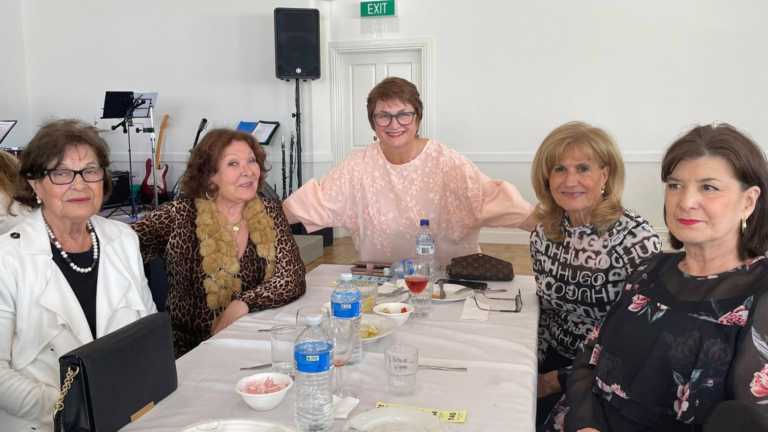
The Hellenic Macedonian Cultural Centre in Adelaide, South Australia was filled with warmth, tradition, and lively celebration on Sunday, August 3, as the Western Macedonian Brotherhood of Pavlos Melas hosted its much-anticipated annual Fasolada Day lunch.
The event, attended by members and friends of the Greek community, was a celebration of culture and camaraderie, centred around the humble yet beloved fasolada, a traditional white bean soup that evokes deep nostalgia for many.
Served as part of a generous four-course meal, the fasolada took centre stage, reminiscent of comforting Sunday lunches at Yiayia’s. The meal, prepared and served with heartfelt dedication, was praised for capturing the flavours and spirit of Greek tradition.
The day’s festive atmosphere was elevated by a live performance from the Floga Band, whose renditions of timeless Greek favourites inspired spontaneous dancing and spirited singing.
“Their music had everyone on their feet, dancing to songs that haven’t been heard live in years, a true soundtrack to our shared memories,” the Pan-Macedonian Federation of South Australia posted on social media.
Adding an element of surprise and cultural pride, the Flambouro Philanthropic Society S.A Dance Group delivered an impressive showcase of traditional Greek dances. Their performance drew enthusiastic applause and contributed to the vibrant energy on the dance floor.
“Bravo to the Western Macedonian Brotherhood of Pavlos Melas for hosting such a vibrant event that reminded us of the power of food, music, and culture to bring people together,” the Federation wrote.
With a nod to the values of filotimo and community, the 2025 Fasolada Day proved once again to be a cherished highlight in South Australia’s Hellenic calendar, blending food, music, dance, and deep cultural roots into a joyful celebration.
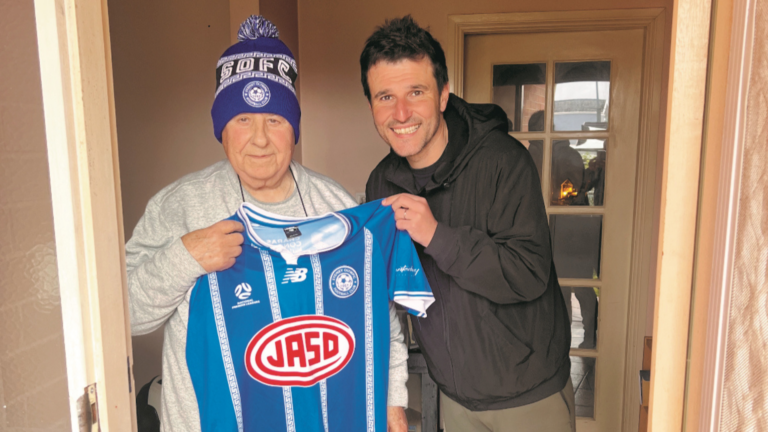
In a poignant show of appreciation beyond the scoreboard, Sydney Olympic head coach Labinot Haliti has paid a deeply personal tribute to one of the club’s most loyal supporters – Stefanos Avgerinos, who has stood by the team since 1957.
Amid a challenging season and recent scrutiny over on-field performance, Haliti took a heartfelt detour from the pitch to the living room of Mr Avgerinos’ home.
There, he presented the lifelong fan with a club jersey and beanie as a symbol of gratitude for nearly seven decades of unwavering support.
“For me, it’s not just about wins and losses,” Haliti told The Greek Herald.
“It’s about people like Mr Stefanos who have kept this club alive for decades. I’m proud to have given him a jersey and a beanie, but more than that, I’m proud to have met him. It’s in moments like these that you truly understand what football means.”
Mr Avgerinos, clearly moved by the visit, responded: “It’s a great honour. I didn’t expect it. The visit moved me deeply. Sydney Olympic is my life. I’ve been with the team since 1957, and as long as I can, I’ll continue to be. I thank the coach and everyone at the club.”
The symbolic visit highlighted a powerful message: that football is more than points on a table. It is about people, community, memory, and connection – values embodied by Mr Avgerinos, who has witnessed generations of club history from the stands and beyond.
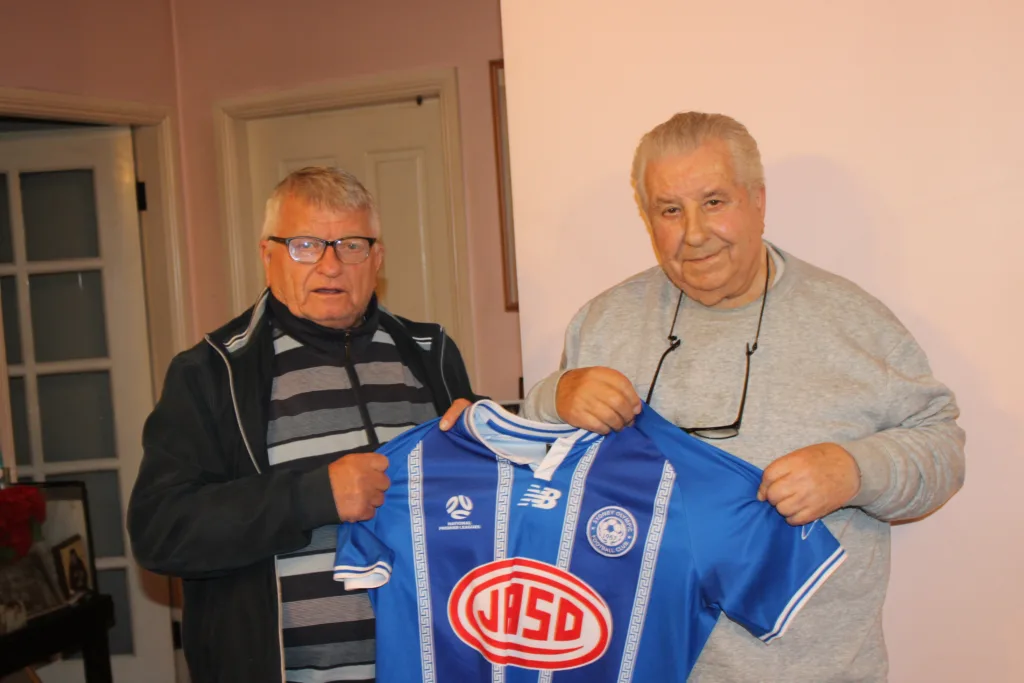
Also present was his close friend and fellow lifelong supporter, Kostas Sotos, who spoke with equal reverence about Avgerinos’ legacy.
“Stefanos is not just a fan. He is a part of this club’s soul. From him, I learned what faith means – what it means to love a team without expecting anything in return,” Mr Sotos said.
“I visit him as often as I can, not only because of our love for Sydney Olympic, but because it’s an honour to have such a man by my side. People like him should never be forgotten.”
In a sport often dominated by metrics and media pressure, Haliti’s gesture served as a reminder of football’s true essence – one defined by loyalty, humanity, and history. It was a moment that transcended results and reignited the spirit of what it means to belong to a club.