The parole review of Snowtown murderer James Spyridon Vlassakis will be conducted in private, after a watchdog ruled that South Australian law requires confidentiality in such cases.
At a preliminary hearing on Friday, former judge and review commissioner Michael David KC confirmed that the upcoming 5 December parole review – which could see Vlassakis become the world’s first paroled serial killer – must be closed to the public and media.
“Under the law, proceedings for this review must be heard in private… the press cannot come, I’m terribly sorry, in my view, private means private,” he said.
Vlassakis, 45, appeared via video link for the first time since his 2000s trial but cannot be described or photographed due to longstanding suppression orders. He spoke only briefly to confirm the video connection and to thank Mr David.
Vlassakis pleaded guilty to four of the eleven Snowtown murders, including those of his half-brother Troy Youde and stepbrother David Johnson, the only person killed inside the Snowtown bank vault.
His cooperation helped convict John Justin Bunting and Robert Joe Wagner, who are both serving life sentences without parole.
If released, Vlassakis will – it is believed – become the first serial killer globally to receive parole. His co-offender Mark Haydon, who helped cover up the crimes, was released in 2024 under strict supervision.
Defence counsel Lindy Powell KC told the hearing that the defence was still awaiting key Parole Board materials, while the commissioner confirmed he would publish his final decision after the December hearing, subject to confidentiality requirements.
The Australian Championship and Movember have launched a new fundraising initiative during the tournament’s inaugural season to change the face of men’s health in the Australian football community.
Building on a partnership confirmed at the Australian Championship season launch and built on shared values of connection and wellbeing, the campaign sets an ambitious goal to raise $500,000 across Football Australia and all Australian Championship clubs.
Every dollar raised will help fund programs that support men to stay mentally and physically healthy and ensure fewer lives are cut short for preventable reasons.
Through the Australian Championship, Movember is uniting players, coaches, officials, and fans to make a tangible impact by having conversations that matter and turning their passion for football into real change for men’s health.
Since its beginnings in Melbourne in 2003, Movember has grown into a global movement and the world’s leading men’s health charity. The organisation tackles key health challenges head-on, including mental health, suicide prevention, prostate cancer, and testicular cancer.
Backed by funds raised by the Movember community, the charity is harnessing the influence of the Australian Championship to help young men build stronger support networks, foster positive culture, and speak up about mental health challenges.
Join the movement and help raise $500,000 to change the face of men’s health
Sign up now at Movember.com and join Football Australia’s team HERE, or donate directly to one of the participating Australian Championship clubs below.
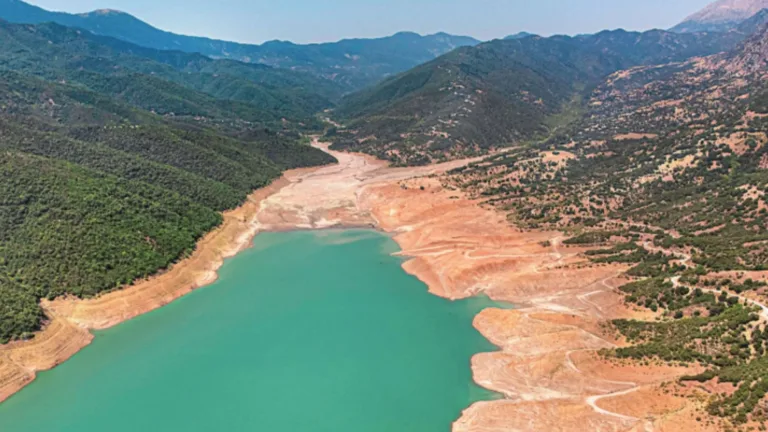
Greece has unveiled a €2.5 billion national plan to confront growing water scarcity and safeguard supplies for the coming decades, amid warnings that Athens could face drought conditions for the first time in 30 years.
The plan was announced by Prime Minister Kyriakos Mitsotakis and Environment and Energy Minister Stavros Papastavrou at the Athens Water Supply and Sewerage Company’s (EYDAP) 100th anniversary celebration.
Both leaders stressed that water will remain a public good and retain its reputation as among Europe’s highest quality.
At the heart of the initiative is a major river diversion project, redirecting part of the Krikeliotis and Karpenisiotis rivers into the Evinos reservoir, which provides water to the Greek capital. Scheduled for completion by 2029, it aims to secure Attica’s water supply for the next 30 years.
Papastavrou said the investment responds to worsening conditions caused by climate change, as Greece’s water reserves have reached near-historic lows.
The project will be supported by new wells in Mavrosouvala, Ymittos and Boeotian Kifisos, capable of supplying an additional 150 million cubic metres of water per year.
Two further medium-term projects are under consideration: a pipeline linking the external water system to desalination facilities, and a new desalination plant with a capacity of up to 87.5 million cubic metres annually.
The government also intends to expand the responsibilities of EYDAP and EYATH to include irrigation and to consolidate Greece’s 750 local water providers into a more efficient network.
At the event, Mitsotakis warned: “Attica faces a very big problem in terms of water supply if no drastic measures are taken. Hope is not a strategy and we have to be prepared for the worst-case scenario.”
He added that the river diversion will enable 200 million cubic metres of water to reach the reservoir “by natural flow, without pumping stations.”
“This project will ensure that for the next thirty years Attica will not face a water supply problem,” he said, recalling “the water supply crisis of the 1990s, which must never be repeated.”
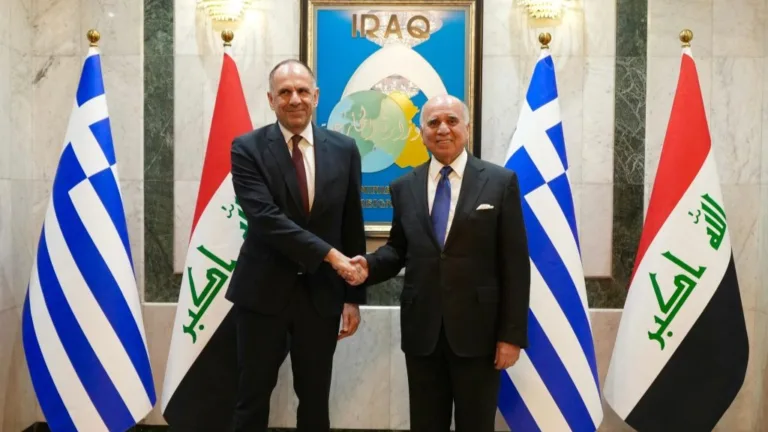
Greek Foreign Minister Giorgos Gerapetritis has announced that Aegean Airlines will launch the first-ever direct flight by a European carrier to Baghdad on 16 December 2025, marking a significant milestone in Greece–Iraq relations.
The new Athens–Baghdad route reflects a deepening of diplomatic and economic ties between the two nations.
Speaking alongside his Iraqi counterpart Fuad Hussein in Baghdad, Gerapetritis said: “I think this will substantially boost our people’s economic, but also cultural ties.”
📍Βαγδάτη | Επίσκεψη Υπουργού Εξωτερικών, Γιώργου Γεραπετρίτη, στο Ιράκ
📍 Baghdad | Minister of Foreign Affairs, George Gerapetritis’ visit to Iraq
Aegean Airlines already operates flights to Irbil, the capital of Iraq’s semi-autonomous Kurdish region, but had previously avoided Baghdad due to security concerns. The move follows improving stability and expanding international engagement in Iraq.
Hussein welcomed the development, noting that both countries are exploring new partnerships in agriculture, investment and tourism, and added that recent high-level visits from European leaders highlight Iraq’s “stability” and its “growing standing on the international stage.”
The announcement also coincides with Iraq’s plans to upgrade Baghdad International Airport, including a $764 million (€573 million) expansion contract with a consortium led by Corporacion America Airport and Amwaj International.
Iraq is meanwhile preparing for parliamentary elections on 11 November, with Prime Minister Mohammed Shia al-Sudani seeking re-election – a rare feat in post-2003 Iraq.
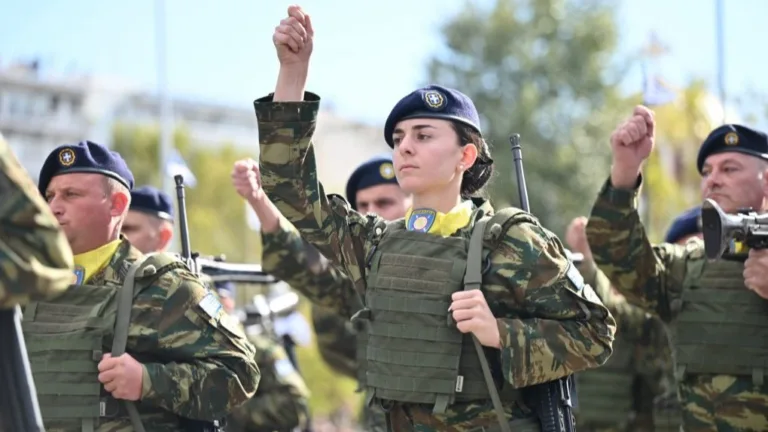
Greece will introduce voluntary conscription for women in 2026, with the creation of a pioneering unit of 100 to 150 recruits, Defence Minister Nikos Dendias has announced.
Speaking at Naftemporiki’s 4th Economic Conference, Dendias said: “We are starting the voluntary conscription of women in 2026. We will form a unit of 100 to 150 volunteers to further strengthen the connection between women and the Armed Forces.”
Ξεκινάμε το 2026 την εθελοντική στράτευση γυναικών. Θα δημιουργήσουμε μια μονάδα 100-150 εθελοντριών για να μπορέσουμε να συνδέσουμε τις γυναίκες ακόμα περισσότερο με τις Ένοπλες Δυνάμεις. Διότι στα επαγγελματικά μας στελέχη είμαστε αρκετά καλά. Το 17% των στελεχών των Ενόπλων… pic.twitter.com/h2LTyL9JUP
Currently, women comprise around 17 per cent of the Greek Armed Forces, a figure that aligns with the global average.
However, Dendias stressed the need for further progress, saying: “We must go one step further – to create the necessary infrastructure, as well as the mindset and culture, so that if ever needed, women can serve alongside men in the Greek Armed Forces.”
The move marks a significant step towards gender inclusion within Greece’s military structure, signalling a broader effort to modernise defence policy and expand opportunities for women in uniform.
Football fans are in for a treat on Saturday, November 1, as Sydney Olympic and South Melbourne – two of Australia’s most storied Hellenic-heritage clubs – reignite their rivalry at Netstrata Jubilee Stadium for another thrilling chapter in the Australian Championship.
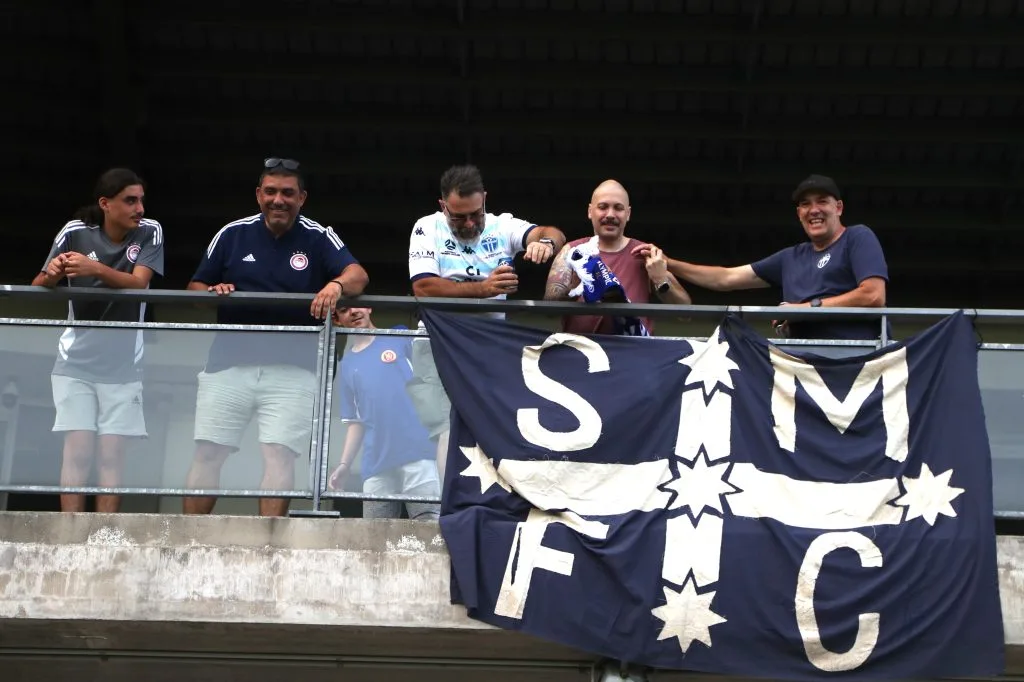
South Melbourne supporters in full voice during The Greek Herald Cup at Jubilee Stadium – when the two Greek-Australian giants last met in Sydney. Photo: The Greek Herald / Andriana Simos.
This weekend, the rivalry returns home to Sydney – and it’s more than just football. Gates open at 2:15 p.m., with kick-off at 3:15 p.m., and fans are invited to enjoy a full day of Greek spirit, family fun, and sporting pride.
A celebration of football and community
Before kick-off, George Karantonis will perform the Greek and Australian national anthems, while Marios Evripidou will ignite the crowd with live bouzouki performances – filling the stands with rhythm, energy and kefi before the match, at halftime and after the final whistle.
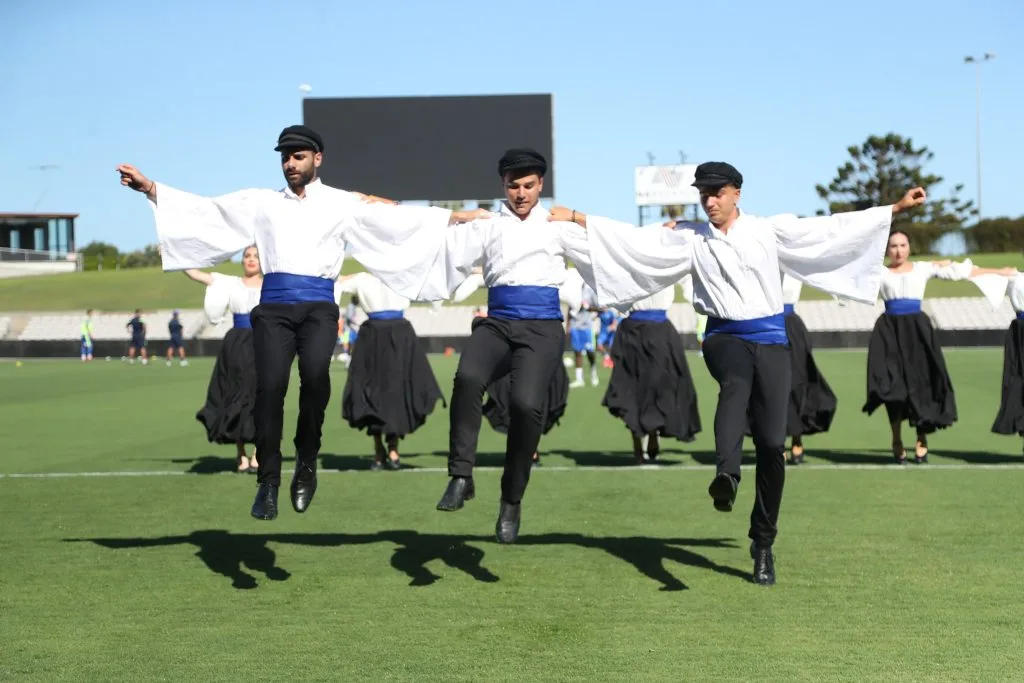
Adding to the spectacle, there will be Greek dancing, traditional BBQ aromas, ice-cream stalls, and activities for children including free face painting, hair braiding, and football skill stations.
Greek dancers to take centre stage, setting the rhythm and spirit for Sydney Olympic’s clash against South Melbourne. Photo copyright The Greek Herald / Andriana Simos.
The stadium will come alive with blue and white flags, music and cheer – transforming Jubilee into a vibrant celebration of Greek culture and football passion.
Sydney Olympic President Damon Hanlin says the match is about more than rivalry, “Whenever we face South Melbourne, there’s extra energy in the air. It’s a rivalry built on respect and history, but our focus is clear – to play strong, smart football and make Jubilee a fortress for our supporters.”
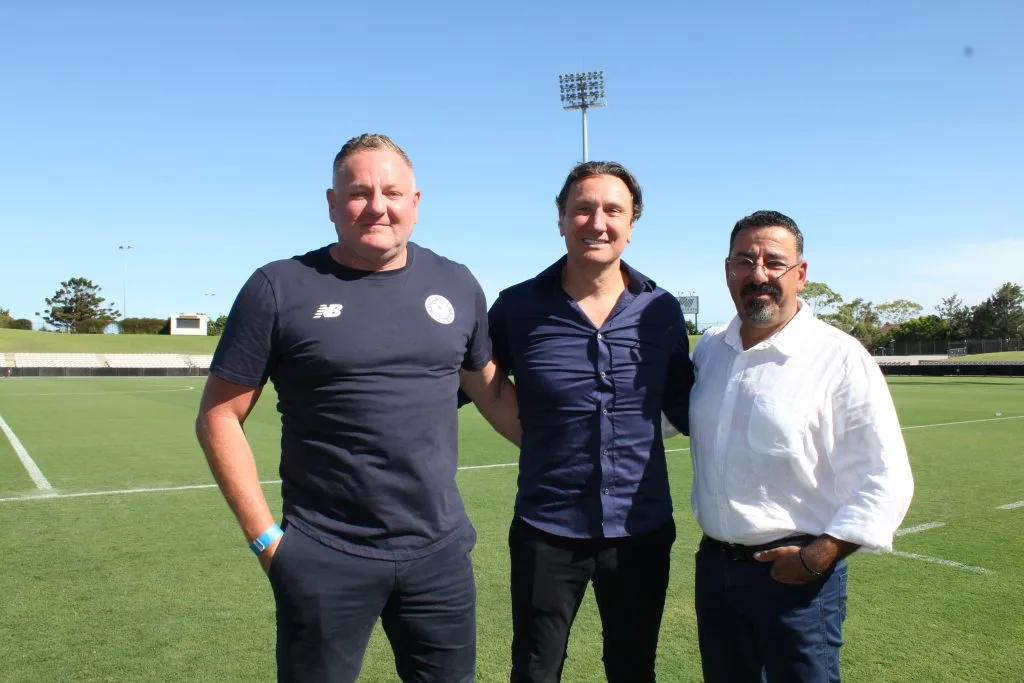
L to R: Sydney Olympic President Damon Hanlin, South Melbourne Co-Presidents, Bill Papastergiadis and Andrew Mesourouni. Photo: The Greek Herald.
Legends and VIP event
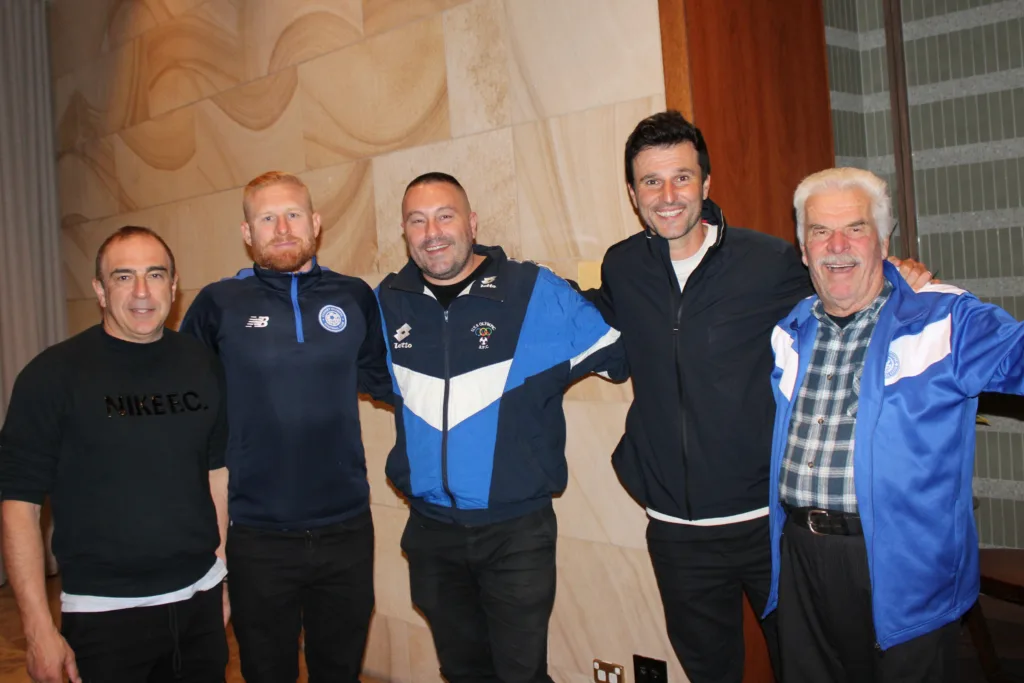
After the final whistle, celebrations will continue in the Captain’s Lounge with a special VIP reception honouring Sydney Olympic’s legendary players and officials – including Peter Katholos, Chris Kalantzis, Jason Culina, Harry Michaels, Pablo Cardozo, Roger Sleeman and many others who have proudly worn the blue and white.
The evening will feature food, drinks and tributes, creating a nostalgic atmosphere that bridges the club’s proud past with its exciting present.
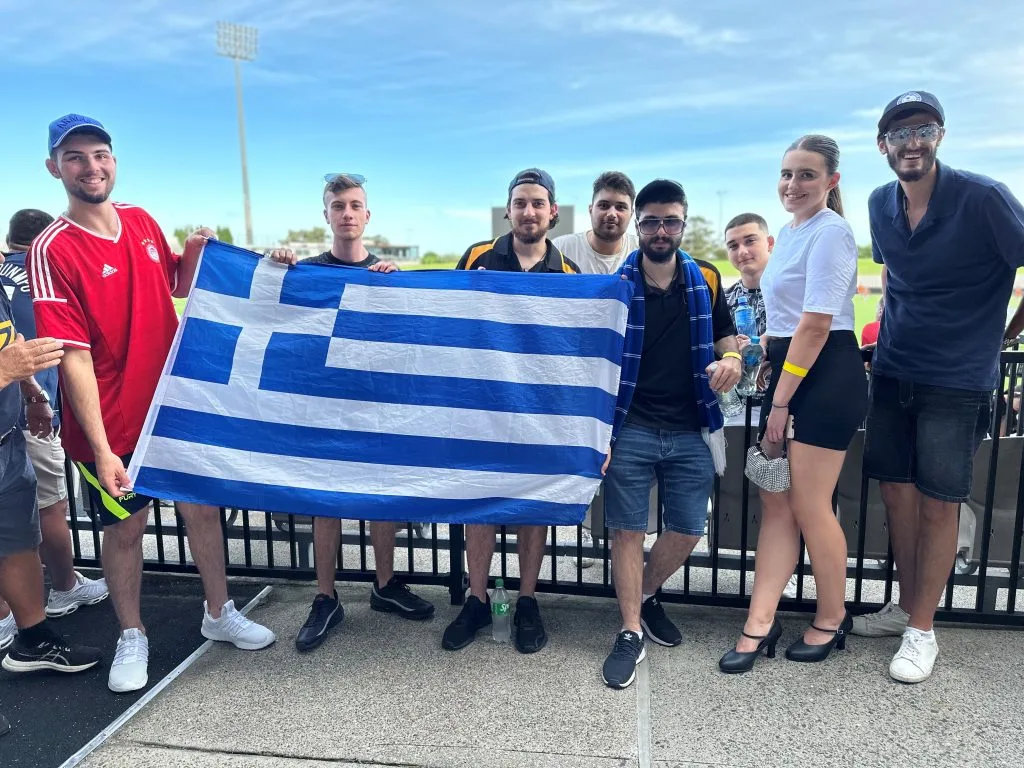
Young fans waving the Greek flag at The Greek Herald Cup in 2024 — capturing the pride and passion that continue to unite generations of supporters. Photo: The Greek Herald.
A rivalry that defines generations
With South Melbourne currently leading Group A of the Australian Championship and Sydney Olympic chasing valuable points, the stakes are high – but so is the excitement. Fans from both Sydney and Melbourne are expected to fill Jubilee Stadium in a sea of blue and white, rekindling a football rivalry that has defined generations.
Bring your family, your flags, and your passion and be part of another unforgettable Sydney Olympic vs South Melbourne derby this Saturday at Netstrata Jubilee Stadium.
Event details:
Date: Saturday, November 1
Venue: Netstrata Jubilee Stadium, Kogarah
Gates Open: 2:15 p.m.
Kick-off: 3:15 p.m.
Entertainment: Live bouzouki music by Marios Evripidou, national anthems by George Karantonis, Greek dancing, food stalls, kids’ activities and more.
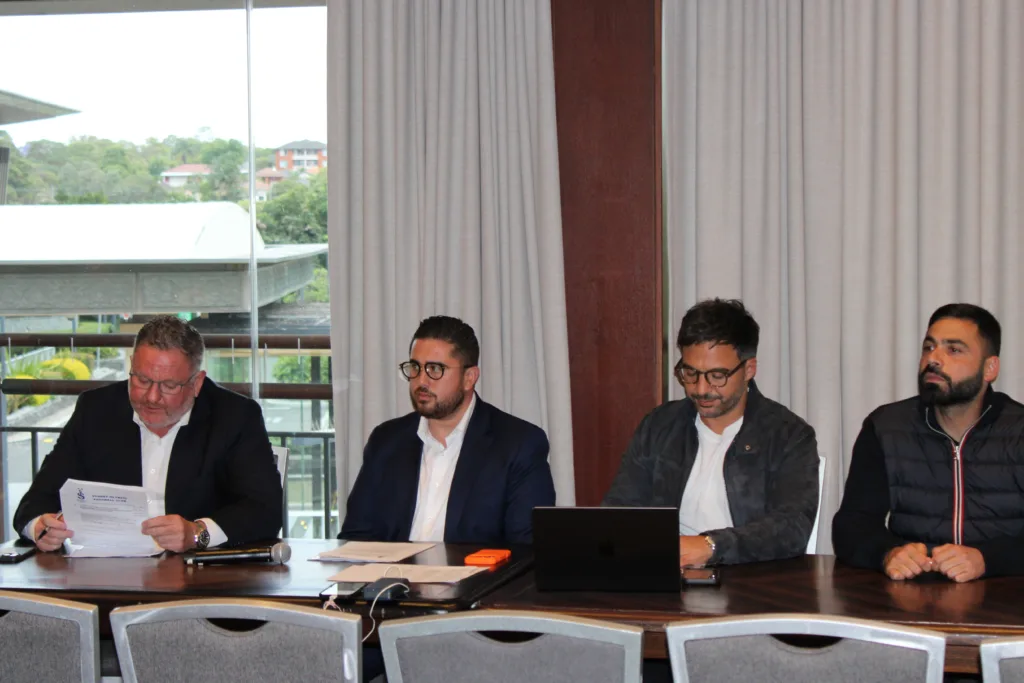
Sydney Olympic FC held its Annual General Meeting on Tuesday, October 28, where President Damon Hanlin and the board presented a wide-ranging update on the club’s future direction.
The meeting covered the introduction of an academy-first strategy, debate over funding and property proposals, and discussion of the club’s recent logo controversy.
Hanlin confirmed the club remains solvent and set out an academy-first approach to its NPL program, with NPL men returning to Belmore Oval in 2025.
While reaffirming his commitment to transparency and sustainability, Hanlin also acknowledged the challenges of running a modern football club amid rising costs and online misinformation, calling for unity and renewed community engagement.
Governance and board
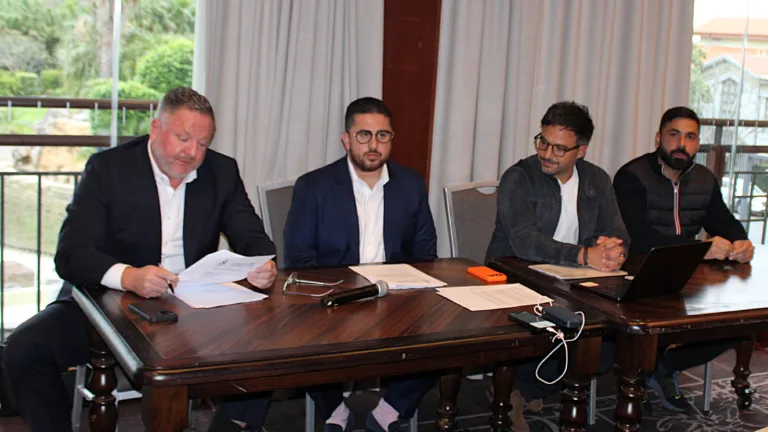
Hanlin chaired the meeting and named board members Matthew Phelps, Chris Charalambous and newly appointed director Rodolf Salem.
(L-R) Damon Hanlin, Matthew Phelps, newly appointed director Rodolf Salem, and Chris Charalambous.
Salem said he brings structure and operational discipline from technology and football administration: “What I can bring to the club is structure, growth and revenue focus.”
Charalambous noted his long-running work across youth pathways and commercial streams, saying the board “works constantly behind the scenes” and that running the club “takes daily effort and personal sacrifice.”
Finances and scale required to compete
Hanlin said the club owes no money and reiterated that his personal financial contributions over the years amount to millions of dollars as sponsorship, not loans.
He explained that to perform at peak and compete at the top level of the NPL, clubs typically spend between $2.2 million and $2.7 million per year, while Sydney Olympic’s first-team spend this season was about $780,000.
“Money buys competitiveness in the NPL – but it’s not sustainable without purpose,” he told members.
NPL strategy: academy-first
Given the cost pressures and limited prize money, Hanlin said the board intends to steer the club toward an academy-centric model, focusing on youth development and long-term pathways rather than short-term results.
He invited members to form a new NPL committee to manage the senior program’s daily operations, with the board to remain hands-off, “Show us the committee, we’ll meet within a week.”
Hanlin said that while members were welcome to take the initiative, any new committee would also be expected to manage its own finances and sponsorships, noting he would no longer personally fund the senior program.
“If people think they can do it better, then step up and do it – but understand what it takes,” he said.
National Second Tier and FA support
Hanlin said the new Australian Championship (National Second Tier) represents a genuine pathway for player development and the potential to generate future transfer revenue as the competition matures.
He estimated an eventual operating cost of around $400,000 and acknowledged Football Australia’s financial contribution in the first season, including travel and accommodation support and direct start-up investment to help participating clubs establish the league.
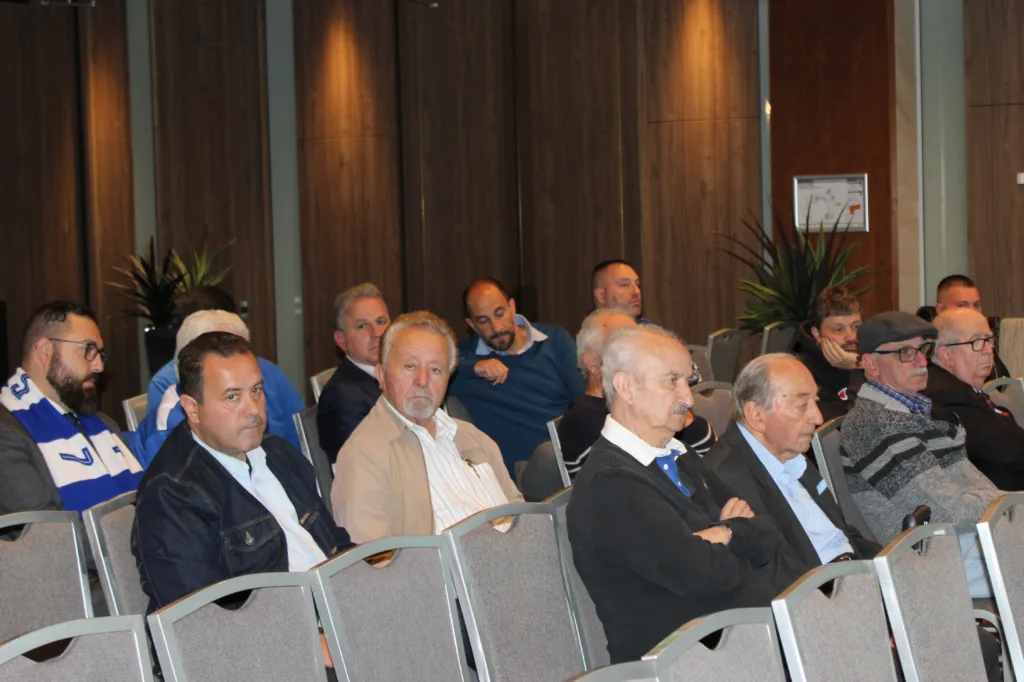
Sydney Olympic FC AGM members.
Licensing model to support club income
Hanlin also revealed that a licensing arrangement will be established between the Championship team and the Sydney Olympic membership club, allowing the use of the club’s name and values under a formal agreement.
The structure is designed to ensure that income generated at national-competition level flows back to the membership base, supporting youth and community programs.
Player movement and compensation settings
Members discussed the loss of juniors to A-League academies and the current Football NSW transfer cap of $6,000, with no compensation for players who leave before the age of 18.
Several attendees said these rules discourage investment in youth, with the board agreeing the system is flawed but reaffirming it will comply while continuing to advocate for reform.
Hanlin described the penalty as “an overreach”, while acknowledging the club’s responsibility and confirming that its governance processes have been rectified.
While discussion became heated at times, Hanlin appealed for unity: “We all want the club to succeed, but it takes more than just opinions – it takes commitment.”
Venues and facilities
The NPL men’s seniors will return to Belmore Oval in 2025, while other grades will remain at The Crest due to works at Peter Moore Field.
Hanlin confirmed the club resolved a tenancy dispute over the canteen at Belmore, with board member Charalambous credited for recovering and re-establishing operations that are now generating around $100,000 in annual revenue.
Community engagement
Community and school visits continue under club captain Ziggy Gordon, who leads the club’s outreach to local schools and festivals. Hanlin said such engagement “takes time and money” but remains important for strengthening grassroots ties.
One long-time supporter reflected on shifting community dynamics: “In the old days the Greek community needed Sydney Olympic; they don’t need it anymore.”
Others countered that a vocal minority distorts perceptions, citing around 1,300 spectators at the club’s first NST home match in 21 years as evidence of continued passion.
Brand and logo: Olympic rings controversy
Hanlin addressed the club’s new logo following a member survey. He said the final design – featuring a stylised ‘S’ and torch – has Football Australia approval and is being processed by the club’s trademark lawyers.
The discussion followed international headlines after the Australian Olympic Committee (AOC) objected to the club’s initial version, which included the Olympic rings.
The club has since updated its imagery to remove the rings from online platforms, though the Olympic rings remain printed beneath the back collar of the rebranded jerseys. It was not discussed whether those jerseys will be reproduced, however the club has reverted to its original jersey in its most recent NST match.
Social media: misinformation called out
Hanlin and several speakers raised concern over a Facebook group posing as a supporter forum that, according to attendees, regularly spreads misinformation and hostility toward the club and its leadership.
The board urged members to rely on official channels for updates and to channel their energy into helping the club move forward.
Facilities and long-term assets
Hanlin said the club is exploring credible partnership or investment proposals that could deliver a permanent home base and recurring revenue, including property and venue ventures.
He revealed that he had previously secured an option over a site in Moorebank and invited members to take a 25 per cent share if they could raise $4 million to activate the acquisition.
“It’s a genuine opportunity – but only for those able to complete,” he said, noting that any discussions would proceed under non-disclosure agreements (NDAs) and require proof of funding.
During this discussion, reference was made to both the Cyprus Club NSW and the Hellenic Village Ltd in Sydney’s south-west – a property recently sold for $119.5 million, as previously reported by The Greek Herald.
The Hellenic Village is currently embroiled in a dispute over how the proceeds from that sale should be distributed among its 21 Greek community associations, with several unit-holders seeking direct payouts rather than reinvestment through the Village’s structure.
A member present, who also serves as president of the Hellenic Village, suggested during the AGM that around $100 million could be available when Hanlin asked if members had the $4 million required for the Moorebank investment.
However, board member Salem questioned the validity and authority of such an offer, noting that any proposal would first require the endorsement of the Hellenic Village board and its unit-holders. Salem added that similar suggestions have been made in the past but cannot be entertained until proper governance steps are followed – a point broadly supported around the room.
What’s next: committee call-out
Hanlin confirmed the club will convene a meeting within a week with those who nominated for the senior NPL committee, aiming to clarify responsibilities, budgets and timelines ahead of 2025.
“It’s been ten years of hard work,” Hanlin said. “We’ve kept the club alive through a lot of challenges, but it takes real commitment from everyone.”
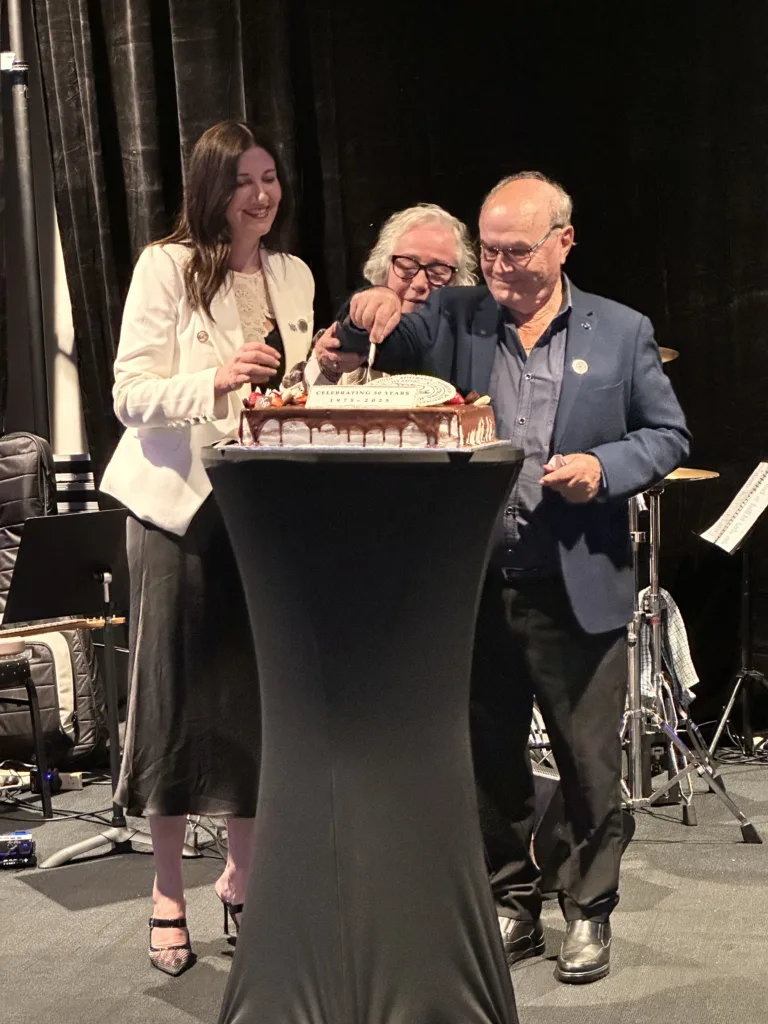
The 50th anniversary of the Navarino (Pylion) Society of South Australia was marked with a night of pride, nostalgia, and optimism on Saturday, 25 October 2025, at the Adelaide Comets Football Club.
Guests gathered for an evening of traditional Greek music and dancing, a Greek-inspired banquet, and live entertainment by the Enosis Band, celebrating half a century since the Society’s founding in 1974.
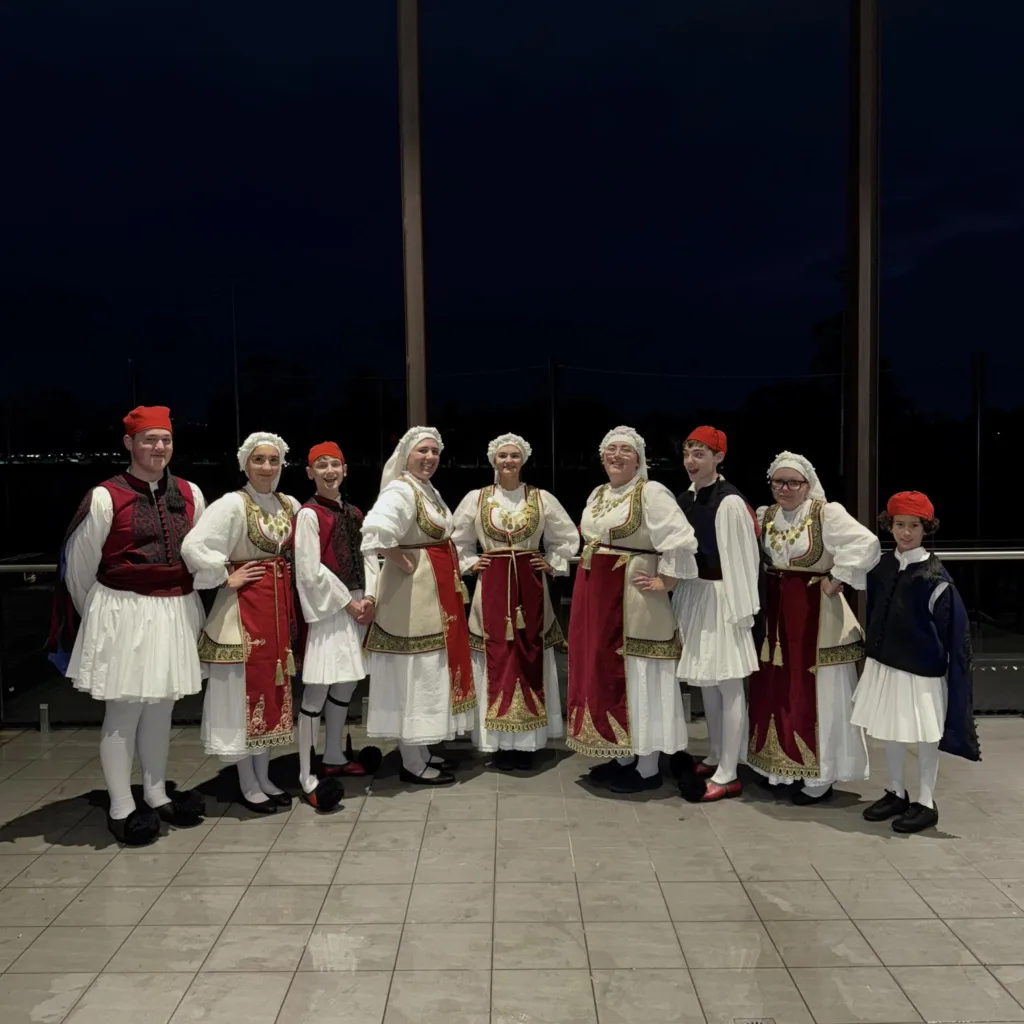
Among the night’s highlights was a captivating performance by the Greek Orthodox Community of South Australia Dance Academy’s intermediate dancers, whose energy and grace reflected the enduring spirit of Hellenic culture in South Australia.
Their dances, echoing the rhythms of Pylos and the Peloponnese, drew heartfelt applause and symbolised the intergenerational transmission of Greek tradition – a living testament to what the Society has stood for over five decades.
Navarino in Greek memory and history
The name Navarino itself carries deep historical meaning, forever linked to one of the most decisive victories in Greece’s modern story.
The Battle of Navarino, fought on 20 October 1827 in the bay now known as Pylos, stands as a cornerstone of Greek independence and a defining moment in Europe’s naval history.
At a time when the Ottoman Empire and its Egyptian allies threatened to extinguish the Greek revolution, Britain, France, and Russia intervened under the Treaty of London (1827), sending a combined fleet commanded by Admiral Sir Edward Codrington to enforce peace. When a Turkish vessel opened fire, the Allies responded in a four-hour engagement that annihilated the Ottoman–Egyptian fleet — the last major battle fought entirely under sail.
The victory transformed the course of the Greek War of Independence (1821–1832). Within ten months, Ottoman forces began withdrawing, and by 1832, the independent Kingdom of Greece was formally established.
Honouring a 50-year journey
The evening began with a warm welcome from Councillor Mary Couros, President of the Pylion Society of South Australia, who spoke with pride as she reflected on both the community’s achievements and her personal connection to its history.
She began by acknowledging the many special guests in attendance, including the Mayor of the City of West Torrens, Michael Coxon, founding members, past and present committee members, and the many friends and supporters of the Pylion Society who have carried its mission forward through the years, and reflecting on the Society’s origins:
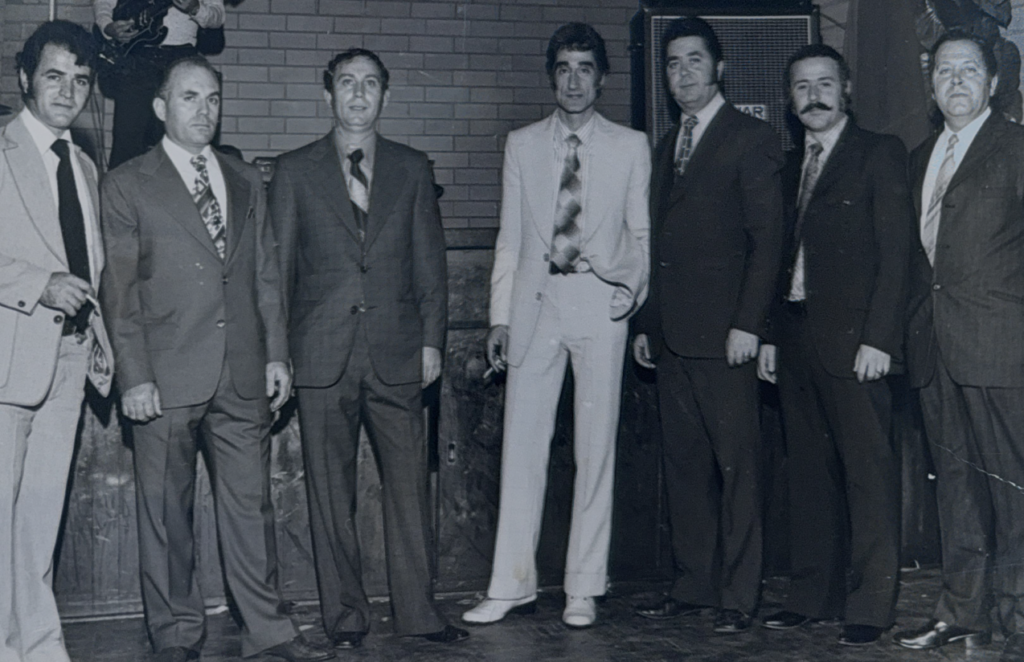
“Back then, five remarkable men came together with a shared dream: John Papanikolopoulos, Sotirios Tertipis, Constantinos Dongas, Peter Adamopoulos, and Stavros Karras – later followed by Stellios Tsonis and John Mirsirlis. They formed what we now proudly know as the Pylion Society of South Australia ‘Navarinon’…” she said.
The founding vision and its enduring meaning
Councillor Couros paid tribute to the Society’s founding members who, she noted, didn’t just form a committee; they built a foundation – one rooted in respect, friendship, and cultural pride.
“The founding members sought to create a place where Greek migrants from Pylos and surrounding regions could gather, support each other, and keep their traditions alive in a new country,” she said.
“Their vision was simple yet powerful: to preserve our customs, celebrate our shared history, and pass on the essence of our homeland to future generations.”
Her reflections captured how the Society served as a cultural anchor for those who left Greece seeking opportunity in Australia, and how its members created a new home while never forgetting the old one.
Looking toward the next 50 years
As the night continued, Councillor Couros highlighted that the heart of the Society’s success lies not in its longevity alone, but in the people who sustained it, and the drive to preserve it for the future.
“Half a century later, the Pylion Society continues to embody those founding principles… So, as we celebrate our 50th anniversary, let’s ask ourselves: what will the next fifty years look like?” she said.
“To me, it’s about engagement – inspiring younger generations to lead with creativity and pride. It’s about connection – strengthening ties with other Greek and multicultural organisations in South Australia. It’s about preservation – keeping our language, music, food, and traditions alive in meaningful ways. And it’s about legacy…”
The evening closed on a festive note. Fifty years on, its legacy continues – carried by those who remember where it began and who remain committed to where it will go next.
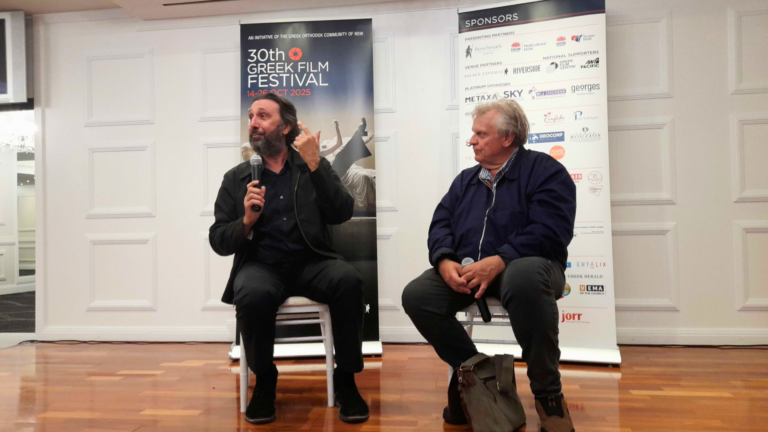
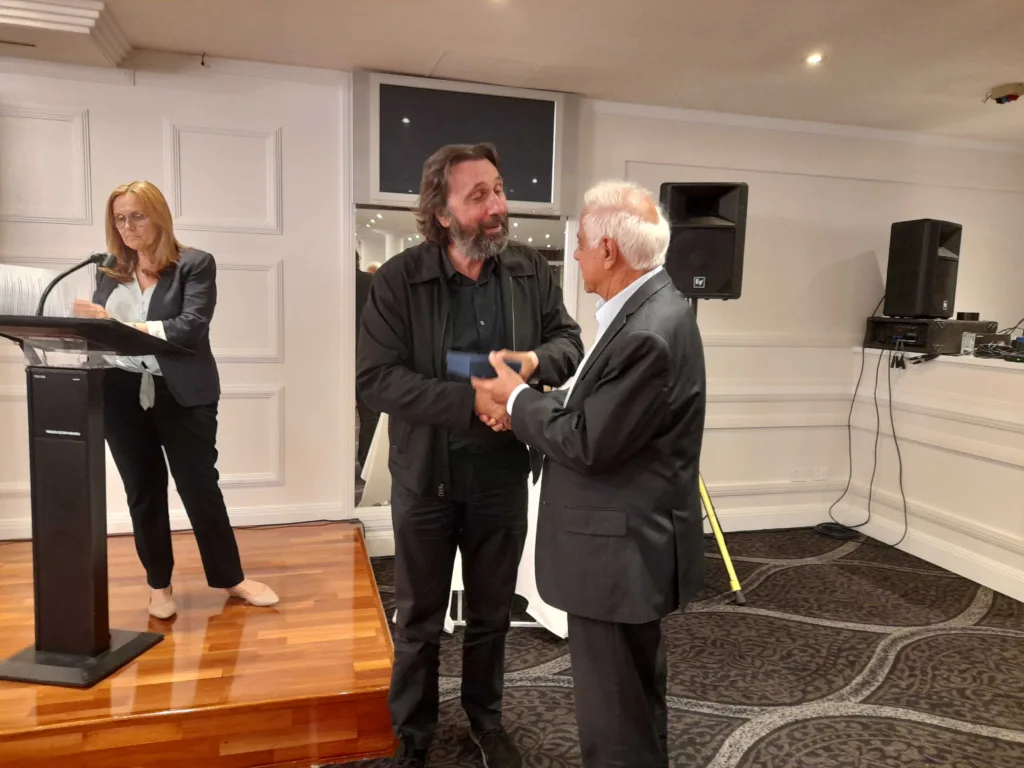
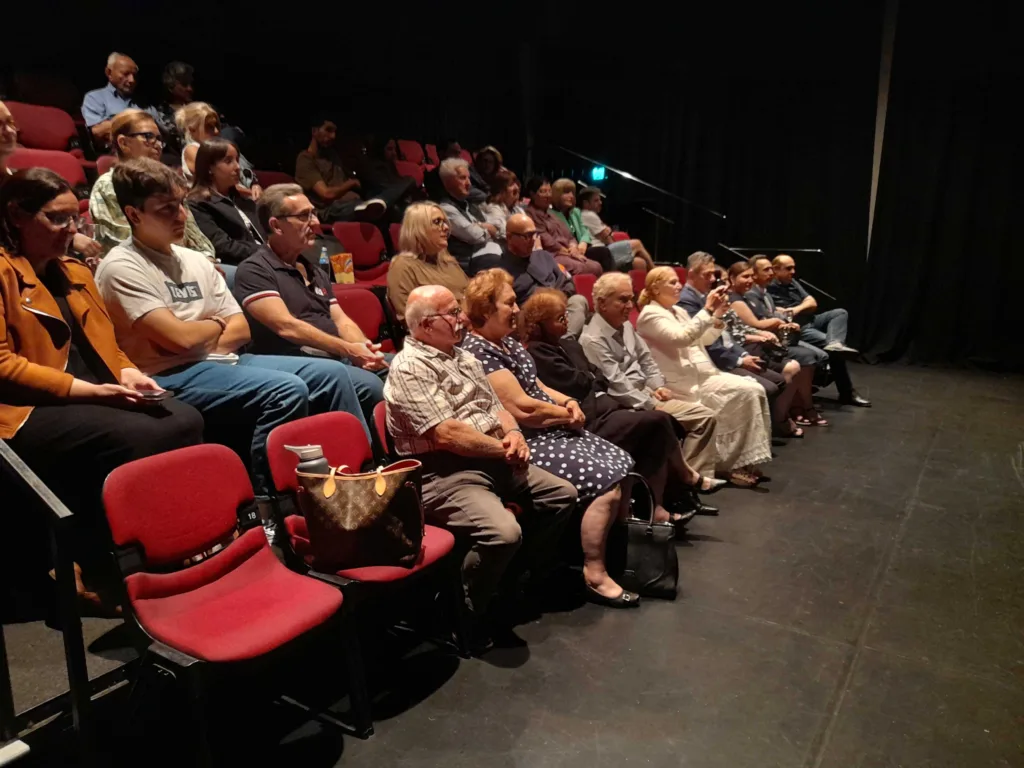
Acclaimed Greek filmmaker Renos Haralambidis concluded an insightful and warmly received visit to Sydney, which featured a retrospective of his entire body of work as part of the 30th Greek Film Festival of Sydney.
Across four packed days, the pioneering director engaged audiences in deep discussions about his career, the evolution of his films, and the nature of time itself, leaving an indelible mark on the local Greek community.
The retrospective begins: From ‘Cheap Smokes’ to ‘No Budget Story‘
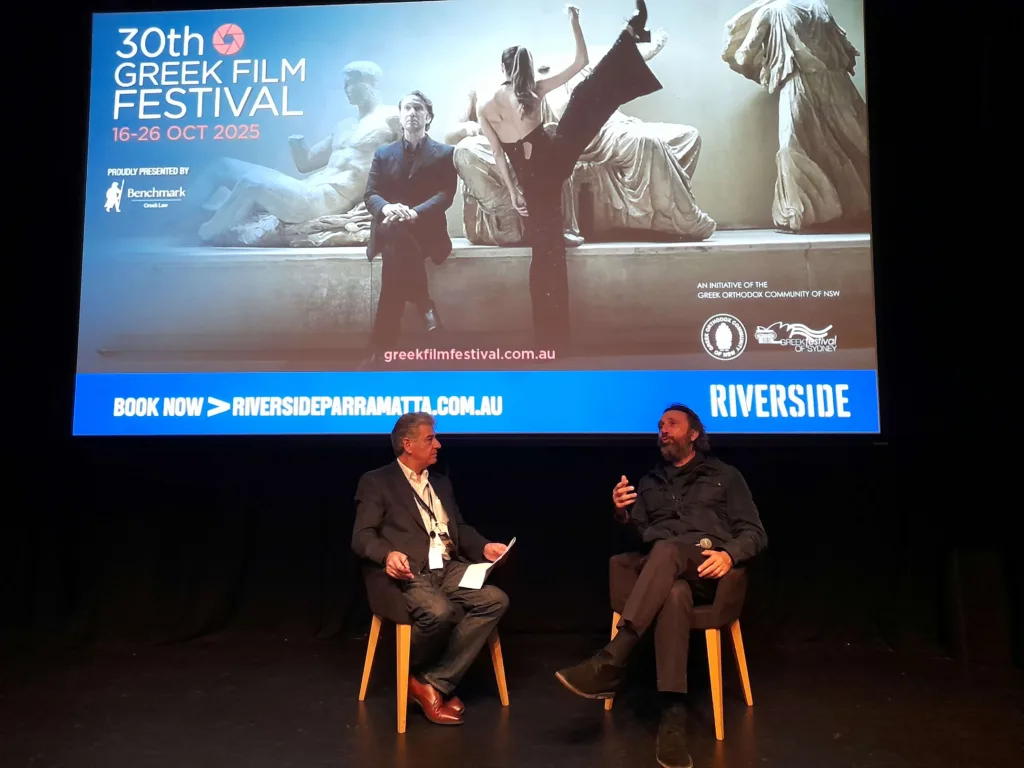
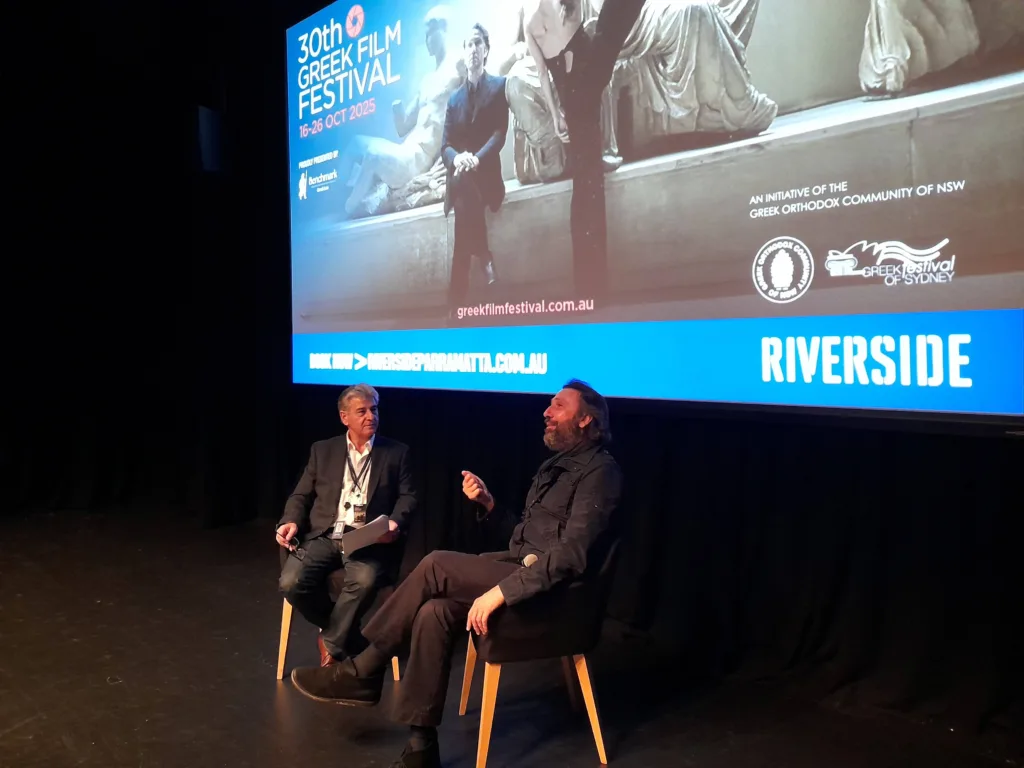
Haralambidis kicked off his visit on Friday, October 24, with a reflective Q&A following a screening of his 2000 cult classic, Cheap Smokes at Riverside Theatres Parramatta.
Led by Themis Kallos, the session saw the director delve into the film’s influences and its journey to cult status.
“My films are enigmas,” Haralambidis mused. “They come from my thoughts and technique and are messages in a bottle in the Greek ocean.”
He expressed both his appreciation and surprise at the enduring connection audiences feel, suggesting perhaps they “acknowledge their deep honesty and reflect the experiences of my generation.”
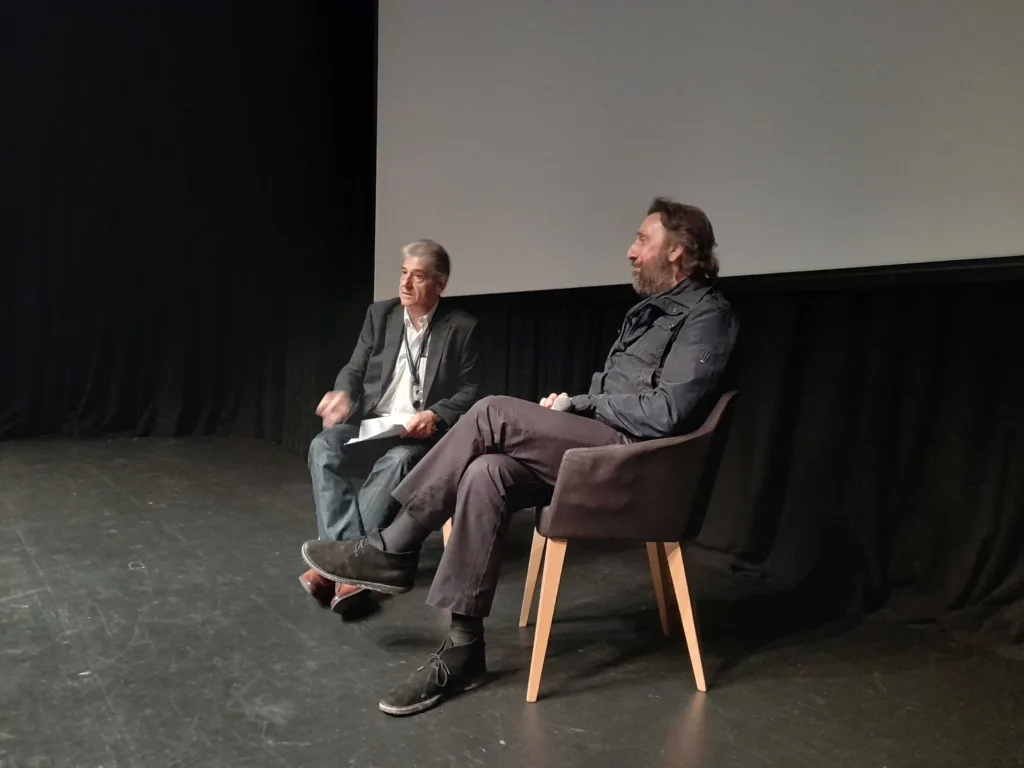
The next day, Saturday, October 25, at Palace Norton Street, a Q&A after his 1997 debut, No Budget Story, led by Professor Vrasidas Karalis, saw the filmmaker grapple with the passage of time.
He observed that while youth is a state of mind, his “old self, the young self has left him,” acknowledging he is now a different person.
Introducing his film, the director offered a profound reflection on his personal and artistic evolution: “With maturity, life begins,” he declared, affirming his refusal to “surrender to time.”
He described the movie as a romantic poetic film for maturity that allowed him to progress as a human being.
The director was profoundly thanked by the Chair of the Festival, Nia Karteris, and the President of the Athenian Association of NSW, Cathy Vallis, who highlighted the association’s significant contribution to supporting and coordinating his visit.
Final reflections: Time as doctor and judge
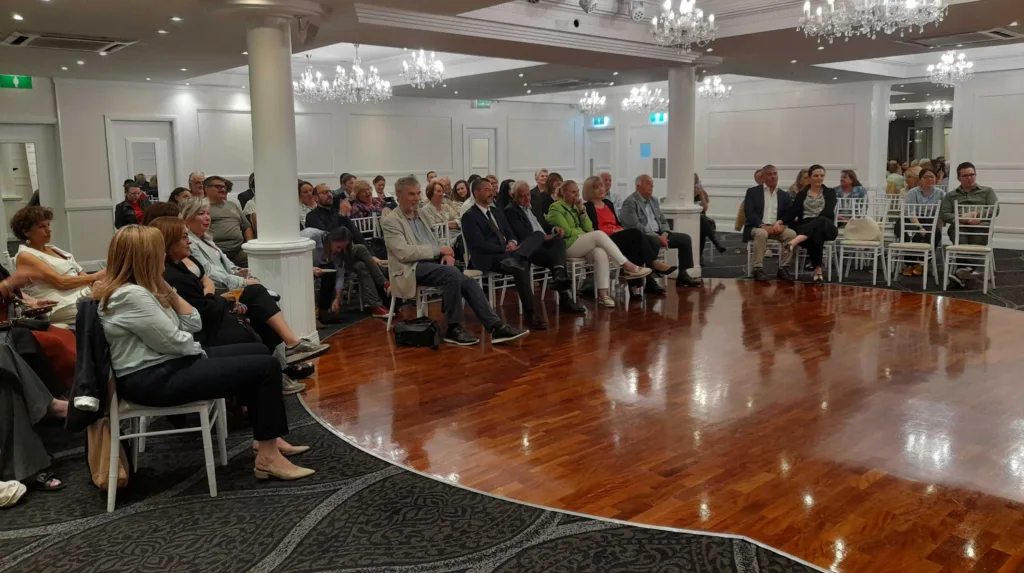
Haralambidis’ visit concluded on Monday, October 27, at The Grand Roxy in Brighton-Le-Sands, where he participated in a final Q&A led by Professor Vrasidas Karalis. The discussion centred on the role of time in the assessment of art and history.
The filmmaker offered one of the most memorable quotes of his tour, stating: “Time is a doctor and judge, and necessary for the souls of the people.” He argued that a true assessment of art requires time for “the souls and the eyes of the people need to be cleaned from passions.”
He closed his trip by expressing sincere delight at the warm Australian reception, praising the local Greek community for acting as a guardian of authentic Hellenic values that are less prevalent in modern Greece.
“It is an indication of respect that we find in the most authentic Greece which has been lost… these elements are very alive here,” he said, expressing a hope to return to the festival next year.
Haralambidis’ films—Cheap Smokes, No Budget Story, The Heart of the Beast, 4 Black Suits, and Athens Midnight Radio—were all showcased as part of the 30th Greek Film Festival of Sydney’s retrospective, celebrating a career that has spanned nearly three decades and established Haralambidis as a pioneering voice in contemporary Greek cinema.
The success of the filmmaker’s visit and the 30th Greek Film Festival of Sydney were underscored by the enthusiasm of community leaders.
Ms Karteris, Chair of the Greek Festival and the Greek Film Festival of Sydney and Secretary of the Greek Orthodox Community of NSW, stated: “It was a tremendous honour to host Renos Haralambidis and celebrate his remarkable contribution to modern Greek cinema.”
“His deep engagement with our audiences, his wit, and his profound reflections on life and art enriched not only the Festival but the entire community. The energy he brought to Sydney was truly inspiring, and we are incredibly proud that the Festival could showcase such a significant retrospective of his work,” she added.
Harry Danalis, President of the Greek Orthodox Community of NSW, commented: “Renos Haralambidis’ visit reinforced the crucial role the Greek Film Festival plays in maintaining the bond between Greek culture here in Australia and modern Greece.”
“His observation that our community is a guardian of authentic Hellenism was a powerful affirmation for us all. We are delighted to have provided the platform for him to connect so intimately with our community and share his message that the authentic Greek world exists beyond geography,” he added.
Ms Vallis said: “We at the Athenian Association are profoundly grateful to Renos Haralambidis for making Athens the true centre of his captivating films. His work, which so beautifully captures the Athenian spirit, is an invaluable gift to audiences abroad and to the Greek diaspora here in Sydney. We thank him for bringing a piece of our home to us through his art, reminding us that the heart of Greece beats strongly, no matter the hemisphere.”
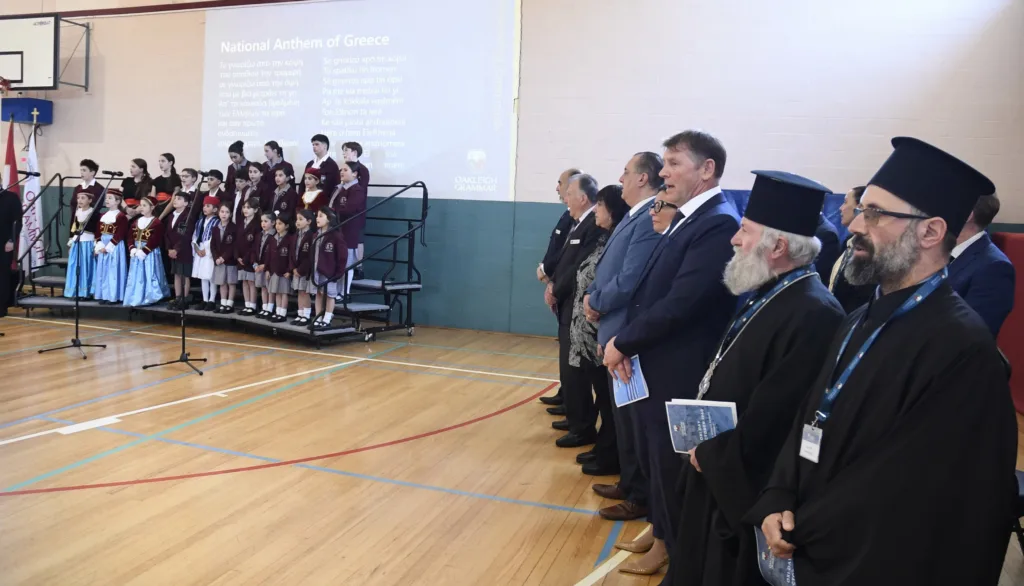
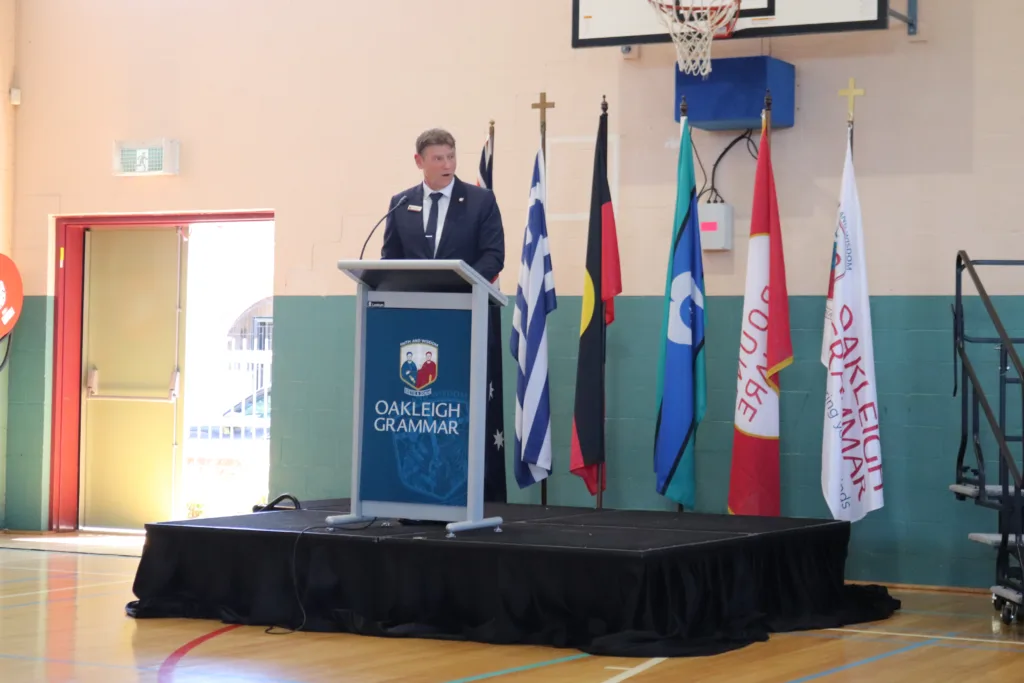
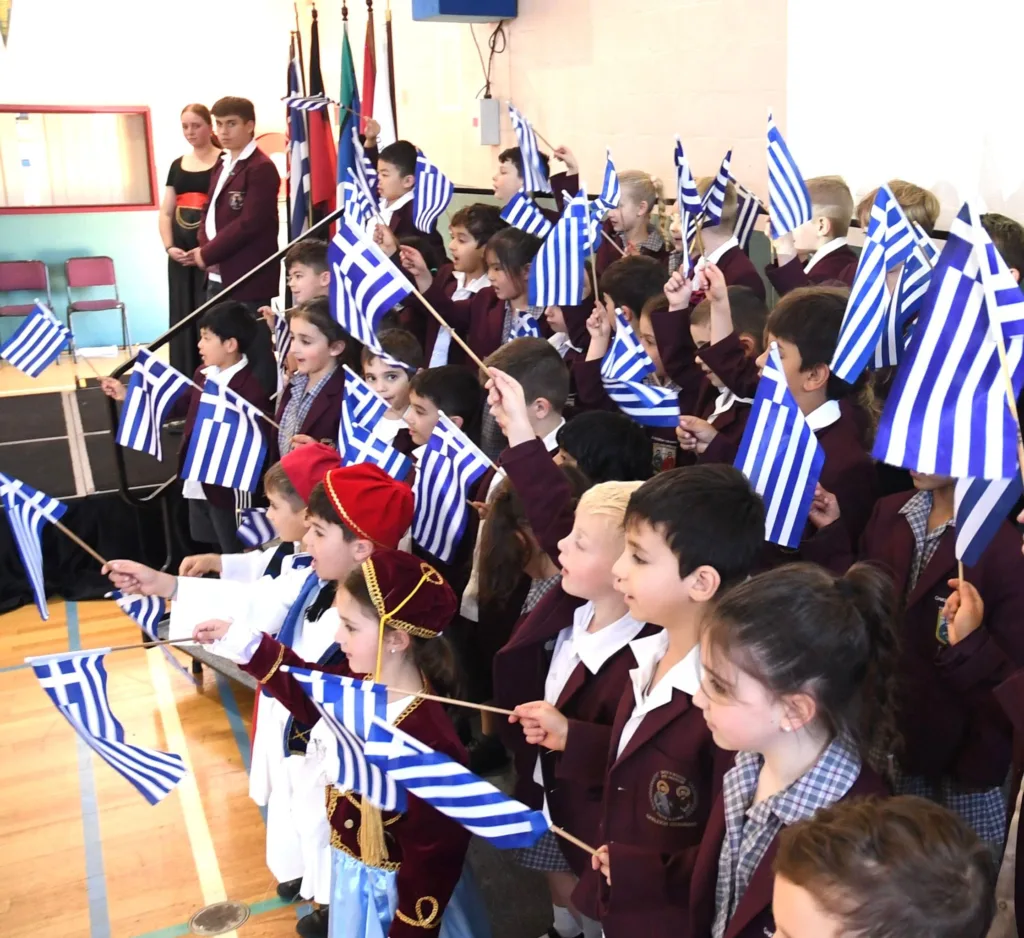
With emotion, pride, and deep respect for history, Oakleigh Grammar held its annual celebration for OXI Day on Tuesday, October 28.
This year’s event, presented by students from the Junior and Middle Schools, was dedicated to the timeless message of freedom, unity, and peace inspired by the heroic spirit of the Greek people in 1940.
The celebration was hosted by the Middle School Captains, Chrisanthy Psaras and Paul Makris, who guided the audience through a rich and moving program with enthusiasm and confidence.
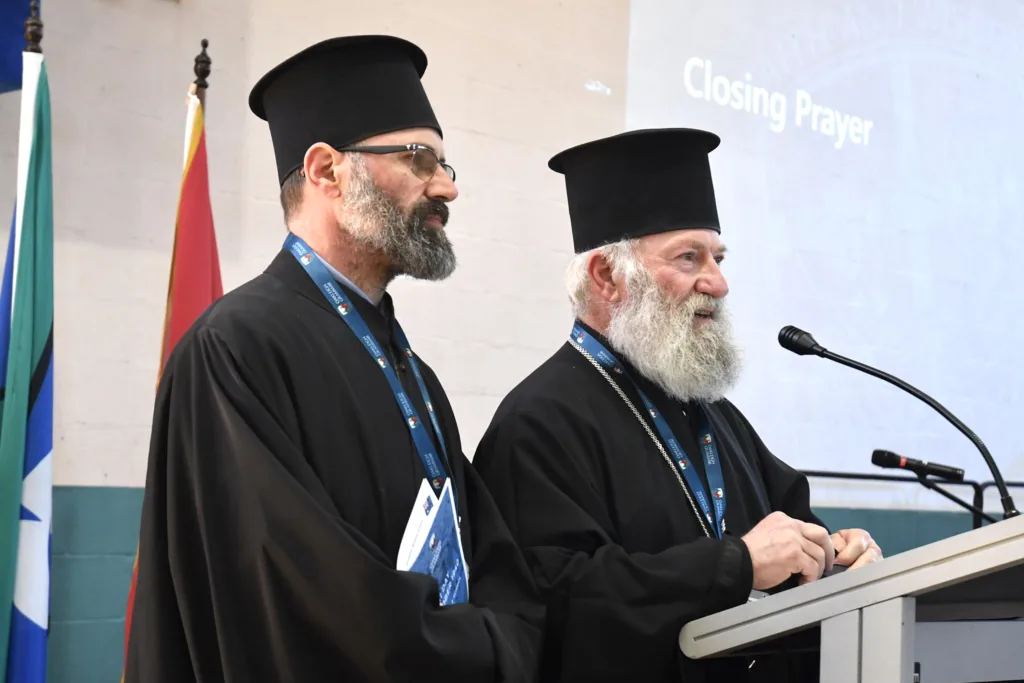
The event began with the National Anthems and the Opening Prayer, followed by beautiful Byzantine hymns performed by members of the school’s Byzantine Choir under the direction of Dean Damatopoulos.
Welcoming remarks were then offered by Mark Robertson, Principal of Oakleigh Grammar, and Dimitra Georgantzoglou, Consul General of Greece in Melbourne, who congratulated the students for keeping the Hellenic spirit and traditions alive abroad.
Emily Koutsovasilis from Year 8 opened the main part of the program with an inspiring speech in English about the historical meaning of October 28. Through her words, the audience relived the moment when Ioannis Metaxas proudly said “OXI!” and all of Greece stood united in resistance against invasion.
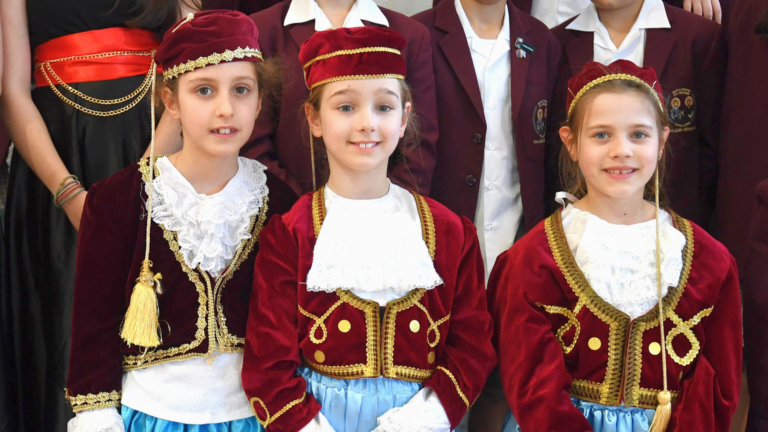
The Prep students followed with a heartwarming performance of the beloved song “Η Ελλάδα ποτέ δεν πεθαίνει” and impressed everyone with a delightful mini parade filled with smiles and enthusiasm.
Students from Year 1 shared their reflections on the importance of OXI Day, while Eva Bakalis from Year 8 delivered a powerful recitation of the poem “OXI”, honouring the heroes of 1940 and the courage of the Greek spirit.
Next, the Year 2 students performed the historic and humorous wartime song “Βάζει ο Ντούτσε την στολή του”, capturing the bravery and wit of the Greek people who defended their homeland in the mountains of Pindos.
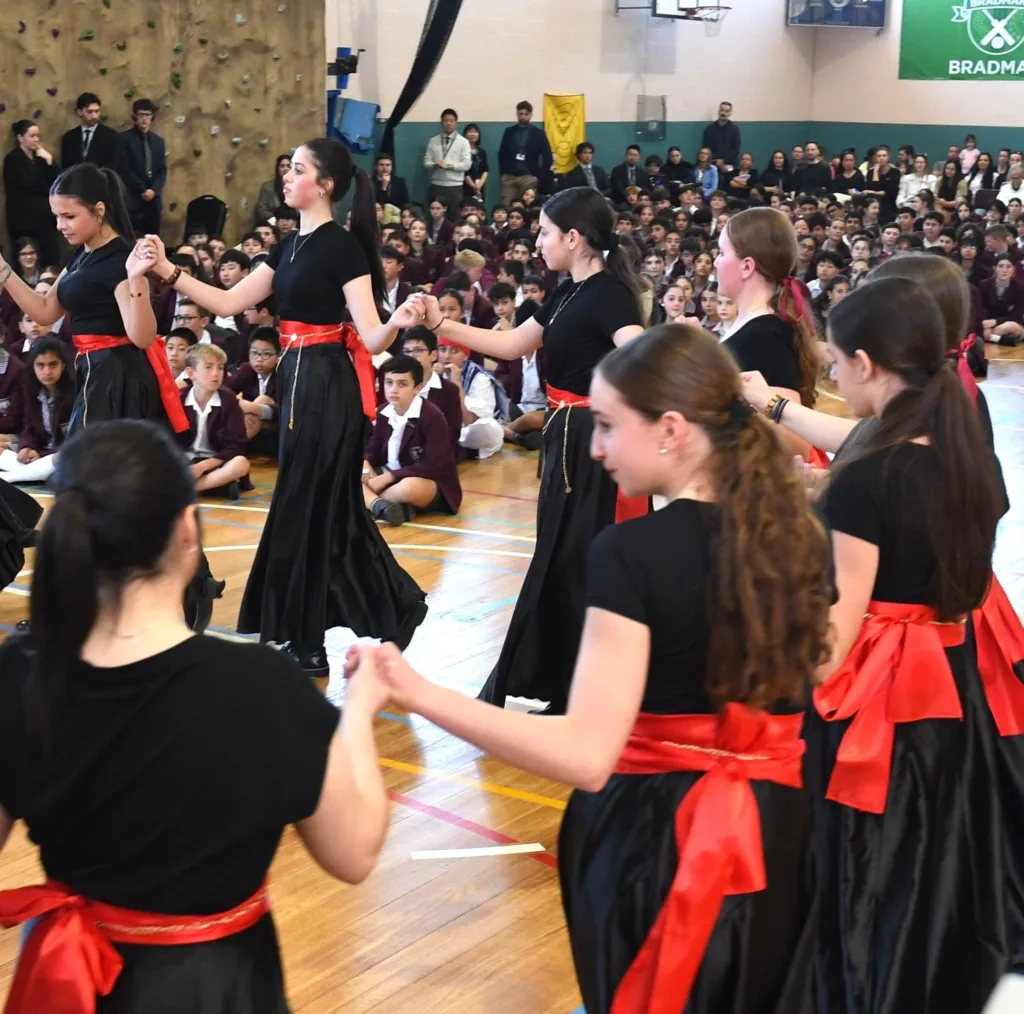
The Year 4 students impressed the audience with a traditional Greek dance, celebrating the strength of rhythm and culture that connects generations.
One of the highlights of the afternoon was the presentation by Valantina Marinakis from Year 9 titled “The ANZACs in Greece during World War II.” With maturity and eloquence, Valantina spoke about the friendship and solidarity formed between Greek and Australian soldiers, highlighting the shared values of courage and humanity even in times of war.
The program continued with moving performances of “Της Δικαιοσύνης ήλιε νοητέ” by the Year 5 students, and “Αν όλα τα παιδιά της γης” by Year 3, both sending powerful messages of freedom, peace, and unity.
The Middle School Dancing Group concluded the artistic part of the celebration with a lively performance of the traditional Kalamatianos dance, filling the hall with joy and pride in Hellenic heritage.
At the conclusion of the event, hosts Chrisanthy Psaras and Paul Makris closed with the timeless quote: “Greeks do not fight like heroes; heroes fight like Greeks.”
The event coordinator, Natasha Spanos, expressed her heartfelt thanks to all students and teachers for their dedication, as well as to the parents and distinguished guests who honoured the day with their presence.
Among those attending were: Reverend Father Stavros Kakavas, School Chaplain and Parish Priest of Sts Anargiri Greek Orthodox Church, Reverend Father Georgios Adamakis, Dimitra Georgantzoglou, Consul General of Greece in Melbourne, Maria Triantafyllou, Acting Coordinator for Educational Affairs (Australia & New Zealand), Tony Tsourdalakis, President of the Intercommunities and Parishes Council of the Greek Orthodox Archdiocese of Australia, George Giannaros, Vice Chair of the Oakleigh Grammar Board, Sam Vassos, Treasurer of the Board, as well as Mark Robertson, Principal, members of the School Executive, staff, parents, and grandparents.
This year’s OXI Day celebration at Oakleigh Grammar was a living tribute to the courage and enduring spirit of the Greek people, which continues to thrive proudly through the new generations of the Greek diaspora.