The Greek Australian Cultural League (GACL) is inviting Greek Australian artists to register for the first-ever ‘Greek Australian Artists Directory’ (GAAD) which aims to support and promote artists and their work.
What is the Artist Directory?
The GAAD is an archival/directory database introducing individual Greek Australian artists, established and emerging, who have been practising traditional or contemporary art in Australia.
As well as introducing the community to various artist profiles, it is an important platform for advertising current and upcoming exhibitions and allows the public to explore gallery related events, information on artists and more.
It is an established directory available online as a digital resource to be utilised for research and education by artists, curators, teachers, students, researchers and the general public.
The GACL hopes that in time, GAAD will be become an important archive of Greek Australian art practice and a not-for-profit community resource which will hopefully be sustained as artist-run and volunteer based.
The GACL intends to support and promote those registered via online publication of biographies, art statements, links and art work images. Artists will also have the opportunity to:
Document their practise in an internationally recognised, archival community resource.
Network with other artists and the wider community.
Promote and advertise artwork and events online and through the GACL’s social media and news print channels.
Feature in ‘Antipodes’, Australia’s longest running annual bilingual periodical.
Participate in online art events and artist led community workshops.
Train across a range of skills such as arts administration, event management, curatorial projects, publishing, marketing, community engagement and arts advocacy through the GACL’s volunteer program.
Assist in amplifying the voice of Greek-Australian artists.
Become a member of the GACL, established and recognised as an advocate for Greek Australian art and literature for over 50 years.
If you are an established and emerging artist you are welcome to register by completing the GAAD online registration form or contacting the GACL Art team by email infogaclm@gmail.com
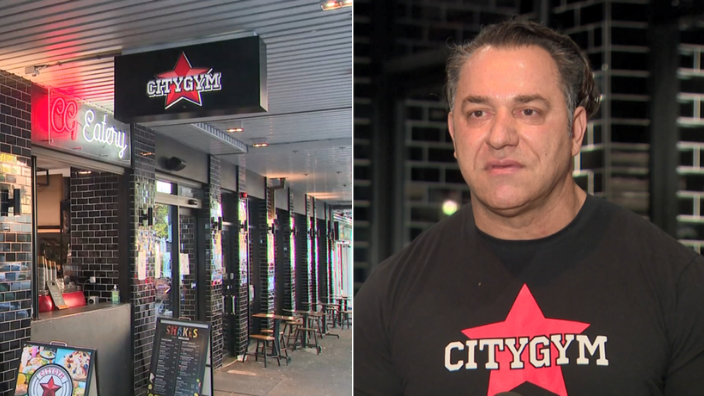
A Sydney gym is at the center of a COVID-19 cluster.
NSW Health confirmed Wednesday that 15 people who had been at the gym tested positive for the virus.
City Gym owner Billy Kokkinis is shocked at the development considering he and staff went “above and beyond” to follow “all the procedures and processes”.
Kokkinis said three NSW Health inspectors visited the gym on Tuesday and claimed it was the “cleanest gym” they had seen so far, the Daily Telegraph reports.
“You can’t tell me one day that we’re the cleanest gym and then the next day tell me we’re a hotspot,” he said.
“Conversely, they have expressed their applause and gratitude for our extra precautionary measures regarding our Covid safe practices calling us the ‘benchmark’.”
“We have been in undeviating contact with the NSW Health Department, meticulously following their instruction regarding our Covid safe practices, procedures, and updates.”
“City Gym is an iconic long-standing community gym, and as the figurehead, I pride myself on the transparency and honesty I provide to my members.”
“We’ve got proof and evidence that we’re compliant.”
NSW Health is urging those who attended the gym at certain times between 18-23 and 25 October to immediately get tested and isolate “until a negative result is received”.
City Gym has undergone a deep clean and reopened to fully vaccinated patrons.
NSW recorded 293 local cases and two deaths on Thursday.
By Georgia Pandelios, Accredited Practising Dietitian and Owner at Nutrition Prescription.
COVID kilos, or pandemic weight gain, has become a common phenomenon – especially for those working from home. With reduced commute time and increased screen time, our lives have become even more sedentary. We zoom more and move around less. Except for those round trips to the pantry. Together with the boredom of being confined at home, we might graze more often as food is within arm’s reach, just a few steps away from our “office.”
Yet with summer around the corner, many are now realising the impact these homely habits have had on the scale. Do not panic. Losing weight can be easy, effective and sustainable when done with a plan.
Here are eight dietitian endorsed steps to rebooting your diet before summer.
1. Set a goal:
Goals are important in keeping us accountable, on track and motivated. The key is to make sure it is realistic and achievable. Set a long term goal as well as several short term goals. A healthy and sustainable amount of weight loss ranges between 0.5kg to 1kg per week. Different things work for different people and you don’t need to use kilo goals – you can use dress sizes or even belt loops.
2. Start meal planning for your grocery shop:
Try to plan out each of the meals you will cook, as well as your snacks, in addition to setting a regular grocery shopping day. This can be weekly for some, fortnightly for others. The key is to set out what the necessities for your diet are and some back up options in case the unexpected happens.
3. Boost the quality of your diet:
Focusing on your diet quality means choosing lots of wholefoods and limiting processed foods. By default, these foods are usually more filling and restrict excess calories, whilst also maximising nutrient intake to support overall health.
4. Portion Control:
Calorie counting is undeniably an exhausting task and doesn’t necessarily improve our diet or health. No matter what the meals are, it is important to get the balance right. The plate model is a very simple and useful tool to portion control a main meal. This strategy aims for 50% of your plate as non-starchy vegetables or salad, 25% as lean protein (eg. meat, chicken, eggs, fish, tofu) and 25% as complex carbohydrates (eg. brown rice, sweet potato, grainy bread). Don’t forget to include some healthy fats like extra virgin olive oil or avocado in your meal for added flavour and to help with absorbing those important fat-soluble vitamins.
5. Eat consistently:
Eating regularly and evenly spreading out our meals can prevent us from overeating and make portion control a lot easier. Make sure to not skip meals or snacks. For those of you who are always on-the-go, convenient protein-rich snack options might include a small tub of yoghurt, cheese and crackers, or some trail mix.
6.Take advantage of low energy foods:
Low energy foods are those that are low in calories, but usually rich in nutrients that are good for our health. These foods are great fillers to do exactly that, keep you full. If you haven’t guessed it yet, most of our plant foods fall into this category. My favourite ones for summer are berries, passionfruit and cucumbers. These can bulk up a meal or snack to help keep us more satisfied and fuller for longer.
7. Drink water:
With the warmer days ahead, it’s also important to make sure we are drinking enough water. Some people might find themselves snacking more when their fluid intake is low as a result of confusing the thirst mechanism for hunger. The average adult needs 2 litres or 8 cups of water per day and sugar free soft drinks are not a substitute. Cold water can be more potable compared to tap water, alternatively adding some berries, mint, lemon wedges or cucumber slices to a drink bottle can make it more enjoyable.
8. Ask for help:
Developing a healthy eating habit is a lifelong skill that takes time and practice. Having support from family and friends in following a routine at home or when eating in social settings is important. This might include delegating age appropriate food prep tasks to family members or ordering takeaway that is in line with the plate model.
Managing weight is very possible, even during pandemic times. By shifting the focus onto building healthy eating habits, we can make our health and weight journey more successful, less stressful and more sustainable. We’re not robots. We have the sense of taste and smell for a reason and enjoying our meals is also key. Having a dietitian on board to coach you along the way is definitely beneficial. Speak to your GP about accessing Medicare rebates for sessions with a dietitian.
Disclaimer: The information in this article is generalised and is not intended to replace medical or dietetic advice, nor directly manage any medical conditions. For personalised advice, please speak with your doctor or contact our office to make an appointment with one of our Accredited Practising Dietitians.
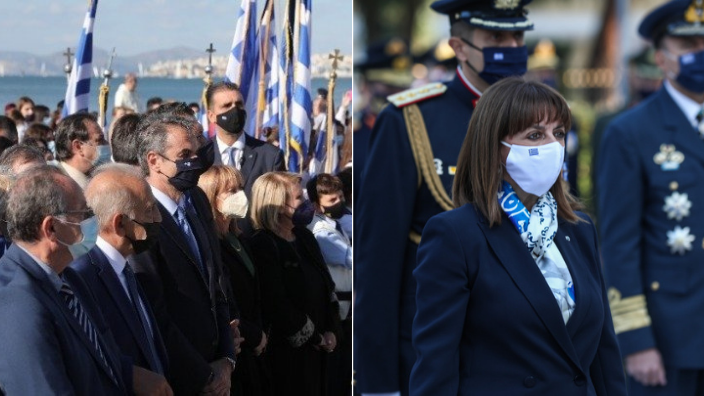
Greece’s national leaders were in attendance at OXI Day parades yesterday to mark the day Greece entered WWII by refusing to work with the Axis powers.
Prime Minister Kyriakos Mitsotakis followed a student parade in Paleo Faliro, while President Katerina Sakellaropoulou attended an army parade in Thessaloniki.
“Today we have the right to look at the future with greater self-confidence and more optimism,” Mitsotakis said.
He said he wishes “we may all go into this future with the unity the times require, and be always able to distinguish the useful Yes’ from the necessary No’s.”
Meanwhile, President Sakellaropoulou laid a wreath at the Monument of Heroes of the Third Army Corps on Megalou Alexandrou Avenue.
She said the day commemorates “a glorious moment in our history, when Greeks refused to surrender, faced the fascist invasion heroically, and utterly defeated a superior enemy.”
She said it reminds Greeks “of what we may achieve when we are united.”
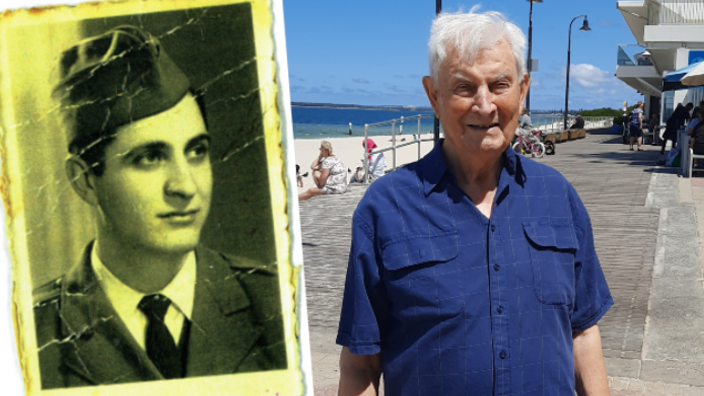
At 94 years of age, Dimitris Papadakis has lived through the Great Depression, the 9/11 attacks and now the coronavirus pandemic, but the one historical event which has stayed with him the most is October 28, 1940.
This date marks the moment when former military general and Prime Minister of Greece, Ioannis Metaxas, said ‘OXI’ (NO) to an ultimatum made by Italian Prime Minister, Benito Mussolini, an ally of Nazi leader Hitler. The subsequent invasion of Greece and outbreak of war saw Mr Papadakis’ life change forever.
“My family lived in Piraeus, the port of Athens, when the news came [about Metaxas’ response to Mussolini’s ultimatum]. I remember my mother taking me from our home to visit a relative in a different suburb of Piraeus who owned a radio at the time… for us to follow the news about what was happening,” Mr Papadakis tells The Greek Herald exclusively.
“We kept listening to it but what was really broadcast, mostly, was martial music and popular music just to keep the moral of the people high. But of course, automatically they started conscription.”
Dimitris was only 13 years old when war broke out in Greece. Photo supplied.
At the time, Mr Papadakis was too young to be conscripted to the Greek army as he was only 13 years old. But in the months that followed, and as news emerged of Greek troops fighting on the Albanian front, Mr Papadakis’ family began to return one-by-one to their hometown – the Greek island of Crete.
‘Swim as fast as you can’:
Mr Papadakis was one of the last of his family to make the dangerous three day and eight-hour trip to Crete. He visited Piraeus port every day to find a ship he could stow away on until eventually in January 1941, his chance to escape came.
“The interesting thing was that my brother-in-law was giving me advice when I said I’m going to sail to Crete. He said, ‘You look for a spot where the beams make a ‘T’ and stay under that because if the ship is torpedoed, that is the safest place that will not collapse very quickly. If the ship gets torpedoed, jump into the water and swim away from the ship as fast as you can’,” Mr Papadakis remembers.
Whilst Mr Papadakis didn’t have to take these drastic actions, being a stow away on the ship still came with other risks as well.
As a young man, Dimitris had to stow away on a boat to get to Crete. Photo supplied.
“I got on board the ship and when they came around and said, ‘show us your ticket,’ I said, ‘sorry I don’t have a ticket.’ They were worried about foreigners being involved in these things, so they called me in the middle of the night to interrogate me: ‘what is your name? what is your mother’s surname? what is your father’s name?’ All sort of things,” he says.
“Eventually they said, ‘we have to take you back to Piraeus. You can’t get off the ship when you reach Chania.’ But an officer saw me and said, ‘what are you doing?’ and I said, ‘they told me not to get off the ship.’ He goes, ‘go home.’ So I jumped out of the ship and went home.”
Crete under attack:
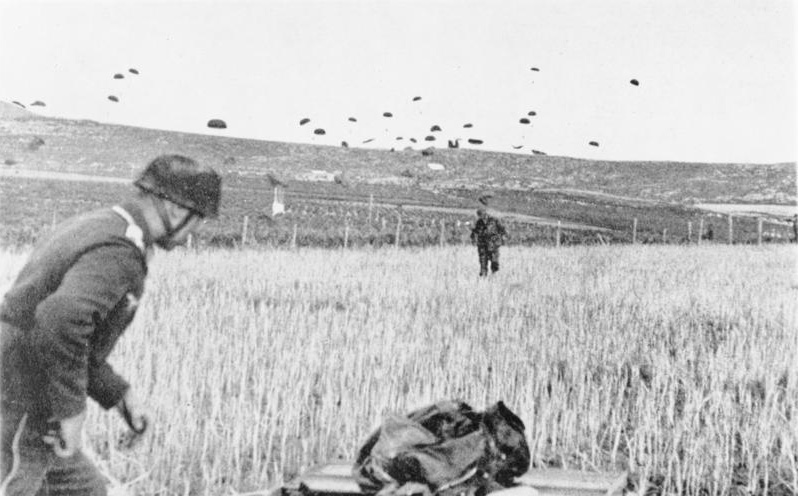
Only months later on May 20, 1941, Mr Papadakis came to witness the Germans invade Crete in the largest airborne attack ever attempted by Nazi Germany.
The Battle of Crete.
“I was at Kastelli [a village in Crete] and I saw the aircraft coming and then I saw the paratroopers dropping. I was young at the time and I thought, ‘this is an opportunity to see war first hand’,” Mr Papadakis says.
“I started running towards where the paratroopers were coming down. When I got there… the people of the town, whoever had a gun, ran and started the battle against the paratroopers. They killed most of them, about a dozen put their hands up and were taken prisoner.”
Eventually, the Germans managed to secure a foothold on Crete after roughly 12 days. The occupation saw Mr Papadakis put into forced labour by the Germans to help build another airport and the island also experienced a shortage of food.
“My father managed to get hold of some wheat from a relative in the country and I took it to the mill to be ground into flour. My mother did the dough and I took the bread to the local baker to bake and brought it back, but it was time for me to go to school so I cut a slice of bread and went,” Mr Papadakis explains.
Life in Greece during WWII was difficult.
“I was nibbling because I was hungry and the other children dobbed on me to the teachers. I got such a tongue lashing from the teachers. They said, ‘aren’t you ashamed? Everybody hasn’t seen bread for so many days and you bring bread here. Get out of here and eat your bread and then come back.’
“This was an indication of how things were at the time. Very, very hard and it lasted for quite some time too.”
Migrating to Australia:
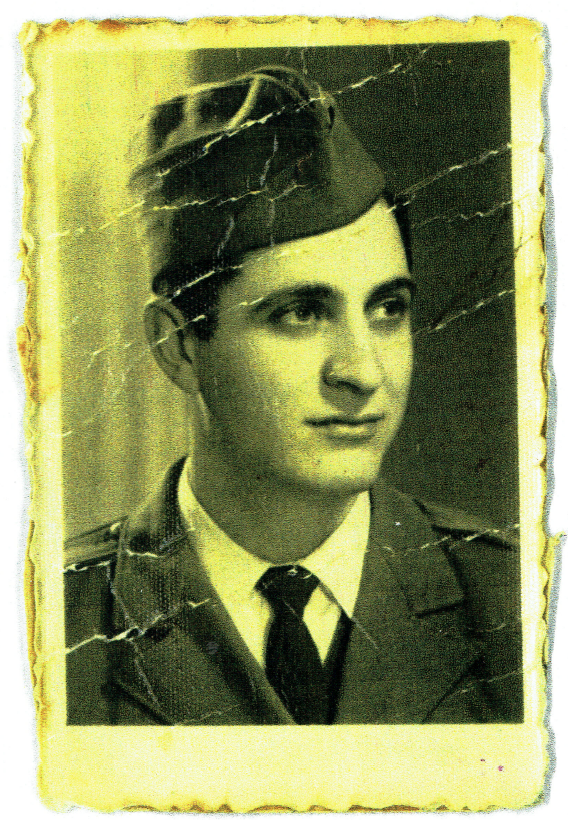
Despite this, Mr Papadakis finished high school and joined the Greek army. He served for about 32 months during the Greek Civil War before he was discharged and migrated to Australia in 1953.
Dimitris as a soldier. Photo supplied.
“In the beginning I didn’t like it. I said, ‘I’m going back to Greece.’ My sister said, ‘Look I understand but why don’t you stay for about six months to polish your English and see a little bit of the country so when you go back you can tell everybody where you’ve been.’ I thought it was a valid argument,” Mr Papadakis says with a laugh.
“By the end of the six months, my English improved and I could understand people… it became a little bit more like a normal life and I stayed.”
Mr Papadakis ended up working in a milk bar for a couple of years, before being a sales person at department store, Farmers, and eventually owning his own insurance broker firm for about 33 years. He also married “a very fine girl” and has three children and seven grandchildren.
Clearly, Mr Papadakis had a prosperous and happy life in Australia. But he still hasn’t forgotten his roots and that fateful day back in 1940 when Greece descended into an atmosphere of war.
“You do silly things at the time. You’re scared and you’re serious at the same time. It was quite a time,” he concludes.
The winners have been announced for the Wotif Uniquely Aussie Awards this year and the ‘best hot chips’ and ‘best jaffles’ categories have been claimed by Greek Australians.
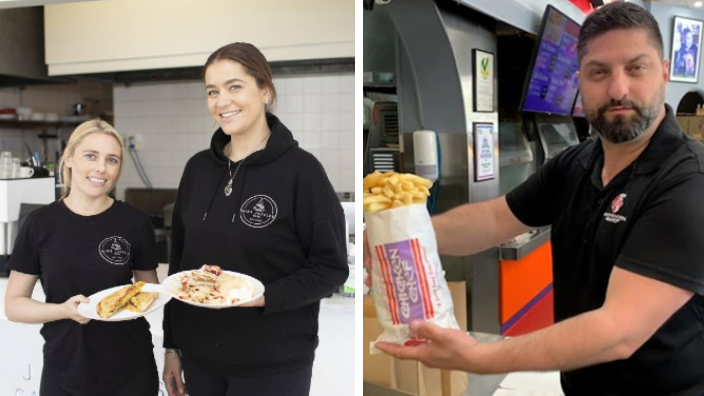
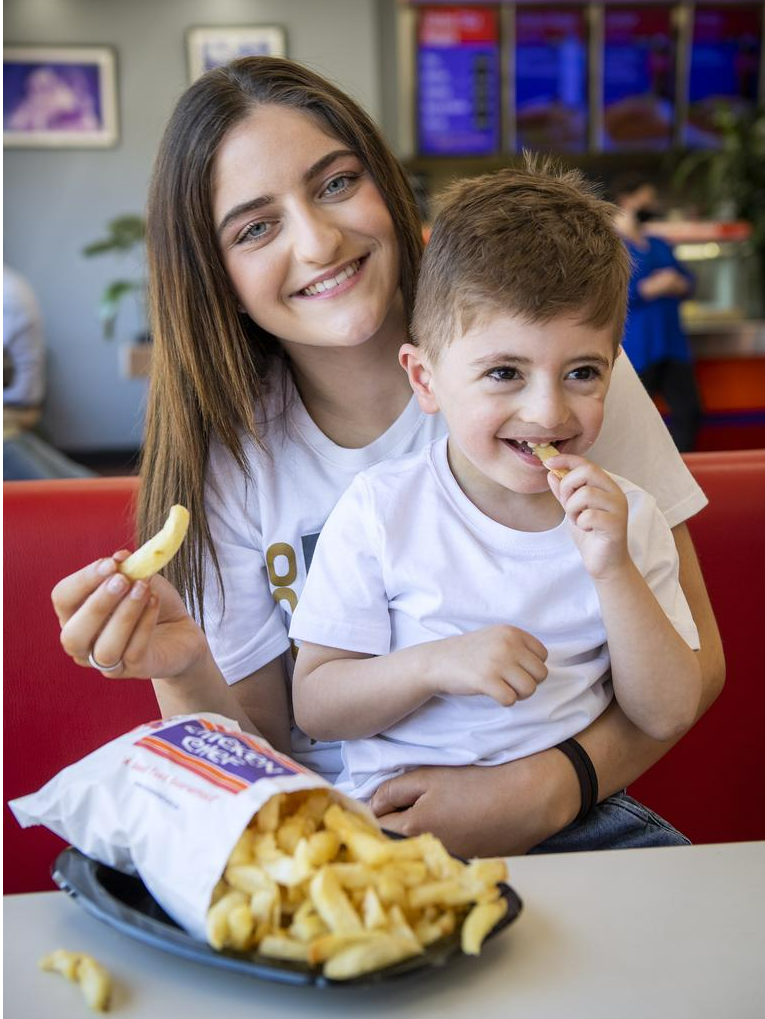
According to The Advertiser, Greek man, Terry, from Adelaide’s Chicken Chef shop in Blair Athol, makes Australia’s best hot chips because of their consistency and famous chicken salt seasoning.
“We were the originators of the chicken salt in SA back in the early 70s. The salt was here when I got here and I guard that recipe with my life,” Terry told the newspaper.
“You can’t buy Chicken Chef Chicken Salt anywhere. There’s only a couple of people that know it.”
Dimi Christopoulos and Dion Mavrommatis with a bag of the best chips at Chicken Chef, Blair Athol. Picture: Mark Brake.
Meanwhile in the ‘best jaffles’ category, Miss Jaffles Cafe in the seaside suburb of Cronulla has been voted people’s choice.
The cafe is owned by business partners, Vaseliki (Vass) Vais and Michelle (Mish) Weir, and they say their cafe offers the only jaffle-based menu in the Sutherland Shire and St George areas, with both sweet and savoury concoctions on offer.
“Jaffles are something that takes everyone back to their childhood. We all grew up on jaffles, putting leftovers in the jaffle or creating your own, it’s comfort food,” Vass toldThe Leader.
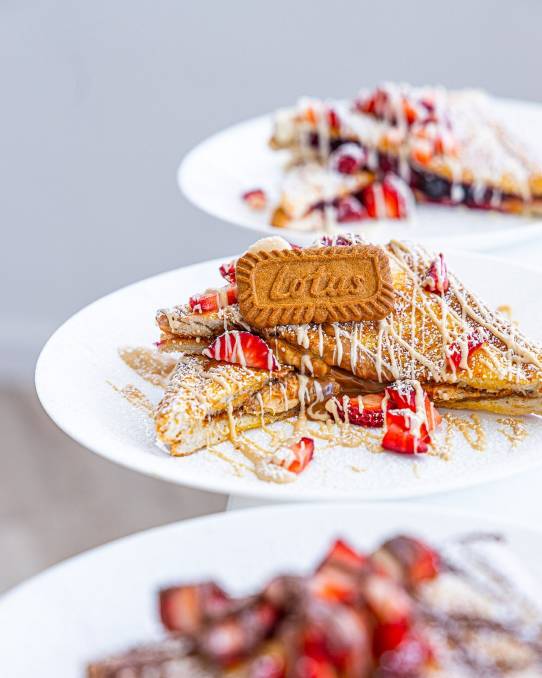
Jaffles from Miss Jaffles Cafe in Cronulla.
The most popular jaffle on the cafe’s dessert menu is the Miss Biscoff with Caramilk, Biscoff, strawberries and ice-cream.
They also do fan favourites including a pizza jaffle, one with mac and cheese and bacon bits, and an old-time gem with baked beans and cheese.
If that doesn’t entice you to visit this cafe, and Terry’s shop, we don’t know what will!
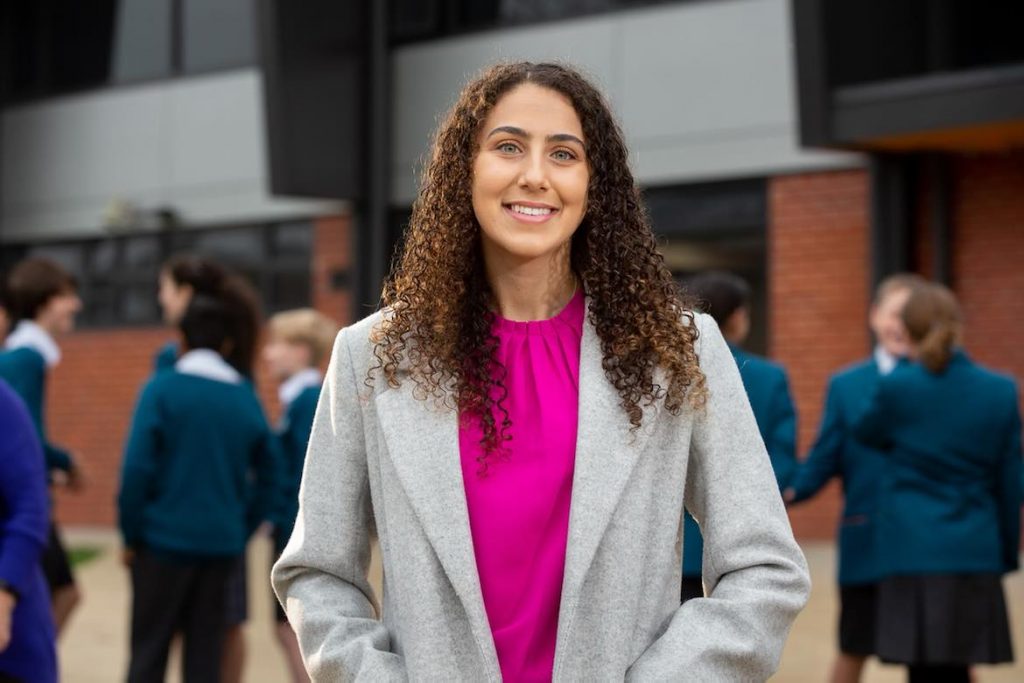
Are you after some hot tips on how to navigate high school, life after school and becoming an adult? Mia Haravitsidis’ new podcast, The Student Space, has all that and more since its launch this year.
The 23-year-old first decided to start the podcast after she graduated from a Bachelor’s degree in Commerce which she wasn’t passionate about and she wanted to stop other students from making the same mistake.
“In high school, I really wanted to be this big CEO, working corporate and I loved the subject Business Management so I thought, ‘I’m going to do commerce at the University of Melbourne’,” Mia tells The Greek Herald.
“But I just went through the whole course hating it but too stubborn to quit. There was no pressure from family, no pressure from myself, but kind of like society pressure where just because you got a high ATAR, you should do a high ATAR course.
“At the end of the degree, my two and only friends at university got jobs at big corporate firms and Microsoft and I didn’t get any of those jobs because I didn’t have good enough marks or experience. So I thought, ‘I’m just going to do a gap year’.”
Mia Haravitsidis studied commerce when she first left high school.
It was on this gap year, as Mia was sipping cocktails on the Greek island of Mykonos with her sister, where the spark for The Student Space podcast was truly ignited.
“I was actually sitting on that beach and I wrote down everything I wished I knew when I was in Year 11 and Year 12. Over the last three years, I’ve learnt that your ATAR doesn’t matter, you don’t have to deal with society pressures and I thought ‘students need to hear this’,” Mia says.
On her return to Australia, Mia studied a Masters of Secondary Teaching at the University of Melbourne to become a fully-fledged educator. She then self-taught herself everything there is to know about podcasting, including crafting episodes, interviewing and editing audio files.
Now, she releases two episodes of The Student Space on Spotify,Apple and Google Podcasts every week and each one is different. She’s interviewed current university students about their university course, people who have taken a non-traditional path from school (such as TAFE or starting their own business), and industry professionals who debunk university terminology, ATARs and everything in between.
“The response has been really great. I’ve been quite blown away by everything,” Mia says.
Mia’s podcast has been a success so far.
“I’ve been lucky enough that schools have reached out and I’ve gone to speak at schools just about wellbeing, study, different things like that.
“Actually, while I’ve been talking at schools, a lot of students come up to me at the end and say, ‘can you do an episode on this?’ and I definitely have. The whole aim by the end is that students are like feeding me what they want to hear and then I’ll create the episode for them.”
From there, Mia says, it’s all about focusing on the bigger picture.
“At school, we’re conditioned to follow one certain path. We’re conditioned to go to high school and then go to university and get a really good job. But I think now there’s so much disruption to that, that there’s no norm,” Mia says.
“My whole main message is your life can be whatever you want it to be and you can be so successful no matter what path you take. That’s what I kind of want to remind students. That they really can make the most of anything and they don’t have to do it the traditional way.”
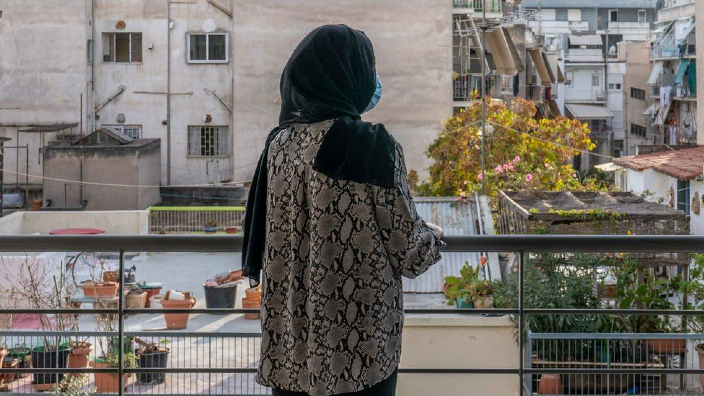
When Afghanistan fell to the Taliban, hundreds of female judges went into hiding. Twenty-six of those women escaped to Greece where the BBC met and interviewed them.
Judge Sana is one woman interviewed by the BBC and she details how she feared for her life and the life of her two young children as she fled Afghanistan.
“It was the worst moment of my life, when I looked at my kids while leaving,” she told the media outlet. “I was so hopeless. I wondered whether I would ever get them out of Afghanistan alive.”
For the past three months, Sana said, she has been hunted by the very men she sent to prison for violent crimes against women. The Taliban opened prisons as they advanced across the country, freeing thousands of criminals to take revenge on those who incarcerated them.
Thousands of people tried to escape Afghanistan this year.
This added an extra layer of danger to Sana’s escape from Afghanistan. The family travelled through the desert for more than 10 hours, never sleeping. Every half an hour or so, they would arrive at a Taliban checkpoint where armed men would inspect the travellers.
“If they knew I was a judge, they would have killed us immediately,” she said.
Eventually, Sana and her children were taken to an airstrip. As the plane took off, the entire cabin broke down in tears, she said.
After arriving in Athens, all 26 judges and their family members were tested for COVID-19 before being dropped off at various apartment blocks around the city. Under a temporary visa scheme, the judges were guaranteed food and shelter by the Greek authorities, in conjunction with various charities, for 14 days.
Some of the female judges had the chance to meet Greek Prime Minister, Kyriakos Mitsotakis, in Athens. Photo: AP Photo/Petros Giannakouris.
What would happen after the two weeks were up was unknown. The judges were advised to start applying for asylum in a third country.
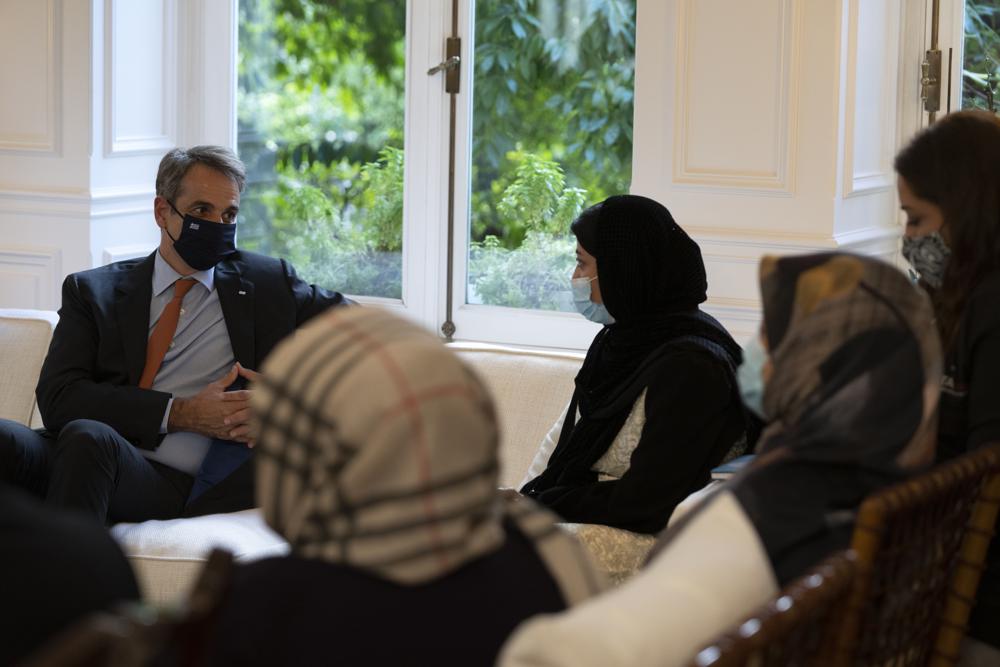
Some had the rare opportunity to meet with the Prime Minister of Greece, Kyriakos Mitsotakis, as well as Greek President, Katerina Sakellaropoulou.
Others, like Sana, vow to continue to fight the injustice they see currently in Afghanistan and “support every Afghan woman.”
“Afghanistan does not belong to the Taliban or any one specific group,” she concluded. “It belongs to every Afghan.”
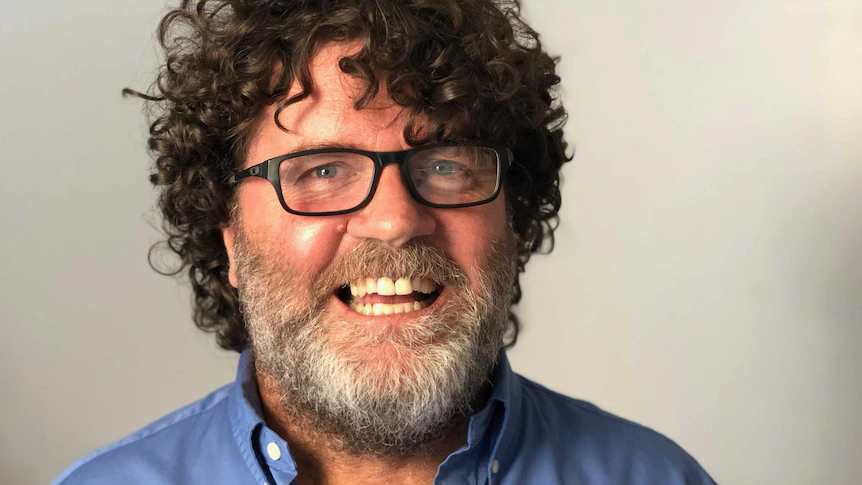
Long-time ABC presenter, Russell Woolf, is being remembered as “a great bloke” with “a wicked sense of humour” following his sudden death on Monday night.
One person leading the tributes to the great man is Nadia Mitsopoulos, who hosts the Mornings program on ABC Radio Perth and co-hosted the Breakfast show with Woolf.
In a piece for ABC News, Mitsopoulos reminisces about how the first person she’d see every day when she arrived at work was Woolf and “sometimes I’d get a wave, a chat or a hug.”
“I particularly liked the hugs, followed by a fist pump and his advice to ‘stay strong and go well’,” Mitsopoulos writes.
“But without Russell, the ABC isn’t the same place it was for much of the past 20 years.”
Nadia Mitsopoulos with Russell Woolf.
Who was Russell Woolf?
Early in his career, Woolf was a resources reporter for ABC Rural. He went on to present Afternoons with Verity James on ABC Radio before taking on Drive for several years.
After he left ABC Radio for a while, Woolf became an MC at various public and private events, often arriving in the nick of time on his trusty red moped.
In 2014, Woolf ran for The Senate, taking the frontline with former colleague Verity James in one of many campaigns to Save The ABC.
Later, he went with his wife, Kylie, and daughter, Bronte, to live in Minneapolis after Kylie landed a job in the United States and tried his hand as a stand-up comedian.
Russell Woolf.
But in 2019, Woolf returned to ABC, resurrecting his radio career and bringing comfort to those fans who’d missed him from the airwaves.
Mitsopoulos says less known out of all this “was his role as a mentor and teacher to me and so many others in the industry.”
“Being in his company brought so much joy for so many people. I was so lucky to be given this gift every day at work,” she says.
“I loved having him as my sidekick. He had an endless capacity to make you smile and an infectious laugh that instantly filled everyone around him with happiness.”
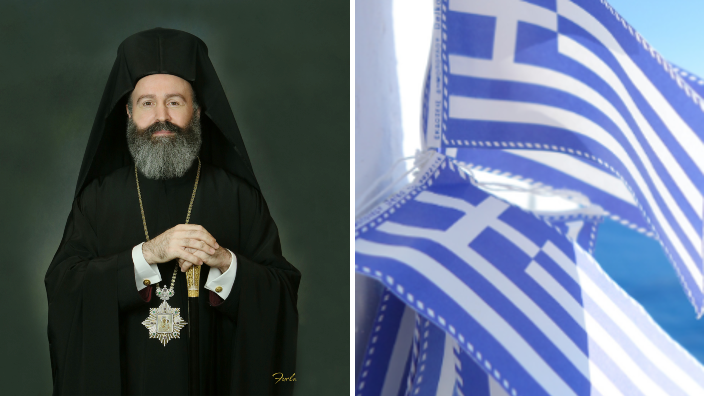
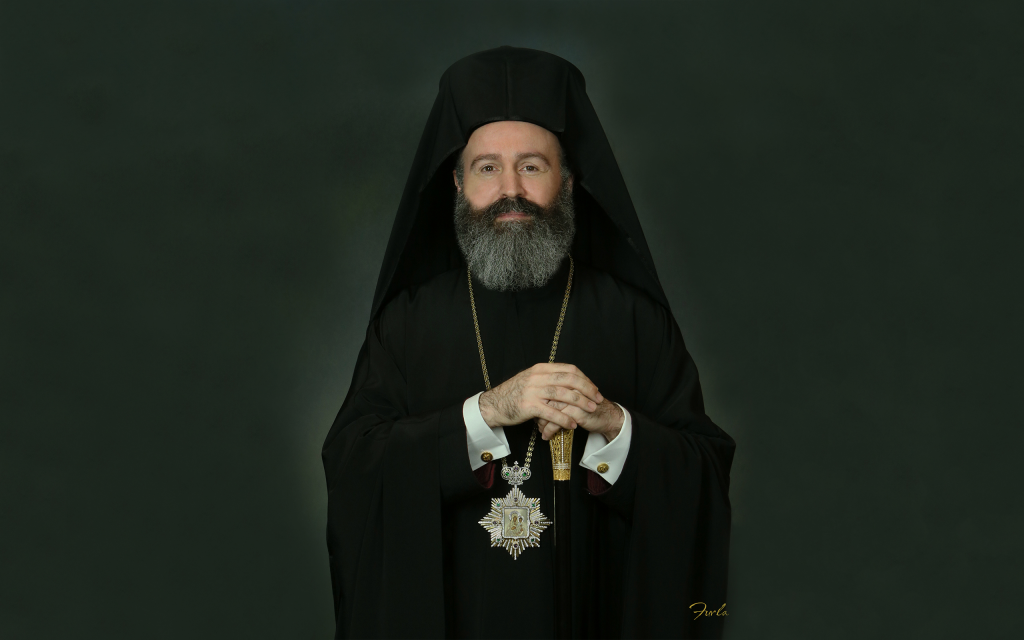
His Eminence Archbishop Makarios of Australia has issued a message today to mark the 81st anniversary of OXI Day.
In his message, His Eminence pays his respects to the Greek people who “became an example of resistance” during WWII and encourages the younger generation to learn about their ancestors and the ideals they fought for.
Full message in English:
This time, 81 years ago, a small, two-syllable word signalled to history to begin writing another glorious chapter about the Greek people. The heroic, “OXI” (NO) came out effortlessly from the lips and flooded the hearts of our proud ancestors, not allowing fear to penetrate and be overwhelmed by turmoil.
By bravely raising their stature in the face of the clearly stronger aspiring conquerors, the Greeks became an example of resistance to other peoples and inspired them to fight with the same self-denial against the emerging forces of fascism and Nazism.
From the outset, our poor people knew they would pay a high price for saying “NO”. But our young men marched resolutely to the frontline, consciously accepting to sacrifice even their lives. For these brave men, we reverently bow our knees today and pay tribute to those who gave their blood for the homeland. Together with them, we also honour the mothers, fathers, their wives and all the Greek people who joined, with admirable solidarity, in that sacred struggle. The best way to honour our heroic ancestors is no other than to reflect on the striking “NO” that they shouted and to continue to serve the high ideals and values that are concentrated in these couple of letters: the love for the homeland; the commitment to dignity, freedom and democracy; the defense of all that is sacred and holy of our Nation and Faith.
Archbishop Makarios of Australia.
Today’s anniversary brings before us the heavy responsibility we have inherited to continue to journey with the ideals of our ancestors as well as to ensure that the younger generations also attain these ideals. Our children must have knowledge and awareness of who they are, where they come from, and for what values their ancestors fought. It is also imperative that they know that the Orthodox faith has always strengthened the Greek people, in every adverse situation of its historical course.
It is no coincidence, after all, that our National Day coincides with the feast of the Holy Protection, during which the Church honours the person of the most-holy Theotokos, whose grace covers and protects the people of God. On this day, we honour and glorify our Panagia, our timeless and unshakable support, who strengthened, enlivened, comforted and protected the heroes of the 40’s era.
We also glorify the Triune God, Who has counted us worthy to celebrate our national anniversary in a country where its people came together with the Greeks in common values and ideals, and fought fiercely to defend them.
With all my heart, I wish “many years” to Greek people everywhere, covered by Panagia’s protection!