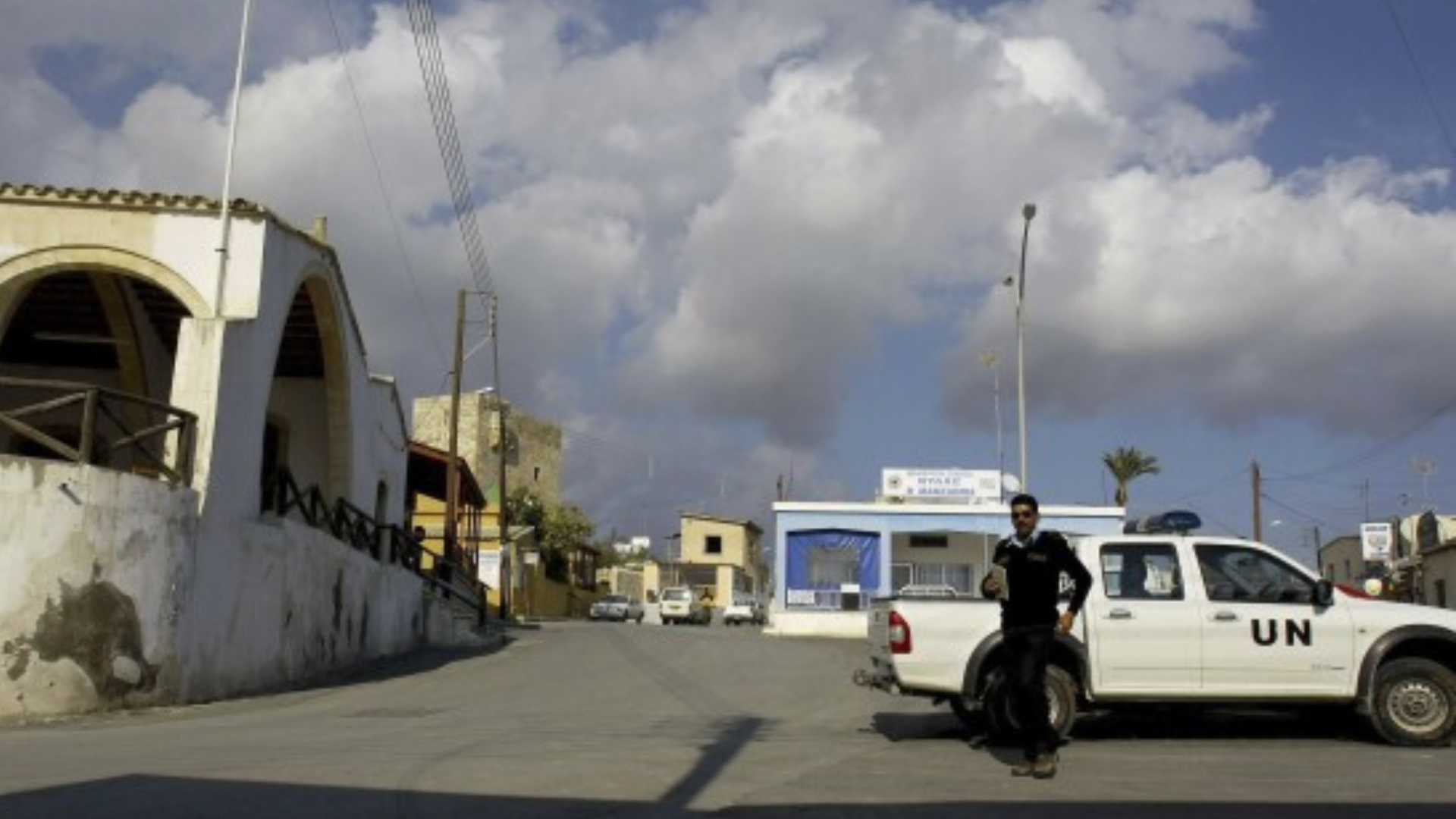
In a recent incident, Turkish Cypriot protesters engaged in a physical attack on international peacekeepers who had intervened to halt road construction activities encroaching upon a U.N.-administered buffer zone within ethnically divided Cyprus.
The United Nations reported on Friday that irate Turkish Cypriot individuals confronted a contingent of international peacekeepers who were preventing construction crews from working on a road intended to connect the village of Arsos, situated in the breakaway Turkish Cypriot northern region, to the mixed Greek Cypriot-Turkish Cypriot village of Pyla. This village lies within the buffer zone, adjacent to the Greek Cypriot southern region, where the internationally recognized government of the island is headquartered.
Video footage reviewed by The Associated Press depicted numerous Turkish Cypriot demonstrators confronting a smaller group of U.N. soldiers from Slovakia and the United Kingdom. These peacekeepers were attempting to restrain the protesters from initiating construction activities within the buffer zone. During this interaction, a few peacekeepers sustained facial injuries as they formed a human barrier to prevent the advancing Turkish Cypriot individuals. The U.N. reported that three soldiers required minor medical attention due to these altercations.
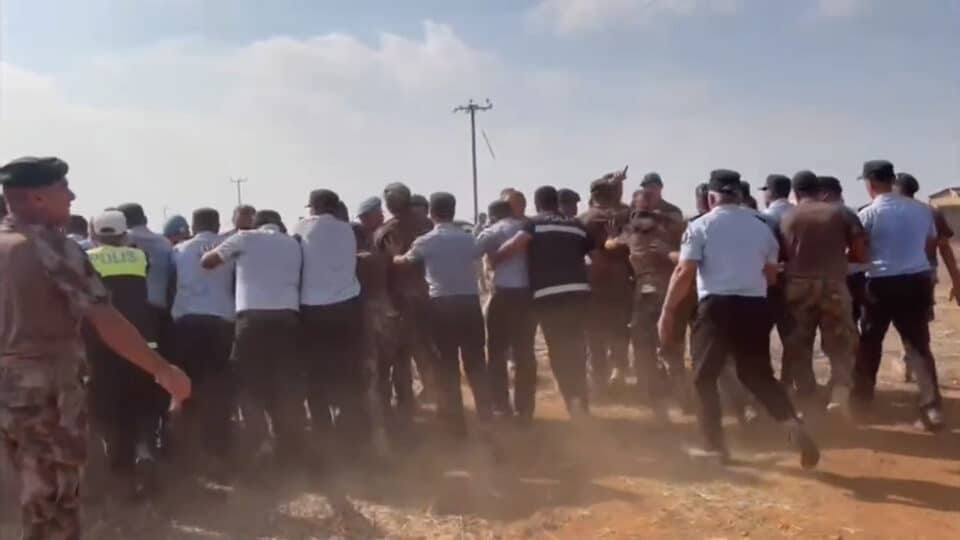
This incident marks a significant escalation of tensions, representing a level of unrest not witnessed on the island in years.
The proposed road project is intended to provide Turkish Cypriots with a direct route to Pyla, bypassing a checkpoint located on the northern periphery of a British military base. These bases were retained by the United Kingdom after Cyprus attained independence from British colonial governance in 1960. Greek Cypriots perceive this road construction as having potential military implications due to its sensitive location within the 180-kilometer (120-mile) buffer zone.
UNFICYP, the United Nations peacekeeping force responsible for the region, released a statement condemning the incident and declaring that threats to the safety of peacekeepers and damage to U.N. property are unacceptable and constitute serious violations of international law.
Despite the altercation that transpired on Friday, UNFICYP spokesperson Aleem Siddique affirmed that the United Nations remains steadfast in its commitment to obstructing or hindering the road construction through nonviolent means. He emphasized that the construction of the road would run counter to the mandate of UNFICYP, which is tasked with preserving the existing status quo within the buffer zone.
