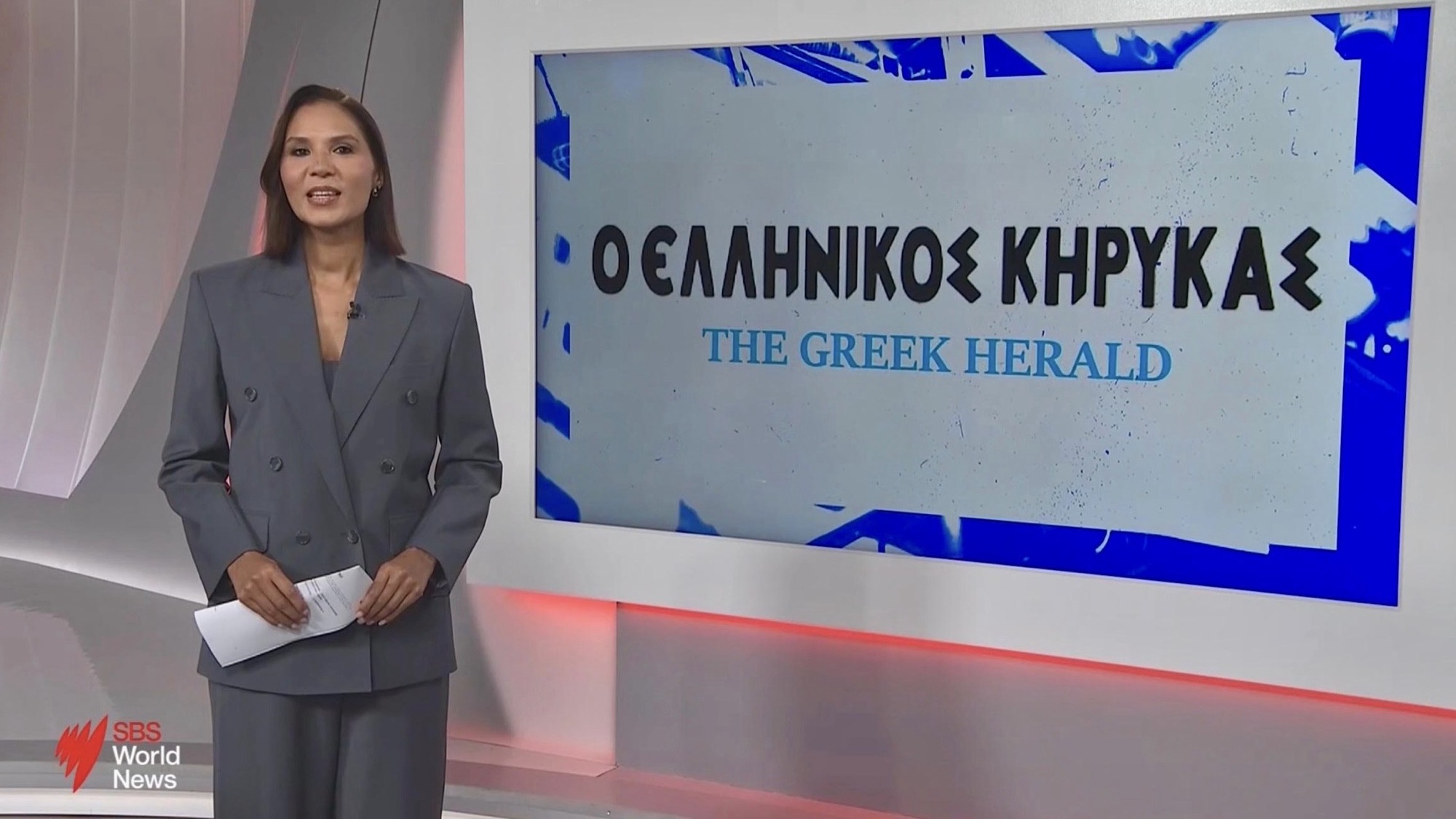
Australia’s multicultural media landscape has turned its attention to SBS News, which this week aired a feature on The Greek Herald as the newspaper marks 100 years of continuous publication serving the Greek Australian community.
The SBS World News segment explored the newspaper’s century-long role as both a source of information and a cultural lifeline for generations of Greek and Cypriot migrants who arrived in Australia throughout the 20th century.
For many early migrants, particularly post-war arrivals who spoke little English, the newspaper became essential in helping families navigate a new life in Australia while remaining connected to their language, identity and homeland.
“You gotta have a newspaper, you can’t depend on TV all the time,” longtime reader George Thanos told SBS News, recalling how his family would collect the paper after attending church in the 1950s.
“The Greek Herald helped a lot. We could read what was going on in Australia, what’s going on overseas. We all used to depend on the paper to get along, advertise for jobs, and it was a very good communication system.”
Charalambos Kokotsis similarly reflected on the newspaper’s importance during the migrant experience.
“The time when we came here, we didn’t speak much English. Only ‘yes’ and ‘no’,” he said.
“The Greek newspaper… it was one thing we read. It was something good for us.”
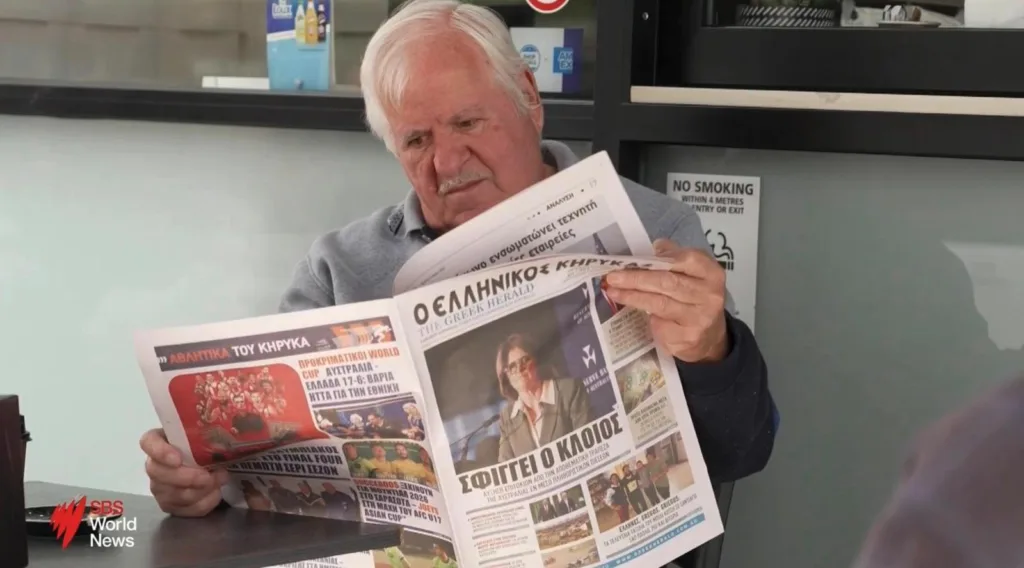
The SBS report also captured the enduring ritual of Greek Australians gathering in kafenia and community clubs to read the paper, discuss current affairs, sports, community news and memorial notices.
Now in his 90s, Pantelis Christou told SBS he still regularly visits Sydney’s Cyprus Club to enjoy a coffee, read the paper and socialise with friends.
Originally founded in 1926 as The Hellenic Herald, the newspaper has grown from a modest broadsheet into one of Australia’s most enduring multicultural media institutions.
The SBS feature also highlighted the historical significance of the publication beyond Australia’s shores. Researcher Leonard Janiszewski recounted discovering old editions of the newspaper in abandoned Greek villages during research trips in the 1980s.
According to Janiszewski, the newspapers demonstrated to families in Greece that thriving Greek communities had been established in Australia, complete with churches, businesses and social institutions, helping encourage further migration.
“What it was telling them was not just simply that there was a community here, but there was a community in which you had churches, a community where you could go to a Greek barber, you could go to a Greek shop,” he told SBS News.
“And that stimulated further chain migration.”

The segment also reflected on the late Theo Skalkos’ transformative leadership after purchasing the newspaper in 1971. Under his stewardship, the publication expanded dramatically and became the only daily Greek-language newspaper published outside Greece and Cyprus.
SBS revisited archival footage of Theo Skalkos speaking in a 1996 SBS interview, where he jokingly compared himself to media mogul Rupert Murdoch.
Following Theo Skalkos’ passing in 2019, Publisher Dimitra Skalkos took over leadership of the family business.
“I grew up in the printing presses,” she told SBS News.
“There was movement, there was screaming, there was stopping printers, there was changing plates because stories would break.
“There were strikes and all sorts of things, but we never missed an edition.”

The SBS report also explored how The Greek Herald has adapted to changing generations and media consumption habits, balancing its historic print presence with digital journalism, English-language reporting and social media engagement aimed at younger Greek Australians.
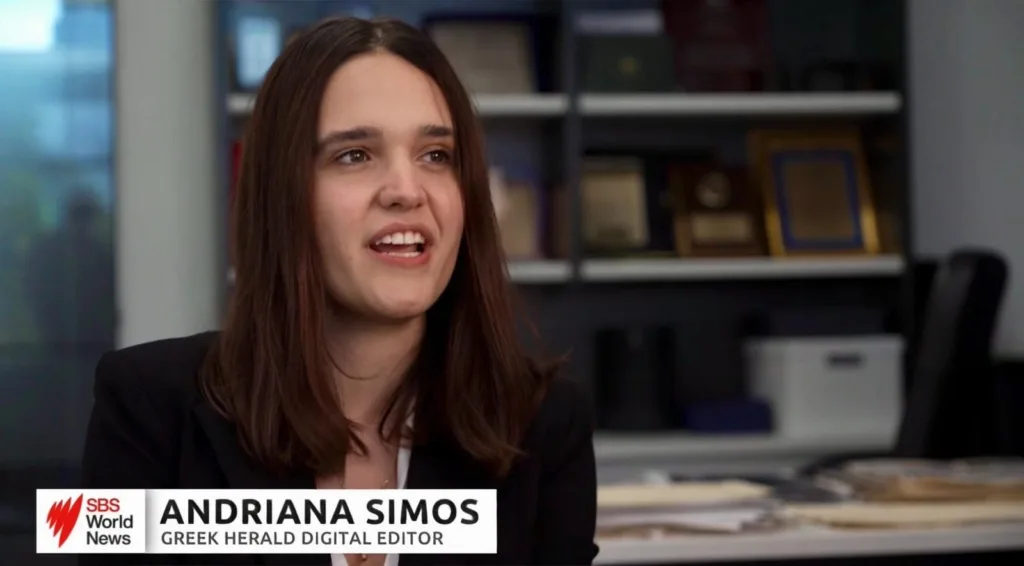
Digital Editor Andriana Simos said younger audiences continue seeking connection with their identity and community through the publication’s digital platforms.
“They’re still interested in faith. They’re still interested in learning about their identity. They’re still interested in community events,” she told SBS News.
“People connect because they’re like, ‘That’s me. I might not speak Greek, but I can still see myself reflected.’”
The SBS feature concluded by examining the broader importance of ethnic media within Australia’s multicultural framework.
Emeritus Professor Andrew Jakubowicz from the University of Technology Sydney noted that multicultural media organisations continue to play an important role in social cohesion and cultural continuity.
For historians and readers alike, the story of The Greek Herald reflects more than the history of a newspaper. It reflects the story of migration, identity, adaptation and the enduring strength of Australia’s Greek community.
“It’s showing us the diversity that exists within Australia,” Janiszewski said.
“And through that diversity, we actually get unity.”
