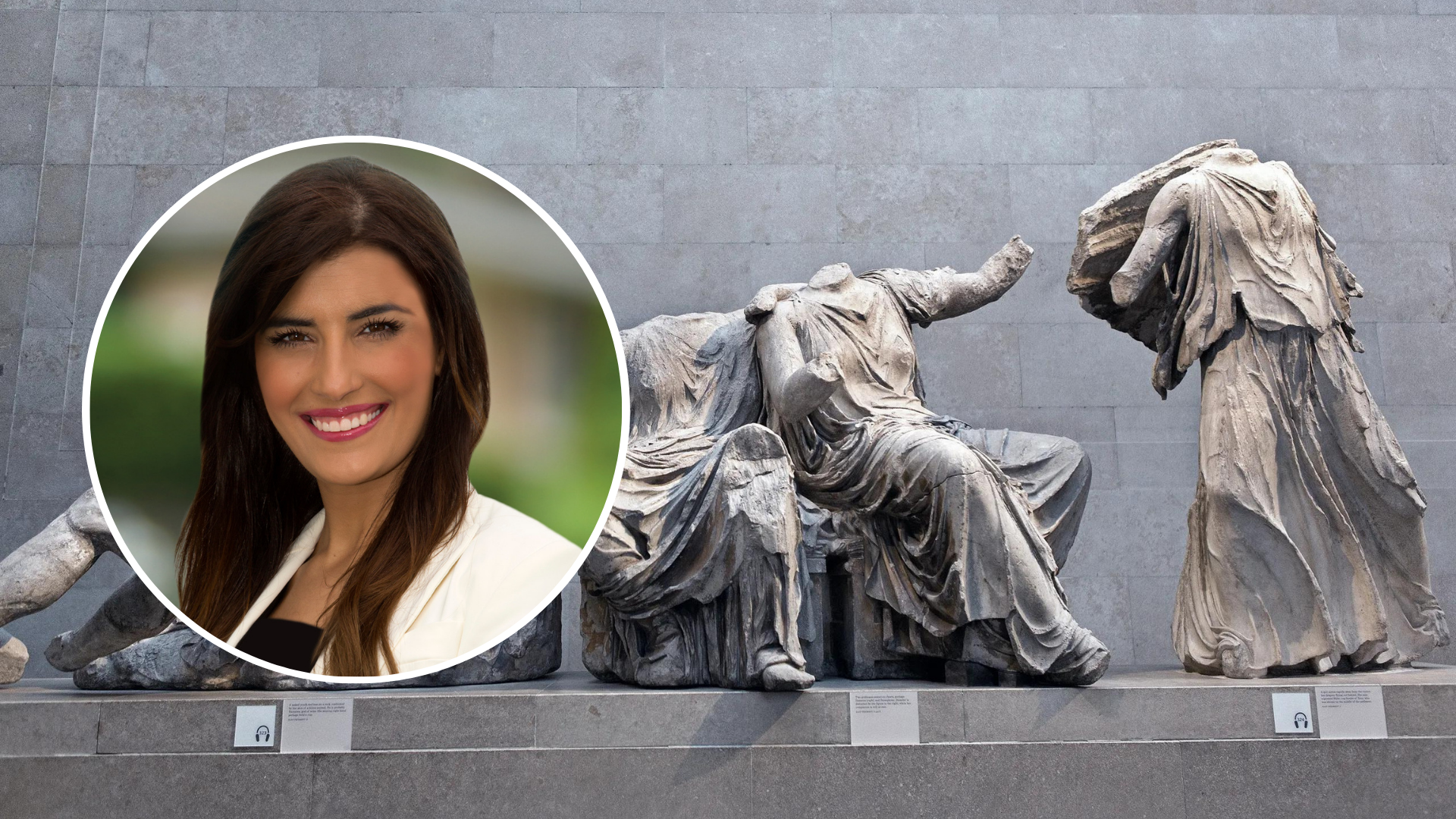
A motion calling for the return of the Parthenon Marbles to Greece has been formally introduced in the NSW Parliament by Eleni Petinos, Member for Miranda.
Speaking in the Legislative Assembly, Petinos gave notice of her intention to move a motion urging the immediate repatriation of the sculptures, which remain in the British Museum.
“I give notice that I shall move that this House,” Petinos began, outlining the key pillars of the motion.
She stated that the House:
- Acknowledges the historic Parthenon Marbles “shamefully remain displaced” in the British Museum, more than 2,000 kilometres from their rightful home.
- Notes that between 1801 and 1805, during the Ottoman occupation of Greece, parts of the iconic Parthenon were forcibly removed.
- Recognises the marbles as enduring symbols of Athenian democracy, Greece’s Golden Age, and cultural heritage.
- Calls for the immediate return of the Parthenon Marbles to Greece.
The sculptures – often referred to as the Elgin Marbles – were stolen from the Parthenon in the early 19th century by agents of Lord Elgin, then British ambassador to the Ottoman Empire. Greece has long argued that their removal was illegitimate and has formally sought their reunification in Athens for decades.
Today, the majority of the surviving sculptures are housed in London, while complementary sections are displayed in the Acropolis Museum in Athens, where space has long been reserved for their return.
For many within the Greek diaspora – including Australia’s large Hellenic community – the issue remains deeply symbolic. The Parthenon Marbles are not merely artefacts but represent the intellectual and democratic foundations of Western civilisation.
Petinos’ motion adds the voice of the NSW Parliament to international calls for repatriation and reflects growing global momentum around cultural restitution.
While the British Museum has maintained its position that the marbles were acquired legally under the standards of the time, discussions between UK and Greek officials have intensified in recent years regarding potential pathways toward reunification.
The introduction of the motion marks another chapter in the ongoing international dialogue over one of the world’s most contested cultural heritage disputes – and underscores the enduring connection between Greece and its diaspora communities abroad.
