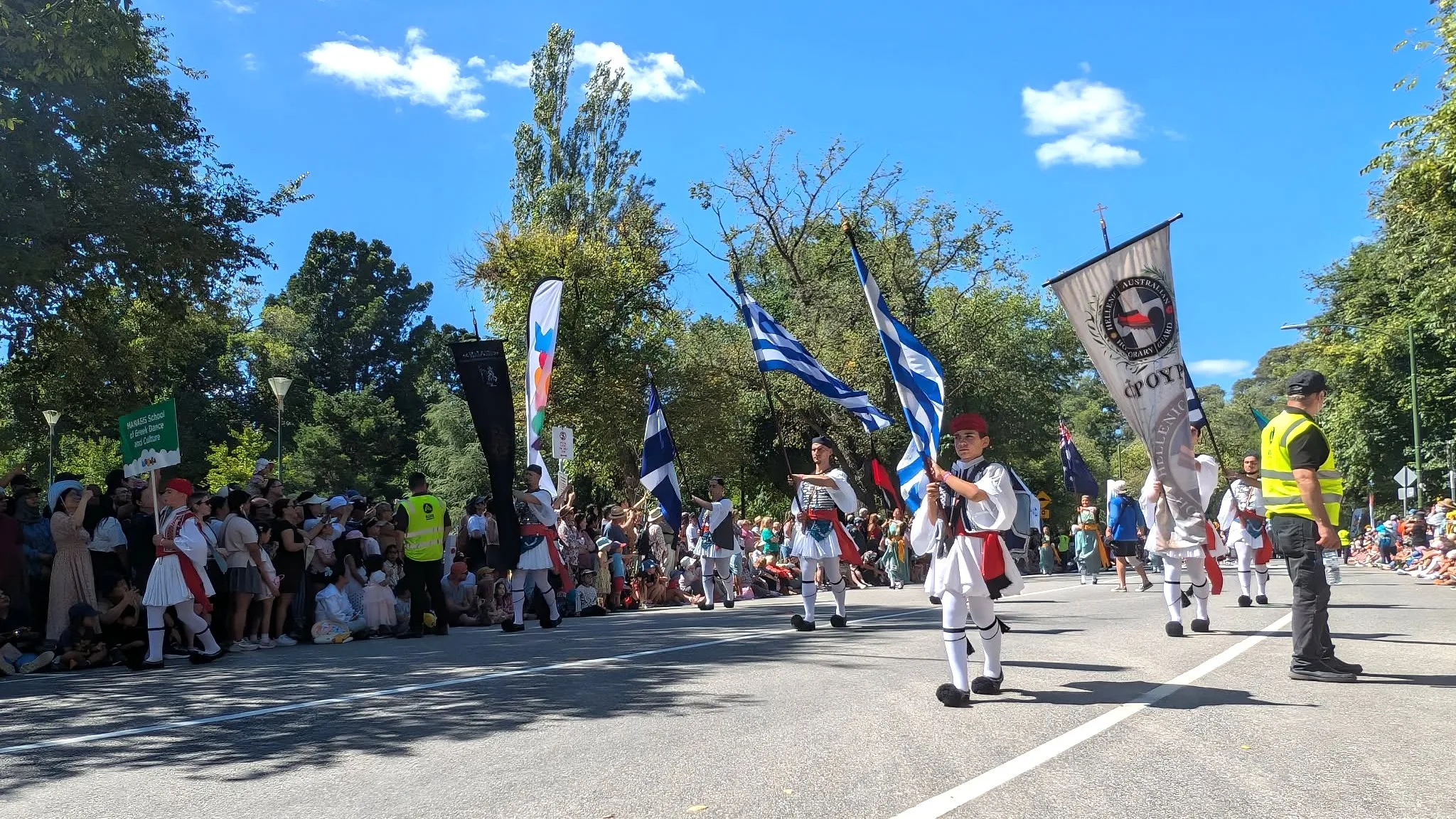
More than 35 community and cultural groups and around 1,800 performers took part in this year’s Moomba Parade in Melbourne, bringing colour, music and movement to the streets as part of Australia’s largest free community festival.
But hours before the parade began, one group withdrew following a dispute over the display of a controversial historical symbol.
The Federation of Macedonian Cultural and Artistic Associations of Victoria (FOMKUD) announced it would not participate after the City of Melbourne ruled that the Star of Kutlesh, also known as the Vergina Sun, could not be displayed.
“After careful and lengthy consultation with our member associations and choreographers, FOMKUD and the Presidents of the Macedonian Cultural Artistic Associations of Victoria have together decided not to participate in today’s 2026 City of Melbourne Moomba Parade,” the organisation said in a statement.
The decision followed months of preparation.
“After months of hard work by our dancers, choreographers and everyone involved, this was a difficult and bitter decision,” the statement read.
FOMKUD also raised concerns about exposing young performers to political tensions.
“Our dancers and choreographers… are our children,” the statement said. “We have a responsibility to keep them safe and protect them from political tensions. Our children are not a political tool to be exploited by any side of any debate.”
The withdrawal was disappointing for the young performers who had spent months rehearsing, and for a festival built around bringing communities together.
At the centre of the dispute was a City of Melbourne directive stating that parade participants could only display official national flags or organisational insignia, a rule applied to all groups to avoid political messaging.
Participants were advised in advance that “flags, banners, signage or branding cannot be displayed in the Parade without approval from the City of Melbourne.”
The rule extended to symbols that could be interpreted as political or divisive, including protest banners, political slogans or non-official cultural flags, whether the Vergina Sun, Pontian flags, Palestinian flags and keffiyehs, or other symbols connected to international disputes.
The directive sparked criticism online from some members of the North Macedonian community, including a Change.org petition signed by more than 2,300 people calling for the Sun of Kutlesh to be allowed in the parade.
“To the Lord Mayor of Melbourne and the Moomba Parade Committee… we demand an immediate end to the ban on the Sun of Kutlesh for the 2026 Moomba Parade,” the petition stated.
However, the symbol has been at the centre of a long-running dispute between Greece and North Macedonia. Under the Prespes Agreement signed by both governments in 2018, which came into force in February 2019, North Macedonia agreed to remove the Vergina Sun from public use within the country as part of the broader resolution of the name dispute between the two states.
Supporters of the petition argued the symbol represents cultural heritage rather than politics. One commenter wrote: “Our flag is our identity. If it bothers anyone, bad luck.”
Others called for a show of defiance. “Bring your families… bring your Macedonian flags,” one social media post urged.
The controversy also triggered criticism of Melbourne Lord Mayor Nick Reece online, with some posts accusing him of discrimination and alleging political pressure because of his personal background.
However, the City of Melbourne said the rule applied equally to all participants when asked whether the Mayor had influence in the decision and whether similar flags had appeared in previous years.
“We welcome and celebrate the colour and creativity of more than 35 community and cultural groups at the Moomba Parade,” a City of Melbourne spokesperson told The Greek Herald.
“We have a consistent approach for all participants, only national and organisational flags can be displayed in the Parade.”
Despite the online debate, the parade itself unfolded in the festive spirit Moomba is known for.
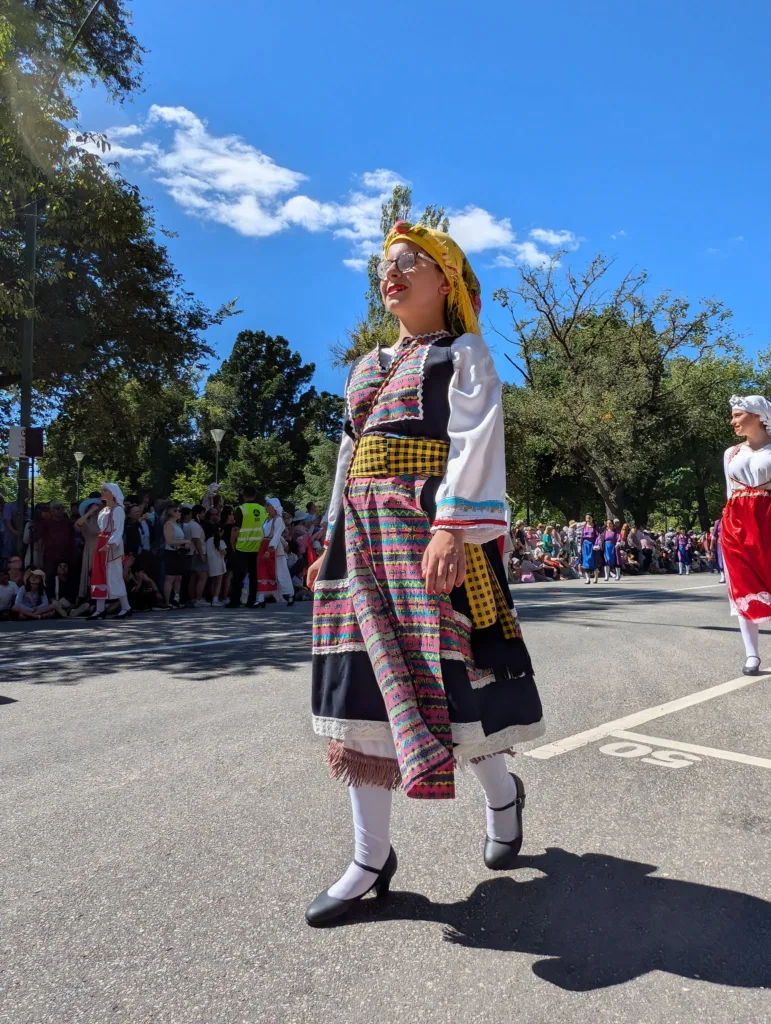
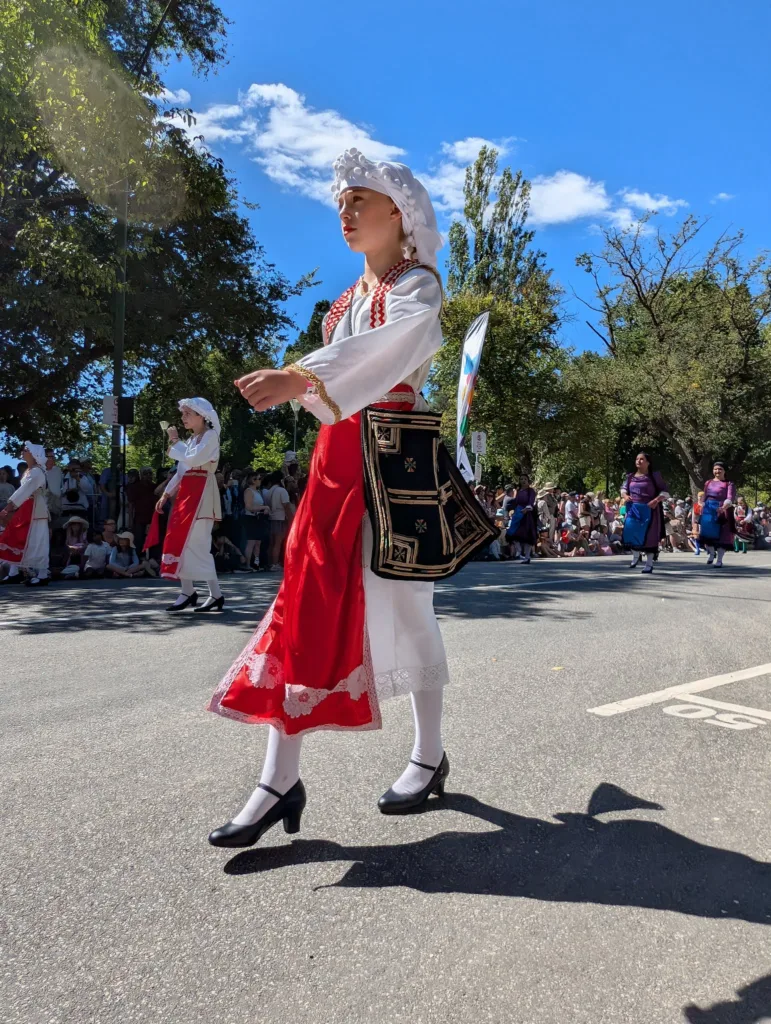
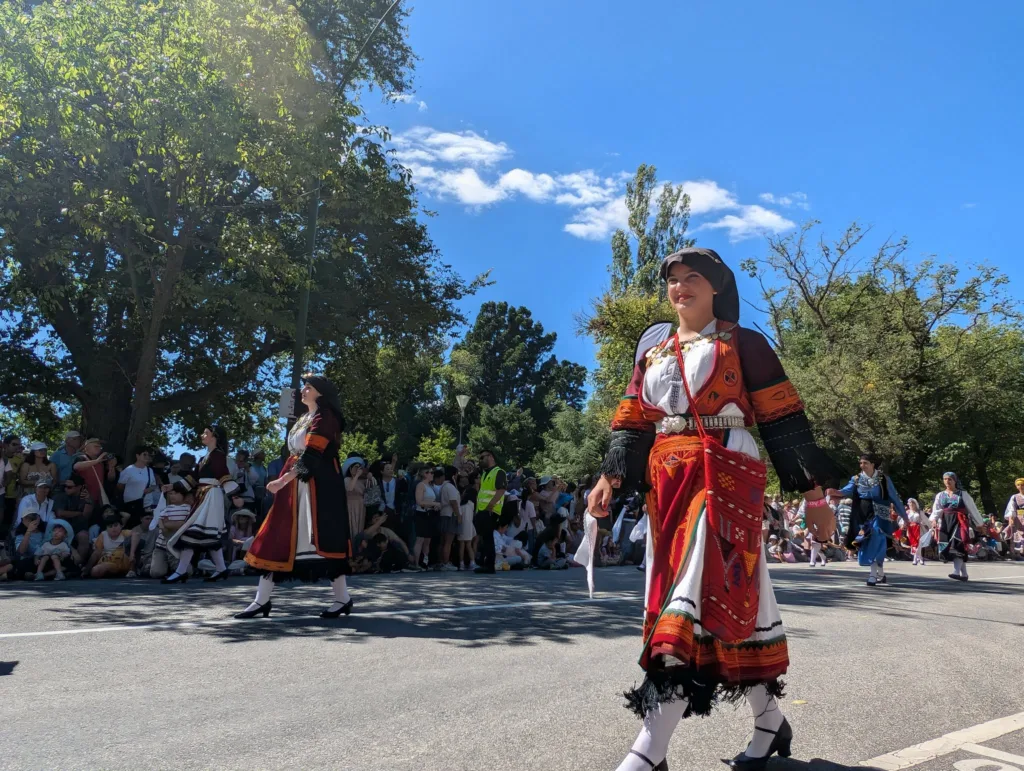
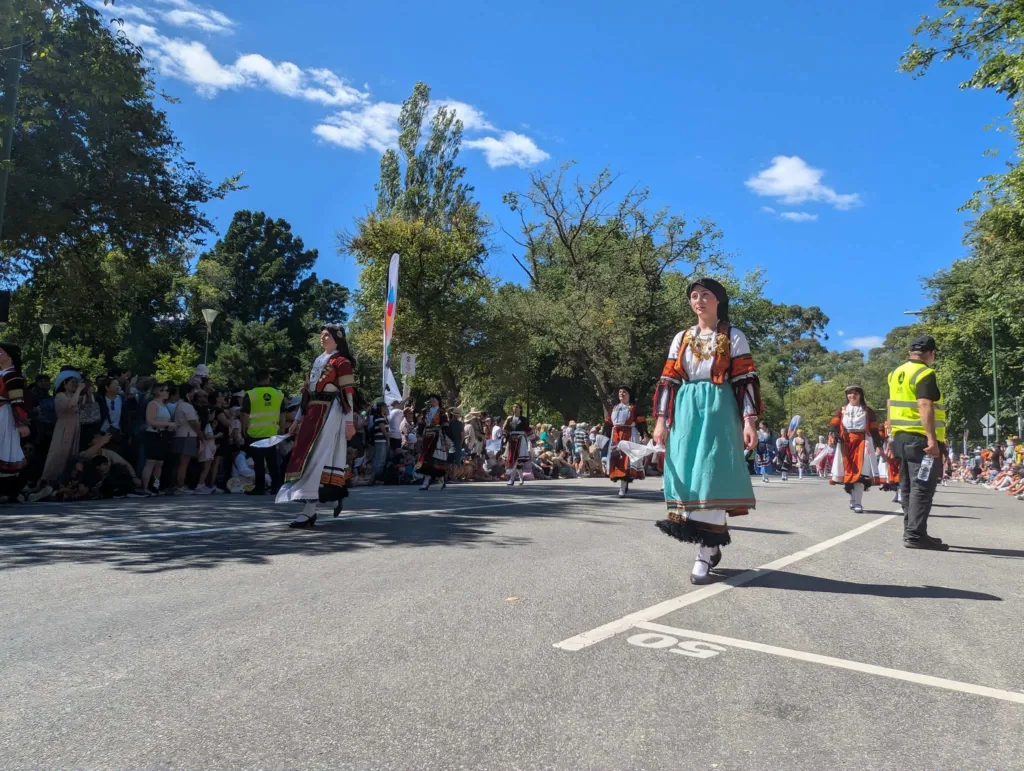
Dimosthenis Manasis, from the Manasis School of Greek Dance and Culture, said around 80 performers took part, presenting a vibrant display of Greek regional traditions.
“Last year was the first time the Greek diaspora was represented through our dance school in 31 years, the last time being in 1993 and 1994,” Manasis said.
“This year we wanted to present a display of Greece in its diversity, costumes from north to south grouped in clusters, alongside the traditional Amalia and Tsolia.”
Rather than simply marching, the troupe danced their way along the route.
“As the parade started, we were travelling and dancing at the same time. The audience clapped along and you could hear ‘opa’ from the sidelines,” he said.
“There was no negativity. It was extremely well received.”
The performance followed months of preparation.
“Everything we do happens during our dance lessons, one hour once a week,” Manasis said. “All the magic happens there, preparing for parades and routines. It’s meticulously planned and requires a massive commitment from our students.”
Manasis said that a more sombre participation will be presented during the Greek National Day parade at the foot of Melbourne’s Shrine of Remembrance on Sunday, March 22. The troupe will also include musical instruments and be more military in nature.
Across the parade route, dancers, musicians and performers from dozens of cultural backgrounds shared their traditions with crowds lining the streets.
The wider festival drew more than one million visitors across the long weekend, filling the banks of the Yarra River with fireworks, carnival rides and family events.
For those watching the parade, the political arguments circulating online felt far removed from what was unfolding on the street.
What people saw instead was simple: cultures celebrating side by side.
And that remains the spirit of Moomba, a festival built not on politics or historical disputes, but on the idea that Melbourne’s many communities can come together in one shared celebration.
