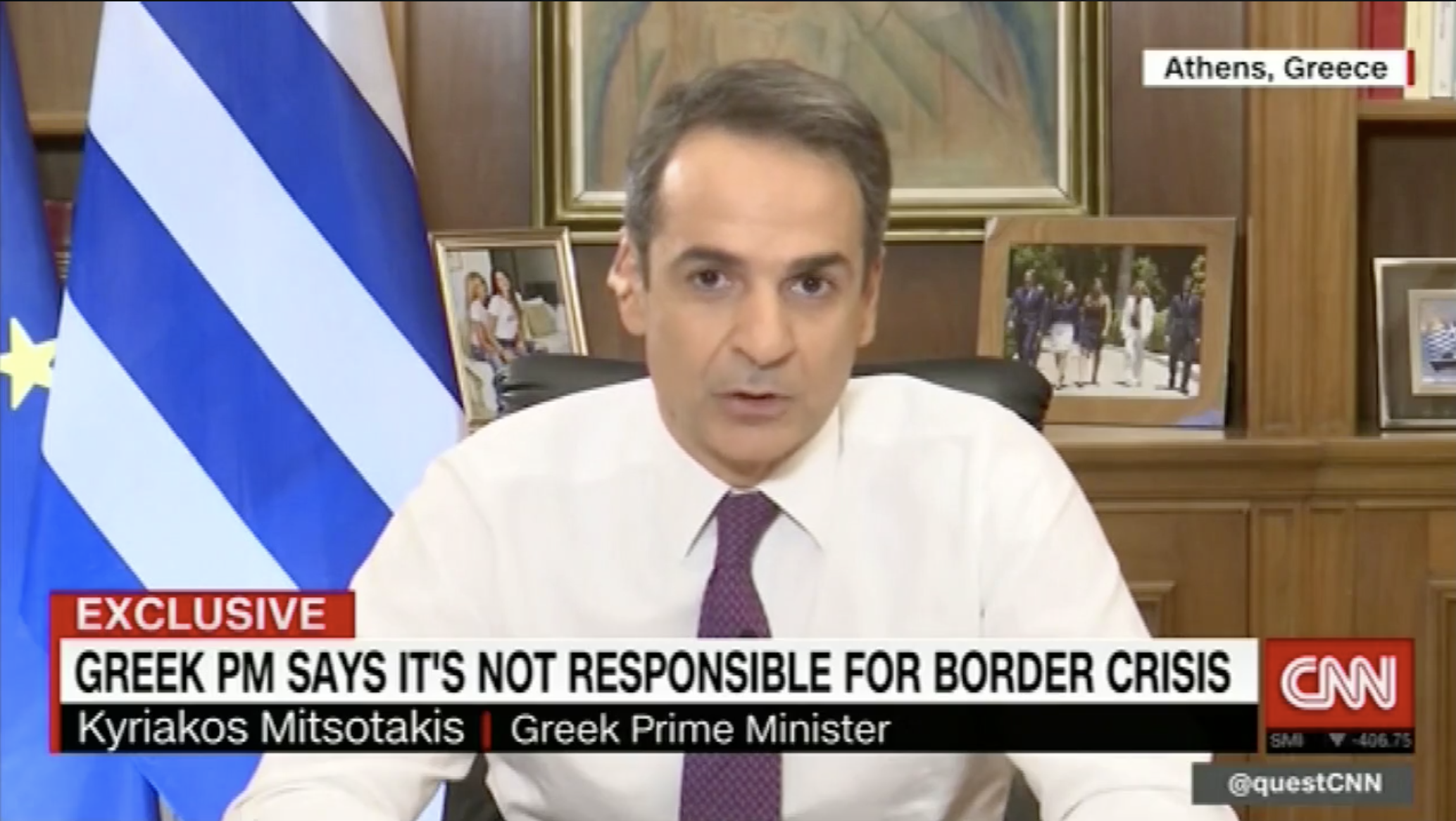
A landmark agreement signed between Turkey and the European Union in 2016, preventing mass migration into Greece from Middle-East migrant, has been labelled as ‘dead’ by Greek Prime Minister Kyriakos Mitsotakis, speaking with CNN in an interview late on Friday.
Mitsotakis believes that the agreement has collapsed because of Ankara’s inhumane tactics. He believes Turkey has falsely convinced migrants that the Greek border is the most accessible way to enter the EU.
“Right now, let’s be honest, the agreement is dead,” Mitsotakis said. “And it’s dead because Turkey has decided to completely violate the agreement because of what happened in Syria.”
Mitsotakis referred to “a conscious attempt by Turkey to use migrants and refugees as geopolitical pawns tio promote its own interests.” He spoke further saying that people crossing into Greece are not from Syria but have been living in Turkey for a long time and are being assisted by Turkish authorities.
“Europe is not going to be blackmailed over this problem by Turkey.”
We have accepted thousands of migrants
Mitsotakis called on Turkish President Recep Tayyip Erdogan “to stop being the instigator of fake news,” referring to “completely false allegations about what is happening at the borders.” “We’re not the ones escalating this conflict but we have every right… to protect our sovereign borders. We’ve succeeded in doing so and we’ll continue to succeed doing so in the future.”
“We were not the ones who initiated this crisis. We were not the ones who encouraged people to cross into Greece illegally. This is a country that over the past years has accepted hundreds of thousands of migrants and refugees,” Mitsotakis says.
Mitsotakis expressed how the Greek people have “opened up our homes and we’ve opened up our hearts,” further stating it is unacceptable for him to be accused of mistreating these refugees and migrants in times of great need.
“Greece has demonstrated it’s humanism throughout this crisis but we are not willing to engage in a process by which another country systematically uses and abuses these people to try to send them across the border. In terms of the methodology we use, we have not used any excessive force and we are always reacting and never initiating.”
