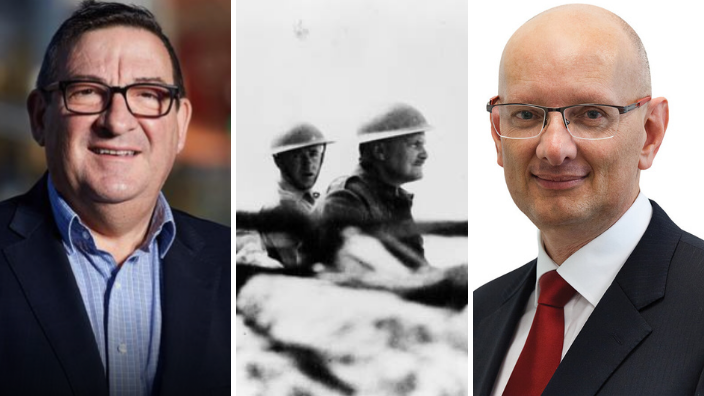
Shadow Minister for Veterans’ Affairs Shayne Neumann and Member for Adelaide Steve Georganas have marked the 80th anniversary since Australian forces took part in Allied efforts to defend Greece and Crete during the Second World War.
Britain and Australia both felt that Greece should be supported against German invasion during the war and that the defence of Greece was a ‘great risk in a good cause’.
Shadow Minister for Veterans’ Affairs Shayne Neumann said that the 6th Division arrived in Greece in early April 1941 and on 6 April, the Germans began their invasion of Greece.
“Despite their efforts, the Allied force, together with Greek units, was unable to halt the rapid German advance down central Greece towards Athens and more than 50,000 troops had to be evacuated,” Mr Neumann said.
“It was a costly operation, with 320 Australia troops tragically killed and 2,065 becoming prisoners of war in the process.
“After a month of intensive fighting, the Allied force was finally withdrawn from the Greek mainland on British and Australian warships and British transports.
“Some soldiers were taken back to Egypt but many were put ashore on the island of Crete.”
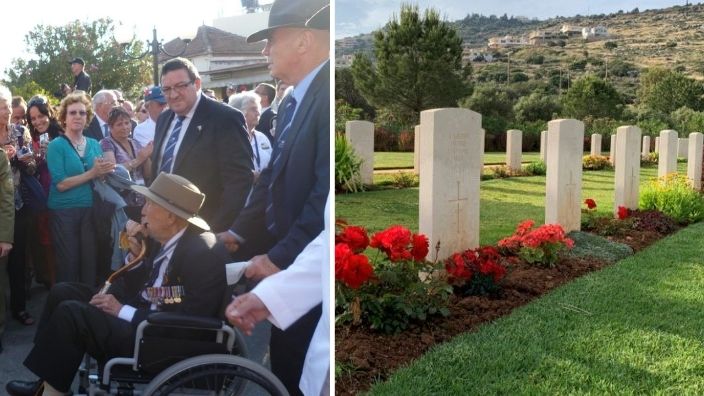
the Batte of Crete, 2011
Member for Adelaide Steve Georganas said that Crete, which was a key strategic asset, subsequently fell in a similar way, with the Allies being overrun by the formidable German force.
“Together with Greek troops, the Allies formed ‘Creforce’ and prepared to meet the Germans, who came on 20 May in the shape of a major paratroop landing at three different places along the north coast of the island,” Mr Georganas said.
“Despite vigorous opposition to the Germans, the Allied force eventually had to be withdrawn, once again by British and Australian warships after sustaining more than 1,700 killed, 2,000 wounded and 11,000 prisoners of war.
“We honour the service and sacrifice of these brave men and we also owe a huge debt of gratitude to the thousands of locals who helped our troops survive.
“Indeed, more than 450,000 Greeks sadly died during the following four years of German occupation, with almost 25,000 executed for assisting the Allies.”
More information about the Allied campaigns in Greece and Crete can be found on the Department of Veterans’ Affairs Anzac Portal.

