Tensions across the Middle East continue to intensify as Iran prepares for a major leadership transition and regional military exchanges escalate.
Iran has selected Mojtaba Khamenei, the son of the former supreme leader Ayatollah Ali Khamenei, as the country’s new leader.
The development comes amid sharp rhetoric from Washington. US President Donald Trump said on Sunday that Iran’s next supreme leader “won’t last long without his approval.”
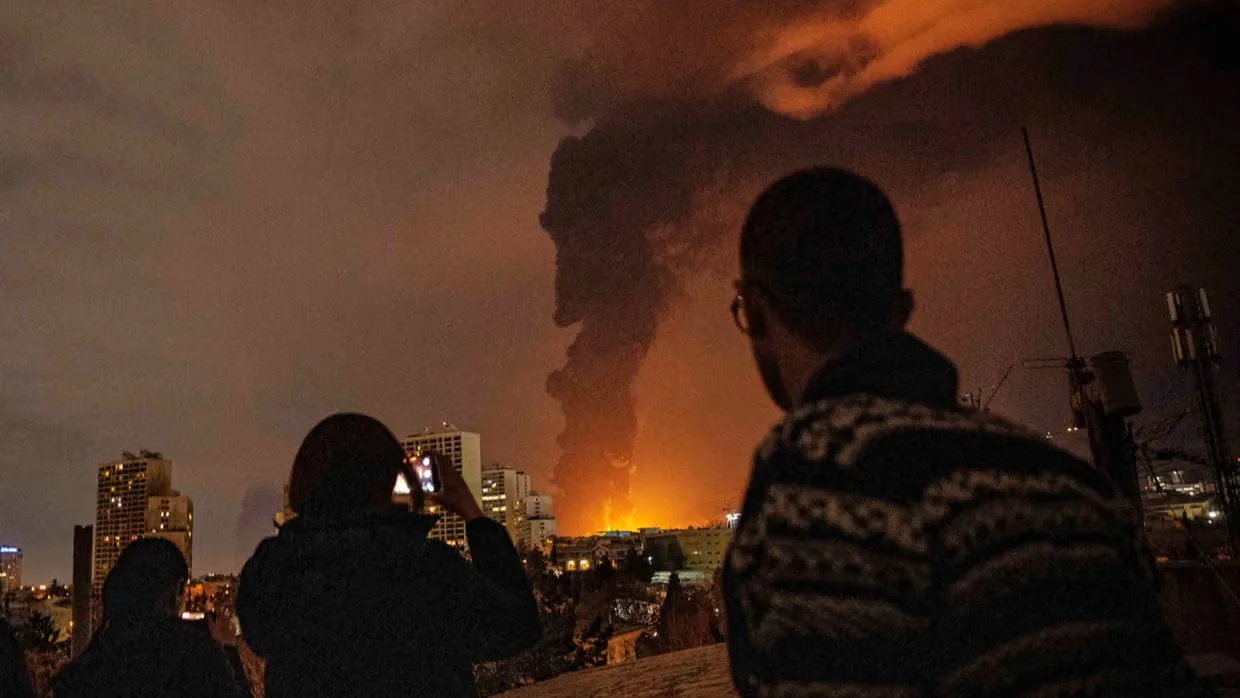
Meanwhile, Israel has launched new “wide-scale strikes” on targets in Tehran and other parts of Iran. The latest wave of attacks followed an announcement from the Israel Defense Forces (IDF) that it had struck the Islamic Revolutionary Guard Corps’ Space Force headquarters in Tehran, as well as around 50 ammunition bunkers earlier in the day.
Iran has also retaliated beyond its borders. Strikes targeting Gulf infrastructure reportedly hit fuel tanks at Kuwait’s airport and a desalination plant in Bahrain, with several people killed.
Iranian President Masoud Pezeshkian warned that the Islamic Republic “will be forced to respond” against neighbouring countries if their territory is used to launch attacks against Iran.
Saudi Arabia, the United Arab Emirates, Qatar and Kuwait have all reported further attacks, while the conflict has begun spreading across the wider region, with tensions also affecting Lebanon, Cyprus, Turkey and Azerbaijan.
The violence has already claimed further casualties. A seventh US military service member has died from wounds sustained during Iran’s initial counterattack last week. In Saudi Arabia, two people were also killed after a projectile struck a residential area in the city of Al-Kharj.
Australia is monitoring the situation closely. Foreign Minister Penny Wong confirmed that Canberra is considering a request for military assistance from Gulf states, but stressed that Australia would not participate in offensive operations against Iran.
Source: ABC News
