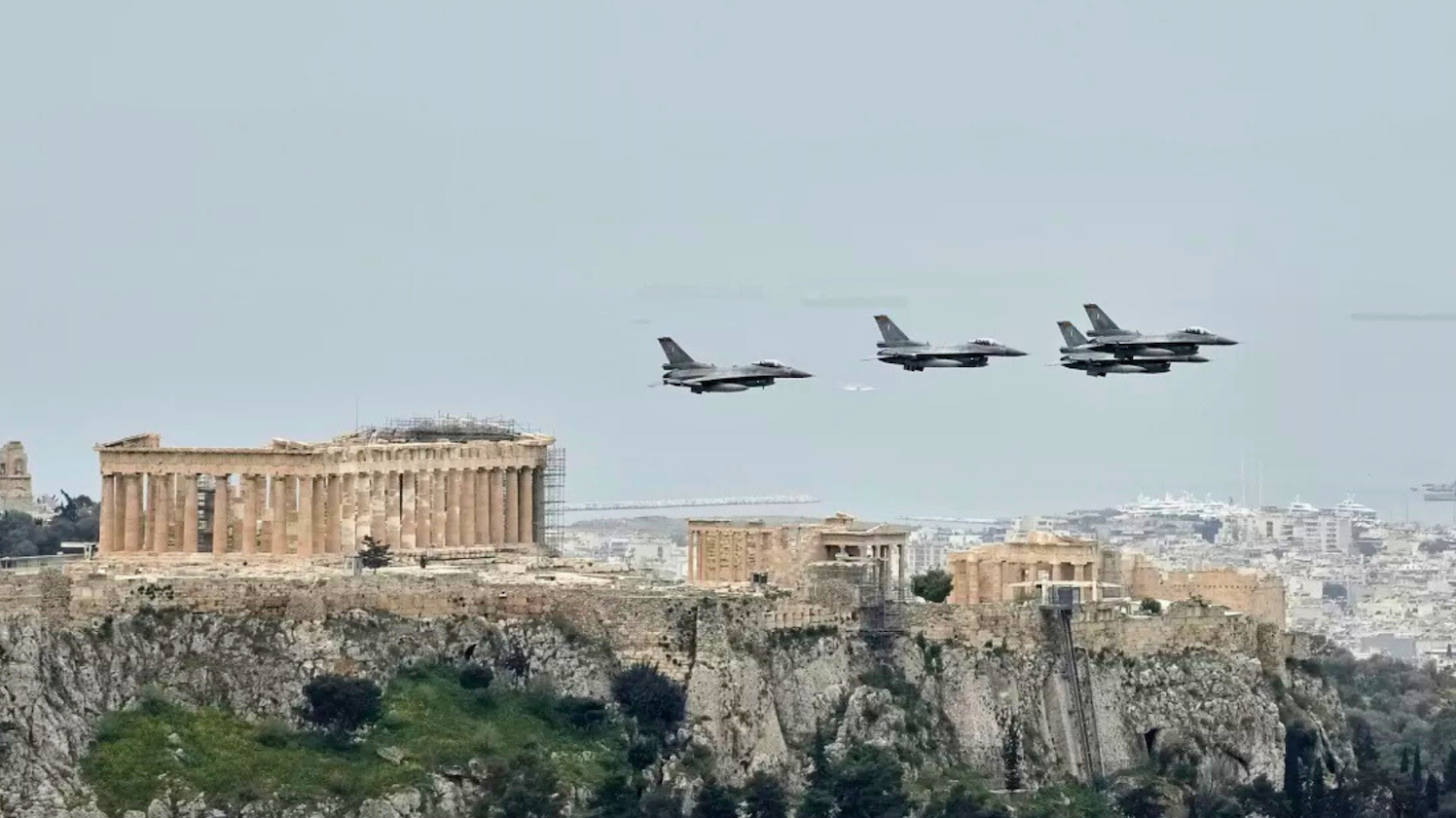
Greece is set to invest 25 billion euros ($43 billion) in a comprehensive defence overhaul, marking the “most drastic” transformation in its modern history, Greek Prime Minister Kyriakos Mitsotakis announced on Wednesday, April 2.
The initiative, aimed at addressing evolving geopolitical challenges and strengthening Greece’s position within the European Union’s defence framework, includes the development of a new anti-missile, anti-aircraft, and anti-drone defensive system called “Achilles’s Shield.”
“The plan involves the most drastic transformation of the armed forces in the country’s modern history,” Mitsotakis told parliament.
He added, “The world is changing at an unforeseeable pace,” emphasising the need for rapid modernisation.
Οι περιστάσεις δεν περιμένουν. Οφείλουμε να τις αδράξουμε, αναλαμβάνοντας το τίμημα και το κόστος της ελευθερίας και της κυριαρχίας, προκειμένου η Ελλάδα να παραμείνει ισχυρή σε έναν αβέβαιο πλανήτη και να συνεχίσει απρόσκοπτα την πορεία προς την πρόοδο. https://t.co/saluneG7yU pic.twitter.com/EG5uEc7zzT
— Prime Minister GR (@PrimeministerGR) April 2, 2025
Greece’s military budget has already doubled this year to 6.13 billion euros ($6.6 billion), making the country one of the few NATO members to allocate more than three percent of its GDP to defence.
This move aims to solidify Greece as a crucial part of the EU’s defence strategy, contributing one of its most advanced armies.
The overhaul is partially driven by Greece’s long-standing tensions with Turkey.
Greece has also been strengthening its military capabilities by purchasing advanced weapons, including 24 Rafale fighter jets from France and 20 US-made F-35 fighter jets, alongside the acquisition of unmanned vessels, drones, and radars.
Όταν μιλάμε για πόρους που αφορούν την Εθνική Άμυνα, δεν εννοούμε μόνο τις δαπάνες, μόνο τις επενδύσεις για τους στρατιωτικούς εξοπλισμούς. Αλλά πρωτίστως την πάγια επένδυση της πατρίδας μας να μένει ισχυρή, σταθερή, ανεξάρτητη, σε έναν κόσμο που αλλάζει με απρόβλεπτους ρυθμούς. pic.twitter.com/1EAIw7GnXE
— Prime Minister GR (@PrimeministerGR) April 2, 2025
Reports suggest that Greece is negotiating with Israel for the “Achilles’s Shield” system, which will bolster its defences against drones.
Experts argue that the overhaul is vital, as Greece’s military had lagged in modernisation due to economic constraints in the past decade.
Maria Gavouneli, an international law professor at the University of Athens, described the reorganisation as “necessary” to address new global security challenges and ensure Greece remains a key European outpost.
This ambitious defence strategy comes amid growing concerns in Europe about security threats from Russia and regional instability, with other EU nations, including France and Germany, also expanding their military capabilities.
Source: The Australian.
