
Environmental educator Costa Georgiadis and the Foundation for National Parks & Wildlife (FNPW) have launched Bring Back the Bush, a national campaign highlighting the country’s thinning landscapes, loss of natural density and cleared patches where thriving habitat once existed.
Land clearing and habitat loss have been the main drivers for biodiversity loss across the country, resulting in Australia being one of the few developed nations considered a ‘deforestation hotspot’.
Bushland is also being pushed to breaking point by invasive species and climate change. Australia has committed to protecting 30% of its land and seas by 2030, but it’s currently at just 22% — leaving a gap three times the size of Victoria.
Australia has now lost more mammals to extinction than any other continent on Earth. With more than 2,320 native species now listed as threatened, conservationists say the warning signs are everywhere: shrinking canopy cover, fragmented wildlife corridors, exposed understorey and once-dense habitats now reduced to patchy remnants.
Costa says Australia’s landscapes are tough — but even the toughest bushland needs a little help to bounce back.
“You don’t need a botanist’s eye to see that the bush is looking bare,” Costa says.
“We’ve reduced our bushland to the point where whole ecosystems are left without the density and coverage they need. Wildlife can’t thrive in a landscape that’s been clipped back like a suburban hedge — they need depth, shade, layers, the kind of bush you can actually disappear into.
“That’s what this movement is about: giving the bush the chance to grow back strong, diverse and wonderfully unruly as nature knows.”
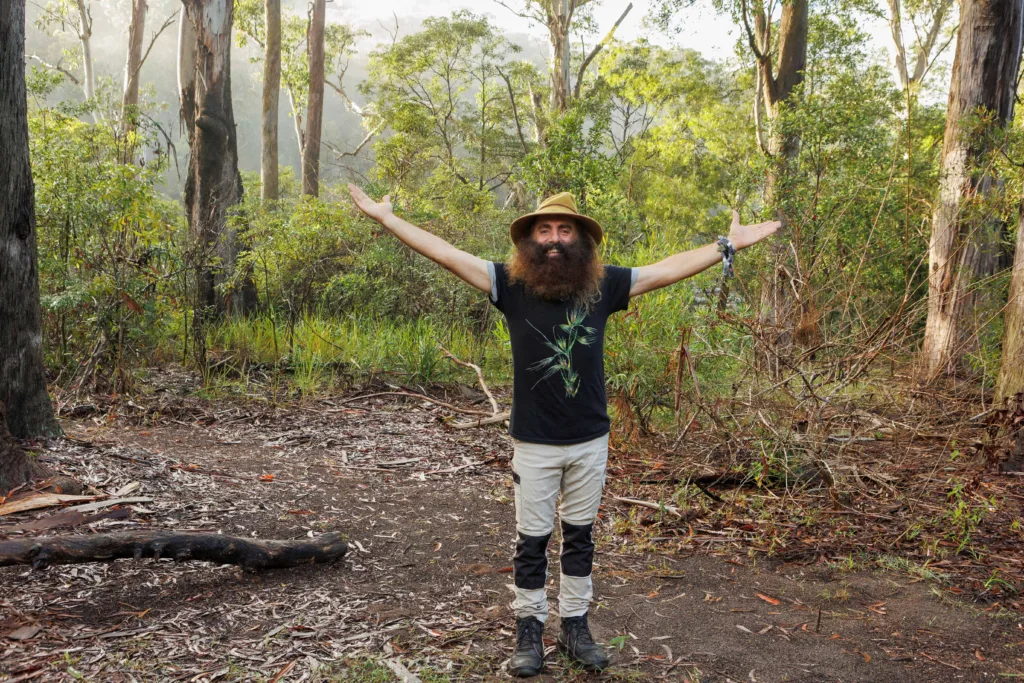
In 2025, FNPW restored 647 hectares of degraded land — but that’s only a fraction of what’s needed. To meet the 2030 target of protecting 30% of our land and seas, Australia must protect or restore more than 60 million hectares. This underscores the scale of work still to be done.
FNPW’s nationalcall-to-action, Bring Back the Bush, highlights the essential role that thick, connected habitat plays in supporting wildlife, protecting biodiversity and keeping Country resilient — providing the cover, food sources and ecological stability that native species rely on.
FNPW’s Chief Executive Officer Ian Darbyshire says the campaign reflects a growing urgency to restore what has been lost, while recognising the bush’s remarkable ability to recover when given the chance.
“Our landscapes have taken a fair hit over the past few decades,” Darbyshire says. “But when we restore habitat, reconnect corridors and protect what remains, we see immediate signs of recovery — species returning, vegetation thickening, ecosystems stabilising. The bush is tough, but it needs our help.”
FNPW’s long-term conservation work continues to demonstrate the impact of practical restoration at scale, with over 55 years protecting and restoring precious land, biodiversity and saving species from extinction. Recent achievements include:
- Secured 29,479 hectares of new protected areas in 2025 — when land of high ecological and cultural value is secured and placed into permanent protection, it stays that way forever.
- Planted 1.2 million native trees nationally, with 49 community groups supporting these efforts.
- Propagated and planted 110,000 fire‑resilient native plants
- Restored 647 hectares of degraded land — helping landscapes recover and thrive.
- Reintroduced Growling Grass Frogs to Winton Wetlands
- Delivered 18,582 wombat mange treatments in 2025 — helping protect one of Australia’s most recognisable native species.
Darbyshire says restoring and protecting bushland is essential to safeguarding Australia’s biodiversity and cultural landscapes for future generations.
“Bringing back the bush is long-term work,” he says. “It takes communities, landholders, conservation groups and everyday Australians pulling in the same direction. But the payoff is enormous — healthier landscapes, stronger biodiversity and a future where our wildlife has a fighting chance.”
For more information on supporting Bring Back the Bush, visit bush.fnpw.org.au
