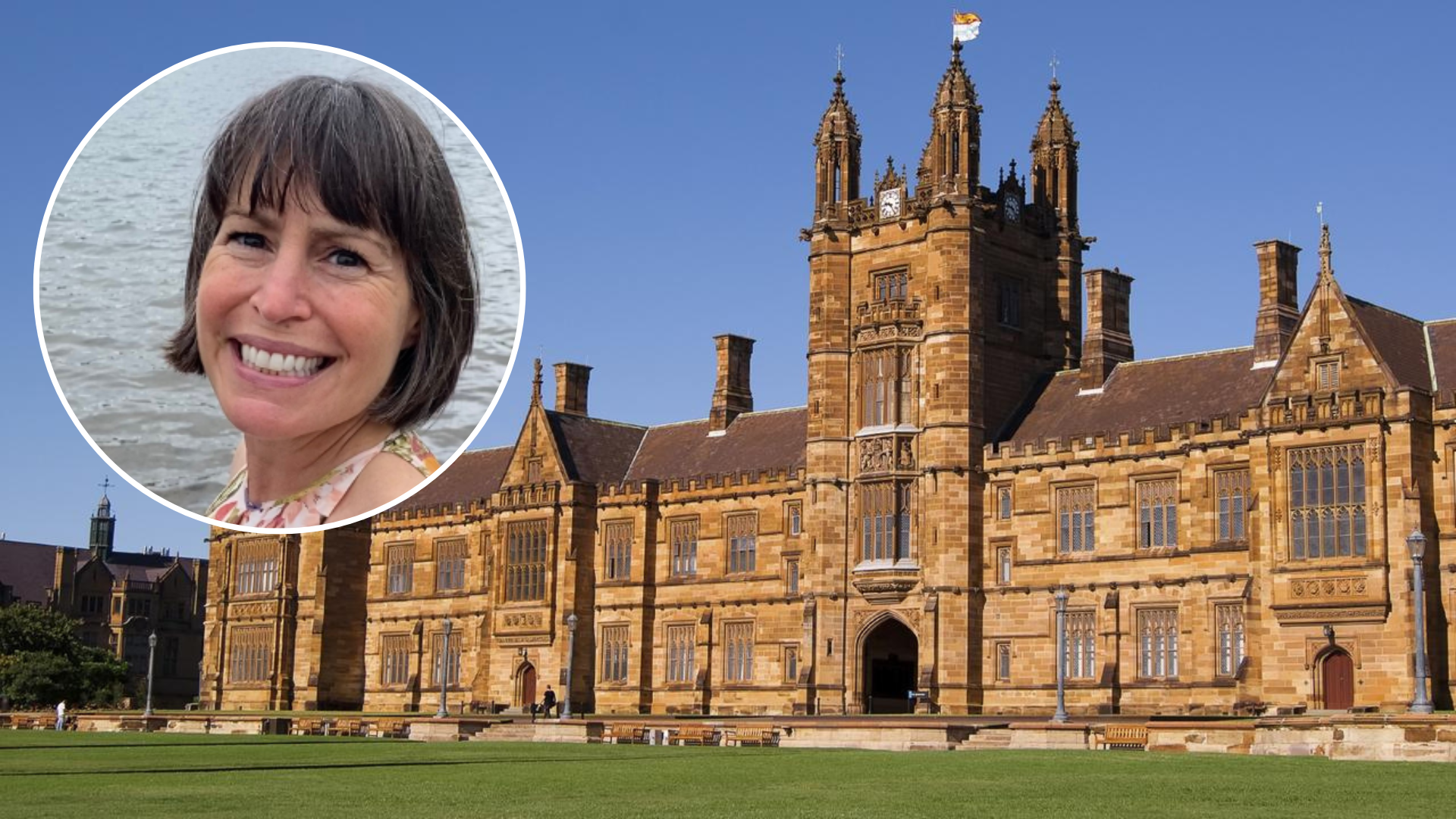
Concerns have been raised by members of Australia’s Greek and wider community about the future direction of the Australian Archaeological Institute at Athens (AAIA) at the University of Sydney (USYD).
The Constitution of the AAIA states that the objective of the Institute is to engage in and promote Hellenic Archaeological research, Modern Greek studies and other such research in Greece and Australia that has a distinctly Greek focus.
The Institute is also one of 18 foreign research facilities established in Athens, Greece, which means it is a legal entity sanctioned by the Greek government and answerable to the Greek Ministry of Culture.
Lack of transparency:
In February this year, the USYD issued a press release announcing the appointment of Professor Tamar Hodos as the AAIA’s new Director. Professor Hodos will also be taking up a position as Chair of Classical Archaeology at the university, and her areas of field excavation and research lie primarily in Turkey and other areas of the Mediterranean.
According to a letter tabled by AAIA Governor Dr Archondia Thanos at the recent Annual General Meeting (AGM), members, friends and supporters of the Institute are concerned the appointment of the new Director represents a change in direction that could threaten the Institute’s character and ability to meet its constitutional objectives.
The two main issues raised at the AGM were centred around the governance of the AAIA, as well as the “lack of transparency in the processes of the election of a new Director and the rationale behind such a decision.”
Some members said there has been a failure to communicate whether Professor Hodos’ credentials are suitable to the position of Director of the AAIA as there does not appear to be any link between the new appointee and Greece or Australia.
The letter alleges that Professor Hodos does not have a working knowledge of the Greek language and has never worked in Greece or with the Greek authorities, the Greek Ministry of Culture and the Greek Australian community “which for years has been the heart of fundraising and collective support for the Institute.”

Questions were also raised at the AGM as to whether there were other candidates that fulfilled the criteria but were passed over for the role. As a result, members were concerned about: (1) whether the selection committee acted in accordance with the Constitution of the Institute, and (2) whether the correct protocols and instructions were followed in relation to the will of the late Professor Cambitoglou who left a bequest of approximately $6 million to the AAIA.
Sources of The Greek Herald said Professor Cambitoglou left the money to the Institute in his will on the condition that the appointed Director has knowledge in Greek archaeology and is able to speak Greek. The sources said Professor Hodos does not meet these conditions, putting the AAIA’s future at risk.
‘We want answers’:
When The Greek Herald asked Dr Thanos about the concerns raised at the recent AGM, she said it was time for Australia’s Greek and wider community to “get answers from the university around what they plan to do to maintain and preserve the purpose of the AAIA as outlined in its Constitution, as well as the independent function of the Institute.”
“With the current changes going on at the university there is a real threat that the Institute will be absorbed into a wider and undefined sphere of ‘Global Studies’ and ‘World Archaeology’ as part of a push to be rid of independent institutions that promote and preserve diversity,” Dr Thanos said.
“There are also fears that the cultural identity of the Institute, which serves as an academic bridge between Australia and Greece as well as the world of academia and the broader Greek Australian community, may be dissolved during this transition and at a critical time for the community as many of our older leaders pass away.“
The AAIA Governor said the community must remain vigilant and act to ensure the “preservation of the Institute’s distinctly Greek focus as specified in its Constitution as its primary function.”
“To date we have not received any reassurance to this effect,” Dr Thanos said.
‘Expanded vision’ for the AAIA:
In a recent interview published to the USYD – School of Humanities YouTube page, Professor Hodos said she is interested in the impact of Greeks during the Mediterranean’s Iron Age, and spoke about her plans for the future direction of the AAIA.
“I would love to see the AAIA as the ‘omphalos’ – that centre of research that is undertaken by Australian and New Zealander scholars in Greece but in the Mediterranean more widely, so that it becomes a real centre of interdisciplinary, multicultural connectivity in research and scholarship for archaeology and its cognate disciplines,” Professor Hodos said.
In a statement to The Greek Herald, the USYD said that whilst the AAIA will remain ‘Greek-focused,’ the university also intends to expand its focus.
“Our Australian Archaeological Institute at Athens will always retain a ‘distinctly Greek focus’ as part of its vision, and the work and activities it carries out and supports,” the statement reads.
“At the same time, we intend to broaden the Institute’s focus beyond Classical Archaeology to also support wider exploration and understanding of other key themes including the influence of Hellenic culture on the wider Mediterranean, Greek diasporas and the legacies of conflict through time.
“Our Institute will also promote a distinctive Greek-Australian perspective, reflecting its membership and friends groups that are made up primarily of Greek diaspora living in Australia. This includes helping to drive and support research, outreach and engagement activities around the wartime heritage of, for example, Lemnos and Crete.”
The statement added that Professor Hodos and the USYD Head of the School of Humanities “has met with colleagues in the Ministry of Culture and Sport, the Australian Ambassador to Greece, various Directors of the other foreign schools in Athens, and the Athens-based Friends group of the AAIA.”
“Our partners were enthusiastic about our expanded vision for the Institute, and we’re looking forward to progressing the next chapter in the history of the AAIA,” the statement concluded.

