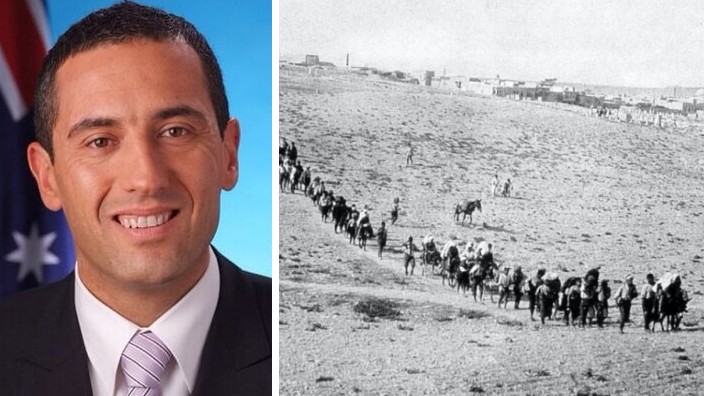
The Hon Tom Koutsantonis MP plans on passing a motion next week in the House of Assembly of the South Australian Parliament, calling for the state government to recognise May 19 as the official day of remembrance of the Greek genocide.
In a Facebook post, Mr Koutsantonis stressed that “on May 19 every year we must pause and remember what our brothers and sisters of Pontos and Asia Minor suffered at the hands of the Turkish Military.”
“The first modern organised genocide, 3.5 million murdered, of them 353,000 Hellenes, 1.5 million Armenians, 500,000 Syrians and other Christian minorities. We remember, we are still here, we will never forget and we demand justice.”
READ MORE: May 19: Remembering the Greek Pontian Genocide.

The motion is as follows:
On May 12, I will move that this house:
- Recognise May 19 as the Day of Remembrance for the genocide by the Ottoman state from 1915-1918 of Armenian, Hellenes, Syrians and other minorities in Asia Minor.
- Congratulate the International Association of Genocide Scholars and many other nations that have officially recognised that Armenians, Hellenes, Syrians and other minorities were subject to genocide at the hands of the Ottoman Turkish military in Asia Minor.
- Note that this house officially recognised that genocide in 2009, moved by the Hon. Michael Atkinson.
- Join with members of the Armenian Australian, Pontian Greek Australian and Syrian Australian communities in honouring the memories of the innocent men, women and children who feel victim to the first modern genocide.
- Again condemn the genocide of Armenians, Pontian Greeks, Syrian Orthodox and other Christian minorities and all other acts of genocide as the ultimate act of racial, religious and cultural intolerance as endorsed by this House in 2009.
- Calls on the Turkish Republic to accept responsibility for the genocide of 3.5 million from Asia Minor, according to the International Association of Genocide Scholars. More than 353,000 Hellenes of Asia Minor and Pontus, 1.5 million Armenians and 500,000 Syrians, the displacement and suffering of millions more, and calls on the Turkish Republic to finally apologise for this act of genocide it perpetrated, beginning in 1915.

