
The Anthony Albanese government is moving to impose a 2.25% levy on major digital platforms unless they strike payment deals with Australian media companies, under a proposed overhaul of news bargaining rules.
The draft News Bargaining Incentive (NBI) scheme would apply to companies including Google, Meta and TikTok, with the government expecting it could generate up to $250 million a year for journalism.
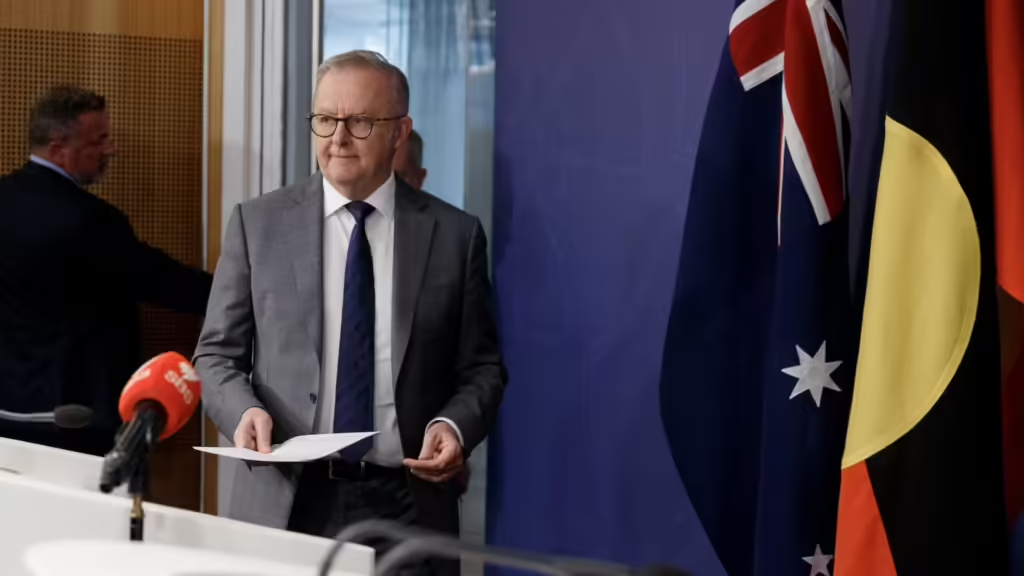
Albanese said the policy was aimed at ensuring tech companies compensate news producers, stating: “[Journalism] shouldn’t just be able to be taken by a large multinational corporation and used to generate profits for that organisation with no compensation appropriate for the people who produce that creative content.”
Communications Minister Anika Wells said the shift reflects changing news consumption habits.
“People are increasingly getting their news directly from Facebook, from TikTok, and from Google,” she said.
“And we believe it’s only fair that large digital platforms contribute to the hard work of journalism that enriches their feeds and that drives their revenue.”
Under the model, platforms can avoid the levy by entering agreements with publishers, with incentives including offsets of up to 170%. If companies refuse, funds collected would be redistributed to media outlets based on employment of journalists. The rules would target platforms earning more than $250 million annually in Australia and with large user bases.
Tech companies have pushed back strongly. Google said it “reject[s] the need for this tax,” arguing it already has extensive commercial deals with news organisations and criticising the exclusion of AI platforms.
Meta described the proposal as flawed, saying the government’s position was “simply wrong.”
“A government-mandated transfer of wealth from one industry to another, with no connection to the value exchanged, will not deliver a sustainable or innovative news sector,” a spokesperson said.
They added the plan was “nothing more than a digital services tax,” noting news organisations “voluntarily post content” on its platforms.
Assistant Treasurer Daniel Mulino said additional companies meeting the thresholds could be captured in future, while issues relating to AI would be handled separately.
Former competition watchdog chair Allan Fels said the reforms were overdue, warning delays had allowed tech platforms to avoid accountability and deepen their bargaining power.
Media organisations, including the ABC and News Corp, backed the proposal, arguing journalism is “under threat” and warning it would become unsustainable if platforms do not pay for the content they benefit from.
The legislation is expected to be introduced later this year, with the government signalling its preference for negotiated deals rather than collecting the levy directly.
Source: The Guardian.
