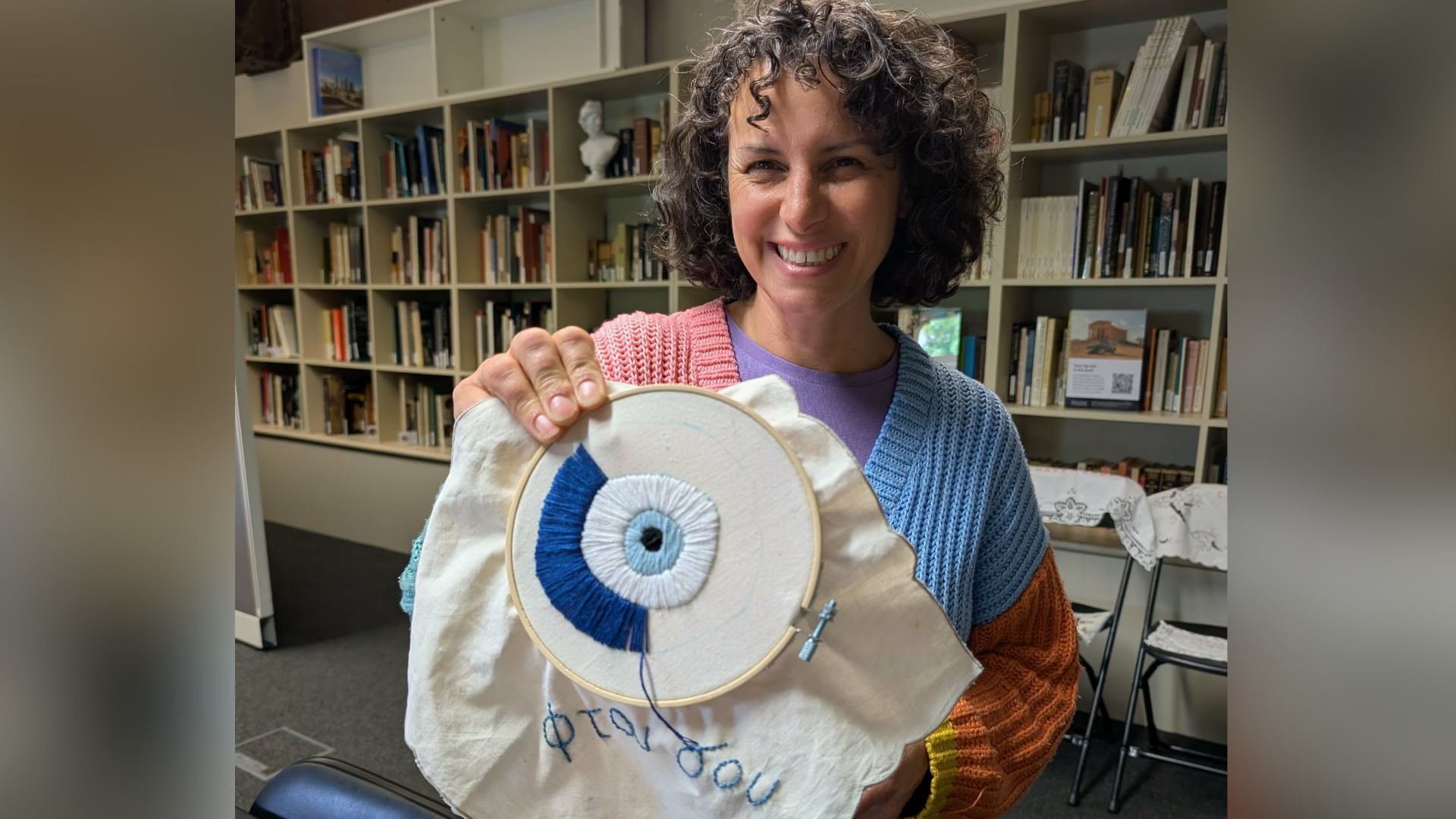
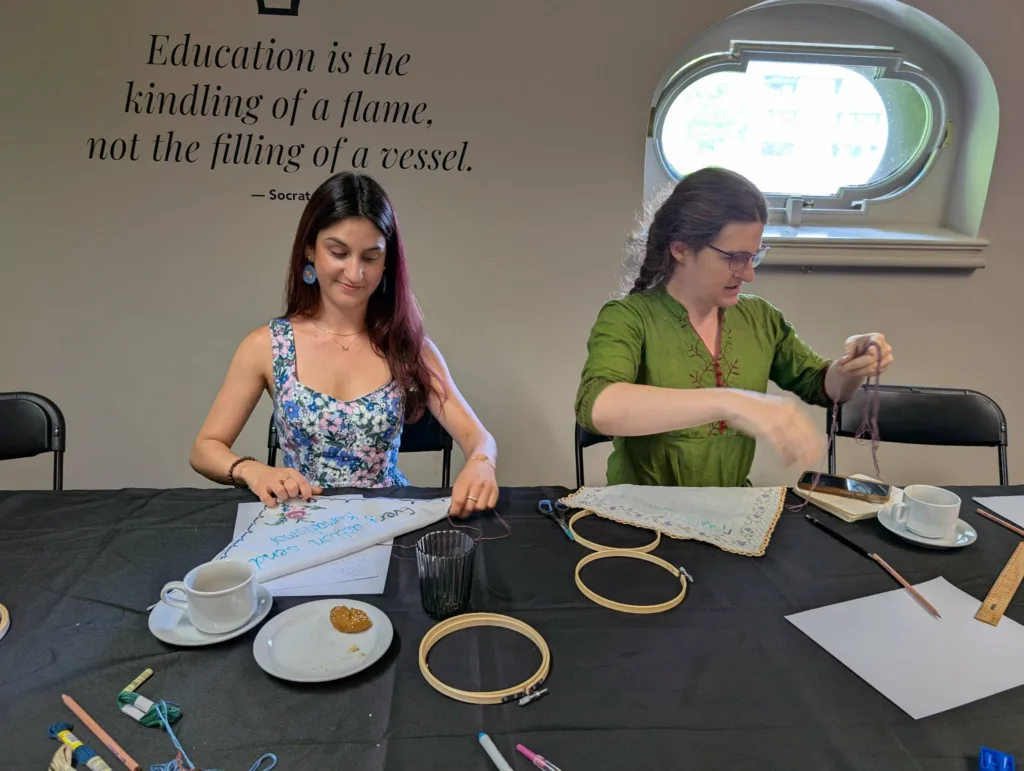
On the top floor of the Hellenic Museum, a musty loft-like space usually reserved for staff, a group of mainly women sit around a table scattered with thread, fabric, coffee cups and small plates of paximadakia biscuits.
Some lean over delicate doilies, concentrating on their stitches. Others pause to talk, laughing as they compare the words slowly appearing in coloured thread across old lace.
This is no ordinary craft circle.
It is a continuum of The Dowry Project, a series of workshops led by Melbourne artist Sonia Zymantas that invites women to take something deeply traditional, the Greek proika, or glory box, and reinterpret it for today.
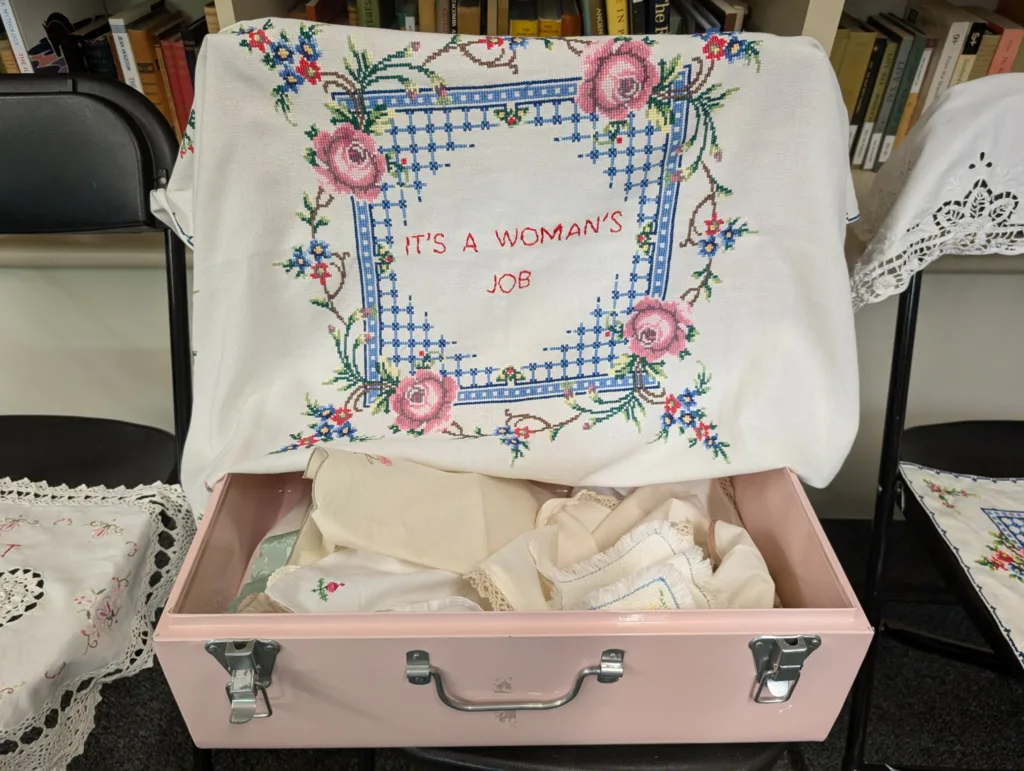
For generations of Greek women, the glory box symbolised readiness for marriage: a wooden chest filled with embroidered linens, crocheted doilies and handmade sheets prepared over many years.
For Zymantas, those carefully stitched heirlooms always carried a heavier meaning.
“It represented the cultural pressures we grew up with,” she says. “The expectation that women would follow a certain path: get married, have children and look after the home.”
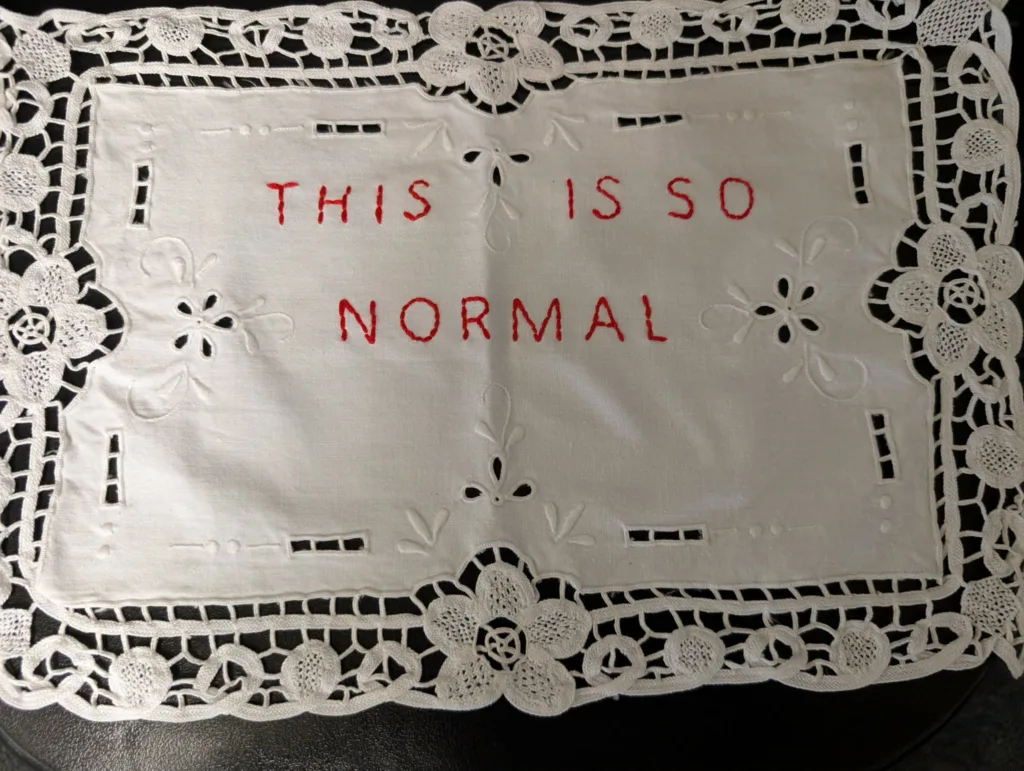
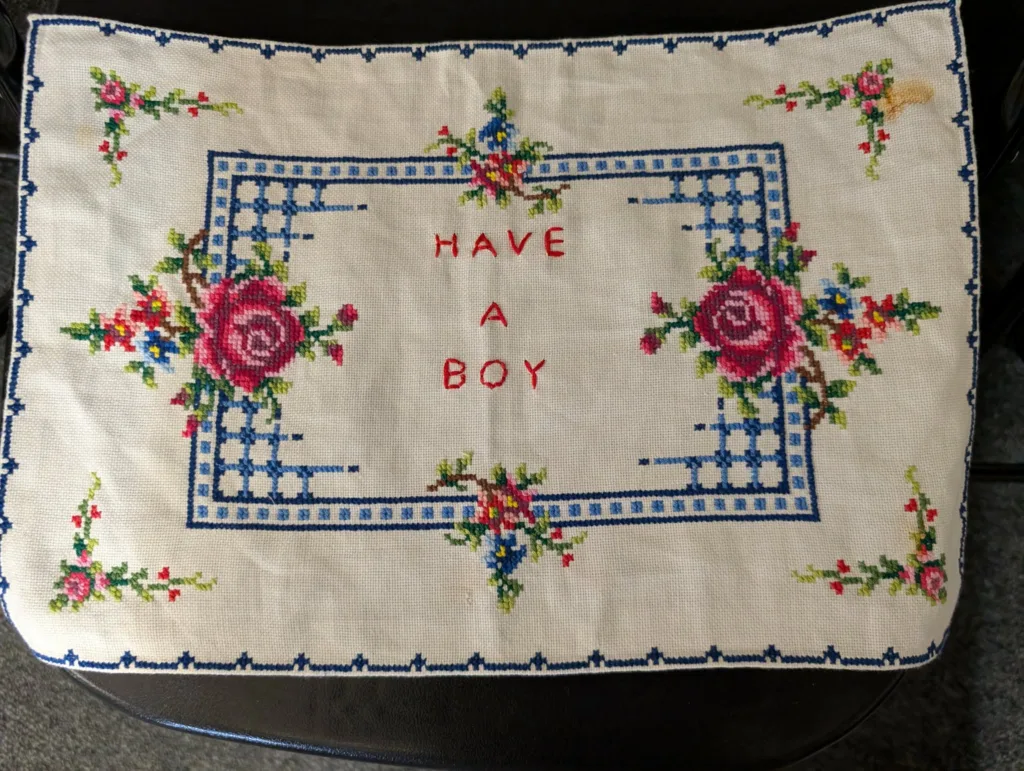
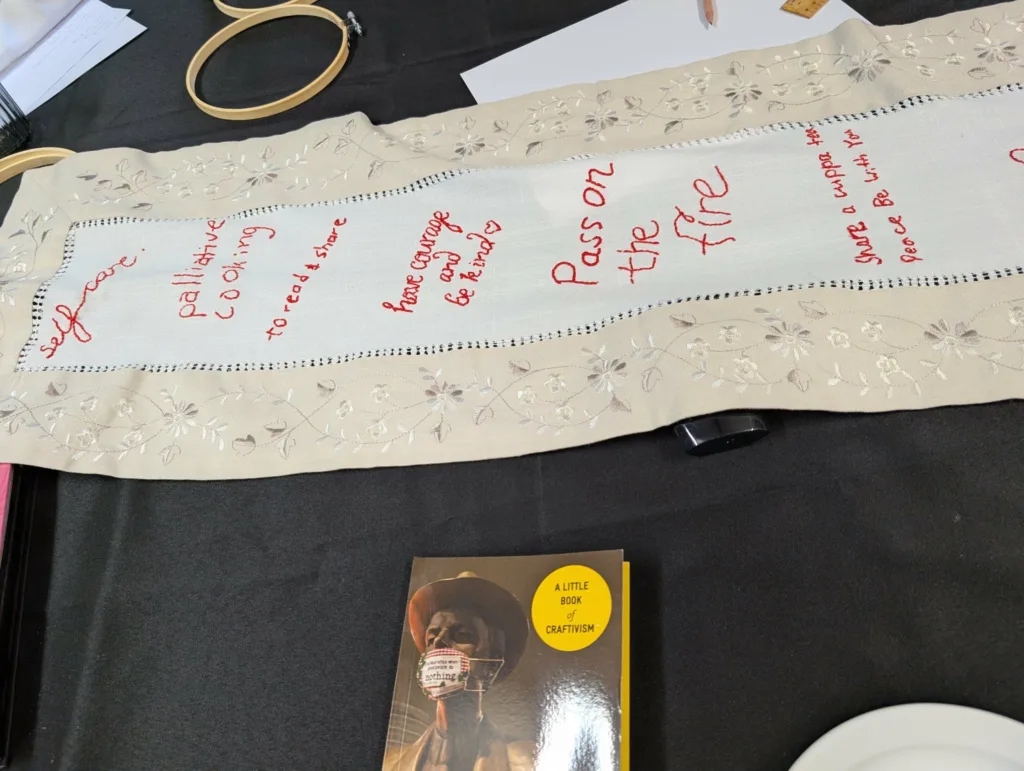
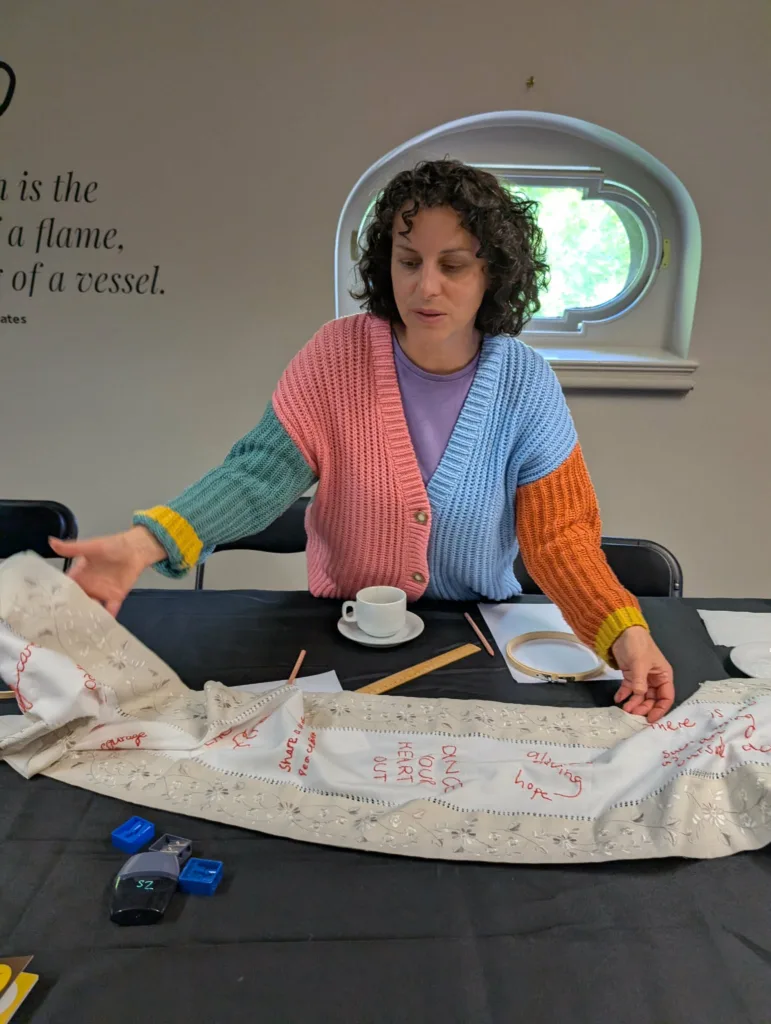
Rather than rejecting that history, Zymantas is asking women to engage with it. Participants bring old textiles, sometimes family pieces, sometimes donated doilies or vintage shop finds, and embroider new words and symbols onto them.
The past remains visible in the fabric. But the message changes.
Reconsidering our traditions
Zymantas grew up in Melbourne in a Greek household where embroidery was simply part of life. Her mother, from Corfu, and relatives would gather to crochet and stitch together.
“There was always embroidery in the house,” she recalls. “It was part of the women’s culture.”
But as a young girl she wanted nothing to do with it.
“I wasn’t aspiring to be a housewife,” she says with a laugh.
In many Greek families, mothers and grandmothers spent years filling the kasella (traditional wooden glory box chest) with textiles for a daughter’s future home.
Zymantas remembers watching women sit together around the table making lace and crochet pieces.
“There was this whole culture of women sitting together making things,” she says. “But I didn’t connect with it at the time.”
That changed years later when her mother passed down some of her own dowry pieces. Holding them in her hands, Zymantas began appreciating the delicate stitches and asking different questions.
“What does this actually mean?” she wondered. “And what traditions am I passing on to my daughters?”
Slowly, she picked up a needle again.
Stitching new meaning
The embroidery she returned to looked very different from the delicate floral patterns she remembered.
Self-taught through experimentation and online tutorials, Zymantas began stitching words onto inherited textiles. She adorned them with statements, reflections and sometimes quiet acts of rebellion.
The lace doily became a canvas.
“It’s meditative,” she says. “There’s something calming about the repetition. But it’s also a way to start conversations.”
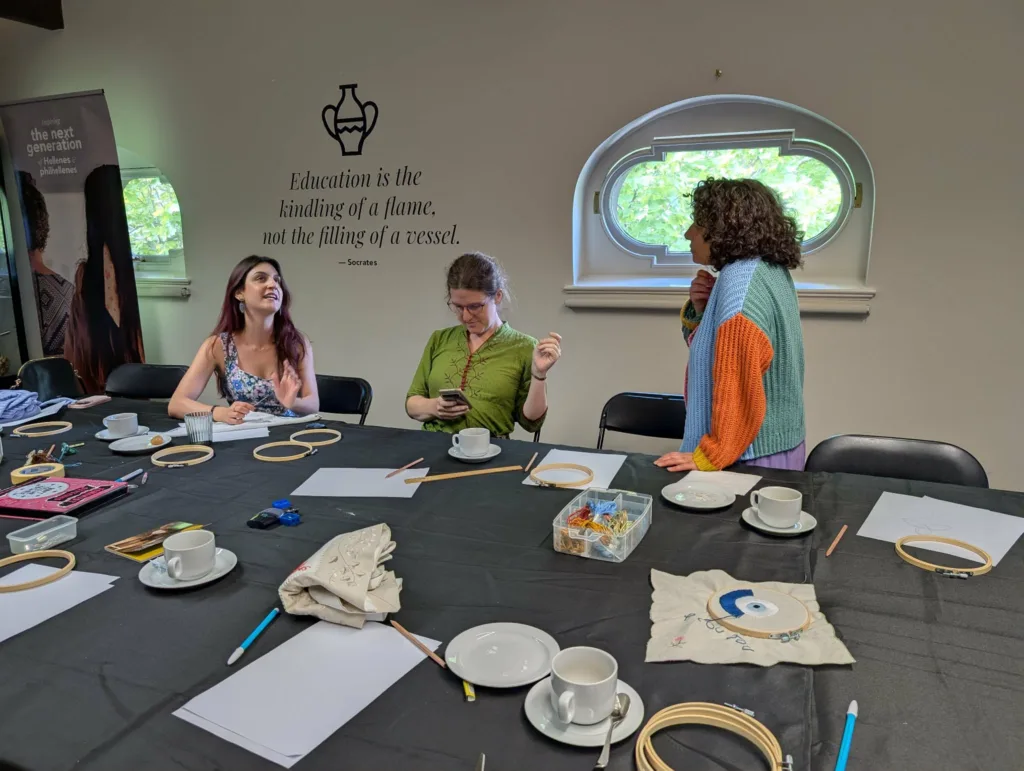
At the workshop, those conversations unfold easily.
Artist Celia Beaton says the idea of reclaiming the dowry tradition through art immediately resonated with her.
“Traditionally the dowry was about preparing for marriage, preparing for a future someone else expected of you,” she says.
“Turning it into art changes the meaning completely.”
Nearby, another participant, Tiana, concentrates on a small piece of fabric between sips of coffee beside her embroidery thread.
She says the workshop revealed the deeper history behind something many people recognise but rarely question.
“You hear about dowries as part of Greek culture,” she says. “But today we talked about what that really meant for women.”
Threads that cross cultures
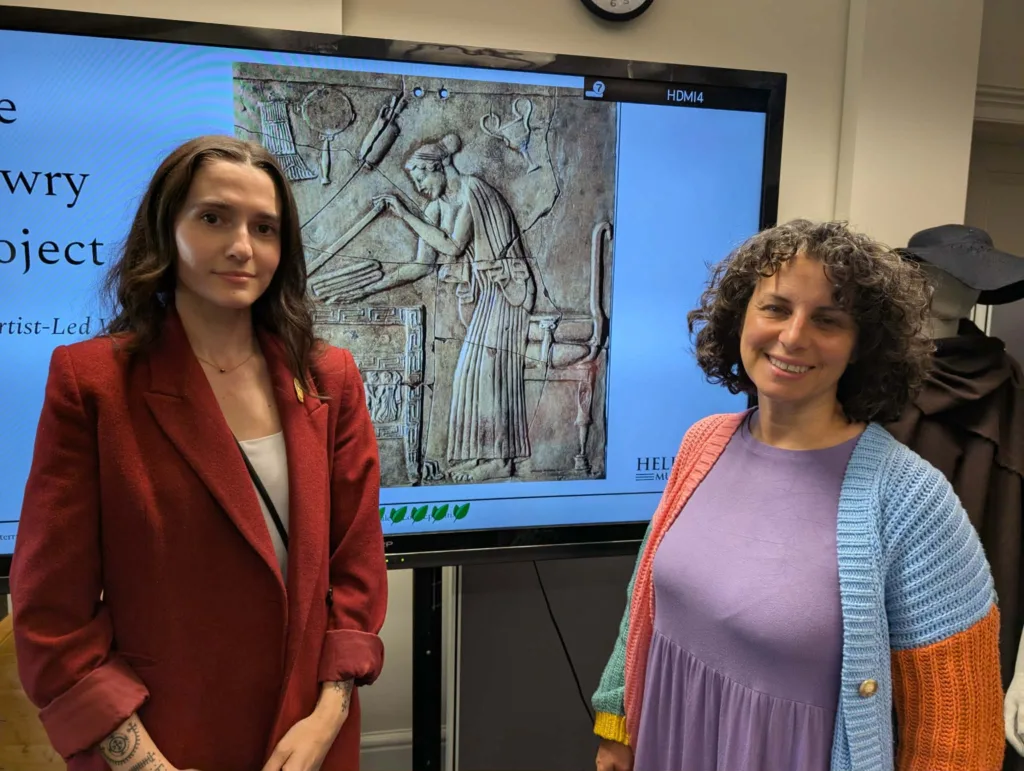
The workshop also included historical context from Sara Prica, Assistant Curator at the Hellenic Museum, who helped shape the conversation around textiles and women’s history.
Prica points out that embroidery traditions rarely belong to just one culture.
“My grandmother was very skilled at cross-stitch,” she says. “She made bedspreads and sold them across Europe during the war.”
Although Prica’s family background is Croatian and Serbian, many of the patterns she remembers, grapes, florals, geometric borders, look strikingly similar to those found in Greek embroidery.
“These patterns travelled,” she says. “They moved across communities and borders.”
Gentle activism
Zymantas describes the workshops as a form of “gentle activism”.
Women gather, talk, stitch and reflect on the expectations placed on earlier generations. For some, it is their first time embroidering. For others, it reconnects them with a skill they watched mothers or grandmothers practise years ago.
Either way, the act of stitching becomes something more than craft. It becomes a way of rewriting the story.
“I didn’t want the traditions I pass on to my daughters to be tied only to marriage or domestic roles,” Zymantas says. “I want them to choose their own future.”
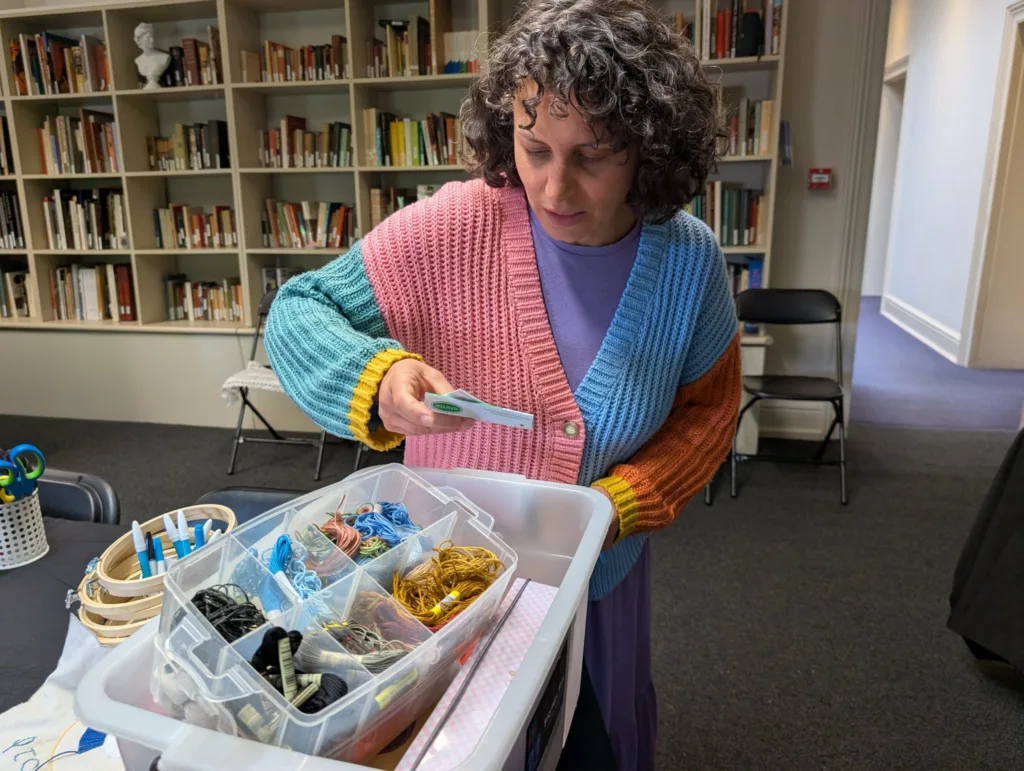
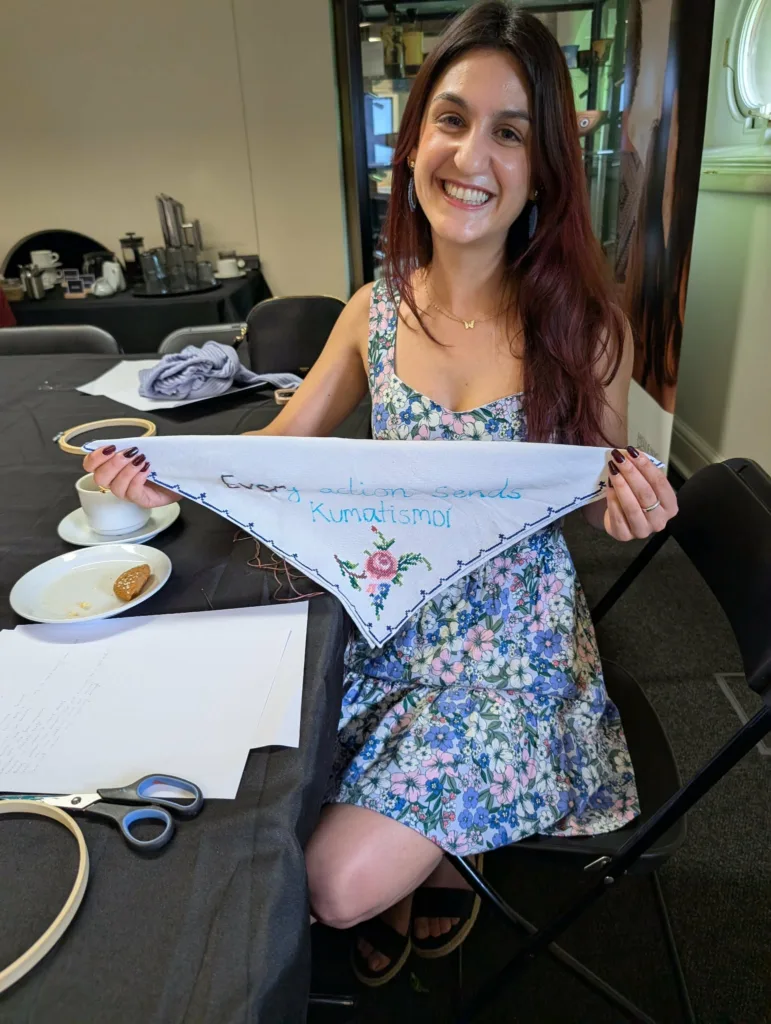
As the workshop winds down, the table fills with finished pieces: small squares of fabric carrying words, symbols and quiet statements of independence.
The doilies still look like something a grandmother might have made. But the meaning stitched into them is entirely new.
*All photos copyright The Greek Herald / Mary Sinanidis.
