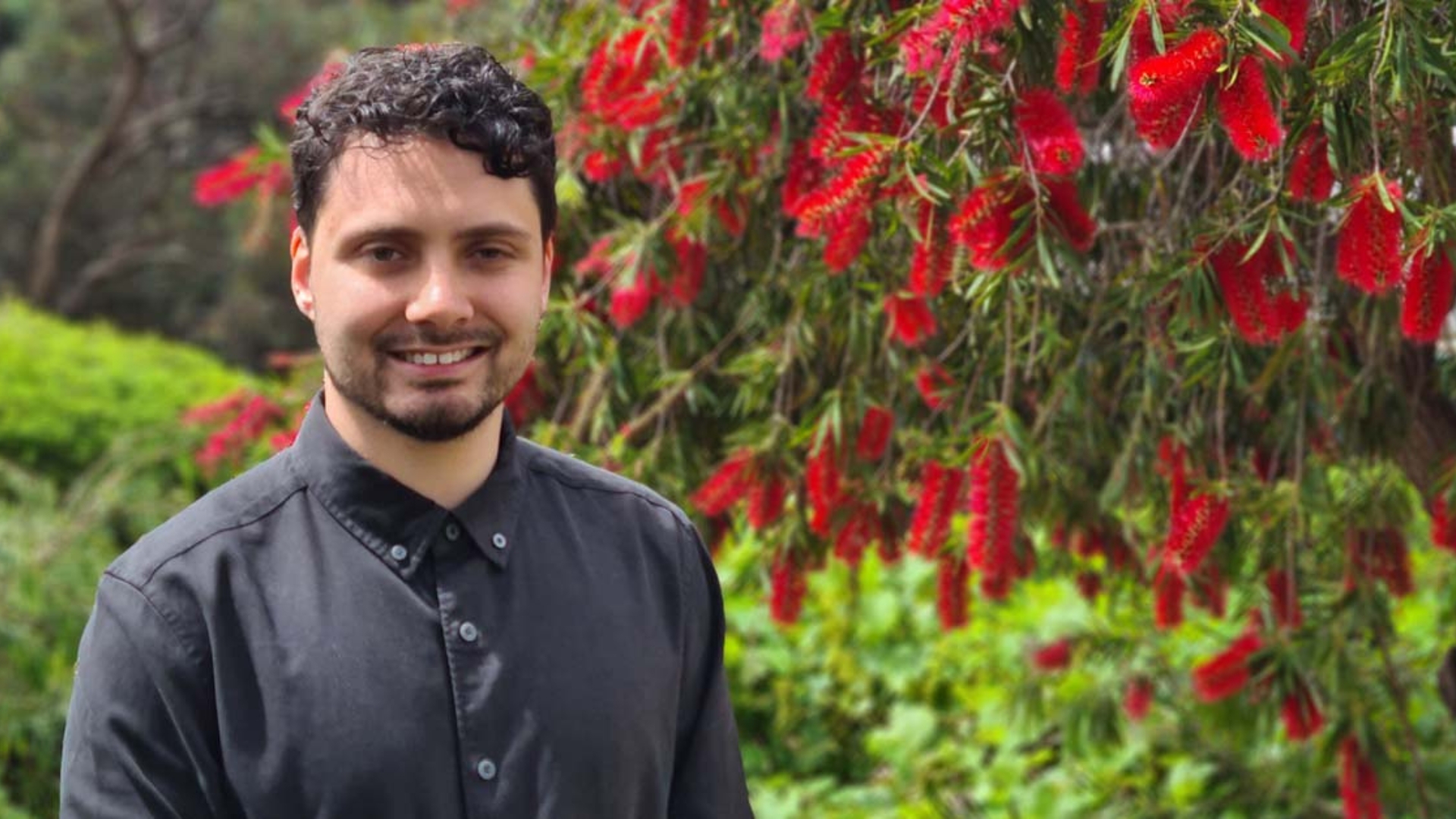
Yianni Cartledge, a Flinders University researcher and language teacher in South Australia, has dedicated his PhD to exploring the history of Greek communities in the English-speaking world, looking for migration stories from the early 1800s to mid-1900s.
In his search for stories, Mr Cartledge was analysing records of migration from the Greek Aegean islands to the English-speaking world and discovered a long-lost ancestor — his great-great grandfather, Ioannis (John) Gronthos.
The PhD student discovered Gronthos migrated to SA with his brother, brother-in-law and nephew in 1911. They arrived at Port Adelaide and settled in Port Pirie where Mr Cartledge’s great-great grandfather worked at the BHP smelters.
After 18 years in Port Pirie, Gronthos became a naturalised Australian citizen in 1929. A year later, Gronthos returned to Greece.
Mr Cartledge also discovered his great-great grandfather’s son, who is the researcher’s grandfather, migrated to Australia with his children 20 years later.
“These migrations are part of my own personal history,” Mr Cartledge told Flinders University.
The language teacher hopes to better understand how Greek communities were created and the challenges they faced when migrating into Australian society.
“[History] grounds us in an understanding of our current world and our current context… Learning more about history helps us make more sense of the world,” he said.
Records of Greeks migrating to Australia are stored in places such as the National Archives Australia (NAA), National Library of Australia, and State Records of South Australia, as well as libraries and archives in the UK.
During his candidature, Mr Cartledge has faced his own challenges in an attempt to access archival records such as shipping registers, migration papers and naturalisation documents.
Despite this, the researcher has continued work on his PhD with supervisor Professor Andrekos Varnava.
“Professor Varnava was able to help me find the gap in the literature where my work will hopefully fit in,” Mr Cartledge said.
Understanding the reasons why people leave their homeland and the experiences of Greek migrants in Australia is part of what Mr Cartledge hopes to uncover.
Source: Flinders University

