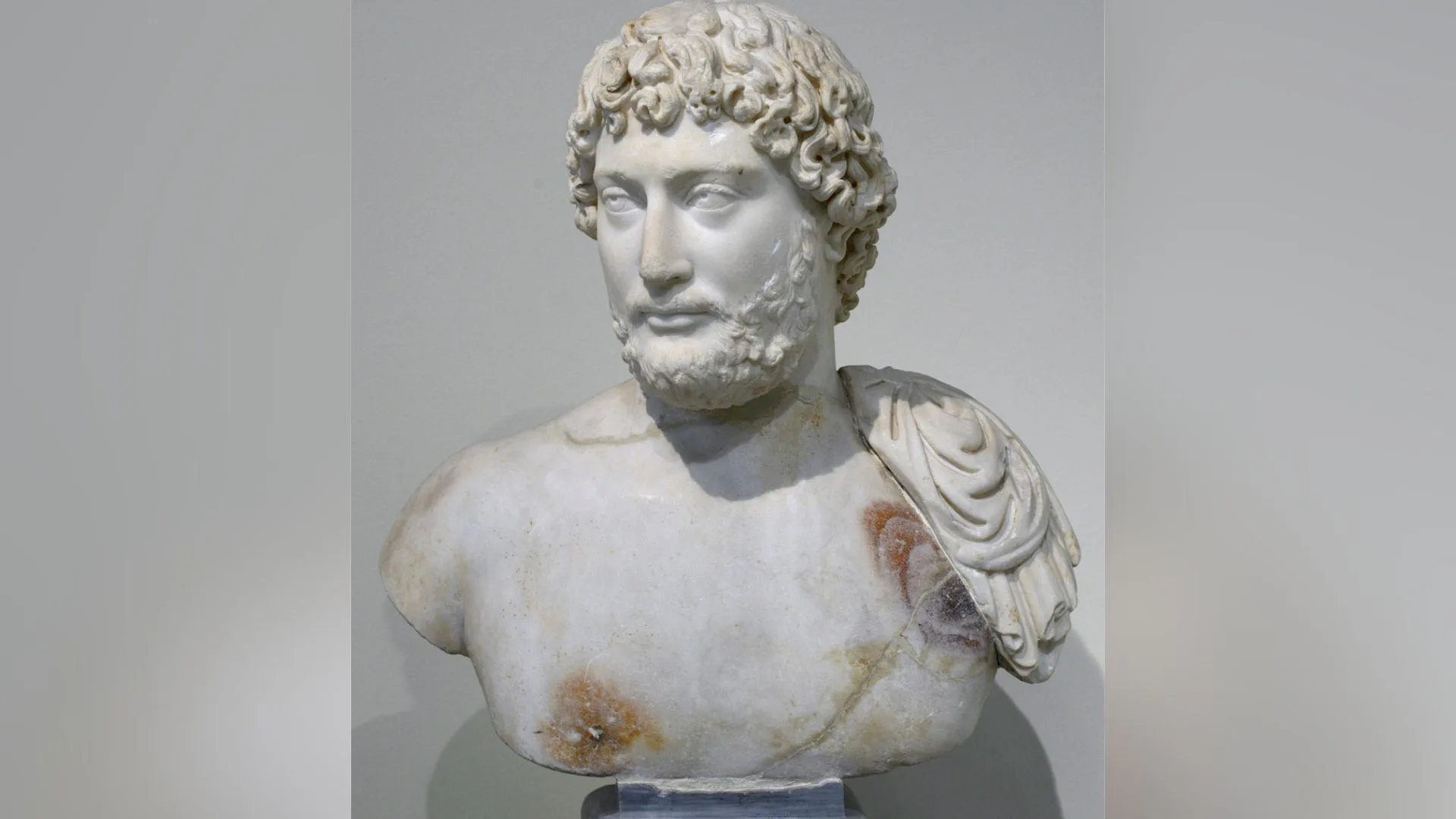
In ancient Greece, the beard was an important symbol for men. It acted as a badge of virility; a sign of manliness. In the epics of Homer, the beard was treated with such reverence that heroes would touch the beard of men they were addressing.
By the Classical era, the beard also had connotations with wisdom and became particularly associated with the philosophers. Socrates, Plato and Aristotles were all bearded. So prevalent was the connection that there was an ancient saying; “a long beard does not make a philosopher.”
In contrast, for much of Roman history, clean-shaven was the preference. Until the Roman emperor Hadrian (76-138 CE; reigned 117-138 CE) that is. Hadrian was the first Emperor to consistently wear a full-beard.
Some contemporary sources said this was to express his admiration for Greek philosophy and cultural traditions. Others, less-kindly, said the beard was a means of hiding his blemished facial skin. Either way, under Hadrian, the beard in Rome became popular too and the “Atticising” trend became a symbol of intellectual sophistication.
No other Roman emperor was so influenced by Greek culture, and in return no other Roman shaped Athens so much. In his thirties, Hadrian spent time in the city and was granted Athenian citizenship. When he was Emperor, he returned to the city several times, extolling Athens as the spiritual centre of Greek culture and as the cultural capital of the entire Empire.
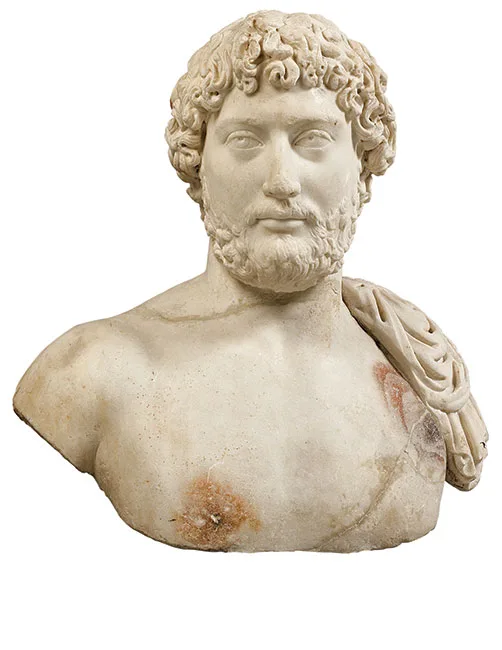
His influence on Athens is still visible. The Arch of Hadrian (Hadrian’s Gate) still stands, while he oversaw the completion of the Temple of Olympian Zeus (Olympieion) which had begun more than seven centuries earlier. Water fountains and aqueducts were constructed under his reign and the Theatre of Dionysos modified. Hadrian’s Library, of which the western wall still stands, was constructed just to the north of the Agora under the shade of the Acropolis.
So, of course, it is not surprising that statues of the bearded Emperor citizen are common in Athens as are representations of his (clean-shaven) young Greek lover Antinous. Perhaps most famous is the idealised portrait bust of the emperor carved from Pentelic marble and now in the National Museum of Athens, showing the emperor with his Greek beard. It was found near the Olympieion.
Just as impressive is the broken colossal statue of the emperor, now in Piraeus Museum and found near Roman baths in the port city in 1963. It too is made from Pentelic marble and the bearded head survives to just over 1.48 metres, but the statue is estimated to have stood at more than three metres high. Another colossal portrait with an oak wreath was also likely found in the Olympieion.
Perhaps there are more bearded portraits waiting to be found in Athens.
See more here: https://www.namuseum.gr/en/collection/romaiki-periodos/
