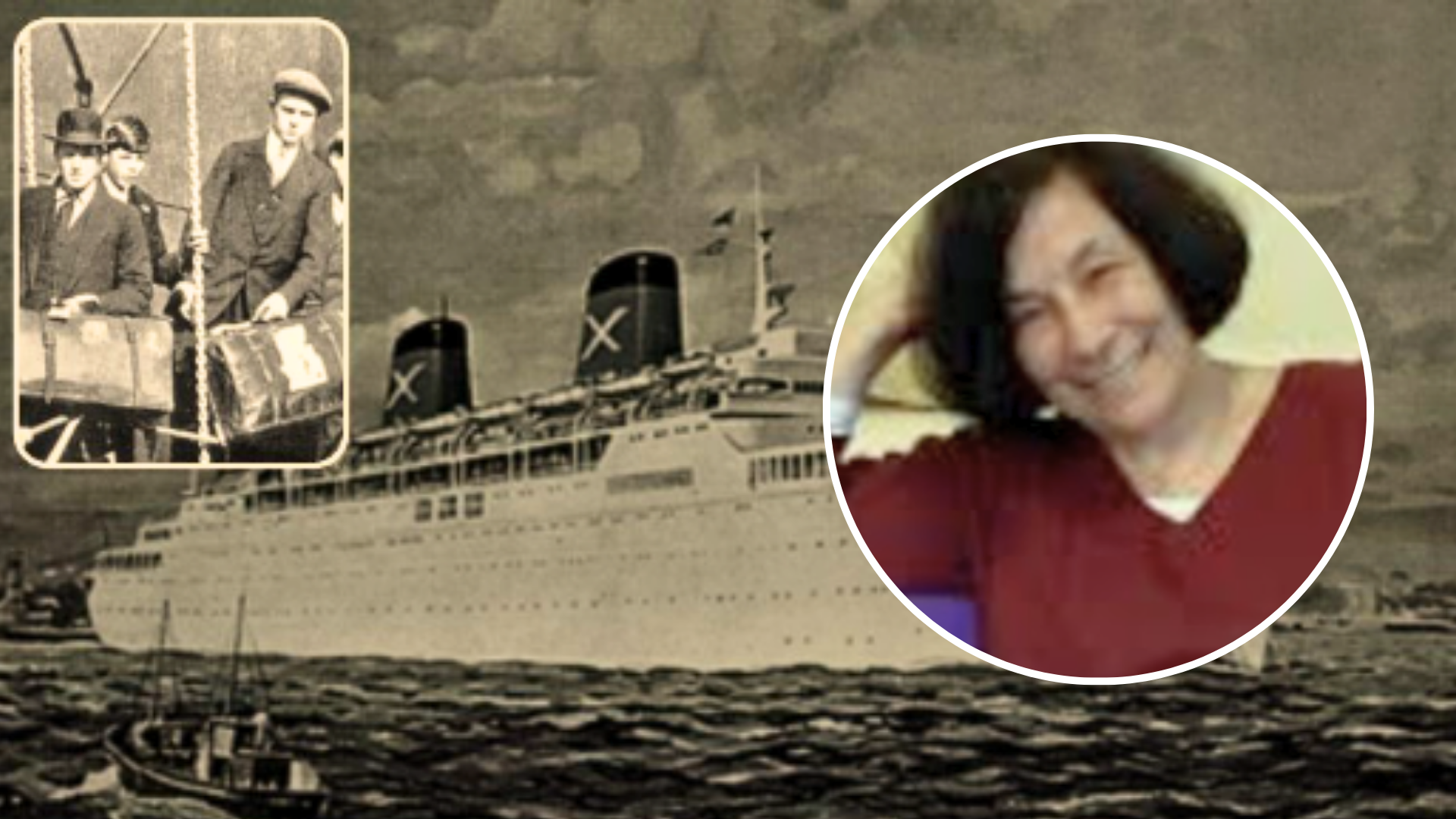
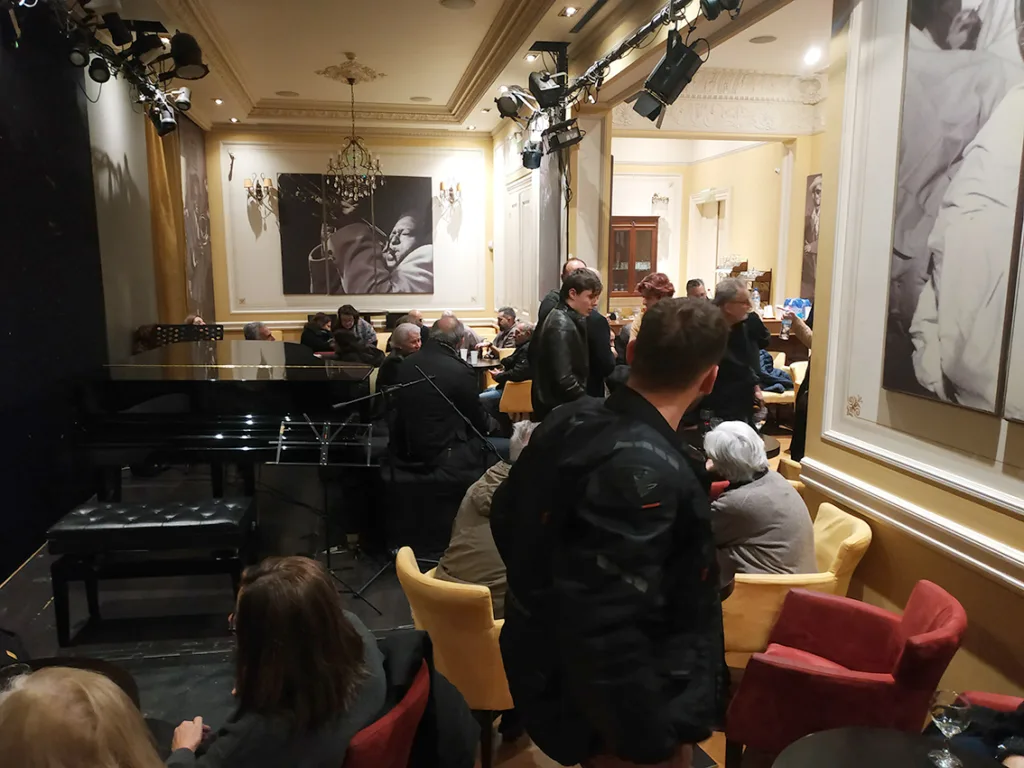
Yet another play at the Aggelon Vima Theatre in Athens prompted me. The theatre’s November 2025–April 2026 season, dedicated to Australia, features award-winning plays about Australia, performed in Greek and written mainly by Australians.
This time though, there was an extra spring in my step upon attending the Aggelon Vima Theatre’s opening-night premiere, no less, of the play Efiges Me To Patris (You Departed On Board the Patris).
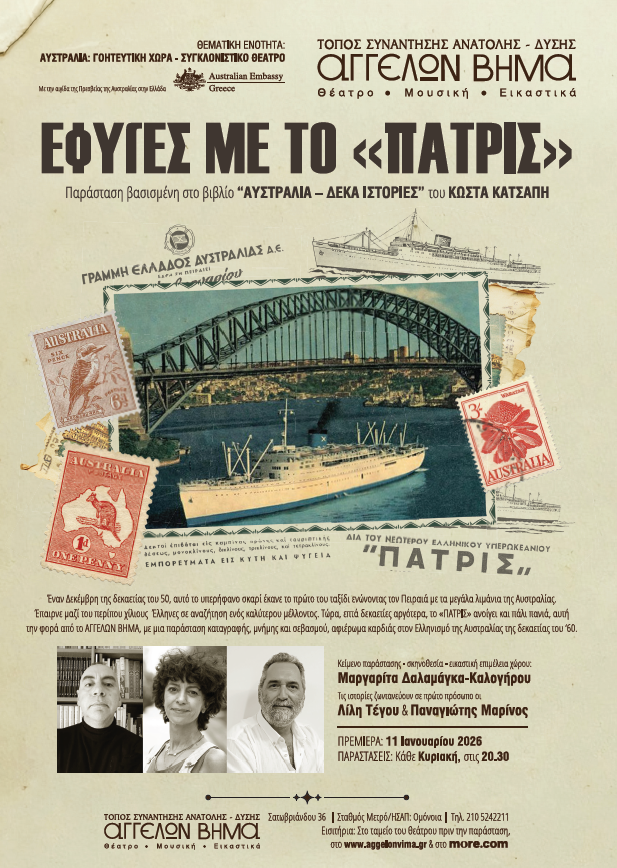
Incorporating this specifically Greek-Australian-themed play within the theatre’s Australian repertoire more than complements the rounded picture of Australia aimed at in this dedicated series – it is a necessity, as so many Greeks left for Australia post-1950 in the hope of a decent livelihood. They – and we – deserve this homage.
And so, I breathed not only a sigh of relief but also felt a sense of pride at Greek-Australian cultural recognition in Greece when, last week, I noticed this important play – Efiges Me To Patris – listed within the theatre’s Australian-themed programme.

As the play’s title specifies, the familiar historical theme of immigration from Greece to Australia in the 1950s and 1960s forms the basis of this theatrical work’s anthology, made up of seven separate vignettes or embedded stories. Representing the time when the majority of our parents, grandparents and even great-grandparents arrived from Greece to Australia aboard ocean liners such as the Patris and Ellinis, the play skilfully delves into heartfelt themes such as hope, as well as trauma stemming from pre- and post-migration experiences.
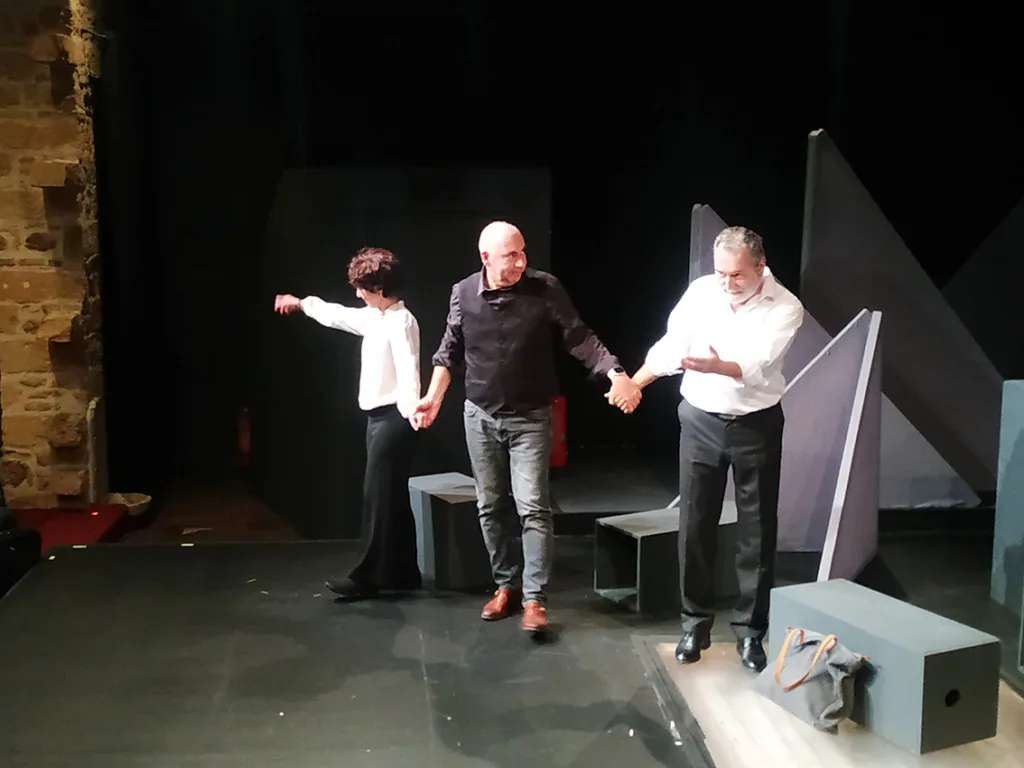
Seeing Efiges Me To Patris certainly did not disappoint. Often moving me to both tears and laughter, each of the play’s seven vignettes incorporated different characters and themes, many of them overlapping. Its demanding acting was executed to perfection by just two performers — the extremely talented Greek actors Lily Tegou and Panagiotis Marinos.


Efiges Me To Patris (directed by Margarita Dalamaga-Kalogirou) is a theatrical adaptation based on a 2022 book by Kostas Katsapis: Australia: Deka Istories (Australia: Ten Stories).
The book’s author, Mr Katsapis, is an academic and historian teaching at Panteion University in Athens. Born in 1973, his parents migrated to Australia in the 1960s and returned to Greece a year before his birth. Even so, Mr Katsapis lived – and continues to live – within the milieu of the Greek-Australian migration experience.
Born, growing up and living in Greece, Mr Katsapis finally went to Australia in 2011 and 2012. He says, “I grew up surrounded by Australia, through my parents’ migration experience from 1964 till 1972. My sister was also born there in 1966. So even now, when we have family get-togethers, our chats revolve around Australia – including debating whether it was the right decision to come back to Greece, etc.”
Meeting up with him recently, among the many topics we discussed was how the book inevitably highlights non-fiction within fiction, and how this manifests through geopolitical and historical influences. Even though major life events like migration impact individuals uniquely, it is one’s cultural and ensuing social environment that tends to ‘nurture’ ideas and behaviour.
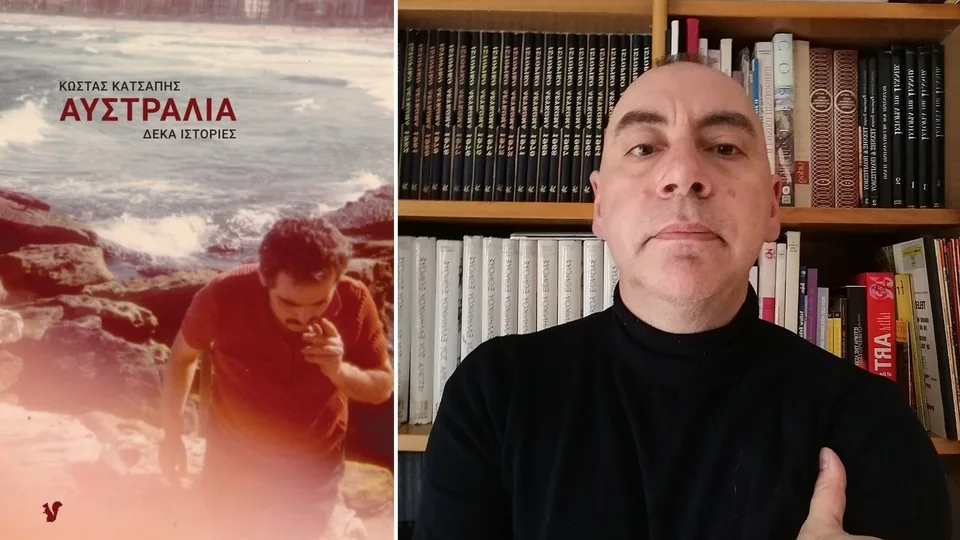
Despite being primarily a historian, Mr Katsapis’ decision was to write this book as fiction, with a few juxtaposed biographical themes as well as official Greek-Australian archival sourcing. His work results in more personal and relatable access for both the reader and, in this case, theatrical audiences.
On attending the premiere of Efiges Me To Patris as an author seeing his work performed theatrically for the first time, Mr Katsapis exclaimed: “The play was better than I could’ve even hoped or imagined.” In fact, when I also briefly saw him at the theatre immediately after the play ended, he said sygkinithika (“I was very moved”) in response to my tearful “congratulations”.
Now to the “guts” of the play… One theme enacted in the play’s separate stories is that of two Greek parents perceiving their son as being “turned homosexual” by a “non-Greek”, and the mother’s angst over how to “stop him”.
Another scenario depicts an extremely depressed, middle-aged Greek woman. She tells a doctor that she “wants pills” because she has done – and continues to do – her duty as a wife and mother and, although she wants to change her life, feels powerless to do so.
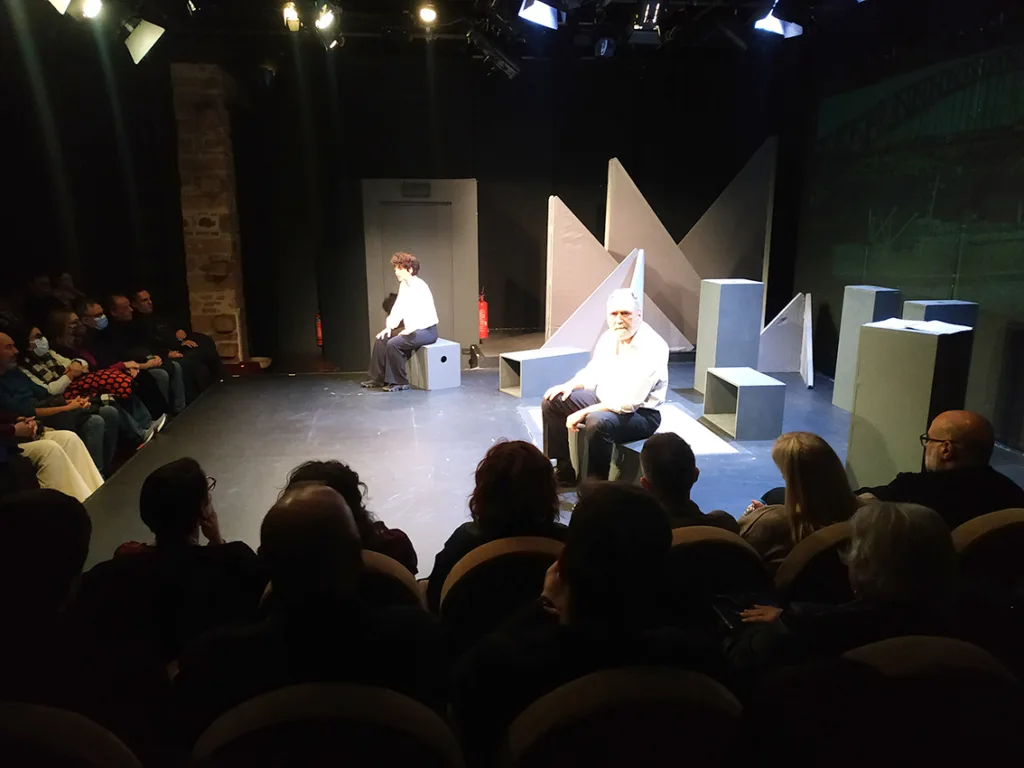
A further issue enacted in the play refers to poorer young women from Greek rural areas, showing how some were often forced by their parents to either go to Athens to work as servants (psyhokores) or migrate to Australia to a future husband who, via a photograph of himself, seeks a wife.
In our meeting, Mr Katsapis mentioned: “It seems that women suffered a lot more in the migration experience than men.” We discussed how, apart from the majority working in factories or doing seamstress work at home, they also carried the additional responsibilities of domestic chores and child-rearing.
Quite a few of the play’s vignettes refer to Greek political persuasions being brought to Australia, highlighting inter-Greek community conflicts. Intergenerational conflict is also portrayed through a father and son-in-law, and their right- and left-wing – or “communist” versus “fascist” – politics. We even see a comic-tragic scenario of a spy who had not intended on such a ‘career path’. There are also references to the proika (dowry) system, portraying the binds inherent in cultural traditions.
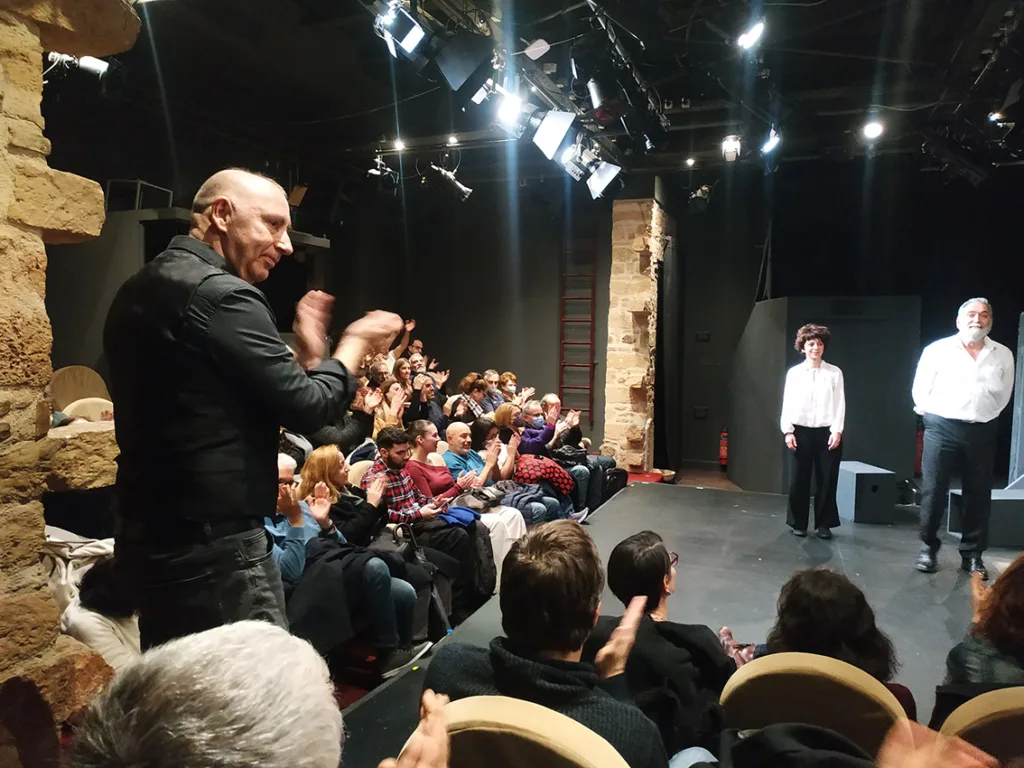
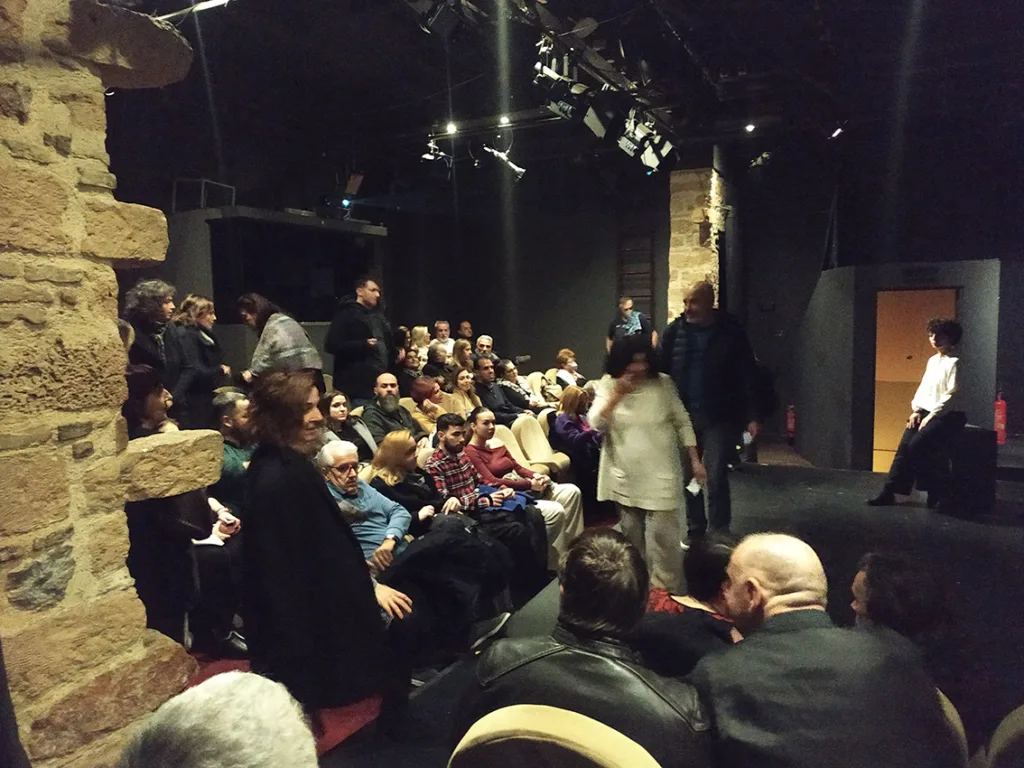
To me, the word Patris – the final word of the play’s title – is key, in that it can also represent old-school Greece, including its use of older formal grammar (for example, Patris instead of Patrida). The play shows the 1950s predominantly rural mentality that constituted Greece’s formal values of family, nation and religion. These notions were transported to Australia and often exaggerated there, in fear of losing one’s culture within such a distant land and an ensuing different host culture.
Time transforms – including both Greece and Australia, and us. The play Efiges Me To Patris is a moving snapshot into first-generation Greek migration history. The play’s director, Ms Margarita Dalamaga-Kalogirou, extends this view, describing it as a mirror of all people, even today, regardless of age, who wish to change their lot in life, as those aboard the Patris once did. And they certainly succeeded in their new country, Australia.
The author Mr Kostas Katsapis’ message to Greeks in Australia at the end of our discussion was simple and heartfelt: “Tell them I love them very much, and I love Australia very much and look forward to visiting again ASAP.”
You’re very welcome.
