There’s just over one month to go until applications close for the 2021 Martin-Lysicrates Prize on March 22, 2021 at 11.59pm.
The Prize, which is supported by The Lysicrates Foundation, The Australian Theatre for Young People (ATYP) and Riverside’s National Theatre of Parramatta, celebrates the best new Australian writing for young people aged 11 – 14.
According to The Lysicrates Foundation’s website, the Prize is the only “play competition for students where the winner is selected by the votes of the audience, and so is highly participatory.”
READ MORE: Statue by the Lysicrates Foundation stands proudly in Martin Place, Sydney.
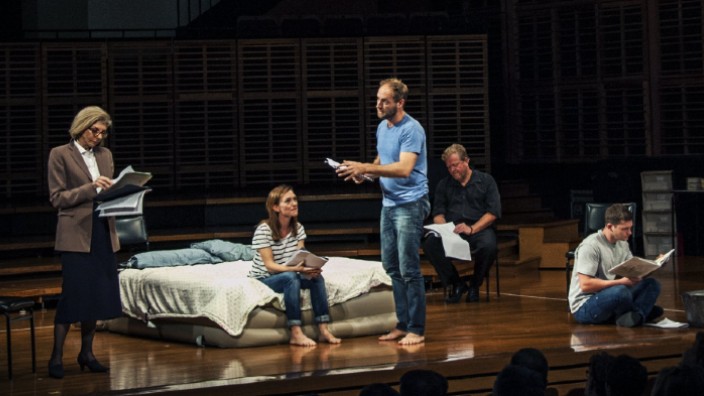
To enter, playwrights submit the first 10-15 minutes of a new play for young people aged 11-14. The top three plays receive a week’s rehearsal with a professional team of artists and are then performed on stage and via live stream before an audience of children who will vote for the winning play.

The play must be able to be performed by no more than 4 actors (actors can perform multiple roles). Actors can include adults and young people.
The winners of the Martin-Lysicrates Prize will be announced at an event on June 16, 2021 at Riverside Theatres.
READ MORE: TGH Exclusive: How John Azarias has brought the dramatic arts to life with the Lysicrates Foundation.
“The winning playwright will receive a full commission of $12,000 to complete the play (up to one hour in length) and the two runners-up will receive a cash prize of $1,000 each,” the ATYP says.

“An additional prize of $3,000 will be awarded to the winner of the popular vote from the live-stream audience.”
The 2020 winner of the inaugural Online Voters’ Lysicrates Prize was Matthew Whittet and Helen Kotsianis won The Lysicrates Viewers’ Prize of $1,000.
How to submit your application:
Applications should be in a single PDF file and include:
- Cover page with play title and contact details (name, email, phone number, address);
- A synopsis (between ½ to 1 page);
- Proposed cast size and character information (max 1/2 page);
- A statement from the writer on the impetus for the work (max 1/2 page);
- The first 10-15 mins of your play for young people aged 11-14;
Email your application to info@atyp.com.au by 11.59 pm, Sunday, March 22, 2021.
