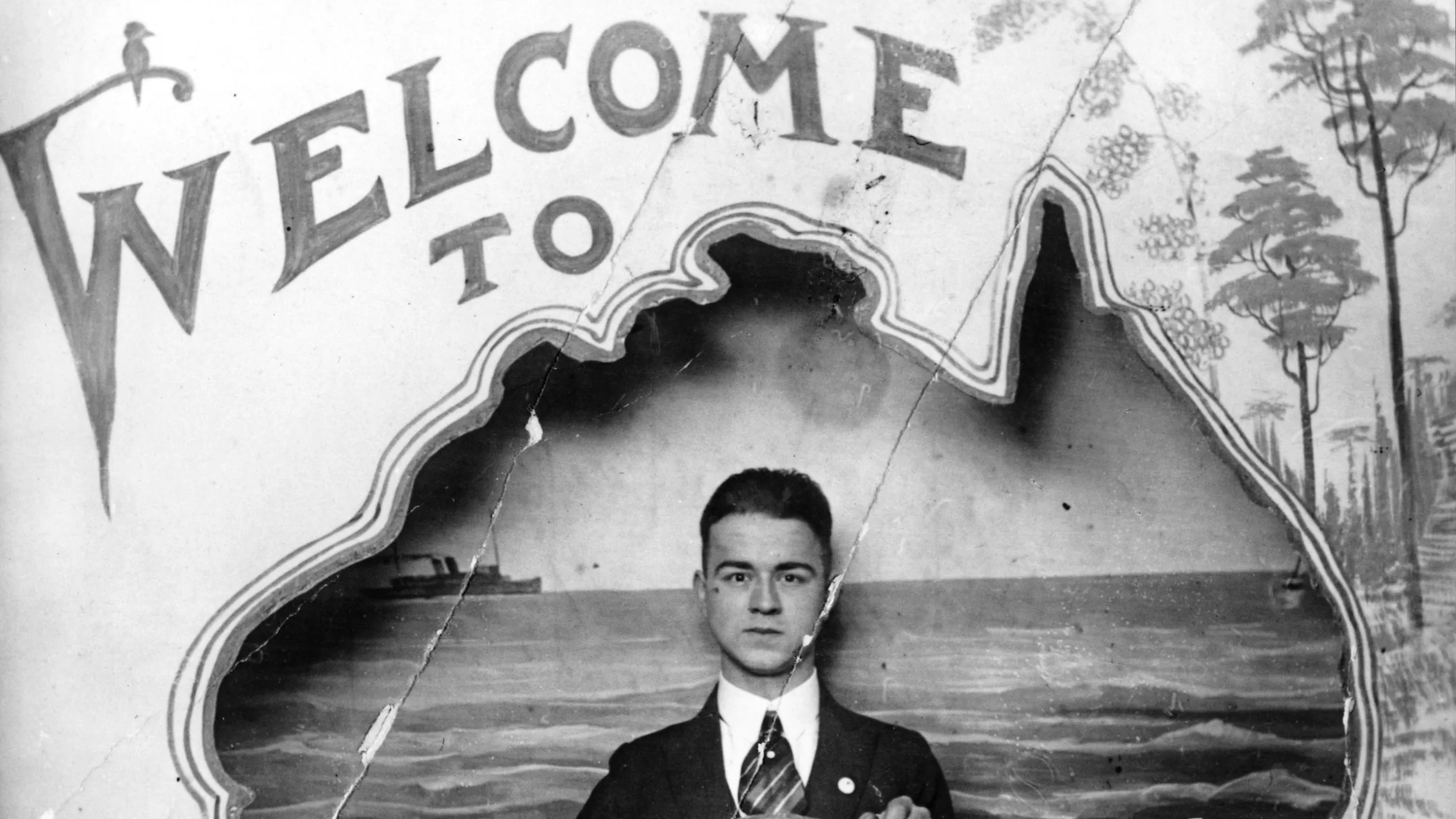
Lecture on history of the Hellenic presence in Australia to be held in Melbourne

·

A free public lecture, ‘In Their Own Image: A History of the Hellenic Presence in Australia, 1810s to Present‘ by Macquarie University’s Leonard Janiszewski and Effy Alexakis will be presented this month in Melbourne.

It will take place on Wednesday, 24 April, at Wheelers Hill library at 2pm.
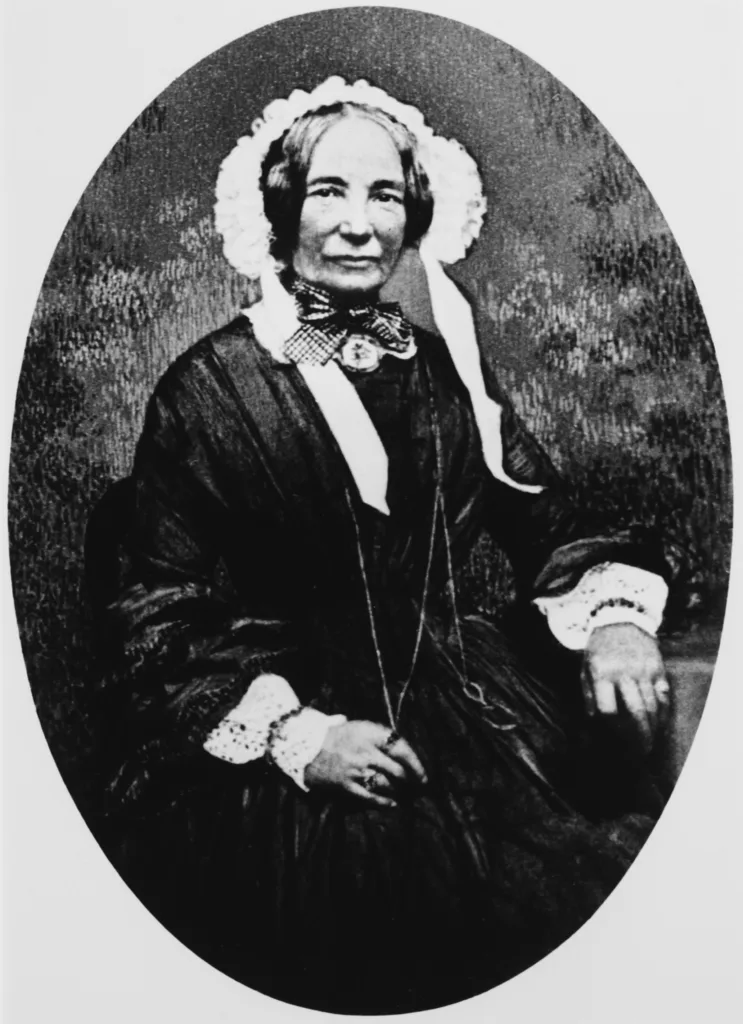
Katherine Crummer (nee Aikaterini Georgia Plessos)
Katherine Crummer (nee Aikaterini Georgia Plessos). Photo: R. and P. Crummer, copied from the original daguerreotype, from the ‘In Their Own Image: Greek-Australians’ National Project Archives, Sydney.

The lecture will chronicle the depth and diversity of Australia’s Greek presence over the last 200 years. 

We may never know who the first Greek to set foot on Australian soil was – as in Homer’s Odyssey, memory and myth have become one. However, in the early 1800s, Antipodean shores beckoned, gently at first – tentative ripples carrying the convicted, the adventurous and those desirous of new beginnings. 
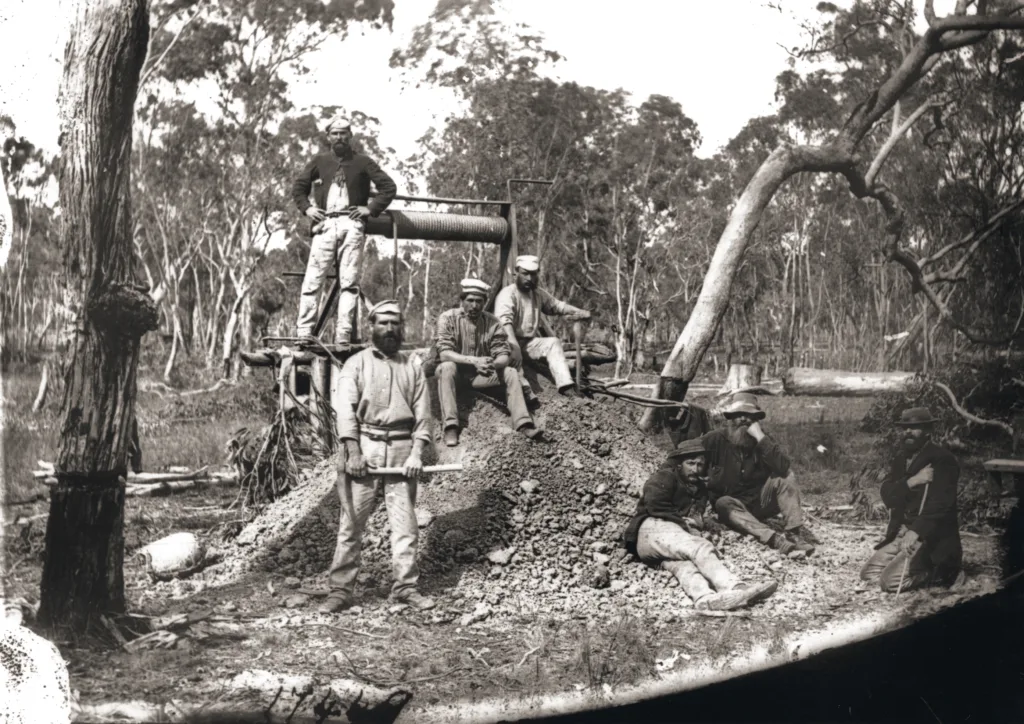
Jeremiah_williams
Jeremiah Williams (gerasimos Vasilakis) and fellow miners at a mine-head Hill End – Tambaroora, NSW, early 1870s. Photo: Holtermann Collection, State Library of NSW, from the ‘In Their Own Image: Greek-Australians’ National Project Archives, Sydney.

By the 1850s the gentle ripples of Australia’s early Greek presence surrendered to the first real wave of Greek migration – gold swiftly sweeping away the ‘tyranny of distance’ and the uncertainty of economic opportunities upon arrival. The first collective Greek settlements arose and ‘chain migration’ stimulated. In the 1890s, formal Greek communities were established in Melbourne and Sydney. By 1939, some 15,000 people of Greek heritage resided in the country. Following World War II, a larger, rapid and fiercer human inundation occurred: mass migration.
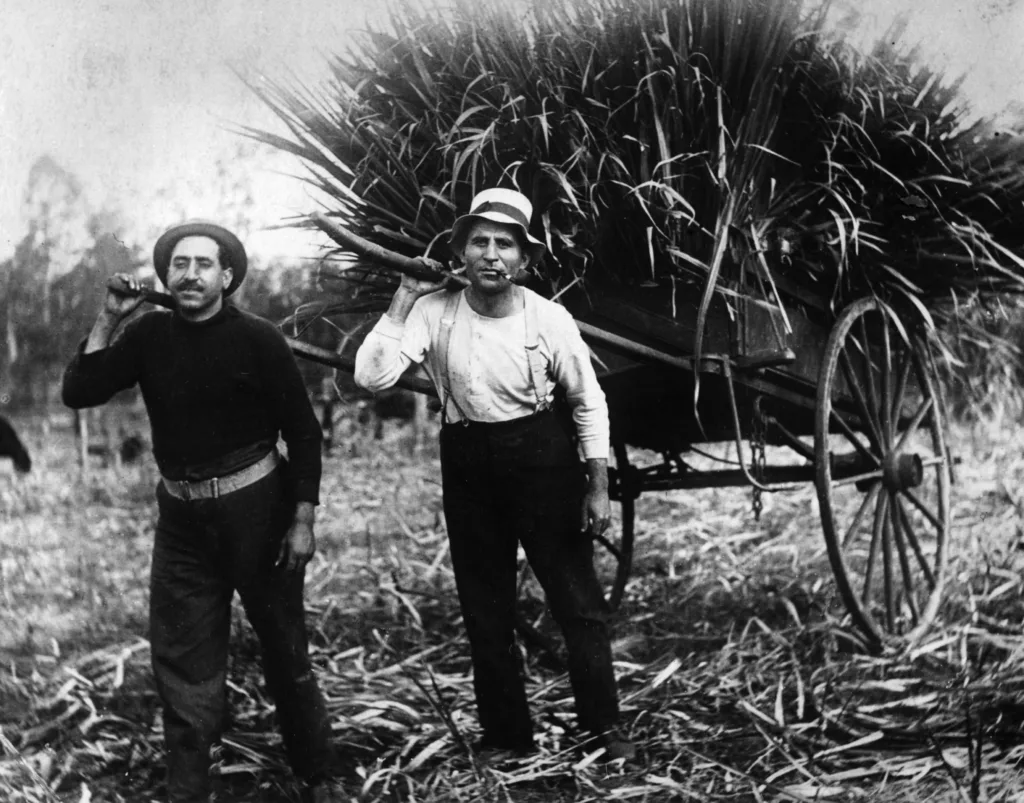
Greek sugarcane cutters
Childers, Qld, c. 1917
Greek sugarcane cutters Childers, Qld, c. 1917. Photo: B. Comino, from the ‘In Their Own Image: Greek-Australians’ National Project Archives, Sydney.

Between 1953 and 1956, almost 30,000 Greeks arrived in Australia – well over half were assisted migrants who were initially placed in ‘migrant camps’. ‘Bride ships’ brought over large numbers of single Greek women. Between 1947 and the early 1980s, some 250,000 Greeks arrived in Australia. This included those Greek-Cypriots fleeing the 1974 invasion by Turkey. More recently, since the onset of the Greek economic crisis in 2008, Australia has again become a major destination for Greek migration, particularly to Melbourne. 
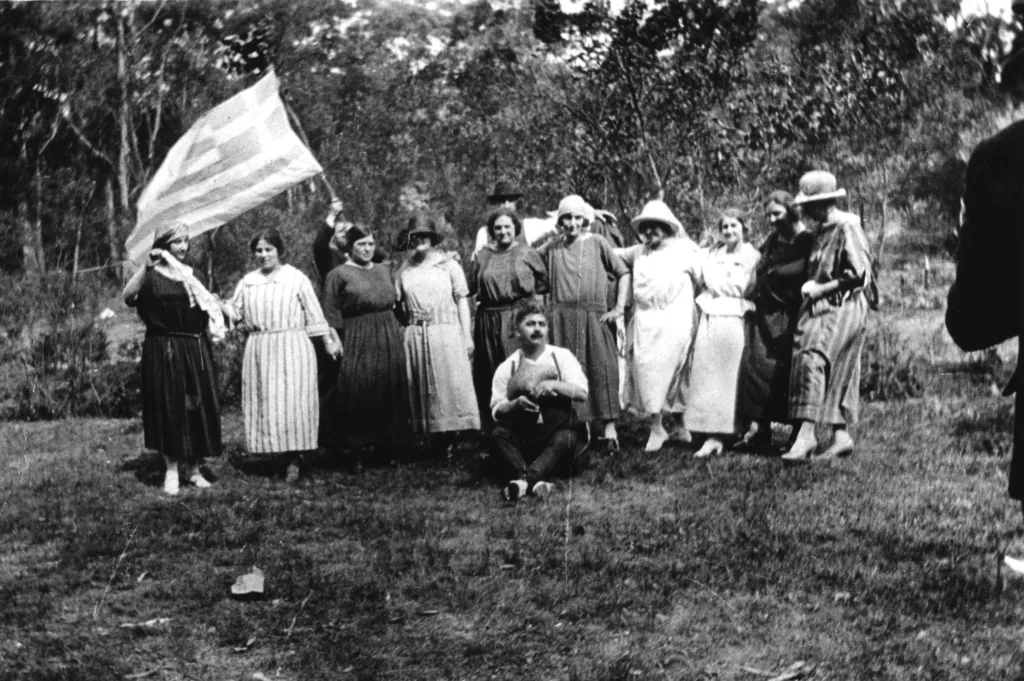
Greek women dancing at a picnic
Greek women dancing at a picnic at the Clifton Gardens, Sydney, NSW, 1923. Photo: T. Notaras, from the ‘In Their Own Image: Greek-Australians’ National Project Archives, Sydney.

Australia’s contemporary Greek community, including those of Greek descent, ranges in estimates from 500,000 to 700,000. As Janiszewski’s and Alexakis’ presentation will confidently highlight, it is a community that is as diverse within itself, as the multicultural Australian society in which it exists. 
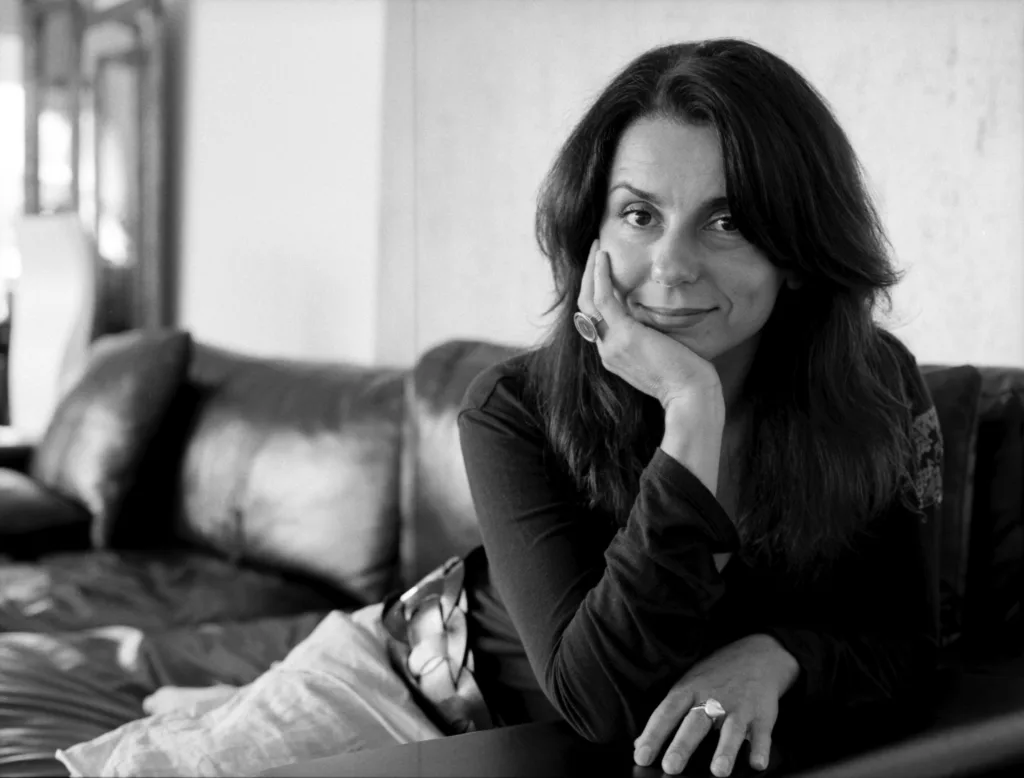
Mary Coustas, actor/comedian in 
Sydney
Mary Coustas, actor/comedian in Sydney, NSW. Photo: Effy Alexakis, from the ‘In Their Own Image: Greek-Australians’ National Project Archives, Sydney.

Event Details:

  • WHAT: ‘In Their Own Image: A History of the Hellenic Presence in Australia, 1810s to Present’ lecture
  • WHEN: Wednesday, 24 April 2024
  • WHERE: Wheelers Hill Library, 860 Ferntree Gully Road, Wheelers Hill, Victoria, 3150
  • TIME: 2:00PM – 3:30PM
  • BOOKINGS: call (03) 9265 4877; OR on line askmonlib@monash.vic.gov.au

Share:

KEEP UP TO DATE WITH TGH

By subscribing you accept our Terms of Service and Privacy Policy.

Latest News

Dr Yianni Cartledge traces the stories of Ikarians in Australia through archival research

Inspired by his own family history and the broader migrant experience, Dr Yianni Cartledge has published a book exploring Ikarian migration.

Elfa Moraitakis included among the most powerful people in Western Sydney

Elfa Moraitakis has been named among the most powerful people in Western Sydney in The Daily Telegraph’s list.

Chicago family returns ancient Greek artefacts to Greece

Five ancient Greek artefacts spanning from the 6th century BC to the Roman period have been returned to Greece by a family from Chicago.

Kefalonia beach voted as the second best beach in the world

Fteri Beach has been ranked the second most spectacular beach in the world for 2026 in the annual World’s 50 Beaches list.

Frank Alexopoulos says leaving construction job transformed his approach to fatherhood

Frank Alexopoulos says a call to Lifeline during a difficult period in his life transformed the way he approached fatherhood.

You May Also Like

Turkey renews call for demilitarisation of Greek islands in letter to UN

Turkey has renewed its calls for the demilitarisation of the eastern Aegean islands in a letter to the United Nations.

Paul Nicolaou calls scaled-back Cutaway trading hours ‘disappointing’

Business Sydney's Paul Nicolaou criticised the NSW government’s decision to wind back plans for 24-hour trading at The Cutaway venue.

Wreaths, prayer and living memory: SA Pontians commemorate the Greek Genocide

The South Australian Pontian community gathered solemnly on Sunday, May 18 to commemorate the Greek Genocide.