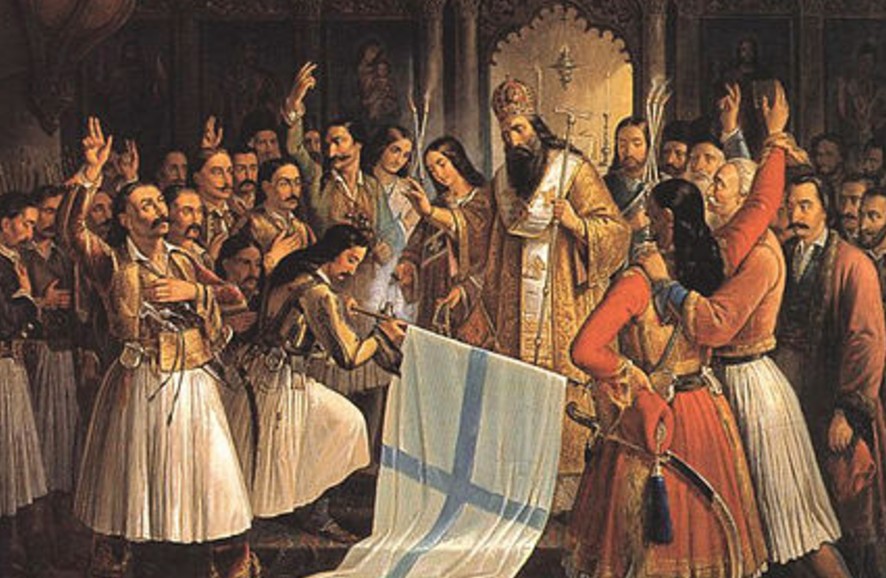
On March 21, 1821 the Greek revolution began with the siege of Kalavryta, where Greek warriors fought and made the city the first Greek town liberated from the Ottomans.
The Greek chieftains were led by Sotiris Charalambis, Asimakis Fotilas, Sotiris Theocharopoulos, Ioannis Papadopoulos and Nikolaos Soliotis and Nikolaos Petmezas. They had taken a small cannon from the Monastery of Agia Lavra and besieged the city fortress.
The Turks under the command of Ibrahim Pasha Arnaoutoglou barricaded themselves in three towers and expecting military help from Tripolitsa. Such military reinforcements never arrived, and the Greeks succeeded in their conquest.
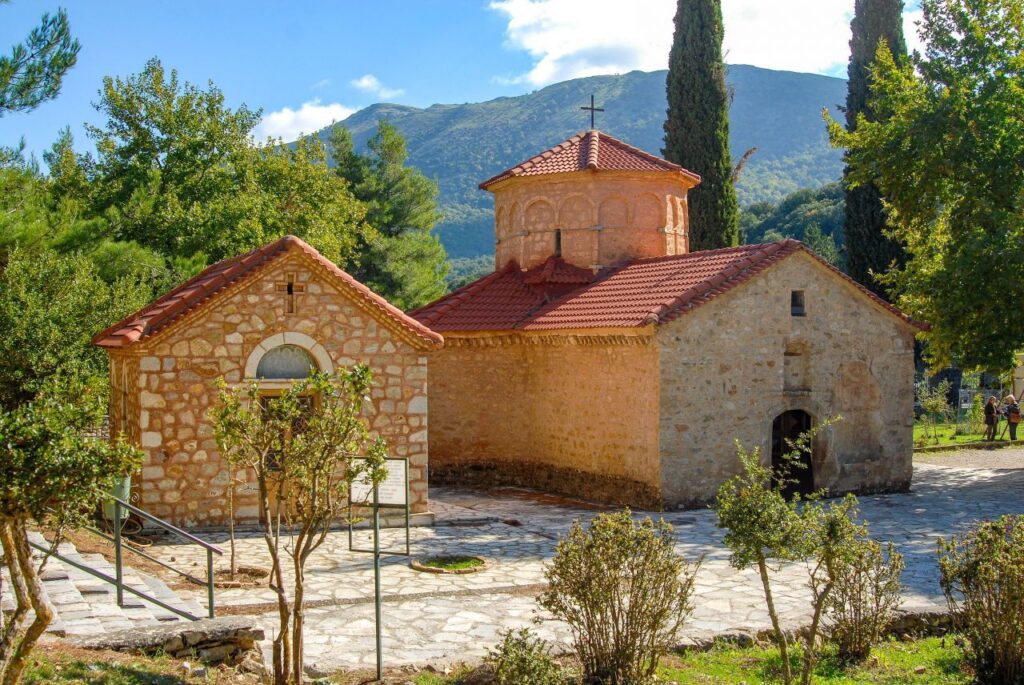
The Monastery of Agia Lavra in Kalavryta, which housed Greek revolutionists 200 years before the war of 1821, became the starting point for the battle against the Turks. Paleon Patron Germanos, the bishop who declared the Revolution against the Turks, raised the first Greek flag in the monastery. This became the banner of the revolution and was raised on March 25, 1821 to officially declare war.
After taking Kalavryta, revolutionaries moved towards Patras where Greeks were facing heavy resistance by the Turks. The brave Panagiotis Karatzas drove them back to the fortress in Patras and once again controlled the countryside of the Peloponnese.
Historian Nikolaos Papadopoulos had described the liberation of the city as follows: “It was dusk when approximately 200 warriors arrived at Kalavryta and started the battle for the liberation of the town. Soon the battle spread out as the rebels took over the Turkish officials’ towers, making the town their own. This was the first victorious battle and Kalavryta was the first free Greek city.”
“In the years of Turkish rule, Kalavryta was the largest city in the Morea and numbered 40,000 residents. The Turks stayed around the current monastery of Agia Aikaterini, where they had built two mosques.”
The people of Kalavryta remain proud that their city and monastery became the birth place of the Greek War of Independence.

