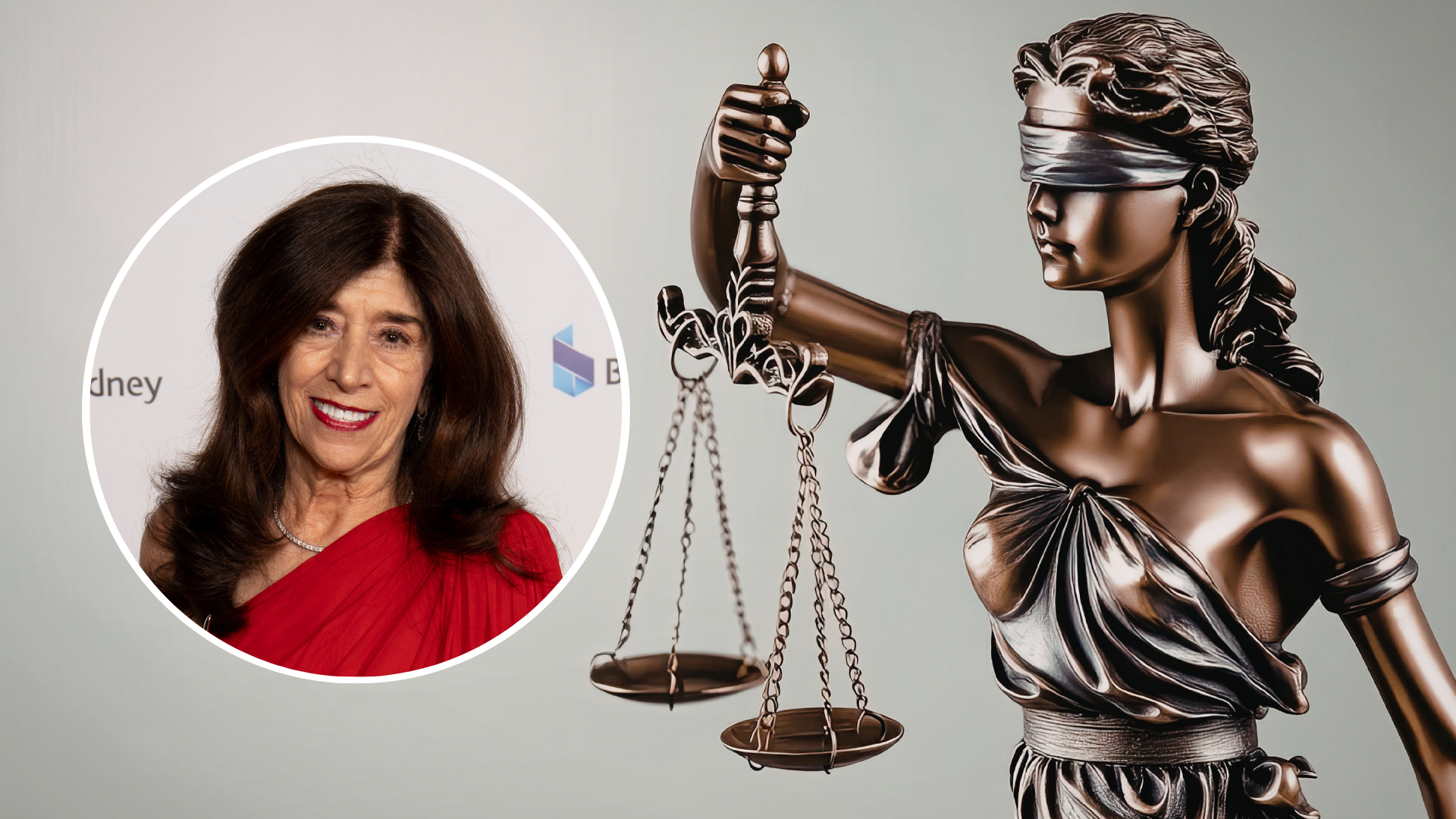
By Eugenia Mitrakas OAM: Golden Alumni University of Melbourne 2025
The scales of justice are not just a phrase — they are a powerful symbol rooted in Greek thought and part of our shared Hellenic heritage.
Themis and Dike:
In our mythology, the Titanes or Goddesses, Themis the Goddess of Divine Law, natural order and justice served as a Counsellor to her husband Zeus. Her daughter Dike was the Goddess of Human Justice who worked with her mother Themis to enforce justice.
Both were originally depicted blindfolded holding the Scales of Balance representing impartiality and the sword represented their authority, standing on a snake to wipe out evil in their roles in enforcing justice and protecting against chaos.
A universal symbol:
Long before it became a symbol in our western courthouse, the concept that justice must be “weighed” fairly was a Greek contribution to civilisation and to our modern legal system as we know it today as we know it today.
Justice has never been passive — it requires action. And throughout history, women have too often been symbols of justice — but excluded from exercising it. International Women’s Day reminds us that the scales are not self-correcting. Women must lift them.
As a lawyer, I have always fought for equality for women and migrants in the legal profession — balancing the scales not only for women, but for all migrants.
Today in Australia 65% of law students are women, 63% of all lawyers are women yet only 28% make equity partner and 39% Board members. The scales are not balanced for women in law Australia. Similar statistics also apply in England and Wales.
The imbalance remains: women enter the legal profession in greater numbers, yet leadership positions still elude many; it matters because justice shaped without women’s voices is incomplete — and the work of rebalancing is not finished. Progress without power is not equality. Until women shape the decisions, not just enter the rooms, the scales remain uneven.
I have fought for equality of migrants and women throughout my legal career and to balance the scales in their favour.
Balancing the Scales for a community finding its voice
My own journey began in 1969, when I undertook a feasibility study for the introduction of Modern Greek at the University of Melbourne and in Victorian high schools.
In 1970, I was elected — the only student and the only woman — to the University’s Main Support Committee under the patronage of Sir Robert Menzies, then Chancellor. Together, we worked to secure the introduction of Modern Greek into formal education.
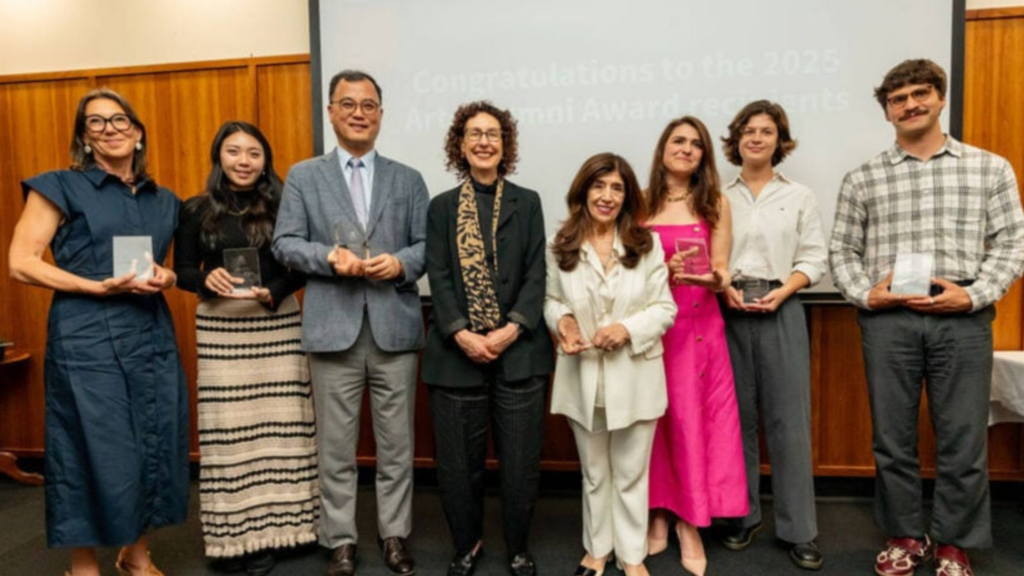
I was deeply honoured when the University of Melbourne awarded me the Golden Alumni Award last year and invited me to address the graduation ceremony at the Exhibition Building in December 2025.
I believe that this honour should be shared by the whole Greek community and is testament to the high esteem that the University of Melbourne holds the Greek community of Melbourne. The Chancellor sitting next to me applauded every Greek name that was called.
Balancing the Scales through leadership and service
In 1970, I founded the Greek Professional Association to support our emerging professionals.
In 1972, four members of that association — myself included — helped found the Australian Greek Welfare Society — now Pronia — giving migrants, especially women, access to legal and social support and dignity.
Migrant women were navigating a new country without legal protection or representation. So, we built structures that gave them both. As Honorary Solicitor for Pronia, I helped create the legal foundation that ensured their voices were not ignored. This included incorporating the organisation as a company limited by guarantee, preparing and lodging annual reports, drafting all legal submissions, advising generally on governance matters, and assisting with the purchase of properties in Richmond and Brunswick.
By 1975, through our work at the Australian Greek Welfare Society, we could see that the scales would soon tip again — this time toward an ageing migrant population. We understood that within two decades, our community would face the challenge of caring for its elderly with dignity and cultural respect. So, we acted. In 1975, we founded the Australian Greek Society for Care of the Elderly — now Fronditha Care.
A society reveals its values in how it treats its elderly women. Balancing the scales means ensuring that strength in youth becomes dignity in age.
I am deeply honoured to have been a founding member of both organisations and humbled to have been made an Honorary Life Member of each. But more importantly, I am grateful that, in the 1970s, these organisations entrusted a young Greek woman lawyer with leadership at a time when such opportunities were rare.
Balancing the Scales in the Law
I came across the day-to-day problems faced by our community, particularly women in my practice. In the 1970s, I had a large practice dealing with family law, property law and personal injuries. I witnessed the legal issues faced by our community, particularly the women.
They sought me out because I was the only Greek woman solicitor in private practice. The scales were not balanced. These women carried families, culture and sacrifice — yet stood legally exposed. That imbalance demanded correction. These women traditionally did not work outside the home in Greece but became factory fodder in Australia, raised families and ran the household without any home help.
International Women’s Year 1975
On the 18th of December 1972 the United Nations General Assembly adopted a resolution proclaiming 1975 as the International Women’s Year (IWY). This resolution stressed that 1975 should be used as the year to “promote equality between women and men and ensure the full integration of women in the total development effort”.
A National Advisory Committee was established in Australia and in 1975 the Centre for Urban Research (CURA) published a report entitled “But I wouldn’t let my wife work here…” written by Des Storer and with research team including Arthur Faulkner and Toula Nikolaou. Des Storer and the research teams attended multiple meetings of Australian Greek Welfare (now Pronia) and sought our input.
Pronia followed this by holding a seminar on the topic at the Trades Hall Council shortly after to debate the working conditions of our community who were factory fodder, particularly the women.
Legal Submissions in the 1970s
As the Honorary Secretary of Pronia in the 1970s I drafted the first constitution as a company limited by guarantee and prepared all legal submissions.
My two major submissions in the 1970s were for the Sir John Minogue Motor Car Accident Inquiry in 1976 and the Sir Daryl Dawson Conveyancing Inquiry in 1977.
I prepared both submissions and was called to give oral evidence at both inquiries, and the issues gained considerable public attention. I was interviewed in the mainstream media, helping to bring the concerns of migrant women into the national conversation.
Sir John Minogue Inquiry into Motor Car Accident Compensation 1976
My core submissions before Sir John Minogue were for the introduction of a no-fault liability and the introduction of Medical Panels with a Greek doctor being appointed on the panel for an injured Greek. Both submissions were controversial in the 1970s but were legislated and became entrenched in our legal system 10 years later, thus removing the blame barrier particularly for migrant women. Justice should not depend on language, status or confidence. It must protect the vulnerable first.
Balancing the Scales required that the person assessing your injury and pain and thus medical panels with Greek doctors were also introduced in the late 1980s.
Sir Daryl Dawson Conveyancing Inquiry 1977
In 1977, before the Sir Daryl Dawson Conveyancing Inquiry — later a Justice of the High Court of Australia — I made submissions that shaped protections we now take for granted:
- Section 32 Pre-Contract Disclosure
- The Cooling-Off Period
- The bold front-page warning: “THIS IS A LEGAL DOCUMENT — SEEK INDEPENDENT LEGAL ADVICE BEFORE SIGNING.”
Sir Daryl Dawson later recalled those submissions as groundbreaking. They too were legislated a decade later. These reforms protected the migrant family home — often a woman’s greatest achievement and only security. That was balancing the scales.
Interpreter services
The quality of interpreter services in the courts and medical examinations was a recurring item on the fortnightly Agendas for Pronia during my 10 years on the Board and no solution was available or foreseeable.
In 1984, I became the first woman, migrant and sole practitioner to be elected by all the members in Victoria on the Council of the Law Institute of Victoria where almost all members were the White Anglo Saxon Protestant Males from the big city law firms. My election to the Council was historic not only for the Greek community but for all women and ethnic solicitors in the whole of Victoria.
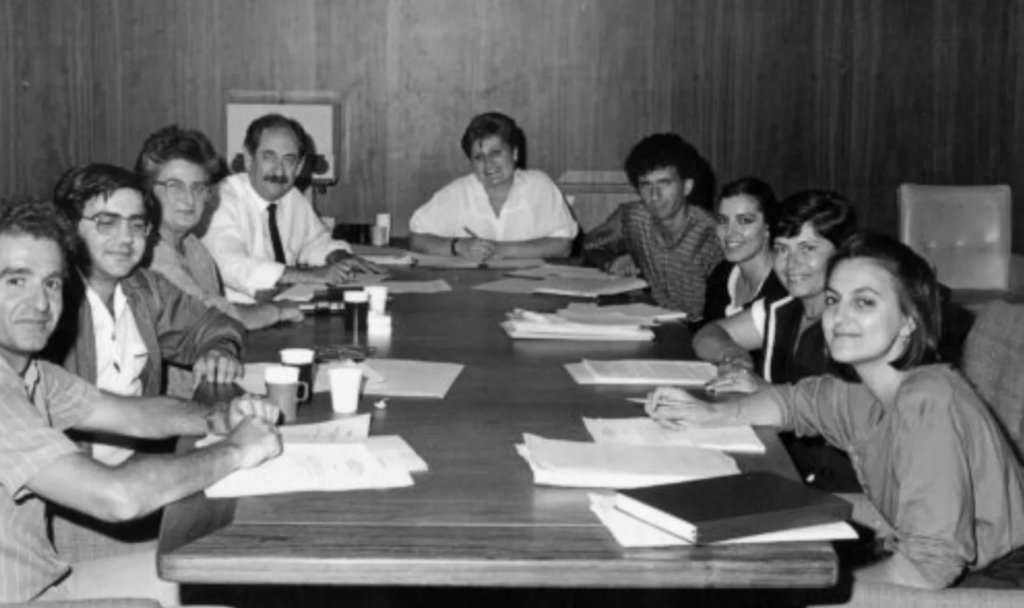
In 1985, I convened an Ad Hoc Committee of the Law Institute of Victoria which I chaired. My aim in convening this Committee of the Law Institute of Victoria was to try and see if we could find a solution to this issue that affected all migrants not only in Victoria but all of Australia.
Members of my committee included the Deputy Chief Magistrate, the Head of the Departments of Language and Culture Studies at Victoria College, a psychiatrist practising extensively in medico legal work, another senior member of the Law Institute Council, the Chairman of the Litigation Section of the Law Institute and Savas Augustakis, Co-Ordinator of the Legal Interpreter Services and also a Member of the Pronia Board.
The extensive written report was distributed to all interested parties and written comments were received from The Hon Sir John Young Chief Justice of the Supreme Court of Victoria, The Hon Justice Bowen Chief Judge of the Federal Court of Australia , The Hon Justice Asche Senior Judge of the Family Court of Australia, Victorian Ethnic Affairs Commission and all known interpreters Associations in Victoria.
The report included a proposal for a Bill to amend the Evidence Act and to be cited as The Court Interpreters Act 1986.
This report led to the establishment of the National Australian Translators and Interpreters (NAATI), Australia’s national organisation that regulates the standards of translators and interpreters in Australia and a certifying body for practitioners in the translation and interpreting industry.
This report was groundbreaking not only for our Greek community but for all Australians in all states and is recognised globally.
Balancing the scales at home: Stopping financial abuse
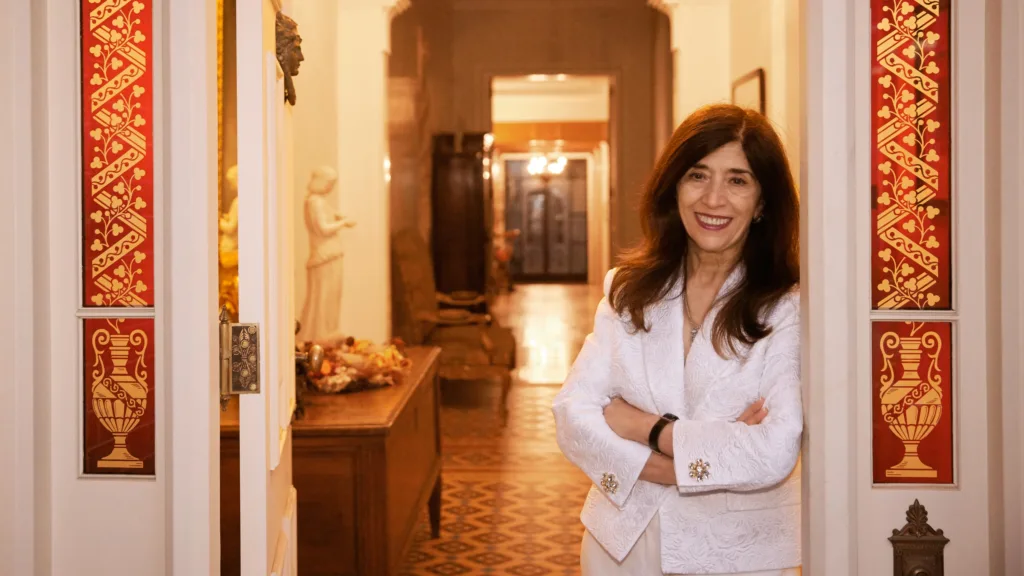
One of the most confronting imbalances I have witnessed throughout my career is financial abuse. Financial abuse has existed in our community throughout my legal career. Balancing the scales does not end in the courtroom or with law reform. It must extend into our homes.
I have observed that older migrant women can be particularly susceptible to financial and emotional pressure, sometimes even from within their own families. This is a deeply confronting reality.
However, elder abuse is not confined to the Greek community. I have witnessed it across the broader community as well — including during the COVID period — and have appeared before VCAT to defend and protect an elderly German woman from exploitation. Balancing the scales means having the courage to confront these injustices wherever they arise, and to stand firmly beside those who cannot stand alone.
Elder abuse has sadly been part of our community for decades. Today, my advocacy continues for families, particularly women facing “Inheritance Impatience” from within their own families. I don’t wish to go into this difficult topic today, but it is a topic that should be explored in depth.
In my own practice, I have done my utmost to protect those subjected to such pressures — most often elderly women — and to restore balance, dignity, and security where the scales have tipped against them.
Each generation faces its own imbalances. The form changes — but the responsibility does not. It is now our task to ensure that in our courts, in our profession, in our homes, and in our community — the scales remain balanced.
And when they tip — as they inevitably do — we must have the courage to lift them again. Those who came before us endured imbalance. We worked to rebalance it. It is now for the next generation to protect and extend what we have begun.
“I stood with Sir Robert Menzies in 1970 to give you a voice, with Sir John Minogue in 1976 to protect your body and with Sir Daryl Dawson in 1977 to give you a home. I have provided this work pro bonofor 55 years because your dignity is my mission. Do not let your security be taken by those you love most.” — Eugenia Mitrakas OAM
