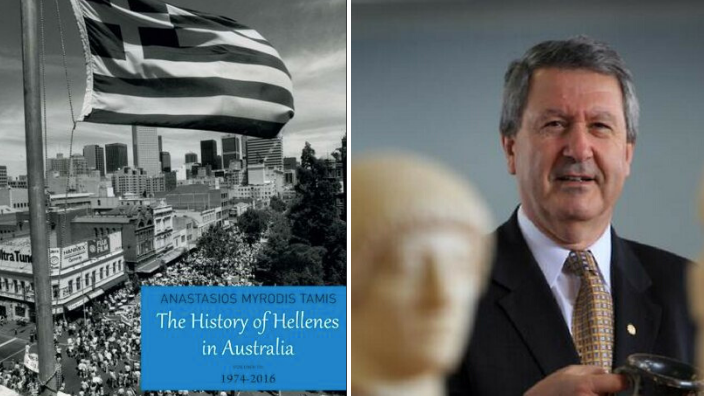
Shortly after the third and final volume of his book “Hellenes in Australia”, was published, we caught up with Professor Anastasios Tamis, President of the Australian Institute of Macedonian Studies (AIMS) and Director of the Australian Institute for Hellenic Research, to chat about the book’s thematology and its importance as a legacy for the future generations of Greeks in Australia.
“The first volume, published in 1997, deals with the years from 1830 to 1958. The second volume with the years 1958 to 1974 and the latest one from 1974 to 2016,” explains Professor Tamis.
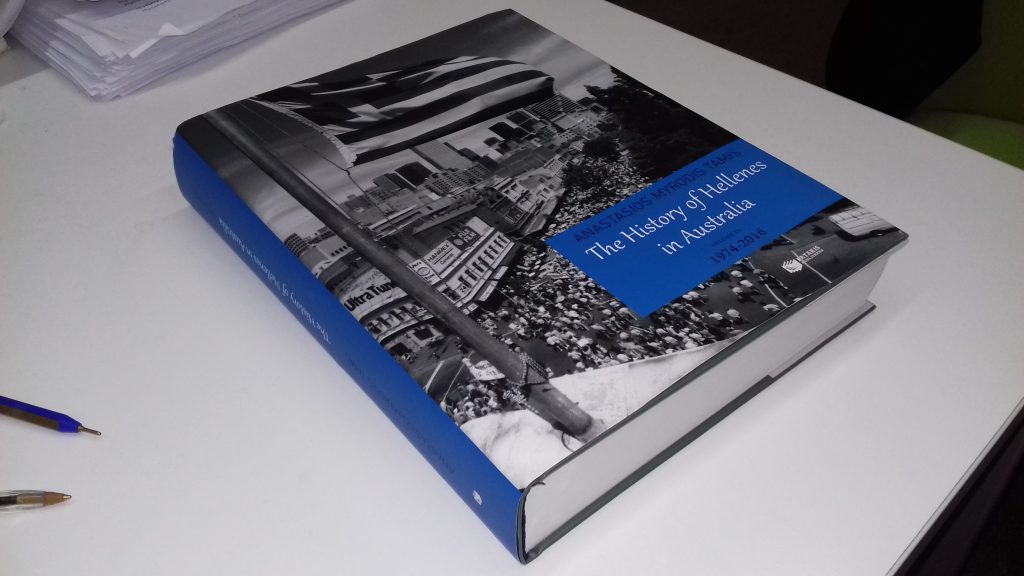
The third volume of the History of Hellenes in Australia is written in English and in 650 pages, it presents the story of Hellenic settlement and organization, the socio-economic, cultural and religious trends as well as the achievements attained by more than 540,000 Australians of Hellenic background in Australia, between the years 1974 to 2016.
“This volume is the most important one, as it describes the emergence of the middle class. Prior to 1974, most of the -otherwise intelligent and curious- Greek and Cypriot immigrants who arrived in Australia were unskilled workers and farmers. There was no leadership.”
“After the first years of survival, when their children established themselves and adapted to the Australian culture, they claimed positions of influence and thus created, the so-called middle class. This was only due to the sacrifice of the first generation of Greek immigrants. Today, these children are the ones who lead Greek organisations, unions and communities,” said the Greek academic.
But why is a book about Hellenes in Australia written in English?
“Because the children and grandchildren of those first immigrants must read it,
“The content of this book is an integral part of Australia’s and Greece’s national history,” he said, adding that “unfortunately, the Greek language skills they have are not sufficient for them to understand historical or spiritual books”.
“The Greek language, is a bet we’ve lost. Yet, it is of great importance for the Australian-born children and grandchildren to read and learn about the history written by their own parents and grandparents,” Professor Tamis concludes.
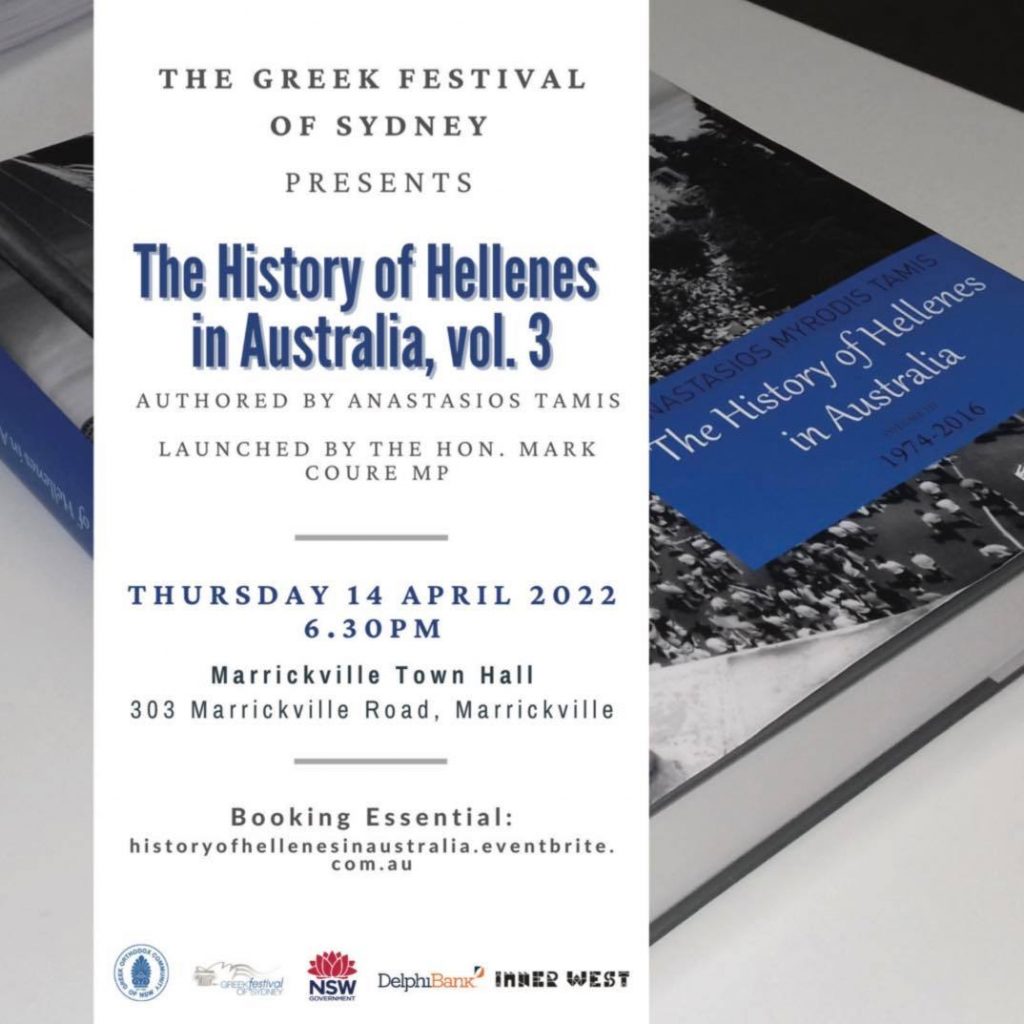
Professor Tamis’ book will be launched as part of The Greek Festival of Sydney on Thursday, April 14 at the Marrickville Town Hall at 6.30pm. The NSW Minister for Multiculturalism, Mark Coure MP, will be launching the book.
Bookings are essential here.