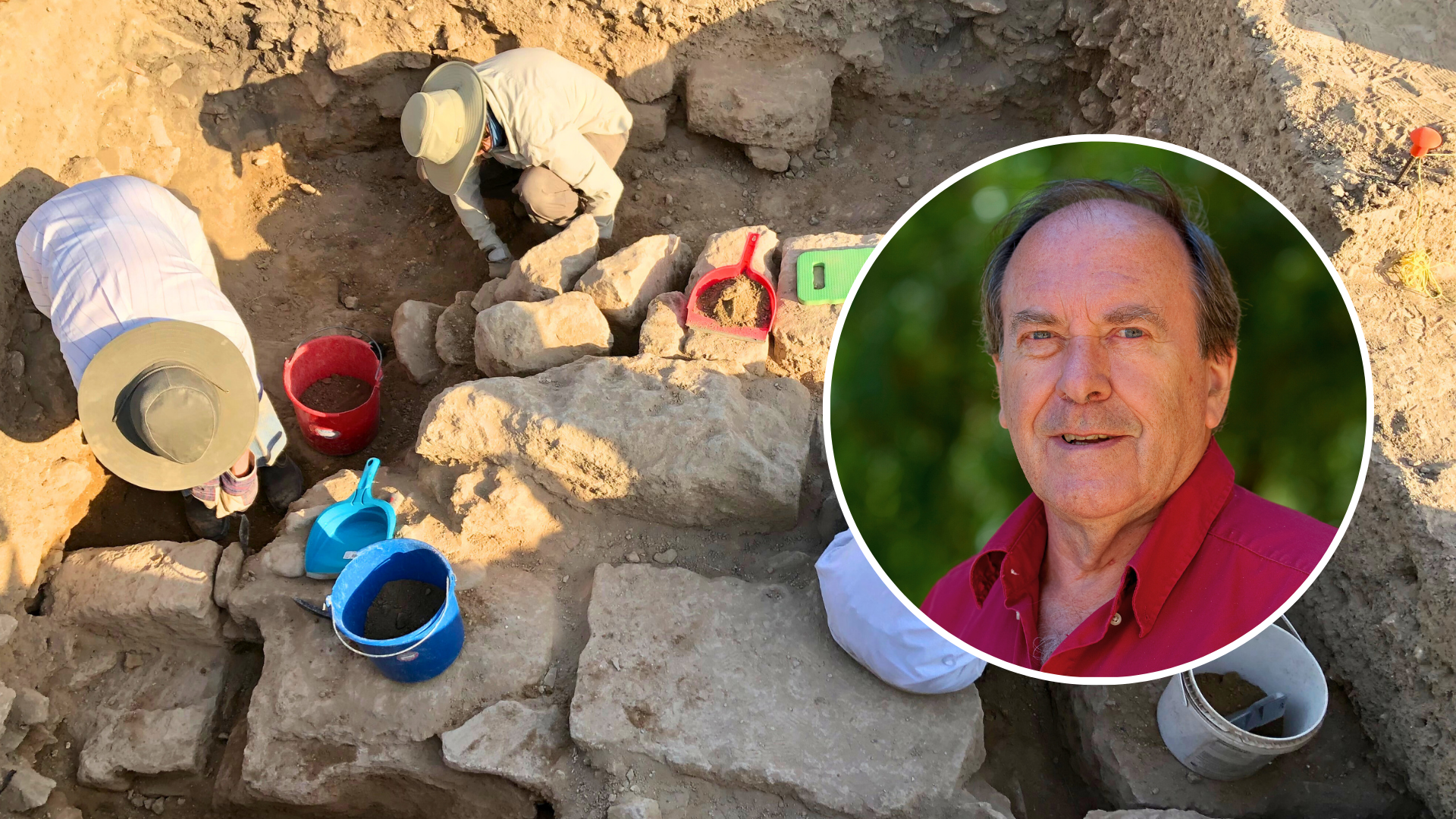
Emeritus Professor Richard Green, a finalist in the inaugural Australia Cyprus Achievement Awards, has spent more than three decades at the centre of one of Australia’s most significant archaeological undertakings in the Mediterranean: the excavation of the ancient theatre at Nea Paphos in Cyprus.
For more than 30 years, Professor Richard Green has been at the centre of one of Australia’s most significant archaeological findings in the Mediterranean: the excavation of the ancient theatre at Nea Paphos, Cyprus.
What began as a lucky mix of the right timing and people has become a project that explores both ancient history and modern cultural survival.
For Green, the urgency is unmistakable. “We live in difficult times and there are threats on all sides. We are in danger of losing our way of life and our identities.”
Archaeology, he insists, is not an exercise in nostalgia.
“One way of securing ourselves is to rediscover our pasts and to learn from our pasts, establishing ourselves as the products of our forebears who themselves coped with ever-changing worlds.”
From Manchester to archaeology
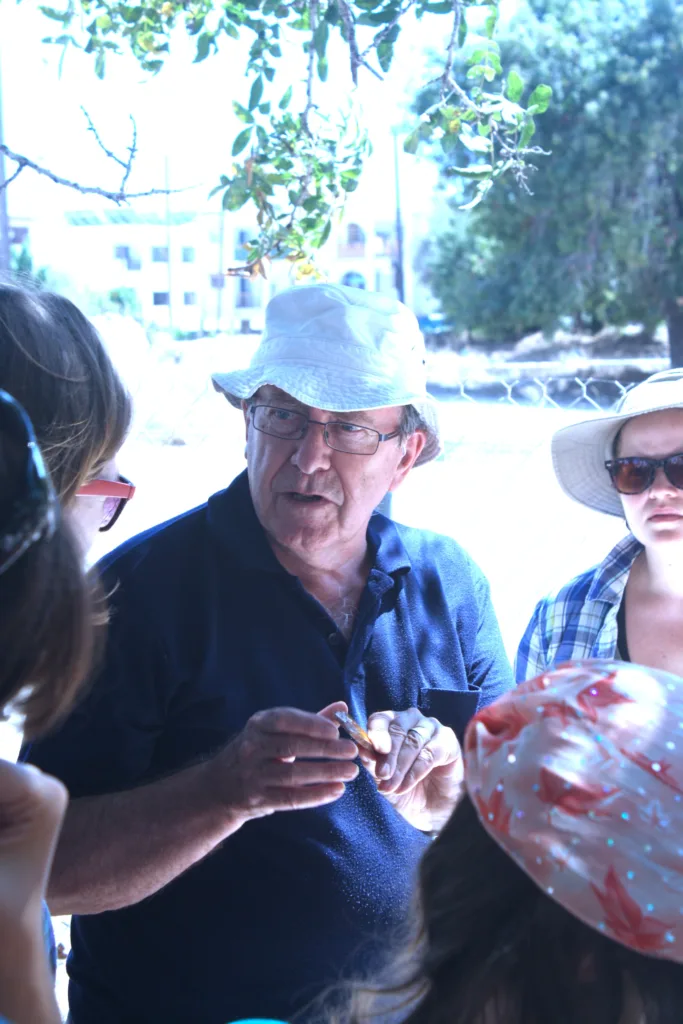
Green’s path to archaeology was not inherited. “I grew up in the outskirts of Manchester, England, and was the first person in my extended family to go to university.” Opportunity, rather than tradition, shaped him early. Grammar school allowed him to specialise in Latin and ancient Greek before University College London, where exposure to “really good teaching staff, most of them world-renowned” and a specialisation in Greek Archaeology set his direction.
It was also where a long-term connection was formed. “It was while I was a student there that I first met and got to know Vassos Karageorghis… We were very friendly. He of course went on to become Director of Antiquities in Cyprus.” That relationship would later prove decisive.
Early fieldwork and formative influences
Fieldwork came early. “On completing my Bachelor of Arts Honours I won a scholarship that took me to the British School of Archaeology at Athens. It was a critical step.” Immersion in museums and active digs followed. “Semni Karouzou at the National Museum in Athens encouraged me to handle a range of material,” while exposure to the American Excavations in the Agora taught him “what excavations are about and how complex they can be.”
The moment everything aligned
By 1995, the conditions were right. “This was a coincidence of a range of factors that all seemed to come together at that point.” Green had taken up the Chair of Classical Archaeology at the University of Sydney and felt a responsibility to his students. “We had an outstanding cohort of advanced students who deserved special treatment and who needed field experience.”
Cyprus carried personal weight. He had worked across Italy and Greece, but also “had the experience of being isolated on a Greek island during the events of 1974 and so was very conscious of the terrible things happening in Cyprus.” The division of the island still shapes him. “[I have] never, even now, been able to bring myself to set foot over the border, in the northern half of Cyprus.”
With all this in mind, he contacted Karageorghis. “Without any hesitation, he welcomed the idea of a Sydney team,” and suggested a site aligned with Green’s scholarly interests: theatre.
“It would be a good idea for us to investigate a site in Paphos where it seemed likely that an ancient theatre was to be found. And so it was.”
A theatre layered with history
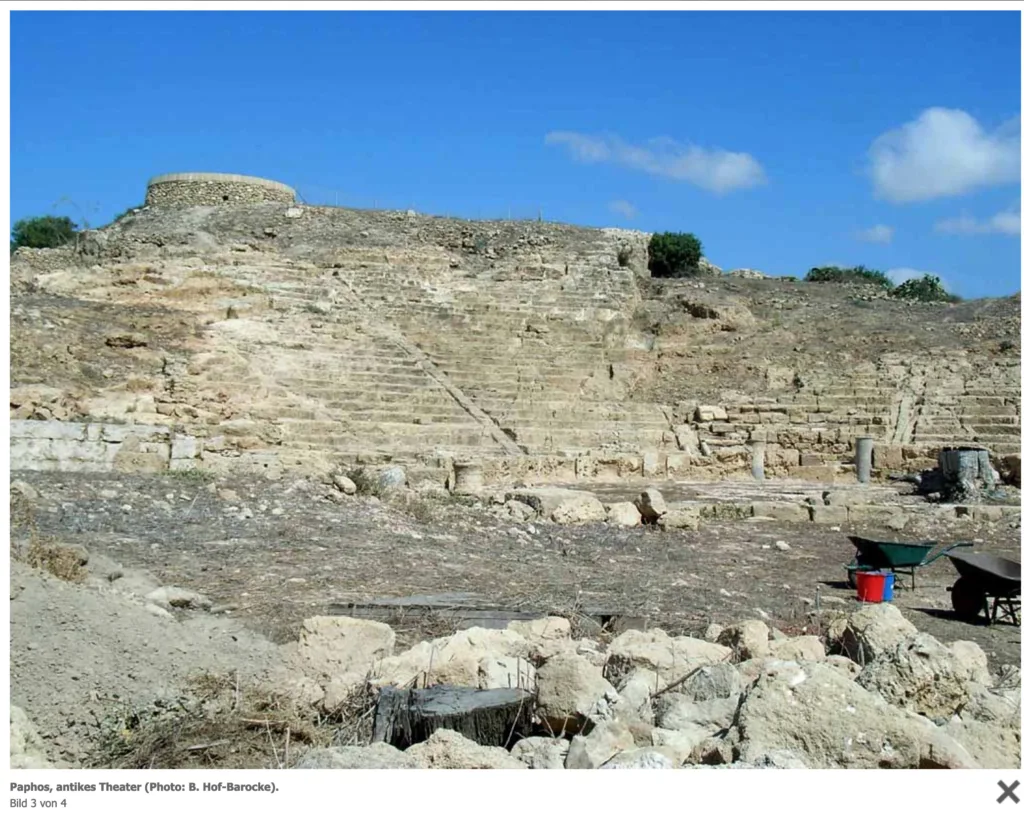
What emerged was not simply a theatre, but a compressed history of the eastern Mediterranean. “Most of all, it’s the theatre itself.” First built around 290 BC, “probably with input from Ptolemy I,” it was repeatedly rebuilt and reimagined. “It was remodelled and reopened with an international theatre festival in 141 BC, remodelled again under the emperor Augustus, rebuilt in the AD 140s.”
Each phase reflected power and prestige. “It reflects the regard with which Paphos, as then capital of the island, was held in the imperial court.” The Roman version was unapologetically grand: “marble columns imported from Euboea, water-sprinklers that played water over a floor paved with exotic coloured marbles,” and “fragments of portrait-statues of Antoninus and his family.”
That version endured until catastrophe. “The terrible earthquake of AD 365 together with a major tsunami.” The theatre was abandoned, repurposed, absorbed into a Christian city. “Elements were used in the construction of the Chrysopolitissa basilica… We have stood where Paul and Barnabas had stood.”
Layers beyond the ancient world
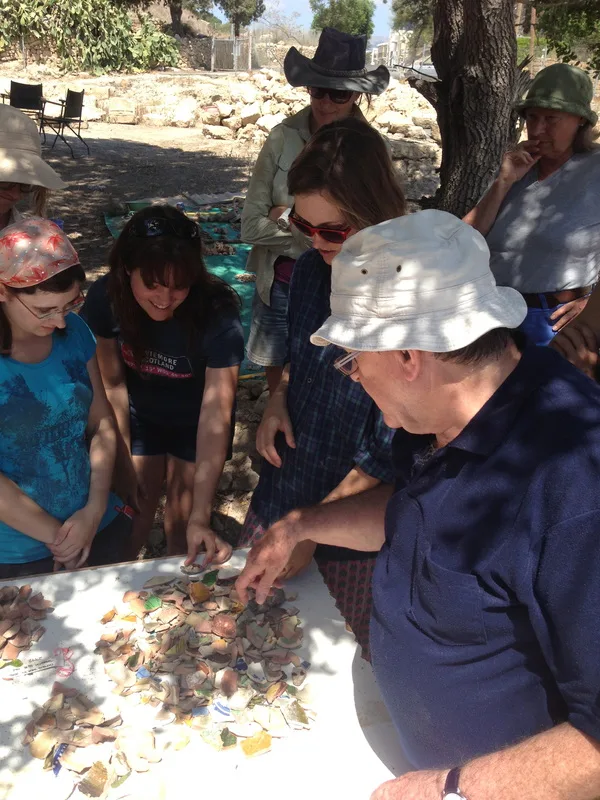
Over the following centuries, the site’s function shifted from public performance to local industry. Layers kept coming. Above the ancient theatre sat something unexpected: “a cluster of buildings that had housed a group of pottery manufacturers of the Crusader period… supplying Crusaders in the Holy Land.” The site became industrial, then global. “Many pieces of decorated, glazed pottery manufactured on our site have been identified there.”
Among countless finds, one object captures the project’s meaning for Green. “A plate decorated with features that recall the Nile… It dates to the 6th century AD.” Its significance lies not in style, but in movement. “The fascinating thing is that the clay of which it was made is Paphian. The man travelled, not the pot.”
Looking ahead
As the excavation enters its next phase, Green is measured but hopeful. The immediate priority is detailed publication to ensure the work is preserved, but the goal remains unchanged: “to see it continue in much the same fashion, involving the sharing of cultures.”
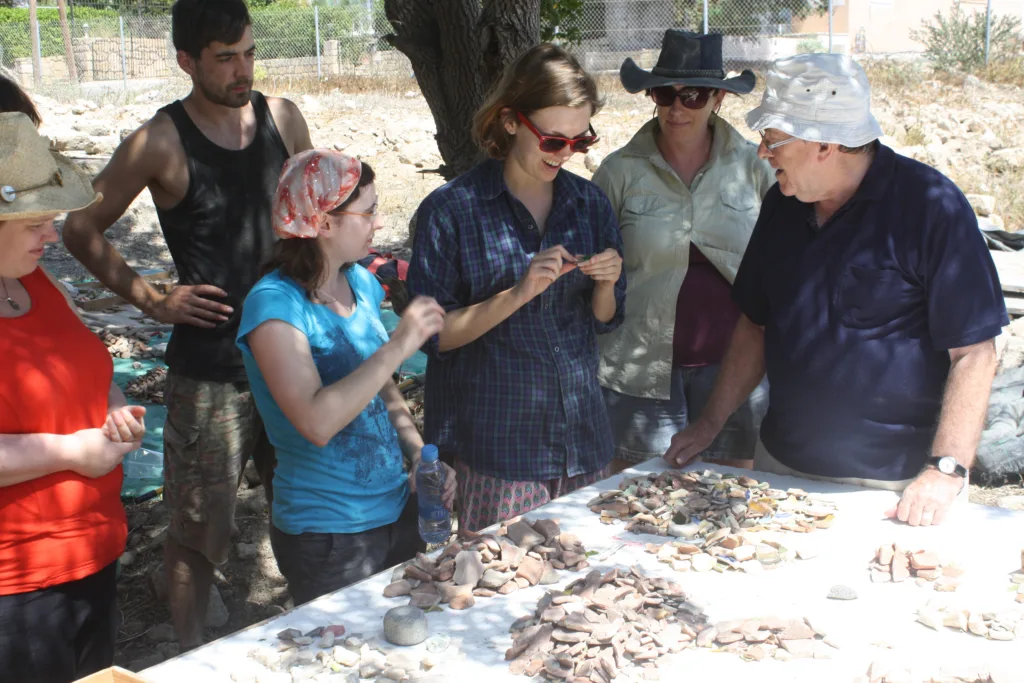
The project’s longevity rests on people as much as archaeology. “We have invariably been treated well and made welcome by the people of Cyprus.” In Australia, “we have had the unstinting support of the Cypriot community.” From the outset, the excavation opened itself beyond academia. “We have regularly opened our teams to members of the broader Australian community so that they too could share not only in the archaeology but in the experience of Cyprus.”
For Green, the emotional centre of the work is not abstract. It is physical. Standing in the orchestra of a theatre that once seated 8,500 people, he offers no grand theory. “What can one say? It is the fulfilment of a dream, and one I would like others to share.”
At Nea Paphos, the past is not sealed. It is layered, disrupted, rebuilt and still speaking.
The winner of the Australia Cyprus Achievement Award will be announced at a formal presentation ceremony in February 2026, recognising individuals whose work has strengthened cultural, intellectual and community ties between Australia and Cyprus.
Event details
Venue: The Chau Chak Wing Museum, The University of Sydney
Date: Thursday, 26 February 2026
Time: 6.30 pm
Bookings: www.thecyprusclub.org.au/awards
