One recurring question when discussing Australia’s Hellenic community is how the next generation will be affected. Will they hold onto the language? Will they have exposure to anything Greek? And perhaps the most pressing question: will they even be interested in learning about Greek culture?
I’ve heard these questions circulate in education groups, families and community groups, where both the young and old are curious about the future of the Greek Australian community. Many are working to encourage the younger generation to learn Greek and maintain their cultural ties.
While most Greek Australian families 30 or 40 years ago had both parents of Greek descent, in 2025 you’re more likely to find biracial families with only one Greek parent. This raises new challenges as parents navigate the balance of ensuring their children can connect with multiple cultures.
Taking Greek lessons might be the first thing that springs to mind when brainstorming ways to maintain exposure to the language. These lessons can profoundly impact a child’s language skills and their social development by sharing cultural experiences with other Greek students. Outside of the classroom, there are many other ways to engage with Greek culture.
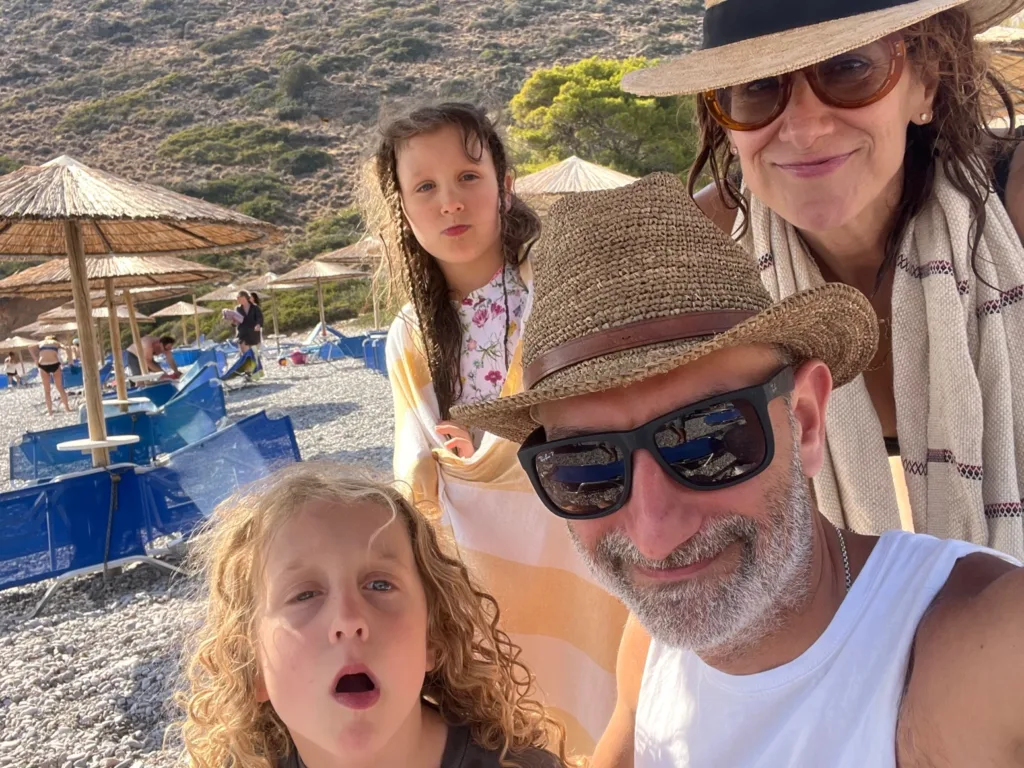
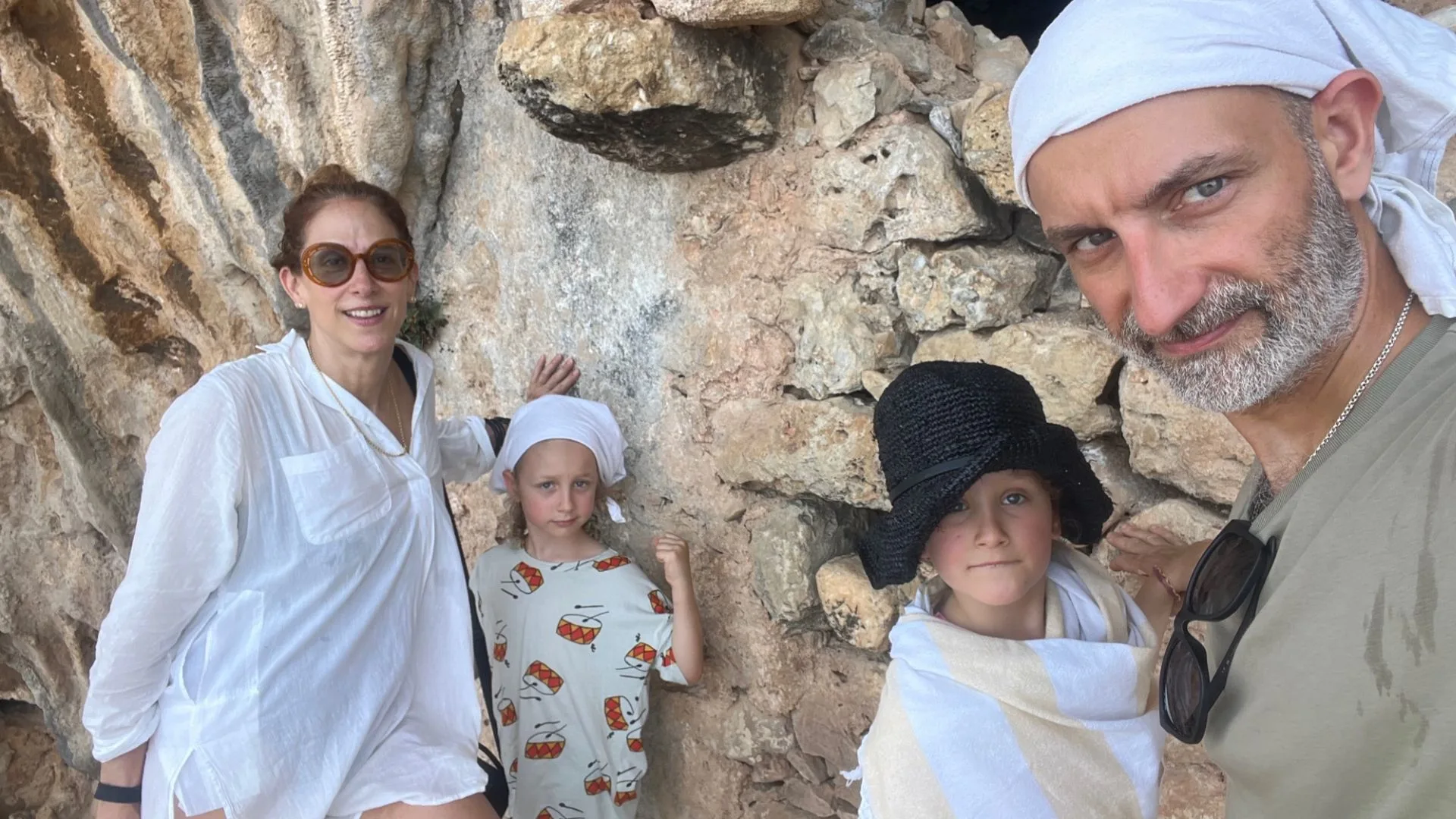
Anthony Couroupis and his partner Faustina Delany share identical twin daughters, Marika and Sophia Couroupis, who are 3 ½ years old. Anthony describes himself as being “Greek with an asterix,” as his parents are both Greek, but born in Egypt. Faustina, born in Japan, is Australian-Irish.
With the mix of culture and places, Anthony said incorporating Greek culture into their family was “made really easy because my partner’s so into the idea of Greek culture… she’s been in my family for 15 years and… the idea of family is very important to her.”
In her support of Greek culture, Anthony said Faustina “started doing Greek language lessons [soon after they met] so that’s been a big help.”
Anthony decided to speak predominantly Greek to Marika and Sophia while Faustina spoke English, raising their twins to be bilingual. The girls also listen to Greek music and the family participates in the “ceremonial aspects of the Greek culture,” such as dyeing eggs red during Easter and cutting a vasilopita on New Year’s Day.
Anthony’s Greek family had the traditional open-door policy to all family, neighbours and friends, so he was surrounded by visitors daily. He hopes his daughters have the same generational link he had: “It would be very meaningful to me… [for them to be] connected to the wider community.”
Another biracial family encouraging exposure to Greek language is the Papadakis family. Anne and Andreas Papadakis have eight-year-old twins, Eva and Paris. Anne is from the east coast of the United States, and Andreas is from Athens, Greece. The couple met in Santorini in 2000, moved to Australia in 2006, and later started their family.
With no other family in Australia, Anne and Andreas have formed their own family traditions and have incorporated Greek culture in their lives.
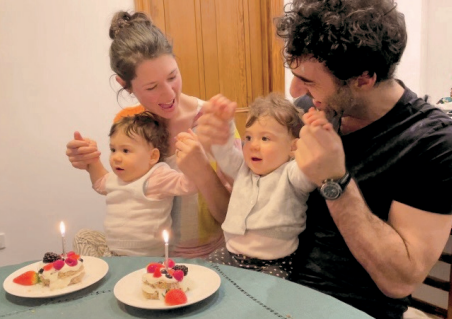
Eva and Paris began Greek lessons when they were four.
“Since their Pappou speaks no English, I have really pushed for them to go to Greek school,” Anne explained.
The Papadakis family have also shared Greece with their children: “Luckily, we have been able to spend time in Athens and travel around Crete almost every couple of years. Museums, ruins, events are always peppered throughout our trips; but sometimes the most interesting experience is the family-run shop on the side of the road.”
While there are many wonderful parts of uniting cultures, Anne also acknowledges how “linguistic and cultural differences do cause miscommunications often that can be very frustrating.” These difficulties complement the joys of sharing cultures, something often unspoken.
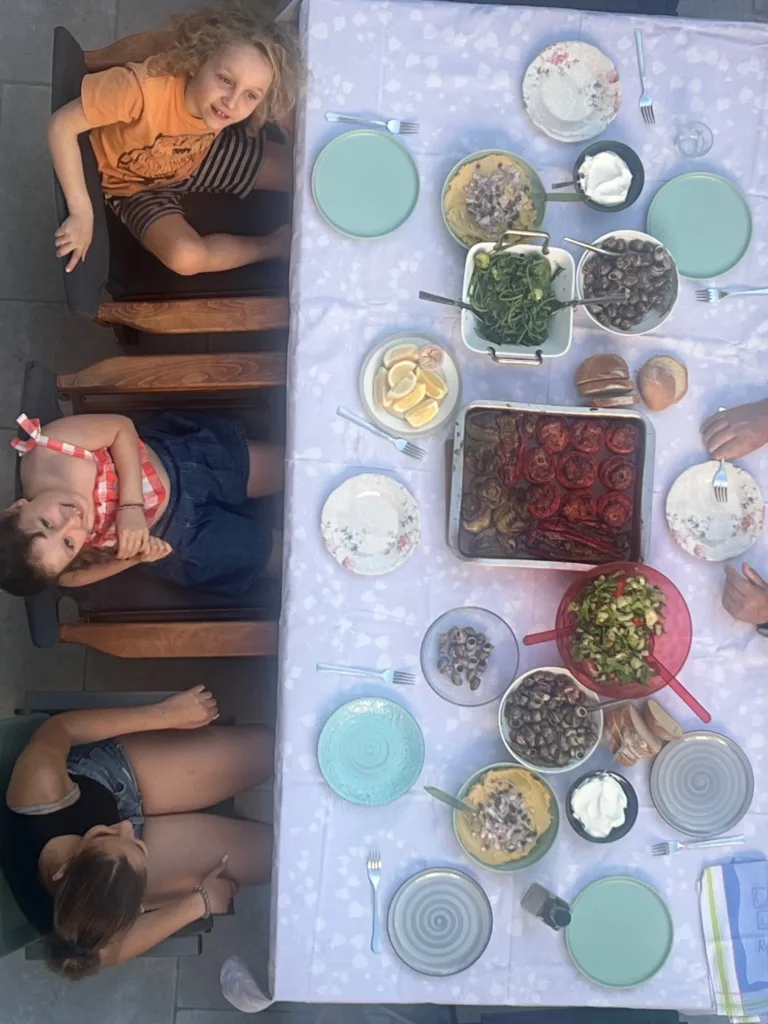

Being immersed in Greek culture, both in Australia and Greece, has strengthened Eva and Paris’ ties to their heritage.
“Eva and Paris are at an age where Greek mythology is very appealing. This has made museum visits more meaningful,” Anna said.
While connecting with cultural roots is encouraged by much of the Greek community, it can be easy to fully assimilate into Australian culture and leave behind any trace of our Hellenism. But perhaps there’d always be a lingering thought pulling us back to these roots.
This was true for Anthony and his experience growing up in an strongly Greek household.
“I actually tried to kind of put some distance between myself and the idea of me being Greek, so I hope that doesn’t happen for [Marika and Sophia]. When my parents tried to speak Greek to me for about a year and a half, I refused to speak Greek back to them. I just spoke English,” he said.
Reflecting on this, Anthony said even if his children do reject Greek culture, “I found my way back home… I feel like I know a lot of people who have gone through that.”
The beauty of biracial families is how they raise a new generation that appreciates and understands different cultures. A new generation whose unique experiences can enrich Australia’s Hellenic communities.
