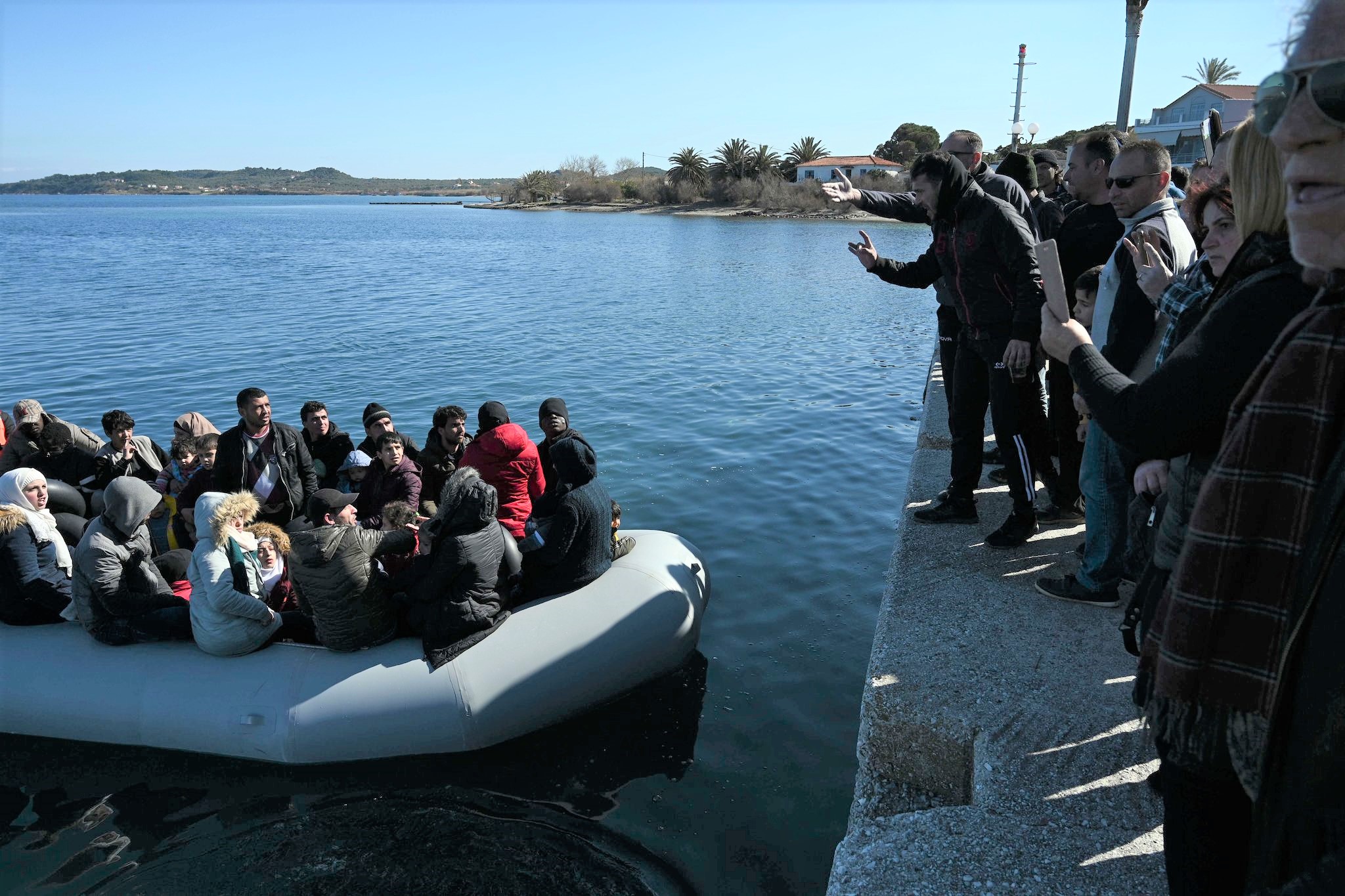
Greek villagers enlisted to catch migrants at Turkey border

·

Over the years, villagers who live near Greece’s border with Turkey got used to seeing small groups of people enter their country illegally. The Greek residents often offered the just-arrived newcomers a bite to eat and directed them to the nearest police or railway station.

But the warm welcomes wore off. When Turkey started channeling thousands of people to Greece, insisting that its ancient regional rival and NATO ally receive them as refugees, the Greek government sealed the border and rushed police and military reinforcements to help hold back the flood.

Greeks in the border region rallied behind the expanding border force, collecting provisions and offering any possible contribution to what is seen as a national effort to stop a Turkish-spurred incursion.

In several cases, authorities asked villagers familiar with the local terrain to help locate migrants who managed to either slip through holes cut in a border fence or cross the River Evros, which demarcates most of the 212-kilometer border.
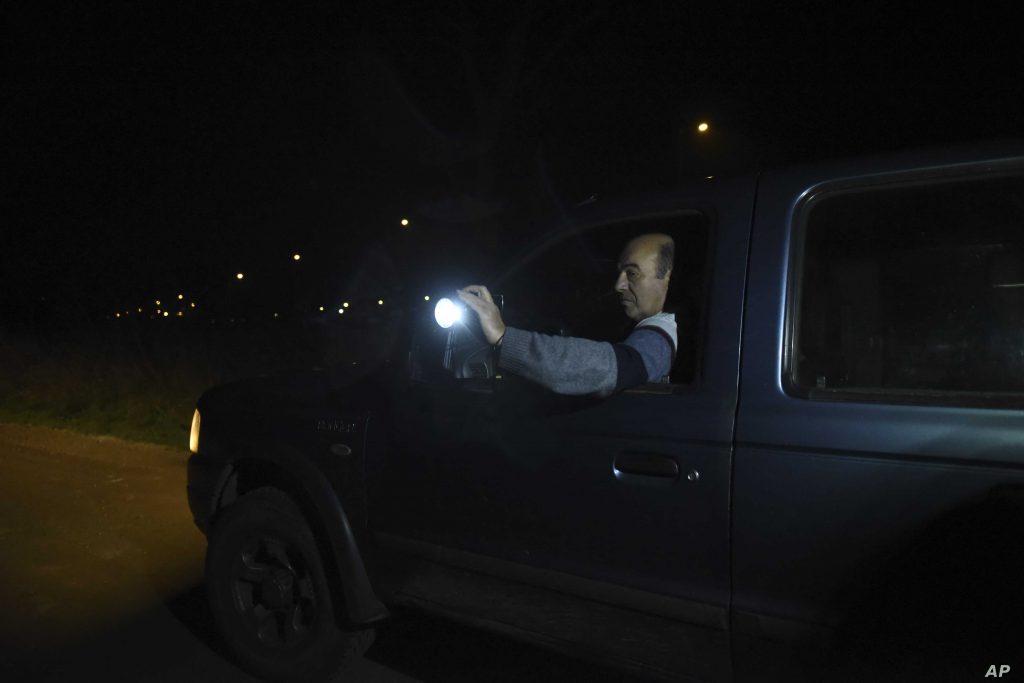
A local resident uses his flashlight near the Greek-Turkish border, in the village of Amorio, to spot any migrants trying to cross. Source: AP Photo/Giannis Papanikos.

“We sit at the crossings, and they come,” said Panayiotis Ageladarakis, a community leader in Amorio, a village that lies some 300 meters from the river banks.

“We keep them there most of the time, call police and they come and arrest them. Then, it’s a matter for the police. We aren’t interested in where they take them. We just try to help this effort taking place by the army and the police.”
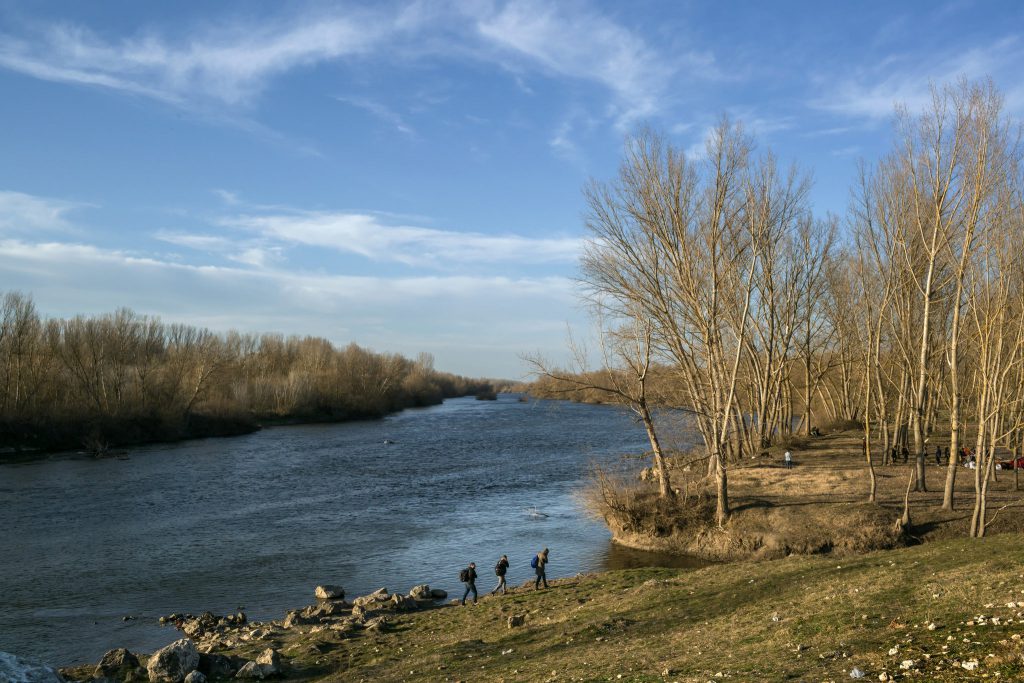
Migrants walking along the Maritsa River on the border between Turkey and Greece on Monday. Source: The New York Times

Other villages also responded to the call for help. A woman named Fotini, who lives in Moria village bordering the notorious refugee camp on Lesbos, said the locals are forming “impromptu roadblocks” aimed at stopping migrants from walking through their village.

“When the Syrians started coming five years ago, we gave clothes, we cooked for them, we bounced their babies,” Fotini told The New York Times.

“Five years of solidarity. We can’t take it any more. We want our lives back.”

Irate farmers are also joining the vigilante fight by lining up their tractors, each adorned with a small Greek flag, and declaring they are ready to fight to protect Greece.

Source: Associated Press.

Share:

KEEP UP TO DATE WITH TGH

By subscribing you accept our Terms of Service and Privacy Policy.

Latest News

Shark attack victim’s brother Mike Psillakis calls for shark population control

The twin brother of shark attack victim Mercury Psillakis, Mike Psillakis, is calling for stronger controls on shark populations.

Ancient glory revived as Parthenon restoration reaches major milestone

Restoration work on the western side of the Parthenon has been completed for the first time in around 220 years.

Virgin Australia responds to criticism by extending COVID credit travel deadline

Virgin Australia has officially extended the expiry date for travel credits from flights booked during COVID-19 travel bans.

Mitsotakis says Gulf shipping must be fully restored following US-Iran deal

Greek Prime Minister Kyriakos Mitsotakis says Greece’s immediate focus is the restoration of shipping through the region.

Dimitra Skalkos: Carrying The Greek Herald into its second century

Dimitra Skalkos can’t remember a time before The Greek Herald. Before she became its Publisher. Before she inherited its responsibilities.

You May Also Like

Meet Cypriot Smurf: the story behind the fake moustaki

32-year-old comedian, Cypriot Smurf, is in Australian for a live sold out tour to his devoted Australian fans in Adelaide, Melbourne and Sydney.

Faith and festivity: Saint Anna parish marks Orthodox Easter on the Gold Coast

On Easter Sunday morning, the Greek Orthodox Parish–Community of Saint Anna on the Gold Coast gathered in large numbers.

From hardship to hope: Katrina Pastourmoglou’s tireless fight for cancer support

Katrina Pastourmoglou has become a key figure in community fundraising, turning personal hardship into meaningful action for cancer support.