
The European Commission on Tuesday adopted rules that will make the European Union COVID-19 certificate valid for travel nine months after the completion of the primary vaccination schedule.
The proposal comes as several EU states introduce additional requirements on travellers in a bid to reduce the spread of the Omicron coronavirus variant.
The new rules will be binding on the 27 EU states from February 1. The rule can be blocked by a qualified majority of EU governments or a simple majority of European Parliament members, but officials have said there is sufficient support for it.
The rule replaces a non-binding recommendation the EU Commission put forward in November.
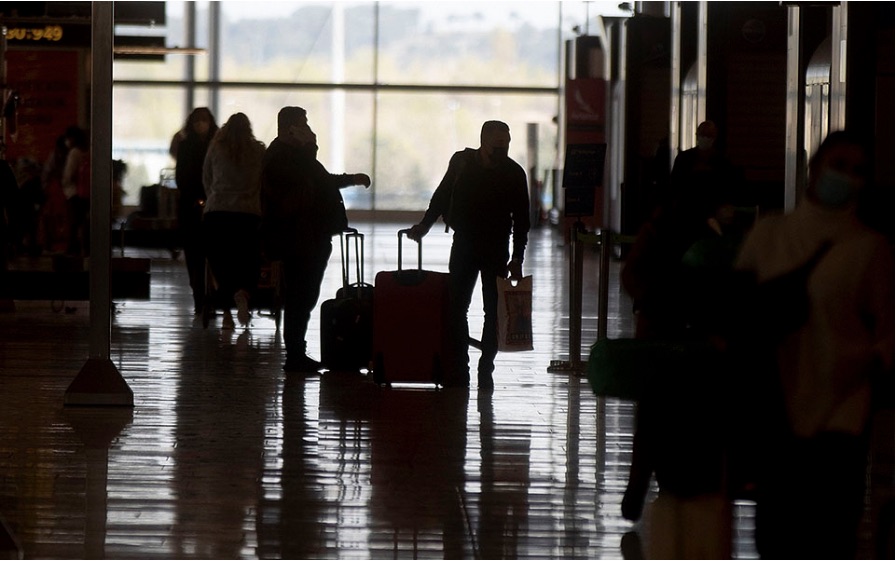
Once the rule is effective, EU states will be obliged to let fully vaccinated travellers with a valid pass access their territory. However, as an exception justified by a deteriorating situation, they could still impose further requirements, such as negative tests or quarantines, as long as they are proportionate.
Seven EU states are currently requiring fully vaccinated travellers from other EU countries to also show a negative COVID-19 test upon arrival, measures some see as damaging the credibility of the EU pass.
The states are Italy, Greece, Ireland, Portugal, Latvia, Cyprus and Austria.
“We prefer to use for the free movement in Europe only the certificate without additional measures,” EU Justice Commissioner Didier Reynders said.

He noted that the additional requirements could be justified by concerns caused by the spread of the Omicron variant, but governments had to prove they were proportionate and necessary.
The new rules apply only for international travel.
Governments will be able to have a different duration of the COVID-19 pass for access to events or indoor activities within their territories.
After a booster shot, the validity of the COVID-19 pass will be extended further without a set limit, because at the moment there is not enough information about the duration of protection from boosters, an EU official said.
A primary vaccination schedule for COVID-19 is currently composed in the EU of two shots of vaccines produced by Pfizer-BioNTech, AstraZeneca and Moderna, or a single jab of the Johnson & Johnson vaccine.
Source: Ekathimerini.