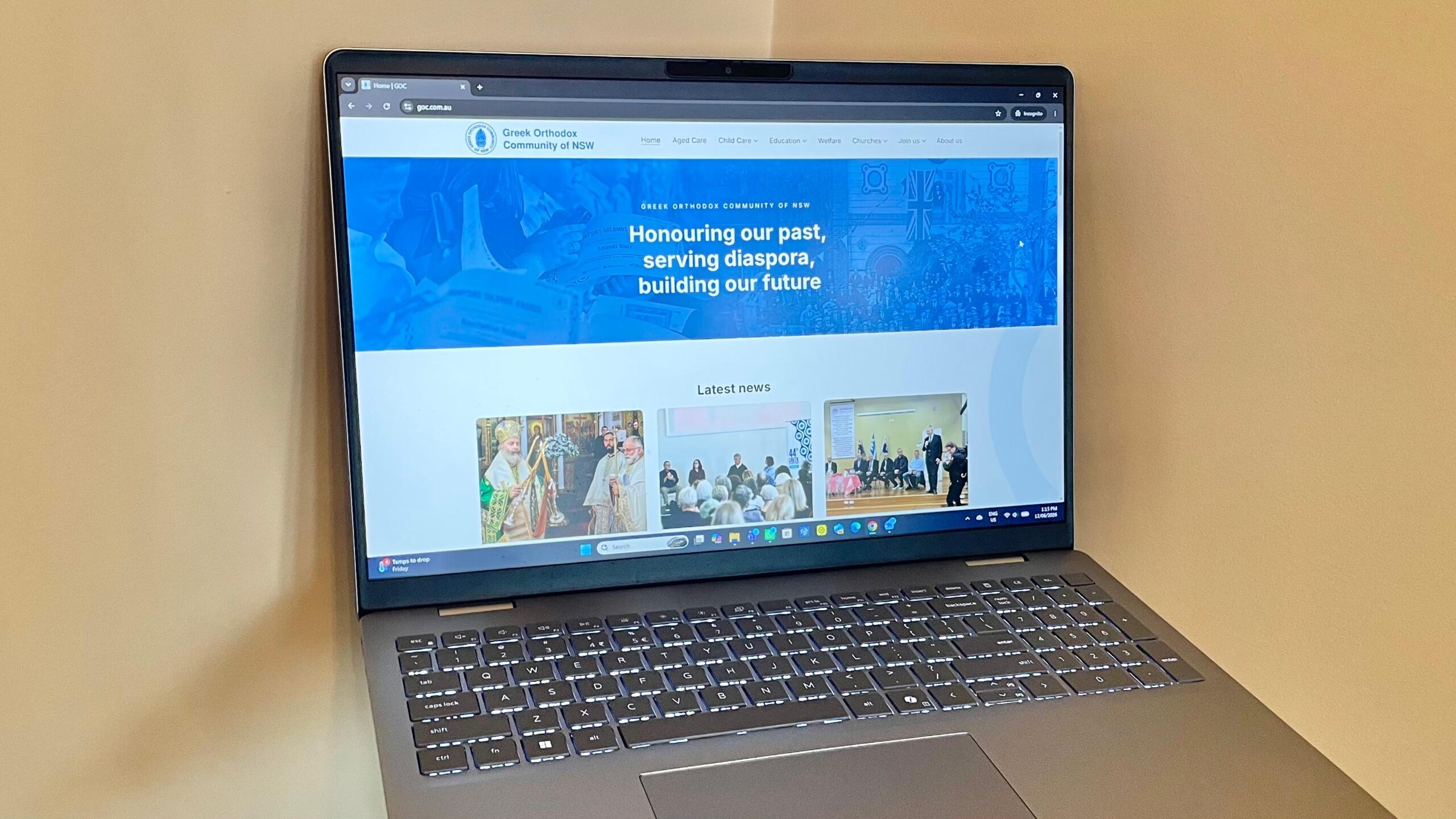
The Greek Orthodox Community of NSW (GOCNSW) has introduced its newly elected Board of Directors and unveiled a new community website during a networking evening attended by representatives from Greek organisations and associations across Sydney.
Held at the Greek Community Club in Lakemba on Tuesday, June 16, the event aimed to strengthen connections between the Community and the broader Greek Australian community while highlighting the wide range of services and programs operating under the GOCNSW umbrella.
Opening the evening, General Manager Vicky Tomaras said the gathering had two key objectives: introducing the newly elected Board and officially launching a new digital platform designed to improve communication with members, associations and the wider community.
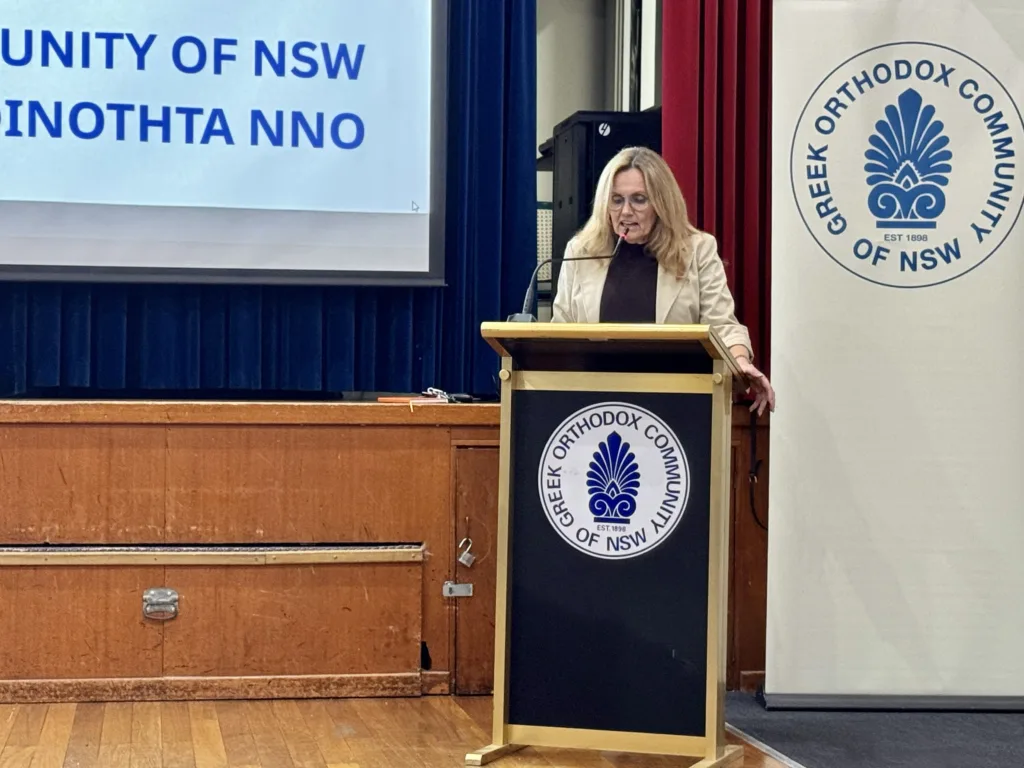
GOCNSW President Con Apoifis described the organisation as a unique community institution that continues to operate debt-free while managing significant assets and services across aged care, education, welfare, childcare, culture and religion.
“We are here to provide services to our Greek community,” Apoifis said.
“Our churches, schools, childcare services, welfare programs and aged care facility all exist to serve our people. We have substantial assets and our responsibility is to grow those assets and strengthen the organisation for future generations.”
He stressed that the Community’s assets were income-producing and existed to support the long-term future of the Greek community in New South Wales.
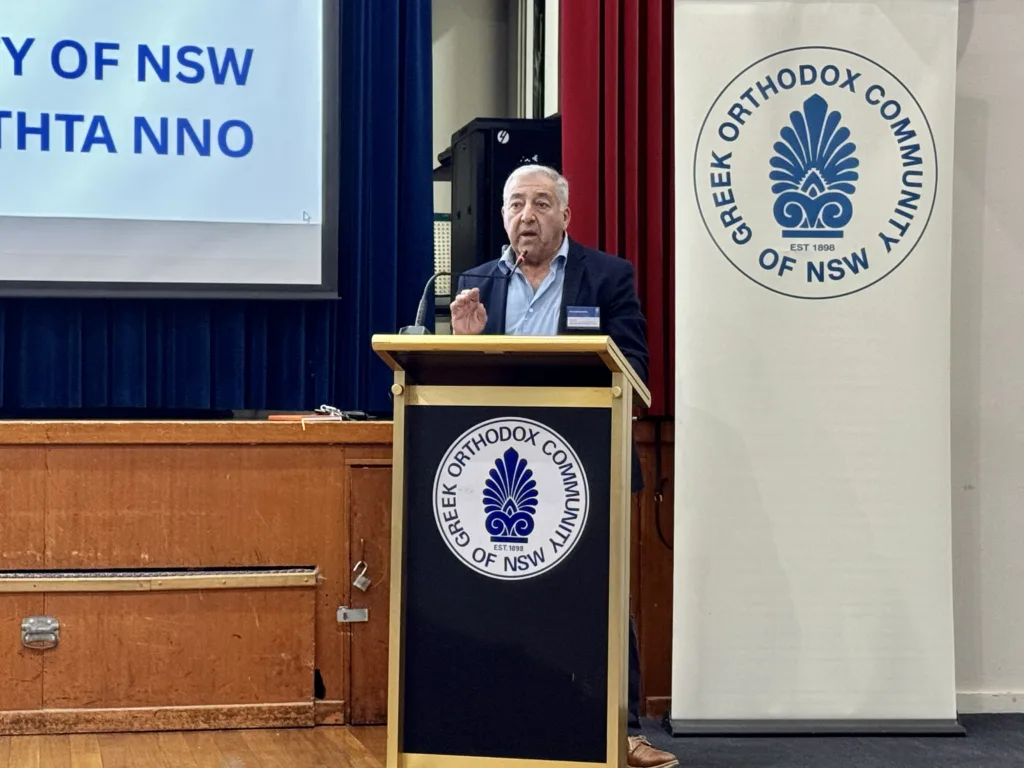
During the evening, Consul General of Greece in Sydney Giorgos Skemperis congratulated the new Board and encouraged organisations to work closely together while helping disseminate information throughout the community.
He also highlighted improvements at the Consulate over the past year, revealing that staffing levels had increased from eight or nine employees to 16, resulting in significant reductions in appointment waiting times.
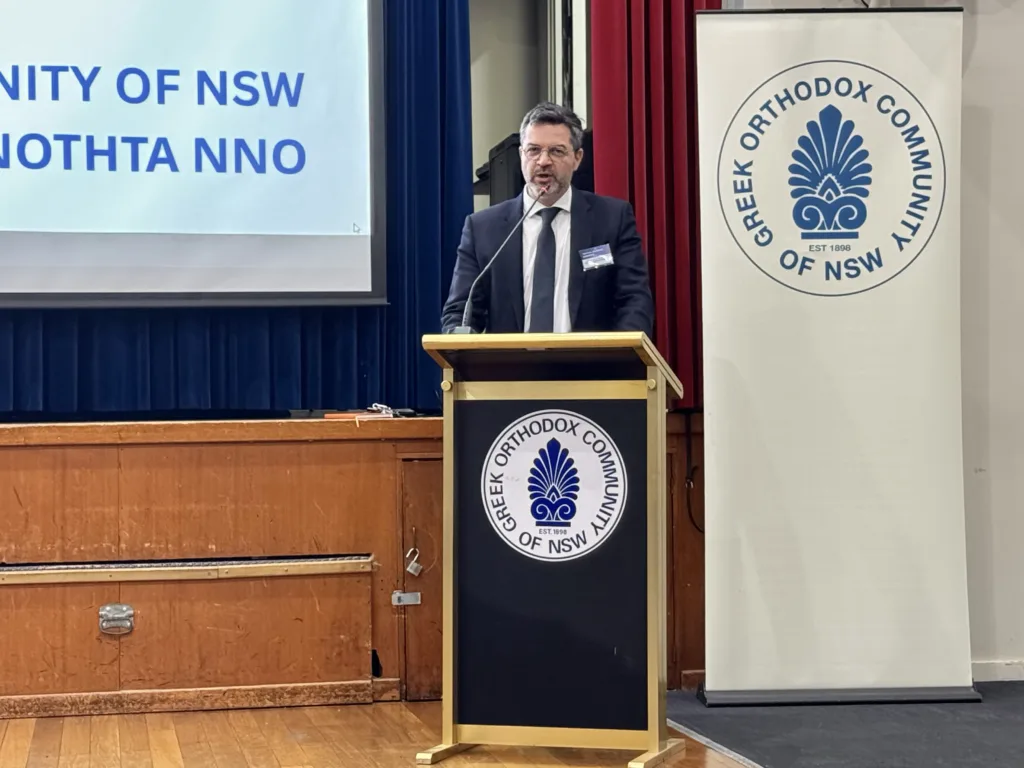
“Appointments for registrations have gone from around two years to four or five months, and the same applies for passports,” he said.
Skemperis also called on organisations to find new ways to engage younger generations and ensure community institutions remain relevant in the years ahead.
Aged care demand continues to outpace capacity
One of the evening’s key presentations came from Katerina Kouris, Manager of the Greek Community Home for the Aged, who outlined the work being undertaken at the facility.
Kouris said the home had been recognised as Australia’s number one aged care provider for food quality for two consecutive years and remained committed to preserving Greek language, culture and faith within residential care.
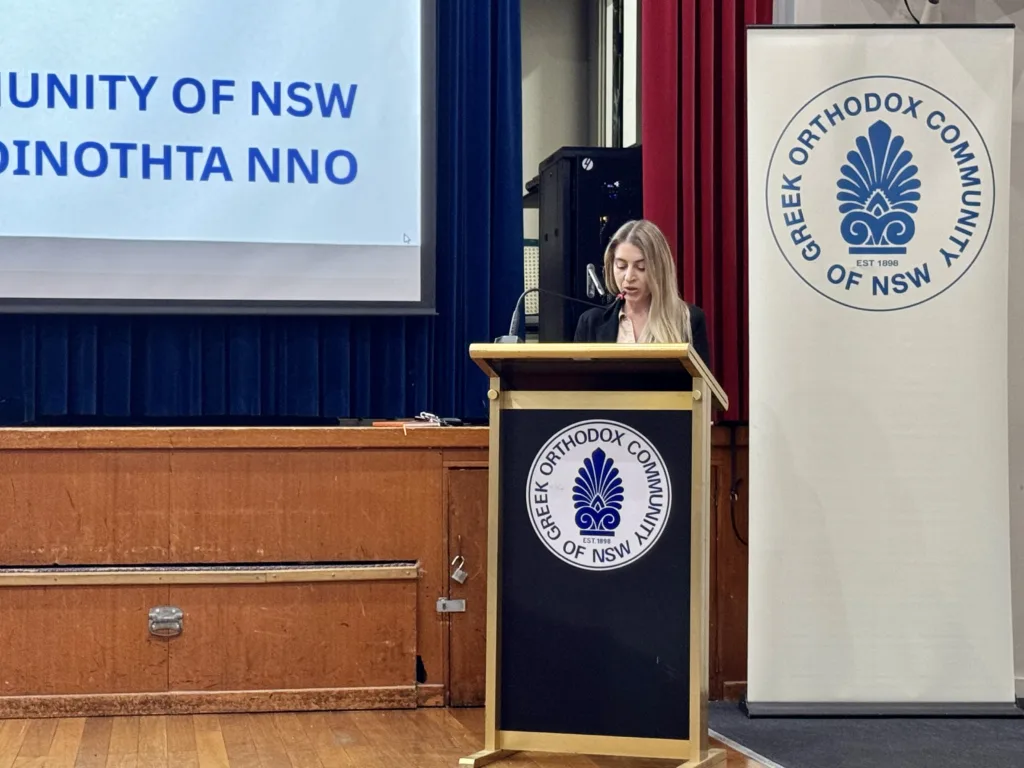
She revealed demand for culturally appropriate aged care services continued to exceed available places, with the facility currently accommodating 48 residents while maintaining a waiting list of 172 people.
“Our home exists because earlier generations envisioned a place where Greek elders in Australia could live with dignity, respect and a strong sense of cultural identity,” Kouris said.
She said the facility welcomed collaboration with organisations through volunteering opportunities, cultural activities and intergenerational programs that keep residents connected with the broader community.
Education programs continue to grow
Greek Schools Principal Veronica Kapsimali outlined the growth of the Community’s education programs, which now serve 301 students across five schools.
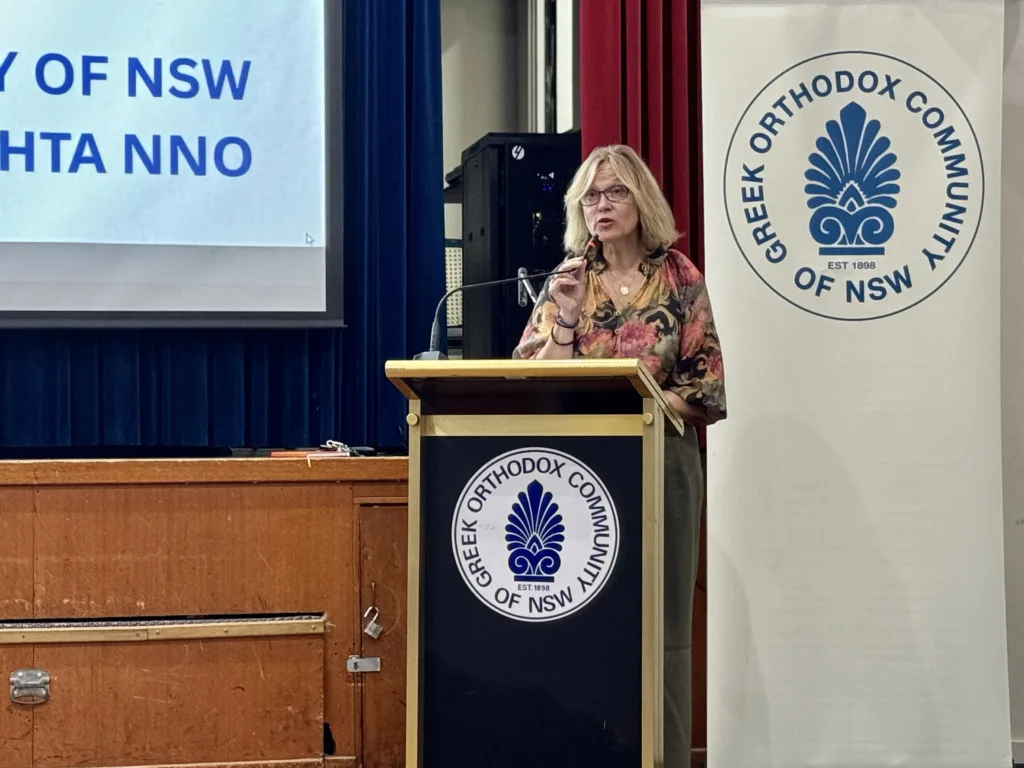
She said the organisation was adapting its approach to meet the needs of third and fourth-generation Greek Australians, many of whom have limited exposure to the Greek language outside the classroom.
“Our ambition is not simply to preserve the Greek language,” Kapsimali said.
“Our ambition is to build a sustainable and thriving Greek education ecosystem that develops confident young people, strengthens community identity and creates stronger connections between Australia and the global Hellenic world.”
Kapsimali said the schools had introduced a range of new initiatives, including theatre classes, leadership activities, cultural programs and modern teaching methods incorporating technology, music and drama.
She also announced plans to work with Macquarie University towards offering students the internationally recognised Certificate of Attainment in Greek from 2027.
The Community’s schools currently employ a team of 12 educators and continue to attract growing enrolments, with interest emerging from new areas including Oran Park and the Macarthur region.
Welfare programs serving communities across Sydney
Welfare Department Manager Denianna Kolevris outlined the Community’s expanding social and welfare programs, which currently operate across several Sydney locations.
The programs are designed to promote wellbeing, reduce social isolation and strengthen community connections, particularly among older members of the Greek Australian community.
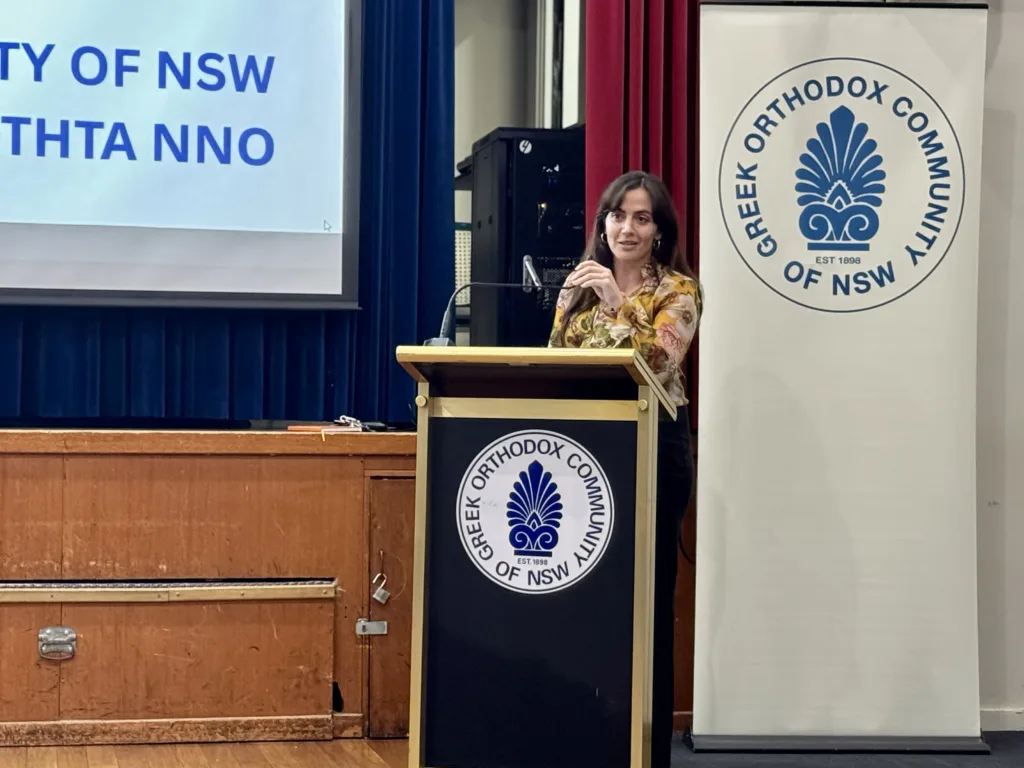
A women’s yoga program operates on Tuesdays, while social support groups are held in Casula on Wednesdays and Ashfield on Thursdays. The sessions include gentle exercise, balance and fall-prevention activities, social interaction, morning tea and group discussions.
On Fridays, the Community hosts a women’s exercise group at its Lakemba premises, attracting between 30 and 40 participants each week. The program combines light exercise, Greek music and dancing.
The Community also organises regular excursions and outings for participants across its various groups.
Kolevris said GOCNSW was looking to expand its offerings further and was considering new initiatives, including programs aimed at younger families and mothers.
She encouraged community organisations to share information about the programs with their members and welcomed suggestions for future activities.
Childcare and preserving community history
Attendees were also reminded of the Community’s childcare services, which operate across two centres in Stanmore and Marrickville.
While the childcare director was unable to attend the evening, GOCNSW representatives noted that the Stanmore centre caters for approximately 58 children, while the Marrickville centre accommodates around 27 children.
Volunteer Anna Ioannidis also presented the work of the Greek Historical and Cultural Centre, which houses approximately 17,000 books, extensive archival collections, oral histories, photographs, community records and artefacts documenting the history of Greek migration and community life in Australia.
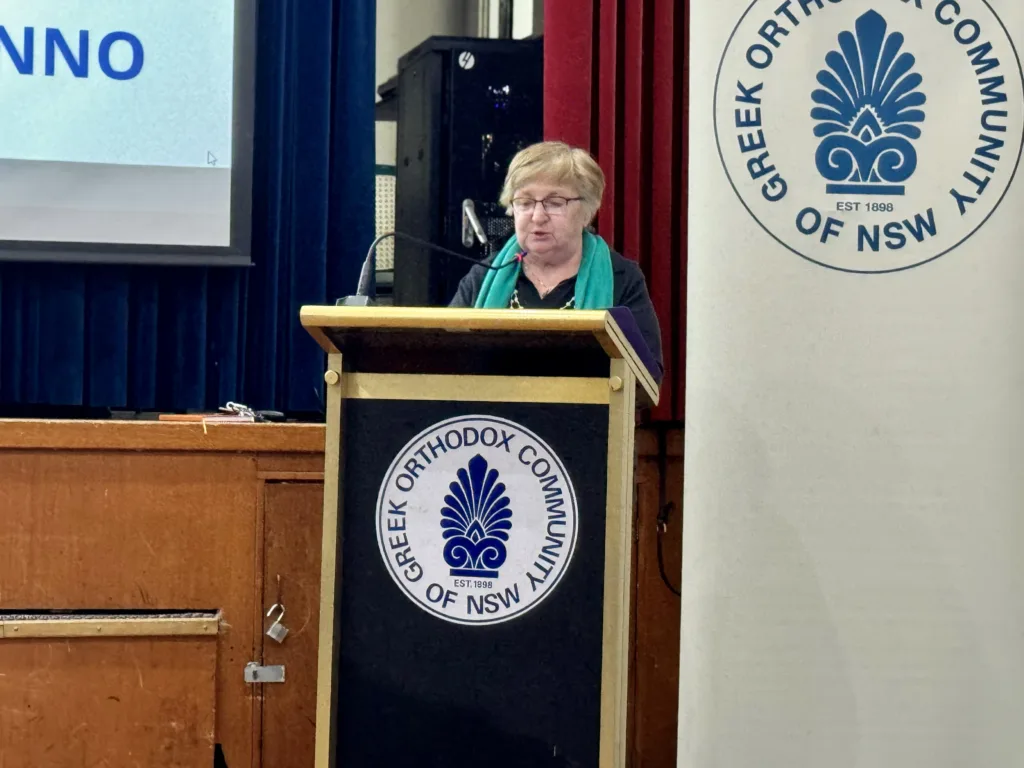
The centre includes rare publications, historical newspapers, recordings, museum collections and more than 940 interviews with prominent figures from the Greek Australian community.
Ioannidis said preserving the history of community organisations remained a priority before valuable records and archives were lost over time.
New website launched
A major focus of the evening was the official launch of the Community’s new website, developed by Michalis Kostikoglou of CONNEXIA.
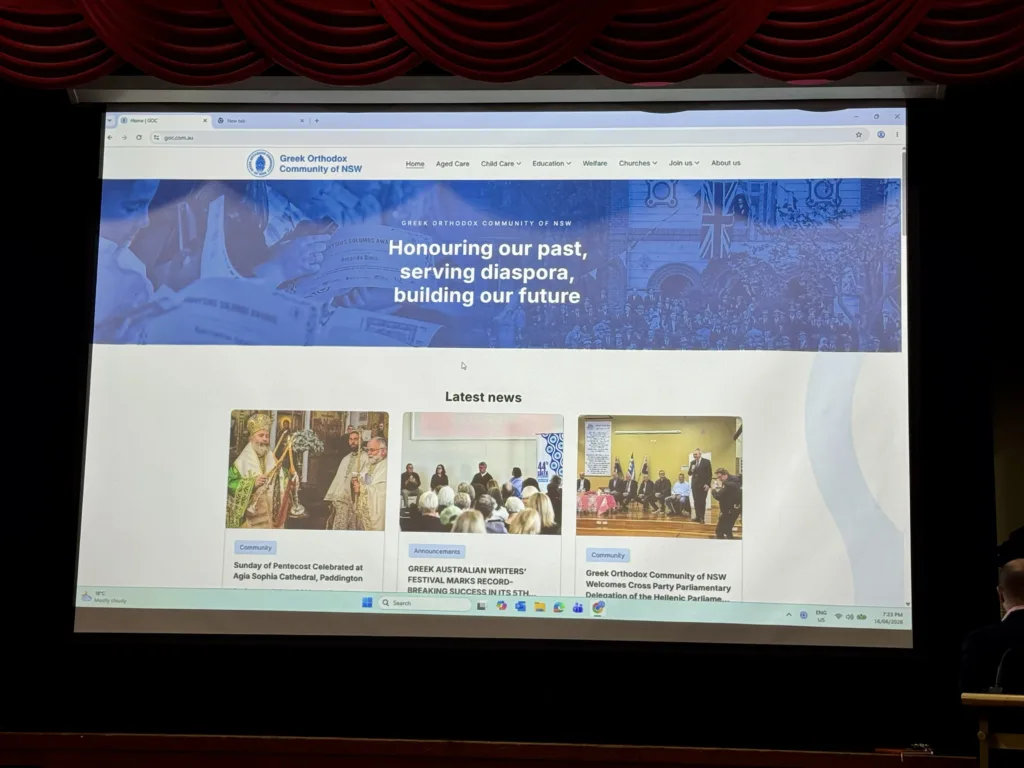
The platform brings together information on aged care, education, childcare, welfare services, churches, volunteering opportunities, employment vacancies and membership applications.
Kostikoglou described the project as an important step towards modernising the organisation and making its services more accessible to the wider community.
The website also includes a dedicated news section designed to promote community announcements, events and activities.
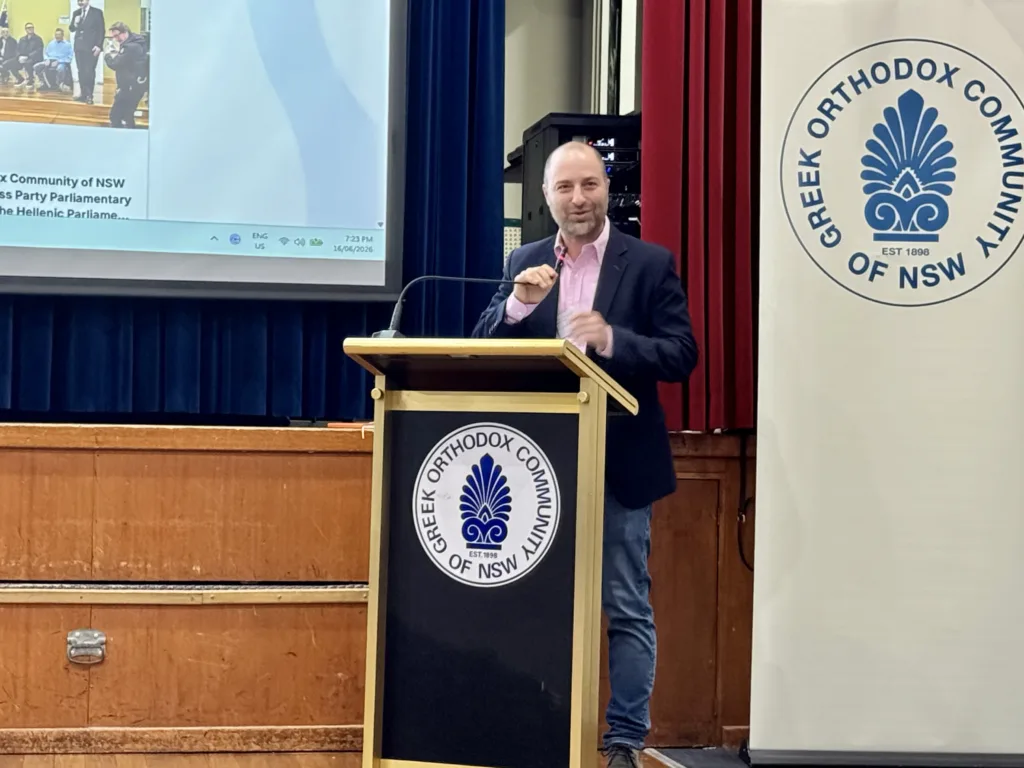
Apoifis encouraged associations to contribute their own content and event information, with the aim of creating a central hub for community information across Sydney and New South Wales.
The evening also acknowledged the contribution of Elena Skarlatou, who assisted in coordinating and compiling content for the website project.
Questions focus on redevelopment and community cooperation
The question-and-answer session generated some of the evening’s most substantive discussion.
One question focused on the future of the Community’s Lakemba headquarters and whether the organisation should continue investing in the site given its increasing value following rezoning.
The questioner noted that the property was now capable of supporting significant residential development and asked whether it would be more beneficial to sell the site and relocate to a more central location for the Greek community.
Responding, Apoifis confirmed the Board had explored alternative sites for several years but had not yet identified a suitable option.
“We have identified a couple of places, but they have fallen over for various reasons,” he said.
“We thought it would be better that we fix this facility, have it going, but meanwhile not stop looking.”
Apoifis confirmed the Community intended to utilise a pending $4.5 million government grant to undertake a major refurbishment of the existing premises.
The funding has not yet been formally received, with final agreements still awaiting completion.
“We will do a general renovation and create a beautiful centre that the Greek community can come to and enjoy,” he said.
The President noted that the 5,200-square-metre site had been rezoned for high-density residential development of up to 15 to 18 storeys and continued to appreciate in value.
“As we hold this property, every day it increases in value,” he said.
However, he explained that previous development proposals had faced planning obstacles and that a major redevelopment could cost between $35 million and $40 million.
“We are not property developers,” he said.
“We are here as a society and a community to provide services and build things for our people.”
In his address, GOCNSW Secretary George Diamataris also reassured attendees that the Greek Community Club would continue operating, with any future closure relating only to renovation works.
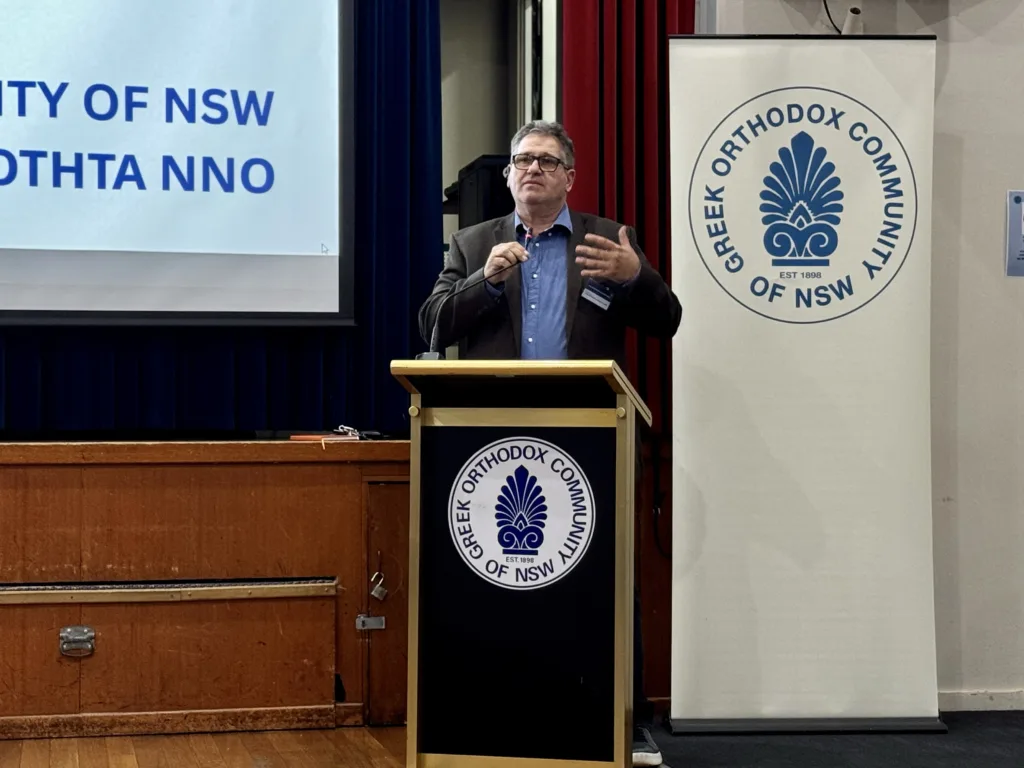
A second audience question centred on how the momentum created by the evening could be used to encourage greater cooperation between Greek organisations.
The speaker noted that the event had successfully brought together leaders from many of Sydney’s Greek associations and suggested that more structured collaboration was needed to address the challenges facing the community.
“There are serious issues facing the Greek community at the moment,” she said.
“What we would like to see is how all these organisations can work together with the Community and how we can collaborate in a meaningful way.”
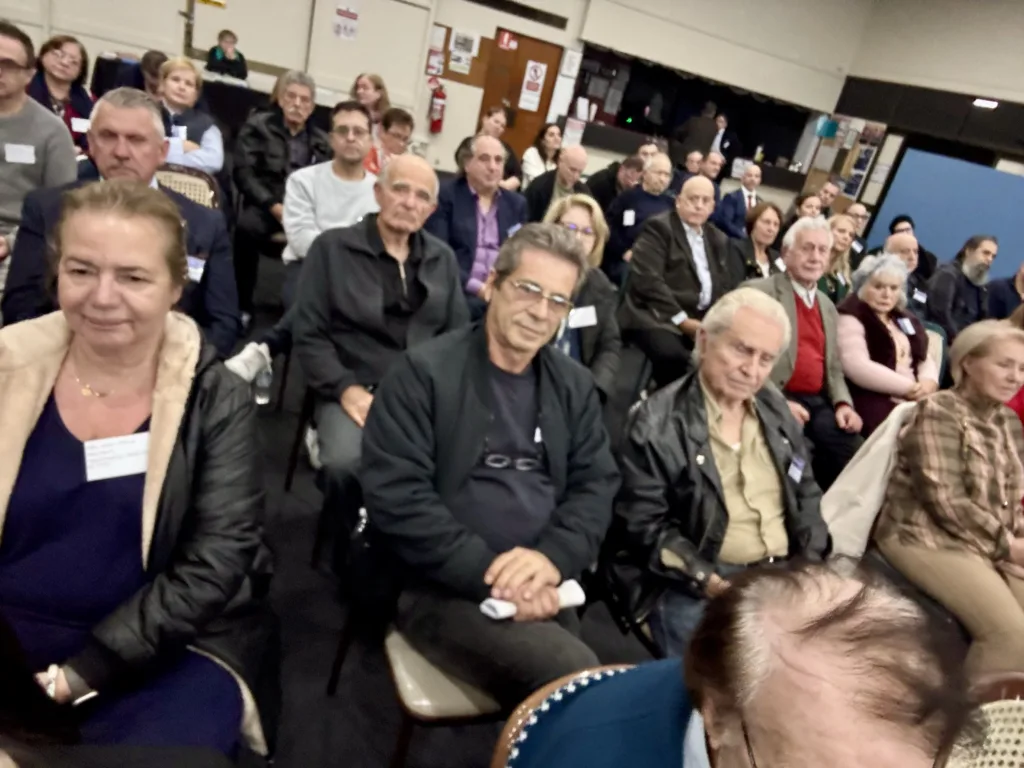
Apoifis welcomed the suggestion and said one of the primary objectives of the evening had been to reconnect organisations and strengthen relationships across the community.
“The purpose of tonight was for us to get to know each other again,” he said.
“We want to bring the Greek community together.”
He also supported the idea of establishing a community think tank to identify priorities and opportunities across areas including youth engagement, education, aged care and long-term community planning.
“Let us all work together for the Greek community,” he said.
Looking ahead
The evening concluded with a call for greater collaboration, stronger communication and increased participation across all sectors of the Greek Australian community.
While the launch of the new website marked an important milestone, much of the discussion focused on how the Community can expand services, improve facilities and strengthen cooperation between organisations for the benefit of future generations.
As attendees gathered for refreshments and networking following the formal proceedings, the message from the new Board was clear: the future of the Community will depend not only on infrastructure and services, but on building stronger connections across the wider Greek Australian community.
*All photos copyright The Greek Herald
