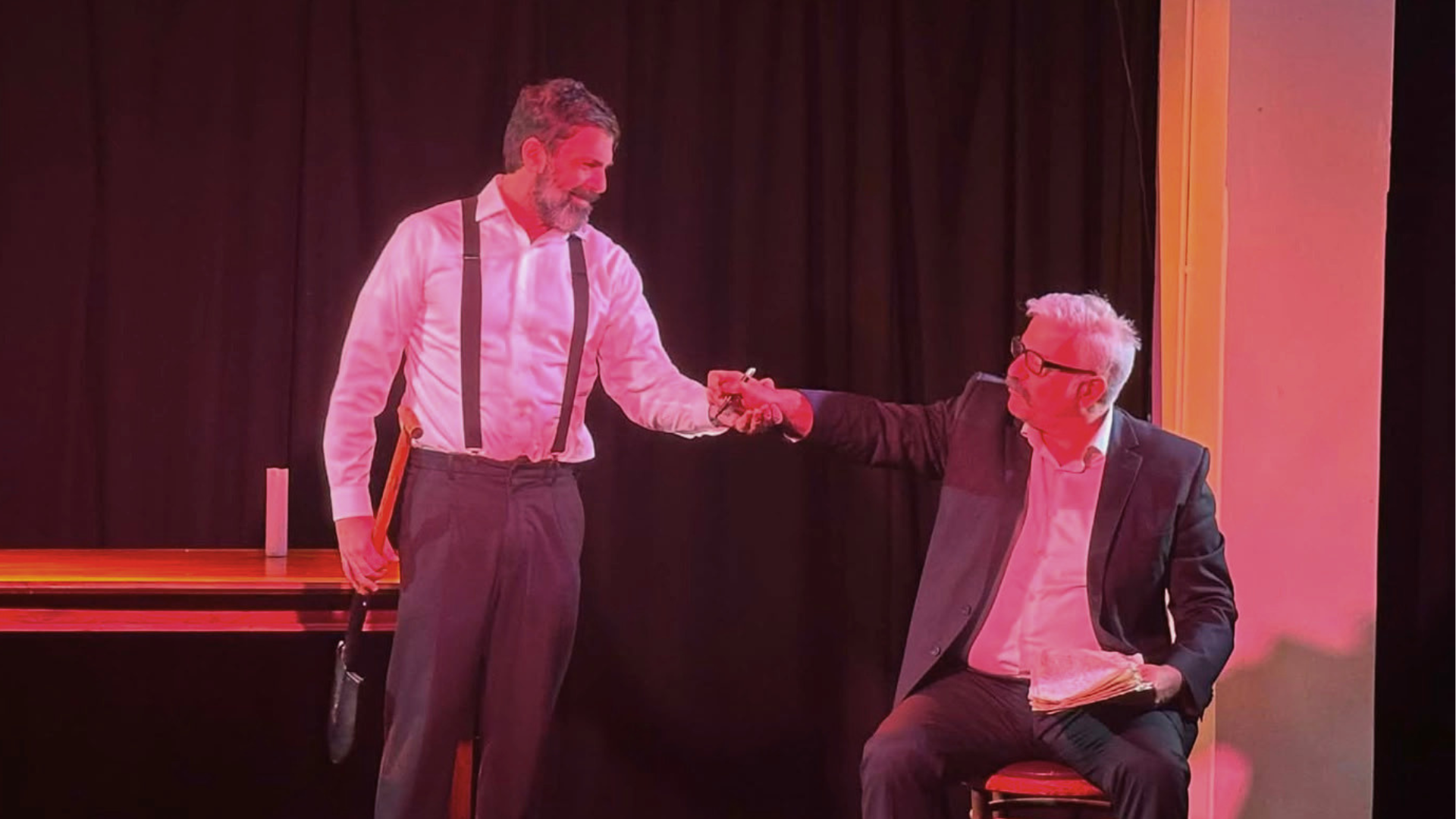
What would happen if the spirit of Giorgis Zorbas visited Nikos Kazantzakis and asked him to change the way he is depicted in Kazantzakis’ novel Zorba the Greek? Award-winning playwright Tom Petsinis answers just that in his refreshing theatre production Zorba’s Last Dance.
Directed by Rosemary Johns, Zorba’s Last Dance was originally performed at La Mama Courthouse two years ago. Recent funding from the City of Melbourne has brought the production back to the stage, inviting a whole new audience to dive deep into the lives of Zorbas and Kazantzakis, played respectively by Evangelos Arabatzis and Dimitrios Koutsoukos.
The encounters between Zorbas and Kazantzakis are framed through contemporary Melbourne characters John (Arabatzis) and Paul (Koutsoukos).
Recently diagnosed with cancer, John asks his playwright friend Paul to write a play about Zorba and give him one final role to play. Through this play-within-a-play, Petsinis explores questions of mortality, legacy and what it means to live a meaningful life.
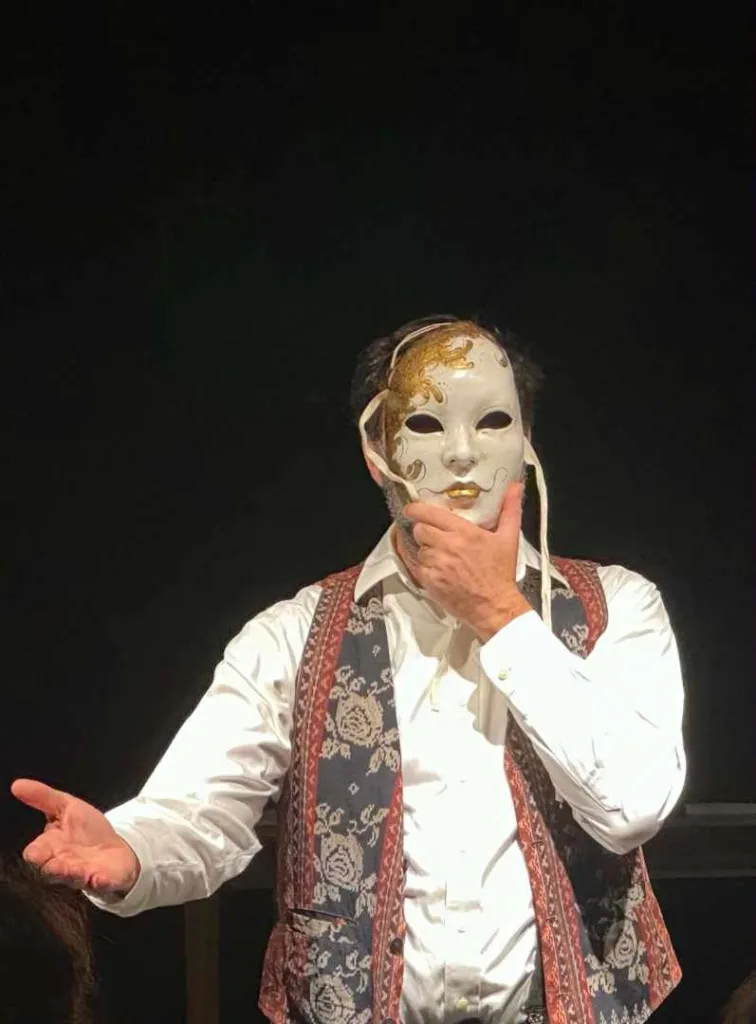
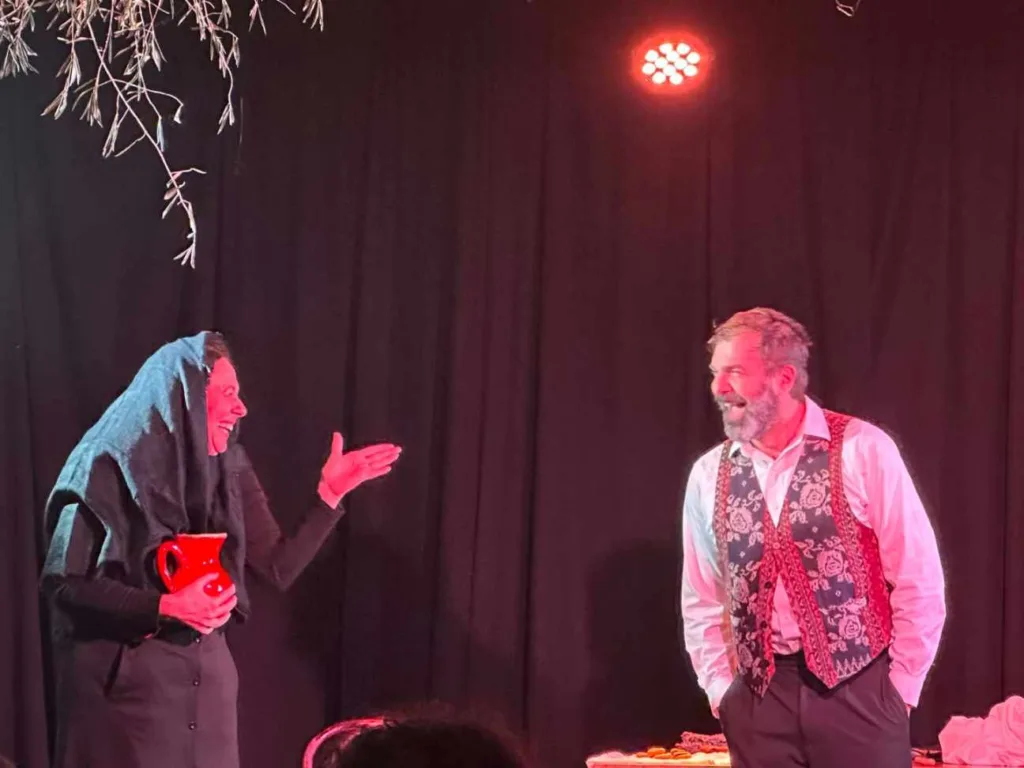
These ideas are established from the opening moments of the production. Donna Dimovski-Kantarovski, who plays Lyuba, Zorbas’ second wife, alongside several other characters, opens the play with haunting vocals as she recites the lament ‘Zaidi, Zaidi’ (‘Sunset, Sunset’), mourning her husband Giorgis. The lament immediately establishes the production’s thematic resonance of life and death.
Following both sets of characters as they confront their own struggles, the question of what makes a life worth living — and what may await on the other side — remains ever present.
The characters’ philosophical discussions touch on illness, ageing, finding meaning through music and life’s smaller moments, asking the question ‘When was the last time you felt alive?’. These conversations feel deeply human and are grounded in humour and honesty.
Arabatzis and Koutsoukos bring such energy and effortless rapport to the stage. Their performances transition seamlessly between contemporary Melbourne and the imagined meetings of Zorbas and Kazantzakis. The actors effectively contrast Zorbas’ passion for life and music with Kazantzakis’ reserved nature, often hidden behind his written words.
The ease with which the two actors feed off one another’s energy drives the entire performance. Their humour and dialogue, particularly in the contemporary scenes, create a refreshing sense of realism. Here are two Greek Australian men speaking to one another without relying on the familiar ‘wog’ stereotype for laughs. Instead, they emerge as fully formed characters with their own histories and vulnerabilities.
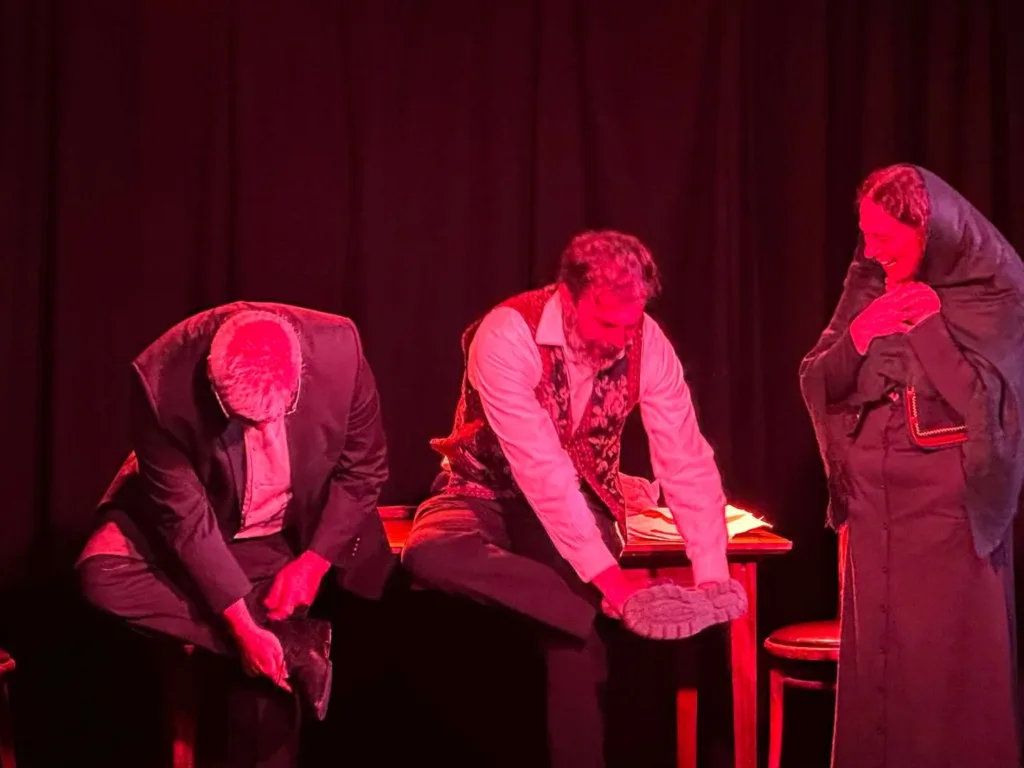
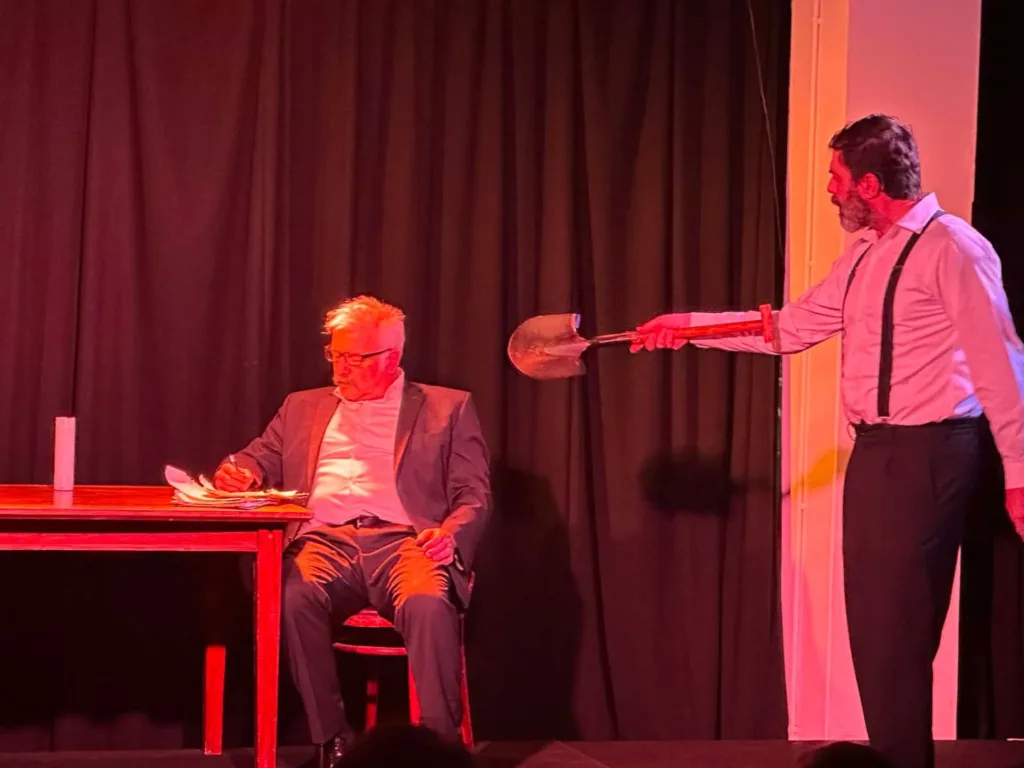
Petsinis has crafted a self-aware piece of theatre that is not stereotypically Greek while still celebrating the culture and its rich history. He pays homage to the historical realities of these figures’ lives while comedically and insightfully critiquing the flaws of Zorba the Greek.
Rather than placing the original text on a pedestal, Zorba’s Last Dance enters into a conversation with it, questioning who gets to control a person’s legacy and how literature holds the ability to shape the way people are remembered.
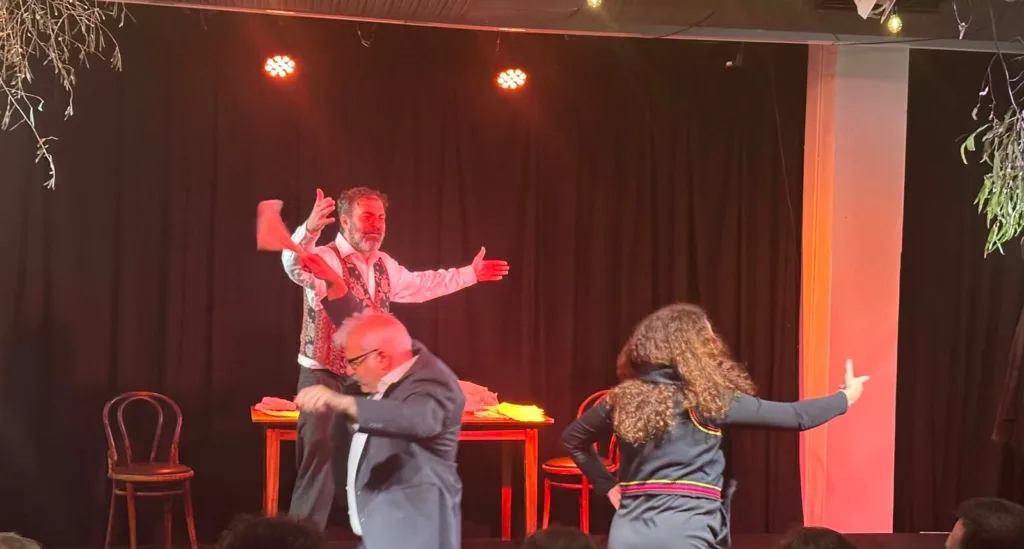
The intimate setting of the Greek Centre’s Mezzanine further creates this sense of connection by removing the limitations of a traditional stage space, particularly when the performers sit among audience members and invite spectators to join them in a dance, blurring the line between observer and participant.
By intertwining the stories of John and Paul with those of Zorbas and Kazantzakis, Zorba’s Last Dance becomes more than a reimagining of a literary classic. It is a thoughtful and often humorous reflection on what it means to truly feel alive.
