In my observance of Easter this year, I must admit that I’m finding it challenging not to be overwhelmed by cynicism. This originates from fear, confusion and an accelerating distrust of governing institutions – institutions which many of us once considered almost foolproof. We relied on them (with our votes and taxes) to provide stability and safety, believing that our comfortable lives were ‘untouchable’ or unchangeable within our “Western civilisation”.
Now living in a world at war in the Middle East, there is a sense of anticipation and trepidation towards impending doom, including here in Greece, where I live.
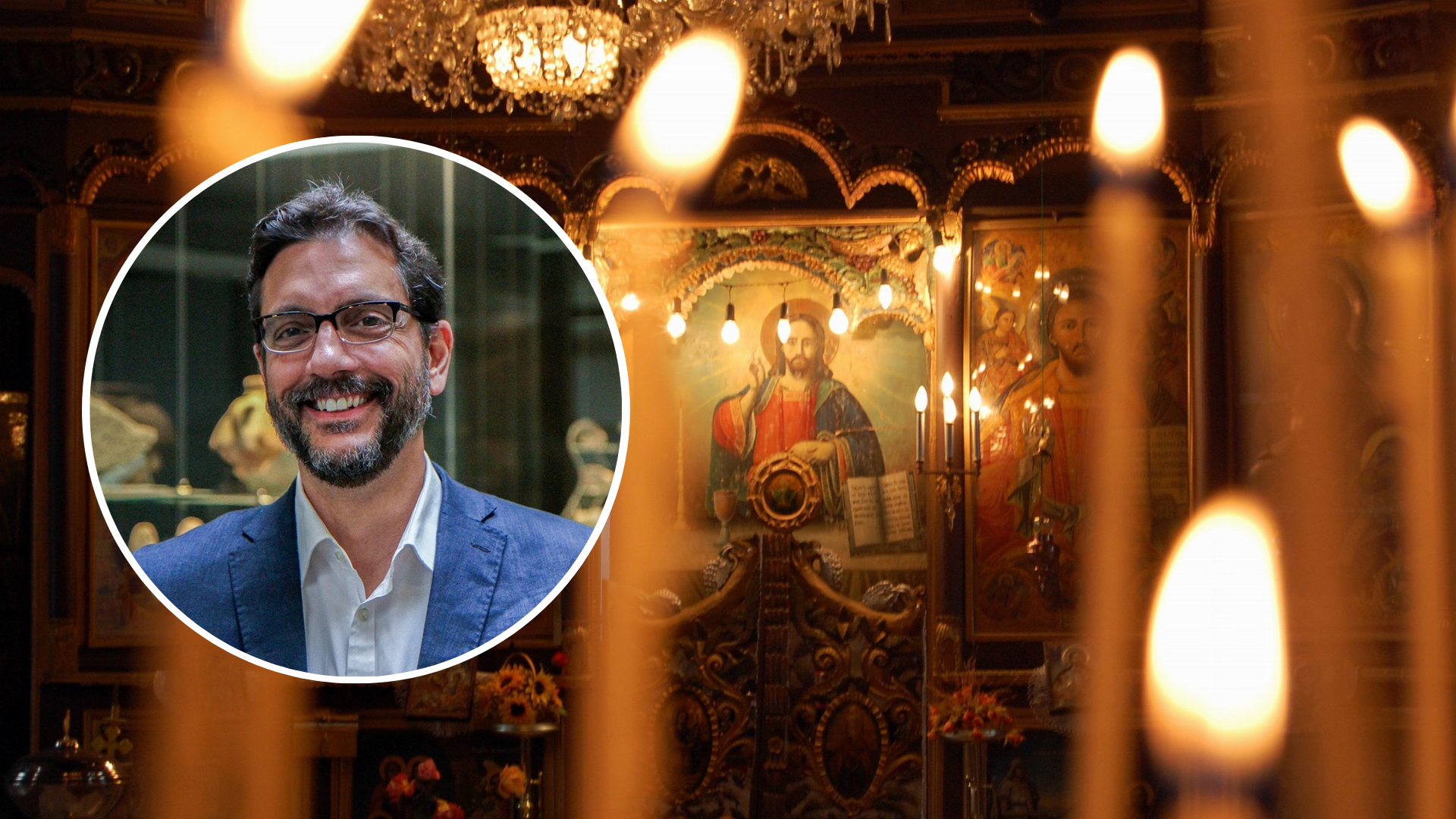
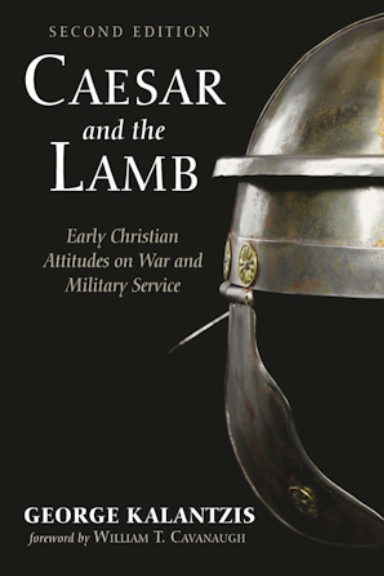
My angst led me to reach out to an ‘expert’ to help enlighten me and others regarding keeping ‘the faith’ at Easter within these warring times. I was very fortunate to discover Professor George Kalantzis – Professor of Theology and an authority in early Christian studies, whose many areas of related expertise include “War and military service”. Also an author, his latest book is aptly titled: Caesar and the Lamb: Early Christian Attitudes on War and Military Service (second edition, 2025).

In response to my perhaps fervent questions and suppositions, Professor Kalantzis responded calmly and patiently. Questions such as: “How can our Christian Orthodox faith this Easter help us deal with a smothering sense of hopelessness in our materialistic, corrupt, individualistic, now warring Western societies?”
He replied: “War, economic uncertainty, threats, and death have been constants of the human experience – indeed of Greek history in particular,” stressing that the last couple of generations have incorporated an “innocent telling” of modern history.
I take this to mean that many of us are perhaps easily ‘shell-shocked’ (no pun intended) – easily forgetful of the harsh realities faced by our ancestors, to the point of even denouncing our faith when confronted with difficulty.
Professor Kalantzis reminds us: “For Christians, Easter reveals God’s presence with us – that God does not stand against us but is for us (John 3:16). Easter is the divine assurance of victory over death and violence, and therefore a foretaste of the promised renewal of all things. When Christians surrender to cynicism, we reveal how captive we have become to the illusion of unqualified optimism – believing that progress, achievement, or security will inevitably lead to happiness – and we betray the core of our faith, which is hope: the certainty that even in suffering God is with us, making all things new.”
Furthermore, and perhaps controversially so, Professor Kalantzis says: “Holy Week reminds us that the disciples also misunderstood Jesus. They sought a revolutionary who would free them from Roman oppression, a political leader who would place them at the centre of power, a sovereign who would secure their safety and prosperity. When Jesus was arrested, he failed to meet their expectations; when he was crucified, their dreams were crushed – and they abandoned him. The disciples’ optimism turned into fear and cynicism.”
“You [referring to me] note that, accustomed to our modern comfort zones, we fear being tortured, killed, or ridiculed if we sacrifice our lives for the Kingdom of God rather than the ‘kingdom’ or ‘democracy’ of our nation. Yet Lent reminds us that God has not promised us safety, but rather participation in an adventure that is God’s making all Creation new (Revelation 21:5). This is the proclamation of the Anastasis: God is making all things new, despite all evidence to the contrary,” he added.

In response to my ‘brainstorming’ as to whether the only thing left to bring about peace – short of a Jesus-like sacrifice when faced with direct threat – is peaceful protest, Professor Kalantzis explains:
“Jesus did not call us to be passive but to be active peacemakers (eirēnopoioí, Matthew 5:9). If Christian non-violence becomes mere passivity, indifference, or is limited to occasional social media outrage, it loses its scriptural grounding and ignores Jesus’ call to active peacemaking.”
“This posture of peacemaking must be embodied publicly and socially, giving concrete form to the command to love the enemy. That is why Christians engage in non-violent resistance as a first step in peacemaking. Non-violent resistance names injustice, refuses to respond in kind, and absorbs violence to break its cycle and bring it to an end,” the Professor added.
We certainly seem to be absorbing violence at present. Yet who among us is willing to stand up and refuse to obey the government, refuse to join the military, to live and openly declare allegiance only to the Kingdom of God through Jesus, rather than to the Caesar-like governments of our time, as the early Christians did?
Professor Kalantzis addresses this by stating: “The Christian’s identification with Christ is the basis on which they are called to love their enemies and pray for their persecutors (Matthew 5:44). This love is neither innate nor easy. It contradicts our instinct for self-protection. Yet its difficulty does not render it impossible or merely ‘idealistic’. Holy Week teaches us what ‘love of enemy’ looks like in the person of Jesus, who ‘laid down his life for us’ (1 John 3:16)… rooted in the Resurrection and the recognition of God’s imminent presence revealed in Jesus.”
…A ‘tall order’, but essentially the only one that offers true peace, now and beyond.
